2024-12-18 06:07
LONDON, Dec 18 (Reuters) - OPEC+ is wary of a renewed rise in U.S. oil output when Donald Trumpreturns to the White House, delegates from the group said, because more U.S. oil would further erode OPEC+ market share and hamper the producer group's efforts to support prices. OPEC+ pumps about half of the world's oil and earlier this month delayed a plan to raise output until April. The group extended some of its supply cuts until the end of 2026 due to weak demand and booming production from the U.S. and some other non-OPEC+ producers. OPEC has a history of under-estimating U.S. output gains going back to the start of the shale oil boom, which has seen the United States become the world's top oil producer. The United States now pumps a fifth of world supply. Some delegates are more bullish now on U.S. oil and say the reason behind this is Trump. Following an election centred on the economy and the cost of living, Trump's transition team put together a wide-ranging package to deregulate the energy sector. "I think a return of Trump is good news for the oil industry, with possibly less stringent environmental policies," a delegate from a U.S. ally OPEC+ member said. "But we may see higher production in the United States, which is not good for us." Vienna-based OPEC didn't respond to a request for comment. A further rise in U.S. output would hinder plans by the Organization of the Petroleum Exporting Countries and allies such as Russia to start raising output from April 2025 without risking a drop in prices. A drop in prices would hurt OPEC+ countries who rely on oil revenues. The U.S. president-elect wants to raise output but for different reasons, having campaigned on promises to bring down energy prices and inflation. "This is a potentially difficult dynamic for both sides," said Richard Bronze, head of geopolitics at Energy Aspects. "OPEC+ has faced a big challenge from rising U.S. production, which has reduced the group's influence." U.S. OUTPUT TO RISE IN 2025 OPEC+ is holding back 5.85 million barrels per day of output capacity after a series of cuts since 2022. In the 2022-2024 period, total U.S. oil output has risen 11% to 21.6 million bpd according to OPEC's own figures. Only 11 years ago, the United States pumped about 10 million bpd. OPEC+'s output is equal to 48% of world supply, the lowest since it was formed in 2016 with a market share of over 55%, according to Reuters calculations based on International Energy Agency figures. OPEC+ decisions to reduce output in 2016 and 2020 helped the U.S. shale industry and made it a leading exporter, said Igor Sechin, the head of Russia's largest oil producer Rosneft (ROSN.MM) , opens new tab, earlier this month. Another OPEC+ source said Trump's policies could support oil demand, which would benefit the producer group, although the prospect of higher U.S. oil supply is a concern. "The main threat to OPEC+ is increasing U.S. oil production under Trump, reducing the country's dependence on imported oil and increasing exports," the source said. In a report last week, OPEC predicted total U.S. supply will rise by 2.3% next year and also cut its forecast for global oil demand growth again. "They are acknowledging that the U.S. will be taking a bigger piece of the pie," said Bjarne Schieldrop, chief commodities analyst at SEB. The IEA sees U.S. output rising by 3.5% next year, faster than OPEC. Some industry executives and analysts aren't convinced that U.S. supply could increase substantially under Trump. Shale producers are focused on their economics, known as capital discipline, and are expected to only increase output if it will be profitable, according to the head of Exxon's upstream division. This scenario becomes less likely if prices drop. New oilfields take years to develop, so Trump's pledges for permits to drill in new places aren't likely to yield new barrels any time soon. "The U.S. has no spare capacity," said Bob McNally, president at Rapidan Energy Group and former White House official. "How much the U.S. will drill depends more on decisions made in Vienna than in Washington." Sign up here. https://www.reuters.com/business/energy/opec-wary-renewed-us-oil-output-rise-under-trump-sources-say-2024-12-18/
2024-12-18 06:06
Luxury brands explore crypto payments to attract new wealth Printemps partners with Binance, Lyzi for crypto payments Expected regulatory support boosts crypto's appeal despite volatility PARIS, Dec 18 (Reuters) - Bitcoin’s soaring value has caught the attention of high-end fashion brands and retailers, prompting further interest in offering cryptocurrencies as a means of payment to tap in to fresh pockets of wealth and build loyalty with crypto investors. Until recently, only a handful of luxury brands including LVMH (LVMH.PA) , opens new tab watch labels Hublot and Tag Heuer as well as Kering-owned (PRTP.PA) , opens new tab fashion brands Gucci and Balenciaga have experimented with crypto payment offers. In recent weeks, upscale French luxury department store Printemps announced it was teaming up with the world's largest crypto exchange, Binance, and French financial tech company Lyzi to accept cryptocurrencies including bitcoin and ethereum in its stores in France - becoming the first European department store to do so. The move, coming as bitcoin rises, has been noticed by other brands and retailers who are showing interest in joining in. "There have been quite a few calls - it's generated interest," said David Princay, president of Binance France, who said the company is in talks with other luxury labels. Luxury lighter and pen maker S.T. Dupont told Reuters it aims to accept cryptocurrency payments in two Paris stores before the holidays. In the realm of experiences, cruise company Virgin Voyages began this month offering its first product accepting bitcoin as a payment option - a $120,000 annual pass for up to a year of sailing on its cruise ships. Regulators have long warned that cryptocurrencies like bitcoin are high-risk assets, with limited uses in the real world. High volatility has been another barrier to wide adoption as a means of payment. But pledges of support from U.S. President-elect Donald Trump, who is expected to bring in more friendly e-currency regulation, have fueled record-breaking rises for bitcoin. S&P analysts say the narrative is starting to shift, noting that blockchain innovation in financial markets could increase predictability for cryptocurrencies. SEEKING INNOVATIVE BRANDING Luxury labels have long sought to cater to affluent shoppers from the tech industry by opening stores in upscale Silicon Valley malls and issuing products like the Hermes (HRMS.PA) , opens new tab Apple Watch, for example, which combines signature, stitched leather straps of the French Birkin bag maker with tech giant Apple’s (AAPL.O) , opens new tab connected timepiece. Now, new wealth generated by bitcoin's recent highs - topping $107,000 on Monday - comes as the luxury industry faces its biggest slump in years and searches for new sources of growth. Offering cryptocurrency payments can be a way for companies to brand themselves as innovative rather than “a stuffy old brand that's only selling to the boomers,” said Andrew O’Neill, digital assets lead analyst at S&P Global Ratings. The payment option remains largely symbolic. Retailers usually reconvert the funds to euros or dollars to offset risks of volatility, while for most shoppers, payment methods are seen overall as “something that’s been solved” already by such transaction platforms as PayPal (PYPL.O) , opens new tab or Venmo, said O'Neill. But for bitcoin investors who have seen a strong rise in the value of their investment, luxury goods - a designer handbag or high-end watch - are an obvious choice for diversifying one's portfolio, analysts say. In a sign of growing interest from designer labels, Balenciaga recently issued a leather card holder designed to hold “Stax” hardware from crypto wallet company Ledger. The black leather accessory, which retails for 350 euros ($368), includes a keychain and Eiffel Tower charm, and an NFC chip fitted underneath the brand logo. Ledger’s Stax Crypto hardware, its recently developed higher-end hardware with a curved touch screen, sells for $399 at Best Buy (BBY.N) , opens new tab. The company’s “Flex” hardware, which resembles a mini Amazon Kindle, sells for $249 while the “Nano” version, which looks like a USB key, sells for $79. REACHING YOUNGER CLIENTELE Gregory Boutte, chief client and digital officer for luxury conglomerate Kering, has described the group’s strategy when it comes to technology as “test and learn” rather than “wait and see." He emphasized the embrace of new technologies as key to reaching younger and Asian clientele. Kering’s star label, Gucci, has since 2022 made purchases available through 10 cryptocurrencies for most of its products in the United States. Printemps is working to expand its crypto payments service to New York City, where it plans to open a multibrand retailer in the Wall Street district in March. Bitcoin's rise in late 2021 prompted an initial flurry of interest from luxury brands with Tag Heuer, headed at the time by LVMH luxury scion Frederic Arnault, as well as Gucci, accepting payments in cryptocurrency the following year for some purchases in the United States. One crypto advocate who recently used digital assets to make luxury purchases is Eunice Wong, an investor and influencer known as "Eunicorn." Wong said she used cryptocurrency to buy several high-end watches this year including an Audemars Piguet Royal Oak model. But she is not interested in being drawn in by high end brands seeking to build a closer client relationship, preferring to bypass traditional retail stores and sales routines. That takes too much time, in her view. “If I will buy, I'll buy on the secondary market, not through them,” she told Reuters. “I want it now.” Sign up here. https://www.reuters.com/business/finance/bitcoin-soars-luxury-brands-consider-accepting-crypto-payments-2024-12-18/

2024-12-18 06:04
LITTLETON, Colorado, Dec 18 (Reuters) - Italy's power producers are set to generate more electricity from clean power sources than from fossil fuels this year for the first time, marking a major energy transition milestone for Europe's fourth-largest economy. However, the country remains beset by the highest wholesale power prices among major regional economies, and will end 2024 as Europe's largest net electricity importer for the 10th straight year. Italy's utilities also remain overwhelmingly reliant on natural gas, which produces more than twice as much electricity as any other power source in the country. This combination of enduring gas dependence, above-average power costs and high import reliance means that Italy's energy consumers remain heavily exposed to external energy sector volatility even as domestic clean generation hits a record. And with natural gas costs set to keep rising into 2025, energy bills in Italy look set to keep climbing even as local clean electricity supplies also rise. CLEAN THRESHOLD Over the first 11 months of 2024, Italy's power firms generated 116 terawatt hours (TWh) of electricity from clean sources and 109 TWh from fossil fuels, according to data from energy think tank Ember. That generation split means that clean electricity supplies accounted for more than 50% of Italy's total generation mix for the first time. Record production from hydro dams (44 TWh) and solar farms (34 TWh) were the main drivers behind the clean power gains, while output from wind farms and bioenergy plants shrank slightly on the year. Total clean generation was up nearly 14% from the same period in 2023, while output from fossil fuels to fell to its lowest since at least 2016. Gas-fired output was down nearly 4% while coal-fired generation slid by over 70% to a record low. INDUSTRIAL OFFTAKE While power generators reduced their overall gas needs, Italy's industries slightly increased their collective gas use from 2023's levels following two consecutive years of contraction. Industrial gas users - which include those who use gas for power and as a feedstock - increased their overall gas consumption by 1.4% from the year before to 114,000 gigawatt hours (GWh), according to data from LSEG. While that industrial gas offtake was up from just under 112,000 GWh in 2023, it was still 12% less than the annual gas use average by industry between 2019 and 2022, LSEG data shows, indicating enduring weakness within Italy's business sector. PRICE PRESSURE A key inhibitor of industrial energy demand remains Italy's wholesale base power prices, which in 2024 have averaged around 109 euros per megawatt hour (MWh), according to LSEG. That compares to just under 80 euros/MWh in Germany and the Netherlands, around 64 euros/MWh in Spain and around 59 euros/MWh in France. Italy's average wholesale power price so far in 2024 has been over 50% higher than the average for France, Germany, Belgium, Spain and the Netherlands, LSEG data shows. Italy-based businesses have thus been hit by a significant handicap compared to competitors based elsewhere in Europe, accounting for the contraction in Italy's manufacturing activity for the past eight months running. Continued growth in local clean electricity output could help relieve some of the pressure on major energy users, and the country's utilities do have plans to add more renewable capacity by 2030, according to the International Energy Agency (IEA). However, over the nearer term Italy's power firms will remain heavily dependent on natural gas for generation, which in 2024 will generate around 44% of Italy's total utility-scale electricity production. Utilities will also remain heavily reliant on gas and liquefied natural gas (LNG) imports to secure sufficient gas supplies, as the country imports roughly 95% of its total gas needs, according to the Energy Institute. But with gas prices set to trend higher heading into 2025, generation costs look set to climb in tow. Italy's power firms will also remain Europe's largest electricity importers, and in 2024 are on course to import just over 50 TWh of electricity from neighbouring nations, according to energy data portal Energy-Charts.info. But with electricity demand rising across all of Europe, overall electricity costs also look set to push higher and will mean that Italy's energy costs could continue to climb into 2025 no matter how much more local clean power supplies will grow. The opinions expressed here are those of the author, a market analyst for Reuters. Sign up here. https://www.reuters.com/business/energy/italy-hit-key-clean-electricity-target-power-woes-persist-maguire-2024-12-18/

2024-12-18 05:55
MUMBAI, Dec 18 (Reuters) - The Indian rupee dropped to a record low on Wednesday, weighed by persistent demand for U.S. dollars from importers and speculators ahead of the Federal Reserve's policy decision. The rupee dropped to 84.9325, inching past its prior low of 84.93 hit in the previous session. "Natural dollar demand (from importers), lack of supply" is "squeezing" the rupee, a currency trader at a bank said. Overall, the bias is "definitely" towards a higher dollar/rupee, and "suspect that you are seeing a bit of build up in long positions" before the Fed. The rupee, already pressured by worries over India's growth outlook and a well-supported dollar following Donald Trump's election victory, had to contend with data this week that showed trade deficit surged to a record high in November. The combination of the wider trade deficit alongside a slowdown in capital inflows means that the rupee will face a large balance of payments (BoP) deficit this quarter. Based on FX reserves data, the BoP deficit is tracking at $38.9 billion from Oct to Dec. 6, according to IDFC First Bank, a turnaround from a surplus of $9.6 billion in the September quarter. The rupee is expected to weaken to 85.50 by March 2025 and 86.00 by September 2025, the bank said. Other Asian currencies were mostly lower on the day with the Indonesian rupiah leading losses with a 0.4% decline. The dollar index was little changed at 106.9 ahead of the Fed's policy decision due during U.S. market hours. The Fed is widely expected to deliver a 25 basis points cut and focus will be on whether policymakers will make any hawkish revisions to their interest rate projections going into next year. Sign up here. https://www.reuters.com/markets/currencies/indian-rupee-slips-lifetime-low-dollar-bids-fed-policy-review-looms-2024-12-18/

2024-12-18 05:55
MUMBAI, Dec 18 (Reuters) - The Indian rupee fell marginally on Wednesday ahead of the crucial Federal Reserve policy decision later in the day, with traders expecting interventions by the Reserve Bank of India (RBI) to blunt the negative outlook on the local unit. The rupee was at 84.9225 against the U.S. dollar at 10:05 a.m. IST, against its close of 84.8950 in the previous session. The currency had weakened to its all-time low of 84.93 on Tuesday, hurt by concerns about India's merchandise trade deficit , opens new tab(INTRD=ECI) , opens new tab rising to a record high and due to outflows from local stocks. Foreign investors net sold over $700 million of equities in the previous session, according to provisional exchange data. "Quite likely that the Reserve Bank of India will be on offer (on USD/INR) near 84.93-84.94 levels which should limit intra-day gains," a trader at a state-run bank said. Routine interventions by the RBI have supported the rupee over recent sessions as the currency has been under pressure from slowing economic growth and elevated dollar bids in the non-deliverable forwards market. Asian currencies were mostly weaker on the day with the Indonesian rupiah, down 0.3%, leading losses. The dollar index was little changed at 106.9. The Fed is widely expected to deliver a 25-basis-point rate cut during U.S. market hours on Wednesday. The focus will be on whether policymakers make any hawkish revisions to their future interest rate projections. In September, the median based on their projections indicated 100 bps of rate cuts over 2025. "Uncertainty remains about future monetary policy actions, especially with the incoming Trump administration's potential tariff hikes, which could have severe inflationary consequences. This could slow the pace of Fed rate cut in 2025," MUFG Bank said in a note. Sign up here. https://www.reuters.com/markets/currencies/rupee-slips-before-fed-decision-traders-say-rbi-intervention-cap-bearish-bias-2024-12-18/

2024-12-18 05:39
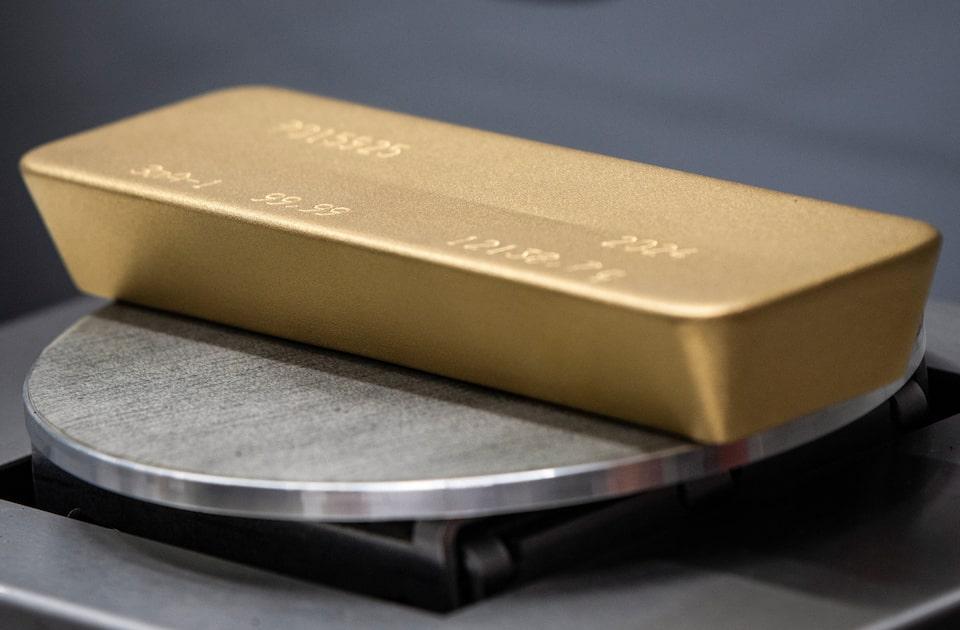
Fed cuts interest rates by 25 basis points US 10-year yield hits fresh four-week high US dollar index scales two-year peak Silver down more than 3% Dec 18 (Reuters) - Gold slipped more than 2% to a one-month low on Wednesday after the U.S. Federal Reserve lowered interest rates as expected, but noted it will slow the pace at which borrowing costs fall any further, boosting the dollar and bond yields. Spot gold was down 2.1% at $2,589.91 per ounce by 03:56 p.m. EST (2056 GMT), its lowest level since Nov. 18. U.S. gold futures settled 0.3% lower at $2,653.30. "Markets are climbing a wall of worry into the close as (Fed Chief Jerome) Powell nods to a period of slower rate cuts predicated on further progress in inflation. Core PCE data later this week now takes on more importance," said Tai Wong, an independent metals trader. "Gold is slumping below $2,600, which will worry some nervous bulls," Wong added. U.S. central bankers issued fresh projections indicating two quarter-percentage-point rate cuts next year amid rising inflation, a forecast consistent with a wait-and-see approach as President-elect Donald Trump returns to the White House in January. Powell said Fed policymakers want to see more progress on bringing inflation down as they consider future rate cuts. Futures on the federal funds rate have priced in that the Fed will leave its benchmark overnight rate unchanged at the Jan. 28-29 policy meeting. Higher rates reduce the appeal of holding the non-yielding asset. The dollar index (.DXY) , opens new tab jumped more than 1% to a two-year high, making gold more expensive for other currency holders, while the benchmark U.S. 10-year yield hit a fresh four-week high. Traders will be watching now for key U.S. GDP and inflation data due later this week that could further shape expectations around monetary policy. "I do see the consolidation as a continuation pattern within the longer-term uptrend in gold. I think that trend will re-exert itself in the first quarter of 2025," said Peter Grant, vice president and senior metals strategist at Zaner Metals. Elsewhere, spot silver fell 3.5% to $29.45 per ounce, platinum slipped 2% to $919.25, and palladium declined 3% to $906.88. Sign up here. https://www.reuters.com/markets/commodities/gold-prices-edge-higher-with-focus-feds-policy-decision-2024-12-18/