2024-12-17 19:29
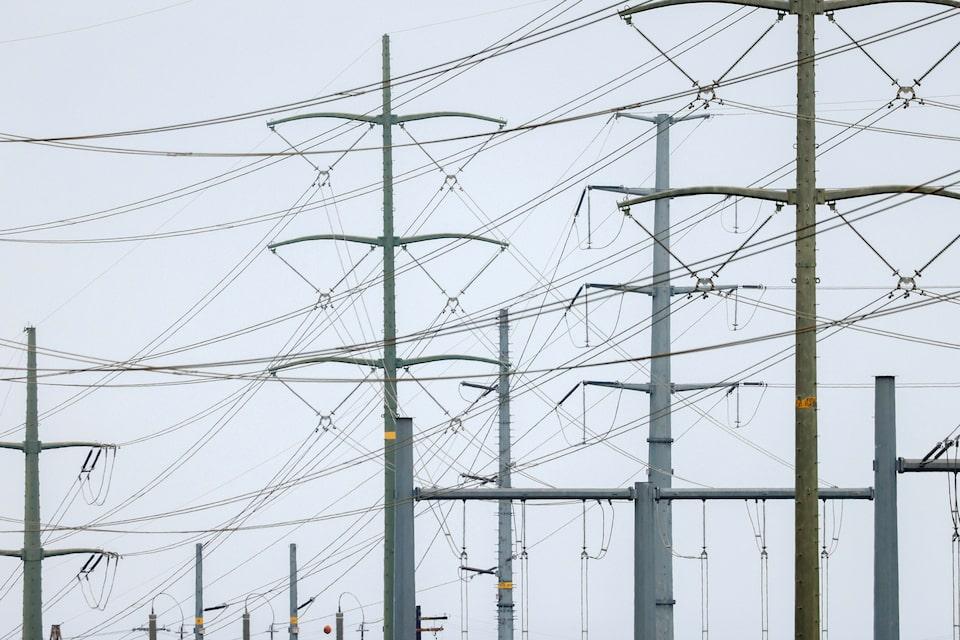
NEW YORK, Dec 17 (Reuters) - About half of the United States is at increased risk of power supply shortfalls in the next decade that could lead to outages and electricity conservation measures, the North American Electric Reliability Corporation said on Tuesday. As U.S. power consumption rises from AI data centers and the electrification of buildings and transportation, efforts to add electricity generation have fallen short, creating an intensifying supply-demand imbalance, NERC said in its annual Long-Term Reliability Assessment. "We are seeing demand growth like we haven't seen in decades," said John Moura, director of NERC's Reliability Assessment and Performance Analysis. "Our infrastructure is not being built fast enough to keep up with the rising demand." The Midcontinent Independent System Operator, which operates the electrical grid in 15 states, was at high risk of shortfalls even at normal peak demand periods, NERC said. Other grid operators at elevated risk, in which shortfalls may happen during extreme heat or cold, include PJM Interconnection, ISO New England, Texas and California operators. Parts of the northwest, northeast, southeast and midwest were better positioned to keep the lights on over the long term, NERC said. Accelerated electricity demand contributed to the high-risk and elevated-risk areas, along with planned fossil-fired power plant retirements, which may exit service before new supply comes online. NERC found that there are 78 gigawatts of confirmed generator retirements, and another 37 gigawatts with announced plans for retirement, through 2034. One gigawatt of capacity can power as many as 1 million U.S. homes. NERC is a North American nonprofit regulator that develops industry standards, assessments and forecasts focusing on the reliability and security of the electric grid. Sign up here. https://www.reuters.com/business/energy/half-us-high-risk-power-shortfall-next-decade-regulator-says-2024-12-17/
2024-12-17 19:25
Project would revolutionize global energy, but is a long-shot Technology would replicate reactions that power the stars Virginia facility aims to produce electricity early next decade WASHINGTON, Dec 17 (Reuters) - Commonwealth Fusion Systems, a private company spun off from the Massachusetts Institute of Technology, plans what it calls the world's first grid-scale fusion power plant in Virginia, to generate power by the early 2030s, the company said on Tuesday. The project, if successful, could revolutionize the global energy industry by tapping into a virtually limitless power source, similar to that which fuels the stars. But it is a long-shot. CFS lacks local and federal permits, investors to fund most of the plant's construction, and the answer to fusion's top technological question: how to get more energy out of a fusion reaction than what goes into it in the first place. Still, CFS, the largest private-sector fusion company, which has raised $2 billion since 2018 mainly for demonstration projects, is confident more money will flow for the plant. "The fact that there's a broad investor syndicate, that's a good thing," Bob Mumgaard, the company's CEO, told Reuters ahead of the announcement. CFS investors include Italian energy company ENI (ENI.MI) , opens new tab, Temasek, a sovereign wealth fund from Singapore, and Norway's Equinor (EQNR.OL) , opens new tab. For decades, scientists in the U.S., China, Europe, Russia and Japan have hoped that fusion, the reaction that produces the light and heat from the sun, can be replicated and sustained on Earth. To create fusion reactions, physicists use lasers or magnets to jam two light atoms into one, releasing large amounts of energy. When harnessed, the reactions could be used in power stations to generate emissions-free electricity, helping to fight climate change. As power demand rises due to growth in artificial intelligence, electric vehicles, and cryptocurrencies, companies are raising billions of dollars in hopes of commercializing the technology. Unlike today's nuclear reactors, powered by fission, which splits atoms, fusion does not generate large amounts of long-lasting radioactive waste. But there are other challenges, such as ensuring materials withstand constant bombardments of high-energy neutrons and some of the hottest temperatures ever created on Earth, and how to transfer that heat to a turbine to generate electricity. Getting reactions to occur almost continuously instead of once in a while is yet another challenge. A fusion breakthrough came two years ago when scientists at a U.S. lab in California briefly achieved "fusion ignition" with lasers, though the energy output was tiny compared to the energy firing the lasers. NO GUARANTEE CFS said it will start seeking local, state and federal permits next year. That is well before it expects to produce in 2026 its first plasma, or a superheated, charged state of matter that allows fusion reactions, at SPARC, its demonstration magnet-driven project in Massachusetts. It hopes to reach net energy shortly after. "There is of course no guarantee in life that all will go according to plan, but it's pretty sure if you don't prepare, it won't," Mumgaard said about the plan to build in Virginia before ironing out the science. Dominion Energy (D.N) , opens new tab will provide non-financial help, including development and technical expertise and leasing rights for the proposed site in Chesterfield County. Edward Baine, president of Dominion Energy Virginia, said CFS is "advancing the exciting energy potential of fusion." CFS expects ARC, the plant planned for Virginia, will have capacity to generate 400 megawatts of electricity — enough to power industrial sites or about 150,000 homes. Last year, the five-member U.S. Nuclear Regulatory Commission voted unanimously to separate fusion regulation from fission regulation, a move that developers of the new technology said would allow them to innovate. Last week, two anonymous NRC staffers who helped develop the rule, challenged the different licensing approach in a public document saying such plants could use large amounts of water for cooling and leak tritium, a hard-to-contain radioactive isotope. Mumgaard said CFS is learning how to deal with tritium at its Massachusetts facility and that the staffers' criticisms were "just part of the normal process of staff working through" fusion issues. Sign up here. https://www.reuters.com/business/energy/commonwealth-plans-worlds-first-grid-scale-fusion-power-plant-virginia-2024-12-17/

2024-12-17 17:27
Dec 17 (Reuters) - Retail investors poured nearly $11 million into MicroStrategy's (MSTR.O) , opens new tab shares on Monday, almost three times their average daily inflows this year, after the biggest corporate holder of bitcoin secured a spot in the Nasdaq-100 index. The data, compiled by Vanda Research on Tuesday, highlights the bitcoin bull's growing popularity among individual investors after its stock notched an eye-popping return of nearly 550%, outpacing Wall Street favorite Nvidia's (NVDA.O) , opens new tab roughly 160% surge so far in 2024. Promoted as a financial tool free of government intermediaries, bitcoin often earns its corporate champions a devoted following. Michael Saylor, the co-founder and executive chairman of MicroStrategy, is known for posting his bullish views on crypto to millions of his followers on X. The company has also benefited from a massive rally in bitcoin, which crossed the $100,000 milestone for the first time earlier this month, thanks to the pro-crypto stance of U.S. President-elect Donald Trump. "Most people wouldn't have a clue what MicroStrategy does as a day-to-day business, yet it has become the stock market's poster child for playing the bitcoin price," said Dan Coatsworth, investment analyst at AJ Bell. While the company is primarily a bitcoin purchaser, it also sells business analytics software. Revenue from its software business fell 10% in the third quarter , opens new tab. Short interest in the stock has retreated sharply — to 12.98% of the free float as of Dec. 16 compared with 20.7% at the start of 2024, according to data from analytics firm Ortex. Short sellers, which profit from betting against an asset, often close out positions to limit losses when their trades turn unfavorable. The activity can boost prices further. The average daily retail inflow in MicroStrategy was $3.75 million so far this year, according to data from Vanda, which excludes trading activity via private bankers or savings plans like 401(k). Sign up here. https://www.reuters.com/technology/microstrategys-nasdaq-100-entry-attracts-nearly-11-million-retail-inflows-2024-12-17/

2024-12-17 17:21
Retail sales increase 0.7% in November, above market expectations for 0.5% gain Auto dealerships, online retailers boost sales Core retail sales rise 0.4%; October core sales unrevised Manufacturing output gains 0.2%; drag from Boeing strike lingers WASHINGTON, Dec 17 (Reuters) - U.S. retail sales increased more than expected in November as households stepped up purchases of motor vehicles and online merchandise, consistent with strong underlying momentum in the economy as the year winds down. The report from the Commerce Department on Tuesday had no impact on expectations that the Federal Reserve would cut interest rates on Wednesday for the third time since the U.S. central bank initiated its policy easing cycle in September. Fed officials started a two-day policy meeting on Tuesday. Signs of strong domestic demand added to warmer inflation readings in recent months in suggesting that the Fed could pause rate cuts in January. Policies planned by President-elect Donald Trump's incoming administration, including tariffs on imports and mass deportations of undocumented immigrants, are also seen complicating matters for the central bank. "The market is still discounting a 25-basis-points rate cut tomorrow, but if consumers are still buying interest-sensitive goods like autos, a rational markets observer would have to wonder why would a central bank add fuel to the fire with a president-elect coming in at the end of January with one of the most pro-growth agendas of any president in history," said Christopher Rupkey, chief economist at FWDBONDS. Retail sales jumped 0.7% last month after an upwardly revised 0.5% gain in October, the Commerce Department's Census Bureau said. Economists polled by Reuters had forecast retail sales, which are mostly goods and are not adjusted for inflation, advancing 0.5%. Estimates ranged from a 0.1% dip to a 1.0% surge. Retail sales increased 3.8% year-on-year in November. Labor market resilience, characterized by historically low layoffs and strong wage growth, is underpinning consumer spending. Strong household balance sheets, reflecting record stock market prices and high home prices, are also driving spending. Household savings remain supportive. Economists expect policymakers will signal fewer rate cuts in 2025 when they update their summary of economic projections on Wednesday. The Fed's benchmark overnight interest rate is currently in the 4.50%-4.75% range, having been hiked by 5.25 percentage points between March 2022 and July 2023. "Unless the labor market materially weakens, investors should expect the Fed to ease rates next year but not as much as originally hoped," said Jeffrey Roach, chief economist at LPL Financial. Stocks on Wall Street traded lower. The dollar was steady against a basket of currencies. U.S. Treasury yields ticked up. TARIFFS FEARED The solid increase in retail sales came despite a late Thanksgiving holiday that pushed Cyber Monday into December, and was consistent with a strong start to the holiday shopping season. Sales at auto dealerships jumped 2.6%, likely boosted by residents replacing motor vehicles damaged by Hurricanes Helene and Milton. Online retail sales vaulted 1.8%, probably reflecting early holiday promotions. Receipts at sporting goods, hobby, musical instrument and book stores increased 0.9%. Building material and garden equipment store sales rose 0.4%, likely as residents rebuilt in areas devastated by Helene and Milton. There were also decent gains in sales at electronics and appliance stores as well as furniture outlets. But there were pockets of weakness and hints of belt tightening among some consumers, especially low-income households. Though layoffs remain low, hiring has cooled down. Consumer debt loads are expanding. Receipts at food services and drinking places, the only services component in the report, fell 0.4% after increasing 0.9% in October. Economists view dining out as a key indicator of household finances. Sales at clothing stores decreased 0.2%. Grocery store sales also declined 0.2%. Sales at miscellaneous retailers, which include florists and gift shops, dropped 3.5%, extending the prior month's decline. Nonetheless, consumers generally remain in good shape. Retail sales excluding automobiles, gasoline, building materials and food services rose 0.4% last month after a 0.1% dip in October. These so-called core retail sales correspond most closely with the consumer spending component of gross domestic product. They rose 0.3% after adjusting for inflation. Growth in core retail sales averaged a 6.5% annualized rate in the last three months. Economists estimated that consumer spending was running at around a 3.0% pace so far in the fourth quarter. Consumer spending grew at a 3.5% rate in the third quarter, accounting for most of the economy's 2.8% pace of expansion during that period. The Atlanta Fed is forecasting GDP increasing at a 3.1% pace in the fourth quarter. "We expect households to keep spending into the new year, but for the pace of consumption to slow as the year progresses and tariff-related price pressure bites," said Shannon Grein, an economist at Wells Fargo. "While the broad household sector is still in a decent financial position today, data suggest consumers are growing more vulnerable amid slowing real income growth and still-high financing costs." While consumers continue to carry the economy on their shoulders, manufacturing remains downbeat in part because of the lingering effects of the Fed's policy tightening and crippling strike by factory workers at Boeing (BA.N) , opens new tab. Factory output increased 0.2% in November after a downwardly revised 0.7% decline in October, the Fed said. Economists had forecast production rebounding 0.5% after a previously reported 0.5% decrease. Though the Boeing strike ended in early November, production of aerospace and miscellaneous transportation equipment fell 2.6%. That was attributed to declines in the manufacturing of aircraft parts, and followed a 6.7% tumble in October. It partially offset a 3.5% jump in motor vehicle and parts output. Tariffs loom over the sector next year. "The threat of tariffs on imported raw materials and intermediate goods likely will stimulate manufacturing output briefly, as firms seek to increase inventory and control costs," said Samuel Tombs, chief U.S. economist at Pantheon Macroeconomics. "Nonetheless ... we think that heightened uncertainty over tariff and immigration policy will dissuade manufacturers from investing in additional capacity until the policy picture is clearer." Sign up here. https://www.reuters.com/markets/us/us-retail-sales-beat-expectations-november-2024-12-17/

2024-12-17 17:19
Canadian dollar weakens 0.6% against the greenback Touches its weakest level since March 2020 Inflation eases to 1.9% in November Canada-US 10-year yield spread widens to 124 basis points TORONTO, Dec 17 (Reuters) - The Canadian dollar weakened to nearly a five-year low against its U.S. counterpart on Tuesday, hurt by domestic political unrest as well as a wider gap between Canadian and U.S. bond yields after data showed a surprise easing of Canadian inflation. The loonie was trading 0.6% lower at 1.4323 per U.S. dollar, or 69.82 U.S. cents, its weakest level since March 2020. "The driver today seems to be the ongoing rally in Canadian yields on a relative basis," said Benjamin Reitzes, Canadian rates and macro strategist at BMO Capital Markets. "Sentiment is still pretty negative on the Canadian economy and the macro backdrop. Add in the political dysfunction, and that does not look kindly on the Canadian dollar at this point." The abrupt resignation of Canada's finance minister leaves the government adrift less than a month before the inauguration of a second Trump administration that could impose crippling sanctions on Canadian exports. "We think this level of political turbulence will raise uncertainty levels for Canadian consumers and businesses, adding to the headwinds already facing productivity-enhancing investment," Karl Schamotta, chief market strategist at Corpay, said in a note. Canada's annual inflation rate declined to 1.9% in November from 2% in October. Measures of underlying inflation closely watched by the Bank of Canada were higher, but money markets continued to lean toward another interest rate cut by the central bank in January. The Canadian 10-year yield eased 4.2 basis points to 3.149%, moving 2.8 basis points further below its U.S. equivalent to a gap of 124 basis points. That's the widest spread in LSEG data going back to 1994. The price of oil, one of Canada's major exports, fell 1.6% to $69.57 a barrel on Chinese demand concerns and ahead of a Federal Reserve interest rate decision on Wednesday. Sign up here. https://www.reuters.com/markets/currencies/canadian-dollar-hits-nearly-five-year-low-political-turbulence-2024-12-17/

2024-12-17 15:37
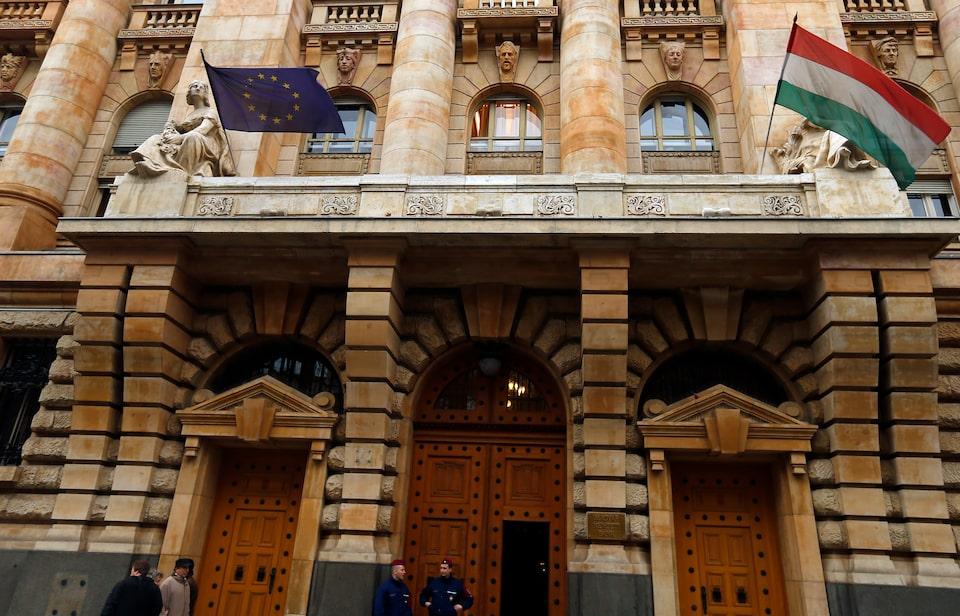
Base rate unchanged at 6.5%, as widely expected Forint falls, tax hikes lift 2025 inflation path One policy maker again proposes lowering base rate Czech central bank could also halt rate easing on Thursday Central Europe's rate cut rally stalling after steep cuts BUDAPEST, Dec 17 (Reuters) - Hungary's central bank left its base rate steady at the European Union's joint highest level of 6.5% on Tuesday, as widely expected, after falls in the forint since its latest rate cut and tax hikes have sharply raised next year's inflation path. S&P Global said on Thursday that central Europe's monetary easing campaign had entered a riskier stage, with a higher likelihood of policy missteps due to global economic uncertainty and exchange rate volatility. The Czech National Bank is also widely expected to leave its main rate unchanged on Thursday, which would mark the first time since Hungary started cutting rates in May 2023 that all four of the region's central banks have kept rates on hold in the same month. The National Bank of Hungary (NBH) has cut interest rates by a combined 11.5 percentage points, aided by a retreat in inflation from the EU's highest levels, but has now held borrowing costs steady for a third successive meeting. The forint, which sank to record lows versus the euro in late-2022, has fallen some 4% since the bank's latest rate cut on Sept. 24 and is down nearly 7% versus the euro this year, underperforming central European currencies. At 1505 GMT, it traded at 409.6 per euro, weaker than levels around 409.1 before the rate announcement. The bank said the forint's falls and tax hikes to rein in Hungary's chronic budget deficit have lifted next year's inflation path by about 50 bps to 3.3% to 4.1% and delayed the achievement of its 3% inflation target to 2026. Asked why the bank avoided rate tightening despite falls in the forint and the higher inflation outlook, Deputy Governor Barnabas Virag said the NBH tightened monetary conditions by shelving the one or two rate cuts it had previously flagged. "When we discussed the monetary policy outlook in September, expectations were for the central bank to deliver another rate cut by the end of 2024 and another one in the first quarter of 2025," Virag said. "Compared to that, the central bank has definitely tightened, because we know for a fact that we have not delivered another rate cut this year," he said, adding that the 6.5% base rate level was "appropriate" based on the current outlook. Virag said there were upside risks to inflation and said the key question for next year, when a new governor takes over, would be whether Hungary is able to keep inflation in a lower range on a sustained basis. Even with the bank raising its inflation forecast for next year, one policy maker again proposed a 25 basis point rate cut on Tuesday in a sign of a rift within the rate-setting Monetary Council, which had previously handed down unanimous decisions. The latest Reuters poll forecasts project just 100 bps worth of additional rate easing in Hungary and Poland by the fourth quarter of 2025 and 75 bps in the Czech Republic and Romania. After rate cuts worth hundreds of basis points, risks from wage growth, sticky services inflation, high budget deficits and currency swings amid fears of global trade wars are complicating the policy outlook in central Europe. Sign up here. https://www.reuters.com/business/finance/hungary-central-bank-leaves-base-rate-steady-third-straight-month-2024-12-17/