2024-12-17 11:16
A look at the day ahead in U.S. and global markets from Mike Dolan Even with another Federal Reserve interest rate cut this week baked in to market pricing, U.S. Treasury bonds appear anxious again about the year ahead - with political upheavals in Germany and Canada clouding the overseas picture. As the Fed meets for the last time this year, there's little doubt in futures markets that it will cut another quarter point off its policy rate. But with the sort of roaring growth in the dominant U.S. services sector seen in this week's December surveys, record high stock markets and likely tax cuts ahead, barely two more cuts are expected next year and Fed policymakers are expected to lift their estimate of long-run neutral rates above 3%. U.S. November retail and industrial updates should add grist to the Fed mill on the first of its two-day meeting on Tuesday. The combination of the growth, rates and fiscal picture going into 2025 has seen 10-year Treasury yields complete a round trip 30 basis points in a month - recapturing 4.4% this week to its highest since Nov. 21 and up 30 basis points from the lows of Dec. 6. The 30-year "long bond" yield has done likewise, a poor backdrop to the 20-year debt sale later on Tuesday. Worryingly, the New York Fed's estimate of the so-called term premium demanded by investors for holding long-term Treasury paper is rearing up again too, with the 10-year gauge back at 28 bps for the first time in more than a month - suggesting fiscal worries as much as stubborn Fed fears. Even though it spurred Bitcoin to new highs of $107,821 on Monday, jitters about sound fiscal management won't have been eased much by President-elect Donald Trump reiterating bizarre plans to create a bitcoin strategic reserve similar to its strategic oil reserve to help pay off the national debt. Overseas political angst also created some disquiet about the fiscal picture in the wider G7. The Canadian dollar and Canadian government debt yields rose as the abrupt resignation of Canada's finance minister Chrystia Freeland leaves the government adrift less a month before Trump takes office with promised tariff hikes. Potentially undermining Prime Minister Justin Trudeau's government ahead of next October's elections, Freeland quit on Monday after Trudeau offered her a lesser position. She said his wish to increase spending could endanger Canada's ability to withstand the damage done by Trump's tariffs. In Europe, Germany looks set to head to the polls in February after Chancellor Olaf Scholz lost a confidence vote on Monday - a move he designed to trigger the poll after the collapse last month of his ruling coalition government. With the latest IFO German business surveys showing another worrying drop in sentiment there this month, the euro and German bund yields slipped. France, meantime, remains in something of a political hiatus despite the appointment of veteran centrist Francois Bayrou as France's new prime minister, with ratings firm Moody's joining other agencies in cutting France's rating by one notch late last week over the state of government finances. The dollar index (.DXY) , opens new tab was higher on Tuesday generally. Dollar/yen pulled back a touch from Monday's three-week high, but dollar/yuan continues to probe higher. Economists polled by Reuters now see no Bank of Japan interest rate rise at its meeting this week - a big shift in opinion in just a few weeks. The yuan remains under pressure, however, after another spate of week economic numbers - and expectations of aggressive policy easing that may follow. China's capital markets outflow reached a record high of $45.7 billion in November, according to official data tracking cross-border payments, as the prospect of a Trump return to the White House jarred. Some signs of potential detente between the two countries were evident this week, however. Initially disappointed by the lack of detail in the latest Chinese government policy meeting last week, Chinese stocks (.CSI300) , opens new tab then bounced back on Tuesday after Reuters reported the country would retain its 5% economic growth target for next year with a historically high budget deficit of 4% of GDP. Elsewhere, sterling was higher after sparky UK wage growth data put paid to any remote thoughts the Bank of England might cut interest rates this week - and suggested a relatively hawkish stance may persist there. After the latest highs, Wall Street stock futures were marginally lower ahead of the bell. Key developments that should provide more direction to U.S. markets later on Tuesday: * US November retail sales, industrial production, December NAHB housing index, December New York Federal Reserve service sector survey, October business inventories; Canada November CPI inflation * Federal Reserve's Federal Open Market Committee begins two-day policy meeting, decision Wednesday * U.S. Treasury sells $13 billion of 20-year bonds Sign up here. https://www.reuters.com/markets/us/global-markets-view-usa-2024-12-17/
2024-12-17 10:59
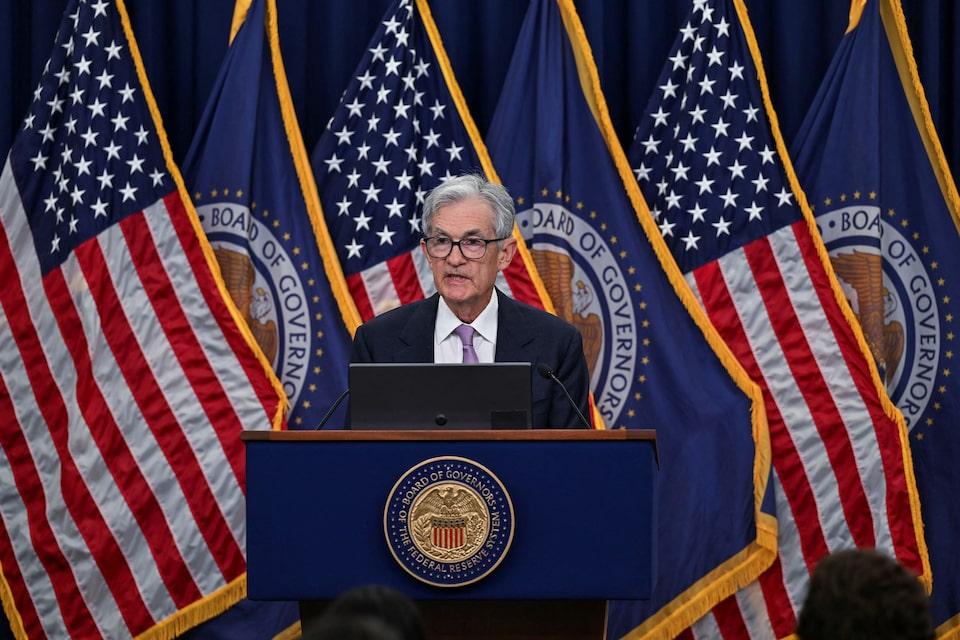
Fed preparing markets for slower pace of rate cuts Investors stick to shorter end of curve Trump tariffs, tax cuts expected to reaccelerate inflation Bond investors not aggressively extending duration NEW YORK, Dec 16 (Reuters) - Bond investors, expecting the Federal Reserve to cut interest rates by a quarter of a percentage point on Wednesday, are bracing for the central bank to scale back its easing in 2025 in anticipation of higher inflation under the Trump administration. Market players are staying out of longer-dated Treasuries with U.S. inflation already looking stickier, preferring to hold notes on the front end to the middle of the curve, anywhere from two-year to five-year notes. Fears of higher inflation typically prompt a selloff on the long end, pushing those yields higher as investors demand a premium to compensate for the risk of holding them. The Fed is widely expected to lower its benchmark overnight rate by 25 basis points to the 4.25%-4.50% target range at the end of a two-day policy meeting that starts on Tuesday. But what it does after this week's meeting is an open question. At least one bank - BNP Paribas - sees the Fed holding rates steady all of next year and resuming its rate cuts again in mid-2026. Others see two or three quarter-percentage-point reductions in borrowing costs. "A hawkish cut is consistent with both what the data will look like, but also potential policy changes from the new administration," said George Bory, chief investment strategist for fixed income at Allspring Global Investments. "The Fed is trying to prepare the market for a deceleration in the pace of rate cuts and ... increase the optionality to be able to follow the data and be prepared to respond to policy changes." Recent data depicted a resilient U.S. economy: a labor market that continues to create jobs and inflation that in November remained too hot for comfort. U.S. core consumer prices rose 0.3% for a fourth consecutive month in November, suggesting progress towards the Fed's 2% inflation goal has stalled. Investors will also focus on Fed policymakers' quarterly economic projections, including rate forecasts, also known as the "dot plot," which reflects how much easing is expected. The "dots" from the September meeting, when the Fed kicked off its easing cycle with a 50-basis-point cut, showed a policy rate of 3.4% by the end of 2025. The Fed hiked rates by 5.25 percentage points between March 2022 and July 2023, pushing the policy rate to the 5.25%-5.50% range, to fight an upsurge in inflation. "The Fed will be less dovish in the summary of economic projections than they were during September, which is appropriate given the commentary that (Fed Chair Jerome) Powell made that the economy is stronger than he thought when they cut by 50 basis points," said Greg Wilensky, head of U.S. fixed income at Janus Henderson Investors, referring to the central bank's rate cut in September. "I believe they will raise the 2025 dots by about 25 basis points from where it was," said Wilensky, who noted that his bond portfolios are currently overweight maturities below 10 years and underweight those 10 years and beyond. NO-GO ON THE LONG END Bond investors all year had been lengthening duration, or buying longer-dated assets, as they prepared for the Fed's easing and possible recession. As rates fall, bonds with higher yields become more attractive, causing their prices to rise. Maturities of five to 10 years, for instance, are sensitive enough to capture price gains when rates drop, but they also carry less interest rate risk than longer-term bonds. More recently, however, some investors have reduced duration, focusing on shorter-dated Treasuries instead, or stayed neutral. "No one's really looking to aggressively extend duration right now," said Jay Barry, head of global rates strategy at J.P. Morgan. "That's a story about a more shallow easing cycle." Going into this week's Fed meeting, asset managers cut net long positions on longer-dated assets such as Treasury bond futures, while leveraged funds increased net short positions on this maturity, Commodity Futures Trading Commission data showed. Investors overall are staying away from the very long end of the curve, which is dependent on Treasury supply and longer-term inflation expectations, Allspring's Bory said. Market participants expect a reacceleration of inflation with President-elect Donald Trump's incoming administration and its plan to cut taxes and impose tariffs on a range of imported products. These measures are likely to widen the fiscal deficit, pressure the long end of the curve, and elevate their yields. "Tariffs are a potential inflation risk as they cause import prices to rise. They could end up as a one-time price shock or become an ongoing source of inflation," said Kathy Jones, chief fixed income strategist at Schwab. BNP Paribas expects year-on-year U.S. CPI of 2.9% by the end of next year and 3.9% in 2026 due in part to tariffs. With higher inflation, the bank expects the Fed to remain on hold in 2025. The Fed has already shown a "reticence to ease," said James Egelhof, BNP Paribas' chief U.S. economist, given the economy's resilience and growing concern that monetary policy may already be close to neutral. "The Fed will not be able to simply look through a tariff-driven temporary pickup in inflation," he said. Sign up here. https://www.reuters.com/markets/rates-bonds/us-bond-investors-brace-hawkish-cut-spurn-long-term-bonds-2024-12-16/
2024-12-17 10:34
13 banks face extra leverage ratio charge ECB says sector generally in good shape Supervisors to focus on geopolitical risk FRANKFURT, Dec 17 (Reuters) - The European Central Bank imposed additional capital charges on 13 euro zone banks this year, judging that they might be taking on more risk than they can absorb. This "add-on" to the banks' leverage ratio requirement, which measures a bank's core capital as a percentage of its total assets, was applied to more than twice as many banks as last year and was worth between 10 and 40 basis points. It was the single biggest change in the ECB's annual evaluation of the 113 banks on its watch, which it generally found in good shape. "The asset quality of European banks is robust, they have overall solid capital positions, good levels of profitability, and are a reliable source of funding and financial services for European households and firms," the ECB's top supervisor Claudia Buch said. Still, the ECB slapped further capital add-ons on 18 banks that it found not to have made sufficient provisions for unpaid loans, down from 20 last year. Nine banks faced additional requirements for their exposure to highly indebted borrowers, or "leverage finance" in market speak. The ECB did not mention any lender as is its policy. Next year, the ECB will focus its supervisory work geopolitical risks, including financial sanctions and cyberattacks, and a more subdued economy. "Adverse geopolitical events are often not priced in by financial markets, which can lead to an abrupt repricing of risks if such events materialise," Buch said. "In terms of the real economy, higher costs for firms and disruptions to global trade could increase credit risk." Sign up here. https://www.reuters.com/business/finance/ecb-imposes-extra-capital-charge-13-banks-over-leverage-risk-2024-12-17/

2024-12-17 10:30
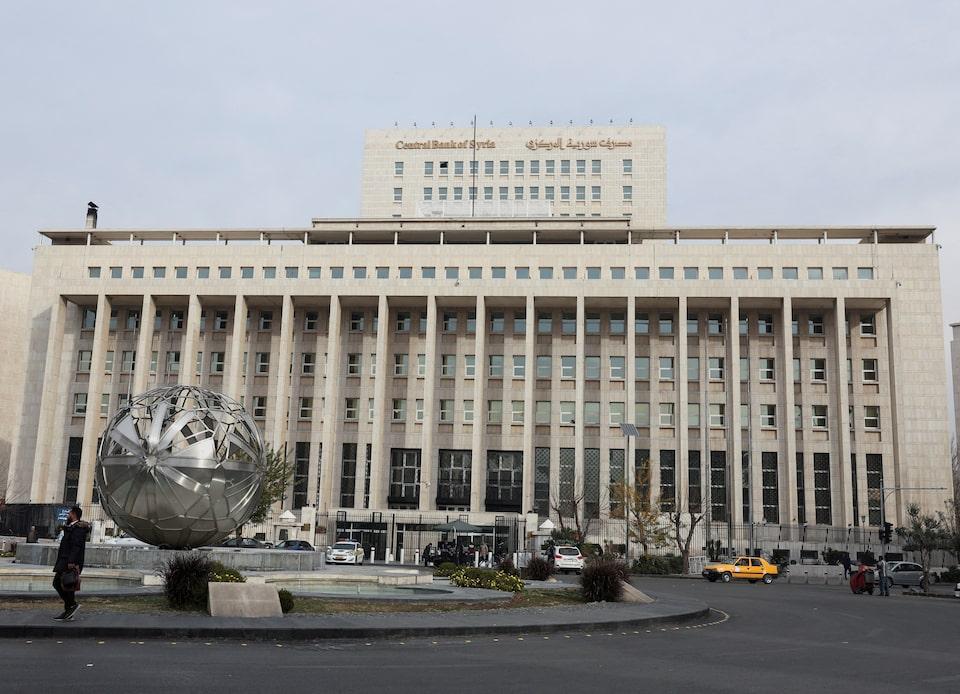
DUBAI, Dec 17 (Reuters) - Syrian caretaker Prime Minister Mohammad al-Bashir told Al Jazeera TV on Tuesday that Syria has very low foreign currency reserves. Current and former Syrian officials have told Reuters that the dollar reserves have been nearly depleted because Bashar al-Assad's government increasingly used them to fund food, fuel and its war effort. The central bank's foreign exchange reserves amount to just around $200 million in cash, one of the sources told Reuters, while another said the U.S. dollar reserves were "in the hundreds of millions". Sign up here. https://www.reuters.com/markets/currencies/syrias-caretaker-pm-bashir-syria-has-very-low-foreign-currency-reserves-2024-12-17/
2024-12-17 10:30
SINGAPORE, Dec 17 (Reuters) - Bangladesh's electricity imports from an Adani Power (ADAN.NS) , opens new tab plant in India fell by nearly a third in November, Indian government data showed, pushing the south Asian nation to boost fuel oil use for power generation. Adani abruptly slashed supply to Bangladesh from its 1,600 megawatt power plant in Jharkhand state last month following a dispute over dues. It had signed a 25-year deal to supply power to Bangladesh in 2017 under ousted Prime Minister Sheikh Hasina. Bangladesh, which is battling a foreign exchange shortage, has been asking Adani to renegotiate its power supply price, the highest among all sources in the country. Adani Power's Godda plant, which is under contract to send all its output to Bangladesh, had accounted for about 9% of the country's power supply in the twelve months preceding Hasina's ouster in August. Data from a regional power committee constituted by the federal power ministry showed the Godda plant exported 450 million kilowatt hours of electricity to Bangladesh in November, 32.8% lower on an annual basis. That was the steepest monthly decline in Bangladesh's imports from the Adani plant. Volumes were at their lowest monthly levels since December 2023, data from India's Eastern Regional Power Committee showed. While overall consumption is tapering heading into winter, a period of seasonally low demand, Bangladesh has turned to fuel oil-fired power plants to address a 5.6% annual uptick in demand and to fill a void created by lower imports from Adani. Fuel oil use for power generation in Bangladesh surged 47.8% in November, up for the third straight month after declining for 21 consecutive months, a Reuters review of data from Bangladesh's power grid operator showed. Natural gas-fired power generation rose more than 10% in November after falling for five consecutive months, while coal-fired power fell for the third straight month, the data showed. Sign up here. https://www.reuters.com/business/energy/bangladeshs-electricity-imports-adani-plant-slide-by-third-november-2024-12-17/
2024-12-17 10:27
SPP, others want Russia gas flows to continue via Ukraine Ukraine wants to stop the flows but will transit other gas European Commission says it has no interest in preserving flows Dec 17 (Reuters) - Slovakia's main gas buyer SPP and groups from Hungary, Austria and Italy warned the European Commission on Tuesday of the risks of an end to natural gas transit via Ukraine, as EU officials kept out of talks aimed at keeping Russian gas flowing. Slovakia, receiving gas from Russia via pipelines in Ukraine, has been in talks to try to avoid Russian gas flows stopping when a transit contract between Kyiv and Moscow expires at the end of the year. Ukraine, locked in a 33-month-old war with Russia, has said repeatedly that it will not extend the gas transit agreement. Prime Minister Denys Shmyhal said on Monday that Ukraine was willing to agree to a deal enabling gas to transit through its territory as long as it was not of Russian origin. "The declaration that we have prepared in SPP is intended to support the continuation of gas transit through the territory of Ukraine and the preservation of its gas infrastructure," SPP Chief Executive Vojtech Ferencz said in a statement. "It is the most advantageous solution not only for gas consumers in Europe, but also for Ukraine itself," Ferencz said. SPP said its declaration was signed by Slovak pipeline operator Eustream, Hungarian groups MVM and MOL (MOLB.BU) , opens new tab, along with industry associations from Italy, Austria and Hungary. The declaration was sent to Commission President Ursula von der Leyen "so that she has first-hand information about the threat to energy and economic security in our region," Ferencz said. A spokesperson said on Tuesday that the Commission had received the groups' declaration but was not in talks to extend the transit contract and had no interest in keeping Russian gas transit via Ukraine. "The Commission does not support any discussions on the contract extension nor other solutions to maintain transit flows and has not been involved in any kind of negotiations on this," the spokesperson said in emailed responses to questions. Slovakia has said that European countries and companies have a combined demand of around 15 billion cubic metres of Russian gas next year via Ukraine. Slovak Economy Minister Denisa Sakova held another round of talks on Tuesday with Russian group Gazprom (GAZP.MM) , opens new tab. With fewer route options, the loss of supplies via Ukraine transit would be a blow to buyers like Slovakia. In SPP's case, the company said the loss of supplies from the east would cost it an additional 150 million euros ($157 million) due to higher transit fees. The cost for the entire Slovak market would reach 220 million euros. Amid renewed concerns over Russian gas supply, the benchmark Dutch front-month gas contract was up over 5% on Tuesday. Deputy Prime Minister of Moldova Oleg Serebrian told Radio Moldova he had discussed with Kyiv officials how Russian gas could transit through Ukraine after the existing agreement expires, but felt that the issue was closed. Moldova has been discussing gas supplies with Russian gas giant Gazprom, particularly to its separatist Transdniestria region, and has suggested Russian gas could be shipped by lines passing through Turkey, Bulgaria and Romania. No agreement has yet been reached. Russian gas is critical for Transdniestria's residents and to supply a thermal plant that provides most of the electricity for government-controlled areas of Moldova. But Serebrian rejected a call from Transdniestria's pro-Russian leaders to make a joint appeal to Moscow on gas supplies. "Just what would a joint declaration (of Moldova and Transdniestria) mean?" he asked. "Would it mean recognition of dual power centres in Moldova? Recognition of their so-called authority? That is the sub-text of such a proposal." ($1 = 0.9537 euros) Sign up here. https://www.reuters.com/business/energy/slovakias-spp-partners-sign-declaration-calling-continued-ukraine-gas-transit-2024-12-17/