2024-12-17 10:11
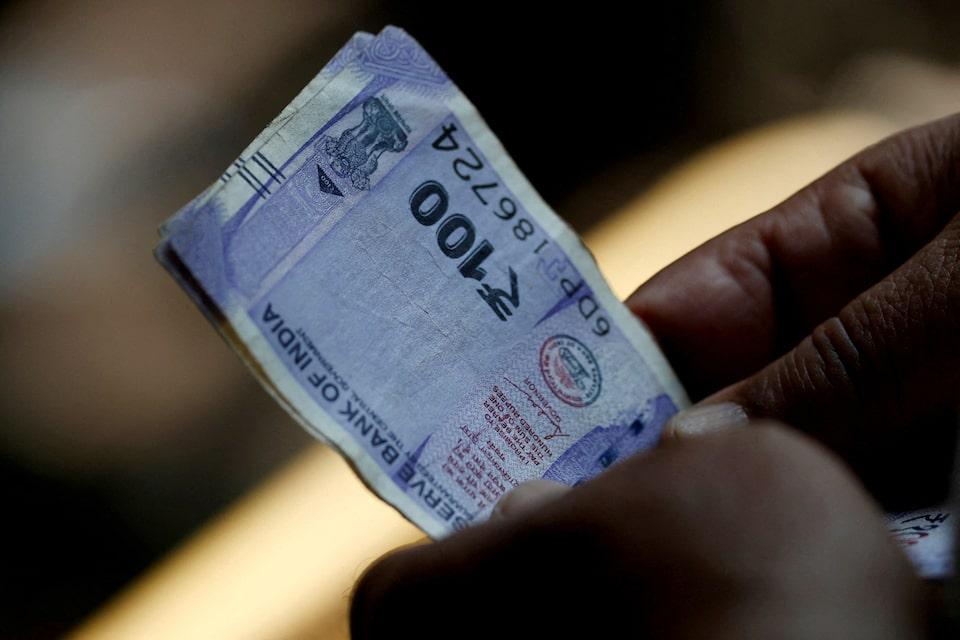
MUMBAI, Dec 17 (Reuters) - The Indian rupee weakened to its lifetime low on Tuesday, hurt by concerns about a widening trade deficit and likely outflows from local equities, although intervention by the central bank capped losses. The rupee hit a low of 84.93 against the U.S. dollar, before closing at 84.8950, down 0.04% on the day. Benchmark Indian equity indexes BSE Sensex (.BSESN) , opens new tab and Nifty 50 (.NSEI) , opens new tab, closed lower by over 1% each, dragged by weakness in financial stocks and Reliance Industries. Investor sentiment was also dampened after data on Monday showed that India's merchandise trade deficit rose to a record high of $37.84 billion, led by a surge in gold imports. Foreign banks were spotted bidding for dollars, likely on behalf of custodial clients, while the Reserve Bank of India likely intervened via state-run banks to keep a lid on the local unit's decline, traders said. The wider trade deficit has "reinforced the upward bias (on USD/INR) and a rise above 85 seems quite likely in the next few sessions," a trader at a private bank said. The dollar index , meanwhile, was up 0.2% at 107 while most other Asian currencies weakened, led by a 0.6% decline in the Thai baht. U.S. bond yields rose in Asia trading with investor focus squarely on the Federal Reserve's policy decision due on Wednesday during U.S. market hours. The central bank is widely expected to cut rates at this meeting, and investors are keeping a close eye on policymakers' future interest rate projections. "The Fed will cut this week by 25bp. But will likely pause at the January meeting. It's not just the inflation data, it's the unknowns coming from the beginning of the Trump administration post the 20th January inauguration," ING Bank said in a note. Sign up here. https://www.reuters.com/markets/currencies/rupee-hits-record-low-widening-trade-deficit-weakness-local-equities-2024-12-17/
2024-12-17 10:10
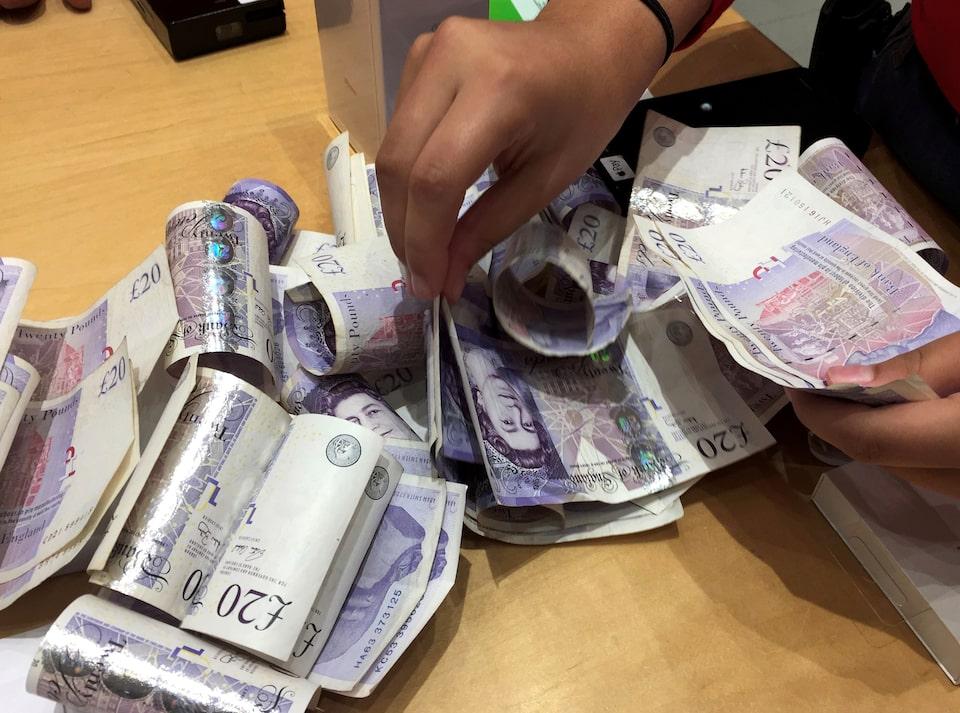
LONDON, Dec 17 (Reuters) - The pound rose on Tuesday, supported by data that showed UK wage growth picked up more than expected in the three months to October, which in turn raises the chances that the Bank of England will not rush to cut rates next year. Average weekly earnings, excluding bonuses, were 5.2% higher in the three months to the end of October than a year earlier, the Office for National Statistics said. A Reuters poll of economists had mostly forecast a rise of 5.0%. Sterling was last up 0.1% at $1.2693, having bounced from an earlier session low of $1.26685. The BoE will announce its decision on monetary policy on Thursday and markets expect rates to remain at 4.75%. Looking further out, money markets show traders expect the BoE to cut rates by around 70 basis points next year, compared with expectations for roughly the same scale of cuts from the U.S. Federal Reserve and around 120 bps in cuts from the European Central Bank. The "higher for longer than elsewhere" theme has been a key driver of sterling strength this year, meaning the pound is the best-performing major currency against the dollar in 2024. Even though it has fallen 0.3% in the year to date, it is still well ahead of the offshore Chinese yuan , the runner up, with a loss of 2.3%. Against the euro , the pound is up around 4.5% in 2024. Benchmark 10-year UK government bond yields have risen by almost a full percentage point this year, compared with a 54-bps rise in 10-year Treasuries and with a 20-bp rise in German 10-year yields . That said, there are cracks appearing in the UK economic picture. Recent data has shown the UK economy suffered a second month of contraction in October, while the employment market is weakening, with employers cutting staffing and job vacancies dropping. "In the longer term, although wage data was stronger than expected, we think that the economic backdrop is weakening, which will lead to a loosening of the UK labour market over the course of 2025," XTB research director Kathleen Brooks said. "Thus, there is a risk that the market is currently underestimating the chance of rate cuts from the BOE next year," she said. Sign up here. https://www.reuters.com/markets/currencies/sterling-gets-lift-hotter-uk-wage-growth-2024-12-17/
2024-12-17 09:34
Price rise dampens gold demand in December Dec imports seen falling to around $5 billion - dealer Nov imports surge to record $14.8 billion MUMBAI, Dec 17 (Reuters) - India's gold imports are poised for a sharp slowdown in December following record purchases in November, in the absence of any major festival and as rebounding prices prompt buyers to delay purchases, trade and government officials said. Lower imports by India, the world's second-biggest consumer of the precious metal, could cap a rally in global prices that hit a record high in October. The drop in imports could also help India narrow its trade deficit and support the ailing rupee . "Last month, imports shot up thanks to strong demand for investment and jewellery," Prithviraj Kothari, president of the India Bullion and Jewellers Association (IBJA), said. "But now, things are cooling off, and imports are slowing down. We might see a drop of over 50% in December." Gold imports more than doubled in November compared to the previous month, reaching a record $14.8 billion, which widened the trade deficit to a record level and pushed the rupee to an all-time low. Many potential buyers had been waiting for gold prices to drop and rushed to make purchases as soon as prices corrected in November, said a Mumbai-based dealer with a private bullion importing bank. Local prices declined to 73,300 rupees ($863) per 10 grams in mid-November after hitting a record high of 79,775 rupees in October. Prices have rebounded in December, which is discouraging buyers and will likely lead to imports falling sharply to around $5 billion, the dealer said. "So far this month, we have received fewer gold consignments for clearing compared to last month," said a customs official, who declined to be named. Weak demand prompted Indian dealers this week to offer a discount of up to $8 an ounce over official domestic prices – inclusive of 6% import and 3% sales levies. Last month, they were charging a premium of up to $16. In November, investment demand was robust as bullion was offering better returns than the stock market, IBJA's Kothari said. India's NSE Nifty 50 share index (.NSEI) , opens new tab fell to 23,263.15 points in November, down 11% from a record high hit on Sept. 27. Gold imports in November were also driven by festive season demand, as jewellers aimed to replenish stocks following the festivals of Dussehra and Diwali, said Amit Modak, chief executive of PN Gadgil & Sons, a jeweller. ($1 = 84.8990 Indian rupees) Sign up here. https://www.reuters.com/markets/commodities/indias-gold-imports-plunge-december-after-record-november-2024-12-17/

2024-12-17 08:02
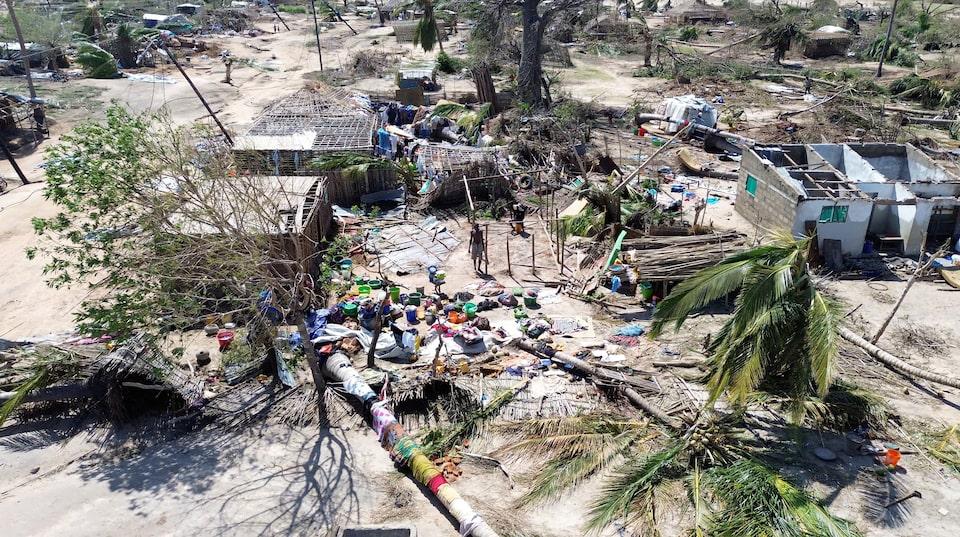
Authorities prioritize food, water, and preventing disease spread Curfew imposed; Macron plans visit to assess damage Cyclone highlights immigration issues and government neglect debate PAMANDZI, Mayotte, Dec 17 (Reuters) - Authorities in Mayotte struggled on Tuesday to stop hunger, disease and lawlessness from spreading in the French overseas territory after the weekend's devastating cyclone, while Mozambique reported dozens of deaths from the storm. Hundreds or even thousands could be dead in Mayotte, which took the strongest hit from Cyclone Chido, French officials have said. The storm laid waste to large parts of the Indian Ocean archipelago, France's poorest overseas territory, before striking the African mainland. Essential goods, medical and technical staff and police were arriving via the air bridge with La Reunion, the territory's only lifeline. With many parts of Mayotte still inaccessible and some victims buried before their deaths could be officially counted, it may take days to discover the full extent of the destruction. So far, 22 deaths and 1,373 injuries have been confirmed in Mayotte, the interior ministry said, adding there were currently no reports of disease outbreaks. "It's impossible to find them all", said Mathieu Gouzou, a sports teacher at the Bouéni M'titi-Labattoir middle school in the town of Dzaouzi when asked about the fate of his pupils. "Many of them live in the shantytown nearby, nobody can go there." French President Emmanuel Macron will visit Mayotte on Thursday, his office said. Opposition politicians in France have criticised what they say is the government's neglect of Mayotte and failure to prepare for natural disasters linked to climate change. Ambdilwahedou Soumaila, the mayor of the capital Mamoudzou, described a grim scene as authorities prioritised the distribution of food and water. "There are people who have unfortunately died where the bodies are starting to decompose that can create a sanitary problem," he told Radio France Internationale. "We don't have electricity. When night falls, there are people who take advantage of that situation." The International Federation of the Red Cross and Red Crescent Societies said the number of victims was likely to be much higher as about a third of the island's population was still unaccounted for because of bad communications. "It's a small island with 300,000 inhabitants, and because the cyclone has disturbed the electricity, the connection of the internet and the phone lines, about 100,000 people are still unaccounted for," IFRC communications manager Nora Peter said. Tens of thousands of people may have died in Mayotte, and doctors are bracing for a surge in disease, a dental surgeon at the islands' only hospital said on Tuesday. "The fact that we don't see that many injured from the cyclone when everything has collapsed makes us think that all these people are still buried and are dead," Naouelle Bouabbas told Reuters in a video call from the islands. SHANTYTOWNS Rescue workers have been searching for survivors amid the debris of shantytowns bowled over by 200 kph (124 mph) winds. "My children are traumatised, my husband hasn't slept in three nights," said Anne, a doctor and mother of four who came back to Mayotte in the afternoon. "I needed to go to La Reunion for a professional training, and then I was trapped there." The situation is made more difficult by the fact that the exact size of Mayotte's population, which rose by an estimated 100,000 over the last 10 years mainly due to undocumented immigration, is unknown. France's interior ministry announced that a curfew would go into effect on Tuesday night from 10 p.m. to 4 a.m. local time. Doctor Claudia Lodesani of Doctors without Borders said it was crucial to restore access to drinking water to avert the outbreak of cholera and other diseases. "An epidemic is not inevitable, but there is a very high risk," she told Reuters, saying that even before the storm access to clear water and health services was difficult in shantytowns, where many immigrants live. "France will repair the hospital quickly, but the situation in the shantytowns is worrying," Lodesani said. Chido was the strongest storm to strike Mayotte in more than 90 years. In Mozambique, it has killed at least 34 people, officials said on Tuesday. Another seven died in Malawi. Drone footage from Mozambique's Cabo Delgado province showed razed thatched-roof houses near the coast and personal belongings scattered under the few palm trees still standing. Sign up here. https://www.reuters.com/world/europe/mayotte-authorities-fear-hunger-disease-race-help-cyclone-survivors-2024-12-17/
2024-12-17 07:16
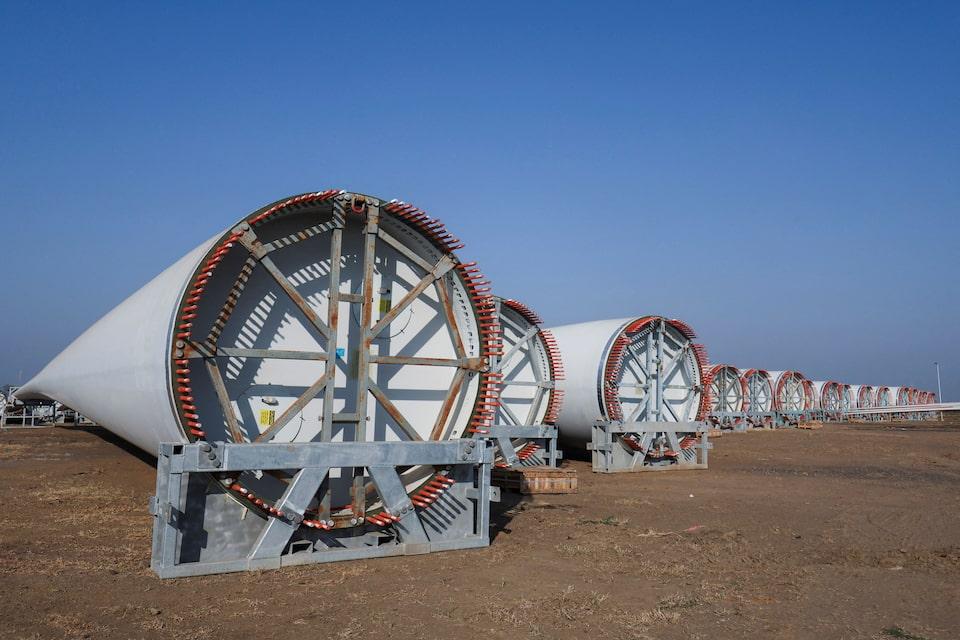
Japan targets 40-50% renewable energy by 2040 Nuclear power to account for 20% of Japan's 2040 energy supply Thermal power to decrease to 30-40% by 2040, focus on LNG TOKYO, Dec 17 (Reuters) - Japan wants renewable energy to account for up to 50% of its electricity mix by fiscal year 2040 with nuclear power taking up another 20%, according to a draft of its revised basic energy policy, as it makes a clean energy push while meeting rising power demand. As the world's second-largest importer of liquefied natural gas and a major consumer of Middle Eastern oil, Japan and its basic energy plans are drawing global attention from oil, gas and coal producers. Thermal power usage, particularly from inefficient coal-fired power plants, is set to decrease to between 30% and 40% of the mix by 2040 from 68.6% in 2023, although the draft energy policy does not specify the breakdown of coal, gas and oil. "It is necessary to utilise LNG-fired power as a realistic means of transition," the draft said, calling for the government and the private sector to secure long-term LNG contracts to hedge against price hikes and supply disruption risks. The industry ministry's policy draft unveiled on Tuesday proposes increasing renewables to between 40% and 50% of power supplies in the 2040 fiscal year, roughly doubling the 22.9% share in the 2023 fiscal year and exceeding the 2030 target of between 36% and 38%. While the previous energy plan's primary focus was on decarbonisation, heightened geopolitical risks, including the Russia-Ukraine war, have shifted greater attention to energy security. Japan's 2040 nuclear power target is in line with the 2030 target of between 20% and 22%, despite the challenges faced by the industry after the 2011 Fukushima disaster. Nuclear power accounted for 8.5% of the country's power supply in 2023. The new energy plan removes the previous target of "reducing reliance on nuclear power as much as possible" and includes plans to build innovative next-generation reactors at nuclear power sites owned by operators who have decided to decommission existing reactors. The 2040 forecasts assume an increase in electricity demand of between 12% and 22% from 2023 levels, particularly from semiconductor factories and data centres. All targets are provisional. The new proposed energy plan is more realistic than the existing targets through 2030, analysts say, indicating that the government wants to attract investments in renewable energy, including storage batteries, and keep LNG as a transition fuel. "The government has finally realised that nuclear power is important because it can provide the country with affordable energy and stable load, and data centres need energy 24/7. Nuclear power and data centres go well together," said Naomi Oshita, a power market associate with Wood Mackenzie's Asia Pacific power and renewables team. Although the existing energy plan to 2030 aims for new fuels such as hydrogen and ammonia to comprise about 1% of the electricity mix, the updated plan omits specific targets for these fuels. A joint meeting of the industry and environment ministries last month unveiled a draft strategy that calls for a 60% cut in greenhouse gas emissions by 2035 and a 73% cut by 2040 as a "linear pathway" to net zero by 2050. A finalised version of the greenhouse emissions strategy will be submitted to the United Nations in February. The final version of the energy plan is expected to be approved by the government early next year. Sign up here. https://www.reuters.com/sustainability/climate-energy/japan-targets-40-50-power-supply-renewable-energy-by-2040-2024-12-17/
2024-12-17 06:55
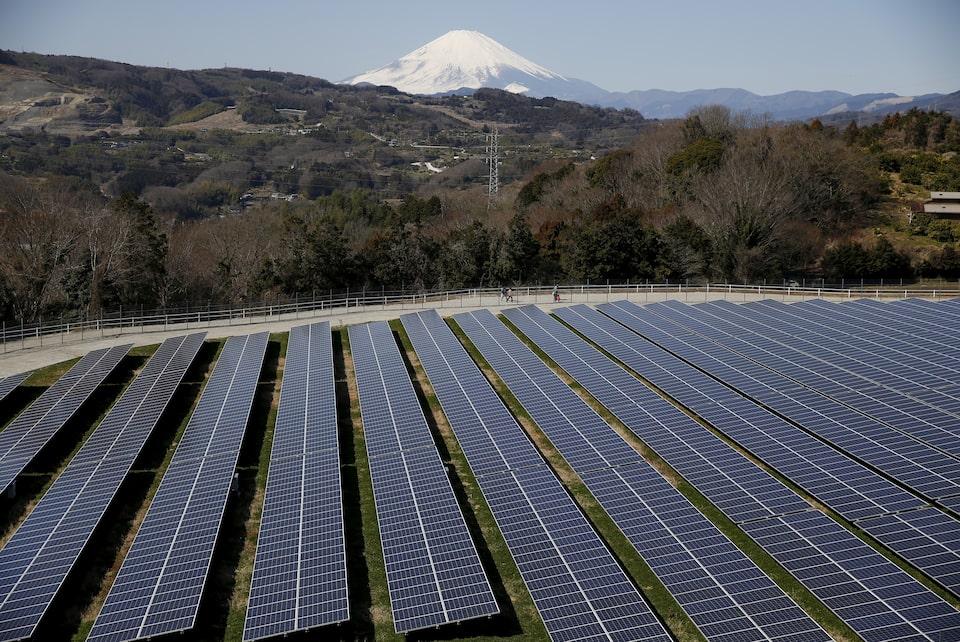
Indian state's cabinet overruled advice that Adani deal was not good value State's finance officials said solar costs likely to keep dropping and state had bargaining power Regulatory approval for Adani procurement deal came very fast - experts Additional costs, taxes to make deal pricier than contract indicates, officials say NEW DELHI/SINGAPORE, Dec 17 (Reuters) - The approach from the Solar Energy Corporation of India (SECI) on Sept. 15, 2021 came out of the blue. The federal agency, tasked with developing the solar sector, wanted to know if the southeastern state of Andhra Pradesh would like to sign India's largest renewables contract. Two years earlier, Andhra Pradesh's energy regulator had said in a 10-year forecast the state had no short-term need for solar power, and should focus on other renewables that could provide 24-hour energy. But just a day after SECI approached the state government, the 26-member state cabinet led by Chief Minister YS Jagan Mohan Reddy gave the deal its preliminary approval, according to cabinet records seen by Reuters. While SECI's Sept. 15 letter did not name the energy supplier, it was publicly known at the time that the federal agency had only contracted with two suppliers, the larger of which was controlled by billionaire Gautam Adani, according to past statements from the two companies. By Nov. 11, the state government had secured the nod from the energy regulator. On Dec. 1, state authorities signed a procurement agreement with SECI for the deal, which could eventually be worth over $490 million annually. As much as 97% of that will go to Adani Green, the renewables unit of the billionaire's Adani Group conglomerate, according to documents related to the agreement, reviewed by Reuters. The news agency spoke to a former state power regulator and an energy legal expert who said the 57 days between SECI's approach to the state government and regulatory approval from the Andhra Pradesh Electricity Regulatory Commission (APERC) for the 7,000 megawatt deal was unusually fast, although timeframes for such deals can vary. The solar deal is now under scrutiny by U.S. prosecutors, who indicted Adani and seven other executives in November for alleged involvement in a bribery and securities fraud scheme involving several Indian states and one territory. U.S. prosecutors allege that $228 million was offered to an unnamed Andhra Pradesh official by the defendants to direct the state's electricity distribution companies to purchase the solar power supplied to SECI by Adani Green. Reuters reviewed 19 state government documents, many of them previously unreported, and interviewed more than two dozen state and federal officials about the deal, as well as independent energy and legal professionals. Most of the people spoke on condition of anonymity due to the sensitivity of the matter. Together they provide a picture of how political leaders overruled advice from finance and energy officials in order to approve the massive Adani deal. Some officials have publicly described the contract as likely to strain the state's coffers, potentially leaving taxpayers on the hook for thousands of megawatts of energy that Andhra Pradesh does not need. Adani Green did not respond to Reuters' questions about the alleged corruption nor the speed of the approval process. Adani Group has previously called the allegations "baseless." SECI told Reuters in a statement it was up to states and their regulators to decide how much power to purchase. It declined to answer other questions. The office of Reddy, who was not named in the U.S. indictment and lost power in an election this year, referred Reuters to a Nov. 28 statement in which he denied being bribed and justified the deal on grounds it provided free power to farmers. Reddy's office declined to answer other questions. A spokesperson for Reddy's party said after this story was published that state energy officials had thoroughly analysed the contract. The official said Andhra Pradesh had signed a good deal because solar prices had not fallen significantly since 2021. APERC, which regulates the state's power sector and was responsible for due diligence on the deal, did not respond to repeated requests for comment on its processes and the U.S. allegations. The current state government also did not respond to requests for comment. DUE DILIGENCE For most of Sept. 15, 2021 then-energy minister Balineni Srinivasa Reddy was unaware of any potential solar deal, he told Reuters. But late that night, he received a call from a person in his office, whom he did not identify, about a proposal that required his signature for discussion in cabinet the next day, said Srinivasa Reddy, who joined a rival party this year. "Never before" had he been so rushed to approve files, he said, and he was not given "details or time to study the matter." Srinivasa Reddy said he signed off after being assured by a senior official at his department, whom he also did not identify, that the contracting party was SECI. He said he had "no idea the supplier was Adani." Srikant Nagulapalli, who declined to comment, was then the top civil servant in Srinivasa Reddy's department. Reuters could not establish if Reddy consulted him or if he provided assurances about the deal. The next day, cabinet approved the deal "in principle," according to minutes from the cabinet meeting, allowing the regulatory process to be fast-tracked. On Oct. 21, the Andhra Pradesh Power Coordination Committee (APPCC) - which had been tasked with studying the deal after the preliminary approval - filed a report recommending the deal. The committee was established by the state government to coordinate between state-owned distribution companies; its members include the state's top energy official and company executives. Seven days later, the Andhra Pradesh cabinet officially committed to procuring 7,000 megawatts from SECI. In doing so, it overrode advice from officials at the finance and energy departments that the contract did not represent good value. On Oct. 28 - the same day as the cabinet meeting that approved the deal but before the greenlight was given - the finance department made a submission to the cabinet stating there was an industry trend of falling solar prices and that future agreements would likely be cheaper, according to cabinet minutes. It said Andhra Pradesh had leverage because the government was the buyer, offering the supplier security that a default would be unlikely. The treasury also questioned the duration of the 25-year contract, especially since supply was scheduled to start only in 2024, according to the minutes. The treasury said it believed costs could continue to fall in the period between agreeing the contract and power being supplied. The energy department endorsed the treasury's advice. The records of the cabinet deliberations do not document any discussion about the finance and energy departments' concerns beyond a statement in the minutes that the cabinet was "duly overruling the finance remark." Andhra Pradesh will pay 2.49 rupees per kilowatt-hour when the solar power comes online, according to the agreement. An Adani Green spokesperson told Reuters that supply would be delayed beyond 2024, citing delays in "grid availability." However, an analysis released by the office of Chief Minister N. Chandrababu Naidu - who ousted Reddy's government in elections this year - found the state would likely have to pay more, because the contract did not account for certain taxes and duties that are typically included in such calculations. A state official familiar with the matter said Andhra Pradesh is likely to pay as much as 23% over the price it agreed in the Adani contract once the taxes and duties are included. Andhra Pradesh is now seeking to suspend the deal due to the indictment of Gautam Adani. A decision could come by year-end, an official told Reuters. If the Adani deal goes ahead, the state treasury will be directly on the hook for solar bills running hundreds of millions of dollars annually, according to Reuters' review of contract documents. Annual payments to Adani once the power supply is fully operational will be roughly equal to state spending on social security and nutrition programs for the previous fiscal year. ($1 = 84.8380 Indian rupees) Sign up here. https://www.reuters.com/world/india/adani-deal-under-bribery-scrutiny-was-approved-against-officials-advice-2024-12-17/