2024-12-17 05:05
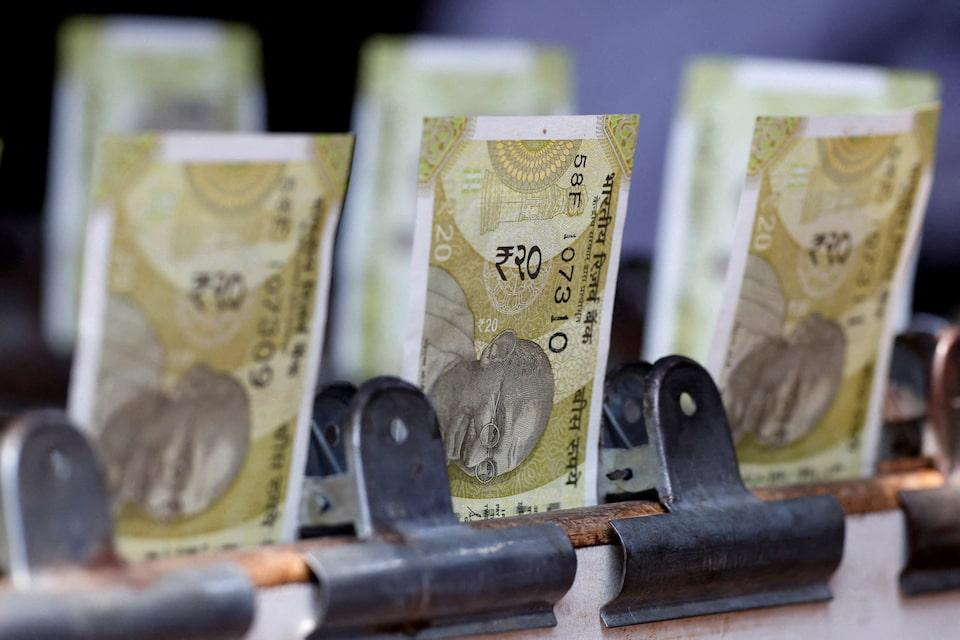
MUMBAI, Dec 17 (Reuters) - The Reserve Bank of India (RBI) likely intervened to support the rupee after the currency slipped to an all-time low on Tuesday amid worries over a sizeable widening of the Asian nation's trade deficit. The rupee , having dropped to a record low of 84.92, was last at 84.9125 to the dollar. The RBI was likely on offer on the dollar/rupee pair via state-run banks at 84.92-84.93 levels, per traders. "It's what they (RBI) do. They come in at a level and then hold it through the rest of the session," a currency trader at a bank said. "Highly unlikely we will move higher (on the dollar/rupee) from here, for today at least." Just before forex markets shut on Monday, data released by India's commerce ministry showed that the country's trade deficit widened to record levels, driven by higher gold imports and weak exports. India's merchandise exports in November fell 4.9% year-on-year to $32.11 billion, while imports surged by more than 27% to $69.95 billion. The RBI's strategy of not wanting to allow the rupee to weaken, via regular intervention, was critically examined in the wake of the data. "The widening trade deficit calls into question the RBI's FX intervention strategy, which has been aimed at capping INR depreciation pressures," Nomura said in a note. As such, allowing the rupee to weaken "somewhat" can be an automatic stabiliser, which can cool imports, it said. The RBI's FX intervention has been substantial over the last few months as equity outflows, slowing economic growth and dollar strength have hurt the rupee. The FX intervention alongside revaluation loss has resulted in India's forex reserves falling by nearly $50 billion in the current quarter. Sign up here. https://www.reuters.com/markets/currencies/india-cenbank-likely-steps-trade-deficit-woes-push-rupee-record-low-2024-12-17/
2024-12-17 04:23
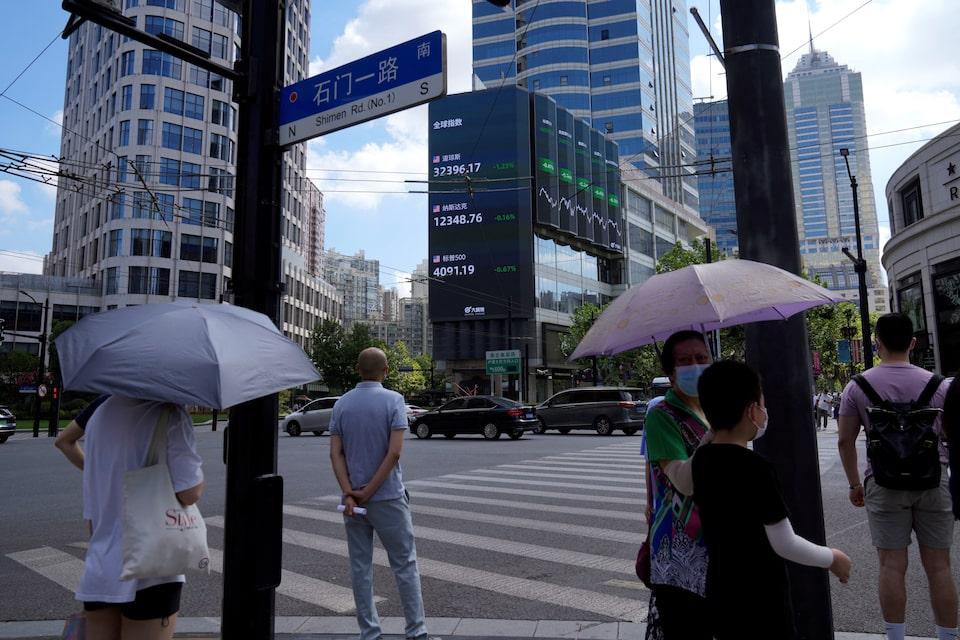
China portfolio investment outflow reaches $45.7 billion in Nov Trump's election win roils global flows; yuan slumps Outflow reflects weak investor confidence despite Beijing's stimulus blitz SHANGHAI, Dec 17 (Reuters) - China's capital markets outflow reached a record high of $45.7 billion in November, according to official data tracking cross-border payments, as Donald Trump's U.S. presidential election win roiled global portfolio flows. Cross-border receipts from portfolio investments were $188.9 billion, while payments totalled $234.6 billion, resulting in the biggest monthly deficit on record, according to data from China's foreign exchange regulator. The data release comes as China's policy-driven stock market rally that started in late September is losing steam, while the yuan has slumped against the dollar in the face of tariff threats from Trump. The massive deficit, which widened from a $25.8 billion outflow in October, also reflects weakening investor confidence, despite a slew of policies announced by Beijing since late September to stimulate an economy mired in a property crisis, weak consumption and persistent deflation. "Whether the recovery momentum can be sustained into Q1 2025 depends on the speed and magnitude of implementation of the stimulus mapped out at the CEWC, as well as the timing of the potential US tariffs," BNP Paribas said in a note to clients. During last week's Central Economic Work Conference (CEWC), China's leadership pledged to increase the budget deficit, issue more debt and loosen monetary policy. The portfolio data, released by the State Administration of Foreign Exchange (SAFE), follows other Chinese capital statistics that showed a similar trend. China's central bank on Monday said that foreign institutions cut holdings in Chinese onshore bonds for the third consecutive month in November. Separately, the Institute of International Finance (IIF), which tracks global portfolio flows, also recorded outflows last month in both China's bond and stock markets. The strengthening of the U.S. dollar in the wake of Trump's victory helped shape portfolio flows in emerging markets including China, the IIF said. Goldman Sachs said that its preferred measure showed notable China foreign exchange outflows of $39 billion in November, a jump from $5 billion in October. "The sizeable FX outflows were mainly from cross-border RMB outflows, likely due to RMB outflows via portfolio investment channel," Goldman said in a note to clients. China's Stock Connect scheme - the key channel for foreign investors to buy mainland shares - is a big contributor to cross-border yuan flows as forex transactions under the programme take place in Hong Kong. China no longer publishes daily foreign investment data under Connect, but the flow is reflected in China's cross-border receipts and payments data. Sign up here. https://www.reuters.com/world/china/china-capital-markets-witness-record-outflows-nov-official-data-shows-2024-12-17/
2024-12-17 03:05
MUMBAI, Dec 17 (Reuters) - The Indian rupee may slip to an all-time low on Tuesday with the currency, already under pressure from slowing growth, choppy equity flows and a dollar rally, will have to contend with an unexpected widening in trade deficit to a record high. The 1-month non-deliverable forward indicated that the rupee will open at 84.88-84.90 to the U.S. dollar compared with 84.8625 in the previous session. The rupee hit a lifetime low of 84.88 last Thursday. The jump in gold imports and weak exports pushed India's merchandise trade deficit to a record high in November, per data released just before the close of over-the-counter forex trading hours on Monday. The trade deficit data "reinforces the ongoing view" that the rupee will continue to weaken at a moderate pace, a currency trader at a bank said. "The obvious level to watch next is 85, a move past which is likely to push more hedging activity." India's merchandise trade deficit rose to $37.84 billion in November from $27.14 billion in the previous month and much higher than $23.9 billion forecasted by economists in a Reuters poll. While the significant jump in gold imports may not sustain, the weakness in merchandise exports is likely here to stay, owing to high trade tensions on the horizon, Nomura said in a note, referring to the trade policies that U.S. President-elect Donald Trump is likely to implement. Expectations that Trump will impose tariffs next year have spurred a rally in the dollar, undermining the rupee and other Asian currencies. India's slowing economic growth, which is likely to mean that capital flows will be weak, is further hurting the rupee. Foreigners are likely to be net sellers of Indian equities this quarter. Meanwhile, the Federal Reserve's two-day policy meeting gets underway later in the day. The decision is due Wednesday, with a 25-basis-point rate cut fully priced in. KEY INDICATORS: ** One-month non-deliverable rupee forward at 85.08; onshore one-month forward premium at 18.5 paise ** Dollar index down at 106.75 ** Brent crude futures up 0% at $73.9 per barrel ** Ten-year U.S. note yield at 4.39% ** As per NSDL data, foreign investors bought a net $346.1 mln worth of Indian shares on Dec. 13 ** NSDL data shows foreign investors sold a net $3.5 mln worth of Indian bonds on Dec. 13 Sign up here. https://www.reuters.com/markets/currencies/record-trade-deficit-adds-rupees-challenges-may-open-all-time-low-2024-12-17/
2024-12-17 00:28
LAUNCESTON, Australia, Dec 17 (Reuters) - China's steel output fell in November from October, seemingly another sign of the struggles in the world's biggest producer of the key metal for construction and manufacturing. But while November production did drop 4.3% from October, the detail is far more nuanced and the big picture shows China's steel sector is largely steady, as it has been for the past five years. Crude steel output in the world's largest producer was 78.4 million metric tons in November, down from 81.88 million in October, data from the National Bureau of Statistics showed on Monday. However, on a tons per day basis, November was 2.61 million tons, down only 1.1% from October's 2.64 million and higher than the 2.54 million from November 2023. It's likely that output eased in October as steel mills saw margins squeezed by higher iron ore prices and softer prices for key steel products such as rebar. Steel production also tends to moderate as the northern winter approaches, partly as demand eases with colder weather cutting construction, but also steel mills tend to undergo maintenance and face pollution control measures in some areas. For the first 11 months of the year, China's steel output was 929.19 million tons, down 2.7% from the same period last year. However, it's likely that December's production will come in higher than December 2023, which at 67.44 million tons was the weakest in six years. This means that 2024 output is likely to be around 1 billion tons, roughly in line with the 1.02 billion tons produced in 2023. However, given 2024 production is likely to be slightly down from 2023's figure, the media headlines will probably be downbeat when the final data is released early next year. This isn't an accurate picture. In volume terms, China's steel output has been largely stable since 2019. Production hit 996 million tons in 2019, before rising to a record 1.07 billion tons in 2020 and then easing to 1.03 billion in 2021 and 1.01 billion in 2022. In other words, since 2019 the gap between the weakest year and the strongest for steel output was a mere 74 million tons, and in recent years the gap has been even smaller. Essentially China's steel production has flatlined, and while this isn't a bullish story, it's far from the bearish narrative that is the current market consensus. EXPORTS, INVENTORIES What has shifted slightly is that China is exporting more steel products, with 101.15 million tons being shipped out in the first 11 months of 2024, a gain of 22.6% from the same period last year. Assuming December steel product exports are largely in line with November, that means total exports for the year are likely to be around 110 million tons. This would be about 22% higher than the 90.26 million tons exported in 2023, but in volume terms it is only about 20 million tons more, or about 2% of China's total steel production. China's steel inventories are also not surging, implying the bulk of steel being produced is actually being consumed. Rebar inventories monitored by consultants SteelHome dropped to 3.05 million tons in the week to Dec. 13, down from 3.10 million the previous week, and also below the 3.51 million from the same week in 2023. Another sign that China's steel sector isn't performing badly is that iron ore imports and prices remain robust. Imports of iron ore, the key steel raw material, were 1.124 billion tons in the first 11 months of 2024, up 4.3% from the same period in 2023. Steel mills have raised iron ore purchases as the price trended weaker over 2024, with the Singapore Exchange contract having dropped from a peak of $143.60 a ton on Jan. 4 to a low of $91.10 on Sept. 10, before recovering to end at $105.66 on Monday. The overall picture from China's steel sector is that modest iron ore prices are supporting imports, and steel production is holding up despite concerns over a weak residential property sector. The views expressed here are those of the author, a columnist for Reuters. Sign up here. https://www.reuters.com/markets/commodities/chinas-steel-sector-is-not-gloomy-it-appears-russell-2024-12-17/

2024-12-16 23:53
WASHINGTON, Dec 16 (Reuters) - The U.S. Department of Energy has zeroed in on three regions of the country it has determined are in major need of new electric transmission infrastructure and eligible for future federal funding, it announced on Monday. The DOE selected Lake Erie-Canada, including parts of Lake Erie and Pennsylvania; the Southwestern Grid Connector, including parts of Colorado, New Mexico, and a small portion of western Oklahoma; and the Tribal Energy Access Corridor, including central parts of North Dakota, South Dakota, Nebraska, and five Tribal Reservations, as National Interest Electric Transmission Corridors. WHY IT'S IMPORTANT The DOE has narrowed down an initial list of national interest corridors to three from 10. The designation would allow the federal government to expedite the development of grid expansion projects. It is meant to help areas that grapple with high electricity bills and power disruptions attract more investment in transmission capacity. Electricity demand across the U.S. is growing significantly amid the rapid expansion of data centers and artificial intelligence. BY THE NUMBERS The projects could be eligible for federally subsidized loans. The 2022 Inflation Reduction Act appropriated $2 billion to cover the credit subsidy cost of those loans, and the DOE is seeking public input on the scope of eligible projects and project financing requirements. KEY CONTEXT The comment period for the three corridors would extend to February 2025, after President-elect Donald Trump takes office. Trump has said he may declare a national energy emergency to expedite the construction of new electric capacity and domestic energy. His transition team was not immediately available for comment. Sign up here. https://www.reuters.com/business/energy/us-energy-department-identifies-three-priority-regions-electric-transmission-2024-12-16/

2024-12-16 23:41
Dec 17 (Reuters) - Australia's competition watchdog said on Tuesday it has taken Exxon Mobil's (XOM.N) , opens new tab local brand affiliate to court, claiming it misled customers about fuel sold at six of its branded petrol stations in Queensland. Mobil is a petroleum brand owned and operated by American oil and gas corporation Exxon Mobil. The Australian Competition and Consumer Commission (ACCC) alleges that Mobil falsely represented that its "Mobil Synergy" contained certain additives, when it did not. "Consumers have no way of verifying the claims made about the fuel they put into their tank and rely on the accuracy of claims made by the fuel supplier," the ACCC Commissioner Liza Carver said. The firm further incorrectly claimed that the fuel sold at these petrol stations had a different quality or composition compared to fuel at its other sites, and contained certain extra benefits, the ACCC added. "This conduct, which is isolated to six sites representing less than 1% of the entire Mobil-branded network, occurred as a result of a number of operational difficulties, including unanticipated delays associated with the COVID-19 pandemic and related supply issues, as well as the remote location of the sites involved," a Mobil spokesperson told Reuters. Exxon Mobil Australia, in an email to Reuters, said it had accepted the ACCC proceedings and has co-operated fully with the regulator during its investigation. The firm said it is taking steps to ensure it does not engage in similar conduct going forward. Sign up here. https://www.reuters.com/business/energy/australia-takes-exxons-local-petrol-brand-court-over-false-fuel-representations-2024-12-16/