2024-12-16 05:10
SINGAPORE, Dec 16 (Reuters) - Singapore's ChemOne Group has delayed the start of its Pengerang Energy Complex (PEC) to the fourth quarter of 2028, with construction set to begin by mid-2025, it said on Monday, after securing more financing for the project. The project has secured an agreement for $3.5 billion of financing, the company said. "As the petrochemicals industry is set to grow exponentially, alongside rapid economic development across East Asia and Southeast Asia, the PEC project is poised to form a key driver of demand for quality aromatics in the medium to long term," Alwyn Bowden, PEC's chief executive, said. The $5 billion project's start has been delayed multiple times in the past few years after it was first announced in 2020. "The PEC project has faced many challenges on its path to fruition, including living through the COVID restrictions and the various geopolitical impacts of both the Ukraine war and the more recent conflicts in the Middle East, all of which have conspired in creating a complex financing environment for all projects," Bowden said. The "complexity working with five export credit agencies as well as three Islamic entities" also resulted in a "degree of unpredictability" and timeline adjustments of the project, he added. Earlier this year, ChemOne Group awarded the operations and maintenance contract for the PEC site to a subsidiary of GS Engineering & Construction Corp (006360.KS) , opens new tab. When completed, the site is expected to house a petrochemical facility that can produce up to 2.6 million metric tons per annum (mtpa) of products such as paraxylene, a feedstock for synthetic fibres and plastic bottles, and 3 mtpa of fuel products including jet fuel. Sign up here. https://www.reuters.com/business/energy/singapores-chemone-delays-pengerang-complexs-start-2028-2024-12-16/

2024-12-16 05:04
Investors call peak pessimism, start bargain hunting Europe weighed down by political turmoil, tariff threats Potential German stimulus, China recovery seen as catalysts LONDON, Dec 16 (Reuters) - The year ahead is shaping up badly for Europe with its financial markets already hit hard by U.S. tariff fears and political turmoil in France and Germany, yet some investors are calling peak pessimism and hunting for bargains amid the gloom. European stocks are set to underperform the U.S. by the most in at least 25 years, MSCI data showed, while the euro has slumped more than 5% against the dollar and some forecasters expect sustained bad news to drag it below $1. But as the region's markets get cheaper, investors are increasingly interested in hunting for bargains, arguing that assets are fully priced for more disappointment and could rally strongly if the geopolitical and economic backdrop brightens. "We believe Europe could be a positive surprise for underexposed investors," said Edmond de Rothschild co-head of equities Caroline Gauthier. "We are close to reaching a peak in negativity and that is good news." A broad MSCI index of continental European stocks (.dMIUG00000GUS) , opens new tab has gained 4.6% this year, while a comparable U.S. index (.dMIUS00000GUS) , opens new tab surged 29% as artificial intelligence fever powered stunning gains for the tech titans that dominate Wall Street equity markets. "Valuation levels in Europe are (now) far more attractive," said Sonja Laud, CIO of Britain's biggest asset manager Legal & General Investment Management, The manager of $1.5 trillion of investments was not yet broadly raising exposure to Europe, she added, but warming to stock market sectors like car makers and luxury goods that would benefit if China's slowdown eased and U.S. tariffs were less punitive than feared. Euro zone productivity is weak, the European Central Bank downgraded its growth forecasts on Thursday alongside its fourth rate cut of the year, and cautious households are hanging onto their savings. Yet, in one sign traders see market pricing as extreme, German stocks have started to soar. Germany's DAX index is up 4% so far in December and set for its best month since March (.GDAX) , opens new tab. Europe’s biggest asset manager Amundi forecasts strong gains for the euro next year while other major European investors are warming to beaten-down French stocks. Germany is expected to hold snap elections in February after Olaf Scholz's fractious coalition collapsed and while top leadership contender Friedrich Merz backs stimulus spending, that would also require unusually strong cross-party unity. "We're trying to make the most of the pessimism we see in Europe," said Kevin Thozet, investment committee member at European asset manager Carmignac, adding he was building positions in European multi-nationals that have similar businesses to U.S. peers but trade on lower valuations. For sure, euro zone economic trends remain woeful. Citi's economic surprise index for the bloc is below the zero level, showing data is widely missing expectations (.CESIEUR) , opens new tab. But it has stopped falling sharply, indicating that the severity of negative data shocks for markets has reduced. "Bearish positioning (in Europe) has reached extremes," Citi strategists said on Dec. 10, recommending clients buy into the region because monetary and government stimulus would benefit economically cyclical businesses in sectors like manufacturing and travel. Columbia Threadneedle chief European economist Steven Bell said European assets were cheap "for good reasons," citing the region's economic struggles. But, he added, the asset manager was investigating opportunities among cheaply valued French stocks that could rally if the nation's budget stresses abated. WALL STREET BUBBLE? Bank of America strategist Michael Hartnett said in a note to clients that potential U.S. tariffs will push U.S. inflation and interest rates higher by the spring of 2025, sparking a rush of investment into "cheap" international alternatives to U.S. stocks. U.S. equity markets are heavily dependent on the fate of big tech stocks, whose runaway gains have taken so-called concentration risk, which rises as the number of stocks that dominate a market declines, to record levels, data from investment group Simcorp showed. Hartnett predicts a "major correction" in U.S. stocks in the first half of 2025 and expects European companies to attract more investment for this reason. ($1 = 0.7920 pounds) Sign up here. https://www.reuters.com/markets/europe/laggard-european-markets-may-be-2025s-top-recovery-trade-2024-12-16/

2024-12-16 04:53
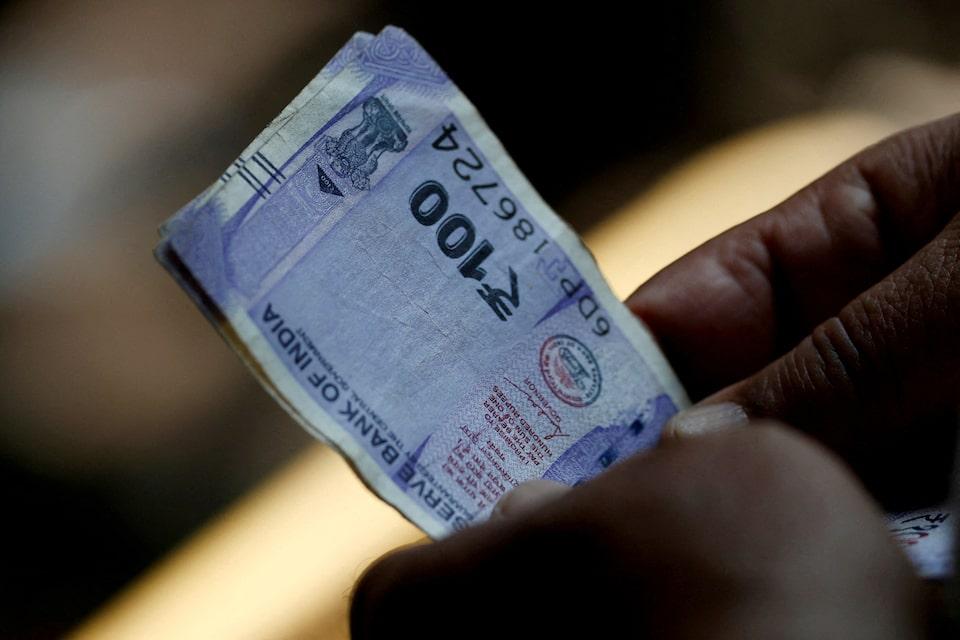
MUMBAI, Dec 16 (Reuters) - The Indian rupee weakened slightly on Monday, tracking weakness in regional peers, while the dollar-rupee overnight swap rate jumped on the back of cash dollar inflows and tight rupee liquidity, pushing up the implied rupee yield on overnight swaps above 10%. The rupee was at 84.8250 as of 10:00 a.m. IST, down 0.04% from its close at 84.7875 on Friday. Asian currencies were mostly weaker on the day, with the offshore Chinese yuan down 0.1% after data showed that retail sales in the country were weaker than expected in November. The dollar index was little changed at 106.8. Meanwhile, the dollar-rupee overnight swap rate extended its ongoing climb and rose to 1.20 paisa, pushing up the implied rupee yield on overnight FX swaps above 10%. Cash dollar inflows, alongside tight INR and flush USD liquidity in the banking system, on the back of recent spot dollar sales by the central bank, prompted the rise in the overnight swap rate, traders said. Dollar-rupee far forward premiums slipped, with the one-year implied yield down 2 basis points at 2.16%, pressured by a rise in U.S. bond yields ahead of the closely watched Federal Reserve policy decision later this week. The one-year U.S. Treasury yield was up 4 basis points at 4.28%. The U.S. central bank is widely expected to cut rates, with investors watching out for any hawkish revisions to policymakers' future interest rate projections. The odds of a 25-basis point rate cut by the Fed are currently at 95%, according to CME's FedWatch tool. "The dollar is currently defying seasonal trends for December weakness and we doubt that the FOMC (Federal Open Market Committee) needs to prove itself a negative event risk," ING Bank said in a note. Sign up here. https://www.reuters.com/markets/currencies/rupee-dips-implied-inr-yield-overnight-fx-swap-climbs-above-10-2024-12-16/
2024-12-16 04:49
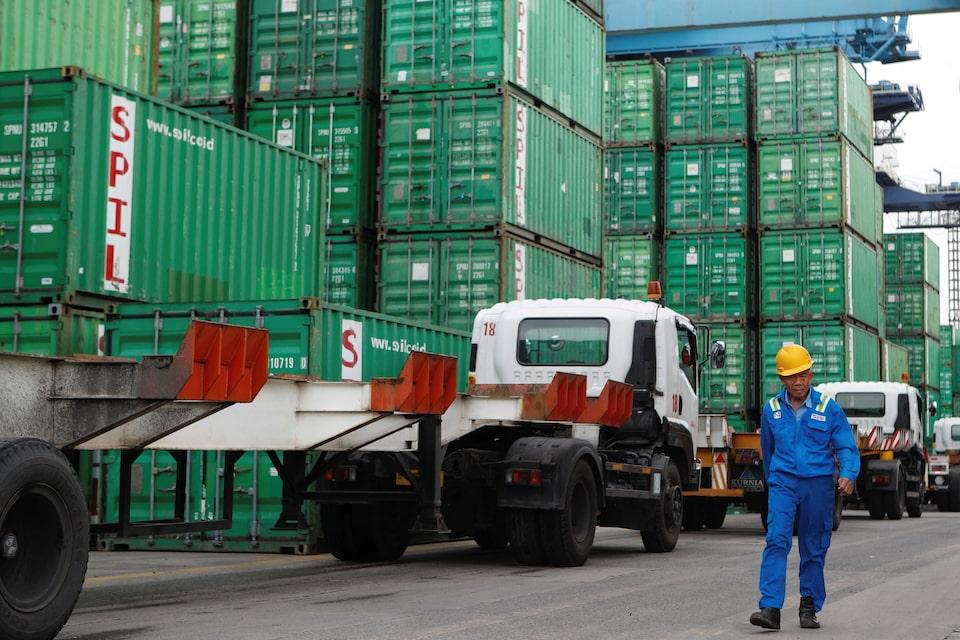
JAKARTA, Dec 16 (Reuters) - Indonesia posted an unexpectedly large $4.42 billion trade surplus in November, double the figure expected by analysts as exports jumped and imports came in below market forecasts, official data showed on Monday. The trade data is among a host of economic indicators the central bank will consider at its monetary policy review on Wednesday, with analysts expecting it to leave key rates unchanged. The rupiah strengthened slightly after the trade data, but remained near four-month lows against the dollar. The November surplus was the biggest since March and compared with a forecast surplus of $2.21 billion in a Reuters poll of analysts. The October surplus was revised up slightly to $2.48 billion. Exports rose 9.14% in November from a year earlier to $24.01 billion, well above a poll forecast of 4.92%, boosted by shipments of agriculture and manufactured products, such as cocoa butter and powder. However, shipments of top commodities such as coal fell 4.4% from a year earlier, and palm oil shipments were up by only 2.2%. Imports were flat at $19.59 billion, against an expected rise of 6.15%. The value of shipments of top products such as machinery, electronics and steel all contracted. Sign up here. https://www.reuters.com/markets/asia/indonesias-november-exports-up-91-yy-more-than-expected-2024-12-16/
2024-12-16 03:03
MUMBAI, Dec 16 (Reuters) - The Indian rupee, having witnessed slight relief late last week, is likely to come under renewed strain on Monday on the back of a further rise in U.S. Treasury yields. The 1-month non-deliverable forward indicate that the rupee will open at 84.82-84.83 to the U.S. dollar compared with its previous close of 84.7875. The local currency inched up 0.1% on Friday, thanks to likely dollar sales by the central bank and possible inflows, according to traders. "In the context" of how persistent the pressure has been on the rupee, Friday's recovery "was respectable", a currency trader at a bank said. That recovery will have to contend with "similar forces" of "an environment that favours the dollar", he said. Asian currencies began the week on the defensive, pressed by U.S. yields. The 10-year U.S. yield rose seven basis points on Friday and 25 bps over the week. Worries over possible inflationary pressures and the U.S. deficit on account of U.S. President-elect Donald Trump's policies are factors being cited by analysts that may be undermining demand for Treasuries. This week, the focus will be on the Federal Reserve's monetary policy decision due on Wednesday. With a 25 bps rate cut fully been priced in, what investors will be watching for is the outlook for next year. "With inflation remaining sticky, and President-elect Trump looking to strengthen the U.S. growth performance, the Fed is set to signal a more cautious policy easing profile for 2025," ING Bank said in a note. The bank reckons the Fed will signal only three rate cuts in 2025 compared to four previously. Meanwhile, India's forex reserves India's foreign exchange reserves dropped to multi-month lows amid dollar sales by the central bank to support the rupee. The Reserve Bank of India's fx intervention is being challenged by domestic and global headwinds. KEY INDICATORS: ** One-month non-deliverable rupee forward at 85.00; onshore one-month forward premium at 16.5 paisa ** Dollar index at 106.85 ** Brent crude futures down 0.2% at $74.3 per barrel ** Ten-year U.S. note yield at 4.3920% ** As per NSDL data, foreign investors sold a net $419.9 mln worth of Indian shares on Dec. 12 ** NSDL data shows foreign investors sold a net $35.6 mln worth of Indian bonds on Dec. 12 Sign up here. https://www.reuters.com/markets/currencies/indian-rupee-face-renewed-pressure-us-yields-climb-2024-12-16/
2024-12-16 01:38
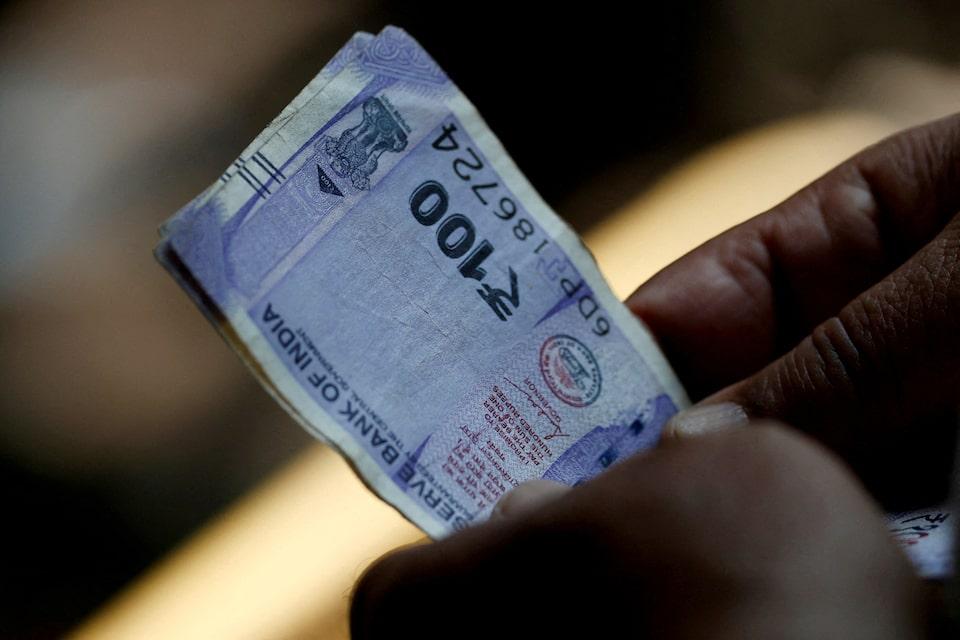
Over 50%, 17 of 31, expect rates to be on hold at 6.00% on Dec. 18 BENGALURU, Dec 16 (Reuters) - Bank Indonesia (BI) will hold its key interest rate steady on Wednesday to support the rupiah, according to a narrow majority of economists in a Reuters poll, who decisively expected a rate cut on Dec. 18 just a month ago. While domestic factors such as softening economic growth and cooling inflation were conducive for a rate cut, the rupiah's near 6% drop against the dollar from a September peak was likely to give BI enough reason to pause. The central bank is mandated to keep the currency stable. Just over 50% of respondents, 17 of 31 in the Dec. 9-13 Reuters poll, predicted the central bank would keep its benchmark seven-day reverse repurchase rate (IDCBRR=ECI) , opens new tab at 6.00% on Wednesday. "We expect BI to err on the side of caution and keep the benchmark rate on hold this month," said Radhika Rao, senior economist and executive director at DBS Bank in Singapore. "While inflation and growth developments tick the box for the BI to retain a dovish bent, weakness in the currency is a bigger bother for policymakers in the face of U.S.-driven uncertainties." However, a significant minority, 14 of 31, expected the bank to cut a quarter-point as Indonesian inflation was near the lower end of BI's 1.5-3.5% target range last month and domestic consumption, the biggest driver of growth, moderated last quarter. Median forecasts showed economists were predicting shallower interest rate cuts, down from 100 basis points in the last three polls to 75 basis points from the current level by end-2025. The shift in view for shallower rate cuts was in line with what economists expected from the U.S. Federal Reserve - three quarter percentage point cuts - next year, a separate Reuters poll showed. Diminishing expectations of aggressive rate cuts from BI and the Fed were largely attributed to proposed tariffs by U.S. President-elect Donald Trump, which are expected to be inflationary for the U.S. economy, keeping the dollar stronger for an extended period. "While BI retained an easing bias, it acknowledged that the scope for rate cuts has become more limited following U.S. political developments and the associated prospects of higher U.S. inflation, treasury yields, and a stronger U.S. dollar," noted an economist from ANZ. (Other stories from the Reuters global economic poll) Sign up here. https://www.reuters.com/markets/asia/bank-indonesia-hold-rates-this-month-fx-stability-outweighs-domestic-concerns-2024-12-16/