2024-12-13 19:56
Dec 13 (Reuters) - The Louisiana Department of Health said on Friday it has detected the first presumptive positive human case of H5N1 bird flu infection in the U.S. state. The individual is a resident of southwestern Louisiana and is currently hospitalized. The department is coordinating with the Centers for Disease Control and Prevention (CDC) on the epidemiologic investigation. The investigation identified that the individual had come into contact with sick and dead birds, which are suspected to have been infected with H5N1. H5N1 is a type of influenza virus that causes highly infectious and severe respiratory disease in birds. Outbreaks of the H5N1 avian influenza virus in wild birds and poultry have been ongoing in the United States since 2022. As of Dec. 13, 60 confirmed human cases of H5N1 have been reported across the United States, with the majority linked to exposure to infected poultry or dairy cows. So far, there has been no person-to-person spread associated with any of the H5N1 bird flu cases reported in the United States. Sign up here. https://www.reuters.com/business/healthcare-pharmaceuticals/louisiana-detects-first-presumptive-positive-human-case-h5n1-bird-flu-2024-12-13/
2024-12-13 19:54
US targeted Novatek's Arctic LNG 2 project with sanctions Arctic LNG 2 suspended output, sources say Novatek seeks to rebuild relations with West, source says LONDON, Dec 13 - Russia's largest liquefied natural gas producer Novatek is working with lobbyists in an attempt to rebuild U.S. relations after Washington imposed sanctions on its mammoth Arctic LNG 2 project, two sources familiar with the matter said. Russia's relationship with the United States hit a post-Cold War low after Moscow's invasion of Ukraine in 2022, with President Joe Biden's administration imposing sanctions on hundreds of entities and individuals for backing the war effort. These include Novatek's (NVTK.MM) , opens new tab Arctic LNG 2, which was set to become Russia's largest LNG plant. The return of U.S. President-elect Donald Trump to the White House on Jan. 20 is being viewed with cautious optimism by some in Russia, although others think it will change little. Trump pledged during his campaign to end the nearly three-year-old war within 24 hours of his inauguration, if not before. Novatek is seeking to rebuild relations with the West, in anticipation of an end to the war in Ukraine, one source said. Its senior executive and management board member, Denis Solovyov, travelled from Moscow to Washington in recent days to begin work with a U.S. lobbying firm, the sources said. Novatek and the lobbyists plan to approach U.S. government entities in the coming weeks, the sources said. Assistant Secretary of State for Energy Resources Geoffrey Pyatt told Reuters that the State Department was aware of Novatek's visit to Washington but suggested that the company would make little headway with the Biden administration during its remaining weeks in office. "Now is not the time for business as usual with Russia," Pyatt said. "Russia is in the penalty box and it’s my job to ensure it stays there as long as possible - certainly as long as the illegal war continues." Solovyov declined to comment when contacted by phone. Novatek did not respond to a request for comment. Novatek hopes to get its flagship Arctic LNG 2 off the current sanctions list, the second source said. Sanctions have led to Arctic LNG 2 declaring force majeure on supplies and suspending its production. Both sources, who spoke on condition of anonymity due to the sensitivity of the matter, said that Novatek will use its tax status to appeal to the West and make the case that it is not a financial contributor to Russia's war effort. Other Russian gas firms such as Gazprom pay corporate tax, which is considered one of the largest contributors to Russia's budget and therefore indirectly financing the war. Novatek-owned Yamal LNG, which is not sanctioned, enjoys significant tax relief such as zero export duty on LNG and gas condensate, as well as a zero mineral extraction tax rate for production of these fuels, a presentation to investors shows. The project has a 12-year tax exemption starting from when it became profitable, meaning it does not have to make payments to the Kremlin until 2030. Sign up here. https://www.reuters.com/business/energy/russias-novatek-hires-lobbyists-thaw-us-relations-sources-say-2024-12-13/
2024-12-13 18:44
Canadian dollar weakens 0.1% against the greenback Touches its weakest level since April 2020 at 1.4244 Price of US oil increases 1.6% Ten-year yield rises 3.2 basis points to 3.187% TORONTO, Dec 13 (Reuters) - The Canadian dollar hit a 4-1/2-year low against its U.S. counterpart on Friday as investors worried about a potential trade war between the United States and Canada and dialed back bets on Federal Reserve interest rate cuts in 2025. The loonie was trading 0.1% lower at 1.4230 per U.S. dollar, or 70.27 U.S. cents, after touching its weakest intraday level since April 2020 at 1.4244. For the week, the currency was down 0.5%, its third straight weekly decline. Recent reports that Canada was considering tit-for-tat retaliatory tariffs if U.S. President-elect Donald Trump carries out his threat to tax Canadian imports have given traders another reason to bet against the loonie, said Amo Sahota, director at Klarity FX in San Francisco. "It could be a long wait until the U.S. presidential inauguration to see how determined Trump is to begin his second term with a full trade war," Sahota said. Some Canadian provincial premiers are urging Ottawa to respond robustly to the threat of U.S. tariffs, Canada's finance minister said on Wednesday. The U.S. dollar (.DXY) , opens new tab is headed for its best weekly performance in a month as investors priced in the possibility of the Fed cutting interest rates more slowly next year. The price of oil , one of Canada's major exports, was up 1.6% at $71.13 a barrel on expectations additional sanctions on Russia and Iran could tighten supplies. Domestic data for October showed that factory sales grew 2.1% from September and that wholesale trade was up 1.0%, possible signs that lower borrowing costs are helping to boost the economy. On Wednesday, the Bank of Canada slashed its benchmark interest rate by half a percentage point to 3.25%. The Canadian 10-year yield rose 3.2 basis points to 3.187%, extending its rebound from a low of 2.977% on Wednesday. Sign up here. https://www.reuters.com/markets/currencies/canadian-dollar-falls-third-straight-week-trade-war-risk-2024-12-13/
2024-12-13 18:12
Dec 13 (Reuters) - Some United Food and Commercial Workers (UFCW) local unions on Friday urged Kroger's (KR.N) , opens new tab board to replace CEO Rodney McMullen following the company's announcement of a $7.5 billion stock buyback plan after terminating a deal to buy Albertsons (ACI.N) , opens new tab. The UFCW local unions that led the "Stop the Merger coalition" argued that the "abrupt" and "massive" share repurchase program comes at a time when Kroger needs investments in staffing, repairs and store remodels. Kroger and Albertsons terminated their $25-billion merger plan on Wednesday after a U.S. judge blocked the deal. Albertsons then filed a lawsuit against Kroger, alleging a breach of contract that led to the deal's demise. Kroger announced a new repurchase program later on Wednesday and said it intends to enter an accelerated share buyback program of about $5 billion of common stock. "It is outrageous that Rodney McMullen would try to distract attention from his multiple failures as CEO by announcing a massive one-time giveaway to shareholders," said Kim Cordova, president of UFCW Local 7 in Colorado and Wyoming. "Statements from UFCW locals leaders, who are in the midst of CBA (collective bargaining agreement) negotiations, mischaracterize Kroger's actions and intent," Kroger spokesperson said. Since Kroger has terminated the merger agreement, the company is in a position to resume share repurchases which was paused since the merger agreement in 2022, the company spokesperson added. Sign up here. https://www.reuters.com/business/retail-consumer/local-unions-call-krogers-board-replace-ceo-after-75-billion-buyback-plan-2024-12-13/

2024-12-13 16:28
Dec 13 (Reuters) - Foreign investors added a net $19.2 billion to their emerging market portfolio holdings in November, with selling of stocks more than offset by a continuing flow of cash into EM debt, data from a trade group showed on Friday. Stock portfolios saw an $11.1 billion outflow while bonds attracted $30.4 billion last month, data from the Institute of International finance showed. The November net inflow of $19.2 billion compares with a $0.3 billion net outflow in October and an $38 billion inflow in November 2023. Chinese equities shed $5.8 billion while the country's bonds saw an outflow of $7.5 billion, underscoring investor concerns over geopolitical tensions including an opening of more fronts in the expected trade war with the incoming U.S. administration. Markets reacted to President-elect Donald Trump's U.S. election win and the subsequent rally in the dollar, which has historically weighed on emerging market assets. "This sustained pessimism surrounding Chinese equities is rooted in a confluence of factors, including regulatory concerns, slowing economic growth, and persistent geopolitical tensions," IIF economist Jonathan Fortun said in a statement. He said the resilience of EM debt markets outside China was underpinned by the ongoing quest for yield and the relative stability of fixed-income assets compared to stocks. All regions saw net inflows in November with Latin America leading the pack at $6.5 billion, while EM Europe attracted $4.8 billion, Asia $4.6 billion, and Africa and the Middle East $3.4 billion. Sign up here. https://www.reuters.com/markets/foreigners-add-192-bln-em-portfolios-november-iif-says-2024-12-13/
2024-12-13 15:38
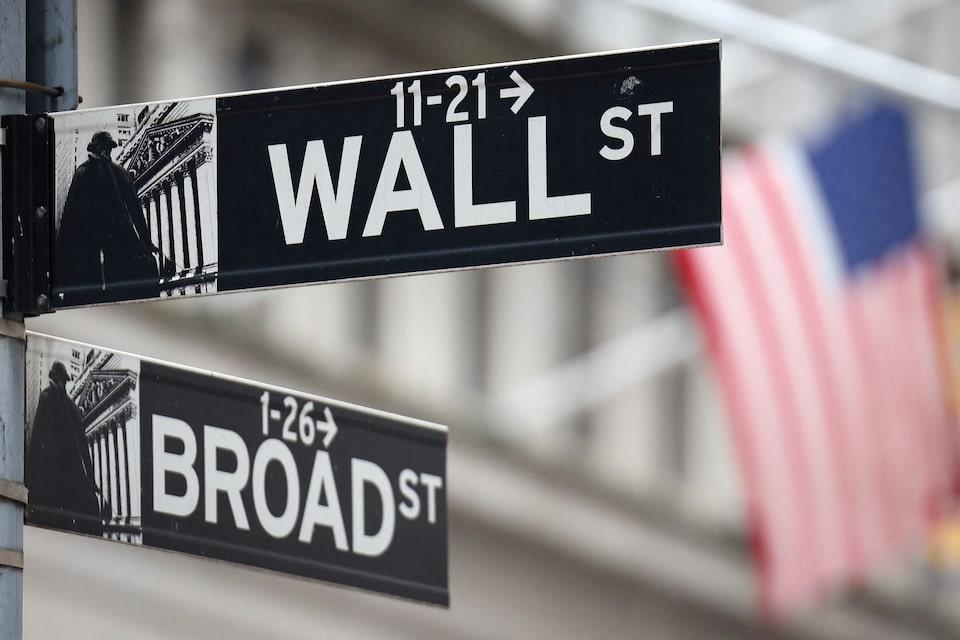
ORLANDO, Florida, Dec 13 (Reuters) - A strong U.S. dollar and high Treasury yields are posing significant challenges for emerging economies, and policymakers have no easy way to counter this powerful one-two punch. With American exceptionalism casting a shadow over the rest of the world, many emerging markets (EM) are facing weaker currencies, increased costs to service dollar-denominated debt, depressed capital flows or even capital flight, dampened local asset prices and slowing growth. Added to that is the uncertainty and nervousness surrounding the incoming U.S. government's proposed tariff and trade policies. History has shown that when trends like these take hold in emerging markets, they can create vicious cycles that accelerate rapidly and prove difficult to break. Unfortunately, there appears to be no simple road map for avoiding this. Just look at China and Brazil. The monetary and fiscal paths being pursued by these two EM heavyweights could not be more different. Beijing is pledging to ease monetary and fiscal policy to reflate its economy; Brasilia is promising substantially higher interest rates and seeking to get its fiscal house in order. Their divergent paths – and ongoing struggles – suggest that no matter where EM economies are in terms of growth, inflation and fiscal health, they are likely to face a difficult road ahead in the coming years. GO WITH THE FLOW Brazil and China are clearly in very different places, not least with regard to inflation. Brazil has lots of it, prompting the aggressive actions and guidance from the central bank. China, on the other hand, is battling deflation, and is starting to finally slash interest rates. Another difference is the fiscal headroom each has to generate growth. Brazil's reluctance to cut spending sufficiently is a key cause of the real's slump and the central bank's eye-popping tightening. The market is forcing Brasilia's hand. The market is also putting pressure on Beijing, but pushing it in the opposite direction. The collective size of the support packages and measures announced since September to revive economic activity run into the trillions of dollars. But even though the two countries' tactics are diametrically opposed, the outcomes have thus far been similar: sluggish growth and weak currencies, a picture most emerging countries will recognize. Brazil's real has never been weaker and the tightly managed yuan is close to the troughs last visited 17 years ago. As Reuters exclusively reported, China is mulling whether to let the yuan weaken in response to looming U.S. tariffs, and analysts at Capital Economics warn that it could tumble as low as 8.00 per dollar. But allowing the yuan to depreciate is not without risk. Doing so could accelerate capital outflows, and spark 'beggar thy neighbor' FX devaluations across Asia and beyond. A race to the bottom for EM currencies would be very problematic for the countries involved, as the dollar is now a bigger driver of EM flows than interest rate differentials, according to the Bank for International Settlements. Analysts at State Street reckon exchange rates explain around 80% of local EM sovereign debt returns. The Institute of International Finance estimates that capital flows to emerging countries next year will decline to $716 billion from $944 billion this year, a fall of 24%. "Our forecast is premised on a base-case scenario, but significant downside risks remain," the IIF said. FINANCIAL CONDITIONS TIGHTEN EM countries also face headwinds from higher U.S. bond yields. While the pile of hard currency sovereign and corporate debt is small compared to local currency debt, it is rising. Total emerging market debt is now approaching $30 trillion, or around 28% of the global bond market. That figure was 2% in 2000. And the squeeze from higher borrowing costs is being felt in real time. Emerging market financial conditions are the tightest in nearly five months, according to Goldman Sachs, with the spike in recent months due almost entirely to the rise in rates. Real interest rates are a lot higher now than they were during Trump's first presidency. But many countries may still struggle to cut them, as doing so "could create financial stability concerns by putting pressure on exchange rates," JP Morgan analysts warn. On the positive side, emerging countries do have substantial FX reserves to fall back on, especially China. Most of the world's $12.3 trillion FX reserves are held by emerging countries, with $3.3 trillion in China's hands alone. Finding themselves caught between a rock and a hard currency, EM policymakers may soon be forced to dip into this stash. (The opinions expressed here are those of the author, a columnist for Reuters.) Sign up here. https://www.reuters.com/markets/currencies/em-has-no-easy-escape-dollar-squeeze-mcgeever-2024-12-13/