2024-12-13 11:12
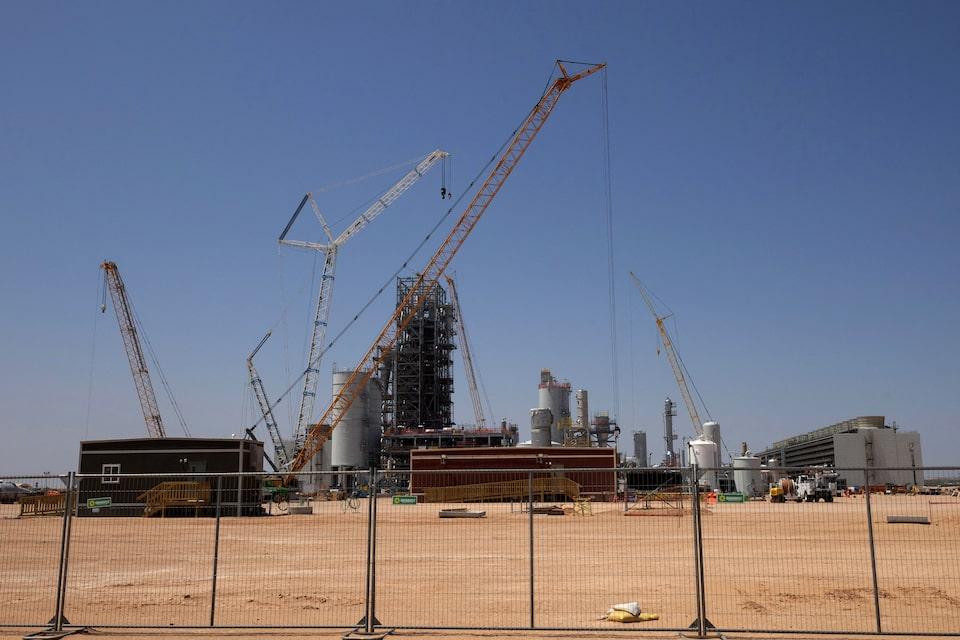
CO2 injection risks earthquakes, well blowouts, activists warn Texas leads in carbon injection permit applications, faces regulatory challenges Occidental, others confident in CCS safety despite past leaks, expert concerns Dec 13 (Reuters) - Texas has seen surging interest from companies hoping to bury carbon dioxide in its oilfields, putting the state at the vanguard of a government-subsidized program to fight climate change. But pumping CO2 into the ground could exacerbate earthquakes and well blowouts already happening in the Permian Basin as Texas struggles to manage wastewater disposal, potentially undermining public support. "Without legitimate oversight of underground injection in Texas, we expect more geyser-like well blowouts, sinkholes, leaks from plugged and unplugged wells, and injection-induced earthquakes," said Virginia Palacios, executive director of Commission Shift, a Texas watchdog group pushing for tougher oversight of the oil and gas industry. Such consequences have rarely happened as a result of CO2 injection over the decades the technology has been deployed. The unprecedented vast volume of carbon now proposed for burial, however, worries activists and researchers. Carbon sequestration is vital to U.S. government goals to reduce emissions that cause global warming. The Biden administration's 2022 Inflation Reduction Act, landmark climate-change legislation, includes billions of dollars worth of subsidies for CCS projects. While President-elect Donald Trump has vowed to gut the IRA, energy experts say CCS subsidies will likely survive due to bipartisan support. Trump's transition team did not provide comment. Several companies, including Occidental Petroleum (OXY.N) , opens new tab, plan to take advantage of IRA subsidies. The projects are concentrated in Texas, where CCS proponents argue underground geology is ideal for storing liquid and gaseous waste. PERMIT APPLICATIONS JUMP Over the last 12 months, the number of applications filed with the Environmental Protection Agency for carbon injection permits in Texas has jumped by 63% to 43, according to the agency, making it a national leader. But Texas is dogged by problems linked to disposal of drilling wastewater underground. The Texas Railroad Commission (RRC) regulator has grappled with leaks and blowouts from orphan wells, as well as earthquakes, triggered by higher pressure underground from water injection. Reuters spoke with a dozen Texas landowners and researchers who said proposed CO2 projects need more oversight than the state can offer to avert environmental and safety risks. The RRC is seeking authority from the EPA to oversee its own permitting program for carbon sequestration to speed up approvals. The EPA, which is also reviewing Texas' handling of wastewater permitting following the blowouts, said the request was being considered. The RRC said in a statement it is capable of effectively regulating CO2 injection wells, adding it has hired more staff. Trump's victory increases the chances Texas will get this authority, experts say. North Dakota was the first state to receive oversight authority during Trump's first term and its governor, Doug Burgum, is Trump's pick for interior secretary, which includes responsibility for drilling permits on federal land. Burgum did not respond to requests for comment. REASON FOR CONCERN One of the biggest Texas projects is the Stratos direct air capture joint venture in Ector County between Occidental and asset manager BlackRock. It is expected to inject 8.5 million metric tons of CO2 starting next year. The county has numerous abandoned wells at risk of erupting if underground pressure rises and CO2 eats away at cement plugs, said oil and gas attorney Sarah Stogner, who represents landowners that have had blowouts. There have been 19,700 wells drilled in the county since 1993, according to data from state agencies. Nineteen are orphan wells, with no company legally responsible for ensuring they remain plugged, including three close to the Stratos site. Raymond Straub, a hydrogeologist who owns a Texas groundwater services firm, testified at an October EPA hearing that he was concerned Occidental did not devote enough attention to the unplugged or badly plugged orphan wells in the project area. Occidental spokesperson William Fitzgerald said the company had done extensive site surveys to ensure it would be safe. "This survey confirmed the location of three wells, which Occidental will address prior to beginning CO2 injection," he said. "There is more than 3,000 feet of confining rock layers above the sequestration zone to securely contain the CO2." A pilot project by agribusiness ADM (ADM.N) , opens new tab in Illinois, the first of its kind meant to demonstrate the technical feasibility of commercial carbon injection, has suffered leaks and other setbacks, underscoring worries. ADM spokesperson Jackie Anderson said the leaks have presented no risk to surface or groundwater or to public health, and that the company is confident in CCS technology. Dominic DiGiulio, an independent energy analyst and former EPA official who has studied CCS, said, however, that CO2 can corrode the cement casings of plugged wells. "These abandoned wells will in fact leak," he said. A 2023 paper by Chinese researchers , opens new tab, published in Earth-Science Reviews, said CO2 injection could also boost the risk of earthquakes. The researchers did not respond to requests for comment. Large leaks could acidify groundwater, and suffocate people and animals if it displaces oxygen above ground, according to nonprofit Pipeline Safety Trust. "This is supposed to be permanent storage," said Carolyn Raffensperger, executive director of the Science and Environmental Health Network. "If it can’t even contain it for 10 years, why do we think it can contain it forever?" she added, referring to ADM's project. (This story has been corrected to remove the word 'annually' from paragraph 16 and to add a quote from Fitzgerald in paragraph 21) Sign up here. https://www.reuters.com/world/us/earthquakes-blowouts-undermine-case-carbon-storage-texas-2024-12-13/
2024-12-13 11:02
A look at the day ahead in U.S. and global markets by Samuel Indyk The stellar year for U.S. stock markets took a bit of a breather on Thursday, perhaps expected after a rally that has led the Nasdaq to 20,000 for the first time this week and the S&P 500 to another new record high. Gains have been driven by optimism over artificial intelligence and rate-cut expectations, with attention now turning to the Federal Reserve's last policy meeting of the year, beginning next Tuesday. The central bank is likely to follow up November's 25 basis point rate cut with another of the same magnitude, taking the fed funds rate to 4.25%-4.5%. But where the Fed plans to take rates in 2025 is what will interest markets more. Donald Trump's election victory last month has left investors with a lot of questions about the economy in 2025. Will Trump push ahead with blanket tariffs on U.S. imports? Will these tariffs be inflationary? And how will the Fed react? For now, markets are pricing in just two more quarter-point cuts in 2025, assuming the Fed lowers rates on Wednesday. Should the Fed lower interest rates next week, it will mean a total 100 basis points of easing this year - the same amount delivered by the European Central Bank (ECB) in 2024 after it lowered borrowing costs on Thursday for the fourth time. But while ECB president Christine Lagarde left the door open for more rate cuts next year, the ECB president refused to commit to a particular rate path, leaving some investors scratching their heads. Markets have been betting that the euro zone's central bank would cut rates at every meeting through the first half of next year, possibly even faster, with inflation back near target and growth remaining sluggish. Those expectations were little changed after Thursday's decision, with the deposit rate seen falling to roughly 1.75% by the end of next year. The ECB has not been the only show in town this week, with the Swiss and Canadian central banks each opting for jumbo 50 basis point rate cuts. Next week, as well as the Fed, the central banks of Sweden, Norway, Britain and Japan will also announce their policy decisions. The global interest rate picture has left the dollar index on track for a 1% gain this week, its biggest weekly jump in a month and ninth positive week in 11. The U.S. currency has risen against all major peers this year. The S&P 500 is within touching distance of recent peaks and on track for annual gains of more than 20% for the second year in a row, with futures on Friday pointing to a firmer open, led once again by the tech-heavy Nasdaq. This time it's Broadcom leading the way higher after the semiconductor company forecast quarterly revenue above Wall St estimates on Thursday after-hours, predicting booming demand for its custom AI chips. Shares are up 14% pre-market. Key developments that should provide more direction to U.S. markets later on Friday: * U.S. import and export prices Sign up here. https://www.reuters.com/markets/us/global-markets-view-usa-2024-12-13/
2024-12-13 11:01
Developing nations seek robust curbs on emissions and reparations for harm done ICJ opinion may influence global climate lawsuits Major emitters argue existing UN climate treaties should guide obligations THE HAGUE, Dec 13 (Reuters) - The World Court concludes hearings on Friday on countries' legal obligation to fight climate change and whether large states contributing most to greenhouse-gas emissions may be liable for damage caused to small island nations. The International Court of Justice will issue an opinion on those questions, likely in 2025, that could be cited in climate change-driven litigation around the world. During two weeks of hearings, rich countries of the global north broadly argued that existing climate treaties like the Paris Agreement, which are largely non-binding, should be the basis for deciding countries' responsibilities. For their part, developing nations and small island states bearing the brunt of climate change sought robust measures to curb emissions, and want to regulate financial support from wealthy polluting nations. "On the current trajectory of greenhouse gas emissions, Tuvalu will disappear completely beneath the waves", Eselealofa Apinelu, representing the small island state, told the judges. Nearly 100 states and organisations took part in hearings at the institution, the top U.N. court for disputes between states, where small island nations had spearheaded the efforts to get the U.N. General Assembly to ask for an advisory opinion. World Court opinions are not binding, but carry legal and political weight. Experts say the court's opinion on climate change could set a precedent in climate change-driven lawsuits in courts from Europe to Latin America and beyond. "The power of an ICJ opinion does not lie only in its direct enforcement, but in the clear message and guidance it will send to the many courts around the world that are grappling with the question of state obligations to address the climate emergency and remedy climate harm," Nikki Reisch, director of the Center for International Environmental Law's Climate & Energy Program, told Reuters. The hearings opened in early December with Pacific island nation Vanuatu, which urged judges to recognise and repair the harm caused by climate change. The world's largest emitters, the U.S. and China, together with countries like Saudi Arabia and several EU members, argued that existing treaties produced by U.N.-backed climate change negotiations, which are largely non-binding, should be the benchmark in determining states' obligations. "China hopes that the court will uphold the U.N. climate change negotiations mechanism as the primary channel for global climate governance," Ma Xinmin, a legal adviser in China's foreign ministry, told the court. Under the Paris Agreement, countries have to update their national climate plans, known as Nationally Determined Contributions (NDCs), every few years with the next round due by February 2025. The UN has asked countries to deliver economy-wide plans that show an increased, non-binding ambition to hold the world to 1.5C (2.7F) of warming. "NDCs concern an obligation of best efforts, not of results," a Saudi Ministry of Energy representative told the court, in comments that worried those arguing for binding rules to curb fossil fuel use. Sign up here. https://www.reuters.com/business/environment/rich-countries-island-states-lock-horns-climate-change-un-court-2024-12-13/

2024-12-13 10:55
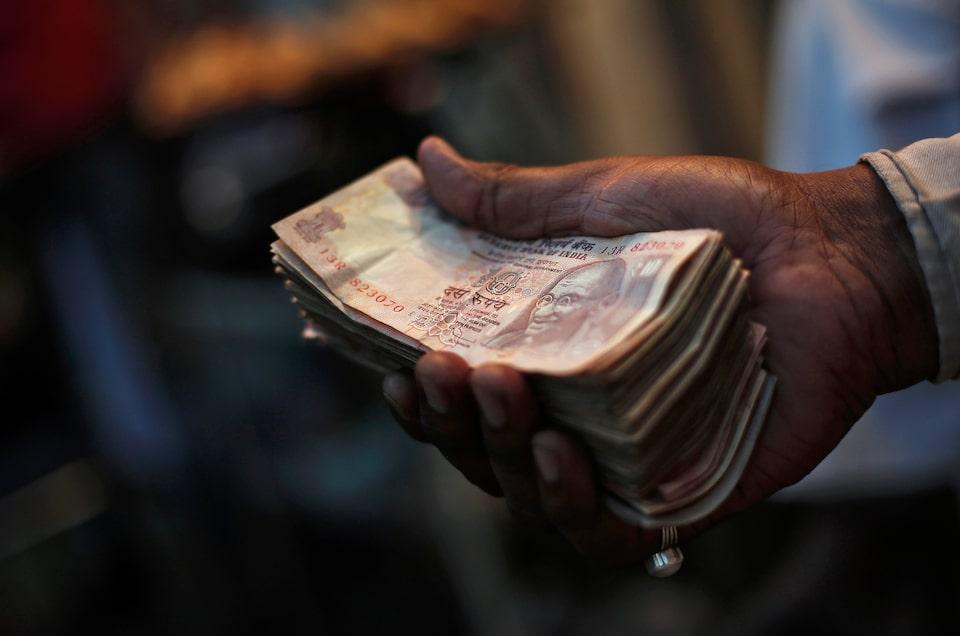
MUMBAI, Dec 13 (Reuters) - The Reserve Bank of India's efforts to slow the rupee's decline have been relentless but its already-stretched strategy is now challenged by weak economic growth, tepid foreign inflows and a buoyant dollar's threat to Asian currencies, especially the Chinese yuan. The dollar index has rallied more than 3% since Donald Trump won the U.S. presidential election on Nov. 5. The rupee has declined just 0.8% in that time, making it the second-best among major Asian currencies, largely due to the RBI's intervention. This intervention has stretched across segments: buying and selling dollars in the onshore spot and forward markets, taking positions in local currency futures and in the non-deliverable forward (NDF) market. "The amount of intervention has been quite substantial ... We can say intervention is a little bit stretched but, at the same time, it is a call that the RBI must take," said B Prasanna, head of global markets at ICICI Bank. The strain is showing. For instance, in the NDF market, the RBI's go-to strategy, the central bank's position has ballooned to levels that make it difficult to use as frequently. Moreover, India's forex reserves are at a five-month low after the RBI sold $38 billion, per IDFC FIRST Bank's estimate, between October and the first week of December. Investors are taking notice. The RBI's forex policy and the rupee's future were key discussion points in a recent Asia investment tour, said Madhavi Arora, chief economist at Emkay Global Financial Services, which conducted the tour. "With continuing pressure on the currency and policy defences arming up against the global tide, most investors believe that the RBI has stretched too far." CHANGING LOCAL, GLOBAL CONDITIONS The rupee hit an all-time low of 84.88 per dollar on Thursday. But for two years, it has been the least volatile Asian currency, barring the pegged Hong Kong dollar. However, that could change given local and global challenges. At home, economic growth hit a seven-quarter low recently, which led to foreign investors withdrawing from the equity markets and rising expectations of an interest rate cut sooner rather than later. Globally, Trump has vowed to slap additional tariffs on China, India's largest trading partner, and Chinese policymakers may look to counter by weakening the yuan, Reuters has reported. The yuan has declined 2.6% since Trump's election victory, prompting traders to question whether the RBI would let the rupee weaken in line to prevent an overvaluation. The yuan is "always on the RBI's radar and it is one of the peer currencies that really matters," a person familiar with the central bank's thinking said, declining to be named as they are not authorised to speak to the media. The RBI did not immediately respond to an email seeking comment. "With significant volatility possible in the coming quarters -- not just due to U.S. policies but also second-order effects, say due to a bigger-than-expected move in the CNY -- the INR is likely to become more volatile," Neelkanth Mishra, chief economist at Axis Bank, said in a note. Sign up here. https://www.reuters.com/world/india/domestic-global-headwinds-challenge-indian-central-banks-fx-intervention-2024-12-13/
2024-12-13 10:07
MUMBAI, Dec 13 (Reuters) - The Indian rupee logged its the sixth consecutive weekly decline on Friday as pressure remained on account of heightened dollar demand in the non-deliverable forwards market and a weaker yuan while mild inflows helped the currency on the day. The rupee closed stronger at 84.7875 against the U.S. dollar on Friday, but fell 0.1% on the week. While the rupee was supported by likely dollar-selling intervention by the central bank earlier in the session, it found some relief in latter half on account of inflows, traders said. Benchmark Indian equity indexes, the BSE Sensex (.BSESN) , opens new tab and Nifty 50 (.NSEI) , opens new tab ended higher by about 1% on the day. The dollar index was slightly higher at 107, on course for its best weekly performance in a month, while Asian currencies weakened between 0.1% to 0.6%. U.S. producer price inflation data released on Thursday reaffirmed investor expectations of a 25-basis point rate cut by the Federal Reserve on Dec. 18 as well as a comparatively slower pace of policy easing over 2025, which would be dollar-positive. "President-elect Trump’s policy thrust of immigration controls, tariffs and personal and corporate tax cuts (are) likely to mean the Fed signals a shallower, slower path of easing through 2025," ING Bank said in a note. Persistent strength in the U.S. dollar contributed to the rupee declining to its all-time low of 84.88 earlier in the week, alongside market expectations of a dovish tilt in the Reserve Bank of India's monetary policy. Bearish bets on the rupee have increased to a two-year high amid growing concerns that potential U.S. tariffs would undermine the appeal of emerging market assets, according to a Reuters poll. Sign up here. https://www.reuters.com/markets/currencies/inflows-help-rupee-end-higher-day-weekly-losing-streak-persists-2024-12-13/
2024-12-13 08:54
BEIJING, Dec 13 (Reuters) - China will firmly prevent overshooting risks of the yuan exchange rate and keep the rate basically stable, its central bank said on Friday, state media reported. The People's Bank of China will increase treasury bond buying and selling operations, and provide a sound liquidity environment for government bond issuance, CCTV quoted the Bank as saying. Sign up here. https://www.reuters.com/world/china/china-central-bank-promises-keep-yuan-exchange-rate-stable-2024-12-13/