2024-12-13 08:14
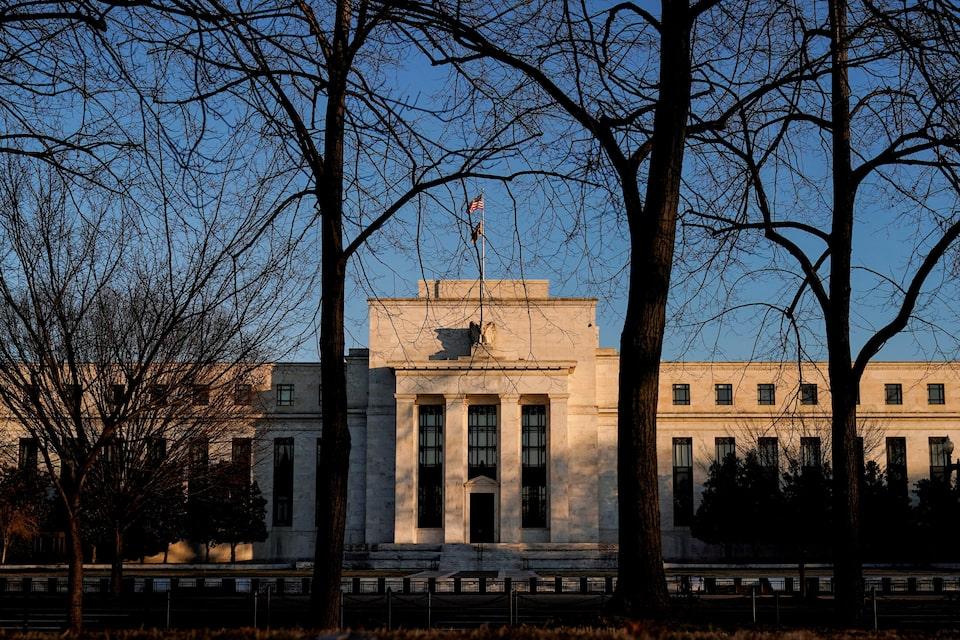
LONDON, Dec 13 (Reuters) - The end of the year is almost in sight for traders, yet the last mile will be anything but slow. Central banks in the United States, Japan and Britain meet, while Germany holds a vote of no confidence in the government. Here's all you need to know about the coming week in world markets from Lewis Krauskopf in New York, Kevin Buckland in Tokyo and Naomi Rovnick, Amanda Cooper and Dhara Ranasinghe in London. 1/ CUT, THEN WHAT? The U.S. Federal Reserve is expected to continue monetary easing with a 25 basis point (bps) rate cut on Wednesday, in what would be its third straight reduction, with the latest consumer price index rising in line with economists' estimates. Investors have curtailed expectations for how much the Fed will cut next year. Traders expect rates to fall to about 3.7% by end-2025 from the current 4.5%-4.75% range, roughly 90 basis points higher than what was priced in September. That puts the focus on the Fed's own rate projections and on any insight from Chair Jerome Powell about his expectations for future easing. Powell has said the economy is stronger now than the Fed had anticipated in September, and appeared to signal his support for a slower pace of rate cuts ahead. 2/ HIKE ON HOLD? The pendulum of BOJ policy expectations has swung widely in the last two weeks, tying traders in knots. But as the Dec. 19 decision looms, the signal is becoming clearer - even if the outcome is still uncertain. Reuters reported on Thursday that policymakers are leaning towards a pause, waiting for further data on wages and clarity on Donald Trump's policies before raising rates for a third time. A day earlier, Bloomberg reported that BOJ officials see "little cost" from delaying additional tightening. No doubt the BOJ decision is live, meaning market volatility could be high. One mooted risk is that the Fed surprises by not cutting rates on Dec. 18, triggering a jump in dollar/yen. But analysts note it would be very rare for the Fed to go against the grain when market conviction for a cut is so strong. 3/ VORSPRUNG DURCH TECHNICALITY Germany's DAX (.GDAXI) , opens new tab index is this year's best-performing European index, up 22%, hitting record high after record high. Defence, tech and construction stocks have more than made up for the performance of its out of favour auto sector. Corporate Germany appears to be weathering sluggish growth and political drama. A no-confidence vote in the government on Dec 16 should pave the way for a February snap election. But the devil is in the details. Goldman Sachs says just 18% of DAX sales come from Germany versus the 33% for companies on the mid-cap MDAX (.MDAXI) , opens new tab, which is down 1.1% this year. German corporate earnings shrank 5.4% on an annual basis in the third quarter, versus 8.2% growth for STOXX earnings (.STOXX) , opens new tab, based on LSEG data. German equities may start aligning a little more closely with the underlying economic and political reality. 4/ TIME FOR BOE SURPRISE? When it comes to rate cuts, the Bank of England has been driving in the slow lane. Traders expect the BoE to hold rates at 4.75% on Thursday, just 50 bps below a previous 16-year peak, and to resist a third 25 bp cut until February. Employer tax hikes in the Labour government's October budget motivated big businesses to warn of price rises, fuelling inflation concerns and helping propel sterling to 2-1/2 year highs against the euro as the ECB eases policy more rapidly than the BoE. But bond markets are querying this divergence, with two-year gilt yields , which move on rate forecasts, dropping to about 4.38% from more than 4.5% a month ago. UK employment growth is slowing as tax rises deter hiring plans and consumer confidence is weak. Sterling bulls should watch out for the BoE shifting gears. 5/ SHAKIER GROUND Once-robust services sectors across big economies are faltering, bringing a divergence with sluggish manufacturing activity to an end. That was the takeaway from November PMIs. December numbers, out across the globe next week, should show if the slowdown is getting deeper. The November euro zone composite PMI, seen as a good gauge of overall economic health, sank to 48.3 from October's 50.0. Britain's all-sector PMI fell to its lowest in a year at 50.9 - just above the marker that separates contraction from expansion. Even U.S. services sector activity slowed. U.S. tariff worries, and French and German political ructions have the potential to hurt business activity. For some observers, the PMI data paints too pessimistic a picture of underlying activity, with falling interest rates helping to bolster sentiment. Sign up here. https://www.reuters.com/business/take-five/global-markets-themes-graphic-pix-2024-12-13/
2024-12-13 07:45
Russia launches 93 missiles, nearly 200 drones, Kyiv says Ukraine imposes longer power cuts after attacks Damage to multiple energy facilities confirmed Ukraine calls for strong Western response, more aid KYIV, Dec 13 (Reuters) - Russia hammered Ukrainian energy facilities in a massive aerial attack on Friday that President Volodymyr Zelenskiy said was one of the largest yet on the ailing grid and evidence of why Kyiv needed more Western support before any peace with Russia. Russia's 12th major assault on the energy system this year damaged power facilities in several Ukrainian regions and forced authorities to impose even longer electricity cuts for millions of civilians, the national grid operator said. With winter temperatures currently around -6 degrees Celsius, the strikes increase pressure on Ukraine at an unpredictable moment with Donald Trump set to return to the White House next month, vowing to end the war quickly. "This is (Russian President Vladimir) Putin's plan for 'peace' – to destroy everything. This is how he wants 'negotiations' – terrorising millions of people," Zelenskiy said on X. "A strong reaction from the world is needed: a massive strike – a massive reaction." Russia launched 93 missiles, including one manufactured in North Korea, and nearly 200 drones during the attack, Zelenskiy said. Air defences intercepted 81 of the missiles, including 11 shot down by F-16 fighter jets, he added. The full extent of the damage was hard to assess. After repeated Russian attacks, officials reveal little detailed information about the state of the network. Six unspecified energy facilities were damaged in the western region of Lviv that borders Poland, officials said. An industry source told Reuters the attack had targeted power substations and that there had been more strikes on gas infrastructure than in past assaults. Unspecified equipment at thermal power plants sustained serious damage, according to DTEK, Ukraine's biggest private power provider, which has been battered by the strikes since Russia's February 2022 invasion. Officials said they had imposed additional power cuts due to the attack. In the region outside Kyiv, the power cuts were scheduled to last for 11 hours, up from eight hours before the attack. Around a half of power company Yasno's 3.5 million consumers were without power on Friday, their CEO said. "I reiterate my call for the urgent delivery of 20 NASAMS, HAWK, or IRIS-T air defense systems," Foreign Minister Andrii Sybiha wrote in a post on X, responding to the attack. The International Atomic Energy Agency said five of Ukraine's nine operating nuclear reactor units had reduced power output due to renewed attacks on energy infrastructure. One person received light injuries, officials said. 'CYNICAL' ATTACK "As Ukrainians wake to the coldest day of the winter so far, the enemy tries to break our spirit with this cynical terrorist attack," DTEK's CEO Maxim Timchenko said. Moscow described its assault as retaliation for Ukraine using U.S.-supplied ATACMS missiles to attack a Russian military airfield this week. The Russian Defence Ministry said air- and sea-based long-range precision weapons and drones had been used against "critical facilities of Ukraine's fuel and energy infrastructure that support the military-industrial complex". Russia says it does not target civilian infrastructure, but that it sees the power system as a military target. The attack comes as Russian forces notch up their fastest battlefield gains in eastern Ukraine since 2022 in their drive to seize the entire industrial Donbas region. Trump's impending return to power has spurred expectations of a push for negotiations to halt the war. Ukraine has repeatedly said it needs the West to help put it in a stronger position before peace talks begin, a stance reaffirmed by Zelenskiy on Friday. "Chatter will not stop Putin – we need force that will lead to peace," he said. Sign up here. https://www.reuters.com/world/europe/russia-launches-large-scale-missile-attack-ukraine-energy-facilities-kyiv-says-2024-12-13/

2024-12-13 07:10
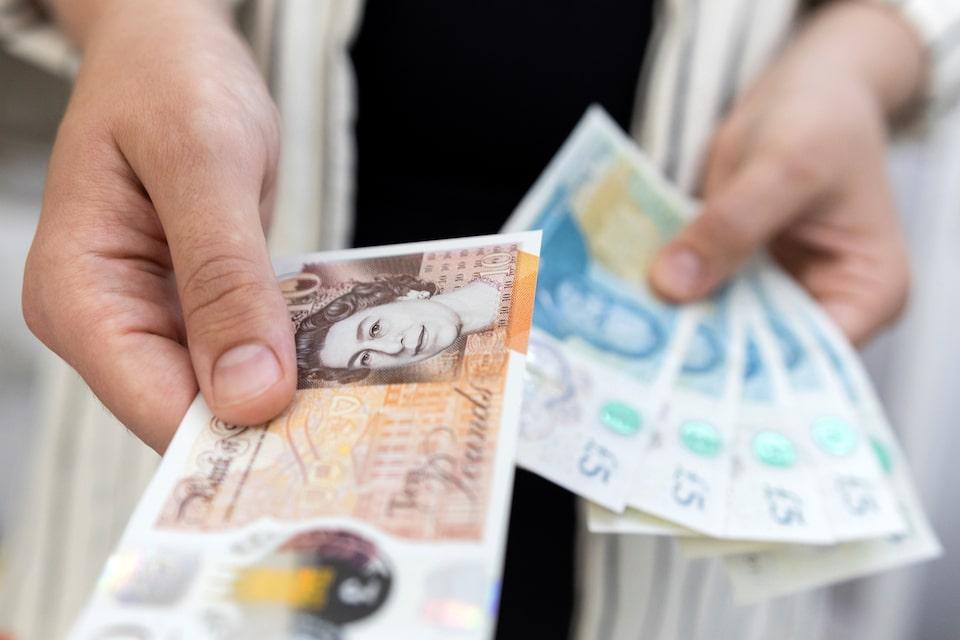
LONDON, Dec 13 (Reuters) - The pound fell on Friday after data showed the British economy shrank unexpectedly in October, which could prompt traders to attach a greater chance to the prospect of speedier rate cuts by the Bank of England next year. Official data showed UK economic activity contracted 0.1% in October. A Reuters poll of economists had forecast a rise of 0.1% last month, from September's 0.1% fall. This was the first back-to-back decline since the onset of the COVID-19 pandemic in 2020, when Britain imposed the first lockdown. Sterling initially fell as much as 0.43% after the numbers and was last down 0.3% at $1.2635. "The market will be surprised, this is not part of the game plan. However, the outlook for 2025 does look more encouraging," Neil Jones, managing director, FX sales and trading for financial institutions, TJM Europe, said. "I would expect further limits to any pound sell-off and gilt rally. Wages and inflation will likely remain solid and dissuade the BOE from shifting lower, relative to the Fed and ECB expectations," he said. The pound was last down 0.4% against the euro at 82.895. Sterling is set for a second monthly gain against the euro, which has fallen 0.6% in December so far to trade around its weakest in over eight years. In part, it is the expected difference in interest rates in Britain and the euro zone, as the BoE is likely to move more slowly on cuts than the European Central Bank. The ECB cut rates as expected by a quarter point on Thursday, but sounded a cautious note on the outlook for inflation, which might mean it does not have the scope to deliver the almost five cuts markets have priced in for 2025. The BoE, meanwhile, may find it needs to act more swiftly to head off a more protracted slowdown in the British economy. Recent data on business activity showed a deterioration in the manufacturing sector. Grocery inflation is creeping up, squeezing the budgets of British households, while the labour market is sputtering. Data earlier this week showed job vacancies have dried up faster in the UK than in other similar countries over the past year. A separate report on employment on Dec. 9 showed demand for UK workers crashed in November, after the Labour government's first budget, in a sign of the impact of the tax increases for employers that it contains. Sign up here. https://www.reuters.com/markets/currencies/sterling-falls-after-uk-gdp-unexpectedly-contracts-october-2024-12-13/
2024-12-13 07:03
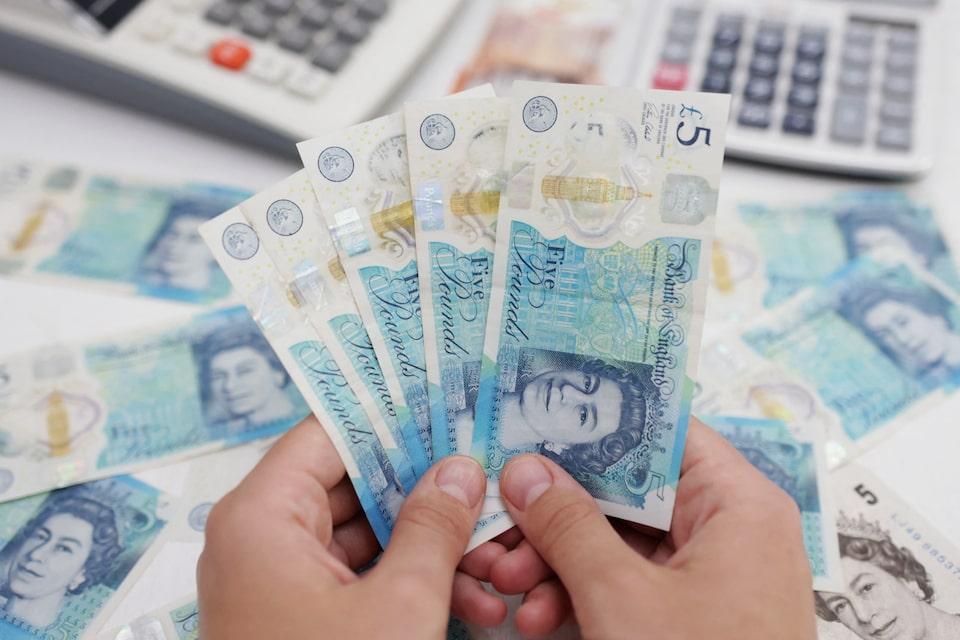
LONDON, Dec 13 (Reuters) - Sterling's return close to pre-Brexit referendum levels against the euro owes much to Britain's delicate dance between resetting relations with Europe and the return of "Trumpism" in the United States. A services-heavy British economy should weather trade tariffs threatened by U.S. President-elect Donald Trump better than an already hobbled euro zone. And repairing rifts with latter, still the UK's biggest trading partner, holds out some hope of re-attracting investment flows from the European Union. A big question going forward is whether newfound currency strength muddies any improved export picture and puts the spotlight back on the Bank of England's foot-dragging on lowering interest rates. But since the Labour Party returned to government after the UK elections in July, the pound has mostly moved higher against the euro and on a broad trade-weighted basis against world currencies . Indeed, the latter already returned to pre-Brexit levels in anticipation of July's vote. This week, just as Finance Minister Rachel Reeves made a largely symbolic visit to the euro group finance ministers' meeting in Brussels, the pound surged again to within a whisker of its 2022 peak versus the euro. A move beyond this would take it back to where it sat before 2016's fateful vote to leave the EU. Symbolism aside, basic interest rate machinations were the immediate driver. The European Central Bank cut borrowing costs once again on Thursday and signalled more to come, while the Bank of England is set to stand pat at its final meeting of the year next week. Assuming it holds the line, the BoE's main policy rate would stand higher above ECB equivalents than at any stage since the global banking crash in 2007. And further out in the borrowing spectrum, the gap between 10-year UK and German government bond yields is now at its widest point in two years. Underlying those rate gaps, however, are multiple moving parts. MID-ATLANTIC BALANCING ACT Britain's biggest bank, HSBC, recently lifted its sterling forecast and now sees it ploughing through 2022's peak by early next year and on to 0.80 per euro, which would be the strongest level in eight years. That would add another 3 percentage points to its 5% gains on the euro for the year to date. The HSBC strategists considered not only the widening rate gap with the euro zone but also how both the pound and the British economy will navigate the unfolding EU-UK "reset" as well as Trump's promised universal import tariffs. They reckon there's only marginal direct benefits from the "rapprochement" between London and Brussels so far, plans that include tweaks to bilateral programmes, regular annual bilateral summits and Prime Minister Keir Starmer's attendance at an EU leaders gathering in February. But they concluded that global security and trade threats are pushing the two closer together. That shift could boost the hampered investment flows from the EU to the UK and offset bilateral trade gaps, they said, noting the EU accounted for some 28% of all foreign direct investment to the UK in the decade to 2020. But as the Brexit uncertainty and related political upheavals of the past decade now ebb - and currency volatility subsides as a result - relative economic performance should now re-assert its influence on the pound. On that score, the euro bloc looks more exposed to winds ahead. A mix of political logjams in Berlin and Paris and the euro zone's outsized exposure to potential U.S. goods import tariffs darkens the immediate outlook there more than it does for Britain and the widening rate gaps reflect some of that already. The HSBC team points out that goods account for just 42% of total UK exports but some 65% for the euro zone. Moreover, Britain is the world's second-biggest services exporter and more than a quarter of those head to a U.S. economy that is still expected to grow briskly through next year. The BoE's 4.75% policy rate remains the highest of the G7 economies, including the United States. But UK rates are likely to fall faster than U.S. equivalents in 2025, though not by as much as the already far lower ECB rates. That leaves the pound somewhere over the mid-Atlantic, potentially gaining on the euro while falling back against a buoyant dollar . The stronger pound could create its own headwinds for an economy desperate to boost growth while raising taxes at home. But some relief against the dollar may well take the pressure off on that score. For Britain to get the best of both worlds may be much harder in practice - but currency markets seem to be giving it some benefit of the doubt in sailing between the two right now. The opinions expressed here are those of the author, a columnist for Reuters. Sign up here. https://www.reuters.com/markets/currencies/transatlantic-balance-buoys-sterling-towards-pre-brexit-berth-mike-dolan-2024-12-13/
2024-12-13 06:59
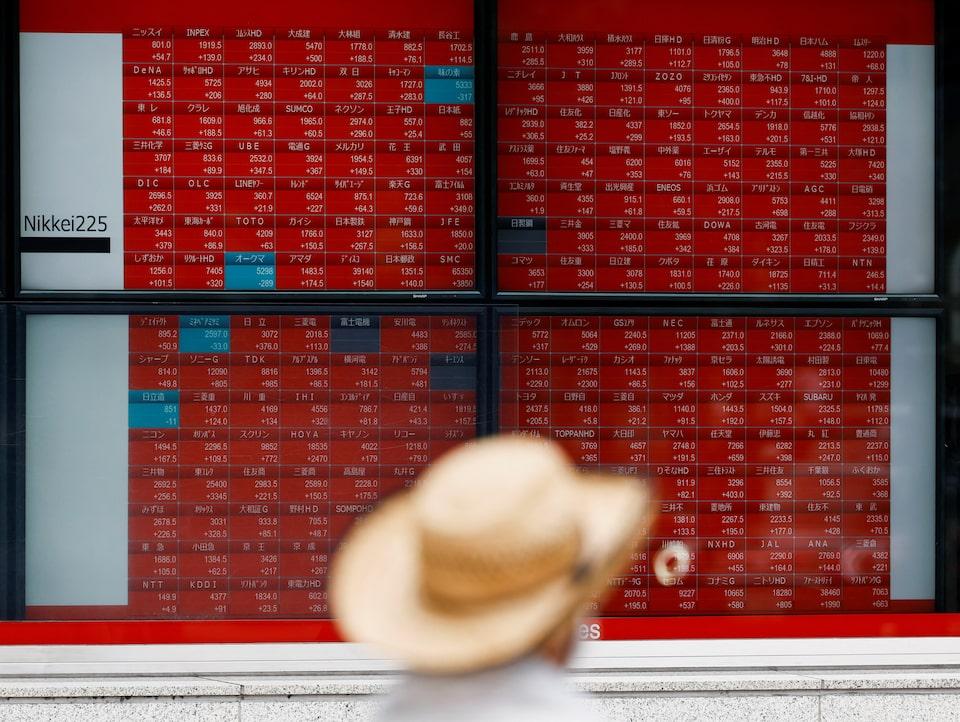
Dec 13 (Reuters) - Asian debt markets witnessed foreign outflows in November for the first time in seven months as expectations of changes in U.S. trade policies under the forthcoming Trump administration and a strengthening dollar dampened investor appetite. Non-native investors withdrew a net $1.92 billion from local bond markets in Indonesia, Thailand, Malaysia, India and South Korea, registering their first monthly net sales since April, data from regulatory authorities and bond market associations showed. "Markets started to price in the implications of an incoming Trump administration for Asia, as well as the outlook for U.S. rates," said Khoon Goh, head of Asia research at ANZ. "The prospect of trade restrictions next year does not bode well for the outlook of portfolio flows for the region." Following his November 5 election victory, U.S. president-elect Donald Trump pledged to impose significant tariffs on America's top three trading partners, including China, potentially impacting exports reliant on strong Chinese supply chains. Foreigners divested about $1.8 billion worth of Indonesian bonds, halting their six-month buying trend. Thai and Malaysian bond markets witnessed foreign outflows for a second successive month, worth about $1.08 billion and $257 million, respectively, on a net basis. The dollar's surge to two-year highs after Trump's victory last month dampened investor appetite for regional bonds, with the Malaysian ringgit, Thai baht, and South Korean won each losing nearly 1.5% against the dollar. South Korean bonds, meanwhile, saw a net $1.07 billion worth of foreign inflows, the fifth monthly net purchase in a row, influenced by their upcoming inclusion in the FTSE Russell's World Government Bond Index (WGBI) starting November 2025. Foreigners also added a meagre net $145 million to Indian debt markets last month. Sign up here. https://www.reuters.com/markets/asia/foreign-outflows-hit-asian-bonds-nov-trump-policy-concerns-dollars-rise-2024-12-13/
2024-12-13 06:28
Gold has risen over 0.8% so far this week Gold might see some unwinding going into year-end, analyst says Silver, platinum, palladium set for weekly losses Dec 13 (Reuters) - Gold prices fell on Friday after bullion hit a more than five-week high in the previous session and as the U.S. dollar gained, but prices were on track for a weekly rise on expectations of a Federal Reserve rate cut next week. Spot gold was down 1.1% at $2,652.29 per ounce at 01:43 p.m. ET (1843 GMT), as the U.S. dollar was steady at its highest in more than two weeks. Bullion hit its highest since Nov. 6 on Thursday, and has risen over 0.8% so far for the week. U.S. gold futures settled 1.2% lower at $2,675.80. "Gold had an explosive year and we're getting into the tail end of the year which might see some unwinding going into the last few weeks, but I think that's going to be short-lived and believe that gold is going to continue to move much higher," said Daniel Pavilonis, senior market strategist at RJO Futures. Underpinned by easing monetary policies, robust central bank buying, and safe-haven demand, gold has shattered multiple record peaks this year. Traders now see a 97% chance of a 25 basis point rate cut at the Fed's Dec. 17-18 meeting. The focus will also be on Chair Jerome Powell's commentary as market participants analyse U.S monetary policy for 2025, especially in the light of President-elect Donald Trump's tariff plan which economists say would stoke further inflation. Central banks typically keep interest rates elevated to curb inflation, which in turn increases the opportunity cost of holding non-yielding bullion. "Generally speaking, we see a stronger U.S. economy next year, which should leave less room for rate cuts and should thus bring less tailwinds for gold," said Carsten Menke, an analyst at Julius Baer. Spot silver fell 1.3% to $30.55 per ounce. Platinum lost 0.9% to $921.75 and palladium shed 1.9% to $951.87. All three metals were set for weekly losses. Sign up here. https://www.reuters.com/markets/commodities/gold-set-weekly-gain-with-focus-feds-policy-decision-2024-12-13/