2024-12-12 19:05
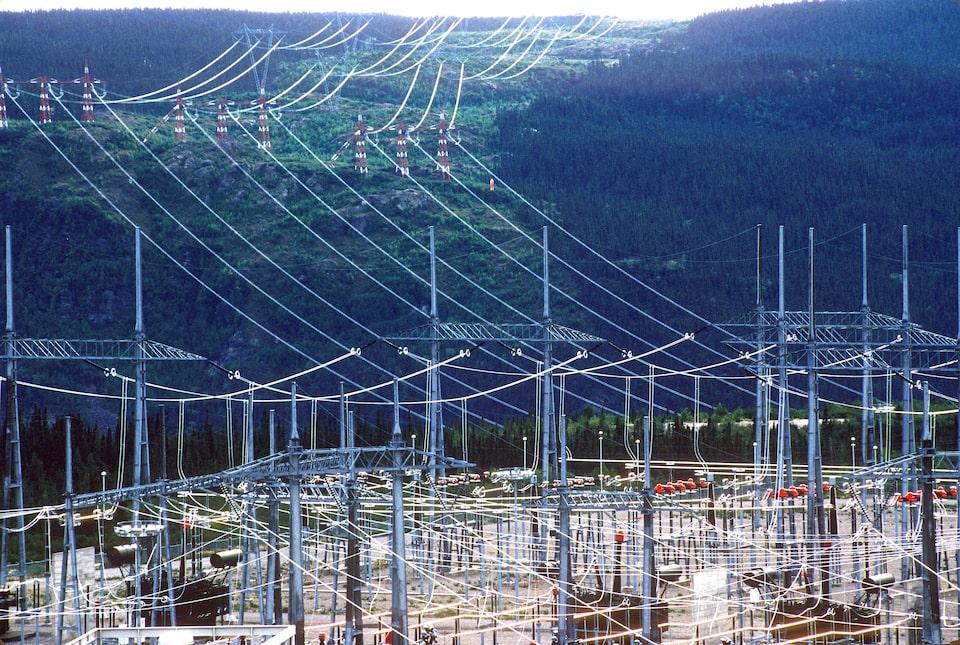
Dec 12 (Reuters) - The Canadian province of Newfoundland and Labrador on Thursday signed a memorandum of understanding with neighboring Quebec for a deal on hydroelectric generation in Labrador that will bring an estimated C$200 billion ($140.97 billion) in revenue by 2075. The deal will replace a contentious 1969 contract to export power from the Upper Churchill Falls hydroelectric facility in Labrador that has been a source of bitter tension between the two provinces for decades. Although Newfoundland and Labrador owns the majority of the Churchill Falls plant, most of the revenue has always flowed to Quebec, which under the original contract had the right to buy the power at extremely low fixed prices and sell it on for huge profits in the U.S. "This changes everything for our province," Newfoundland and Labrador Premier Andrew Furey told a news conference, to cheers and applause. "This new deal leaves behind the naivety and the short-sightedness of 1969, it doesn't wait to start at some far-off imaginary day. It is here, it is now." Furey said the new deal would have a generational impact on the growth and prosperity of Newfoundland and Labrador and bring in revenues of C$2 billion a year by 2044 and C$6 billion a year by 2060 as demand for clean power grows. The original contract was meant to expire in 2041 but was renegotiated 17 years early. The new deal will increase the price Newfoundland and Labrador receives from Quebec for its power and also covers the joint development of new hydroelectric projects in Labrador, including a new 2,250 megawatt generating facility known as Gull Island. For Quebec the deal ensures energy security as its power demand grows, adding 2,400 megawatts of capacity and securing a favorable price until 2075. Quebec premier Francois Legault said residential cost increases in Quebec would be capped at 3% a year thanks to the deal and estimated his province would save over C$200 billion over 50 years. "It's a win-win deal," Legault said, seated next to a smiling Furey. "C$200 billion for Andrew, C$200 billion for me, it's fair." ($1 = 1.4187 Canadian dollars) Sign up here. https://www.reuters.com/business/energy/eastern-canadian-provinces-agree-replace-contentious-churchill-falls-hydropower-2024-12-12/
2024-12-12 18:40
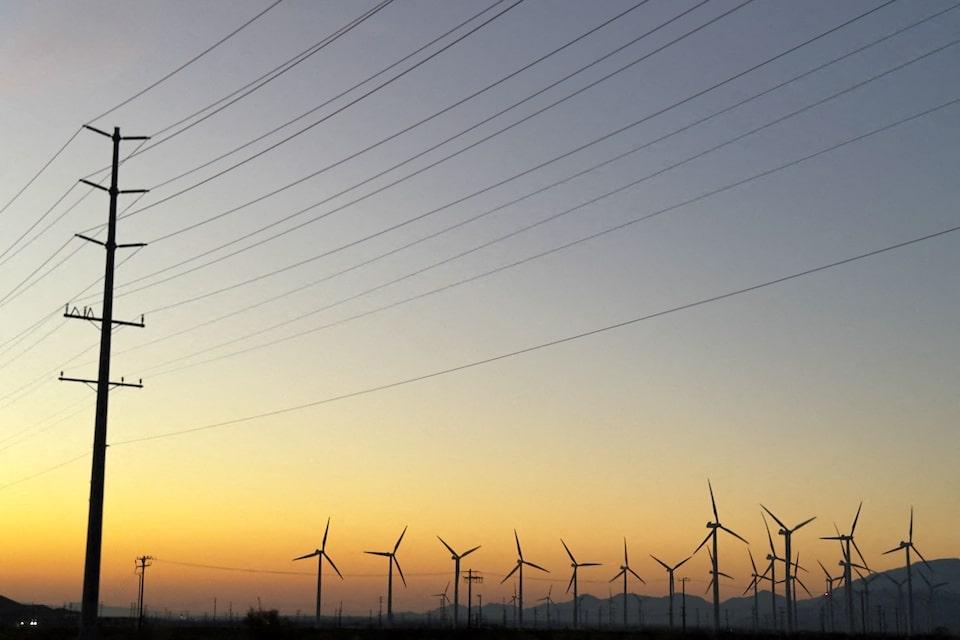
NEW YORK, Dec 12 (Reuters) - The value of U.S. power and utilities deals fell over the last year to $27.8 billion, down by 36% from 2023, as political uncertainty ahead of the Nov. 5 presidential election slowed transactions, a PwC report said on Thursday. WHY IT'S IMPORTANT Renewable power deals flourished as a result of U.S. President Joe Biden's climate and infrastructure legislation, which provides hefty funding for the development of electricity generation sources like wind and solar. The prospect of switching to an administration led by President-elect Donald Trump, who has been critical of climate-related spending, has brought deals to a multi-year low in a slowing trend that is expected to continue into 2025. BY THE NUMBERS The number of completed mergers and acquisitions in the country's power and utilities sector in 2024 dropped to 30, from 52 in 2023, 36 in 2022 and 56 in 2021, according to PwC's Power & Utilities: US Deals 2025 outlook. The total value of the deals was also sharply lower from the $43.3 billion in 2023, $36.3 billion in 2022 and $53.3 billion in 2021. Fossil-fired power generation deals, meanwhile, saw an increase in 2024. Natural gas-fired power and other fossil fuel power deals accounted for 19% of total deal value, more than double what was seen in the previous year. WHAT'S NEXT Renewable power deals are expected to continue to slow under Trump and a Republican-led Congress, while the number of fossil generation deals is expected to grow. Organic investment in renewables like wind and solar, however, is expected to remain steady. KEY QUOTES "Most important was the re-election of Donald Trump as U.S. president, which will likely lead to policies favoring traditional energy sources, including a relaxation of environmental regulations and an uptick in investment in fossil fuel infrastructure," PwC said. "Despite the changes in the White House, we expect renewables to continue to be a focal point in the industry for organic capital investment, as we do not anticipate wholesale changes to federal support in the sector in the near-term with upcoming demand growth expectations and historical bipartisan support." Sign up here. https://www.reuters.com/business/energy/us-power-deals-down-36-last-year-due-political-uncertainty-pwc-says-2024-12-12/
2024-12-12 18:28
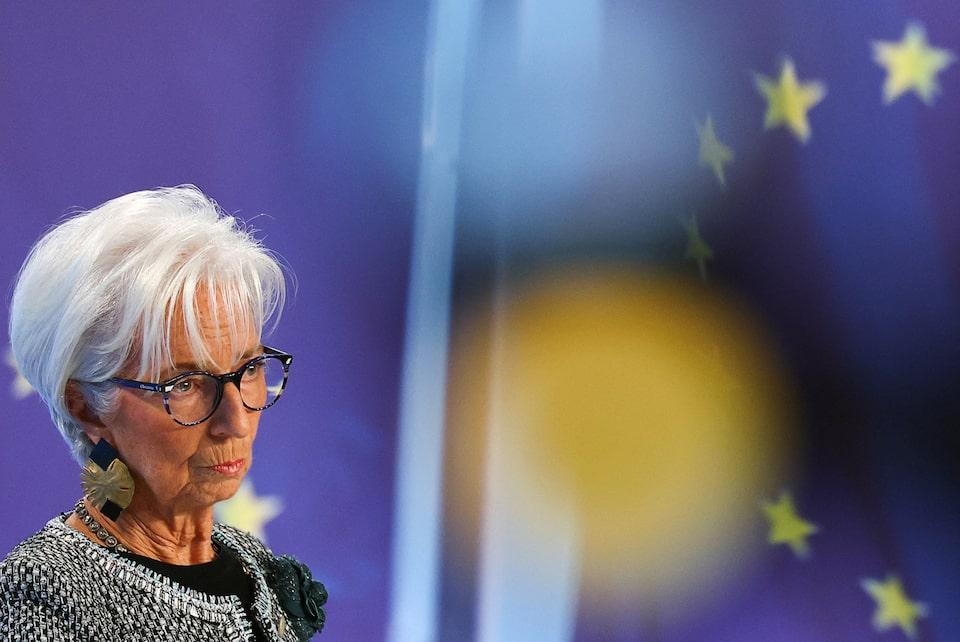
ECB cuts rates but markets confused by messaging Traders stick with expectations for speedy rate cuts ECB too optimistic on economy outlook - ING LONDON, Dec 12 (Reuters) - Euro zone markets swung on Thursday after the European Central Bank gave up a long-standing hawkish tilt but analysts were split on the signals it gave on how fast it will cut rates. At first sight all looked rosy for markets betting on speedy rate cuts from the ECB next year as the economic outlook sours and given potential tariffs from U.S. President-elect Donald Trump and political turbulence in France and Germany. The central bank, which delivered its fourth rate cut of the year on Thursday, no longer pledged to keep "keep policy rates sufficiently restrictive for as long as necessary" to bring down inflation. It sounded confident that inflation is going to settle at its 2% target on a "sustained basis". But that was couched in caution that the ECB wasn't sticking to a particular rate path, hardly a comfort for markets betting on back-to-back rate cuts going into next year. And as ECB chief Christine Lagarde spoke, markets clung onto further signs of caution, sending interest-rate sensitive German two-year yields up around 5 basis points and Italian 10-year yields over 10 bps higher. "I can see why the markets (took) it a little bit hawkishly, and she didn't quite endorse market pricing as much as expected," said Rabobank senior rates strategist Lyn Graham-Taylor. Analysts said one key factor that didn't sit well with markets was Lagarde's comments on the so-called 'neutral rate', which neither stimulates nor restricts the economy, which she said policymakers did not discuss. After all, markets are betting the bank's key rate will fall to roughly 1.75% by end-2025, the bottom end of ECB estimates Lagarde pointed to on Thursday putting the rate at 1.75%-2.5%. Lagarde added the thinking was that the neutral rate was a "little higher" than before. Arne Petimezas, director of research at Dutch broker AFS Group, said Lagarde's comment on services inflation still remaining high also made her sound "quite hawkish". In sign of investor confusion, the euro slipped around a third of a percent to $1.0468 in afternoon European trade before recovering to $1.05. WHAT NEXT? While markets wavered on Thursday, the overall direction for ECB expectations was broadly unchanged, with traders continuing to bet on speedy cuts ahead. They expect over 120 bps of rate cuts by end-2025, only marginally lower than before the ECB's decision. And they still bet on non-negligible chances of jumbo 50 basis-point moves at the next two meetings -- around a 20% chance in January, and a nearly 30% chance of one in March. So, some analysts thought the direction was clear, a point Lagarde was explicit about. "Lagarde was as dovish as she could be," said Danske Bank chief analyst Piet Christiansen, pointing to her comments on inflation risks now being two-sided, labor demand weakening and downside risks to growth. She "kept the door open and allowed the market to speculate on a jumbo rate cut." And for all Lagarde's caution around the neutral rate, she said the bank would likely debate it "more and further as we get closer to where it eventually is." "I was struck by her very last words. She said when we get to the neutral rate, not if -- there is absolutely no question in her words about the direction of travel," said Pictet Wealth Management's head of macroeconomic research Frederik Ducrozet. The ECB meanwhile cut its growth forecast to 1.1% next year and 1.4% in 2026, higher than a recent Reuters poll which expects 1% growth next year and 1.2% in 2026. ING's global head of macro Carsten Brzeski said he thought the ECB was paying to much attention to inflation, given that many believe the ECB was too late to hike rates when inflation surged. Indeed, a handful of policymakers initially wanted a larger interest-rate cut on Thursday, worried among other things that new U.S. tariffs would hamper economic growth, three sources told Reuters. "By focusing too much on the mistakes of the past, they run the risk of making a new mistake and that is being too late to save the economy," Brzeski said. Sign up here. https://www.reuters.com/markets/europe/euro-zone-risks-mount-markets-seek-clarity-pace-ecb-rate-cuts-2024-12-12/
2024-12-12 18:20
Dec 12 (Reuters) - BlackRock (BLK.N) , opens new tab recommends that interested investors consider allocating as much as 2% of their portfolio to bitcoin, the world's largest cryptocurrency, the giant asset manager said in a report on Thursday. "We see a case for investors with suitable governance and risk tolerance to include bitcoin in a multi-asset portfolio," a team of four senior BlackRock executives including Samara Cohen, chief investment officer of ETFs and Paul Henderson, senior portfolio strategist of BlackRock Investment Institute, said in the short report. The arguments in favor of those with an interest in bitcoin to include it in an asset allocation model include the fact that it is likely to be less correlated with other major asset classes and could offer a diversified source of return. "Investors should also be alert to bitcoin's risks," the report cautioned. "It may not ultimately achieve broader adoption. And it remains highly volatile and vulnerable to sharp selloffs." In addition, there have been times when its returns have been more closely tied to those of stocks and other risk assets, meaning investors might not be able to count on it serving as a hedge. BlackRock was one of 10 companies to launch new exchange-traded products tied to bitcoin in January in what has been the most successful ETF launch in the history of those products, with more than $100 billion in assets, according to data from VettaFi. The lion's share of those assets have flowed to BlackRock's iShares Bitcoin Trust, which now has $51.1 billion in assets. BlackRock said it based its allocation recommendation on gauging how much the addition of bitcoin to a portfolio would raise its overall risk. While the report's authors said that bitcoin is a unique asset, it is in some ways similar to the group of giant technology companies, including Nvidia (NVDA.O) , opens new tab and Microsoft (MSFT.O) , opens new tab, that have come to be known as the Magnificent 7. Those companies, whose big gains on Wednesday played a major role in propelling the Nasdaq Composite Index to a new record above 20,000, have an average market capitalization of $2.5 trillion, close to the $2 trillion or so for bitcoin, BlackRock said. Having significant exposure to these companies can be similar to owning bitcoin in terms of overall portfolio risk, the firm said. But BlackRock cautioned that above the 2% maximum recommended weight, "bitcoin’s share of total portfolio risk becomes outsized compared with the average magnificent 7 stock." BlackRock's report also flagged the need by investors to regularly review "bitcoin's changing nature", including the pace at which it is adopted by institutional investors, its correlation to stocks and its volatility. News of BlackRock's recommended allocation was first reported by Bloomberg News. Bitcoin's price is largely flat at about $101,390. Sign up here. https://www.reuters.com/markets/us/blackrock-recommends-bitcoin-portfolio-weighting-up-2-interested-investors-2024-12-12/

2024-12-12 18:01
WASHINGTON, Dec 12 (Reuters) - The rate on the popular U.S. 30-year fixed-rate mortgage will average around 6.0% next year and help to boost new housing construction and stimulate demand for previously owned homes, the National Association of Realtors predicted on Thursday. The NAR also projected 4.5 million existing home sales in 2025 and forecast house prices increasing by about 2%. It estimated a $410,700 median existing home price. "If rates stabilize around 6%, about 6.2 million households can once again be able to afford median-priced homes, compared to the current constraints with rates near 7%," NAR said. The housing market experienced mixed fortunes from the Federal Reserve's aggressive monetary policy tightening between March 2022 and July 2023. Sales of previously owned homes contracted sharply also as higher mortgage rates discouraged many owners from putting their houses on the market. Many homeowners have mortgage rates below 5%. The so-called rate-lock worsened a supply crunch, boosting home prices and pricing out many potential homeowners. Builders responded by constructing smaller homes, drawing buyers to new construction, which drove new home sales higher. The U.S. central bank has cut interest rates twice since it started its easing policy cycle in September, with a third reduction expected next week. Still, the 30-year fixed-rate mortgage has remained close to 7%, tracking the yield on the 10-year U.S. Treasury note, which has risen on the economy's resilience and worries that some of President-elect Donald Trump's planned policies would stoke inflation. The NAR forecast 1.45 million housing starts next year, the bulk of them for single-family units. "Lower rates can significantly benefit homebuilders by reducing financing costs and boosting market confidence," the Realtors group said. "However, inventory levels are still expected to fall short of pre-pandemic norms, continuing to present challenges for buyers." Sign up here. https://www.reuters.com/markets/us/realtors-group-forecasts-us-30-year-fixed-rate-mortgage-averaging-6-2025-2024-12-12/

2024-12-12 17:54
Producer prices increase 0.4% in November Goods, primarily eggs account for bulk of the rise in PPI Small gain in services bodes well for core PCE inflation Weekly jobless claims increase 17,000 to 242,000 Continuing claims advance 15,000 to 1.886 million WASHINGTON, Dec 12 (Reuters) - U.S. producer prices increased by the most in five months in November, but easing costs of services such as portfolio management fees and airline fares offered hope that the disinflationary trend remains in place despite stalled progress. A surge in the price of eggs amid an avian flu outbreak accounted for much of the bigger-than-expected rise in producer inflation last month. Other details of the report from the Labor Department on Thursday were, however, mostly favorable, prompting economists to sharply lower their estimates for the personal consumption expenditures (PCE) price measures tracked by the Federal Reserve for its 2% inflation target. The report, together with other data showing more people were collecting unemployment checks at the end of November relative to the beginning of the year as demand for labor cools, cemented investor expectations that the U.S. central bank would deliver its third consecutive interest rate cut next week. Inflation could, however, rise next year should President-elect Donald Trump's incoming administration push ahead with tariff increases and mass deportations of undocumented immigrants. "We see little evidence of pipeline price pressure in the producer price data," said Samuel Tombs, chief U.S. economist at Pantheon Macroeconomics. "The foundations are in place for core PCE inflation to fall further next year, though the new administration will snatch defeat from the jaws of victory if they press ahead with higher import tariffs and deportations." The producer price index for final demand jumped 0.4%, the largest gain since June, after an upwardly revised 0.3% increase in October, the Labor Department's Bureau of Labor Statistics said. Economists polled by Reuters had forecast the PPI gaining 0.2% following a previously reported 0.2% rise in October. In the 12 months through November, the PPI shot up 3.0%. That was the biggest year-on-year increase since February 2023 and followed a 2.6% rise in October. The government reported on Wednesday that consumer prices increased by the most in seven months in November, while a measure of underlying price pressures continued to run warmer over the past four months. Wholesale goods prices surged 0.7%, accounting for nearly 60% of the monthly rise in the PPI, after edging up 0.1% in October. Food prices soared 3.1%, making up 80% of the increase in goods prices. Wholesale egg prices vaulted 54.6%, the most since June, after declining 20.6% in October. Prices for fresh and dry vegetables, fresh fruits and melons also rose. Energy prices gained 0.2%. Excluding the volatile food and energy components, goods prices rose 0.2%, advancing by the same margin for five straight months. SERVICES PRICES TAMER Services prices gained 0.2% after climbing 0.3% in October. Portfolio management fees fell 0.6% after surging 3.1% in October. Airline passenger fares decreased 2.1% after increasing 2.6% in the prior month. The cost of hotel and motel rooms dropped 3.1% after rising 2.8% in October. Prices for physician and hospital outpatient care were unchanged, but the cost of hospital inpatient care rose 0.2%. Portfolio management fees, healthcare, hotel and motel accommodation and airline fares are among components that go into the calculation of the PCE price index, excluding food and energy. Following the PPI data, economists slashed their estimates for November's so-called core PCE inflation to 0.11% from as high as 0.3% on Wednesday after the CPI report. Core PCE inflation is one of the measures tracked by the Fed for monetary policy. It rose 0.3% for a second straight month in October. Core inflation was forecast increasing 2.8% year-on-year in November, matching October's advance. "If our forecast proves correct, it would be a relief and leave us less worried about the recent trajectory of inflation," said Aditya Bhave, a U.S. economist at Bank of America Securities. "That said ... progress on inflation has stalled of late, and there are upside risks to inflation on the horizon." Stocks on Wall Street were mostly lower. The dollar was steady versus a basket of currencies. U.S. Treasury yields rose. Financial markets have almost fully priced in a quarter-percentage-point rate cut at the Fed's Dec. 17-18 policy meeting, according to CME Group's FedWatch Tool. The Fed kicked off its monetary policy easing cycle in September. Its benchmark overnight interest rate is now in the 4.50%-4.75% range, having been hiked by 5.25 percentage points between March 2022 and July 2023 to tame inflation. A separate report from the Labor Department showed initial claims for state unemployment benefits increased 17,000 to a seasonally adjusted 242,000 for the week ended Dec. 7. The jump likely reflected volatility after the Thanksgiving holiday and probably does not mark an abrupt shift in labor market conditions. Claims are likely to remain choppy in the weeks ahead. Nonetheless, the labor market is slowing. Though job growth accelerated in November after being severely constrained by strikes and hurricanes in October, the unemployment rate ticked up to 4.2% after holding at 4.1% for two consecutive months. A stable labor market is critical to keeping the economic expansion on track. Historically low layoffs account for much of the labor market stability, and have driven consumer spending. The number of people receiving benefits after an initial week of aid, a proxy for hiring, increased 15,000 to a seasonally adjusted 1.886 million during the week ending Nov. 30, the claims report showed. The elevated so-called continued claims are a sign that some laid-off people are experiencing longer bouts of unemployment. Continued claims are still running high in Washington State, despite the end early last month of a strike at Boeing (BA.N) , opens new tab. They remain lofty in North Carolina in the aftermath of Hurricane Helene and in Michigan following job losses in the automobile sector. The median duration of unemployment spells rose to the highest level in nearly three years in November. "While the labor market on balance appears healthy, there are some pockets of softness, and the Fed wants to guard against that turning into more significant weakness," said Nancy Vanden Houten, lead U.S. economist at Oxford Economics. Sign up here. https://www.reuters.com/markets/us/us-producer-price-increase-exceeds-expectations-november-2024-12-12/