2024-12-12 12:14
Canadian oil producers see higher output amid resilient demand U.S. fuel demand expected to rise with lower borrowing rates Trans Mountain pipeline boosts Canadian crude prices and market access Dec 12 (Reuters) - Three of Canada's biggest oil producers, Suncor Energy (SU.TO) , opens new tab, Cenovus Energy (CVE.TO) , opens new tab and Imperial Oil (IMO.TO) , opens new tab, on Thursday projected higher production in 2025, betting on resilient demand for Canadian crude in U.S. and international markets. Fuel demand in the United States, the biggest destination for Canadian crude, is expected to rise next year as U.S. industrial activity will likely benefit from a cut in borrowing rates, according to the U.S. Energy Information Administration. Oil exports to the U.S. could slow, however, if incoming U.S. President Donald Trump follows through on his pledge to add a 25% tariff to Canadian goods unless Ottawa clamps down on the flow of illegal immigrants and drugs across the border. Calgary, Alberta-based Suncor forecast 2025 production to be between 810,000 and 840,000 barrels per day (bpd) next year, a 4.4% rise at midpoint compared to projected output for 2024. More noteworthy, BMO Capital Markets Analyst Randy Ollenberger said in a note, is that the company is well-positioned to beat its 2024 production guidance of 770,000-810,000 bpd "raising the question whether a repeat could occur in 2025." Cenovus forecast a 4.4% increase in 2025 crude output, targeting 805,000 to 845,000 barrels of oil equivalent per day, primarily driven by the start-up of the Narrows Lake oil sands project. Imperial Oil, majority-owned by Exxon Mobil Corp (XOM.N) , opens new tab, expects a 3.1% production increase. Canadian producers are benefiting from the start-up of the Trans Mountain pipeline expansion earlier this year, which has nearly tripled the flow of oil to Canada's Pacific Coast from landlocked Alberta, boosted the price of Canadian crude and opened up market access to refineries in Asia and the U.S. West Coast. Suncor also forecast a slight rise in refinery throughput volumes to between 435,000 and 450,000 bpd in 2025. The company forecast capital spending for 2025 would fall 3% from this year to between C$6.1 billion ($4.31 billion) and C$6.3 billion. Imperial expects to spend C$1.9 billion-C$2.1 billion in 2025, above analysts' estimates, and also increased its 2024 capital expenditure by 9% to C$1.85 billion. Company CEO Brad Corson said the higher spending was mainly related to the timing of multi-year projects and opportunities such as additional drilling at its Cold Lake oil sands project. "Where it makes sense for us to accelerate some of that work we're doing that, so we can be most efficient with the capital dollars," Corson told analysts on a call. Imperial shares were last down 6% on the Toronto Stock Exchange at C$97.85. Suncor shares were last down 1.8% at C$53.09, while Cenovus, which expects to keep 2025 capital spending broadly in line with 2024, dipped 0.7% to C$21.55. ($1 = 1.4159 Canadian dollars) Sign up here. https://www.reuters.com/business/energy/suncor-energy-expects-higher-production-2025-2024-12-12/
2024-12-12 12:00
SINGAPORE, Dec 12 (Reuters) - Saudi Arabia's crude oil supply to China is set to rebound to a three-month high in January, trade sources said on Thursday, thanks to price cuts by the world's top exporter amid uncertainty over Iranian supplies. State oil firm Saudi Aramco (2222.SE) , opens new tab will ship about 46 million barrels in January to China, a tally of allocations to Chinese refiners showed, the highest volume since October and up from December's 36.5 million barrels. China's state majors Sinopec (600028.SS) , opens new tab, PetroChina (601857.SS) , opens new tab will be lifting more Saudi crude in January, and non-state owned refiners Rongsheng Petrochemical (002493.SZ) , opens new tab and Shenghong Petrochemical will also increase lifting, the sources said, speaking on condition of anonymity. Saudi Aramco declined to comment. China's demand for Saudi oil rose after Aramco cut its official selling prices (OSPs) to Asia for two straight months. On Sunday, the producer cut the flagship Arab Light crude OSP to Asia by 80 cents per barrel in January to the lowest in four years. The increased Saudi shipments followed tighter supplies and higher prices from Iran, which prompted some independent refiners in China to seek more non-Iranian cargoes from the Middle East. Sign up here. https://www.reuters.com/markets/commodities/saudi-crude-oil-supply-china-rebound-jan-vs-dec-sources-say-2024-12-12/
2024-12-12 11:53
Cut takes rates to lowest level since November 2022 Swiss franc weakens after decision SNB flags weak inflation and political uncertainty Schlegel says likelihood of negative rates has reduced BERN, Dec 12 (Reuters) - The Swiss National Bank cut its interest rate by 50 basis points on Thursday, its biggest reduction in almost 10 years, responding to weaker than expected inflation in Switzerland and growing uncertainty about the global economy. The central bank flagged tepid price increases, rising risks around future U.S. economic policy and political hazards in Europe as it reduced its policy rate from 1.0% to 0.5%, the lowest since November 2022. While markets had predicted the move, more than 85% of economists polled by Reuters had expected a smaller cut of 25 basis points. The Swiss franc weakened after the decision, leaving the euro up nearly 0.7% on the day at 0.9339 francs and the dollar up 0.4% at 0.8883 francs. Swiss stocks rallied, pushing the main Zurich index up 0.45% on the day. The cut is the steepest drop in Swiss borrowing costs since the SNB's emergency rate reduction in January 2015 when it suddenly quit its minimum exchange rate with the euro. "With our easing of monetary policy today we are countering the lower inflationary pressure," the SNB's new chairman Martin Schlegel told reporters. "We will continue to monitor the situation closely, and will adjust our monetary policy if necessary to ensure inflation remains within the range consistent with price stability over the medium term," Schlegel added. He also left the door open for further interest rate cuts next year, but said it was now less likely the SNB could take rates below 0% - a possibility he has recently flagged. "At the current juncture we cannot exclude negative interest rates in the future," he said. "Now with these cuts today the likelihood of negative rates has become smaller." Thursday's decision was the first under Schlegel, and saw an acceleration from the policy of predecessor Thomas Jordan, who oversaw three reductions of 25 basis points this year. It was made possible by low Swiss inflation, which was 0.7% in November, and has been within the SNB's 0-2% target range, which it calls price stability, since May 2023. Schlegel said uncertainty about future price developments was still high as the central bank forecast that Swiss inflation in 2025 would be lower than previously expected at 0.3%. LOWER RATES ELSEWHERE The actions of other central banks would also be taken into account, Schlegel said, although the SNB's focus remained on developments at home. The European Central Bank is expected to cut rates later on Thursday and the U.S. Federal Reserve on Dec. 18. The Bank of Canada cut its main policy rate by 50 basis points on Wednesday. Narrowing interest rate differentials between Switzerland and other countries increase the attractiveness of the safe-haven franc, boosting the currency. The franc's appreciation is an additional headache for Swiss exporters, making their exports more expensive when they are already facing subdued demand in Europe and China. The cut was welcomed by industry associations Swissmem and SwissMechanic. "This is a good decision," said Jean-Philippe Kohl, Deputy Director and Head of Economic Policy at Swissmem. "The lower key interest rate will dampen the upward pressure on the Swiss franc." Low inflation and risks to the European economy and thus to the Swiss economy were probably the major drivers for the rate cut, said UBS economist Alessandro Bee. "Furthermore, by cutting by 50 basis points the SNB is likely to widen the interest rates differential and thereby pre-emptively counter excessive Swiss franc strength." Schlegel said the SNB was ready to intervene in foreign exchange markets if necessary, although interest rates remained its primary tool. "The SNB softened its forward guidance for possible further cuts. But with the latest move the SNB likely cemented the market expectations for lower rates," said Alexander Koch, head of macro and fixed income research at Raiffeisen. "And if the SNB does not deliver at the coming meetings, there is ample potential for renewed franc strength." Sign up here. https://www.reuters.com/markets/europe/swiss-national-bank-cuts-interest-rates-by-50-basis-points-2024-12-12/
2024-12-12 11:51
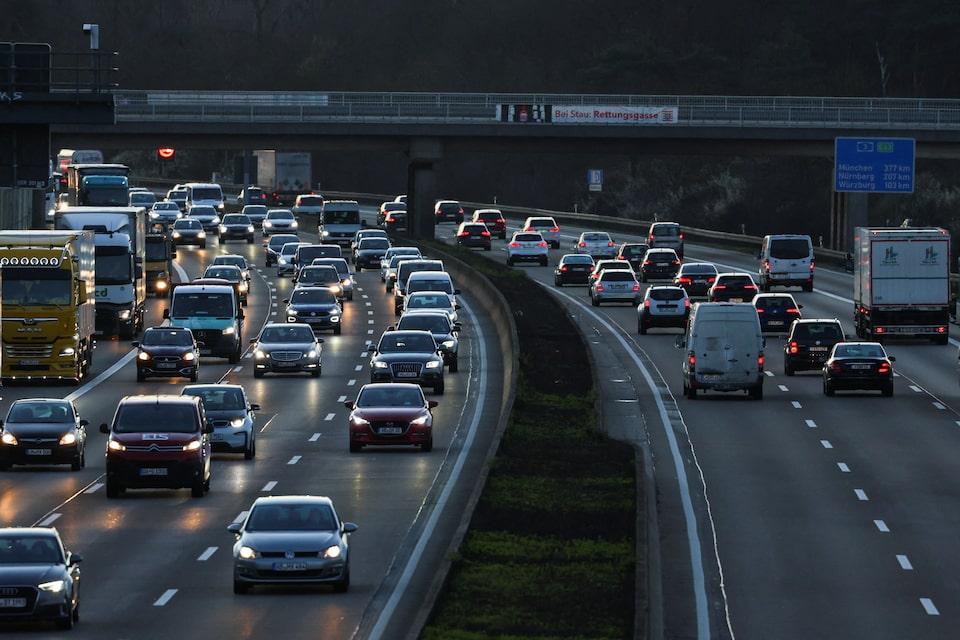
BRUSSELS, Dec 12 (Reuters) - The European Commission is not considering changing Europe's policies to cut CO2 emissions from cars, despite a push from the EU's biggest political group to weaken the laws, the bloc's climate policy chief told Reuters on Thursday. The centre-right European People's Party - the European Parliament's biggest lawmaker group - launched a campaign , opens new tab this week to weaken the climate rules, adding to pressure on Brussels from automakers and national governments to urgently help Europe's ailing autos sector. Asked whether he was now considering changing the car CO2 rules, European Union climate commissioner Wopke Hoekstra said he was not. "No. The answer is no," he told Reuters on the sidelines of an industry event in Brussels. Hoekstra, like European Commission President Ursula von der Leyen, is part of the EPP political group. Europe's car sector is in turmoil, with thousands of jobs on the line as it struggles with weak demand, Chinese competition and lower than expected electric vehicle sales. Brussels has said the climate rules are needed to meet Europe's legally-binding emissions goals, and they provide a predictable investment environment for European companies. The main demand of the EPP is that automakers are given relief from 2025 CO2 limits, which many are expected to miss. European automaker association ACEA has said the industry potentially faces 15 billion euros ($15.8 billion) of fines for failing to meet the 2025 targets, which it says would divert money from investments. Hoekstra has previously played down such concerns, noting carmakers' far lower fines for missing 2020 EU emissions targets. Volkswagen then faced penalties exceeding 100 million euros. The EPP suggests using a three-year average to count automakers' compliance with next year's CO2 limits - allowing them to miss next year's targets and dodge fines if they catch up in 2026 and 2027. ($1 = 0.9512 euros) Sign up here. https://www.reuters.com/world/europe/eu-not-buckling-pressure-over-car-co2-rules-climate-chief-says-2024-12-12/
2024-12-12 11:50
Sees overhang of up to 1.4 million bpd in 2025 Sees higher 2025 demand growth on China stimulus Trims 2024 oil demand growth forecast by 80,000 bpd LONDON, Dec 12 (Reuters) - The world oil market will be comfortably supplied in 2025, the International Energy Agency (IEA) said on Thursday, even after producer group OPEC+ extended oil supply cuts and a slightly higher than expected demand forecast. The outlook from the IEA, which advises industrialised countries, points to continued headwinds for OPEC+, which comprises the Organization of the Petroleum Exporting Countries and allies such as Russia. OPEC+ is seeking to begin reviving output in 2025 after years of cuts. Oil demand growth has been weaker than expected this year in large part because of China. After driving rises in oil consumption for years, economic challenges and a shift towards electric vehicles are tempering oil growth prospects in the world's second-largest consumer. Still, the IEA increased its 2025 global oil demand growth forecast to 1.1 million barrels per day (bpd) from 990,000 bpd last month, "largely in Asian countries due to the impact of China's recent stimulus measures," it said in its monthly oil market report. China is seeking to boost the economy and will adopt an "appropriately loose" monetary policy next year, the first easing of its stance in some 14 years, the Politburo was quoted as saying on Monday. At the same time, the IEA expects non-OPEC+ nations to boost supply by about 1.5 million bpd next year, driven by the United States, Canada, Guyana, Brazil and Argentina - more than the rate of demand growth. "The relatively subdued pace of global oil demand growth is set to continue in 2025, accelerating only modestly," the IEA said, saying also that the market was "looking comfortably supplied." Oil prices pared an earlier gain after the report was released, with Brent crude trading below $74 a barrel. 2025 SURPLUS To support the market, OPEC+ last week pushed back the start of oil output rises by three months until April and extended the full unwinding of cuts by a year until the end of 2026 due to weak demand and booming production outside the group. The IEA said, even excluding the return to higher output quotas, its current outlook points to a 950,000 bpd supply overhang next year - almost 1% of world supply. This would rise to 1.4 million bpd if OPEC+ goes ahead with its plan to start unwinding cuts from the end of next March, it said. Next year's surplus, as forecast by the IEA, could make it harder for OPEC+ to bring back production. The hike was earlier due to start in October 2024, but OPEC+ has delayed it amid falling prices. Forecasts on the strength of demand growth in 2024 vary, partly due to differences over demand from China and the pace of the world's switch to cleaner fuels. The IEA's view is at the lower end of industry estimates and in the report, it trimmed its forecast of 2024 world demand growth to 840,000 bpd, down 80,000 bpd from last month. OPEC, which is at the top end, on Wednesday cut its demand growth forecasts for this year and next, but still expects more rapid growth than the IEA of 1.61 million bpd and 1.45 million bpd respectively. Sign up here. https://www.reuters.com/markets/commodities/iea-sees-comfortably-supplied-oil-market-2025-despite-demand-hike-2024-12-12/
2024-12-12 11:48
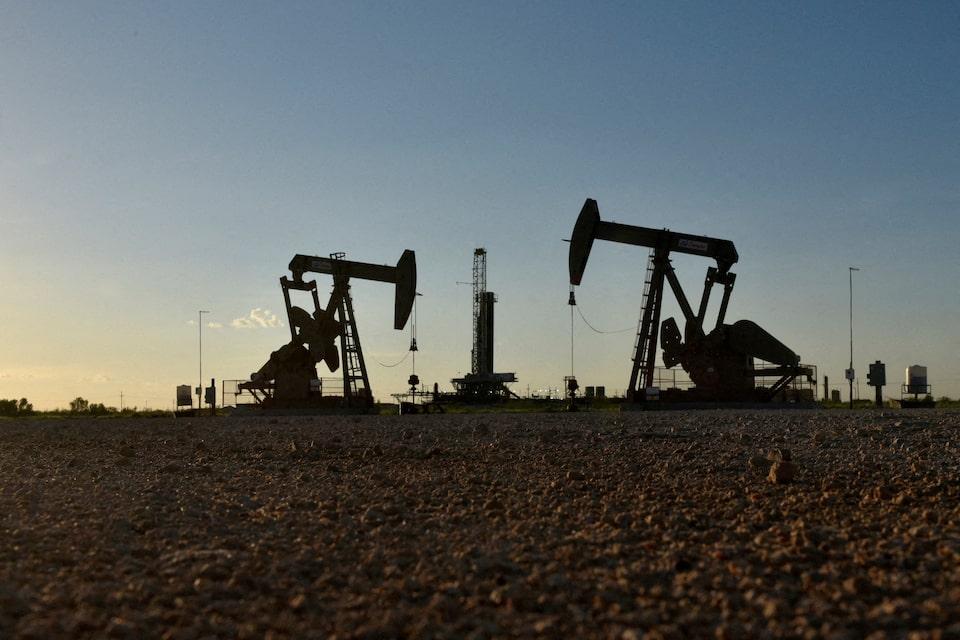
TSX ends down nearly 1% at 25,410.71 Posts its lowest closing level since Nov. 26 Materials group falls 2.5% as metal prices fall Energy declines 1.7%; oil settles 0.4% lower Dec 12 (Reuters) - Canada's main stock index fell to a two-week low on Thursday as lower commodity prices weighed on resource shares and after a supersized interest rate cut by the Bank of Canada failed to quell unease about domestic economic prospects. The Toronto Stock Exchange's S&P/TSX composite index (.GSPTSE) , opens new tab ended down 246.99 points, or 0.96%, at 25,410.71, its biggest decline since Oct. 31 and lowest closing level since Nov. 26. The Bank of Canada's aggressive easing campaign "signals a weaker-than-expected economy in Canada," said Shiraz Ahmed, senior portfolio manager and founder of Sartorial Wealth at Raymond James. The prospect of U.S. tariffs on Canadian imports is among the factors "creating a sense of unease in the markets," Ahmed added. On Wednesday, the BoC slashed its benchmark interest rate by 50 basis points to 3.25% to address slower economic growth. Some Canadian premiers are urging Ottawa to respond robustly to the threat of tariffs from incoming U.S. President Donald Trump and have highlighted critical minerals and metals as products the United States relies on, Canada's finance minister said. The materials group, which includes fertilizer companies and metal mining shares, fell 2.5% as gold and copper prices fell. The price of oil also declined, settling 0.4% lower at $70.02 a barrel. Energy lost 1.7%. Three of Canada's biggest oil producers, Suncor Energy (SU.TO) , opens new tab, Cenovus Energy (CVE.TO) , opens new tab and Imperial Oil (IMO.TO) , opens new tab, projected higher production in 2025, betting on resilient demand for Canadian crude to U.S. and international markets. Shares of all three fell, with Imperial Oil down 6.7%. Heavily weighted financials were also a drag, falling 0.7%. Utilities was down 0.8% as bond yields climbed after hotter-than-expected U.S. producer price data. Sign up here. https://www.reuters.com/markets/tsx-futures-slip-after-previous-sessions-gains-driven-by-boc-rate-cut-2024-12-12/