2025-12-30 06:33
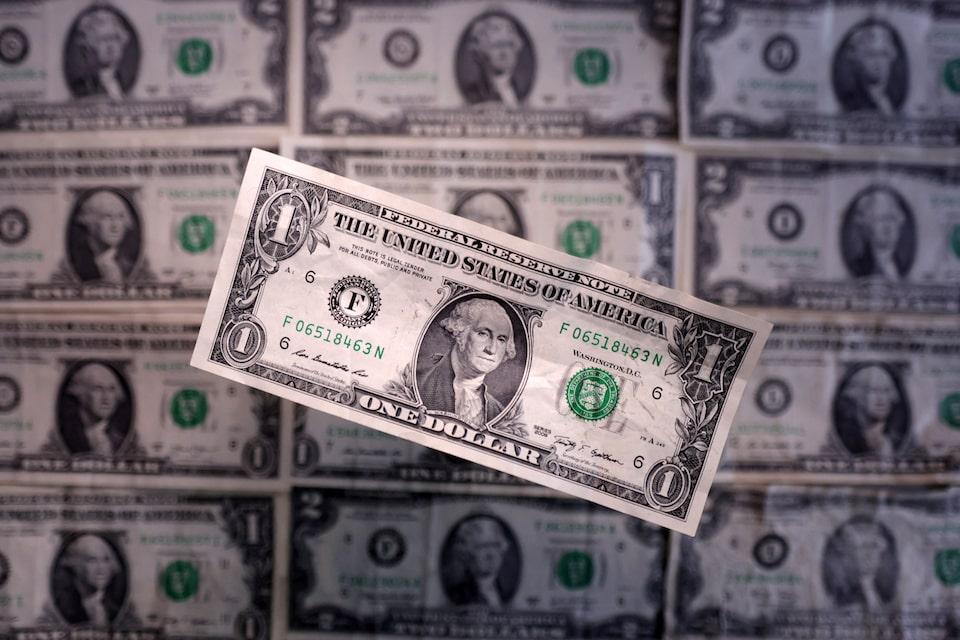
Minutes show central bank split on 2026 policy Dollar index poised for steepest annual drop in eight years China's yuan breaches key level against dollar NEW YORK, Dec 30 (Reuters) - The dollar advanced on Tuesday, maintaining gains after the release of minutes from the Federal Reserve's December meeting, as investors attempt to parse the path of monetary policy. Year-end holidays have kept trading volume light, and analysts cautioned not to put too much weight on market moves over recent days, however. Still, the greenback is on track for its worst performance since 2017 with a fall of nearly 10%. Sign up here. According to minutes of the latest two-day session from the Fed at its Dec. 9-10 meeting, the central bank agreed to reduce rates only after a deeply nuanced debate about the risks facing the U.S. economy right now. New projections issued after the December meeting show the Fed only expects one rate cut next year, while language in the new policy statement indicated the Fed would likely remain on hold for now until new data shows that either inflation is again falling or unemployment is rising more than anticipated. Markets are currently pricing in about 50 basis points of cuts next year. "We don't have any direction in Fed policy and so you're seeing that reflected in the dollar and the currency rates, you're seeing it reflected in the interest rates as well in the Treasury rates, so the market doesn't have a lot to work with right here," said Joseph Trevisani, senior analyst at FX Street in New York. "If we're looking for movement in the new year in the dollar and the currencies and maybe even interest rates, we're going to have to start looking to the economy and see if that will move things." The dollar index , which measures the greenback against a basket of currencies, rose 0.19% to 98.19, while the euro was down 0.18% at $1.1751 on the day - but up more than 13% on the year. Sterling weakened 0.3% to $1.3467 but is up nearly 8% against the dollar for 2025. The dollar index , which measures the U.S. currency against rivals, is down 9.5% on the year, its steepest decline in eight years as Fed rate-cut bets, shrinking interest rate differentials against other currencies and concerns about fiscal deficits and political uncertainty have all weighed on the greenback. While the economic calendar is light in most markets ahead of the New Year holiday, data earlier on Tuesday showed U.S. home prices rose in October at the slowest annual rate in more than 13 years, according to the Federal Housing Finance Agency. It was a potential sign of improving affordability in the long-struggling housing market. The yen weakened 0.2% against the greenback to 156.39 per dollar, although the Japanese currency has strengthened in recent days to move away from levels that drew statements from officials in Tokyo last week and increased market expectations of a possible intervention by the Bank of Japan. YUAN BREACHES KEY LEVEL China's onshore yuan pierced the psychological level of seven to the dollar for the first time in 2-1/2 years, defying weaker central bank guidance, as exporters rushed to sell dollars at year-end. The yuan hit 6.987 per dollar , its strongest since May 2023. It has gained 4% against a weaker dollar since early April when U.S. President Donald Trump announced sweeping tariffs, and is set to snap a three-year streak of declines. China's central bank has sought to prevent the yuan from overshooting through weaker guidance rates and verbal warnings in state media, but has failed to reverse the yuan's strengthening trend. https://www.reuters.com/world/asia-pacific/dollar-steady-ahead-fed-minutes-sluggish-end-dismal-2025-2025-12-30/
2025-12-30 06:05
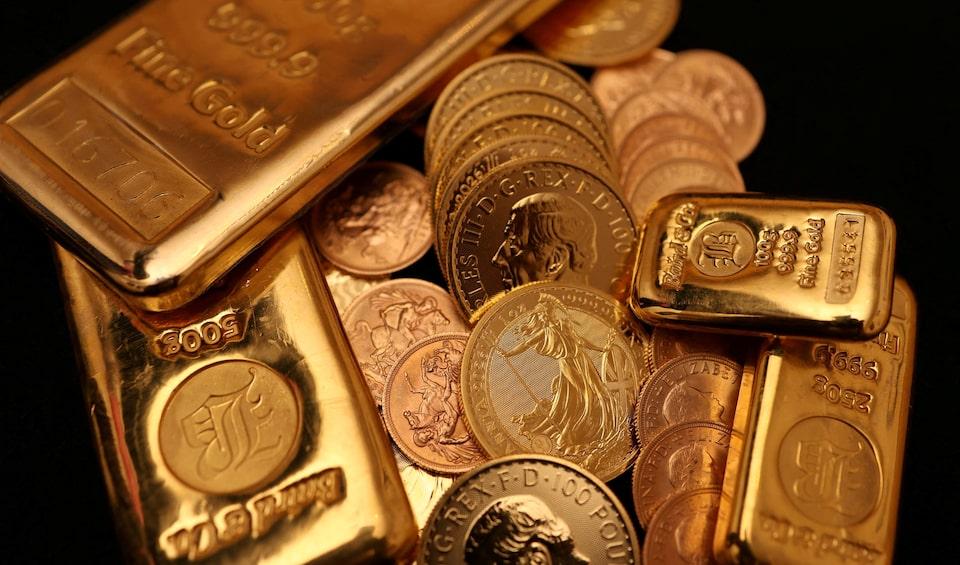
Fed's December meeting minutes show deep divisions Silver hit all-time high of $83.62/oz on Monday, surges 168% in 2025 Platinum and palladium recover after record drops Dec 30 (Reuters) - Precious metals rebounded on Tuesday, after falling sharply in the previous session, as the market refocused on geopolitical and economic risks, reigniting gold's rally to cap its best year since 1979. Spot gold rose 0.8% to $4,364.70 per ounce at 2:07 p.m. ET (1907 GMT). On Monday, it recorded its biggest daily percentage loss since October 21 as profit-taking pushed it down from Friday's record high of $4,549.71. Sign up here. U.S. gold futures settled 1% higher at $4,386.30. "We saw very extreme volatility yesterday where we saw strong action in Asian trading to the upside and then rather substantial profit-taking... but things have stabilised somewhat today, the trade remains generally favourable," said Peter Grant, vice president and senior metals strategist at Zaner Metals. Gold, seen as a safe-haven asset, has surged 66% in 2025 — its steepest climb since 1979 — propelled by a perfect storm of interest rate easing, geopolitical flashpoints, robust central bank purchases and flows into bullion-backed ETFs. The U.S. Federal Reserve agreed to cut interest rates at its December meeting only after a deeply nuanced debate about the risks facing the U.S. economy right now, according to minutes of the latest two-day session. The Fed next meets on January 27-28, with investors currently expecting rates to be left unchanged. "The market remains sceptical on the Russia-Ukraine peace deal, and the broader measures of geopolitical risk remain elevated," supporting prices, Grant said. Russia accused Ukraine of trying to attack President Vladimir Putin's residence and vowed retaliation. Ukraine said the claim was baseless. Silver rose 7.3% to $77.48 per ounce. It hit an all-time high of $83.62 on Monday, before logging its biggest daily drop since August 2020. Silver has soared 168% this year, driven by its inclusion on the U.S. critical minerals list, supply deficits and growing industrial and investor appetite. Platinum rose 5.1% to $2,216.45 per ounce. It also touched a record high on Monday, of $2,478.50, before logging its biggest-ever one-day drop. Palladium rose 1.6% to $1,639.08, after falling around 16% on Monday. https://www.reuters.com/world/india/gold-bounces-back-two-week-low-silver-recovers-2025-12-30/
2025-12-30 05:47
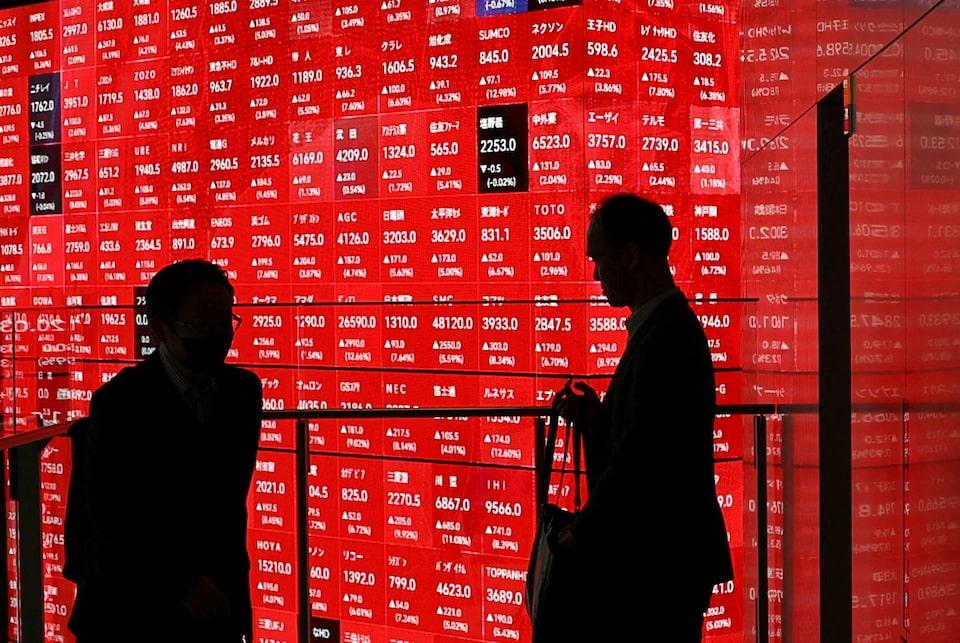
Fed minutes reveal deep divisions, nuanced debate regarding monetary policy European shares set fresh all-time closing high Silver, gold find footing after startling slump Oil muted as Ukraine peace hopes fade, Middle East tensions flare NEW YORK, Dec 30 (Reuters) - U.S. stocks slumped on Tuesday, while gold bounced back on the penultimate trading day of 2025. All three indexes dipped into negative territory in a light-volume pre-holiday session in a subdued ending to a volatile year. Sign up here. Having weathered a year of tariff wars, the longest government shutdown in U.S. history, and roiling geopolitical strife, all three U.S. indexes, along with their global counterparts, are set to log robust, double-digit gains. "At the end of the day, solid corporate profits can make up for a lot of sins," said Ryan Detrick, chief market strategist at Carson Group in Omaha. "And in 2025, strong earnings have justified the bull market that we've seen this year." "We see no major cracks to suggest a recession is coming," Detrick added. "We're optimistic the labor market will get better and this bull market will probably have another few tricks up its sleeve in 2026." Minutes from the U.S. Federal Reserve's last meeting of the year showed most of the group agreed to cut rates, but the debate about the risks facing the U.S. economy revealed deep divisions among the policymakers. "The Fed minutes only further confirm that there are really two sides to potential future policy, and the divide likely will continue to grow," Detrick said. "The reality is inflation is still a tad hot, and the Fed should be looking to cut interest rates to support the weakening labor market in 2026." On the geopolitical front, efforts to resolve the Russia-Ukraine war were complicated by Russian President Vladimir Putin's warning that Russia's negotiating stance will toughen following its accusations that Kyiv attacked Putin's residential complex in Roshchino. Ukraine denies the accusations and said the Kremlin fabricated the incident to block peace negotiations. The Dow Jones Industrial Average (.DJI) , opens new tab fell 94.87 points, or 0.20%, to 48,367.06. The S&P 500 (.SPX) , opens new tab fell 9.51 points, or 0.14%, to 6,896.23 and the Nasdaq Composite (.IXIC) , opens new tab fell 55.27 points, or 0.23%, to 23,419.08. European shares hit another record closing high amid thin, year-end trading, with banking and commodity-linked stocks giving the STOXX 600 a boost. MSCI's gauge of stocks across the globe (.MIWD00000PUS) , opens new tab fell 0.62 points, or 0.06%, to 1,020.07. The pan-European STOXX 600 (.STOXX) , opens new tab index rose 0.6%, while Europe's broad FTSEurofirst 300 index (.FTEU3) , opens new tab rose 13.87 points, or 0.59%. Emerging market stocks (.MSCIEF) , opens new tab rose 2.43 points, or 0.17%, to 1,404.09. MSCI's broadest index of Asia-Pacific shares outside Japan (.MIAPJ0000PUS) , opens new tab closed higher by 0.13%, to 722.72, while Japan's Nikkei (.N225) , opens new tab fell 187.44 points, or 0.37%, to 50,339.48. Gold and silver prices rebounded from the prior session's steep selloff, which was largely attributable to year-end profit-taking following the precious metals' bumper year. Gold remains poised to register its best year of gains since 1979. Spot gold rose 0.3% to $4,344.75 an ounce, while spot silver rose 5.4% to $76.20 per ounce. The dollar held its gains following the release of the Fed minutes, but remained on course for its steepest annual drop in eight years. The dollar index , which measures the greenback against a basket of currencies including the yen and the euro, rose 0.23% to 98.23, with the euro down 0.23% at $1.1745. Against the Japanese yen , the dollar strengthened 0.26% to 156.44. In cryptocurrencies, bitcoin gained 0.74% to $87,888.55. Ethereum rose 0.71% to $2,955.35. U.S. Treasury yields ticked higher, essentially unchanged after the Fed minutes were released. The yield on benchmark U.S. 10-year notes rose 0.4 basis points to 4.12%, from 4.116% late on Monday. The 30-year bond yield rose 0.1 basis points to 4.805%, from 4.804% late on Monday. The 2-year note yield, which typically moves in step with interest rate expectations for the Federal Reserve, fell 1.9 basis points to 3.446%, from 3.465% late on Monday. Oil prices held firm amid fading hopes of an imminent Russia-Ukraine peace deal and rising Middle East tensions concerning Yemen. U.S. crude dipped 0.22% to settle at $57.95 per barrel, while Brent settled at $61.92 per barrel, down 0.03% on the day. https://www.reuters.com/world/china/global-markets-wrapup-1-2025-12-30/
2025-12-30 05:45
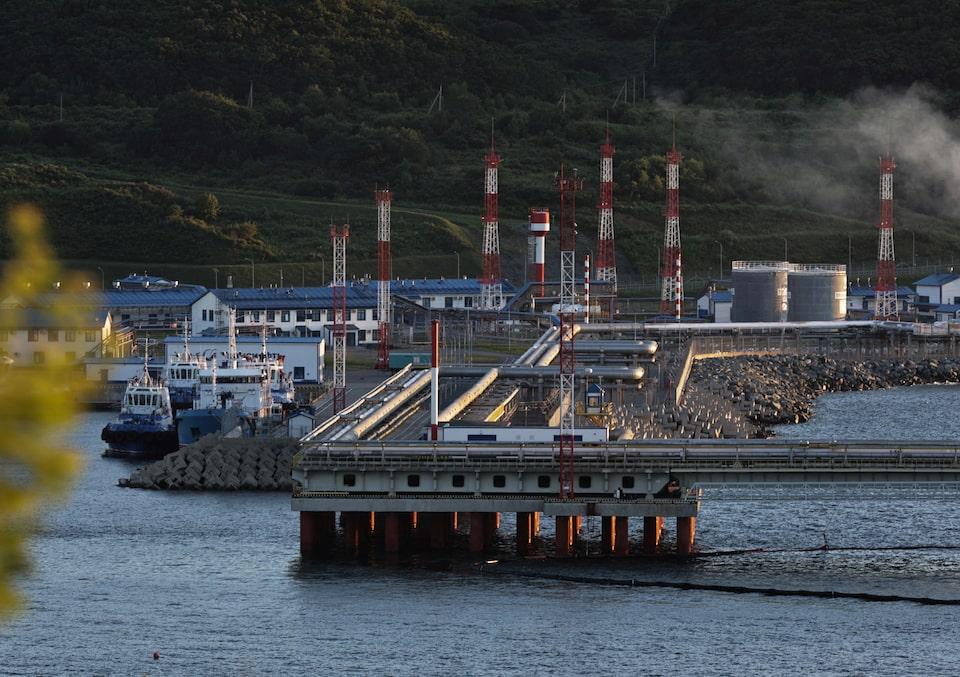
Russia-Ukraine peace talks face setbacks, impacting oil prices Middle East tensions rise with Saudi airstrikes in Yemen Global oil market oversupply may limit price increases HOUSTON, Dec 30 (Reuters) - Oil was steady after a choppy session on Tuesday as investors weighed dented hopes of a Russia-Ukraine peace deal and rising geopolitical tensions in the Middle East around Yemen. Brent crude futures for February delivery , which expire on Tuesday, settled down 2 cents, or 0.03%, at $61.92 a barrel. Sign up here. U.S. West Texas Intermediate crude settled down 13 cents, or 0.22%, at $57.95. On Monday, both benchmarks settled more than 2% higher as Saudi Arabia launched airstrikes against Yemen and after Moscow accused Kyiv of targeting a Russian presidential residence, denting hopes of a peace deal. "This latest stumbling block could see a risk premium return to the commodity, keeping prices in no man’s land," said Tudor, Pickering Holt analyst Matt Portillo in a note on Tuesday of the purported attack on Russian President Vladimir Putin's home. Russia has said it will toughen its position in peace talks after accusing Kyiv of attacking the residence, an allegation that Kyiv dismissed as baseless and designed to undermine peace negotiations. "The peace agreement between Russia and Ukraine could be delayed further, which is supportive to prices," said Dennis Kissler, senior vice president of trading at BOK Financial, adding that the actual effect on crude exports remains minimal. The ongoing U.S. blockade of Venezuelan oil and suspension of Caspian CPC Blend exports because of poor weather supported prices on Tuesday, said UBS analyst Giovanni Staunovo. MIDDLE EAST TENSIONS Adding to supply concerns were strikes by a Saudi Arabia-led coalition on what it described as foreign military support to UAE-backed southern separatists in Yemen. Saudi Arabia said on Tuesday that its national security was a red line and backed a call for UAE forces to leave Yemen within 24 hours, shortly after a Saudi-led coalition carried out an airstrike on the southern Yemeni port of Mukalla. The UAE said it was disappointed with Saudi Arabia's statement and surprised by the airstrikes on Mukalla. The UAE's Defence Ministry said later that it has voluntarily ended the mission of its counterterrorism units in Yemen, the only remaining forces it has in the country after ending its military presence in 2019. Traders also watched other Middle East developments after U.S. President Donald Trump said that the United States could support another major strike on Iran were Tehran to resume rebuilding its ballistic missile or nuclear weapons programmes. Despite renewed fears of potential supply disruptions, perceptions of an oversupplied global market remain and could cap prices, analysts say. Prices are likely to trend downwards in the first quarter of 2026 because of a "growing oil glut", said Marex analyst Ed Meir. https://www.reuters.com/business/energy/oil-prices-retreat-slightly-investors-wary-russiaukraine-tensions-2025-12-30/
2025-12-30 05:13
Reuters Open Interest (ROI) is your essential source for global financial commentary. LAUNCESTON, Australia, Dec 30 (Reuters) - Commodities were pelted in 2025 by the whirlwind of tariffs and policies imposed by U.S. President Donald Trump, and while the storm may recede in 2026, the ripples will last some time. Trump's efforts to remake global trade and his shifting geopolitical moves have boosted volatility in commodity markets, with prices being driven by daily headlines rather than fundamentals. Sign up here. This has created winners and losers, a trend likely to persist into 2026, even if the Trump administration calms its tariff wars and smoothes ruffled feathers with traditional allies such as the European Union and India. However, the list of winners and losers in 2026 may be different from 2025, largely depending on which version of Trump the world gets. GOLD'S BIG YEAR MEETS POLICY RISK A more settled U.S. policy would likely see gold , the star performer of 2025 with a gain of 60%, move into a consolidation phase, albeit with the bullish support of ongoing central bank purchases and investors seeking alternatives to previously safe assets such as U.S. Treasuries. It would take a new crisis to spark another surge in gold, with a candidate for such an event being the risk that the U.S. Federal Reserve loses credibility if its new chair is seen to be a political lackey of Trump and cuts interest rates to juice the economy even as inflation persists. The risk of a market reaction to the ongoing high fiscal deficits and debt burdens in much of the developed world is another event that could bolster gold. If these risks materialise and global economic growth comes under pressure, it's likely that commodities such as crude oil and copper would come under significant pressure. Even assuming the world economy successfully navigates the second year of Trump's second stint in the White House, there are downside risks to many major commodities. OIL, GAS AND THE SUPPLY OVERHANG Crude oil may come under pressure from rising supply and the potential return of Russian barrels to the open market, assuming a peace deal is reached to end the conflict in Ukraine. Liquefied natural gas (LNG) may also come under pressure as more U.S. plants are commissioned, and lower prices are needed to clear the overhang of supply. Another uncertainty about what policies Trump will pursue is what happens when he and his administration realise that the trade commitments promised by some nations are not being kept. One of the key features of many of his so-called trade deals has been commitments to increase purchases of U.S. energy, often to levels that are at best unrealistic and at worst delusional. The EU's undertaking to buy $250 billion a year of U.S. energy is a case in point. Using average prices for 2025, Europe's imports of U.S. crude oil, LNG and coal were worth about $82.3 billion in 2025, up slightly from the $79.1 billion in 2024. Crude oil volumes fell to 1.73 million barrels per day (bpd) in 2025 from 1.91 million bpd in 2024, while LNG imports rose to about 72.24 million metric tons from 45.14 million, and coal was largely steady at 20.73 million tons from 20.44 million in 2024, according to data compiled by commodity analysts Kpler. There is zero chance that the EU's imports of U.S. energy can more than triple in 2026 from 2025, as there simply isn't enough available crude, LNG and coal. Europe's leaders and the wider commodity market are probably hoping that Trump turns a blind eye to what is likely to be a massive shortfall on the unrealistic commitment, but the risk is that he doesn't and seeks some form of trade retribution. METALS ROUNDABOUT Copper is another commodity that has been on the Trump rollercoaster, hitting a record high in December as more metal flowed to the U.S. amid concerns that Trump will impose new tariffs early in 2026. The U.S. is likely to have doubled its imports in 2025, meaning that it has built up a stockpile while depleting inventories in the rest of the world. How this gets resolved will depend on what Trump actually does, but assuming there is some form of tariff on refined copper imports that have so far been spared, it's likely that U.S. imports will decline in 2026 as inventories are used up, which in turn will allow buyers such as top importer China to increase purchases. Another set of commodities that are likely to end up on 2026's winners' list is rare earths and other critical minerals. The Trump administration is likely to continue to commit resources and investment to building supply chains for these minerals that don't rely on China, which currently dominates mining and refining for many of them, including lithium and cobalt. CHINA'S GRIP ON IRON ORE AND COAL There are some commodities that are less exposed to the actions of the U.S., and more dependent on the outlook for China, the world's second-biggest economy. Chief among these is iron ore, with about three-quarters of all global seaborne cargoes heading to China's steel mills. Iron ore enjoyed a stable 2025 as Chinese demand remained robust, but 2026 could put pressure on prices as the huge new Simandou mine - a largely Chinese venture in Guinea - starts to ramp up output. Coal is also largely a commodity dominated by China and India, the world's two biggest producers and importers respectively. Seaborne thermal coal prices will depend largely on how domestic output and electricity generation evolve in China and India, with the risk that they may come under pressure as both Asian countries increase renewable energy production. Tariffs and trade spats will keep jolting prices, but the heavier drag in 2026 is likely to be softer demand meeting rising supply. If growth stumbles while new mines, LNG trains and oil barrels hit the market, crude, copper and coal look more vulnerable than gold. In that world, the risks for commodities are not only the next Trump social-media post, but also a wave of physical supply that the market struggles to absorb. The views expressed here are those of the author, a columnist for Reuters. https://www.reuters.com/markets/commodities/commodities-buffeted-by-trump-whirlwind-seek-relief-2026-2025-12-30/
2025-12-30 05:03
SEOUL, Dec 30 (Reuters) - South Korea gave the green light on Tuesday for the operation of a nuclear reactor with electricity output of 1,400 megawatts, the nuclear watchdog said, starting with a pilot run of six months. In a statement, the Nuclear Safety and Security Commission said the Saeul 3 unit in the southeastern city of Ulsan, construction of which had begun in 2016, would expand to full operation after its pilot run over the next six months. Sign up here. Apart from Saeul 3, South Korea has 26 nuclear reactor units and three more under construction, state-run operator Korea Hydro & Nuclear Power says on its website. Nuclear makes up the bulk of South Korea's energy mix, accounting for 31.7% of power generation in 2024, followed by gas and coal at 28.1% each, the industry ministry said in May. https://www.reuters.com/business/energy/south-korea-greenlights-operation-nuclear-power-reactor-2025-12-30/