2024-12-12 07:46
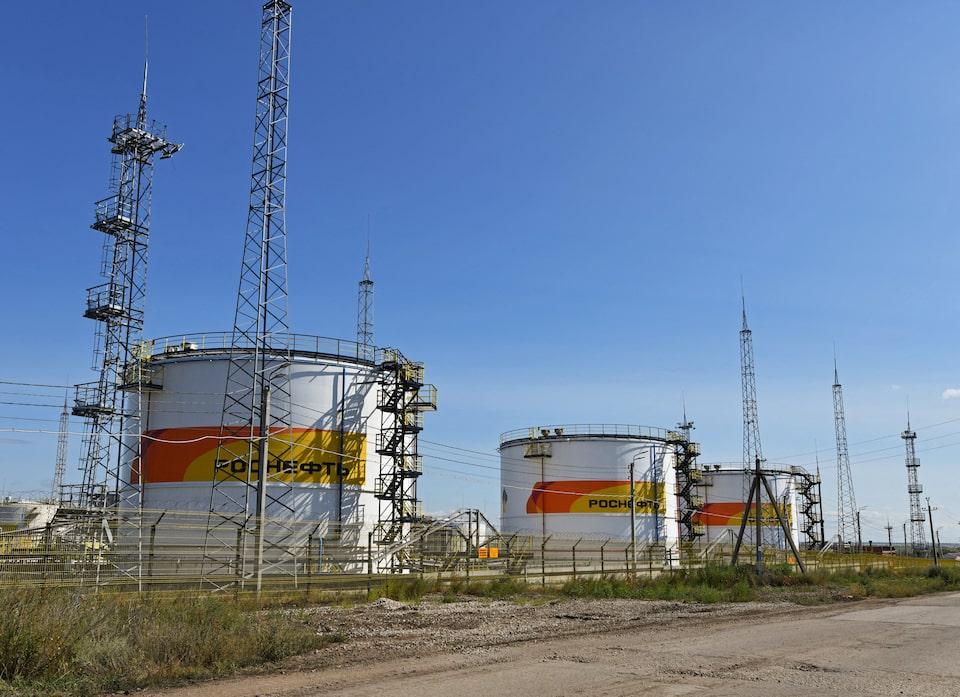
Rosneft to ship 500,000 bpd of various crude grades Biggest India-Russia energy deal ever worth $13 billion a year at current prices Pricing and volumes to be reviewed annually, sources say Agreement strengthens India-Russia energy ties India benefits from cheaper Russian oil amid Western sanctions NEW DELHI/MOSCOW, Dec 12 (Reuters) - Russia's state oil firm Rosneft (ROSN.MM) , opens new tab has agreed to supply nearly 500,000 barrels per day (bpd) of crude to Indian private refiner Reliance (RELI.NS) , opens new tab in the biggest ever energy deal between the two countries, three sources familiar with the deal said. The 10-year agreement amounts to 0.5% of global supply and is worth roughly $13 billion a year at today's prices. It would further cement energy relations between India and Russia, which is under heavy Western sanctions over its invasion of Ukraine. Rosneft did not reply to requests for comments. Reliance said it works with international suppliers, including from Russia, and deals are based on market conditions. The company declined further comment on commercial matters, citing the confidentiality of supply agreements. The deal comes ahead of the planned visit by Russian President Vladimir Putin to India and after U.S. President-elect Donald Trump said he wants to push Moscow and Kyiv to stop the war as soon as he takes office in January. Russian oil accounts for more than a third of India's energy imports. India became the largest importer of Russian crude after the European Union, previously the top buyer, imposed sanctions on Russian oil imports in response to the 2022 invasion of Ukraine. India has no sanctions on Russian oil, so refiners there have cashed in on the cheaper crude supply. Sanctions have made Russian oil cheaper than rival grades by at least $3 to $4 per barrel. India's rising Russian imports have come at the expense of rival Middle Eastern producers. The Reliance-Rosneft deal would represent another challenge for competitors, including Saudi Arabia. Competition among oil producers for a share of the Indian market is hot because it is one of the fastest-growing energy markets, and is becoming more important as a driver of global demand as growth in top importer China slows. Under the deal, Rosneft would deliver 20-21 Aframax-sized cargoes (80,000 to 100,000 metric tons) of various Russian crude grades and three cargoes of about 100,000 tons each of fuel oil each month, the three sources said. The shipments will be supplied for Reliance's refining complex, the world's biggest, at Jamnagar in the western state of Gujarat. Two sources said Reliance and Rosneft will review pricing and volumes every year under the deal to factor in oil markets dynamics. In 2024, Reliance had a deal with Rosneft to purchase 3 million barrels of crude a month. Rosneft has been also selling crude to Reliance via intermediaries on a regular basis. The new deal accounts for roughly a half of Rosneft's seaborne oil exports from Russian ports, which leaves not much supply available for other traders and middlemen, one source said. From January to October, Reliance imported an average 405,000 barrels per day of Russian oil, up from 388,500 bpd in the same period last year, according to tanker data obtained from sources. The new deal between Rosneft and Reliance was discussed and approved during Rosneft’s board meeting in November, two of the sources said. Supplies will start from January and are set to continue for 10 years with an option to extend the deal for another 10 years, the three sources said. The pricing of the grades to be supplied on delivered basis is set at differentials to the average Dubai price of the loading month, according to the sources. Premiums for the light sweet grades were set at around $1.50 a barrel for ESPO, Sokol at about $2 per barrel and Siberian Light at about $1 per barrel against Dubai quotes for 2025, one source said. The majority of the supply will be medium-sulphur and diesel-rich Russian Urals that are most popular with Indian refiners and will be priced at a discount of $3 per barrel to Dubai quotes for the following year, two sources said. Sign up here. https://www.reuters.com/business/energy/rosneft-reliance-agree-biggest-ever-india-russia-oil-supply-deal-sources-say-2024-12-12/
2024-12-12 06:50
Dollar higher after producer prices rose more than expected Euro down ECB cuts rates, leaves door open to more easing Swiss franc slides after SNB 50 bp cut NEW YORK, Dec 12 (Reuters) - The U.S. dollar rose on Thursday after a hotter than expected inflation readout while the euro traded a touch lower following the European Central Bank's decision to cut interest rates for the fourth time this year. A Labor Department report on Thursday showed producer prices rose 0.4% on a monthly basis in November, compared with estimates of a 0.2% rise as per economists polled by Reuters. The dollar index , which measures the currency against a basket of six others, was last up 0.375% at 106.95, a day after a separate U.S. inflation reading cemented bets for a rate cut from the Federal Reserve next week. Markets are now almost fully pricing a 25 basis point cut at the Fed's Dec. 17-18 meeting, compared with about a 78% chance a week ago, the CME FedWatch tool showed. "Although the Fed is seen cutting its benchmark by a quarter point, moves in the last 24 hours — from the Bank of Canada, Swiss National Bank, and European Central Bank — have ensured that cross-currency rate differentials will remain wide relative to the U.S., maintaining the dollar’s position in relative terms," said Karl Schamotta, chief market strategist at Corpay, in an note. The ECB on Thursday cut interest rates by 25 basis points and kept the door open to further easing ahead as inflation closes in on its goal and the economy remains weak. The euro was last down 0.2% against the dollar at $1.0473. The Swiss franc was up against the dollar after the Swiss National Bank opted for a 50 basis point interest rate cut. A majority of economists surveyed by Reuters had expected a smaller 25 basis point move. The dollar was up 0.78% at 0.89135 francs. "There will be some headwinds in the near term," said Kirstine Kundby-Nielsen, FX research analyst at Danske Bank, about the Swiss franc after the rate cut. "But more broadly I still think euro-Swiss will go lower, the franc will strengthen, if we look at the next couple of months ahead as I don't think the picture is very rosy in the euro area." The dollar was slightly higher at 152.525 yen , after hitting a two-week high of 152.845 yen the previous day as market players trimmed back bets for a rate hike in Japan next week. Reuters reported on Thursday that the BOJ is leaning toward keeping rates steady, as policymakers prefer to spend more time scrutinising overseas risks and clues on next year's wage outlook. But with markets now eyeing a rate hike just a month later in January, the shift has not really become a big driver for investors to pile into the dollar against the yen, said Akira Moroga, chief market strategist at Aozora Bank. "There were expectations for December, so dollar/yen has been rising from around 150 yen to about the 200-day average," he said. The Australian dollar was down 0.06% at $0.6365, pulling further away from the just over one-year low of $0.63370 touched on Wednesday. Australia's jobless rate posted a shock decline to an eight-month low in November, prompting markets to scale back bets for easing from the Reserve Bank of Australia in February. The kiwi was last down 0.25% at $0.577 , after hitting its lowest since Nov. 2022 at $0.57625 in the previous session. The yuan was last trading around 7.2772 per dollar in offshore trading . China pledged on Thursday to increase its budget deficit, issue more debt and loosen monetary policy to maintain stable economic growth. Sign up here. https://www.reuters.com/markets/currencies/dollar-holds-steady-despite-rate-cut-bets-aussie-rises-after-jobs-data-2024-12-12/
2024-12-12 06:48
Short bets on won highest since Oct. 2022 Bearish bets on rupee highest since Nov. 2022 Short bets trimmed slightly for all other units Dec 12 (Reuters) - Bearish bets on the South Korean won and the Indian rupee soared to a two-year high as investors clung to their short positions in other currencies on growing concerns that potential U.S. tariffs would undermine the appeal of emerging market assets. Short positions on the won increased to their highest since mid-October 2022, while those on the Indian rupee rose to their sharpest level since early-November 2022, a Reuters poll of 11 respondents showed on Thursday. U.S. President-elect Donald Trump's threatened tariffs on China, Southeast Asia's largest trading partner, could spark inflation, leading to a more cautious Federal Reserve and shallower U.S. rate cuts, with potential ripple effects on emerging market currencies. Bearish bets on the Chinese yuan retreated slightly as market expectations for stimulus support grew following a meeting of top Communist Party officials, who pledged to stabilize the country's property and stock markets. Chinese officials are preparing to deploy extraordinary economic measures, including a potential yuan weakening, to counter the impact of anticipated higher trade tariffs under Trump, presenting another headwind to Asian currencies that are sensitive to the yuan due to trade relations. "RMB will still be hit if Trump imposes tariffs. The uncertainty here is the timing, magnitude and scope. But for now daily CNY fixing pattern (below 7.20) suggests policymakers are likely to stick to the gameplan in using the fix to manage RMB expectations for now until tariff hits (if any)," said Christopher Wong, a currency strategist with OCBC. In South Korea, the won plummeted nearly 2% last week as President Yoon Suk Yeol's brief martial law declaration and subsequent reversal sparked political turmoil, denting investor sentiment. Fears of U.S. tariffs and an unexpected interest rate cut by the Bank of Korea coincided with a 14-month exports slump in the country, reflecting growing concerns about trade tensions and weakened U.S. demand. "USD/KRW could continue to hover at 1,420 for 1H 2025 amid tariff risks and political uncertainty, but we expect a gradual recovery in 2H as political noise fades, while Korea’s growth could pick up with an upturn in the semiconductor industry, and lower rates," Wei Liang Chang, currency and credit strategist at DBS, said. In India, the rupee hit a record low level thrice since last week, battered by slowing economic growth, persistent foreign investment outflows, and the ripple effect of volatile regional currencies, including the weakening Chinese yuan. "Indian policymakers may continue to smooth INR volatility, and we expect USD/INR to gradually inch higher on expectations of a potential Reserve Bank of India rate cut in February," Chang said. Short bets on Thailand's baht eased significantly after last week's data showed a 28% year-to-date increase in foreign tourist arrivals, while another projected 4% growth in exports, both crucial for Southeast Asia's second-largest economy. Bearish bets also eased for the Indonesian rupiah , Malaysian ringgit , and the Philippine peso . The Asian currency positioning poll is focused on what analysts and fund managers believe are the current market positions in nine Asian emerging market currencies: the Chinese yuan, South Korean won, Singapore dollar, Indonesian rupiah, Taiwan dollar, Indian rupee, Philippine peso, Malaysian ringgit and the Thai baht. The poll uses estimates of net long or short positions on a scale of minus 3 to plus 3. A score of plus 3 indicates the market is significantly long U.S. dollars. The figures include positions held through non-deliverable forwards (NDFs). The survey findings are provided below (positions in U.S. dollar versus each currency): Sign up here. https://www.reuters.com/markets/asia/bearish-bets-maintained-asian-fx-us-tariff-fears-intensify-2024-12-12/

2024-12-12 06:42
Swiss National Bank, ECB cut rates Yen weakens on Reuters report BOJ may skip hike next week Yuan stabilises after PBOC keeps official midpoint steady NEW YORK/LONDON, Dec 12 (Reuters) - Global stocks were down and major Wall Street indexes fell on Thursday after the European Central Bank cut interest rates for a fourth time this year, as gold prices slid from a five-week high. European stocks finished lower in choppy trading after the European Central Bank cut interest rates and kept the door open to further easing in 2025 in the face of a struggling economy and heightened political risks. The Swiss franc weakened after the Swiss National Bank cut rates by half a point, its largest reduction in nearly 10 years. Markets had priced a good chance of a half-point cut in the run-up to Thursday's meeting. The U.S. Labor Department's producer price index (PPI) (USPPFD=ECI) , opens new tab, which tracks the prices U.S. companies get for their goods and services at the figurative factory door, jumped by 0.4%, leap-frogging over the 0.2% consensus and marking an acceleration from October's upwardly revised 0.3% gain. The U.S. dollar rose. Oil prices dropped as a forecast for ample supply in the oil market offset optimism stemming from rising expectations of a U.S. interest rate cut. MSCI's gauge of stocks across the globe (.MIWD00000PUS) , opens new tab fell 3.32 points, or 0.38%, to 868.07. Wednesday's inflation reading showed the consumer price index (CPI) rose exactly in line with expectations in November, supporting bets for a Federal Reserve interest rate cut next week. "The market has essentially seen one of the last remaining obstacles that could derail sentiment out of the way," said Chris Weston, head of research at Pepperstone. "Seeing the coast somewhat clearer for the illustrious seasonal chase of returns to play out into year-end." Traders now place a 97% chance on a quarter-point Fed cut on Dec. 18. The Dow Jones Industrial Average (.DJI) , opens new tab fell 234.44 points, or 0.53%, to 43,914.12, the S&P 500 (.SPX) , opens new tab fell 32.94 points, or 0.54%, to 6,051.25 and the Nasdaq Composite (.IXIC) , opens new tab fell 132.05 points, or 0.66%, to 19,902.84. The pan-European STOXX 600 index (.STOXX) , opens new tab closed down by 0.1%, although rate-sensitive euro zone bank shares (.SX7E) , opens new tab edged up 0.3%. Traders were pricing in 125 basis points worth of interest rate cuts by the ECB by the end of 2025, according to data compiled by LSEG. "The ECB is on a direct path of consecutive quarter-point cuts until the deposit rate reaches 2%. This market expectation is now being reinforced by even lower economic forecasts," said Jochen Stanzl, chief market analyst at CMC Markets. Emerging stocks (.MSCIEF) , opens new tab rose 0.39%. The yield on benchmark U.S. 10-year notes rose 6.3 basis points to 4.334%, from 4.271% late on Wednesday. CENTRAL BANK FOCUS The dollar index , which measures the greenback against a basket of currencies including the yen and the euro, rose 0.41% to 106.99, with the euro down 0.23% at $1.047. The greenback retreated against the yen after Reuters reported that BOJ policy makers were inclined to forgo a hike on Dec. 19 and wait for more data on wages at the start of next year. The Australian dollar turned lower against the dollar. Earlier, it surged on unexpectedly strong employment data, rebounding from Wednesday's weakness following a Reuters report that Beijing is considering allowing the yuan to depreciate further next year. China is Australia's top trading partner and the Aussie is often used as a liquid proxy for the yuan. Although economists were almost unanimous in predicting Thursday's move by the ECB, many had acknowledged that a bigger cut would also be justified given a deteriorating growth outlook and rapidly retreating inflation. In commodities, spot gold fell 1.39% to $2,680.59 an ounce as investors took profits and squared positions ahead of next week's Fed meeting. U.S. gold futures settled 1.7% lower at $2,709.40. Crude oil retreated after rallying this week on the threat of additional sanctions aimed at stifling Russian oil output. U.S. crude settled down 0.4% to $70.02 a barrel and Brent finished at $73.41 per barrel, down 0.15% on the day. Sign up here. https://www.reuters.com/markets/global-markets-wrapup-1-2024-12-12/
2024-12-12 06:40
Dec 12 (Reuters) - Australia's corporate watchdog said on Thursday that the country's federal court ordered crypto exchange Kraken's local operator to pay an A$8 million ($5.1 million) fine for unlawfully issuing a credit facility to more than 1,100 customers. The Australian Securities and Investments Commission (ASIC) initiated civil proceedings last year against Bit Trade, which operates the Kraken exchange in Australia, for failing to comply with rules for its margin trading product. ASIC said that Bit Trade failed to determine the right customers for the margin trading product, resulting in losses of more than $5 million. "Bit Trade issued its margin extension product to over 1,100 Australians who were charged fees and interest of more than US$7 million without considering if the product was appropriate for them," ASIC said in a statement , opens new tab. Bit Trade's product allowed for margin extensions, a form of credit or loan, to be made and repaid in either digital assets like bitcoin or national currencies such as U.S. dollars. The company was disappointed with the outcome of the case, a Kraken spokesperson said in an emailed statement. "We believe these rulings significantly hamper growth in the Australian economy. We look forward to engaging constructively with policymakers and regulators as these rules are developed." In August, the federal court found that the product was a credit facility, as it offered margin extensions in national currencies, which requires a mandatory public document-called target market determinations-setting out which class of consumer would be best suited for the product. The penalty marks the first instance against an entity for failing to have a target market determination, the regulator said. ($1 = 1.5593 Australian dollars) Sign up here. https://www.reuters.com/business/finance/australia-orders-51-mln-fine-kraken-crypto-exchange-operator-2024-12-12/

2024-12-12 06:12
BOJ in no rush to hike as yen's rebound moderates price pressure Void of renewed yen plunge, BOJ prefers to gauge more data Trump risk, wage uncertainty favour standing pat - for now BOJ to meet Dec. 18-19, Fed decision due hours before BOJ's TOKYO, Dec 12 (Reuters) - The Bank of Japan is leaning toward keeping interest rates steady next week as policymakers prefer to spend more time scrutinising overseas risks and clues on next year's wage outlook, said five sources familiar with its thinking. Any such decision will heighten the chance of an interest rate hike at the central bank's subsequent meeting in January or March, when there will be more information on the extent to which wage hikes will broaden next year. There is no consensus within the central bank on the final decision, with some in the board still believing Japan has met the conditions for raising rates in December, the sources said. The decision will depend on the conviction each board member holds on the likelihood of Japan achieving sustained, wage-driven price rises. There is also a slim chance the board may favour acting if upcoming events, such as the U.S. Federal Reserve's rate-setting meeting that concludes hours before that of the BOJ, trigger a renewed yen plunge that heightens inflationary pressure. But overall, many BOJ policymakers appear in no rush to pull the trigger with little risk of inflation overshooting despite Japan's still near-zero borrowing costs, they said. "Japan isn't in a situation where imminent rate hikes are needed," one of the sources said. "With inflation benign, it can afford to spend time scrutinising various data," another source said, a view echoed by two more sources. The BOJ will hold its final policy meeting for the year on Dec. 18-19, when the nine-member board will deliberate whether to raise short-term interest rates from the current 0.25%. Just over a half of economists polled by Reuters last month expect the BOJ to raise rates in December. About 90% forecast the BOJ to have hiked rates to 0.5% by end-March. By contrast, markets are currently pricing in less than a 30% probability of a rate increase in December. TRUMP RISK LOOMS The central bank has been guarded on the timing of the next rate hike, causing market expectations of a move to fluctuate between December and January. There is growing conviction within the BOJ that conditions for another hike are falling into place with the economy growing moderately, wages rising steadily and inflation exceeding its 2% target for well over two years, the sources said. In a sign of its confidence over the economic outlook, the central bank is likely to maintain its view that consumption is "increasing moderately as a trend," they said. But there is no sense of urgency to hike as inflationary pressure from raw material imports has subsided due to the yen's recent rebound. That contrasts with when the BOJ hiked rates to 0.25% in July, when the currency's rapid fall pushed up import prices and heightened the risk of an inflation overshoot. While rising wages are prodding more firms to hike services prices, such moves have not heightened enough to cause an alarming wage-inflation spiral, the sources said. Acting in December, rather than January, could give markets the impression the BOJ is in a rush to push up rates to levels deemed neutral to the economy - something it wants to avoid. The government, which still considers Japan as remaining in economic stagnation, also prefers the BOJ to move cautiously. "It's desirable for the BOJ to hold off on raising rates until the economy recovers a bit more," a senior government official told Reuters, when asked about the December meeting. Unless a renewed, rapid yen fall heightens inflationary pressure, many BOJ policymakers likely prefer awaiting information on whether firms will keep offering bumper pay hikes in next year's wage negotiations with unions, the sources said. Holding until the Jan. 23-24 meeting would allow the BOJ to scrutinise remarks from corporate executives on next year's wage outlook, and its quarterly regional report that includes information on how smaller firms are setting prices and wages. Another incentive to hold fire is uncertainty over U.S. president-elect Donald Trump's economic policies, which Governor Kazuo Ueda highlighted as a risk in a recent media interview. "The biggest risk for Japan's economy comes from overseas," as sluggish global demand could hurt corporate profits and dampen their appetite to hike pay, a third source said. The BOJ's decision next week will come hours after that of the Fed, which is widely seen cutting rates. If the Fed surprises by holding rates and triggers a dollar surge, that could pressure the BOJ to hike rates to slow any sharp yen selloff, the sources said. The BOJ ended negative interest rates in March and raised its short-term policy target to 0.25% in July. It has signaled readiness to hike again if wages and prices move as projected, and heighten conviction Japan will durably hit 2% inflation. Sign up here. https://www.reuters.com/markets/asia/boj-leaning-toward-keeping-rates-steady-next-week-sources-say-2024-12-12/