2024-12-12 06:03
LITTLETON, Colorado, Dec 12 (Reuters) - U.S. coal traders have exported the highest volume of thermal coal in six years over the first eleven months of 2024, and look set to ship out even greater volumes in 2025 once President-elect Donald Trump takes office. U.S. exports of coal used in power generation hit 32.6 million short tons from January through November, according to ship-tracking data from Kpler. That was the highest volume for that period since 2018, and will have generated roughly $4 billion in revenues for the U.S. coal sector, according to price data published by the U.S. Energy Information Administration (EIA). As thermal coal consumption is being phased out at home due to concerns about pollution, those hefty exports have served to undermine U.S. credibility as a climate leader. But export volumes could be even higher in 2025 if the incoming fossil fuel-friendly administration of President Donald Trump promotes the extraction and sale of more U.S. energy products as expected. POLLUTING POWER Coal is by far the highest polluting fossil fuel, and will generate roughly 10 billion metric tons of carbon dioxide (CO2) globally this year when burned for power, according to Ember. Roughly 945,000 tons of CO2 is emitted for each terawatt hour (TWh) of electricity produced by coal-fired power stations globally this year. That compares to around 604,000 tons for each TWh produced by natural gas-fired plants, which is a major reason why U.S. power providers have phased out coal burning and boosted the use of natural gas in power generation over the past decade. But while U.S. power producers have cut coal's share of electricity production in half over the past decade to less than 15%, globally power producers remain reliant on coal for over a third of total electricity output. Several countries - including China, India, the Philippines, Vietnam and Turkey - rely on coal for 40% or more of their generation mix, and must import a fair chunk of their annual coal needs. GROWTH MARKETS Indonesia is by far the world's largest coal exporter, and is on track to ship out over 500 million tons of thermal coal this year, according to Kpler. But six other countries are also notable thermal coal exporters, with Australia, Russia, South Africa, Colombia, the United States and Canada all on track to export over 10 million tons each this year. The U.S. ranks sixth on that list, and over the first 11 month of this year has sent a million tons or more to eight different countries. India is by far the top destination for U.S. coal in 2024, accounting for 9.5 million tons or 29% of total U.S. thermal shipments so far. Morocco (4.6 million tons), Egypt (4 million tons) and China (3.3 million tons) are the next largest buyers. Other large buyers include the Netherlands, Japan, Brazil and the Dominican Republic, indicating a wide geographic span for U.S. coal sales so far this year. And a majority of those markets look set to remain heavy coal consumers for the coming years as energy demand there grows at a faster pace than locally-sourced clean energy supplies. That means those countries will remain lucrative markets for all coal exporters, including those in the U.S., even if power producers at home continue to dial down their own coal use due to emissions concerns. The opinions expressed here are those of the author, a market analyst for Reuters. Sign up here. https://www.reuters.com/markets/commodities/hefty-us-thermal-coal-exports-look-set-keep-climbing-2025-maguire-2024-12-12/

2024-12-12 06:00
Nasdaq hits 20,000 amid AI excitement, rate-cut expectations Tech stocks drive Nasdaq's 33% annual rise Megacap stocks' dominance raises concentration concerns NEW YORK, Dec 11 (Reuters) - The Nasdaq Composite Index (.IXIC) , opens new tab hit 20,000 for the first time on Wednesday, putting an exclamation point on a year in which excitement over artificial intelligence and expectations of falling interest rates fueled a searing rally in technology stocks. The tech-heavy index is up more than 33% on the year, driven by a cluster of giant technology-focused companies including Apple (AAPL.O) , opens new tab, Nvidia (.NVDA) , opens new tab, Google-parent Alphabet (GOOGL.O) , opens new tab and in recent weeks, electric carmaker Tesla (TSLA.O) , opens new tab. Wednesday’s gains came after a U.S. inflation report that cemented expectations of a Fed rate cut next week. The index closed on Wednesday at 20,034.89, up 1.8% on the day. While the rally has rewarded investors who went big on growth and tech, it has also stirred unease over rising valuations and the dominance of megacap stocks, which now have an increasingly heavier weighting in the index. "There is clearly an aspect of a chase into year-end, where the winners ... keep winning," said Cameron Dawson, chief investment officer at NewEdge Wealth. "The question is if this momentum can persist into 2025, where stretched valuations, positioning, sentiment, and growth expectations could all present high bars to jump over to keep above-average returns going." After plummeting in early 2020 when the pandemic brought global economic activity to a standstill, the index mounted a swift rebound as the Federal Reserve cut interest rates to near-zero and the U.S. unleashed waves of fiscal stimulus to help the economy. It endured a sharp drop in 2022, falling 33% as inflation surged to 40-year highs and the Fed was forced to deliver a series of jumbo rate cuts. But higher rates did not bring on a widely-expected recession, and the index has soared by about 90% since then, stoked in part by increasing excitement over the business potential of AI. Shares of Nvidia, whose chips are considered the industry's gold standard, are up more than 1,100% from their October 2022 low. “The AI story still rings true and appeals to investors,” said Alex Morris, chief investment officer of F/m Investments. “These are the go-go stocks." While the Nasdaq's valuation has climbed, it is still far from levels it reached during the dot-com bubble more than two decades ago. The index trades at roughly 36 times earnings today, a three-year high and well above its long-term average of 27, according to LSEG Datastream. That is still well below the roughly 70 times the index's P/E ratio reached in March 2000, bringing a measure of comfort to investors comparing the two periods. "The Nasdaq Comp’s latest rally pales in comparison to the late 90s/early 2000 experience, rising more gradually and does not yet look unsustainable as a result," Jessica Rabe, co-founder of DataTrek Research, said in a note on Wednesday. Megacap stocks increasingly dominate the index. The top 10 companies by market value account for 59% of the Nasdaq, compared to 45% in 2020. The three biggest companies by weight are Apple, Microsoft (MSFT.O) , opens new tab and Nvidia, which account for 11.7%, 10.6% and 10.3% of the index respectively. While their surging share prices have buoyed the Nasdaq, the heavy concentration could present a problem for investors should Big Tech fall out of favor. The selloff in 2022, for instance, saw shares of index heavyweights Meta (META.O) , opens new tab and Tesla fall 64% and 65% for the year respectively. The Nasdaq has topped the other major U.S. stock indexes this year, propelled by big gains in heavily weighted names such as Nvidia, Amazon (AMZN.O) , opens new tab and Meta Platforms. The tech-heavy index's 33% climb in 2024 compares with over 27% for the S&P 500 (.SPX) , opens new tab and 17% for the Dow Jones Industrial Average (.DJI) , opens new tab. Over the past decade, the Nasdaq has gained more than 320%, against a 200% rise for the S&P 500 and a 150% increase for the Dow. Sign up here. https://www.reuters.com/markets/us/stunning-rally-big-tech-drives-nasdaq-20000-2024-12-11/

2024-12-12 05:41
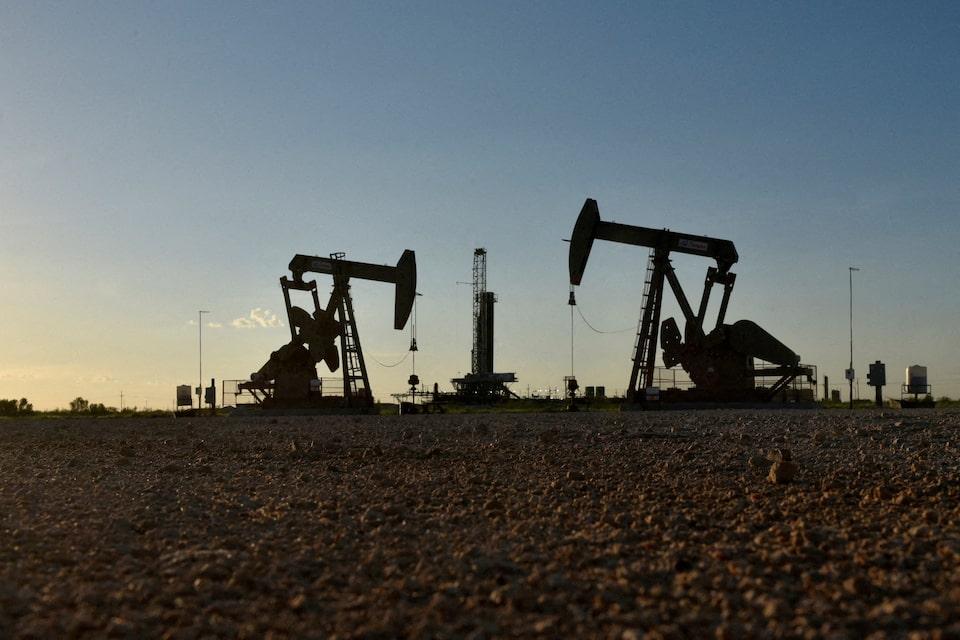
IEA raises oil demand growth forecast for 2025 US inflation rose slightly in November China crude imports up 14 in November from year earlier NEW YORK, Dec 12 (Reuters) - Oil prices settled close to unchanged on Thursday, pressured by a forecast for ample supply in the oil market but supported by rising expectations of a Federal Reserve interest rate cut. Brent crude futures settled down 11 cents, or 0.15%, to $73.41 a barrel. U.S. West Texas Intermediate crude futures were down 27 cents, or 0.38%, at $70.02. The International Energy Agency made a slight upward revision to its demand outlook for next year but still expected the oil market to be comfortably supplied. On Wednesday, OPEC cut its demand growth forecast for 2024 for the fifth straight month. "If you look at the actual data, the IEA is saying that the glut they predicted should be happening right this minute," said Phil Flynn, analyst at Price Futures Group. Global oil inventories fell by 39.3 million barrels in October as low refinery activity coincided with a rise in global oil demand, data from IEA showed. In the U.S., inflation rose slightly in November, in line with economists' expectations. Investors broadly expect the Fed to cut rates again, feeding optimism about economic growth and energy demand. "The inflation report creates a lot of comfort. It could have been better, but it seems to be low enough for the Fed to reduce rates at the next meeting," said Bjarne Schieldrop, chief commodities analyst at SEB. In the world's top oil consumer, the U.S., gasoline and distillate inventories rose by more than expected last week, Energy Information Administration data showed. Global oil demand rose at a slower than expected rate this month but has remained resilient, JPMorgan analysts said in a note. Chinese crude imports grew annually for the first time in seven months in November, up more than 14% from a year earlier. In the Middle East, Iran agreed to tougher monitoring by the U.N. nuclear watchdog at its Fordow site dug into a mountain after it greatly accelerated uranium enrichment to close to weapons grade there, putting pressure on prices. Sign up here. https://www.reuters.com/markets/commodities/oil-little-changed-demand-weakness-offsets-sanctions-driven-supply-risks-2024-12-12/
2024-12-12 05:35
LAUNCESTON, Australia, Dec 12 (Reuters) - The sexual harassment lawsuits filed in Australia against global mining giants BHP Group and Rio Tinto are more than just another potential public relations disaster and possible hit to the bottom line. The allegations go to the very future of two of the world's biggest miners, who aim to place themselves at the heart of the energy transition by producing the metals needed to decarbonise the world economy. The short-term damage of the class action lawsuits may be contained by deft public relations management, a willingness to settle genuine claims generously and a management determined to stamp out future poor behaviour. But the longer-term damage may be far more severe for an industry already battling to attract sufficient skilled workers, and one that has apparently little appeal for the next generation of engineers and skilled employees. The class action lawsuit, revealed on Wednesday by law firm JGA Saddler, alleges sexual harassment at mines in Australia operated by both companies. JGA Saddler said women who spoke out about the harassment were allegedly discriminated against by the miners and that it expects "thousands of female workers" at the two companies to join the class actions. So far the reaction by the companies and the stock market has been muted, with both companies issuing what could be described as pro forma statements. "Sexual harassment has no place in our workplaces or indeed anywhere. We are committed to providing a safe and respectful workplace for everyone," BHP (BHP.AX) , opens new tab, the world's largest mining company, said in a statement. Rio (RIO.AX) , opens new tab, the world's biggest iron ore miner, said in a statement it treats "all such claims with utmost seriousness". The companies' share prices showed little reaction, with Rio dropping 1.2% in Sydney on Wednesday to end at A$123.81 ($78.99), while BHP gained 0.4% to close at A$42.00. The sanguine market reaction likely reflects that the scale of the lawsuit and potential damages that may be ultimately paid are uncertain. But while the market may be in a wait-and-see mode regarding the lawsuit, there is little doubt that both BHP and Rio have underperformed the broader Australian S&P/ASX 200 Index (.AXJO) , opens new tab. BHP hit a record high of A$37.73 a share on April 13, 2011, amid the commodity boom led by China in the recovery from the global financial crisis of 2008. It then entered a downtrend until the beginning of 2016, and finally recovered to the same level it was at its 2011 peak by December 2020 and the price has since rallied about 11.3% to Wednesday's close. Rio paints a similar story, having peaked just as the 2008 crisis was starting at A$111.79 a share on May 22, 2008, and while it did rally in 2011 it took until the very end of December 2020 for it to exceed its previous record. Since then Rio has gained about 13.4%, while the S&P/ASX 200 Index is up around 20.6% over the same period. FUTURE NEEDS If BHP and Rio are to outperform the market they will have to convince investors that their plans to be leaders in the energy transition are viable and profitable. In theory there's no reason why the companies shouldn't be able to do this. Both are well positioned in key transition metals such as copper and aluminium, and are also building portfolios in other key metals such as lithium. While the process of turning iron ore into steel is carbon-intensive, both companies can argue that steel is also essential to the energy transition, and both are looking at ways to decarbonise the steel-making process. But achieving the goal of being seen as vital to the energy transition also means having the necessary skilled workforce, and it's here that the lawsuit and the likely associated damaging revelations are a threat. The more stories about appalling sexual behaviour on the part of some male workers at Australian mines, and the allegations that mid-level managers were more interested in covering this up rather than stamping it out, the harder it becomes to attract workers. Already miners are challenged by falling enrolments in key university courses, with research published last year by consultants McKinsey showing mining engineering graduates dropped by 63% in Australia between 2010 and 2018, and by 39% in the United States. If the declining graduate numbers aren't bad enough, imagine trying to recruit young employees to work on remote mine sites, especially if what they recall from the media is stories of inappropriate behaviour, uncaring management and a poor culture. The risk for BHP, Rio and other miners is that they battle to find enough skilled staff, meaning they either have to pay considerably higher salaries, or try to convince increasingly wary governments of boosting immigration. Disclosure: At the time of publication Clyde Russell owned shares in BHP Group and Rio Tinto as an investor in a fund. The views expressed here are those of the author, a columnist for Reuters. Sign up here. https://www.reuters.com/markets/commodities/sexual-harassment-lawsuits-are-an-enduring-nightmare-bhp-rio-russell-2024-12-12/

2024-12-12 05:35
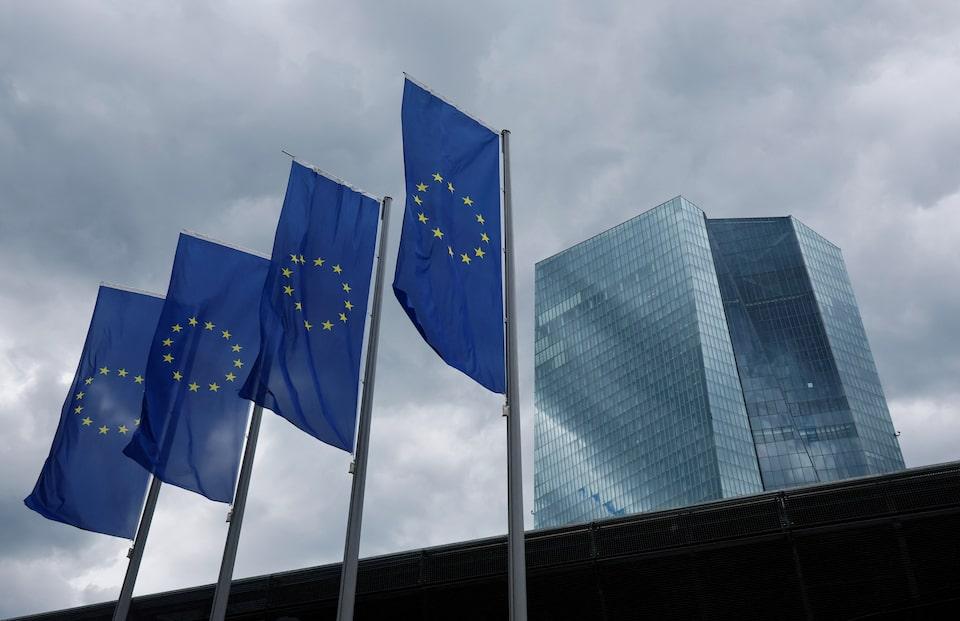
A look at the day ahead in European and global markets from Kevin Buckland A momentous couple weeks for global central banks brings policy decisions from two of the biggest on Thursday: the European Central Bank and the Swiss National Bank. Rate cuts by both are not in question, but how deep those cuts will be is still up for debate. The Swiss central bank decides first, and market-implied odds are tilted towards a half-point cut to 0.5%, ramping up in recent weeks after Chairman Martin Schlegel invoked the possibility of a return to negative rates if needed to dampen investor appetite for the safe-haven franc. At the ECB, a more-standard quarter-point reduction is seen as the most likely outcome, but the 15% odds on a half-point cut suggest that traders see it as a non-negligible risk. The balancing act for European central bankers is an economy teetering towards recession, even as some of the more hawkish officials argue inflation is still a concern given rapid wage growth and spiking services costs. The potential for big U.S. tariffs come January and simmering political crises in both Germany and France - the heart of the euro zone - introduce additional uncertainty. Whichever way the ECB goes today, further easing is undoubtedly coming: Markets are priced for reductions at every meeting until June, followed by at least one additional cut in the final half of 2025. Some major euro milestones are being eyed by corners of the market, including pre-Brexit levels versus sterling and even parity with the dollar for the first time since late 2022. The United States releases PPI figures later on Thursday, a day after an as-expected and not-too-hot reading of consumer inflation all but cemented in the market's mind a Federal Reserve rate cut for Dec. 18. The Wall Street rally that followed the CPI numbers, pushing the Nasdaq (.IXIC) , opens new tab above 20,000 for the first time, has spilled over into Asia, boding well for European shares. Meanwhile, the yuan stabilised on Thursday after the PBOC set a slightly stronger fixing. It had come under pressure the day before after a Reuters report that Beijing was considering further depreciation to counter any U.S. trade war. Key developments that could influence markets on Thursday: -SNB, ECB policy decisions -Sweden, Ireland CPI (both Nov) -US PPI (Nov) Sign up here. https://www.reuters.com/markets/europe/global-markets-view-europe-2024-12-12/
2024-12-12 05:29
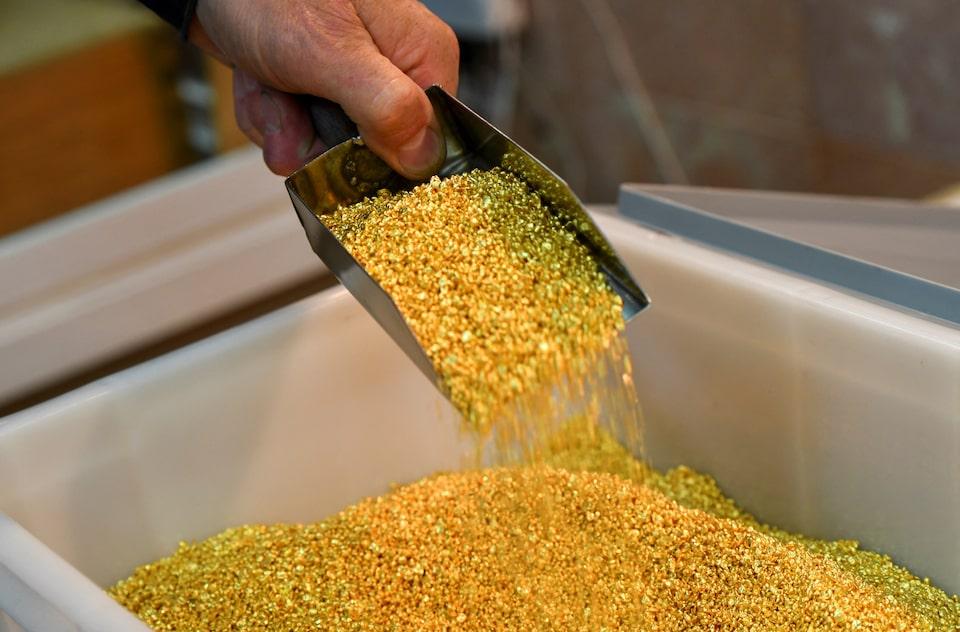
Gold hit highest since Nov. 6 earlier in the session ECB cut interest rates for the fourth time this year US producer price increase exceeds expectations in November Market sees 98% chance of 25-bp Fed rate cut next week Dec 12 (Reuters) - Gold slipped over 1% on Thursday as investors booked profits after it briefly reached a five-week high earlier in the session and squared positions ahead of a U.S. Federal Reserve meeting next week. Spot gold lost 1.2% at $2,684.15 per ounce by 01:40 p.m. ET (1840 GMT), while U.S. gold futures settled 1.7% lower at $2,709.40. Bullion climbed to its highest level since Nov. 6 earlier in the session. "Bulls maintain near-term momentum, though a pullback may occur ahead of the Federal Reserve meeting as investors lock in profits," said Zain Vawda, market analyst at MarketPulse by OANDA. "Focus will shift post-meeting to guidance on the January session and future policy direction, which will be critical in determining the sustainability of further market gains." The CME's FedWatch tool places the likelihood of a December rate cut at 98%. While there are increasing chances of a rate cut next week, inflation is going up, said Alex Ebkarian, chief operating officer at Allegiance Gold, adding that "the Fed is in very much of a bind." U.S. producer prices rose more than expected in November amid a surge in the cost of food. This was followed by Wednesday's inflation data showing consumer prices increased by the most in seven months in November. Jobless claims also rose in the latest week pointing towards an easing labor market making it more likely that the Fed will cut interest rates next week for the third time, despite little progress in lowering inflation down to its 2% target in recent months. "Fund positioning remains somewhat bloated relative to market expectations for the FOMC heading into next week. And so we could see some position squaring into that event risk," said Daniel Ghali, commodity strategist at TD Securities. Meanwhile, the ECB cut interest rates for the fourth time this year, by quarter of a percentage point and kept the door open to more. Spot silver fell 2.7% to $30.04 per ounce, platinum was down 1.1% to $929.64 and palladium shed 1.1% to $970.96. Sign up here. https://www.reuters.com/markets/commodities/gold-eases-profit-taking-after-scaling-more-than-one-month-peak-2024-12-12/