2024-12-12 00:55
Dec 11 (Reuters) - Some Canadian premiers are urging Ottawa to respond robustly to the threat of tariffs from incoming U.S. President Donald Trump and have highlighted critical minerals and metals as products that the U.S. relies on, Canada's Finance Minister said on Wednesday. Canadian Prime Minister Justin Trudeau and other government ministers met with provincial premiers to discuss Trump's pledge to impose steep tariffs on Canadian and Mexican imports after he is sworn in as President in January. That pledge has raised fears of a trade war between the U.S. and two of its biggest trading partners. "A number of premiers offered strong support for a robust Canadian response that included some of the premiers proactively naming critical minerals and metals that their provinces produce, and which are exported to the United States," Finance Minister Chrystia Freeland told reporters after the meeting. Canada's emphasis right now is on reaching out to U.S. officials, Freeland said, adding that Canadian business and labor leaders are also getting in touch with their U.S. counterparts. Ontario Premier Doug Ford said energy exports to the United States could also be halted, without offering further details. Ontario exports electricity to the U.S., but does not produce any of the 4 million barrels per day of oil that Canada ships south of the border. "We'll use every tool in our toolbox, including cutting them off energy that we're sending down," Ford told reporters. Trudeau on Monday said Canada would respond to unfair tariffs, as it did during the last Trump presidency when Ottawa added tariffs to goods including bourbon, Harley Davidson motorcycles and cherries. Trump has said he will keep protectionist trade measures in place until Canada and Mexico clamp down on drugs and migrants crossing the borders into the U.S. The federal government also discussed planned border security measures with the premiers, said Minister of Public Safety Dominic LeBlanc, adding Canada would next share those details with Trump's team once they are finalized. Sign up here. https://www.reuters.com/world/americas/canadian-premiers-urge-strong-response-trump-tariff-threat-minister-says-2024-12-12/
2024-12-12 00:42
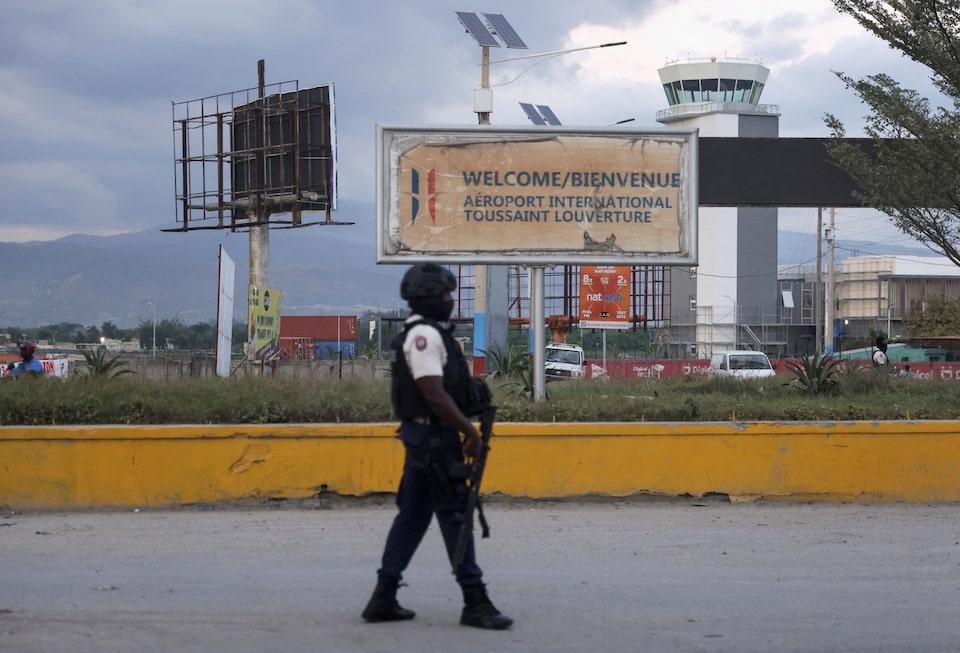
FAA extends ban on U.S. airlines flying to Port-au-Prince Haiti adds patrols, checkpoints to secure airport Gang violence impacts Haiti's economy, displaces 700,000 people PORT-AU-PRINCE, Dec 11 (Reuters) - Haiti's government on Wednesday celebrated the reopening of the capital's Toussaint Louverture International Airport, shut since last month, even as the U.S. aviation watchdog extended a ban on U.S. airlines flying there. The Federal Aviation Administration said it would extend a ban on U.S. airlines flying in or out of the capital Port-au-Prince through March 12. On Nov. 12, the FAA barred U.S. airlines from operating in Haiti for 30 days after three commercial jetliners were struck by gunfire. It later eased the ban to allow pilots to fly to airports in northern Haiti such as Cap-Haitien. Haiti's aviation authority issued a brief post on Wednesday stating that the capital's airport was resuming normal operations, and its interim government said it had added new patrols and checkpoints around the airport. "This decision is part of a strategic approach aimed at restoring a secure environment and relaunching economic activities," the government said in a statement, hailing the move as a "turning point" for the economy. The closure of the key transport hub, for the second time this year, marked another blow to the Caribbean nation's economy as it battles extended gang violence that has seen over 700,000 people internally displaced and food insecurity sky-rocket. Over the weekend, a gang operating in the impoverished port-side neighborhood of Cite Soleil ordered the massacre of around 180 largely elderly residents. Cite Soleil is located near the western end of Toussaint Louverture's runway. Sign up here. https://www.reuters.com/world/asia-pacific/haiti-announces-reopening-capitals-international-airport-2024-12-11/
2024-12-12 00:11
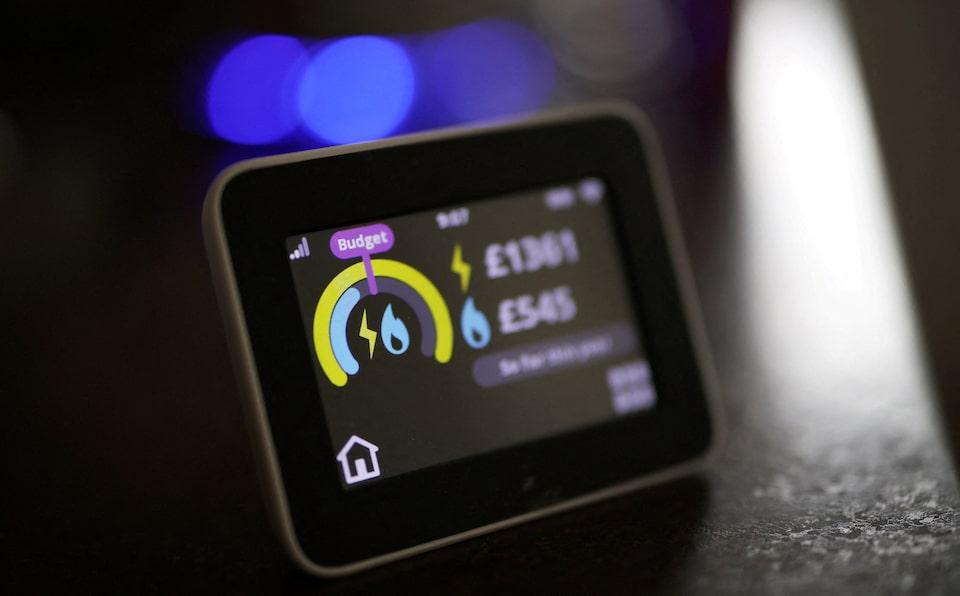
LONDON, Dec 12 (Reuters) - Britain's energy regulator Ofgem has proposed reforming how companies deal with customers who owe money and said they should offer tariffs free of some charges as household energy debts hit almost 4 billion pounds ($5.1 billion). The Labour government has promised to deliver higher living standards across every region of the United Kingdom by the end of the parliament, which could run until 2029, and has also said it wants to reduce domestic energy costs. Under Ofgem’s price cap, home energy bills have fallen since hitting record highs following Russia’s invasion of Ukraine in 2022, but remain some 40% higher than pre-crisis levels and at unaffordable levels for many vulnerable households. Customer energy debts have soared by 91% in the past two years, reaching 3.82 billion pounds in September, Ofgem said. Ofgem has "set out plans to increase and standardise the support people struggling with energy debt will receive, as well as options for practical help for those households who are in real difficulty", Tim Jarvis, director general of markets said. Changes could include introducing new rules to make how suppliers assess customers' ability to pay more consistent and improving the support on offer. Ofgem also proposed making suppliers offer tariffs that do not include standing charges. Standing charges are a daily fixed fee added to the unit price customers pay for gas and electricity, which is designed to cover costs associated with being connected to the energy system. Consumer groups have said they are unfair because they are paid regardless of how much energy a household uses. "We want to give consumers the ability to make the choice that’s right for them ... and by having a zero standing charge tariff, we would create that choice for everyone," Jarvis said. Ofgem will consult on the changes and expects standing charge-free tariffs to be available next winter. ($1 = 0.7840 pounds) Sign up here. https://www.reuters.com/business/energy/uk-regulator-proposes-reforms-household-energy-debts-hit-5-billion-2024-12-12/
2024-12-11 23:55
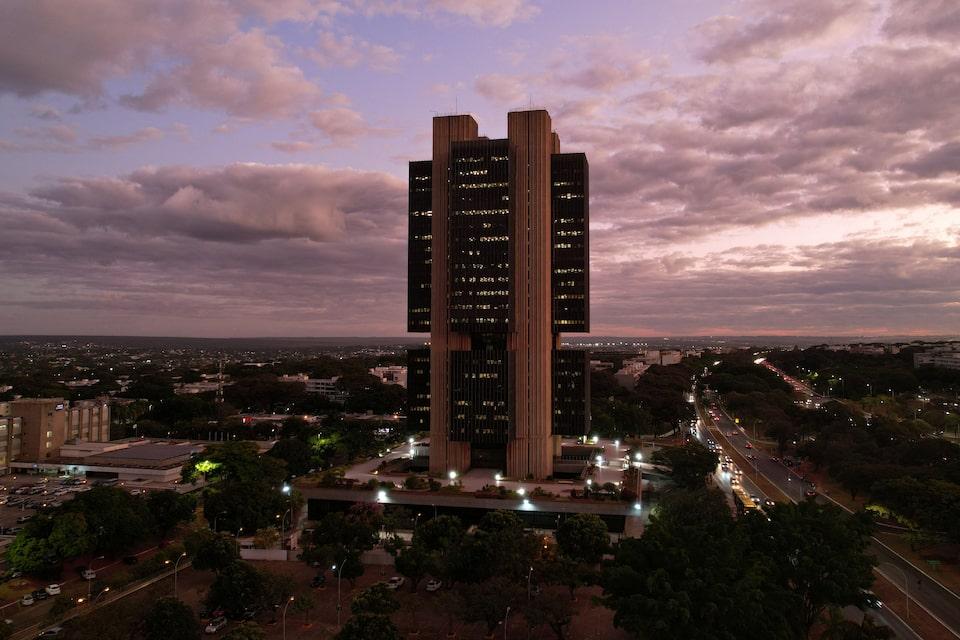
Brazil raises interest rates by 100 basis points to 12.25% Benchmark rate could soar to 14.25% as early as March based on guidance Government spending package fell short of expectations BRASILIA, Dec 11 (Reuters) - Brazil's central bank raised interest rates by a greater-than-expected 100 basis points on Wednesday and pointed to matching hikes for the next two meetings, signaling a shift to a new government-named governor will not weaken its determination to battle inflation. If the proposed roadmap is followed, the benchmark borrowing rate could soar to 14.25% as early as March - more than an eight-year high - reflecting policymakers' determination to curb rising inflation expectations amid robust economic activity, a tight labor market and a weaker currency. The bank's rate-setting committee, known as Copom, unanimously increased the benchmark Selic rate to 12.25%, noting a recent government-announced package of budget measures had impacted Brazil's real currency, asset prices and inflation expectations. The highly-anticipated spending cut package from President Luiz Inacio Lula da Silva's administration fell short of expectations, straining confidence in the government's ability to manage the rising public debt. "The committee judges that these impacts contribute to more adverse inflation dynamics," said policymakers in the decision statement, the last under governor Roberto Campos Neto's leadership at the central bank. Campos Neto, who will be succeeded in January by the current monetary policy director, Gabriel Galipolo, had been emphasizing that a positive fiscal shock, such as less government spending, would have a significant impact on markets if it changed the outlook for Brazil's public debt, as interest rate futures have surged amid growing fiscal concerns. "Our interpretation is that the statement was quite harsh, with explicit guidance for at least another 200 basis points," said Alexandre Espirito Santo, chief economist at Way Investimentos. While he deemed the committee's actions appropriate, he noted that managing expectations is an extremely challenging task at the moment, with focus shifting to the central bank's incoming leadership in January. Jose Francisco Goncalves, chief economist at Fator, said "the Copom's choice for a shock approach reintroduces the additional risk of fiscal dominance, as the only guarantee for now is the increase in interest expenses." In so-called fiscal dominance, central bank rate hikes increase government debt servicing costs and worsen fiscal conditions, deteriorating market expectations and ultimately driving inflation higher. Policymakers began tightening in September, stressing that the overall magnitude of the cycle would be determined by the firm commitment to reaching the 3% inflation target — a message that remained unchanged on Wednesday. Only four of 40 economists surveyed in a recent Reuters poll had anticipated a hike this size, while the majority had projected a smaller 75 basis-point increase. But bets embedded on the yield curve already pointed to a steeper full percentage-point hike, which had not been seen since May 2022, following a sharp weakening of the currency after the fiscal package was unveiled. The Brazilian real has depreciated nearly 20% year-to-date against the U.S. dollar, among the worst emerging market performances. Minutes before the rate decision, policymakers announced plans to hold a U.S. dollar auction with a repurchase agreement of up to $4 billion on Thursday. The view that the central bank should adopt a more hawkish stance gained momentum after the bank's weekly survey of economists showed a sharp deterioration in expectations for consumer prices extending into 2027. This occurred despite expectations for a more aggressive tightening cycle, reflecting a loss of confidence in interest rates effectively curbing inflation. The central bank itself revised on Wednesday its inflation estimates, now projecting inflation of 4.9% this year, up from 4.6% previously, and 4.5% in 2025, up from 3.9%. For the second quarter of 2026, which is part of a 18-month horizon affected by current monetary policy decisions, it forecast annual inflation of 4.0%, up from the prior 3.6%. Sign up here. https://www.reuters.com/markets/brazils-central-bank-steps-up-tightening-with-100-basis-point-rate-hike-signals-2024-12-11/
2024-12-11 23:48
Shares plunge 28% to lowest since March 2020 Stock falls as much as 32% earlier in the day Syrah defaults on loans with the United States Dec 12 (Reuters) - Shares of Australia's Syrah Resources (SYR.AX) , opens new tab plunged to a near five-year low on Thursday after it declared force majeure at its Balama graphite project in Mozambique due to disruptions from protests exacerbated by ongoing civil unrest, which also led the company to default on its U.S.-backed loans. Its shares were trading 28% lower at A$0.190 as of 0401 GMT, their lowest level since mid-March 2020. The stock fell as much as 32.1% earlier in the session to A$0.180, its biggest intraday drop in nearly five years. The company said , opens new tab that farmer-led protests at the Balama project began in late September and have been hindering the movement of people and supplies and disrupting operations. Force majeure is a clause that allows parties in a contract to avoid liability for unexpected external circumstances that prevent them from meeting obligations. Mozambique has also been rocked by civil unrest after election results in October, currently being disputed by opposition parties, which has affected the government's ability to resolve the protests at Balama, the miner said. "With conditions continuing to deteriorate across Mozambique...Syrah is unable to undertake a production campaign at Balama in the December 2024 quarter that is required to replenish finished product inventory, and for customer sales," it said. In 2023, Syrah sold 85,000 tonnes of graphite from Balama, earning $47.7 million in revenue from the project, its only operational and money-making mine in Mozambique. The protests have also caused the company to default on its loans with the U.S. International Development Finance Corporation (DFC) and the U.S. Department of Energy (DOE). The DFC has pledged $150 million , opens new tab in loans to help fund operations at Balama, while the DOE loaned the firm $102 million , opens new tab in 2022 to expand its facility in Louisiana. Earlier this week, miner South32 (S32.AX) , opens new tab withdrew its output forecast for its Mozal Aluminium smelter in Mozambique due to the protests. Sign up here. https://www.reuters.com/markets/commodities/mozambiques-post-election-protests-trigger-force-majeure-syrah-resources-2024-12-11/

2024-12-11 23:32
BRUSSELS, Dec 12 (Reuters) - Europe could recycle enough battery materials to supply two million electric vehicles (EVs) in 2030, but energy costs and a lack of financial support mean it is unlikely to do so, a report published on Thursday found. To boost resilience and competitiveness, the 27-nation European Union is trying to reduce its reliance on China for materials, such as lithium and cobalt, it needs for its green and digital transition. The 2023 EU Battery Regulation requires industrial batteries to have minimum shares of recycled lithium and nickel, each of 6%, and cobalt of 16% from August 2031, with higher shares five years later. T&E, a clean transport and energy advocacy group, said old batteries and gigafactory scrap in Europe could cover 14% of lithium, 16% of nickel and a quarter of cobalt demand by 2030, broadly in line with the 2036 targets. Locally recycled battery materials could then supply between 1.3 million and 2.4 million EVs and avoid the need to build 12 new mines globally by 2040. Recycled lithium could also save almost a fifth of the carbon emissions compared to extraction in Australia and refining in China, the report said. However, recycling capacity in the EU and Britain is only about a tenth of what is required in 2030. Over 30 recovery projects, enough to meet the targets, have been announced or are being built, but energy costs and a lack of technical expertise or financial support mean almost half are uncertain. Unless Europe recycles enough, much strategic material would likely go to China, returning to Europe in the form of finished EVs, the report's author said. The report's publication coincides with Raw Materials Week, a conference organised by the European Commission to discuss EU efforts to secure critical minerals. Stephane Sejourne, commissioner for industrial strategy, told attendees on Wednesday the EU needed to increase its capacity to retain and recycle waste products in the bloc. The Commission intends early in 2025 to present a list of mining, processing or recycling projects able to benefit from access to finance and shorter permitting time frames, after receiving 170 applications. Sign up here. https://www.reuters.com/world/europe/europe-set-miss-potential-battery-material-recycling-2024-12-11/