2024-12-11 23:03
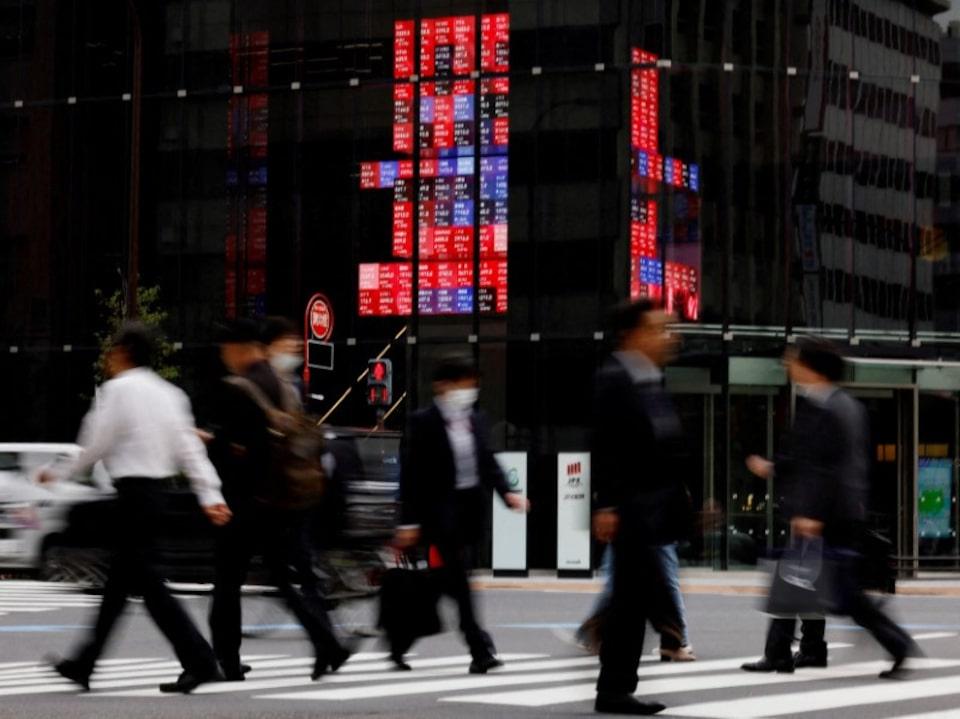
Nearly 75% expect Trump presidency to hurt business environment Half of Japanese firms see higher earnings in next fiscal year Majority of firms see BOJ head capable of normalising policy TOKYO, Dec 12 (Reuters) - Nearly three-quarters of Japanese companies expect Donald Trump's next term as U.S. president to have a negative impact on their business environment, citing planned tariff hikes and U.S.-China trade tensions as causes of concern, a Reuters survey showed. Trump returns to the White House in January, having threatened tariffs in excess of 60% on U.S. imports of Chinese goods. A Reuters poll of economists predicts those initial tariffs could be imposed from early next year, with the median estimate at 38% and projections ranging from 15% to 60%. Trump has also threatened levies of 25% on goods from Canada as well as Mexico, where several Japanese automakers have factories. "It's hard to predict his policies, and that makes it difficult for our client companies to make investment decisions," a manager at a machinery maker wrote in the survey. While 73% of respondents said Trump's second tenure at the White House would not be good for their business environment, the rest expect positive impacts, citing an expected expansion of U.S. domestic demand through tax cuts as well as likely revisions to energy and environmental policies. Asked what measures they would take if Trump hikes tariffs, two-thirds of the survey respondents said their business strategy was unlikely to change, while 22% said they would cut costs and 8% said they would work to expand their presence in markets other than the United States. The survey was conducted by Nikkei Research for Reuters from Nov. 27 to Dec. 6. Nikkei Research reached out to 505 companies and 236 responded on condition of anonymity. Though worries about the implications of a second Trump presidency abound, half of the respondents said they expect their earnings to increase in the next financial year. About a fifth anticipate a year-on-year decline while the rest predict earnings will be roughly the same. Some 1,000 Japanese listed companies saw combined net profit climb 15% in the six months to September, according to an analysis by the Nikkei business daily. Banks benefited from rate hikes - albeit to still very low levels, while shippers got a boost from higher freight rates and hotel and railroad operators saw a boom in inbound tourism, it said. About 60% of respondents to the Reuters survey expect the dollar to trade between 140 yen and 150 yen in 2025. The yen has been under pressure for years due to the large gap between high U.S. interest rates and rock-bottom Japanese rates, with the currency touching an almost four-decade low of 161.96 to the dollar in July. It has since rebounded thanks to both official intervention and Japan tightening monetary policy at the same time as the U.S. loosens and was trading around 151 yen on Wednesday. Asked about Bank of Japan Governor Kazuo Ueda's stewardship, slightly more than half of respondents said they held positive views on his ability to normalise the BOJ's monetary policy after ending negative interest rates in March, the survey showed. That compares with the 24% who do not hold favourable views of Ueda's capabilities to do so. The BOJ raised its short-term policy target to 0.25% in July and just over a half of economists polled by Reuters last month expect the BOJ to raise rates again next week. Sign up here. https://www.reuters.com/markets/asia/most-japan-firms-expect-trump-presidency-harm-business-environment-reuters-2024-12-11/
2024-12-11 22:28
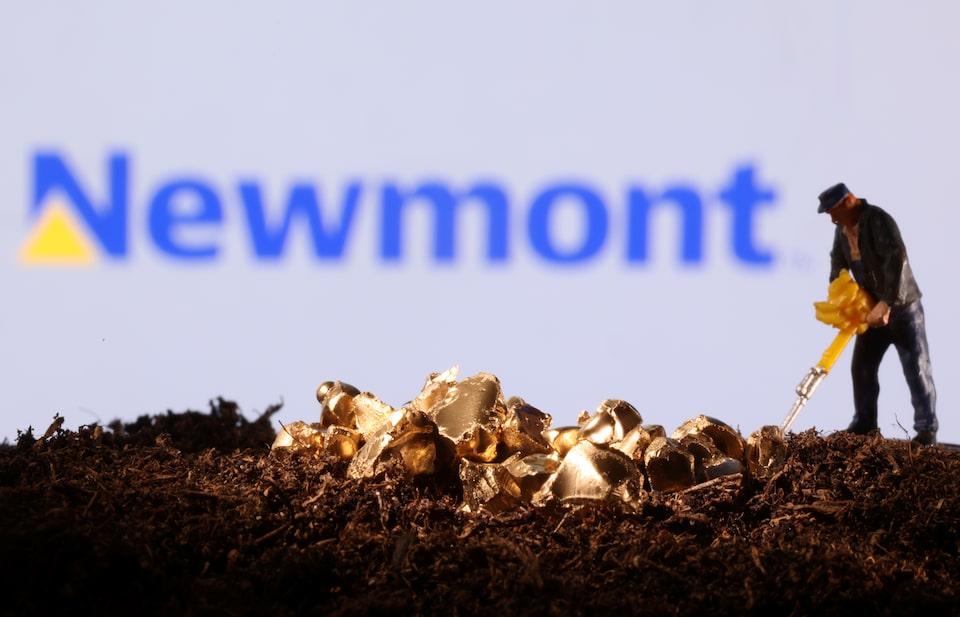
MEXICO CITY, Dec 11 (Reuters) - Newmont's Mexican division said on Wednesday it sees an "openness for dialogue" from the Mexican government, amid the proposed increase in mining royalties, which could potentially hinder billions of dollars in investments. WHY IT'S IMPORTANT The proposed increase in mining royalties could block more than $6.9 billion in investments over the next two years, according to the country's mining chamber, adding to the challenges impacting the sector such as previous administrative decisions and potential legal reforms. Newmont (NEM.N) , opens new tab, a global leader in gold mining, operates the huge Penasquito open-pit gold mine in Mexico which produces gold, silver, zinc and lead, and processes an average of 110,000 metric tonnes of fresh ore daily. KEY QUOTES "There is a lot of interest from the companies, a lot of commitment to continue investing in Mexico," Ana Lopez, manager of Newmont's unit in Mexico said, although she noted that "the best conditions in terms of certainty, opportunity and collaboration are also necessary for us to continue to do so." "This and any norm that is approved and applies to us, what we have to do is comply with it," she said, referring to the controversial royalty increase proposal. Lopez also welcomed the stance taken by Mexican President Claudia Sheinbaum last week, proposing a review of a legal reform which sought to ban open-pit mining, an issue that has also generated concern in the industry. CONTEXT The Mexican government's proposal aims at increasing royalties from the industry, arguing that metals prices have grown steadily in recent years. The mining sector was already impacted under previous President Andres Manuel Lopez Obrador, who refused to grant new mining concessions, and it faces new challenges with the administration of his successor, Sheinbaum, as legal reforms could hinder mining operations in Latin America's second largest economy, after Brazil. Sign up here. https://www.reuters.com/markets/commodities/mexicos-newmont-optimistic-about-talks-mining-royalties-hike-2024-12-11/
2024-12-11 22:21
Top US oil firm wants say in Hess-Chevron deal CEO disputes view a sale falls apart if pre-emption upheld HOUSTON, Dec 11 (Reuters) - (This Dec. 11 story has been corrected to say that the goal is to keep the option open if Hess arbitration succeeds, in the headline and paragraph 1) Exxon Mobil (XOM.N) , opens new tab wants to preserve its right of first refusal in Hess Corp's sale of its Guyana oil production assets because of the work it has put into developing the country's offshore fields, two of its top executives said on Wednesday. A three-person panel in May is to decide whether Hess's deal to sell itself to Chevron can go ahead on its original terms. A challenge by Exxon and CNOOC Ltd has stalled the second-largest deal in a recent wave of oil megamergers. "We developed the value of that asset. We have the right to consider the value of that asset in this transaction, and then the right to take an option on it," Exxon CEO Darren Woods told Wall Street analysts in his most significant comments on the arbitration case to date. "We have an opportunity, as does CNOOC, the other partner, to participate in that opportunity to have the right of first refusal.” Representatives for Hess and Chevron declined to comment. Analysts have put the value of Hess Guyana at between 60% to 80% of Chevron's (CVX.N) , opens new tab proposed $53 billion purchase of Hess (HES.N) , opens new tab. The joint venture has discovered more than 11 billion barrels of oil to date. The proposed sale ignores a joint venture agreement that grants the right of first refusal to any sale of a Guyana partner's stake, Exxon and CNOOC maintain. The two companies previously have rejected the claim, arguing the deal is structured as a merger and Hess's Guyana holdings remain intact. Hess has said if the Chevron deal is not concluded it would not separately sell its Guyana properties to Exxon or anyone else. Woods brushed off Hess's view of a loss at arbitration souring a sale, saying "that's their construct, not ours." Exxon wants the three-person arbitration panel to consider the value of Hess Guyana as part of the deliberations. "We'll look at the value and see if that value is in the best interest of the company, the corporation and the shareholders," added Exxon Vice Chairman Neil Chapman. Sign up here. https://www.reuters.com/business/energy/exxon-wants-extract-its-value-hess-guyana-assets-ceo-says-2024-12-11/

2024-12-11 22:09
SAO PAULO, Dec 11 (Reuters) - A farmers' lobby in Brazil is seeking to end a two-decade-long agreement that forbids grain traders from buying soybeans from farms on deforested land in the Amazon rainforest, claiming the deal has created an uneven playing field. Soybean farmer lobby Aprosoja-MT based in western Mato Grosso state said on Wednesday that the agreement fostered "a purchasing cartel" while harming farmers who strictly comply with the South American nation's forest code. The group said in a statement that it formally asked antitrust watchdog CADE to end the deal. Brazil is the world's largest soybean grower and exporter, with Mato Grosso the country's top-producing state. Global commodity giants including ADM (ADM.N) , opens new tab and Bunge (BG.N) , opens new tab voluntarily signed up for the "Amazon soy moratorium" in the mid-2000s, pledging to stop buying soy from farms in the rainforest that were deforested from 2008. Under forestry rules, Amazon landowners can clear up to 20% of their property. But an early 2000s deforestation surge sparked calls for action by companies that feared a wider ban. Scientists and conservationists have praised the moratorium for slowing deforestation in the Amazon, the world's largest rainforest and a bulwark against climate change since its trees absorb vast amounts of climate-warming greenhouse gases. Aprosoja-MT noted it filed a complaint to CADE after years of failed negotiation attempts, adding that the moratorium generated 20 billion reais ($3.3 billion) in losses for the state. CADE, which already has an open investigation over potential market manipulation related to the moratorium, did not immediately respond to a request for comment. Trader lobby Abiove said the moratorium is "an instrument to defend Brazilian agriculture" and does not bring harm to the sector. Its lawyer Francisco Todorov told Reuters there is plenty of land to farm soy in the Amazon in regions deforested before 2008. Earlier this year, Mato Grosso state lawmakers passed a law stripping tax breaks from firms adhering to the moratorium. "Our commitment is with the families who have been harmed for almost 20 years," Aprosoja said in a separate statement. Last week, environmentalists accused grain traders of seeking to weaken the moratorium. Abiove has said it was holding discussions on the moratorium, but without going into further detail. Asked for comment about the matter on Wednesday, Abiove said it had no update. ($1 = 6.0195 reais) Sign up here. https://www.reuters.com/markets/commodities/brazil-farmer-lobby-asks-lift-soybean-ban-deforested-amazon-rainforest-2024-12-11/

2024-12-11 21:58
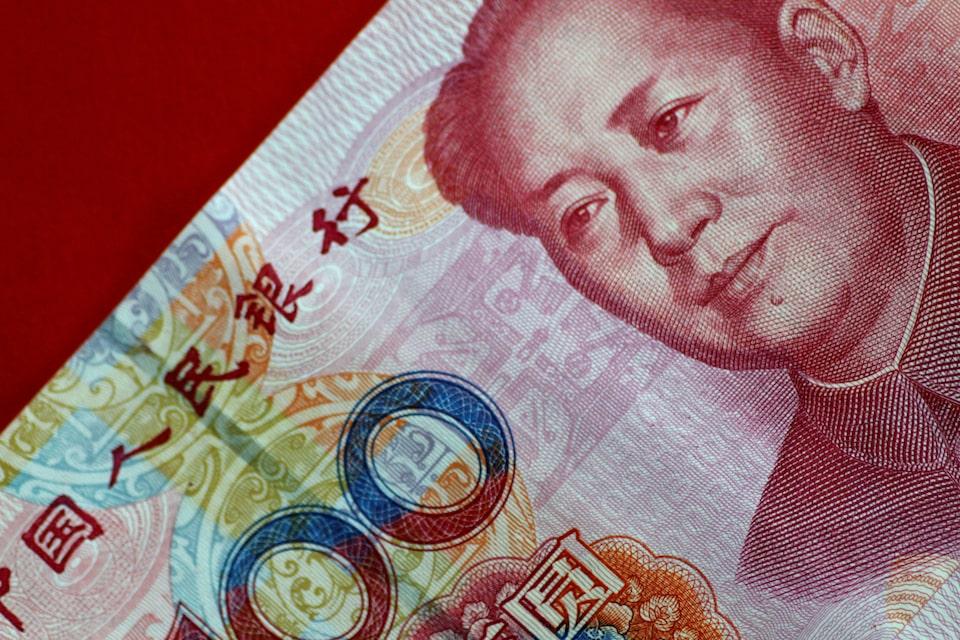
Dec 12 (Reuters) - A look at the day ahead in Asian markets. Stocks in Asia are poised to rise on Thursday after investors took the latest U.S. inflation data as a final seal on an interest rate cut from the Federal Reserve next week, sparking a widespread rally on Wednesday across almost every asset class. Bonds were the obvious exception - yields spiked higher in the wake of a 10-year Treasury debt auction - and emerging market currencies are also likely to feel the squeeze from a muscle-flexing dollar. China's yuan fixing and trading will be closely watched following an exclusive Reuters report that Beijing may allow the currency to weaken as they brace for higher trade tariffs in a second Donald Trump presidency in the United States. The contemplated move reflects China's recognition that it needs bigger economic stimulus to combat Trump's threat of bigger tariffs. But the People's Bank of China said later on Wednesday that the foundation for a "basically stable" yuan exchange rate remains "solid", the FX market is operating steadily, and the yuan is likely to stabilize and strengthen towards the end of this year. That may be, but weakening the currency is an obvious counter measure to tariffs from Washington. Despite Beijing's insistence to the contrary, few analysts would bet against it. There are two main complicating factors for China, however. The yuan will likely weaken against non-dollar currencies, especially in Asia where countries such as Vietnam have grown as hubs for finishing Chinese manufactured goods and avoiding U.S. sanctions. This risks a backlash from trading partners in Asia, perhaps via tit-for-tat regional currency devaluations. Secondly, a weaker yuan could accelerate capital flows out of China from domestic and international investors alike. Cumulative outflows this year have been large, although they have notably improved since Beijing first unveiled its new fiscal and liquidity stimulus a few months ago. According to the Institute of International Finance, China posted net FDI outflows this year for the first time in decades, and is poised to post "substantial" portfolio outflows next year of around $25 billion. On the other hand, the IIF estimates that net portfolio flows into India will more than triple next year to $22 billion. Overall capital inflows to emerging markets are set to slow 24% to $716 billion, the IIF estimates. While the spike in Treasury yields and the dollar on Wednesday may dampen the mood in Asia on Thursday, investors will surely take heart from the surge in world stocks - Wall Street and the MSCI World equity index posted their biggest increases in over a month. Thursday's calendar in Asia sees the release of Australian unemployment, Hong Kong industrial production and producer price inflation, and the latest industrial production and inflation figures from India. Here are key developments that could provide more direction to markets on Thursday: - India inflation (November) - Australia unemployment (November) - ECB policy meeting Sign up here. https://www.reuters.com/markets/asia/global-markets-view-asia-graphic-2024-12-11/
2024-12-11 21:45
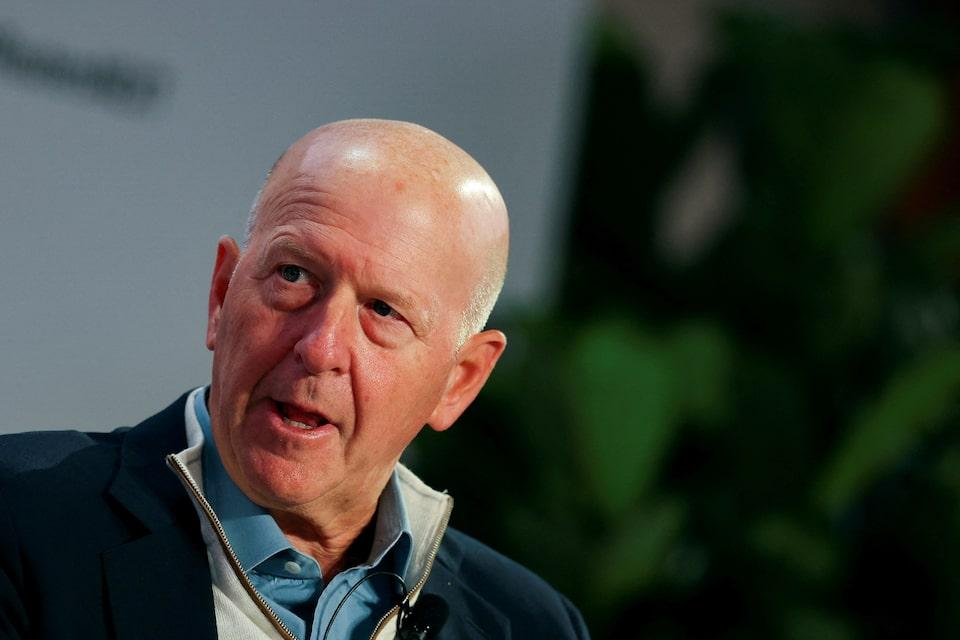
Bankers cautious despite Trump's pro-crypto stance Goldman Sachs says rules limit banks' crypto market participation Client demand for crypto remains limited, bankers say NEW YORK, Dec 11 (Reuters) - U.S. bankers struck a cautious tone on cryptocurrencies at the Reuters NEXT conference in New York this week, despite expectations that friendlier rules under President-elect Donald Trump will pave the way for lenders to expand into digital assets. Trump courted crypto campaign dollars with promises to be a "crypto president" and end the Biden administration's crackdown on the sector, but banks are nevertheless unlikely to rush head-first into the volatile asset, bankers said. "The regulatory framework has to evolve ... and everyone's speculating as to how that regulatory framework will evolve, but it's still unclear," said Goldman Sachs (GS.N) , opens new tab Chief Executive David Solomon. If the rules change, the Wall Street giant would "evaluate" dealing in top cryptocurrencies like bitcoin and ethereum, he said. "But for the moment ... our ability to act in these markets is extremely limited," he added, noting cryptocurrencies were speculative assets. BNY (BK.N) , opens new tab recently began offering custody of cryptocurrencies held by exchange-traded products, and the bank is also investing in a range of digital asset services, its CEO, Robin Vince, said. But anything new needs to be done with appropriate guard rails and be "battle-tested" through a few macroeconomic cycles, he said. "We've seen a couple of cycles already in crypto. We'll have to see how some of these assets evolve," he added. Under President Joe Biden, bank regulators made it more difficult for big lenders to hold crypto tokens and issued accounting guidance which made it extremely costly for banks to offer crypto custody services. With Trump in the White House, that is expected to change and the crypto industry is pushing for an ambitious raft of policies that would promote the widespread adoption of digital assets, including rescinding the SEC accounting guidance and asking bank regulators to ease up on scrutiny of the crypto sector. In key steps toward that policy overhaul, Trump last week announced he would make former top PayPal (PYPL.O) , opens new tab executive and crypto evangelist David Sacks the White House "Crypto Czar" and would nominate pro-crypto Washington attorney Paul Atkins as SEC chair. The latter announcement pushed bitcoin past the $100,000 milestone for the first time. But Trump has not yet announced his banking regulators, while the Federal Reserve's top Wall Street cop, Michael Barr, who has struck a skeptical tone on crypto, has said he will serve out his term through 2026. That creates uncertainty over how fast bank regulators may ease up on crypto lending and dealing, especially after turmoil in the crypto sector contributed to the collapse of lenders Silvergate and Signature Bank last year. That turmoil included the implosion of top crypto exchange FTX, a crisis that policymakers are in danger of forgetting all too quickly, Kristin Johnson, a Democratic commissioner at markets watchdog the Commodity Futures Trading Commission, told the Reuters NEXT audience. "One of my biggest fears for any administration is that they forget the lessons that we were meant to have learned from many previous crises," Johnson said. Even with regulatory easing, any expansion into crypto will be driven by client demand, which remains limited, bankers said. Bank of America (BAC.N) , opens new tab offers some clients exposure to cryptocurrencies via exchange-traded funds, but there was "not an overwhelmingly large amount of interest," said Matt Gellene, the bank's head of Consumer Investments and Employee Banking & Investments. Affluent young professionals were more likely to shop around for investment options that might include digital assets, said US Bank (USB.N) , opens new tab Senior Vice President and Director of Inclusive Growth Strategy Akita Somani, but US Bank was likewise not seeing "significant demand." Sign up here. https://www.reuters.com/technology/us-bankers-cautious-crypto-despite-expected-regulatory-easing-2024-12-11/