2024-12-11 19:14
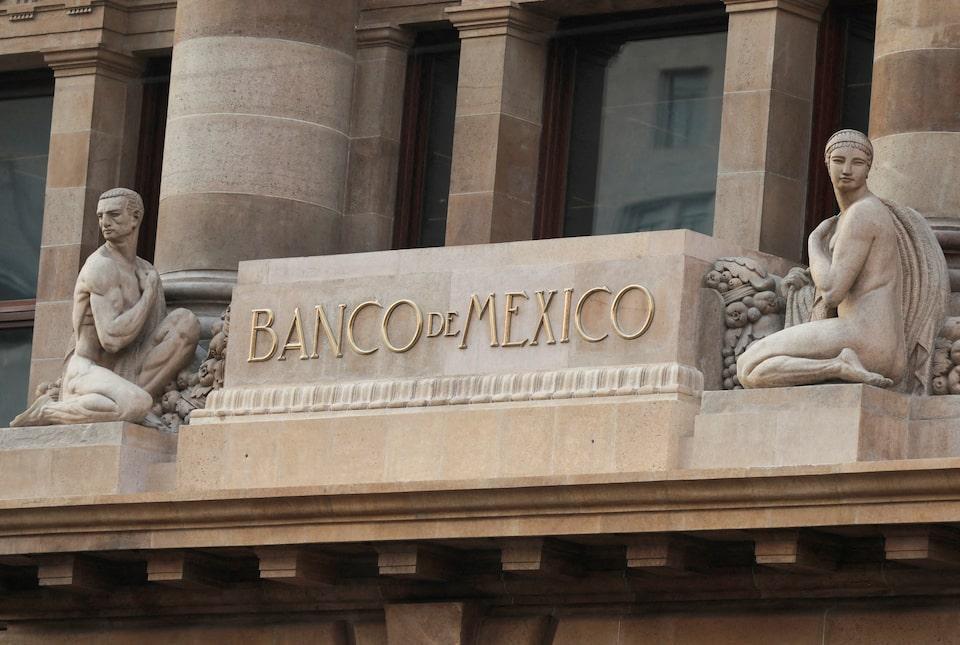
Mexico central bank calls financial system 'solid and resilient' It says banking system has liquidity, adequate capital levels Report calls market behavior relatively orderly Bank cites potential trade conflicts as risk to financial system MEXICO CITY, Dec 11 (Reuters) - Mexico's central bank on Wednesday expressed confidence in the country's financial system despite the "notable weakness" of Latin America's second-largest economy and risks from market volatility and potential trade conflicts. In its biannual financial stability report, the Bank of Mexico credited robust institutions for the system's stability, noting its "solid and resilient" position and capital and liquidity levels above regulatory minimums. Mexican markets have experienced considerable volatility in the year's second half, amid elections in Mexico and the U.S., its top trading partner. U.S. President-elect Donald Trump has promised to levy a 25% across-the-board tariff on Mexican imports. Uncertainty over a slew of constitutional overhauls in Mexico also contributed to a weakened local currency. Still, Mexican markets have managed to behave in a "relatively orderly" manner, the report said. "While the vulnerabilities and risks identified for financial stability are generally considered limited, unexpected or severe shocks could affect its proper functioning," Banxico, as the central bank is known, noted in the report. Even if limited, risks to the financial system could come from a rise in geopolitical tensions or trade conflicts, the report said. It also saw a risk in possible further weakening of the domestic economy, which the central bank currently forecasts will grow just 1.8% in 2024 and 1.2% in 2025. Trump's threatened tariffs have stoked uncertainty over whether Mexico will continue to benefit from nearshoring, a trend in which multinational corporations locate manufacturing capacity in Mexico, closer to the U.S. market, rather than in Asia. Banxico Governor Victoria Rodriguez on Wednesday said the economic phenomenon "is underway," and the results of the central bank's survey of companies underscore the "relevancy" of U.S.-Mexico economic integration. "The relocation of companies has also boosted bank credit," Rodriguez said, adding that the process is a gradual one. "These investments take time to materialize, so we would expect this process to continue both throughout this year and the coming years." Sign up here. https://www.reuters.com/markets/bank-mexico-touts-financial-systems-stability-despite-economys-weakness-2024-12-11/
2024-12-11 18:24
Consumer price index increases by 0.3% in November Shelter, mostly tied to hotels and motels, makes up 40% of gain Food prices rise strongly, lifted by eggs and beef Core CPI gains 0.3%; up 3.3% on year-on-year basis WASHINGTON, Dec 11 (Reuters) - U.S. consumer prices increased in November by the most in seven months, but the Federal Reserve was still expected to deliver a third consecutive interest rate cut next week to support a labor market that has been cooling. Progress in lowering inflation toward the U.S. central bank's 2% target has virtually stalled, with the report from the Labor Department on Wednesday also showing no improvement in the measure of underlying price pressures over the past four months. Despite persistently high inflation, there was some encouraging news. Rents, one of the stickier components of inflation, rose at the slowest pace in nearly 3-1/2 years. The rise in motor vehicle insurance, another troublesome category, moderated. These factors slowed the increase in services inflation. A sustained cooling trend would bode well for the inflation outlook, though looming tariffs from the President-elect Donald Trump's incoming administration pose a threat. "Some Fed officials will likely take solace in the improvement in services and housing inflation," said Scott Anderson, chief U.S. economist at BMO Capital Markets. "With that said, the Fed will need to see more improvement on the inflation front in the months ahead, if its plan for a steady pace of additional rate cuts next year is to be fulfilled." The consumer price index rose 0.3% last month, the largest gain since April after advancing 0.2% for four straight months, the Labor Department's Bureau of Labor Statistics said. A 0.3% increase in the cost of shelter, mostly hotel and motel rooms, accounted for nearly 40% of the rise in the CPI. Shelter costs rose 0.4% in October. The cost of lodging away from home, including hotels and motels, jumped 3.7%. That was the most since October 2022 and followed a 0.5% rise in October. Food prices increased 0.4% after rising 0.2% in October. Grocery store food prices surged 0.5%, with the cost of eggs soaring 8.2% amid an avian flu outbreak. Beef also cost more as did nonalcoholic beverages. But prices of cereals and bakery products fell 1.1%, the most since the government started tracking the series in 1989. Gasoline prices rebounded 0.6% while the cost of piped gas surged 1.0%. In the 12 months through November, the CPI climbed 2.7% after increasing 2.6% in October. The rise in the CPI was in line with economists' expectations. The annual increase in inflation has slowed considerably from a peak of 9.1% in June 2022. The Fed's focus has shifted more toward the labor market. Though job growth accelerated in November after being severely restricted by strikes and hurricanes in October, the unemployment rate ticked up to 4.2% after holding at 4.1% for two consecutive months. CORE INFLATION STUCK Excluding the volatile food and energy components, the CPI increased 0.3% in November, rising by the same margin for the fourth consecutive month. Rents increased 0.2%, the smallest gain since July 2021, after rising 0.3% in October. Owners' equivalent rent, a measure of the amount homeowners would pay to rent or earn from renting their property, rose 0.2%. That was the smallest gain since April 2021 and followed a 0.4% increase in October. "Residential rental prices as captured in CPI might finally be displaying the slowdown long flagged by real-time rent prices," said Kathy Bostjancic, chief economist at Nationwide. "This is significant." The cost of motor vehicle insurance edged up 0.1%. Airline fares rose 0.4% after soaring 3.2% in October. But the cost of healthcare services increased 0.4%. The cost of services as a whole increased 0.3% and nudged up 0.1% when excluding rent of shelter. Goods prices increased 0.4% after being unchanged in October. They were boosted by higher prices for new motor vehicles as well as used cars and trucks, likely as residents in the country's Southeast replaced vehicles damaged by hurricanes. In the 12 months through November, the so-called core CPI gained 3.3%, matching the advance in October. Over the past three months, the core CPI averaged a 3.7% annualized rate. Based on the CPI data, economists estimated that the core personal consumption expenditures (PCE) price index rose 0.2% in November after advancing 0.3% in October. Core inflation was forecast increasing 2.9% year-on-year after gaining 2.8% in October, in part because of unfavorable base effects. These estimates could change after November's producer price data due for release on Thursday. Despite the lack of progress in the inflation fight, investors took comfort from the moderation in the cost of rent and the fact that core inflation had not deteriorated. Stocks on Wall Street were trading mostly higher. The dollar rose against a basket of currencies. U.S. Treasury yields fell. Financial markets have almost fully priced in a quarter-percentage-point rate cut at the Fed's Dec. 17-18 policy meeting, according to CME Group's FedWatch Tool. Before the release of the inflation data, the odds were roughly 86%. Economists expect policymakers will signal fewer rate cuts in 2025 when they update their summary of economic projections next week. Though slower inflation is forecast next year as rent costs cool further and labor market slack grows, that could be offset by higher prices from tariffs on goods and mass deportations of immigrants that have been promised by Trump. The Fed kicked off its monetary policy easing cycle in September. Its benchmark overnight interest rate is now in the 4.50%-4.75% range, having been hiked by 5.25 percentage points between March 2022 and July 2023 to tame inflation. "The lack of meaningful progress on inflation means that in their summary of economic projections Fed officials are likely to signal just three rate cuts in 2025 versus the four they projected in September," said James Knightley, chief international economist at ING. Sign up here. https://www.reuters.com/markets/us/us-consumer-prices-post-largest-gain-seven-months-november-2024-12-11/

2024-12-11 17:46
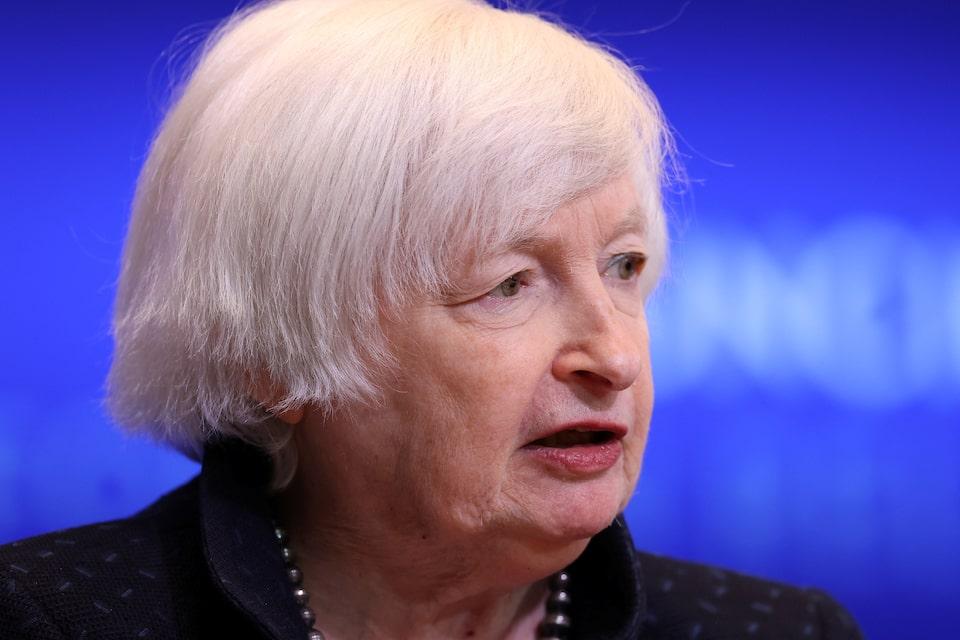
U.S. Treasury attentive to currency interventions, Yellen says Yellen: dollar not under threat; markets should set its value Treasury in November found no manipulation for trade advantage Yellen says U.S., China should keep communications channels open WASHINGTON, Dec 11 (Reuters) - U.S. Treasury Secretary Janet Yellen said on Wednesday that the U.S. will "react strongly" when countries try to manipulate their currencies for competitive advantage, but at the moment there is not such market intervention. Yellen said in a live interview on Bloomberg Television that she does not see any threat to the dollar's reserve currency status, as no other currency can rival its global use in financial markets, trade and other transactions. Asked about the potential for the Trump administration to try to weaken the dollar's value through a new version of the 1985 Plaza Accord, Yellen said that the Biden administration believes it's best for markets to determine the dollar's value. "We are not approving of countries that attempt to manipulate their own currencies to try to gain a competitive advantage and we're very attentive and react strongly when we see countries manipulating their currencies to try to retain an advantage." WEAKER YUAN? Yellen's comments were not specific to any particular country. But they came shortly after Reuters reported exclusively that Chinese authorities are considering allowing the yuan to weaken in 2025 to counteract potentially higher tariffs after President-elect Donald Trump takes office. Trump has vowed to impose tariffs of at least 60% on all imports from China. The Treasury's latest semi-annual currency report found no manipulation from major trading partners, but kept China on a monitoring list because of its large trade surplus with the U.S. and a lack of transparency surrounding its foreign exchange practices. These included a slight decline in China's global current account balance despite higher export volumes, indicating lower export prices. At the height of the U.S.-China trade war during Trump's first term in August 2019, Trump directed then-Treasury Secretary Steven Mnuchin to label China a currency manipulator. But the move was largely viewed as a negotiating tactic, as the Treasury Department dropped the designation in January 2020 as Chinese officials arrived in Washington to sign a trade deal with Trump. Trump's choice for Treasury Secretary, hedge fund manager Scott Bessent, if confirmed by the U.S. Senate, would oversee the next currency report in April 2025. Yellen, who spent two years trying to rebuild frayed U.S. economic relations with Beijing, said that it was critical for the U.S. to maintain ongoing communications with Chinese officials at every level, to foster discussions on policy disagreements and areas of common interest, such as climate, pandemics and financial stability. "It's critical to have open channels of communication. It helps avoid misunderstandings," Yellen said. "We've used these channels when we've taken action like export controls, or our recent outbound investment restrictions, to explain what we're trying to accomplish, to avoid misunderstandings that can worsen the relationship needlessly." Sign up here. https://www.reuters.com/markets/currencies/yellen-says-us-will-react-strongly-any-currency-manipulation-2024-12-11/
2024-12-11 17:14
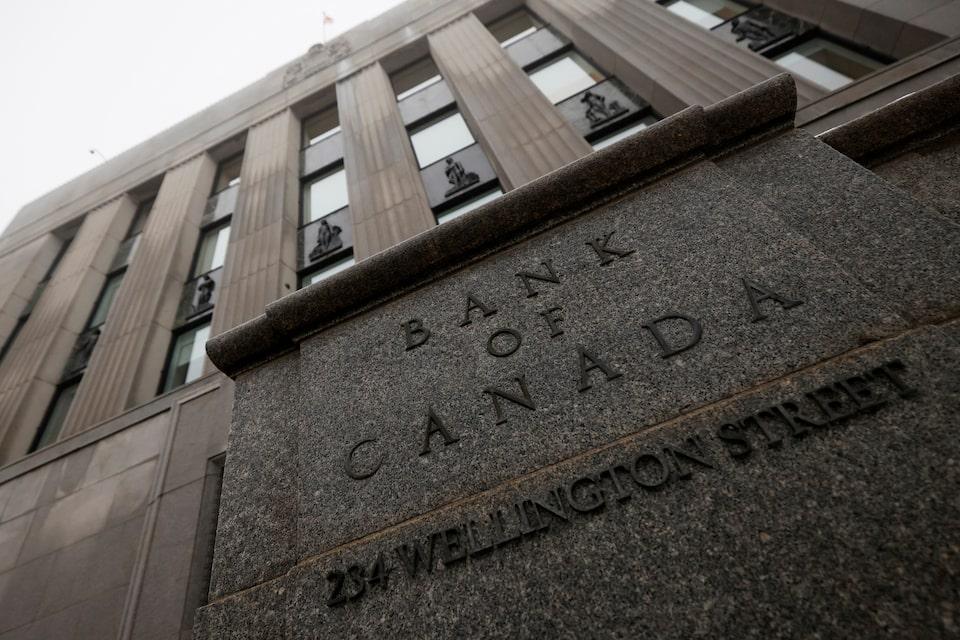
Bank of Canada signals rate cuts will be more gradual Canadian dollar strengthens post rate cut BOC governor says Trump's tariff threats add economic uncertainty OTTAWA, Dec 11 (Reuters) - The Bank of Canada slashed its key policy rate by 50 basis points to 3.25% on Wednesday to help address slower growth, though Governor Tiff Macklem indicated that further cuts would be more gradual and said he does not expect a recession. Canada's economy has been shrinking on a per capita basis for six consecutive quarters and most of the growth observed has been supported by an increase in population. But a planned drop in immigration numbers, a sales tax break from the government, federal and provincial cash handouts and a potential tariff threat from the U.S. are creating a lot of uncertainty for the growth outlook, Macklem said. "There are some mixed signals in the data... We did chew through that," he told a news conference, but noted monetary policy no longer needed to be clearly in restrictive territory. Macklem indicated that further cuts would be more gradual, a shift from previous messaging that continuous easing was needed to support growth. The 50-basis-point cut marks the first time since the pandemic that the central bank has implemented consecutive jumbo-sized cuts. In a Reuters poll of economists, 80%, or 21 out of 27 respondents, predicted that the bank would cut the overnight rate by 50 basis points. The rest forecast a quarter-point reduction. "With the policy rate now substantially lower, we anticipate a more gradual approach to monetary policy if the economy evolves broadly as expected," Macklem said. TRUMP TARIFF THREAT Macklem, for the first time, said that the possibility the new administration of U.S. President-elect Donald Trump might impose tariffs on Canadian exports represented a major new uncertainty. "If those things happen, certainly they will have a big impact on the Canadian economy, and will have a dramatic effect on our forecast," Macklem said. Trump has promised to impose tariffs of 25% on all Canadian exports unless Ottawa moves to tighten the border, which Macklem said clouded the economic outlook. The policy rate is now at the top end of the bank's so-called neutral range, which is considered to be the band within which rates are just enough not to restrict growth but not stimulate it either. The Canadian dollar firmed up on the messaging around slower rate cuts, with the loonie trading 0.29% stronger at 1.414 against the U.S. dollar, or 70.72 U.S. cents. Currency markets are pricing in a 70% chance of a 25-basis-point rate cut in January. Inflation is now at 2%, the bank's target, and Macklem reiterated that he wanted to see growth pick up. Canada's economy grew at an annualized rate of just 1% in the third quarter, less than the Bank of Canada had predicted. The bank said fourth-quarter growth might be weaker than expected, and that planned reductions in immigration levels could cause 2025 growth to also fall short of forecasts. As well as analyzing the effect of immigration numbers, the bank will also have to take into account a temporary sales tax rebate and a possible one-time cash handout by the government. Macklem said the bank would look through the effects that are temporary and focus on underlying trends to guide policy decisions. "We are retaining our call that the Bank of Canada ultimately needs to take its policy rate down to 2.00% by early 2026 as we expect U.S. tariffs to eventually be applied to some Canadian exports," Royce Mendes, head of macro strategy for Desjardins Group, wrote in a note. With Wednesday's reduction, the bank has now shrunk benchmark borrowing costs five times in a row by 175 basis points in a space of six months, making it the only major central bank to have reduced borrowing costs at such a rapid pace. "It says that the economy as a whole is not in an especially strong place," said Andrew Kelvin, head of Canadian and Global Rates at TD Securities. Sign up here. https://www.reuters.com/markets/rates-bonds/bank-canada-cuts-rates-by-50-bps-frets-over-possible-trump-tariffs-2024-12-11/
2024-12-11 16:20
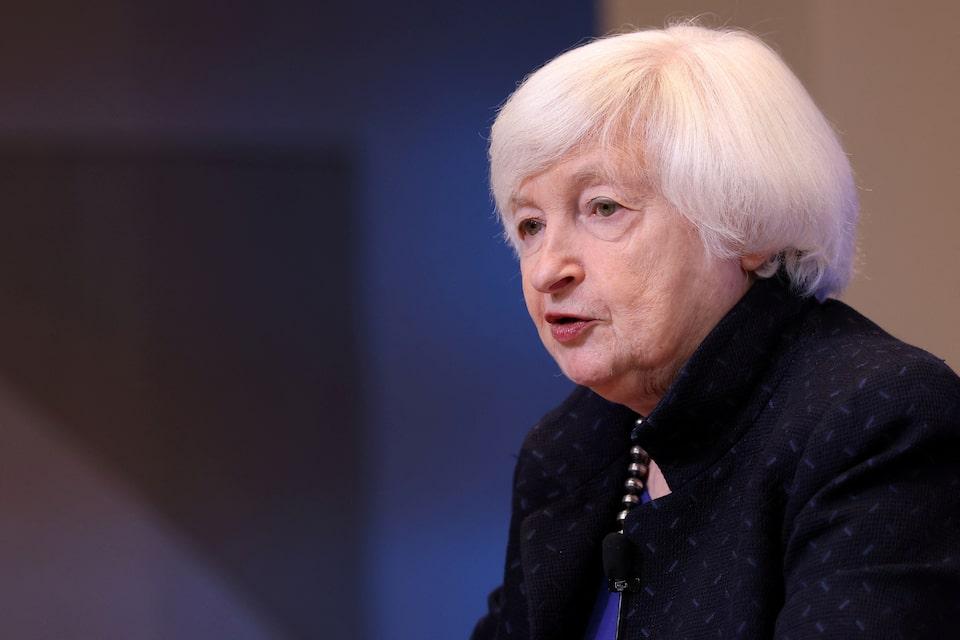
WASHINGTON, Dec 11 (Reuters) - The United States is continuing to look for creative ways to reduce Russia's oil revenue and lower global demand for oil creates an opportunity for more sanctions, Treasury Secretary Janet Yellen said on Wednesday. The United States has been constantly tightening sanctions on Russia over the Ukraine war and Russia has invested a lot of its own fleet of ships to avoid a Western oil price cap, she said in an interview with Bloomberg Television. Yellen said Washington's overall aim has been to impair Russia's ability to continue conducting the war by taking a variety of steps, but it has been focused from the beginning on Russia's oil revenue. "Now what's unusual about this moment is that the oil market seems to be well supplied," she said. "Prices are relatively low. Global demand is down, and there really has been an increase in supply," Yellen said. "So the global oil market is softer, and that creates, possibly, an opportunity to take some further action." The Treasury Department on Tuesday said it transferred the $20 billion U.S. portion of a $50 billion G7 loan for Ukraine to a World Bank intermediary fund for economic and financial aid to the war-torn country. The department said the disbursement made good on its October commitment to match the European Union's commitment to provide $20 billion in aid backed by frozen Russian sovereign assets alongside smaller loans from Britain, Canada and Japan to help the Eastern European nation fight Russia's invasion. Sign up here. https://www.reuters.com/business/energy/low-global-demand-creates-opportunity-more-us-sanctions-russian-oil-yellen-says-2024-12-11/
2024-12-11 15:12
Dec 11 (Reuters) - A meteoric rise in MicroStrategy's (MSTR.O) , opens new tab shares has made the bitcoin hoarder a likely candidate for the tech-heavy Nasdaq 100 index ahead of an annual reshuffle this week. The loss-making software company, an aggressive investor in the highly volatile cryptocurrency, has seen its shares soar nearly 500% this year, taking its market capitalization to $90 billion. The world's largest cryptocurrency hit the $100,000 milestone for the first time last week and has doubled in value this year. It got a big boost after Donald Trump's U.S. election victory as investors expect the president-elect to make good on his promise of a crypto-friendly administration. A Nasdaq 100 inclusion could spur more gains for MicroStrategy, whose bitcoin holding was valued at about $42 billion, as more investment firms include the stock in their portfolios to accurately reflect the index composition. For an entry into the index, a stock listed on the Nasdaq exchange must rank among the top 100 by market value, have a minimum daily trading volume of 200,000 shares and not be in the financial sector. The reshuffle announcement is due on Friday after market close. "MicroStrategy seems to check all the boxes to make it into the Nasdaq 100 when it is reconstituted in December," said Art Hogan, chief market strategist at B. Riley Wealth Management. The potential addition would give the Nasdaq 100 index indirect exposure to bitcoin and could make related ETFs more appealing to a younger investor base, said Todd Rosenbluth, head of ETF research at VettaFi. Data analytics firm Palantir (PLTR.O) , opens new tab, which has risen four-fold in market value to $160 billion this year, is another likely candidate for index inclusion. AI server maker Super Micro Computer (SMCI.O) , opens new tab could be among the ones to be ejected from the index as it has delayed filing its annual and quarterly reports. Super Micro CEO Charles Liang said on Tuesday he was confident the company would not be delisted. Nasdaq did not respond to a Reuters request for comment. RIDING ON BITCOIN BOOM MicroStrategy adopted bitcoin as its main treasury reserve asset in 2020 under the leadership of co-founder Michael Saylor as revenue from its software business slowed. The company has amassed 400,000 bitcoins, making it the biggest corporate holder of the digital asset. It financed its purchases through a combination of equity and debt deals and controls over 2% of bitcoin's total supply which is capped at 21 million. The company reported a net loss of $340 million in the three ended Sept. 20, its third consecutive quarterly loss. Not everyone is convinced about MicroStrategy's potential entry into the tech index. Michael O'Rourke, chief market strategist at JonesTrading, said that the sharp rise in the company's market value "is not the result of its business as a software company (but) its sizeable investments in bitcoin financed by significant equity and debt capital markets activity." "MicroStrategy should be reclassified as a 'financial' (stock) which would render it ineligible for the Nasdaq 100." MicroStrategy is viewed by market participants as equivalent to a leveraged bitcoin fund, J.P.Morgan said in a note last week. Wall Street believes there is room for the stock to grow. All nine brokerages currently covering MicroStrategy rate it "buy" or higher with a median price target of $510, which implies a 35% upside from the stock's last close. Sign up here. https://www.reuters.com/technology/microstrategys-bitcoin-powered-surge-takes-it-closer-nasdaq-100-doorstep-2024-12-11/