2025-12-30 04:32
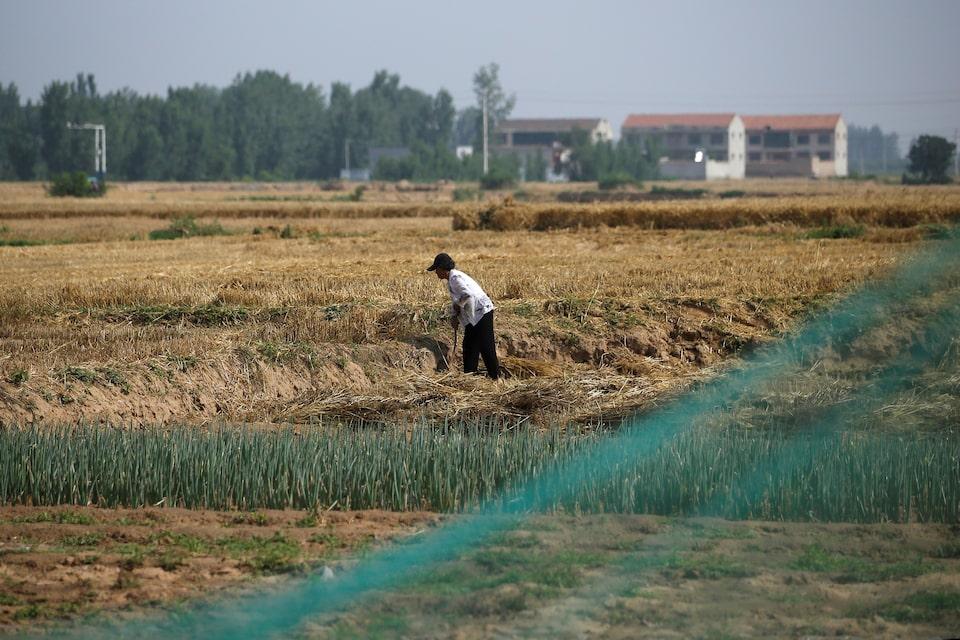
BEIJING, Dec 30 (Reuters) - China must stabilise grain and edible oil production, improve grain varieties and enhance quality, state news agency Xinhua said on Tuesday, following a meeting of the annual Central Rural Work Conference from December 29 to 30. The group, which sets China's agricultural priorities, pledged to "enhance the capacity for diversified food supply" and "promote high-quality development of high-standard farmland through zoned and categorised planning," Xinhua said. Sign up here. China is highly reliant on imports to feed its people and tensions with the U.S., a major agricultural trading partner, have accelerated a domestic self-sufficiency drive that includes investments in machinery and seed technology. "We must not relax our efforts in grain production, promote the integration of high-quality land, high-quality seeds, high-quality machinery and high-quality farming methods to enhance the overall agricultural production capacity and quality," a readout of the meeting released by Xinhua read. The readout said China would "make every possible effort" to increase farmers' income and promote stable employment for migrant workers, as Beijing seeks food security in the face of economic challenges and pressures from urbanization. The readout also said China would launch province-wide pilot programs to extend rural land-use contracts for another 30 years after current contracts expire around 2027. China's total grain output hit a new record this year, up 1.2% from 2024 to 714.9 million tons, according to statistics bureau data released earlier this month. https://www.reuters.com/world/asia-pacific/china-vows-stabilise-grain-edible-oil-production-key-meeting-2025-12-30/
2025-12-30 03:01
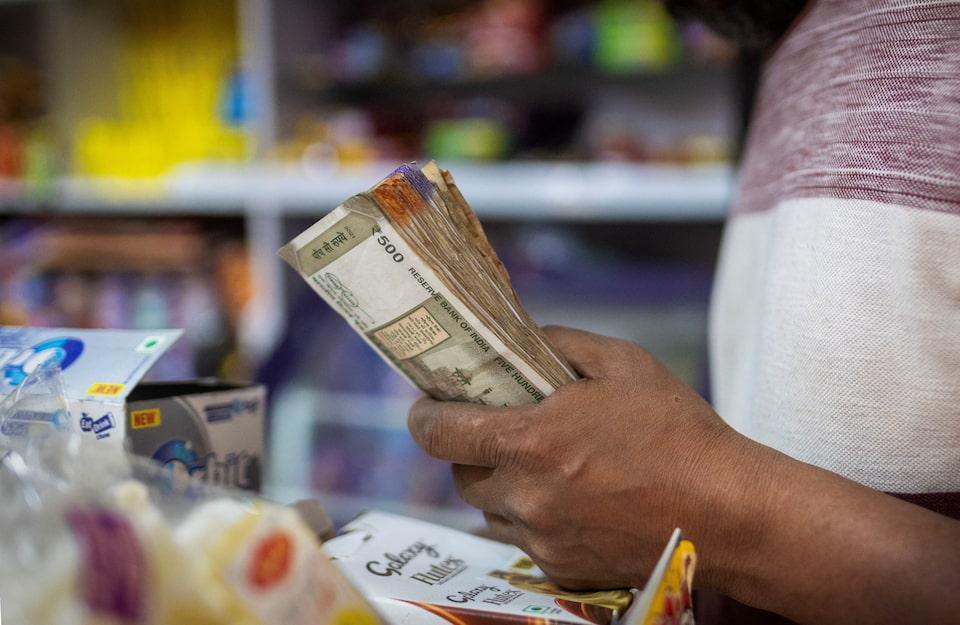
MUMBAI, Dec 30 (Reuters) - The Indian rupee gained against the U.S. dollar on Tuesday, snapping a three-day slide as index-rebalancing inflows and trimmed dollar longs lifted sentiment in thin year-end trade. The rupee ended 0.2% higher at 89.79 per dollar after opening at 89.9325. It stayed rangebound through the morning and had settled at 89.9750 on Monday. Sign up here. "The rupee experienced a significant appreciation post the RBI reference rate, as year-end obligations were met alongside rebalancing flows taking effect," said Dilip Parmar, forex research analyst at HDFC Securities. "Still, the currency's gains were underpinned by thin liquidity and a steady stream of dollar supply from banks." Parmar expects the currency to trade in a range of 89.40 to 90.26 in the near term. Several traders said corporate activity stayed muted and focused on routine near-term flows, buying or selling dollars to meet payables or convert receivables, with few firms taking fresh directional bets. Hedging was light, indicating companies were reluctant to add longer-dated cover at current levels. The rupee held a narrow range, with participants citing the central bank’s expected presence near the 90 level as a key backstop. That perception has anchored spot moves and reinforced a sideways bias in thin year-end trade. Dollar/rupee forward premiums eased again, with the one-year implied interest rate down about 10 basis points to 2.71%. The pullback followed the central bank’s plan for a $10 billion buy/sell swap and a drop in rollover costs from Dec. 31 to Jan. 1, traders said. https://www.reuters.com/world/india/rupee-likely-hold-near-90-central-bank-support-cushions-weak-flows-2025-12-30/
2025-12-30 02:35
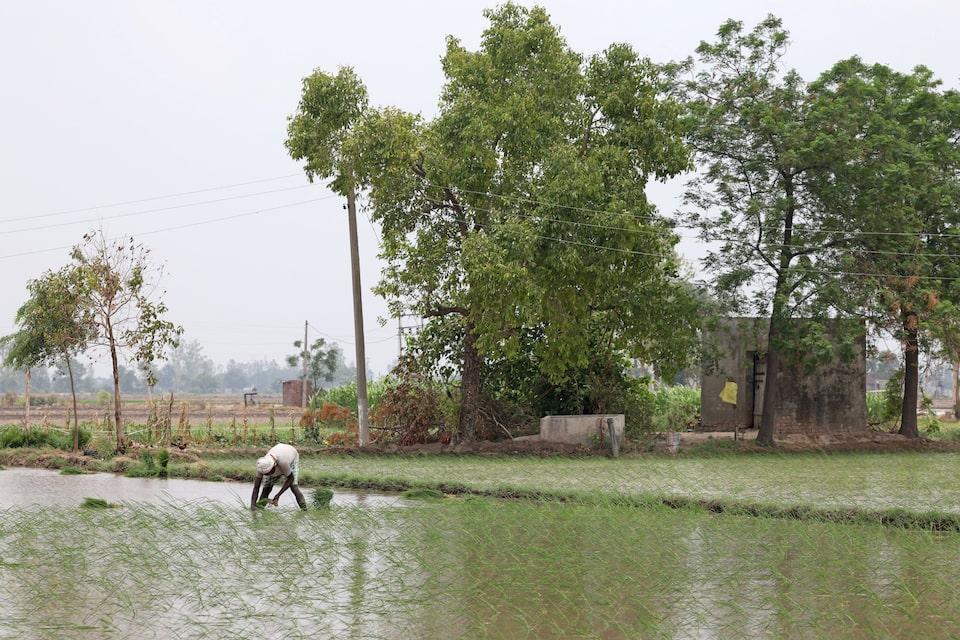
Rice has become key agricultural export for India, but at great cost Rice farming depletes groundwater in already water-stressed states, forcing deeper borewells Government subsidies encourage water-intensive rice cultivation at expense of other crops Some states have fledgling efforts to encourage growers to substitute for less thirsty crops NEW DELHI, Dec 30 (Reuters) - When India overtook China as the world's largest producer of rice this year, the country's politicians and agriculture lobby marked the moment by praising resilient farmers and innovative government policy. India has nearly doubled the amount of rice it exported over the past decade, with shipments crossing 20 million metric tons in the latest fiscal year. Sign up here. But many rice farmers in the country's agricultural heartlands are in a less celebratory mood. Interviews with growers, government officials and farm scientists, as well as a review of groundwater data, reveal widespread concern that thirsty rice crops are unsustainably draining India's already-low aquifers, forcing farmers to borrow heavily to drill ever-deeper borewells. In the rice-basket states of Haryana and Punjab, groundwater was reachable at around 30 feet a decade ago, according to 50 farmers and eight water and agriculture officials. But drainage has accelerated in the past five years and borewells must now go between 80 and 200 feet, according to the farmers, whose accounts were corroborated with government data and research by Punjab Agricultural University. "Every year, the borewell has to go deeper," said Balkar Singh, a 50-year-old farmer in Haryana. "It's getting too expensive." At the same time, government subsidies that incentivize rice cultivation discourage farmers from switching to less water-intensive crops, said Uday Chandra, a South Asia politics expert at Georgetown University in Qatar. The subsidies - some of them a legacy from past decades when India struggled to feed its growing population - include a state-guaranteed minimum price for rice that has climbed by around 70% over the past decade, as well as heavy power subsidies that encourage extracting water for farm use. The net effect, said Avinash Kishore at the International Food Policy Research Institute think-tank in Washington, is that one of the world's most water-stressed countries is paying farmers to consume vast amounts of precious groundwater. The Indian Ministries of Agriculture and Farmers' Welfare and of Water Resources did not respond when presented with Reuters' findings. Prime Minister Narendra Modi previously attempted to reform agricultural laws, including measures that would incentivize more private-sector crop purchases. But that raised fears that the government might reduce the quantity of grain it purchases at guaranteed prices, prompting protests by millions of farmers that paralysed the nation five years ago and forced Modi into a rare retreat. India accounts for 40% of the world's rice exports, so any changes in production will have global implications, Kishore said. In addition, India grows far more rice than it needs to feed its domestic population, which overtook China's in 2023 to become the world's largest, at more than 1.4 billion people. "The sheer volume of rice India produces and exports gives it a pivotal role in global trade," Kishore said. "But it also raises a question: should the country be growing and selling so much rice?" PUNISHING EXTRACTION COSTS While farmers in much of India rely on a mix of surface and groundwater irrigation, growers in the northern states of Punjab and Haryana, which are the nation's leading rice producers, typically depend on groundwater. That dependence makes rice farmers in both states particularly vulnerable to climate change, since aquifers aren't fully recharged when monsoon rains are weak. Even though monsoon rains have been strong for the last two years, farmers have been extracting so much water that aquifers in large parts of Haryana and Punjab are classified by the Indian government as either "over-exploited" or at "critical" levels. The two states extract between 35% and 57% more groundwater annually than their aquifers naturally replenish, according to government data for 2024 and 2025. In an attempt to salvage the situation, local authorities in 2023 imposed bans on new borewells in critically exploited zones. Growers constrained to existing borewells are in turn spending tens of thousands of rupees annually on equipment such as longer pipes and more powerful pumps that can extract from the dwindling supply, the farmers said. Among them is Sukhwinder Singh, who farms a 35-acre plot in Punjab. The 76-year-old, who is not related to Balkar Singh, said he spent between 30,000 rupees ($334.11) and 40,000 rupees last summer on equipment and labour that allowed him to continue growing rice despite the falling water table. "If costs keep rising each season, it looks like they will soon become unsustainable," he said. Producing a single kilogram of rice consumes 3,000–4,000 litres of water, according to farm economist Ashok Gulati, who previously advised the government on crop prices. That is between 20% to 60% more than the global average, according to farm-policy experts. Singh, the Punjab grower, said that farmers with larger plots like himself are still able to make a profit because they understand how to navigate government subsidies and can afford to drill deeper borewells. That isn't the case for subsistence growers, he said: "The falling water table is a major concern for all rice growers, but small farmers are hit hardest as every extra cost of cultivation dents their meagre income." POLICY CHANGES? There are some signs that Indian officials are hoping to break the vicious cycle between rice subsidies and groundwater extraction. The Haryana government last year began offering a subsidy of 17,500 rupees per hectare to encourage farmers to switch to crops such as millets, which require significantly less water. Millets, which are sometimes used as a substitute for rice, are gaining popularity in parts of urban India due to their perceived health benefits. The incentive offered by the Haryana government to promote crops such as millets, however, is available only for one growing season and has so far failed to drive large-scale adoption. The one-off incentive is too short, according to Gulati, who thinks at least five years are needed to encourage farmers to make a long-term switch from rice to millets. The Haryana Department of Agriculture and Farmers' Welfare did not respond to questions about the programme. Gulati said his research indicates that the state could incentivize farmers to switch to less water-intensive crops without increasing spending on subsidies. Punjab spends about 39,000 rupees on fertilizer and power subsidies for each hectare of rice grown, but redirecting 35,000 rupees to pay farmers who grow less thirsty crops would be enough to let them maintain their income levels, he said. The government would also save by paring back on the amount of rice subsidies paid out, he said. The Punjab Department of Agriculture did not return a request for comment on the impact of rice farming on the state's water table. Farmers would be willing to swap crops if properly incentivized, said Punjab rice grower Gurmeet Singh. "The land of Punjab and Haryana is fertile and we as farmers are willing to switch ... provided the government buys our produce at state support prices," he said. ($1 = 89.79 rupees) https://www.reuters.com/sustainability/climate-energy/indias-domination-global-rice-trade-stokes-looming-water-crisis-2025-12-30/
2025-12-30 01:24
BOGOTA, Dec 29 (Reuters) - Colombia's government will raise the country's minimum wage to 1.75 million pesos per month ($470), President Gustavo Petro said on Monday, a 22.7% increase. The new minimum wage, which applies to around 2.5 million workers across the Andean nation, will come into effect in 2026. Sign up here. In a speech, Petro said the measure aims to reduce inequality and "democratize wealth so that working people, who make up the majority of the Colombian population, can live better." The hike more than doubles the 9.54% increase made this year, which brought minimum wages to 1.42 million pesos ($380), and marks the leftist administration's last minimum wage hike before elections are held at the end of May 2026. It also surpasses predictions for next year's inflation, which central bank economists have estimated at 3.6%, down from the 5.1% projected for this year. Petro acknowledged the measure would put pressure on inflation. Banco de Occidente chief economist David Cubides said he considered the increase "absolutely unsustainable" and that it would have effects across the economy including the government payroll, pension costs and the informal labor market. "Inflation figures will have to be revised," Cubides said. "Current forecasts for 2026 and 2027 fell far short, and in light of this, one would expect interest rates in Colombia to increase in the medium term." The new minimum wage was announced by decree after no agreement was reached between business associations and trade unions. Petro also announced an additional transport subsidy for workers earning up to two minimum wages a month, which combined with earnings will bring workers' total minimum remuneration to 2 million pesos per month. ($1 = 3,744.3000 Colombian pesos) https://www.reuters.com/world/americas/colombia-hikes-2026-minimum-wage-by-nearly-23-2025-12-30/

2025-12-30 00:37
VYSHHOROD, Ukraine, Dec 30 (Reuters) - For three days, after the latest Russian air attacks on Ukraine, Olena Pazhydaieva has had no power or heat in her apartment in Vyshhorod, a satellite town 20 km (12 miles) north of Kyiv. With night-time temperatures dipping to -3 C (27 Fahrenheit), she now spends much of the day with her six-year-old son in a shelter the size of a small shack, but with heating and power to connect the devices she needs to work. Sign up here. About 20 people crowd into the building - dubbed "islet of warmth and power" on the sign outside - with mobile phones and laptops charging in order to keep working and connected. "After the last attack, we haven't had electricity for the third day, power hasn't appeared at all, and now we're forced to work here in a shelter, where we can charge our stations, charge our laptops," Pazhydaieva said. "It's good that there's internet. We can work. I’m not the only person here, there are many people." Russian drone and missile attacks have long targeted energy facilities throughout Ukraine, triggering blackouts. The latest massive attack knocked out power to 19,000 customers in Kyiv region surrounding the capital, according to Ukraine's Energy Ministry. The shack is one of a large network of "resilience points" set up by authorities to keep people warm and able to function. But family life without power can be complicated. "We go to an after-school group and they usually take the kids in on holidays, too," Pazhydaieva said. "But when we went there today, we went inside, it was super cold and all the kids were wearing jackets...At least it's warm here." Each family finds new ways to cope. For Pazhydaieva, that means spending time at the "islet" to recharge devices and then trying to connect the water heater at home to a portable power station to keep everyone warm. She has little faith in the U.S.-backed talks on resolving the conflict, particularly U.S. President Donald Trump's remark at a meeting on Sunday in Florida that Russian President Vladimir Putin "wants Ukraine to succeed". "When Trump says that Putin wants prosperity for Ukraine as missiles are flying at us, somehow these two statements don't really match up," she said. "Right now we're just observing and not much depends on us. We're doing the best we can here where we are now." (This story has been refiled to fix the spelling of 'resilience' in the headline) https://www.reuters.com/world/ukrainians-withstand-days-long-power-cuts-crowded-resilence-shelters-2025-12-30/

2025-12-29 22:52
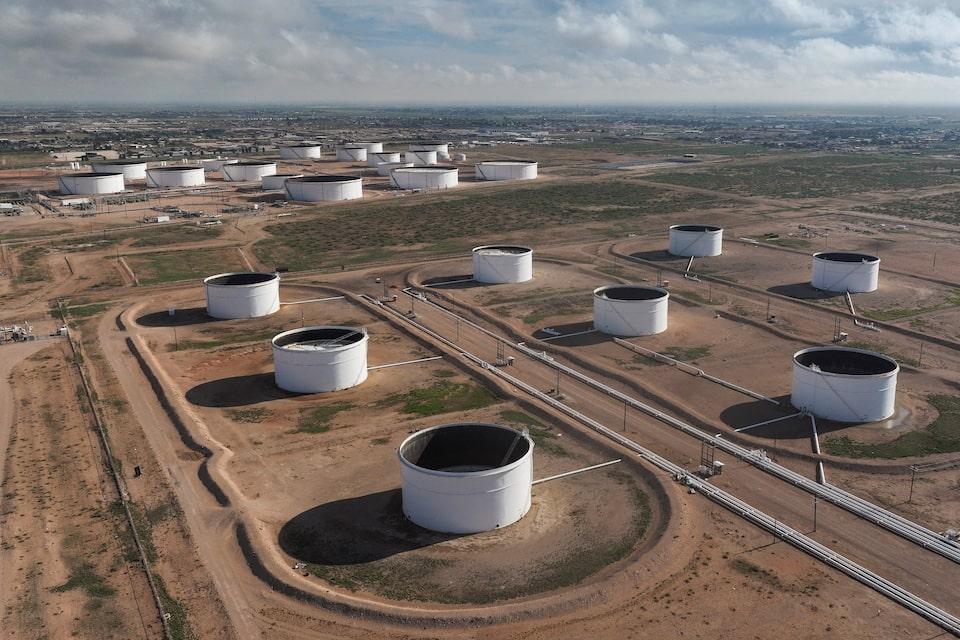
DENVER, Dec 29 (Reuters) - U.S. crude, gasoline and distillate inventories rose in the week ended December 19 as refining activity slowed and imports declined, the Energy Information Administration said on Monday. Crude inventories rose by 405,000 barrels to 424.8 million barrels in the week ended December 19, the EIA said, compared with analysts' expectations in a Reuters poll for a 2.4 million-barrel draw. Sign up here. Crude stocks at the Cushing, Oklahoma, delivery hub (USOICC=ECI) , opens new tab rose by 707,000 barrels in the week, the EIA said. The hub remains close to operationally low levels despite the uptick, Kpler analyst Matt Smith said. Monday's data release was delayed over six hours and released after the oil market had closed. Global Brent crude futures had settled up $1.30 at $61.94 a barrel, while U.S. West Texas Intermediate crude futures settled at $58.08 a barrel, up $1.34. Refinery crude runs (USOICR=ECI) , opens new tab fell by 212,000 barrels per day in the week, the EIA said, while utilization rates (USOIRU=ECI) , opens new tab fell by 0.2% to 94.6%. U.S. gasoline stocks (USOILG=ECI) , opens new tab rose by 2.86 million barrels in the week to 228.5 million barrels, the EIA said, compared with analysts' expectations in a Reuters poll for a 1.1 million-barrel rise. The increase in gasoline stocks was due to softer demand compared to the prior week, Smith said. Distillate stockpiles (USOILD=ECI) , opens new tab, which include diesel and heating oil, climbed by 202,000 barrels in the week to 118.7 million barrels, versus expectations for a 440,000-barrel rise, the EIA data showed. Distillate fuel stocks in the U.S. Gulf Coast refining hub hit their highest level since August 2021, the EIA data showed. Net U.S. crude imports (USOICI=ECI) , opens new tab rose by 609,000 barrels per day 2.47 million bpd. Meanwhile, exports of total petroleum products hit a record high of 7.77 million barrels, the EIA data showed. https://www.reuters.com/business/energy/us-crude-fuel-inventories-rose-week-ended-december-19-eia-says-2025-12-29/