2024-12-11 10:57
Ukraine strikes Taganrog port, weapon unknown Hits Bryansk region with drones, starting fire Ukraine says it struck an oil depot in Bryansk Kazakhstan says Druzhba pipeline unscathed MOSCOW, Dec 11 (Reuters) - Ukraine struck a southern Russian port on the Azov Sea with missiles and triggered a fire at an oil depot in the western Bryansk region with drones, officials and various media and sources said. The extent of damage and weapons used in the port attack were unclear, though Russia has repeatedly cautioned that Ukraine's use of U.S. ATACMS missiles over the border represents direct Western involvement and risks triggering a wider war. Kyiv says it hits Russian energy facilities in retaliation for attacks on Ukrainian energy infrastructure, which have knocked out about half of Ukraine's available generating capacity during the war, damaged distribution and brought blackouts. Russia's defence ministry said air defence units destroyed 14 Ukrainian drones overnight over Bryansk that borders Ukraine. Regional governor Alexander Bogomaz said on Telegram that an unspecified production facility briefly caught fire. Ukraine's military said it caused a massive fire at an oil depot, while Russian independent media ASTRA reported that a refinery had been hit and showed flames leaping into the sky. The Soviet-built Druzhba pipeline, which pumps oil from the Western Siberia and Caspian Sea to Europe, runs through Bryansk, as does the Baltic Pipeline System (BPS) which goes to the Baltic Sea. Kazakhstan pipeline operator Kaztransoil said the Druzhba pipeline was undamaged. Citing Russian authorities, it said an industrial facility caught fire and there were no threats to oil supplies originating in Kazakhstan. Kazakhstan plans to ship 130,000 metric tons (31,000 barrels per day) of oil to Germany in December via Druzhba in addition to 1.358 million tons sent earlier this year. A Ukrainian industry source said that the overnight attack on a Bryansk depot did not affect oil transit to Europe via Ukraine. TAGANROG About 750 km (465 miles) south, Ukrainian missiles hit Taganrog port, damaging an industrial facility and 14 cars, the acting governor of Rostov region Yuri Slyusar said. Reuters was not able to independently verify the reports. Russia's 2022 invasion of Ukraine has left tens of thousands of dead, displaced millions and triggered the biggest crisis in relations between Moscow and the West since the 1962 Cuban Missile Crisis. The war is entering what some Russian and Western officials say could be its final and most dangerous phase as Moscow's forces advance at their fastest pace since the early weeks of the conflict and the West ponders how the war will end. Ukraine used U.S. ATACMS missiles in November to strike into Russia, taking advantage of new permission from outgoing U.S. President Joe Biden. Days later, Russia fired a hypersonic intermediate-range ballistic missile at the Ukrainian city of Dnipro. Since then, Russia reported it had shot down at least 15 ATACMS missiles. The damaged area of Taganrog, a city of about a quarter of a million people on Russia's Black Sea coast not far from the border with Ukraine, has been cordoned off by police, Svetlana Kambulova, the head of the city, said on Telegram. The attack partially damaged a boiler building, cutting off heat to 27 apartment buildings, Kambulova said. Russia has an air base near the city, from which military analysts say Russia's air force operates drones, bombers and other weapons to attack Ukraine. Sign up here. https://www.reuters.com/world/europe/industrial-facility-damaged-missile-attack-russias-taganrog-officials-say-2024-12-11/

2024-12-11 10:56
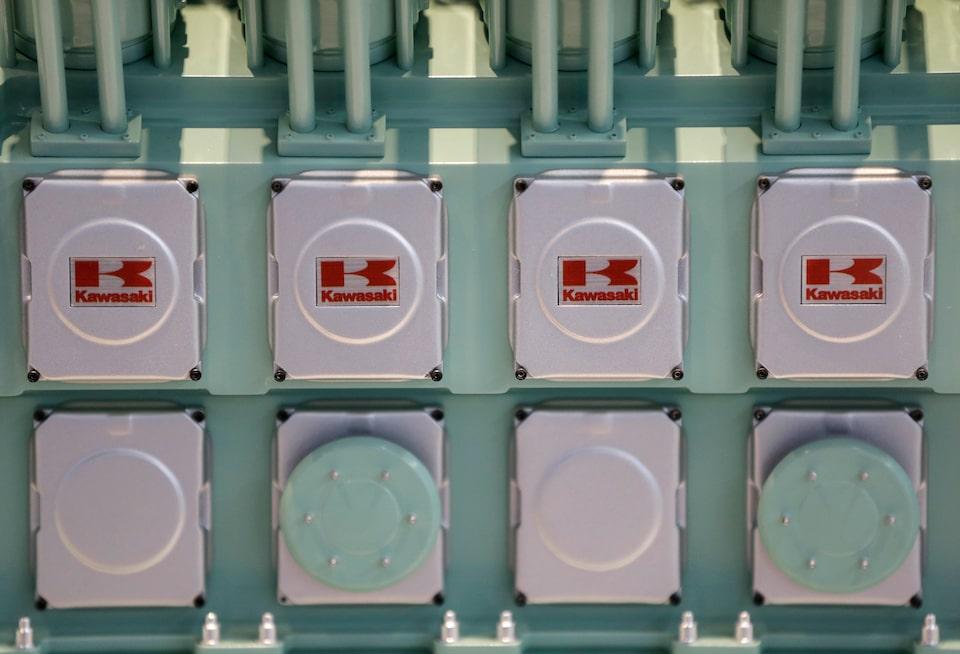
Change follows delays in construction approvals Will also now use smaller ships than originally planned Project backed by Japan, Australia governments TOKYO, Dec 11 (Reuters) - Kawasaki Heavy Industries (7012.T) , opens new tab has revised its Japan-Australia hydrogen supply chain demonstration project, suspending plans to use hydrogen derived from Australian brown coal and shrinking the size of the ships to be used. The move was prompted by difficulties in procuring hydrogen from Australia by the fiscal year 2030 deadline due to delays in construction approvals, a company spokesperson said. The company, which leads the project, has decided to use hydrogen produced in Japan instead, but has not yet decided the details, the spokesperson said. It has also not ruled out procuring coal-derived hydrogen from Australia in the future, the spokesperson added. Other potential sources include the Middle East. Kawasaki also now plans to use smaller liquefied hydrogen carriers with a capacity of 40,000 cubic metres, down from original plans for vessels that can carry 160,000 cubic metres, the spokesperson said. The company believes the smaller vessels will be better suited to market needs in the early stages of hydrogen supply chains. The world's first liquefied hydrogen carrier, with a capacity of 1,250 cubic metre, made its first voyage carrying hydrogen produced from brown coal in Australia to Japan in 2022. BACKED BY GOVERNMENTS The coal-to-hydrogen project is backed by the governments of Japan and Australia as a way to switch to cleaner energy and cut carbon dioxide (CO2) emissions. The Japanese government awarded 220 billion yen ($1.45 billion) in funding to it last year. Hydrogen, seen as a path to decarbonising industries that rely on coal, gas and oil, is key to Japan's plans for achieving carbon neutral by 2050. Australia aims to become a major exporter of the fuel. ($1 = 151.5100 yen) Sign up here. https://www.reuters.com/business/energy/kawasaki-heavy-suspends-plan-use-hydrogen-aussie-coal-2024-12-11/
2024-12-11 10:44
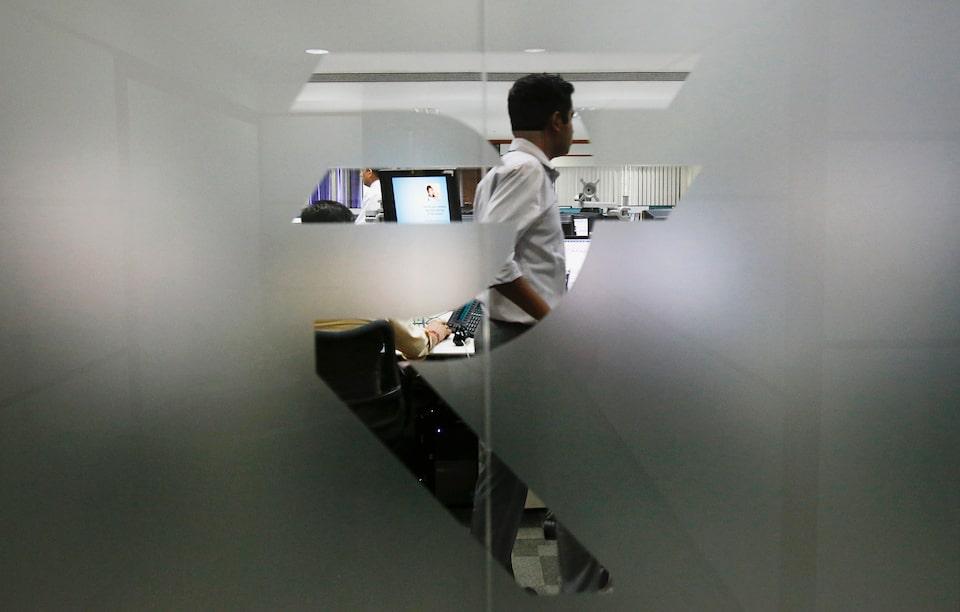
MUMBAI, Dec 11 (Reuters) - The Indian rupee weakened to its record low on Wednesday pressured by a slide in the Chinese yuan and heightened dollar bids in the non-deliverable forwards (NDF) market but central bank intervention helped limit losses. The rupee hit a low of 84.8650 against the U.S. dollar before closing at 84.83, up marginally on the day. The rupee has weakened 0.4% in December, underperforming many of its regional peers as concerns over slowing economic growth and the appointment of a new RBI chief has fuelled expectations of rate cuts next year, hurting the local unit. Dollar-selling intervention by the Reserve Bank of India (RBI), via state-run banks, helped the rupee avert deeper losses, traders said. The offshore Chinese yuan declined 0.4% to 7.28 after Reuters reported that China was considering allowing the yuan to weaken next year to weather higher tariffs, weighing down most Asian currencies. The dollar index, meanwhile, was up 0.2% at 106.5 ahead of the release of the closely watched U.S. inflation data later on Wednesday to gauge the future path of Federal Reserve policy rates. "While it is tempting to say that the Fed has moved on from the inflation story, any upside surprise to the already high consensus expectation for core inflation at 0.3% month-on-month would likely send the dollar higher," ING Bank said in a note. Investors are currently pricing in a 86% chance of a 25-basis-point cut by the Fed this month, according to CME's FedWatch tool. Meanwhile, dollar-rupee forward premiums rose, with the 1-year implied yield rising 11 basis points to 2.17%. Strong interbank paying interest and a rise in near forward premiums, boosted by demand related to arbitrage between outright and non-deliverable forwards, helped the premiums, traders said. Sign up here. https://www.reuters.com/markets/currencies/rupee-declines-lifetime-low-hurt-by-weak-yuan-ndf-dollar-bids-2024-12-11/
2024-12-11 10:05
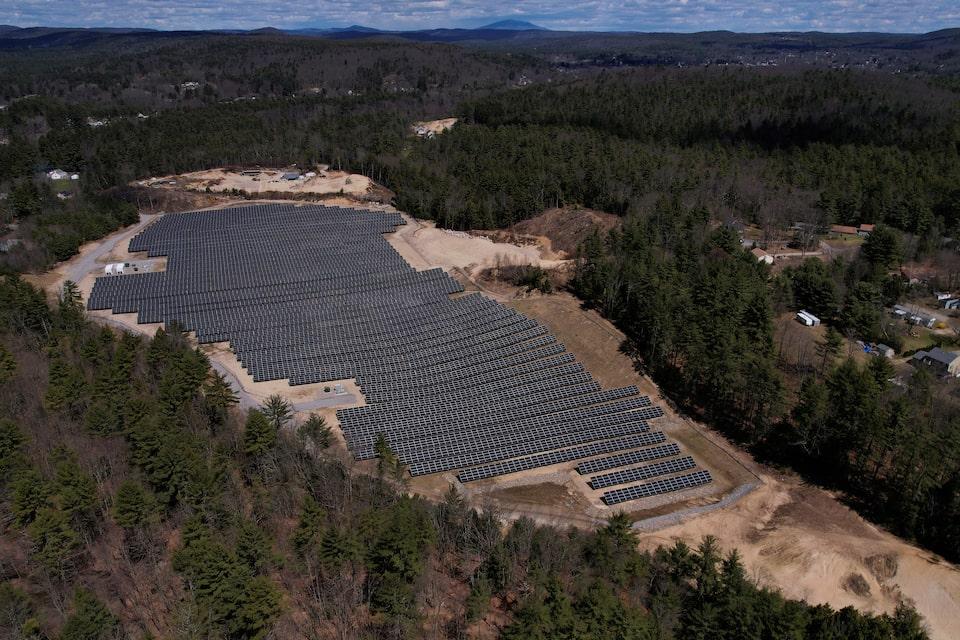
Acadia Infrastructure Capital launches new coalition Microsoft helps back first green energy project Looks to tap more companies; bolster local communities LONDON, Dec 11 (Reuters) - U.S. investor Acadia Infrastructure Capital and companies including Microsoft (MSFT.O) , opens new tab are looking to help develop a $9 billion pipeline of renewable energy projects across the country, the project lead told Reuters. Launching the Climate and Communities Investment Coalition (CCIC) with the technology giant as an anchor member, Acadia Vice President Brian O'Callaghan said it was also talking with companies in sectors including retail and consumer goods. "The CCIC's reason for being is to accelerate corporate-led renewable energy financing with real tangible benefits to local communities," O'Callaghan said, adding it was expected to help build-out around 5 gigawatts of renewable power over five years. The benefits could include things like supporting access to clean energy at reduced prices for low- and middle-income households, hiring local people, and supporting contractors with diverse ownership, he said. While falling costs made renewables attractive, the CCIC would help accelerate the roll-out as many companies need to meet environmental targets and will want to access Renewable Energy Certificates (RECs) attached to the projects. RECs can be sold to those companies looking to help green their power supply while others may buy them to offset dirty emissions in their supply chains. "It's just about the pace of build out. Renewable energy... will continue to expand without corporations. With corporations, the pace becomes exponential," O'Callaghan said, adding the company investment would help attract other investment dollars. Its recent first deal saw Matrix Renewables secure financing for a 210 megawatt solar project, backed by Microsoft. Danielle Decatur, Director, Environmental Justice at Microsoft, added in a statement that the programme helped the company meet its goals "through high-quality renewable energy procurement". Yinka Bode-George, CEO of the non-profit Sustain Our Future Foundation, which is helping with the social impact, said it would "help deliver meaningful, lasting benefits to community stakeholders". Sign up here. https://www.reuters.com/business/energy/acadia-companies-eye-9-bln-us-renewables-roll-out-2024-12-11/
2024-12-11 09:57
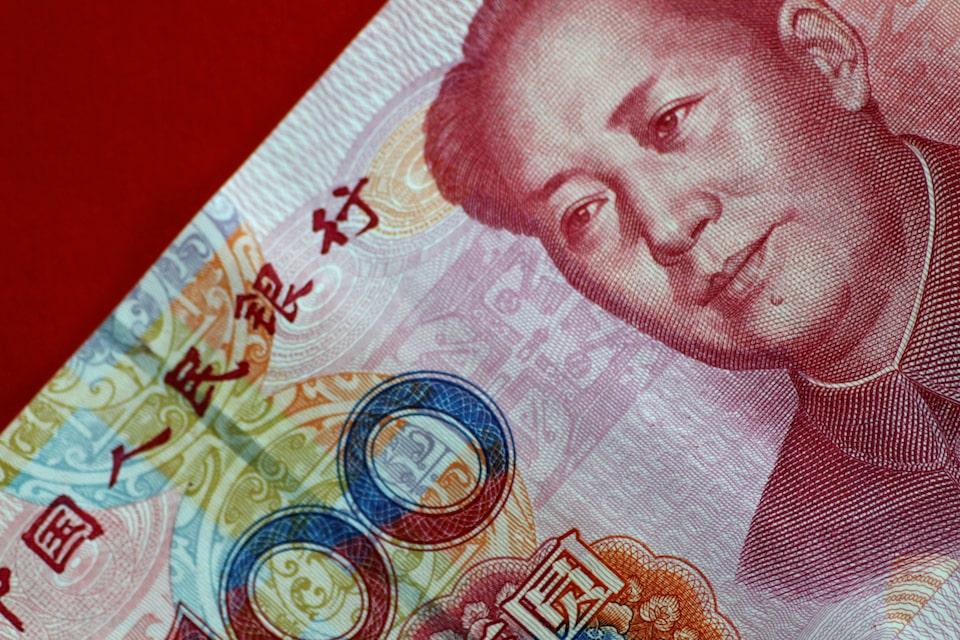
Dec 11 (Reuters) - Reuters reported on Wednesday that China is considering allowing the yuan to weaken in 2025 to brace for higher trade tariffs in a second Donald Trump presidency, citing people familiar with the matter. Foreign exchange markets moved on the news, with the yuan falling about 0.3% to 7.2803 per dollar and China-sensitive currencies such as the South Korean won and New Zealand dollar slipping. The Australian dollar, which sometimes serves as a more actively traded proxy for the yuan, fell as much as 0.6% to a one-year low . Here are comments from market analysts and participants: JANE FOLEY, HEAD OF FX STRATEGY, RABOBANK, LONDON: "It is a very interesting report, because it would fit with the theme of a slowing Chinese economy, and theme of 'what is China going to do to push back against U.S. tariffs?' Weakening the exchange rate, given that sort of backdrop, does have a very appealing logic to it. And we know, of course, that politically, particularly if China does want to increase the reserve status of the renminbi, there is pressure on it to keep it firmer. But if they need to revitalise the economy, and they tend to be more interested on focusing on exports, there is quite a compelling logic that they may allow the renminbi to soften." NICHOLAS REES, SENIOR FX MARKET ANALYST, MONEX, LONDON: "News that China will allow the yuan to weaken as they prepare for Trump tariffs does not come as a shock – this has been one of our high-conviction calls post-election day. "As we see it, Chinese authorities understand that they need to establish a negotiating position, and that right now they have first mover advantage. If anything, we think markets are still underestimating the degree to which the yuan could weaken in the next year if tariffs are implemented. But, given the yuan’s role as a regional FX anchor, significant depreciation is likely to have broader knock-on effects, particularly across Asian FX" CHRIS SCICLUNA, HEAD OF ECONOMIC RESEARCH, DAIWA CAPITAL MARKETS, LONDON: "Most people would assume that the response to implementing tariffs would be to allow the yuan to weaken. Even if European exports are hit (by tariffs), the markets will react by weakening the euro. "So, it's about if and when. The currency adjustment might offset the impact of tariffs. "There is a question about whether or not a weaker yuan is appropriate given the performance of Chinese exports, which are strong while imports are weak. The appropriate response to that is not a weaker currency. "But if you have additional tariffs from the U.S., then we will get a weaker yuan. Then the U.S. will have to ask the question of whether it's worth it." FRED NEUMANN, CHIEF ASIA ECONOMIST, HSBC, HONG KONG: "Currency adjustments are on the table as a tool to be used to mitigate the effects of tariffs. I think that is clear. "It's tempting to think that Chinese currency weakness could fully offset the tariffs in the U.S. and kind of neutralise the impact on the economy. But I think that would be short-sighted. "The Chinese leadership is likely also to be mindful about the impact of a weaker Chinese currency on other trading partners. "If China takes the currency aggressively lower, it raises the risk of a tariff cascade ... so I think there is a bit of a risk here that if China uses its currency angle too aggressively, it could lead to a backlash among other trading partners and that's not in the interest of China." MATT SIMPSON, SENIOR MARKET ANALYST, CITY INDEX, BRISBANE: "China recently said that nobody wins in a race to the bottom, but that doesn't mean they're not prepared to play along. Now we just need to see a slightly hotter U.S. inflation print to send USD/CNH above 7.3 to help AUD/USD fall to 63c." LYNN SONG, CHIEF ECONOMIST FOR GREATER CHINA, ING, HONG KONG: "This sort of mild depreciation is still well within expectations, given an expected stronger dollar backdrop. "There’s some voices in markets calling for a quick 10-20% depreciation to help offset tariffs. We don’t expect an intentional and sharp depreciation like this...rapid movement abandoning the currency stability objective would also unwind the progress made over the last few years on maintaining Chinese purchasing power, reducing capital outflow pressure, and improving the RMB’s role as a settlement currency." JIN MOTEKI, CURRENCY STRATEGIST, NOMURA SECURITIES, TOKYO: "Even if the Chinese yuan depreciates to some extent because of Trump's tariffs, I think the yen is unlikely to move in the same direction. "I think maybe if the Chinese government allows yuan to depreciate, it will support Chinese exports. So in this sense, in terms of the demand supply and balance, the yuan is supported by the improvement in the Chinese trade balance." KEN CHEUNG, FX STRATEGIST, MIZUHO, HONG KONG: "If currency depreciation served as a tactic to counter the tariff shock, the likely escalating trade war could reinforce USD exceptionalism and weigh on regional currencies. "Yuan depreciation to 7.5 will remain manageable on the capital outflow risk, especially with FX stabilising tools in play to manage depreciation pace and magnitude." CHARU CHANANA, HEAD OF CURRENCY STRATEGY, SAXO, SINGAPORE: "China appears increasingly anxious about the impending Trump presidency, as indicated by Monday’s stimulus announcement and today’s reports on the yuan depreciation. However, these measures do little to tackle China's fundamental issues of debt and the lack of confidence among consumers and businesses. "In fact, a weaker yuan exacerbates these problems and poses the risk of China being labelled a currency manipulator by the U.S. Treasury." Sign up here. https://www.reuters.com/markets/currencies/china-is-considering-softer-currency-2024-12-11/
2024-12-11 09:47
LONDON, Dec 11 (Reuters) - New hedge fund launches will 'likely' end the year at their lowest in 24 years amid tough fundraising conditions, hedge fund research firm Preqin said on Wednesday, based on numbers from the first three quarters of this year. By the third quarter of 2024, hedge fund managers opened 123 new funds, the lowest number since at least 2000 when total launches reached 191, Preqin said. Hedge fund debuts peaked at 697 in 2017, according to its data. Most of this year's new funds aim to trade stocks, said the research firm. The low level of launches globally is down to tougher fundraising conditions in the U.S. and Europe and stiffer internal regulation in China, said Preqin. Survey data that Preqin collected for a report in November showed that 40% of managers said fundraising was more challenging in 2024 than 2023. Another 40% said nothing had changed since 2023 but that fundraising was difficult then, too, said Preqin. The number of new niche funds such as those trading insurance linked securities and cryptocurrencies has more than doubled over the past five years, from 730 in 2019 to 1,570 in 2024, said Preqin. Multi-strategy fund launches grew at an annual rate of 4% since 2017 to the end of the third quarter in 2024, said Preqin. Fund closures in the first nine months of 2024 also fell to their lowest in a decade, said Preqin. The hedge fund industry generally has grown in terms of one of its more closely watched metrics -- assets under management or (AUM). However this number includes leverage, investor money as well as any trading positions that have increased in value. Hedge fund's performance has been the prime driver of AUM growth, in 2024 so far, said Preqin's report. Net cash distributions from hedge funds giving investors back their money totalled $8.4 billion in the 12 months to the end of September. However, in the third quarter of 2024, hedge funds took in a net $25.5 billion of new investor money, said the report. The industry as a whole averaged a 10% return on investment to the end of September, said Preqin. Sign up here. https://www.reuters.com/business/finance/new-hedge-fund-launches-set-hit-24-year-low-preqin-says-2024-12-11/