2024-12-11 08:19
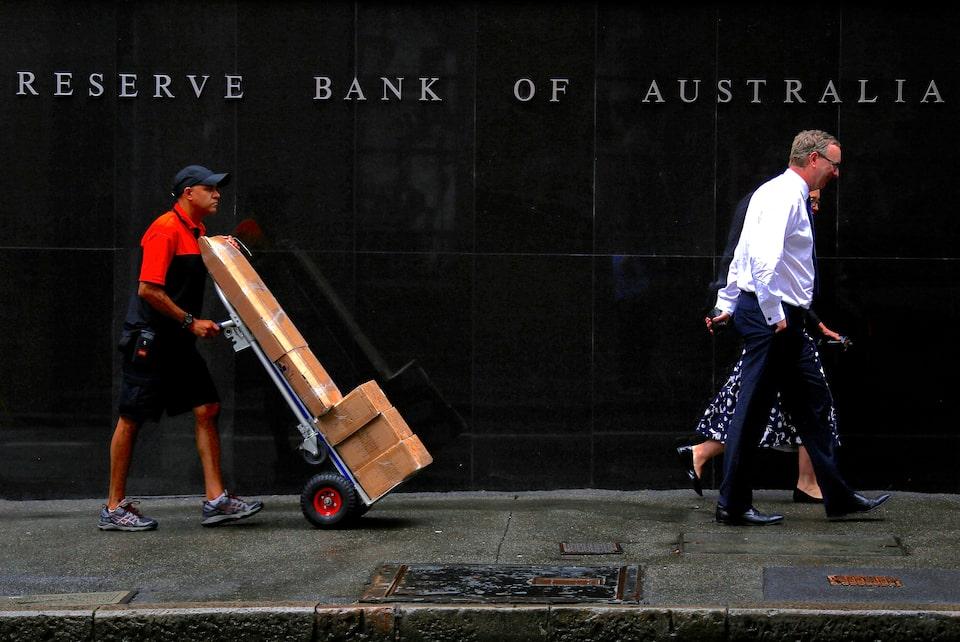
SYDNEY, Dec 11 (Reuters) - Australia's central bank is ready to respond "with force" should potential U.S. tariffs hit global trade and threaten growth at home, a top official said on Wednesday, a day after it surprised markets by opening the door to an easing. In a speech in Sydney, Reserve Bank of Australia (RBA) Deputy Governor Andrew Hauser said the direct impact from any U.S. tariffs on Australia is likely to be limited as the country - unlike others - runs a trade deficit with the world's largest economy. Much will depend on the response from China, he said, adding that policy stimulus from Australia's largest trading partner might even lead to an increase in activity at home. But the deputy governor warned the most extreme scenario of an all-out global trade war would depress global activity and trade. "As with every element of monetary policy setting, we will be alert to developments and ready to respond – in either direction, with force if needed, to deliver our mandate of low and stable inflation with sustained full employment." The RBA, which has bucked the global easing trend by holding interest rates steady at 4.35% for over a year, unexpectedly turned dovish on Tuesday, prompting markets to ramp up bets for an easing in February as economic growth has stayed surprisingly weak. Hauser said the impact from U.S. tariffs on inflation in Australia is "ambiguous" and could move in either direction. "The chances of being propelled into another global depression are low," he said. "We have strong comparative advantages in raw materials and services that other countries need... We have a track record of nimbly reshaping our trading relationships... And our flexible exchange rate and independent monetary policy can serve as powerful shock-absorbers." Sign up here. https://www.reuters.com/markets/australias-central-bank-ready-respond-strongly-should-us-tariffs-hit-global-2024-12-11/
2024-12-11 08:04
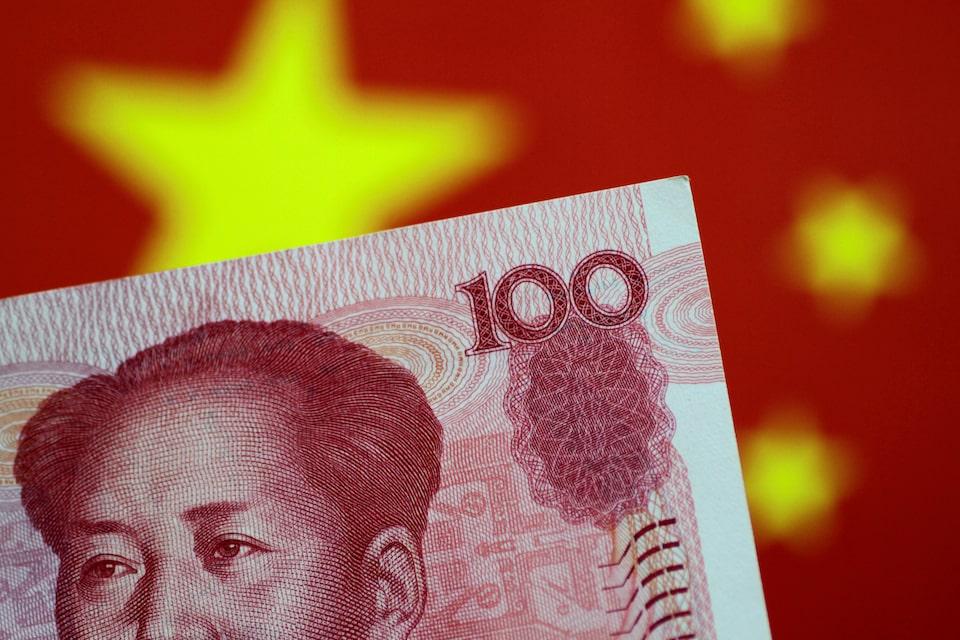
Chinese authorities expect yuan to depreciate as US tariffs loom Yuan fell sharply during Sino-US trade tensions in 2018 Weaker yuan could help boost exports and fight deflation Central bank publication says yuan will be stable Dec 11 (Reuters) - China's top leaders and policymakers are considering allowing the yuan to weaken in 2025 as they brace for higher U.S. trade tariffs as Donald Trump returns to the White House. The contemplated move reflects China's recognition that it needs bigger economic stimulus to combat Trump's threats of punitive trade measures, people with knowledge of the matter said. Trump has said he plans to impose a 10% universal import tariff, and a 60% tariff on Chinese imports into the United States. Letting the yuan , depreciate could make Chinese exports cheaper, blunting the impact of tariffs, and creating looser monetary settings in mainland China. Reuters spoke to three people who have knowledge of the discussions about letting the yuan depreciate but requested anonymity because they are not authorized to speak publicly about the matter. The People's Bank of China (PBOC) did not immediately respond to Reuters requests for comments. The State Council Information Office, which handles media queries for the government, did not also immediately respond to a request for comment. Financial News, the PBOC's publication, subsequently put out an article saying the foundation for a "basically stable" yuan exchange rate remains "solid," and that the yuan is likely to stabilise and strengthen towards the end of this year. Allowing the yuan to depreciate next year would deviate from the usual practice of keeping the foreign exchange rate stable, the sources said. The tightly managed yuan is allowed to move 2% on either side of a daily mid-point fixed by the central bank. Policy comments from top officials typically include commitments to keeping the yuan stable. While the central bank is unlikely to say it will no longer uphold the currency, it will emphasize allowing the markets more power in deciding the yuan's value, one source with knowledge of the matter said. At a meeting this week of the Politburo, a decision-making body of Communist Party officials, China pledged to adopt an "appropriately loose" monetary policy next year, marking the first such easing of its policy stance in some 14 years. The comments did not include a reference to the need for a "basically stable yuan", which was last mentioned in July but missing in the September readout, too. Yuan policy has figured heavily in financial analysts' notes and other think-tank discussions this year. In a paper published by leading thinktank China Finance 40 Forum last week, analysts suggested China should temporarily switch from anchoring the yuan to the U.S dollar to linking it instead to a basket of non-dollar currencies, particularly the euro, to ensure the exchange rate is flexible during a period of trade tensions. A second source privy to the central bank's thinking told Reuters the PBOC has considered the possibility the yuan could drop to 7.5-per-dollar to counteract any trade shocks. That's a roughly 3.5% depreciation from current levels around 7.25. During Trump's first term as president, the yuan weakened more than 12% against the dollar during a series of tit-for-tat tariff announcements between March 2018 and May 2020. DIFFICULT CHOICE A weaker yuan could help the world’s second-biggest economy as it seeks to reach what is expected to be a challenging 5% economic growth target and relieve deflationary pressures by boosting export earnings and making imported goods more expensive. A sharp downturn in exports would give further cause for authorities to try and use the currency to protect the one sector of the economy that has been doing well. China's exports slowed sharply and imports unexpectedly shrank in November, spurring calls for more policy support to prop up domestic demand. "To be fair, it is a policy option. Currency adjustments are on the table as a tool to be used to mitigate the effects of tariffs," said HSBC's chief Asia economist Fred Neumann. But that would be a short-sighted policy choice, he said. "If China takes the currency aggressively lower, it raises the risk of a tariff cascade and other nations then essentially say, well, if the Chinese currency is weakening dramatically, then we may not have a choice to impose import restrictions on goods from China ourselves," Neumann said. "So there is a bit of a risk here that if China uses its currency angle too aggressively, it could lead to a backlash among other trading partners and that's not in the interest of China." Analysts' average forecast is for the yuan to fall to 7.37 per dollar by the end of next year, though a key factor will be how much Trump raises tariffs and how quickly. The currency has lost nearly 4% of its value against the dollar since the end of September as investors positioned for a Trump presidency. The central bank has in the past contained volatility and disorderly moves in the yuan through its daily guidance rate to markets and through state banks’ buying and selling of the currency. The yuan, or renminbi (RMB) as it is sometimes known, has struggled since 2022, weighed down by an anaemic economy and a drop in foreign capital inflows into China's markets. Higher U.S. rates and falling Chinese ones have also kept it under pressure. The offshore yuan fell around 0.3% to 7.2854 per dollar after the Reuters story. The Korean won also dipped as did the China-sensitive Australian and New Zealand dollars. In the coming days, next year's growth, budget deficit and other targets will be discussed - but not announced - at an annual meeting of Communist Party leaders, known as the Central Economic Work Conference (CEWC). A pledge to "maintain the basic stability of the RMB exchange rate at a reasonable and balanced level" was included in the CEWC summaries from 2020, 2022 and 2023. It was not included in those from 2019 and 2021. Sign up here. https://www.reuters.com/markets/currencies/chinese-authorities-are-considering-weaker-yuan-trump-trade-risks-loom-sources-2024-12-11/
2024-12-11 07:48
COPENHAGEN, Dec 11 (Reuters) - Denmark's Orsted (ORSTED.CO) , opens new tab said on Wednesday it has agreed to sell a 50% stake in its Greater Changhua 4 offshore wind farm to Taiwan's Cathay Life Insurance for about 11.6 billion Danish crowns ($1.64 billion). The site is part of Orsted's 920 megawatt (MW) offshore wind farms Greater Changhua 2b and 4, which the company is currently constructing and expects to finalise by the end of 2025. The total sales price includes the 50% ownership share as well as a commitment to fund 50% of the cost of the wind farm, Orsted said. Battling to restore investor confidence, the offshore wind industry leader in February trimmed its investment and capacity targets and paused dividend payouts as part of a major review. Orsted will continue to own the remaining 50% ownership stake in the wind farm, Orsted said. The transaction amount will be paid in 2024 and 2025, it added. The Greater Changhua 2b and 4 offshore wind farms are located next to the 900 MW Greater Changhua 1 and 2a, which are in operation. Together, the 1.82 GW Greater Changhua offshore wind cluster can produce enough energy to power nearly two million Taiwanese households, according to Orsted. ($1 = 7.0847 Danish crowns) Sign up here. https://www.reuters.com/business/energy/orsted-sells-50-stake-greater-changhua-4-wind-farm-164-bln-2024-12-11/
2024-12-11 07:17
Nominations for gas flows into Slovakia from Ukraine edge down Russia halted gas supplies to Austria's OMV in mid-November MOSCOW, Dec 11 (Reuters) - Russian gas exports to Europe through Ukraine remained stable on Wednesday, data from Kremlin-controlled Gazprom (GAZP.MM) , opens new tab and a European pipeline network operator showed. Russia halted gas supplies to Austria's OMV (OMVV.VI) , opens new tab in mid-November amid a contractual dispute and legal wranglings related to interrupted gas supplies in 2022. Despite the stoppage, overall Russian gas exports via Ukraine, which account for just under half of Moscow's total gas flows to the continent, have remained stable as other buyers stepped in. Russia also exports gas to Turkey and further to Europe via the TurkStream pipeline on the bed of the Black Sea. Gazprom said it would send 42.4 million cubic metres (mcm) of gas to Europe via Ukraine on Wednesday, unchanged from Tuesday. Nominations for natural gas flows into Slovakia from Ukraine were a touch lower on Wednesday from Tuesday but in line with recent volumes, data from transmission system operator Eustream showed. Nominations for flows to Austria from Slovakia and to the Czech Republic from Slovakia were also similar as in recent days. Sign up here. https://www.reuters.com/business/energy/russian-gas-exports-europe-via-ukraine-stable-wednesday-2024-12-11/

2024-12-11 06:44
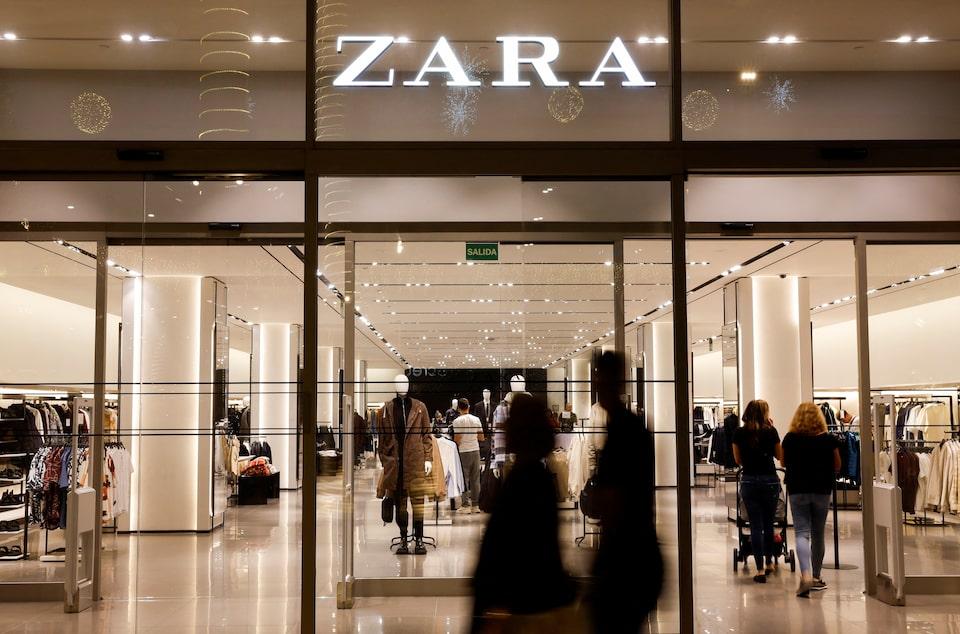
Third-quarter sales, profit miss analysts' expectations Floods in Spain impacted performance, analysts say Sales grow 9% in start to holiday trading Shares down 5% MADRID, Dec 11 (Reuters) - Zara owner Inditex (ITX.MC) , opens new tab posted a rare miss on quarterly sales and profit on Wednesday, although the world's biggest listed fast-fashion retailer said the holiday shopping season had got off to a good start. Shares in Inditex fell around 5% as investors digested results hit by currency fluctuations and floods in Spain, Inditex's biggest market. Third-quarter sales of 9.36 billion euros ($9.84 billion) came in below the 9.51 billion expected by analysts. An 8.5% rise in nine-month net profit to 4.44 billion euros also lagged the 4.52 billion expected by analysts. "While the figures are not too bad, they do not meet the company's growth line and show a bigger slowdown than we estimated," said XTB analyst Javier Cabrera, adding that next year brings new risks such as U.S. trade tariffs likely to drive inflation up. Severe floods at the end of October in Spain had a "very limited" impact on Inditex's performance, with three stores closed, capital markets director Marcos Lopez told analysts on a call. But a strong dollar and weak euro hurt results, analysts said, as Inditex makes most of its sales in euros. "Despite the quarterly setback, affected by the weather and the exchange rate, I believe the company continues on its growth trajectory," said Xavier Brun, portfolio manager at Madrid-based Trea Asset Management, which holds Inditex shares. Zara has been investing in larger stores, logistics centres and marketing, launching a collection with supermodel Kate Moss, as it tries to maintain its edge over fast-fashion rivals like H&M and Shein, which sell at lower prices. Inditex reported revenues up 9% in currency-adjusted terms in the six weeks to Dec. 9, which includes key Black Friday sales, slower sales growth than the 14% reported a year ago. "We had a strong start to the last quarter against a demanding comparable in the same period of 2023," Lopez told Reuters. He also said Inditex expected a smaller impact from currency fluctuations in its fourth quarter. In a sign of the market's confidence in the company, Inditex's shares are trading at around 26 times expected earnings for the next 12 months, above H&M's price-to-earnings ratio of 19.3 times. The stock is up 32% since the start of the year. ($1 = 0.9500 euros) Sign up here. https://www.reuters.com/business/retail-consumer/zara-owner-inditex-reports-strong-start-holiday-shopping-season-2024-12-11/
2024-12-11 06:43
Reuters reports China considering allowing yuan to weaken Fed rate cut next week looks almost certain after US price data Japanese inflation supports expectations of Dec BOJ rate hike Canadian dollar at 4-1/2-year low with BOC set to slash rates NEW YORK, Dec 11 (Reuters) - The dollar was higher on Wednesday after U.S. price data came in line with forecasts, reinforcing expectations the U.S. Federal Reserve will cut interest rates next week. The dollar was also boosted by a Reuters report China was considering allowing a weaker currency next year, which sent the yuan and other Asian currencies lower. The consumer price index rose 0.3% last month, the largest gain since April after advancing 0.2% for four straight months, data showed on Wednesday. Economists polled by Reuters had forecast the index would rise 0.3%. Following the report, the likelihood of a quarter-point rate cut by the Fed on Dec. 18 rose to more than 94%, according to CME's FedWatch tool. "The market is as confident as possible, practically, that the Fed is still going to cut rates next week," said Marc Chandler, chief market strategist at Bannockburn Forex in New York. "Very rarely does the Federal Reserve go against the market when such strong odds are priced in.” The U.S. dollar index was last up 0.329% at 106.7. Analysts said the dollar was also being affected by Reuters' report that China's top leaders and policymakers are considering allowing the yuan to weaken in 2025 as they brace for higher trade tariffs under a second Donald Trump presidency. Against the yuan, the dollar was last up 0.3% against the offshore unit at 7.2825 . The contemplated move reflects China's recognition that it needs bigger economic stimulus to combat Trump's threat of bigger tariffs, people with knowledge of the matter said, according to the report. "That's going to keep Asian currency more depressed [and]keep emerging markets more depressed," said Helen Given, FX trader at Monex USA. China is expected to hold its annual Central Economic Work Conference this week, after Monday's Politburo meeting vowed to switch to an "appropriately loose" monetary policy to spur economic growth. "If a currency depreciation served as a tactic to counter tariff shock, the likely escalating trade war could reinforce (U.S. dollar) exceptionalism and weigh on regional currencies," said Ken Cheung, FX strategist at Mizuho. China-exposed currencies fell, with the Aussie last down 0.11% to $0.6371 and the kiwi 0.26% lower at $0.579, after both touched on year lows after the report. Korea's under-fire won also dipped. Japan's yen was in focus after Bloomberg news reported the Bank of Japan sees "little cost" to waiting for the next rate hike. The dollar was last 0.44% higher at 152.63 yen. Earlier in the day, the yen strengthened after data showed Japanese wholesale inflation accelerated, supporting the case for a Bank of Japan interest-rate hike next week. On Wednesday, the Bank of Canada slashed its key policy rate by 50 basis points to 3.25% to help address slower growth. That move helped keep the loonie near a 4-1/2-year low against the greenback. One U.S. dollar last bought C$1.4156 . In a busy week for monetary policy, the European Central Bank and Swiss National Bank will meet on Thursday. The euro was down 0.34% at $1.0492, while the Swiss franc was down 0.21% against the dollar at 0.8846. Sign up here. https://www.reuters.com/markets/currencies/dollar-holds-ground-ahead-cpi-aussie-wallows-near-4-month-low-2024-12-11/