2024-12-11 05:34
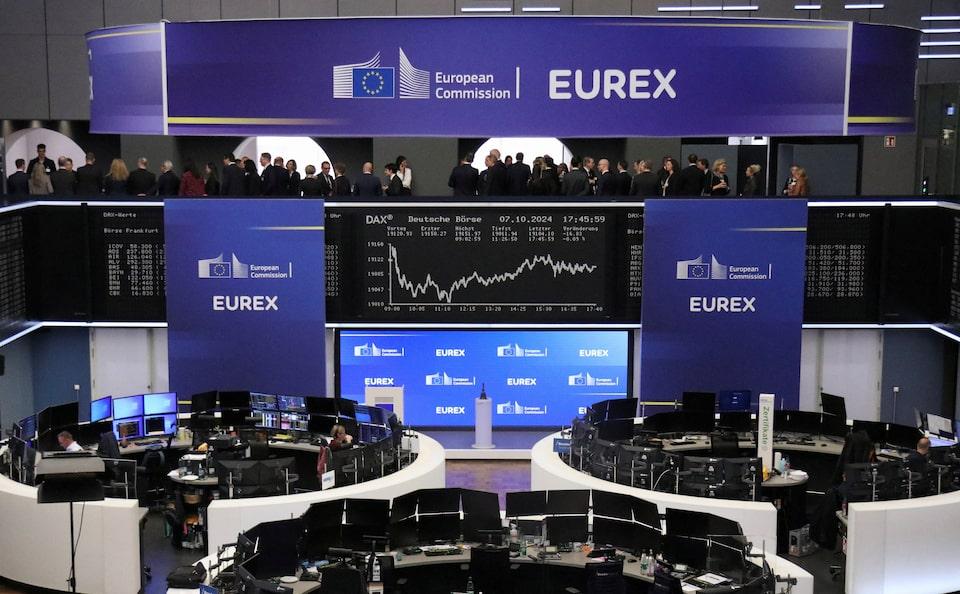
A look at the day ahead in European and global markets from Tom Westbrook Markets head into the release of U.S. inflation figures expecting they won't get in the way of an interest rate cut next week. None of the economists polled by Reuters see core CPI topping 0.3% for November and anything at that level or below is unlikely to ruffle too many prices. It's the surprise, to markets pricing 21 basis points of U.S. easing next week, that traders may need to watch out for. Even a core reading of 0.3% would put the three-month annualised rate around 3.6%, which is uncomfortably high, and so a higher reading might give pause to bets on a December cut and to U.S. share indexes that are trading near record peaks. Asia trade was wary, with the dollar easing on the yen and steady elsewhere and stocks in a holding pattern. In one of their most dovish statements in more than a decade, Chinese leaders signalled on Monday they are ready to deploy whatever stimulus is needed to counter the impact of expected U.S. trade tariffs. But after initial gains, markets have cooled and Chinese shares were mostly flat. The Canadian dollar is pinned near a 4-1/2 year low as rising unemployment has fed expectations for a 50 bp rate cut later on Wednesday. German stocks were also catching their breath after shooting to record peaks despite a dour economic outlook. The benchmark DAX index (.GDAXI) , opens new tab is up 5.5% in two weeks and some of the top gainers have just started to slip from recent peaks. Weapons giant Rheinmetall (RHMG.DE) , opens new tab is down about 7% in two sessions, although it has more than doubled this year. Soaring Siemens Energy (ENR1n.DE) , opens new tab shares, which had zoomed up more than 35% in November and are up more than 300% this year, fell more than 4% on Tuesday. Key developments that could influence markets on Wednesday: - U.S. CPI data Sign up here. https://www.reuters.com/markets/europe/global-markets-view-europe-2024-12-11/
2024-12-11 05:22
Jan 23 (Reuters) - The Bank of Japan concludes its first policy meeting of the year on Friday with the outcome to be announced days after the inauguration of U.S. President Donald Trump. Here is a guide on what to expect and why the BOJ's rate review matters: WHEN DOES THE BOJ MEETING TAKE PLACE? The BOJ board that sets monetary policy is holding a two-day meeting that concludes on Friday. It will announce its decisions at the end of its deliberations. The BOJ ended years of negative interest rates in March and raised its short-term policy target to 0.25% in July. It has signalled a readiness to hike again if wages and prices move as projected. IS THE BOJ GOING TO RAISE INTEREST RATES? There is growing conviction within the BOJ that conditions for another increase are coming into place. The economy continues to expand moderately and inflation has held above its 2% target for nearly three years. Companies continue to pass on rising raw material and labour costs to buyers, suggesting the BOJ board is likely to revise up its inflation forecasts in a quarterly outlook report due after the meeting. More importantly, there have been increasing signs that firms will offer bumper pay hikes for a third straight year in annual wage negotiations with unions kicking off in March. The BOJ's regional branch managers said wage hikes are spreading to companies of all sizes and sectors, meeting a key prerequisite for raising interest rates. As such, the central bank is likely to raise rates to 0.5% on Friday. WHAT HAVE BOJ POLICYMAKERS SAID SO FAR? The BOJ's views on wages and the U.S. policy outlook have been closely watched by markets, after Governor Kazuo Ueda cited uncertainty over the domestic wage outlook and Trump's policies as reasons to hold off raising rates last month. In a speech on Jan. 14, Deputy Governor Ryozo Himino said wage growth will likely remain strong this year. A day later, Ueda echoed the optimism in a sign of the BOJ's conviction that Japan was progressing towards durably hitting its inflation target. Both Himino and Ueda said the BOJ will debate whether to raise rates this month, indicating a strong chance of a hike. WHAT COULD HOLD POLICYMAKERS BACK? With increased prospects of sustained wage gains, the only remaining hurdle for raising rates has been the risk of Trump dropping a bombshell and upending financial markets. Deputy governor Himino said he would look for clues on the "balance and schedule" of the new president's policy steps, as well as anything that had not been flagged by Trump so far. A global share rally this week has alleviated policymakers' fears Trump's tariff threats could trigger market turmoil, further heightening the chance of a rate hike on Friday. HOW COULD MARKETS REACT TO A JAPAN RATE INCREASE? Receding bets of further rate cuts by the U.S. Federal Reserve mean the U.S.-Japan interest rate differential will remain wide, keeping the yen under downward pressure. A rate hike by the BOJ may briefly nudge up the yen. But the currency's gains may be short-lived unless Ueda delivers hawkish comments on the outlook in his post-meeting news briefing. WHAT ELSE SHOULD MARKETS LOOK OUT FOR? The BOJ will release a quarterly outlook report with revised growth and inflation forecasts, which will show how optimistic the board is on Japan's prospects for sustainably hitting 2% inflation. That will affect the pace of future rate increases. Ueda may also give clues on the timing and pace of further hikes at his post-meeting briefing. The key would be the governor's view on Japan's neutral rate. BOJ staff estimates show the inflation-adjusted real neutral rate to be in a range of around -1% to +0.5%. That means if inflation were to hit the BOJ's 2% target, it could raise its short-term rate at least to around 1% without cooling growth. Based on forecasts in October, the BOJ expects short-term rates to approach what it considers neutral "in the latter half of the three-year projection period" through March 2027, which suggests some time after October 2025. While hawkish board member Naoki Tamura projects the neutral rate to be around 1%, Ueda has said it was too hard to come up with credible estimates due to a lack of data. WHAT'S NEXT? Many analysts expect the BOJ to keep raising rates at a pace of roughly twice a year. If the BOJ increased rates on Friday, it may stay in a holding pattern until the latter half of this year when there is more clarity on the impact of Trump's policies. Domestic politics also complicate the BOJ's rate-hike timing with an upper house election slated for July, where Prime Minister Shigeru Ishiba's minority coalition could struggle to garner votes. The BOJ may prefer to avoid shifting policy until the political dust settles. Sign up here. https://www.reuters.com/markets/asia/how-likely-is-bank-japan-rate-hike-next-week-2025-01-16/

2024-12-11 04:56
SINGAPORE, Dec 11 (Reuters) - Singapore's economy will grow 3.6% this year, up from a previous forecast of 2.6% expansion, while monetary policy settings are expected to remain unchanged at an upcoming review in January, a survey by the central bank showed on Wednesday. The median forecast of 20 economists surveyed by the Monetary Authority of Singapore expect growth of 3.1% in the final quarter of 2024 and 2.6% growth for the whole of 2025. Last month, the trade ministry raised its GDP growth forecast for 2024 to 3.5% from a previous range of 2.0% to 3.0%, after third-quarter growth surpassed estimates at 5.4%. A majority of economists surveyed expect the MAS to maintain its current monetary policy in its quarterly reviews in January, April and July. The MAS left monetary policy settings unchanged in October even as growth picked up and inflation declined. It has not changed policy since a tightening in October 2022, which was the fifth tightening in a row. Only 33% of those polled expect a loosening of monetary policy in January via a reduction in the slope of the Singapore dollar nominal effective exchange rate, or S$NEER, compared to 50% in September's survey. The central bank of trade-reliant Singapore sets the path of the policy band of the S$NEER, thus strengthening or weakening the local currency against those of its main trading partners. Headline inflation for 2024 was seen at 2.5%, down slightly from 2.6% forecast in the September survey, while core inflation this year was seen at 2.8%, down from 2.9% seen previously. Core inflation in the final quarter of this year was seen at 2.1% in the survey. Core inflation fell to 2.1% in October from a year earlier, making it the smallest rise in almost three years. The economists surveyed expect headline and core inflation in 2025 to both be in a range of 1.5% to 1.9%. (This story has been corrected to fix the number of economists polled to 20, from 25, in paragraph 2) Sign up here. https://www.reuters.com/markets/asia/singapore-economy-grow-36-2024-monetary-policy-unchanged-jan-survey-shows-2024-12-11/
2024-12-11 04:45
European Union ambassadors agree to new sanctions on Russia, targeting shadow fleet Fuel inventories post larger-than-expected stock builds last week, EIA says OPEC cuts demand growth outlook for 2024, 2025 for fifth consecutive month Investors anticipate rise in Chinese demand as Beijing plans economic growth boost Dec 11 (Reuters) - Oil prices settled more than $1 higher on Wednesday after the European Union agreed to an additional round of sanctions threatening Russian oil flows that could tighten global crude supplies. Brent crude futures settled up $1.33, or 1.84%, to $73.52 a barrel. U.S. West Texas Intermediate crude futures rose $1.70, or 2.48%, to $70.29. European Union ambassadors agreed on Wednesday to a 15th package of sanctions on Russia over its war against Ukraine, the Hungarian EU presidency said. "I welcome the adoption of our 15th package of sanctions, targeting in particular Russia's shadow fleet", European Commission President Ursula von der Leyen said on X. The "shadow fleet" has aided Russia in bypassing the $60 per barrel price cap imposed by the G7 on Russian seaborne crude oil in 2022, and has helped keep Russian oil flowing. "The renewed seriousness about clamping down on flows here is potentially supportive, and is offsetting the traditional demand metric that we have been focusing on," said John Kilduff, partner at Again Capital in New York. Curbing price gains on Wednesday, gasoline and distillate inventories rose by more than expected last week, according to data from the Energy Information Administration, weighing on crude prices. Meanwhile, producers' group OPEC cut its forecasts for demand growth in 2024 and 2025 for the fifth straight month on Wednesday and by the largest amount yet. "OPEC are squaring up to reality about what they are facing, the (demand growth forecast) cuts highlight that they have their hands full in terms of trying to balance this market heading into 2025," Again Capital's Kilduff added. OPEC+, which groups members of the Organization of the Petroleum Exporting Countries with other producers such as Russia, earlier this month delayed plans to start raising output. Weak demand, particularly in top importer China, and non-OPEC+ supply growth were two factors behind the move. However, investors anticipate a rise in Chinese demand following Beijing's latest plans to boost economic growth. China said on Monday it would adopt an "appropriately loose" monetary policy in 2025 marking the first easing of its stance in 14 years. "It’s uncertain whether China can fully kick start growth in 2025," said Global X research analyst, Kenny Zhu. "We believe Chinese monetary and fiscal stimulus will be key data points to watch for the coming year," Zhu added. Chinese crude imports also grew annually for the first time in seven months in November, up more than 14% from a year earlier. Meanwhile, the Kremlin said that reports of a possible tightening of U.S. sanctions on Russian oil suggested the administration of U.S. President Joe Biden wants to leave a difficult legacy for U.S.-Russia relations. Treasury Secretary Janet Yellen said on Wednesday that the U.S. is continuing to look for creative ways to reduce Russia's oil revenue and lower global demand for oil create an opportunity for more sanctions. Sign up here. https://www.reuters.com/markets/commodities/oil-prices-edge-up-demand-hopes-chinas-looser-monetary-policy-2024-12-11/

2024-12-11 04:44
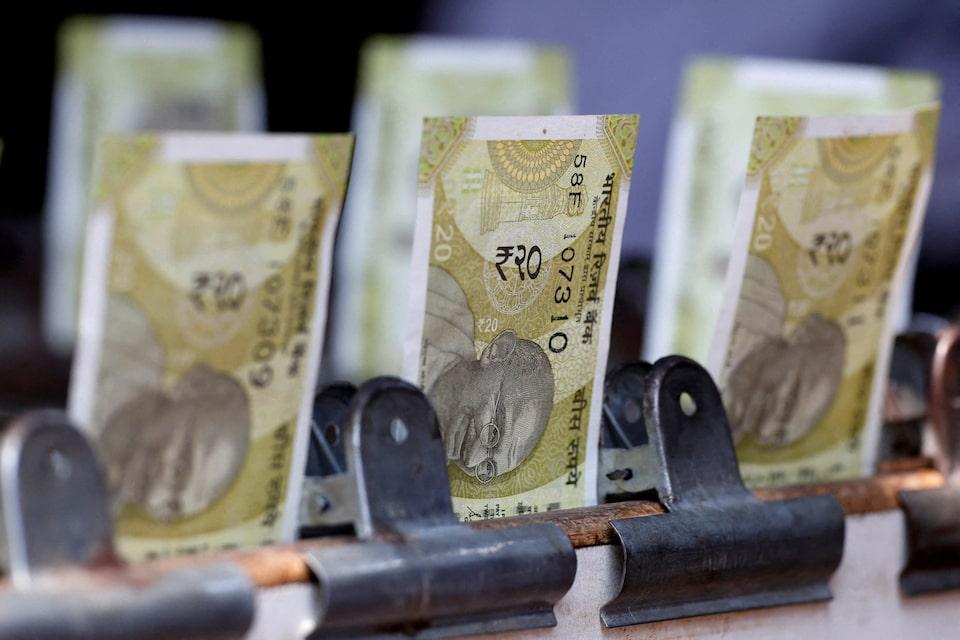
MUMBAI, Dec 11 (Reuters) - The Indian rupee weakened to its all-time low on Wednesday, pressured by heightened dollar bids in the non-deliverable forwards (NDF) market, while likely intervention by the Reserve Bank of India (RBI) helped limit losses, traders said. The rupee fell to 84.86 in early trading, eclipsing its previous record low of 84.8575 hit on Tuesday. The currency was quoted at 84.8525 as of 10:00 a.m. IST. State-run banks were spotted offering dollars, most likely on behalf of the RBI, traders said. There is "quite strong demand in NDF which is hurting the rupee," a trader at a foreign bank said, who expects the RBI to stay active and keep intra-day losses limited to 5-7 paisa. Pressure from the NDF market also meant that the rupee was unable to benefit from a rise in most of its regional peers. The dollar index was steady at 106.3 while most Asian currencies ticked up as investors awaited the closely watched U.S. inflation data due later in the day. The rupee has weakened 0.4% in December, underperforming nearly all of its regional peers as concerns over slowing economic growth have prompted expectations of domestic monetary policy easing. While India's central bank kept rates unchanged at its last meeting, the appointment of a new chief has fuelled expectations of rate cuts next year, weighing on the rupee. Investors will also pay close attention to the incoming Donald Trump administration's policies with expected U.S. trade tariffs posing a risk to emerging market assets. "We expect USD/INR volatility to rise, though it would be unwise to expect USD strength to last the year (2025)," Neelkanth Mishra, chief economist at Axis Bank, said in a note. The bank expects the rupee to weaken to 85.50 by the end of March 2025. Sign up here. https://www.reuters.com/markets/currencies/rupee-slips-record-low-pressured-by-ndf-dollar-bids-rbi-likely-steps-2024-12-11/
2024-12-11 02:56
MUMBAI, Dec 11 (Reuters) - Headwinds for the Indian rupee are likely to persist on Wednesday amid ongoing strength in the U.S. dollar and a lingering bearish bias on the local currency that may push it to another lifetime low, but traders expect the central bank's intervention to limit sharp losses. The one-month non-deliverable forward indicated that the rupee may open near 84.88, compared to its all-time low of 84.8575 hit in the previous session. The currency had closed at 84.8525 on Tuesday. The rupee came under pressure , opens new tab on Tuesday as the appointment of career bureaucrat Sanjay Malhotra as the next Reserve Bank of India (RBI) governor prompted traders to raise bets on domestic rate cuts next year. Malhotra has been appointed as RBI governor for three years starting Wednesday after the six-year term of outgoing governor Shaktikanta Das ended on Dec. 10. While the RBI's intervention helped the rupee avert deeper losses on Tuesday, the currency is expected stay under pressure and trade in a range of 84.77-84.97 in the near-term, said Anil Kumar Bhansali, head of treasury at Finrex Treasury Advisors. Dovish expectations following Malhotra's appointment have added to the rupee's troubles as the currency has remained on the backfoot over the last two months, hurt by portfolio outflows, renewed tariff concerns from the incoming U.S. administration and persistent strength in the U.S. dollar. The dollar index was at 106.3 on Wednesday after rising to a one-week high the previous session, while most Asian currencies edged higher ahead of the release of U.S. consumer inflation data later in the day. The greenback has "has gained some upside momentum as markets await the U.S. CPI data later today," MUFG Bank said in a note. Economists polled by Reuters expect the data to show that core consumer prices rose 0.3% month-on-month in November, unchanged from the previous month. KEY INDICATORS: ** One-month non-deliverable rupee forward at 85.04; onshore one-month forward premium at 16.25 paise ** Dollar index at 106.3 ** Brent crude futures up 0.6% at $72.7 per barrel ** Ten-year U.S. note yield at 4.23% ** As per NSDL data, foreign investors bought a net $70.8 million worth of Indian shares on Dec. 9 ** NSDL data shows foreign investors bought a net $48.5 million worth of Indian bonds on Dec. 9 Sign up here. https://www.reuters.com/markets/currencies/rupee-likely-maintain-downward-drift-rbi-counted-cap-losses-2024-12-11/