2024-12-10 11:49
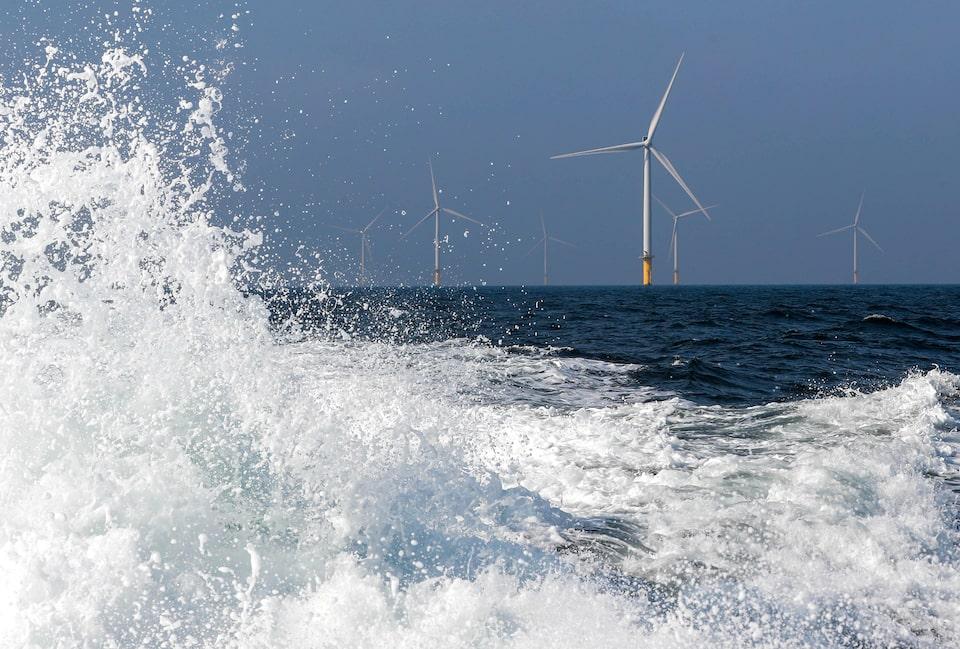
PARIS, Dec 10 (Reuters) - France must make it easier to develop solar, wind and battery projects or lose out to neighbours, the CEOs of French oil major TotalEnergies and state-owned EDF said on Tuesday at the French electricity union (UFE) annual conference. France hopes to massively expand its renewable energy, notably offshore wind, to achieve carbon neutrality by 2050, but a slow licensing process and regulatory hurdles have left it trailing Germany and Britain. It currently has two fully operational offshore wind farms together producing almost 1 GW, and says it wants to reach 45 GW by 2050. EDF, in addition to operating France's nuclear power stations and several hydroelectric dams, has 20.7 GW of gross installed wind and solar capacity worldwide - but only about 3.2 GW in France. "It's hell to invest in France for regulatory reasons ... The administrative delays just can't be compared with what we experience in other parts of the world," said EDF CEO Luc Remont. "And it's not just renewables; it's hell to connect an industrial user or a data centre to the electricity grid." For its part, TotalEnergies (TTEF.PA) , opens new tab aims to reach 35 GW of gross installed renewable capacity by next year and 100 GW by 2030. Of its current 27 GW of gross installed renewable capacity, only around 2 GW is in France. Its CEO, Patrick Pouyanne, said obtaining permits to build renewables was twice as fast in Germany, and that French taxes on batteries for renewable energy storage had led to Total having 200 megawatts (MW) at home versus 2 GW in Germany. "In the U.S., I built 2 GW [of renewable capacity] in one year ... In France I've got 500 energy developers who manage to eke out 300-400 MW per year ... I can't continue to invest and to have so many people costing me money for such a weak return." Bidding alone for offshore wind tenders in France takes an average of 2.5 to 3 years. "I don't understand why we're able to renovate Notre Dame Cathedral in five years and unable to build solar or wind plants at the same pace in France," Pouyanne said. Sign up here. https://www.reuters.com/business/energy/france-must-speed-up-procedures-solar-wind-projects-says-totalenergies-ceo-2024-12-10/

2024-12-10 11:48
TSX ends down 0.5% at 25,504.33 Technology sector falls 1.2% Real estate loses 0.9% Nine of 10 major sectors decline Dec 10 (Reuters) - Canada's main stock index fell for a second straight day on Tuesday as technology and real estate shares lost ground, but the decline was restrained ahead of an expected supersized interest rate cut by the Bank of Canada. The Toronto Stock Exchange's S&P/TSX composite index (.GSPTSE) , opens new tab ended down 121.09 points, or 0.5%, at 25,504.33, extending its pullback from a record closing high on Friday. Wall Street's main indexes also ended lower as investors awaited a U.S. inflation report on Wednesday. The TSX has added 21.7% since the start of 2024, including 16.6% since mid-year. "We've had a great run, particularly in the TSX in the last, call it, six months," said Sadiq Adatia, chief investment officer at BMO Asset Management. "This is people looking at markets, taking some gains." The Bank of Canada will slash interest rates by a half percentage point at a second consecutive meeting on Wednesday, according to a majority of economists polled by Reuters, many of whom changed their view on news of a sharp rise in unemployment. "I think it's important for them to continue to be aggressive on rate cuts to help fuel the Canadian economy," Adatia said. "It would be a sign that consumers are going to spend, helping drive earnings for corporations." The consumer discretionary sector added 0.3%, the only one of 10 major sectors to notch gains. The technology sector fell 1.2%, with e-commerce company Shopify (SHOP.TO) , opens new tab down 1.6%. Real estate lost 0.9%, its fourth straight day of declines. Sign up here. https://www.reuters.com/markets/tsx-futures-edge-down-amid-oil-dip-market-awaits-boc-rate-decision-2024-12-10/

2024-12-10 11:40
MUMBAI, Dec 10 (Reuters) - The Indian rupee weakened to its all-time low on Tuesday as traders reacted to the appointment of career bureaucrat Sanjay Malhotra as the next Reserve Bank of India (RBI) governor by ramping up bets on rate cuts by the central bank next year. The rupee hit a low of 84.8575 against the U.S. dollar before closing at 84.8525, down 0.1% on the day. Government bond yields dipped, while the 5-year overnight index swap, a gauge of interest rate expectations, declined to a 3-month low of 5.97% before paring losses. Dollar sales by state-run banks, most likely on behalf of the RBI, helped limit the rupee's losses, traders said. Das' exit, economists said, may add a dovish tilt to the RBI's monetary policy committee as Das and Deputy Governor Michael Patra were seen as the most hawkish among the six-member rate-setting panel. Patra's term concludes in mid-January. "Between now and the next rate meeting in February, the new Governor's views on liquidity, currency management and macro-prudential measures will be watched closely," DBS Bank said in a note. Malhotra will start his three-year term as RBI governor from Wednesday and relinquish his current post as the revenue secretary to the country's finance ministry. The change comes at a time of heightened global uncertainty, especially on international trade and tariffs. That has weighed on most emerging market currencies, including the rupee, which has declined about 0.9% since Donald Trump won the U.S. presidential election in early November. Meanwhile, the dollar index rose 0.1% to 106.3 on Tuesday while most Asian currencies dipped as traders awaited U.S. inflation data on Wednesday for further clues on the pace of Federal Reserve easing. Investors have priced in a near 90% chance of a 25 basis point Fed rate cut at next week's meeting. Sign up here. https://www.reuters.com/markets/currencies/rupee-hit-all-time-low-rbi-governor-change-sparks-rate-cut-hopes-2024-12-10/

2024-12-10 11:37
Utah counties appealed after lower court halted project Railway would connect to existing freight rail network WASHINGTON, Dec 10 (Reuters) - The U.S. Supreme Court appeared inclined on Tuesday to limit the extent to which federal agencies must review the environmental impact of projects they regulate in a dispute over a proposed railway in Utah meant to carry crude oil that was challenged by environmental groups and a Colorado county. The court heard arguments in an appeal by a coalition of seven Utah counties and an infrastructure investment group of a lower court's decision that halted the project and faulted the environmental impact statement issued by a federal body called the Surface Transportation Board in approving the railway. The counties are seeking to construct an 88-mile (142-km) railway line in northeastern Utah to connect the sparsely populated Uinta Basin region to an existing freight rail network that would be used primarily to transport waxy crude oil. Conservative and liberal justices asked questions that indicated the lower court might have overreached in concluding that the board failed to adequately investigate the railway's impacts on vegetation and wildlife in the basin and air quality in Gulf Coast communities where it would be refined. The case tests the scope of environmental impact studies that federal agencies must conduct under a U.S. law called the National Environmental Policy Act, enacted in 1970 to prevent environmental harms that might result from major projects. The law mandates that agencies examine a project's "reasonably foreseeable" effects. The board, which has regulatory authority over new railroad lines, issued an environmental impact statement and approved the coalition's proposal in 2021. Liberal Justice Ketanji Brown Jackson told William Jay, a lawyer for the challengers, that the board would not have the power to prevent oil from being transported on the railway since it regulates railroads, not cargo. "If they can't say what gets carried, then what difference does it make that the refinery is putting out environmental effects, to their decision as to whether or not to approve this?" Jackson asked. Jay said it matters because one of the things the law at issue requires agencies to do "is to look at the foreseeable consequences, even when they cannot be mitigated." Conservative Justice Brett Kavanaugh expressed concern that judicial second-guessing has prompted agencies to carry out sprawling environmental reviews. "By the courts taking an overly aggressive role it's, in turn, created an incentive for the agencies to do 3,000-page ... environmental impact statements," Kavanaugh told Edwin Kneedler, a Justice Department lawyer, who agreed. Democratic President Joe Biden's administration backed the railway coalition in the case, as did Utah. Environmental reviews that are too vast can add years to the regulatory timeline, risking a project's viability and future infrastructure development, according to companies and business trade groups. "Infrastructure requires investment, and for investors time is money. Project opponents, by contrast, know that time is on their side and a remand just for a little more process can kill a project," Paul Clement, a lawyer for the coalition, told the justices. Some justices seemed concerned that the legal test proposed by Clement for determining the scope of environmental review could be too narrow, given that an action could have effects beyond the local confines of a project. Clement urged the court to rule that an agency's review need only to account for potential impacts that might occur close in time and geography to a proposed project, and that do not fall under the regulatory authority of another agency. Liberal Justice Sonia Sotomayor told Clement: "You want absolute rules that make no sense." Jackson said the test "feels to me to be unmoored" from the purposes of the environmental review law. The Center for Biological Diversity and other environmental groups sued over the board's decision to allow the project, as did Eagle County, Colorado, noting that the project would increase train traffic in its region and double traffic on an existing rail line along the Colorado River. The U.S. Circuit Court of Appeals for the District of Columbia Circuit ruled in favor of the challengers in 2023. Fifteen other states supported the challengers. Colorado said its economy relies on outdoor recreation, and that the project raises the risk of leaks, spills or rail car accidents near the Colorado River's headwaters. Conservative Justice Neil Gorsuch recused himself from the case after some Democratic lawmakers urged his withdrawal because businessman Philip Anschutz, his former legal client, has a financial interest in its outcome. A ruling in the case is expected by the end of June. Sign up here. https://www.reuters.com/legal/government/us-supreme-court-examines-utah-railway-environmental-review-fight-2024-12-10/

2024-12-10 11:36
PARIS, Dec 10 (Reuters) - Some 2.5 gigawatts (GW) of French power production was disrupted by a strike by workers at nuclear and hydro facilities operated by state-owned power giant EDF on Tuesday, data from the company showed. Almost 1 gigawatt of hydro power production was taken offline along with 1.5 GW from two reactors at the Paluel nuclear plant northern France, EDF data showed. EDF was not immediately available for comment. This equates to near 4% of French power production at 1045 GMT, data from grid operator RTE showed. France is expected to remain a net exporter throughout the day, RTE data showed. Regional spot power prices for Wednesday reached multi-month highs earlier as wind power supply in neighbouring Germany are expected to drop to less than a third of Tuesday's levels, while colder temperatures are also expected to drive up demand. Sign up here. https://www.reuters.com/world/europe/french-power-supply-disrupted-by-striking-workers-2024-12-10/
2024-12-10 11:16
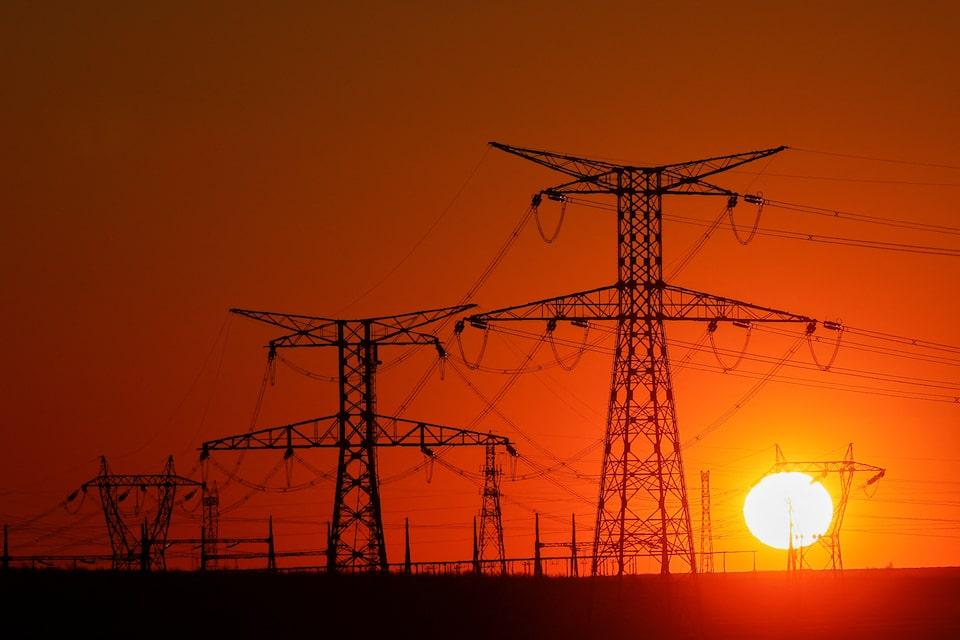
WARSAW, Dec 10 (Reuters) - The cost of supporting Poland's plans to build 17.9 gigawatts (GW) of offshore wind capacity will be about 144.2 billion euros ($152 billion), the PAP newswire reported citing a draft climate ministry resolution. The climate ministry did not have an immediate comment. Poland said it would raise the price it will pay for wind power from new Baltic Sea projects next year after investors said the initial price was too low to meet government targets. The price will also vary according to the distance of the project from shore. In the first phase, investors, including PGE, Orlen, Equinor and Orsted are developing 5.9 GW of offshore capacity along the Polish coast set to come online by 2030. Auctions for 12 GW projects in the second phase are planned to start in 2025. ($1 = 0.9499 euros) Sign up here. https://www.reuters.com/business/energy/polands-offshore-wind-support-seen-144-bln-euros-pap-reports-2024-12-10/