2025-12-29 21:07
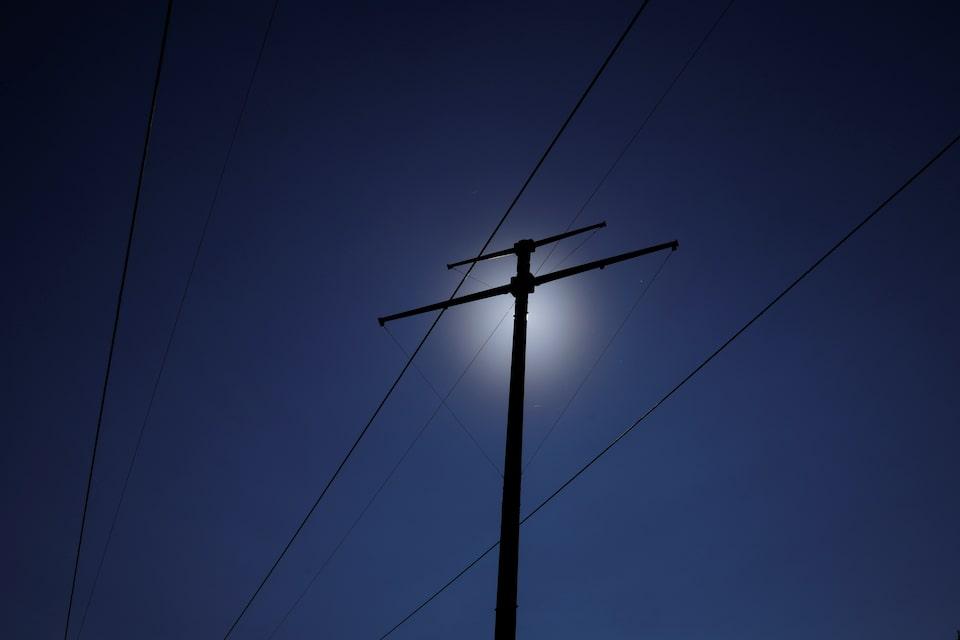
Dec 29 (Reuters) - Wholesale electricity prices in New England jumped in November, driven by fuel costs and increased consumer demand, according to U.S. power grid operator ISO New England. Real-time power prices averaged $61 per megawatt-hour, up 52% from a year earlier, while day-ahead prices rose 51% to $59.55/MWh, the operator added. Sign up here. Fuel is a key cost in power generation in New England, where natural gas, which provided 55% of electricity in 2024, typically sets wholesale power prices, closely linking electricity prices to gas markets, ISO noted. Average natural gas prices rose to $4.68 per million British thermal units in November, up 107% from $2.26/MMBtu a year earlier on the Massachusetts natural gas index, it said. Electricity demand increased 3.9% from November 2024 as temperatures fell, lifting heating needs across the region, the operator noted. ISO said New England power plants produced an estimated 2.53 million metric tons of carbon dioxide during the month, about 2% more than in November 2024. "Estimated year-to-date emissions through Nov. 30 increased 2% year over year, which was largely driven by a colder winter, increased demand, and higher natural gas prices resulting in more oil- and coal-fired generation," the operator added. https://www.reuters.com/business/energy/new-england-power-prices-rise-november-iso-says-2025-12-29/
2025-12-29 21:03
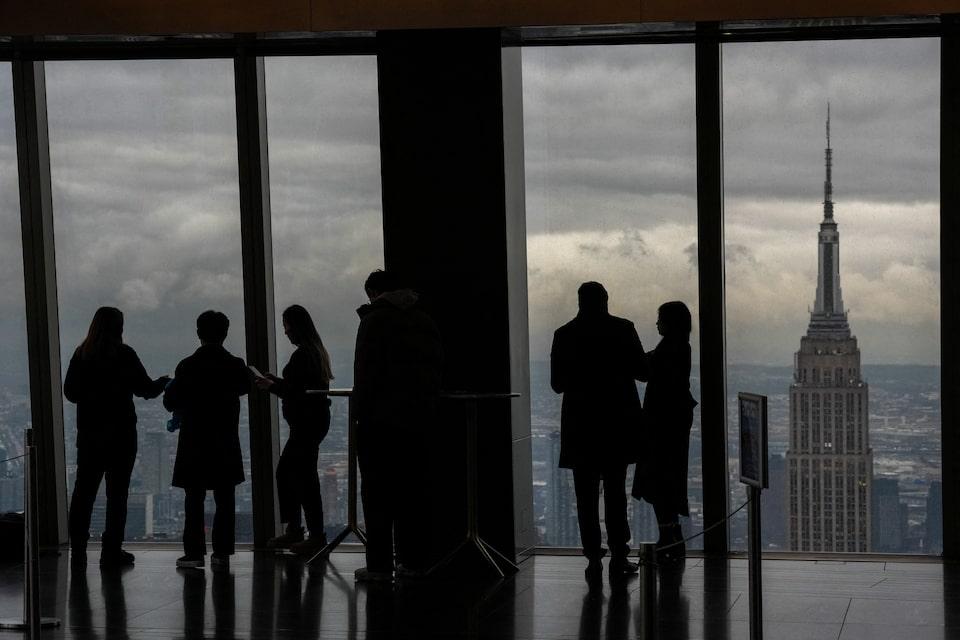
Nearly 6,000 flights delayed, 751 canceled due to storm, as of 3:25 p.m. ET Bomb cyclone expected to worsen conditions, causing blizzards and strong winds Delta faces most cancellations, stock drops nearly 3% Dec 29 (Reuters) - Winter Storm Ezra disrupted holiday travel across the U.S. Northeast, Midwest and Great Lakes for a third straight day on Monday, causing thousands of flight delays and hundreds of cancellations as airlines scrambled to recover and meteorologists warned of a brewing "bomb cyclone" that could further snarl trips ahead of the New Year's holiday. Nearly 6,000 flights were delayed and 751 canceled as of 3:25 p.m. ET, according to flight tracking website FlightAware. Since Friday, weather disruptions have canceled over 3,600 flights and delayed more than 30,000 others. Sign up here. The storm hit during one of the year's busiest travel periods, when airlines operate near capacity with limited flexibility to rebook passengers. Holiday travelers faced long waits, rebooking difficulties and accommodation challenges as airlines coped with severe winter weather. AccuWeather meteorologists warned the powerful storm would intensify into a "bomb cyclone" through Monday night, bringing blizzard conditions, dangerous ice, flooding rain and strong winds from Wisconsin to Maine. A bomb cyclone occurs when rapidly dropping atmospheric pressure produces hurricane-force winds and heavy precipitation. The arctic cold front driving the storm brought with it wild swings in temperatures. In Philadelphia, temperatures, which soared close to 60 degrees on Monday, were expected to drop into the 20s overnight. Major travel disruptions, regional power outages and hazardous conditions were expected through early Tuesday. The harsh weather also disrupted road travel, with poor visibility, icy surfaces and blowing snow contributing to several multi-vehicle pileups and prompting authorities in parts of the region to urge drivers to avoid non-essential travel. The Federal Emergency Management Agency warned travelers that driving could be dangerous as blizzard-like conditions, high winds and ice descend across the Upper Midwest and Great Lakes. The Federal Aviation Administration issued a ground stop at Washington's Dulles International Airport until 4:15 p.m. ET due to high winds. Delays at airports in Boston and Newark, New Jersey, which serves New York City, were imposed due to low visibility and windy conditions. Detroit-bound flights faced additional disruption after the FAA ordered a ground stop at Detroit Metropolitan Wayne County Airport through 8 a.m. ET on Monday. The halt, affecting only Delta Air Lines (DAL.N) , opens new tab flights, was imposed for undisclosed operational reasons, and delays were expected to continue until midnight. Delta had the highest share of cancellations and delays on Monday, and its shares fell nearly 3% in afternoon trading. Shares of United Airlines (UAL.O) , opens new tab, American Airlines (AAL.O) , opens new tab and Alaska Air Group (ALK.N) , opens new tab were each down about 2%. The FAA also said departures from Albany, Bangor, Burlington and Minneapolis-St. Paul were delayed as ground crews cleared snow and ice from planes. Airline operations are tightly interlinked, meaning canceled flights can leave aircraft and crews out of position, complicating efforts to restore normal schedules. American Airlines, United Airlines, JetBlue Airways and Delta told Reuters they had waived change fees for passengers affected by weather-related disruptions. https://www.reuters.com/business/environment/winter-storm-ezra-snarls-us-travel-meteorologists-warn-bomb-cyclone-2025-12-29/
2025-12-29 21:00
Indexes down: Dow 0.51%, S&P 500 0.35%, Nasdaq 0.5% Tech, AI-linked stocks such as Nvidia trigger decline DigitalBridge rises on SoftBank's $4 bln acquisition deal Gold, silver miners fall as precious metal rally stalls Three main U.S. stock indexes set for double-digit yearly gains NEW YORK, Dec 29 (Reuters) - Wall Street's main indexes ended lower on Monday, kicking off the final week of the year on a softer note, as heavyweight technology stocks retreated from last week's gains that had pushed the S&P 500 to record highs. The information technology sector (.SPLRCT) , opens new tab weighed on the S&P 500, as most tech and AI-linked stocks declined. Nvidia (NVDA.O) , opens new tab slipped 1.2% and Palantir Technologies (PLTR.O) , opens new tab dropped 2.4%. Sign up here. "This is (not) the beginning of the end of the tech dominance, it'll turn out to be a buying opportunity," said Hank Smith, director and head of investment strategy at Haverford Trust. "A big reason for that is the top tech names, excluding Tesla, do not have challenging valuations given their growth rate, the moat around their business and their financial strength, which is unparalleled." The S&P 500 (.SPX) , opens new tab lost 24.20 points, or 0.35%, to 6,905.74 and the Nasdaq Composite (.IXIC) , opens new tab lost 118.75 points, or 0.50%, to 23,474.35. The Dow Jones Industrial Average (.DJI) , opens new tab fell 249.04 points, or 0.51%, to 48,461.93. Tesla (TSLA.O) , opens new tab fell 3.3% after hitting a record high last week, weighing on the consumer discretionary sector (.SPLRCD) , opens new tab. Materials (.SPLRCM) , opens new tab slipped, with precious-metal miners sliding as silver dropped sharply after topping $80 per ounce for the first time, while gold also fell after back-to-back record highs last week. Conversely, energy stocks (.SPNY) , opens new tab gained almost 1%, tracking a 2% rise in oil prices. Bank stocks (.SPXBK) , opens new tab also retreated after a strong rally this year. Citigroup (C.N) , opens new tab, among major gainers this year due to progress on resolving some regulatory problems, dropped 1.9% on Monday. The stock has gained nearly 68% since the start of the year. Stocks pulled back after the S&P 500 was within 1% of the 7,000-point mark. The blue-chip Dow hit a record closing high last week. Some investors were hoping for a "Santa Claus rally", a seasonal phenomenon where the S&P 500 typically posts gains in the last five trading days of the year and the first two in January, according to Stock Trader's Almanac. All three indexes were headed for firm monthly gains, with the Dow and S&P 500 on pace for their eighth consecutive month in the green. The bull market, which began in October 2022, stayed intact despite concerns over high valuations of technology companies and market volatility. With traders still optimistic about AI, interest-rate cuts and a resilient economy, all three main indexes are set for their third consecutive yearly gain. Most strategists also expected gains in 2026. With expectations for continued global economic expansion and further easing by the Federal Reserve, it would be unusual to see a significant equity setback or bear market without a recession, said Peter Oppenheimer, chief global equities strategist at Goldman Sachs, in a recent note. On the macro front, minutes from the Fed's previous meeting and a weekly reading of jobless claims will be on the radar in an otherwise data-light week. The S&P 500 has added about 17% so far this year, as the frenzy to capitalize on AI helped the U.S. benchmark overtake Europe's STOXX 600 (.STOXX) , opens new tab, despite investors diversifying away from U.S. stocks earlier in the year. DigitalBridge (DBRG.N) , opens new tab surged 9.6%, with Japan's SoftBank Group (9984.T) , opens new tab set to acquire the digital infrastructure investor in a deal valued at $4 billion. Declining issues outnumbered advancers by a 1.63-to-1 ratio on the NYSE. There were 154 new highs and 83 new lows on the NYSE. On the Nasdaq, 1,386 stocks rose and 3,305 fell as declining issues outnumbered advancers by a 2.38-to-1 ratio. The S&P 500 posted 10 new 52-week highs and 2 new lows while the Nasdaq Composite recorded 37 new highs and 249 new lows. Volume on U.S. exchanges was 13.08 billion shares, compared with the 16.2 billion average for the full session over the last 20 trading days. https://www.reuters.com/business/us-stock-futures-inch-lower-after-last-weeks-rally-holiday-shortened-week-2025-12-29/

2025-12-29 20:39
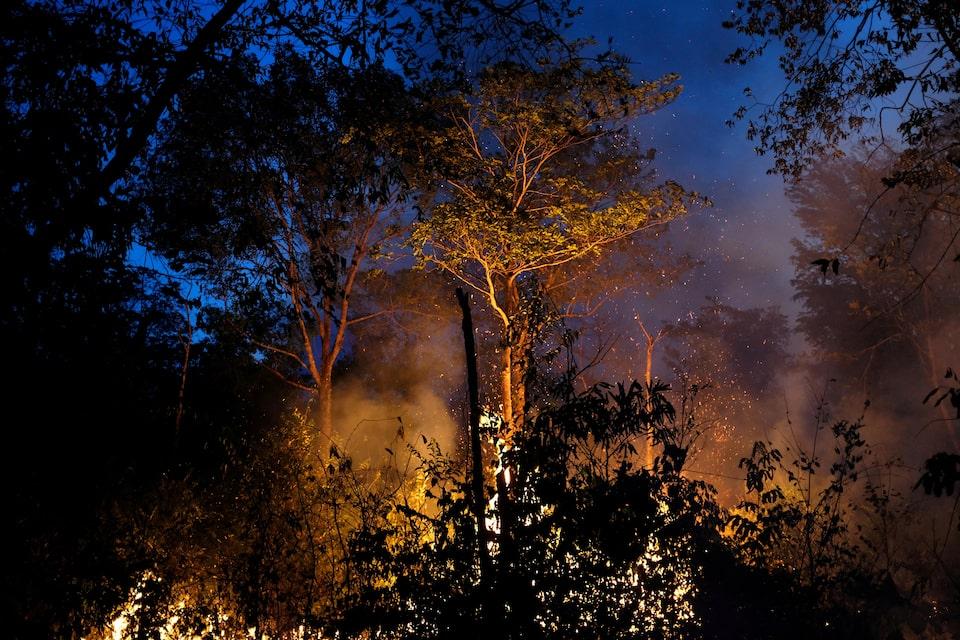
ADM, Bunge, Cargill, Cofco signed 2006 agreement to protect Brazil's Amazon forest with soy farming moratorium Mato Grosso law strips tax incentives from conservation program participants Emboldened farm lobby threatens other environmental protections Soy moratorium credited with saving a rainforest area the size of Ireland Grain traders received tax incentives worth about $840 million between 2019 and 2024 SAO PAULO, Dec 29 (Reuters) - Some of the world's largest soybean traders are preparing to break their agreement to curb deforestation of the Amazon rainforest to preserve tax benefits in Brazil's top farm state, two people with direct knowledge of the matter told Reuters. The firms exiting the so-called Amazon Soy Moratorium, which has saved millions of acres of tropical forest over nearly two decades, are looking to shield themselves from a new state law in Mato Grosso, the sources said on condition of anonymity. Sign up here. Starting in January, the state will strip tax incentives from companies taking part in the conservation program. Mato Grosso grew some 51 million metric tons of soybeans in 2025, more than Argentina. A preliminary report from state auditors in April found that grains traders had benefited from tax incentives worth about 4.7 billion reais ($840 million) between 2019 and 2024. ADM (ADM.N) , opens new tab and Bunge (BG.N) , opens new tab were the top beneficiaries of tax incentives, receiving about 1.5 billion reais ($269 million) each, said Sergio Ricardo, head of the Mato Grosso state audit court. U.S.-based ADM, Bunge and Cargill, as well as China's Cofco and Brazil's Amaggi, are signatories of the pact with facilities in Mato Grosso that have benefited from state tax incentives. It was not clear which of the firms would break immediately from the moratorium. Cargill referred questions to industry group Abiove, which did not respond to requests for comment. ADM, Bunge, Cofco, Amaggi and grain exporter group Anec did not respond to questions. "Most companies will choose not to lose the tax incentives and will withdraw from the agreement," said one of the sources, adding that the departures would effectively end a pact signed in 2006 with the federal government and conservation groups. The moratorium is considered one of the most important forces slowing deforestation rates in the Brazilian Amazon over the past two decades as it bars signatories from buying soybeans from farmers who plant on land deforested after July 2008. Researchers estimate that an area of the rainforest the size of Ireland would have been lost to soy farms in Brazil without the moratorium and related conservation efforts, compared to the pace of expansion in neighboring countries such as Bolivia. The Mato Grosso law, which lawmakers passed in 2023, is the latest example of a global retreat from pacts and policies to curb climate change, even as temperatures break records, driven by rising fossil fuel use and deforestation. Critics of the soy moratorium say that the pact restricts the market and hurts farmers. Farming groups in Mato Grosso say the protocol reduces the income and economic development of the state. "Companies could choose to keep their zero-deforestation commitments," said Cristiane Mazzetti, who oversees the moratorium for Greenpeace. "It's a dangerous precedent, and it's not what we need in a moment of climate emergency," she added. Brazil's federal government has argued in court against the new Mato Grosso law stripping tax breaks from traders due to their environmental commitments. "If the Mato Grosso government really removes those incentives, we have heard that some, or many, companies will in fact abandon the moratorium for economic reasons," said Andre Lima, a senior Environment Ministry official tasked with combating deforestation. He added that firms had not officially informed the ministry of their plans. FAR-REACHING CONSEQUENCES President Luiz Inacio Lula da Silva has vowed an "ecological transformation" of the Brazilian economy, capped off with the United Nations climate summit hosted in the Amazon last month. But in domestic politics, his leftist government is often fighting a rearguard battle to protect the world's largest rainforest from a farm lobby with the upper hand in Congress. The unraveling of the Amazon Soy Moratorium is likely to embolden those rural powerbrokers and their allies. This year the farm lobby has successfully gutted environmental permitting laws and stripped some protections from Indigenous lands. The trend has caught the attention of farmer groups in Europe arguing to block a free trade agreement between the European Union and South America's Mercosur due to the impact of Brazilian agribusiness on vital ecosystems. Brazil's Supreme Court has barred some but not all of the farm lobby's agenda in Congress, based on constitutional protections for the environment and Indigenous peoples. Environmentalists warn that the end of the soy moratorium could pave the way to dismantle other environmental protections in the world's largest soybean producer, including part of Brazil's forestry code restricting farmers from felling trees on 80% of their properties in the Amazon. In recent years, soybean farmers pushed state lawmakers in Mato Grosso, Rondonia and Maranhao to strip tax benefits from companies taking part in environmental pacts more restrictive than Brazilian law. It remains unclear which environmental commitments outside the soy moratorium will trigger those new state laws, which could threaten a range of other companies, including cellulose producers and meatpackers. Brazilian antitrust agency CADE has separately opened an investigation of the soy moratorium for a potential breach of competition rules. For nearly two decades, trading firms have shared the cost of monitoring soy farms in the Amazon to avoid buying from those planting on newly deforested land. Starting in January, CADE has ordered traders "to refrain from collecting, storing, sharing, or disseminating commercial information related to the sale, production, or acquisition of soybeans." Soy farmers in Mato Grosso have also sued grain traders for roughly $180 million over their role in the pact. In temporary rulings, Supreme Court Justice Flavio Dino stopped the antitrust investigation, but let the Mato Grosso law take effect. Environmental groups are still trying to block the state law ahead of a final court ruling on the issue. ($1 = 5.56 reais) https://www.reuters.com/sustainability/soy-trading-firms-abandon-amazon-protection-pact-brazil-2025-12-29/
2025-12-29 19:23
BUENOS AIRES, Dec 26 (Reuters) - (This December 26 story has been corrected to change the peso amount from billion to trillion in paragraph 2) Argentina's Congress passed the 2026 budget on Friday, the first approved by legislators since President Javier Milei took office in late 2023. Sign up here. The budget, passed 46 votes to 25 with one abstention, includes spending of 148 trillion pesos ($102 billion) and projects South America's second-biggest economy will grow 5% with inflation at 10.1%. The bill projects a primary budget surplus equivalent to 1.2% of the gross domestic product. The 2023 budget was the last one passed by Congress. During the first two years of his term, Milei's government had extended the budget of the previous year without passing a bill in Congress, resulting in sectors being dramatically hit by inflation, which hit an annual rate of almost 300% in April 2024. According to a report by the Civil Association for Equality and Justice, a Buenos Aires-based think tank, the new budget reflects a 7% increase in real terms from 2025 but a 24.6% drop in real terms compared to the 2023 Congress-approved budget. However, the think tank noted that some inflation projections are significantly higher than the executive branch's forecast. Milei has ruled with sweeping austerity measures, which have often generated massive protests, and in 2024 Argentina had its first budget surplus in more than a decade. Congress this year overrode Milei's vetoes of bills boosting funding for public universities, pediatric health care and people with disabilities. While the new budget boosts funding for social services -including health, social security and education - the bump does not compensate for sharp falls over the last several years, the ACIJ report said. After a strong showing in midterm legislative elections in October, Milei's La Libertad Avanza party gained considerable power in the newly elected Congress, becoming the largest minority in the lower house and increasing its bloc in the Senate. The government hopes that will help it push forward a series of overhauls, including overhauls to the labor and tax systems, in the coming months. https://www.reuters.com/world/americas/argentinas-congress-approves-2026-budget-2025-12-27/

2025-12-29 19:15
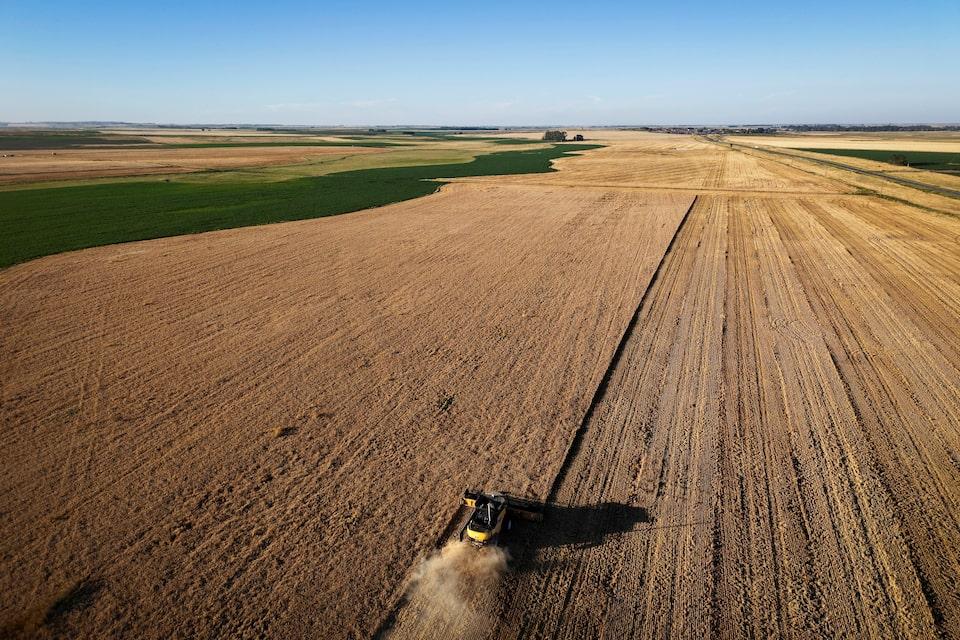
Argentina's wheat harvest expected to exceed previous record by up to 25% Ideal weather conditions led to unprecedented wheat yields, Rosario Grain Exchange reports Soybeans and corn also show good prospects, pending January rains Only 13% of wheat area remains unharvested nationwide BENITO JUAREZ, Argentina, Dec 29 (Reuters) - Diego Ugrotte, like many other Argentine farmers, is wrapping up what could be described as a near-perfect wheat season. The 51-year-old farmer from the southern part of the Buenos Aires province, Ugrotte examines his wheat plants near the steady roar of a combine harvester combing through his fields. The verdict is hard to argue with: this one turned out exceptionally well. Sign up here. "We knew it was going to be a good harvest, but not to the extreme of the figures we ended up with," said the farmer from the town of Benito Juarez, about 400 kilometers south of the Argentine capital. With the country's two main grain exchanges estimating the 2025/26 wheat harvest at a record between 27.1 and 27.7 million tons, the farmer's words resonate not only in his region, the wheat heartland of the country, but throughout Argentina. With only a few hectares left to harvest, production is expected to exceed the country's record wheat harvest of 22.2 million tons for the 2021/22 season by up to 25%, according to official data. A hot, dry day in the austral summer is helping wrap up the harvest on Ugrotte’s farm, where he has been working since he was 17. IDEAL SEASON Argentina, one of the world's top grains suppliers, relies on the agricultural sector to generate foreign currency. Dry conditions have smoothed the path for combines on rural roads and across fields nationwide, after Argentina enjoyed almost ideal weather at every stage of wheat development, resulting in what the Rosario Grain Exchange described as "unprecedented" yields for the crop. "There were low temperatures in the winter when the crop was in its vegetative stage, which is what it needs. Then it had a period of very regular rainfall that resulted in good tillering, good ear development, and finally, excellent grain filling," said Ugrotte. According to the producer, in Benito Juarez only 20% to 30% of the wheat area remains unharvested, marking the end of an "excellent" season. Nationally, just 13% of the planted area remains unharvested, according to the latest government data. And while producers are bagging their last batches of wheat, in adjacent fields, Argentine soybeans and corn are nearing maturity, also with good prospects according to Ugrotte. "For the main crops, the weather has also been cooperating" he said. "The main crops harvest still depend on what happens with January rains, but the outlook looks good." https://www.reuters.com/world/americas/argentine-farmers-bag-last-fields-dream-wheat-season-2025-12-29/