2024-12-10 06:28
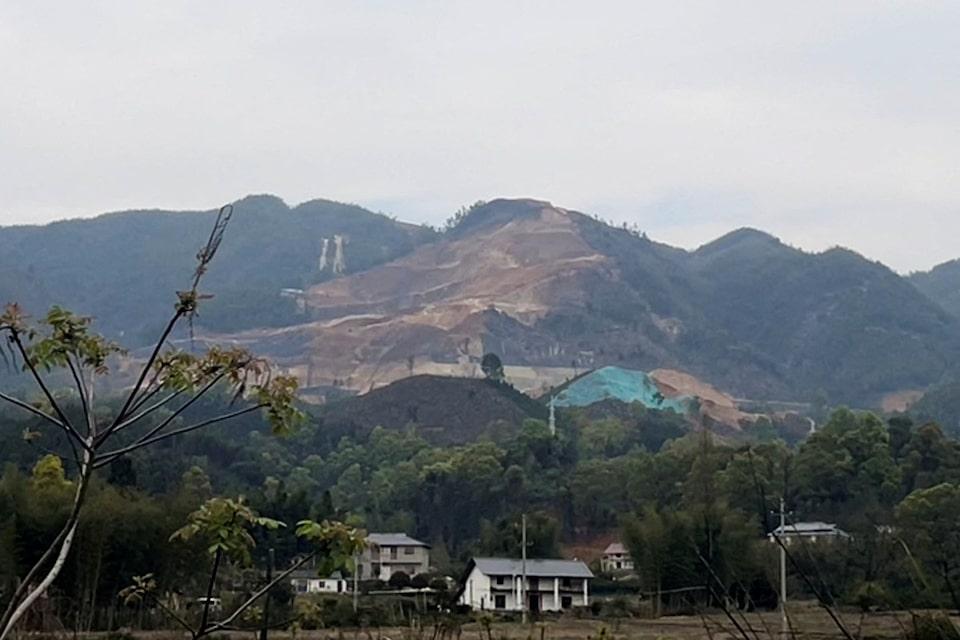
Dec 10 (Reuters) - Some mines that produce lithium, used in electric vehicle batteries, have curtailed operations or delayed expansions after a 90% drop in prices over the last two years. Other loss-making mines have maintained production, largely because they have the support of Chinese battery-makers that can increase their profits when the raw materials in their supply chains are cheaper. Below are details of mines that have temporarily halted operations or postponed expansions. Consultancy CRU said the total impact would be 100,000 metric tons less output this year and 228,000 tons in 2025. MINERAL RESOURCES (MIN.AX) , opens new tab In November, the company said it would put its Bald Hill mine in Western Australia under care and maintenance. It left its other two jointly-owned mines in operation at lower levels. LIONTOWN RESOURCES (LTR.AX) , opens new tab In November, the company trimmed production plans for its new Kathleen Valley lithium mine during its ramp-up. PILBARA MINERALS (PLS.AX) , opens new tab The company said in October it would put one of its two processing plants in care and maintenance at the beginning of December, trimming output by the company. ARCADIUM (ALTM.N) , opens new tab In September, the company said it put its Mt. Cattlin mine , opens new tab in Western Australia in care and maintenance by the end of the first half of 2025. In August, it also announced a delay to expansion plans at its Feniz operation in Argentina and said it would pause development of its Galaxy project in Canada. In October, Rio Tinto (RIO.AX) , opens new tab, (RIO.L) , opens new tab agreed to buy Arcadium for $6.7 billion. CATL (300750.SZ) , opens new tab Chinese battery giant CATL said in September it would adjust lithium production at its Jianxiawo mine. It did not say how much output would be affected, but UBS estimated it would be 15,000 tons for about three months. ARGOSY MINERALS (AGY.AX) , opens new tab In July, the company suspended operations , opens new tab at a lithium carbonate production facility at its Rincon project in Argentina. IGO (IGO.AX) , opens new tab The company in January trimmed its 2024 production forecast for its Greenbushes mine by 7%. CORE LITHIUM (CXO.AX) , opens new tab In January, the company suspended operations at its Finniss project in Australia's Northern Territory. Sign up here. https://www.reuters.com/markets/commodities/lithium-mines-that-have-cutback-output-due-low-prices-2024-12-10/

2024-12-10 06:23
Battery makers help to prop up loss-making lithium mines Global lithium surpluses expected to persist through 2027 Chinese firms keep Zimbabwean mines open despite losses or thin profits LONDON, Dec 10 (Reuters) - Many lithium mines, led by Chinese operators, are maintaining production of the raw material needed for electric vehicle (EV) batteries, in defiance of prices weak enough to trigger mass output cuts - providing a boon for battery makers. The continued production raises the prospect of years of oversupply and of weak prices. Some battery makers own mines or have injected cash into operations to keep them operational, company reports show. Mines were also maintaining production to retain market share and good relations with governments and because closures and restarts can lead to technical issues, according to interviews with miners, consultants and analysts. So far, around a dozen lithium producers have temporarily shut loss-making mines, trimmed output or delayed expansions. Many others are still operating, meaning the global supply glut of the mineral needed for batteries for stationary storage, as well as for EVs, is likely to last for several years and keep prices low, the industry insiders and analysts said. The lithium hydroxide price has slid nearly 90% since touching a peak of $85 per kilogram in December 2022, after soaring by more than sevenfold during the previous 18 months. Global lithium supply is forecast to rise by 25% this year and 15% in 2025, UBS said. "There are some assets in production that shouldn’t really be, but for their own reasons, they’re ploughing on," Martin Jackson, head of battery raw materials at CRU, said. He estimated about 10% of production is loss-making. China has some of the highest lithium mine costs, but many Chinese-owned lithium mines at home and in Australia and Africa are unlikely to close because they are integrated into downstream supply chains, analysts and consultants said. They noted China's government regards its world leading EV and battery sector as strategic and is keen to keep it thriving with steady raw material supplies and low costs. CHINA'S ZIMBABWE MINES An expected surge in EV sales and a spike in lithium prices in 2021 and 2022 ago led to an increase in new mines. After prices fell in response to oversupply and weaker-than-expected EV sales, investment in lithium mines continued, and last year jumped by 60%, the International Energy Agency said. Some of the investment stemmed from China's quest to ensure lithium supplies abroad, including Zimbabwe, which has become the world's fourth biggest supplier of mined lithium in the space of a few years. All four operating mines are majority-owned by Chinese companies but are making scant profit or suffering losses, according to Cameron Perks, product director of lithium at consultancy Benchmark Mineral Intelligence. None of them has shut down despite costs ranging from $600 to $1,000 per metric ton of material sold compared to a price of $765 per ton, said Perks, who visited mines in the country in recent weeks. The price is based on spodumene concentrate containing 6% lithium (SC6), a semi-processed material resulting from separating other minerals from lithium ore. "There's a common understanding that Chinese parent companies could absorb some costs downstream," he said. "There's also the political aspect in China, wanting to secure their supply chains outside of Australia and Canada, where they've had some pushback." He said the highest cost mine in Zimbabwe, Arcadia, is owned by Zhejiang Huayou Cobalt (603799.SS) , opens new tab, which also produces downstream battery cathode materials. AUSTRALIA MINES GET OUTSIDE SUPPORT In Australia, where costs are also high, some companies plan to tough it out with support from battery makers, rejigging mine plans and offsetting losses in lithium with profitable production of iron ore, copper or nickel. Mineral Resources (MinRes) (MIN.AX) , opens new tab last month said it was putting its Bald Hill mine under care and maintenance. However, it also left two other mines producing, although at lower levels, including Mt. Marion, which has higher costs than Bald Hill on an SC6 basis due to lower grades, according to Luke Allum at consultancy Project Blue. The two other mines are jointly owned so MinRes has to consult with its partners. Mt. Marion mine is 50% owned by China's Ganfeng Lithium (002460.SZ) , opens new tab, which manufactures batteries as well as being a lithium producer. "The sweetener for MinRes at Mt. Marion is the mining services contract from Ganfeng, where they get a little extra revenue," said Allum. Australia's Liontown Resources (LTR.AX) , opens new tab has kept its new Kathleen Valley mine in operation by trimming output during its ramp-up. Liontown, which posted an annual net loss after tax of A$64.9 million, has been supported by South Korean battery maker LG Energy Solution (LGES) (373220.KS) , opens new tab, which supplied $250 million in funding in July. LGES, which got a 10-year extension to its lithium supply deal from Liontown, has benefited from weak lithium prices, with an official telling an earnings call in July: "Due to weak metal prices, the advanced automotive battery division posted an increase in revenue." Sign up here. https://www.reuters.com/markets/commodities/lithium-supply-surplus-set-stay-with-battery-makers-help-2024-12-10/
2024-12-10 06:16
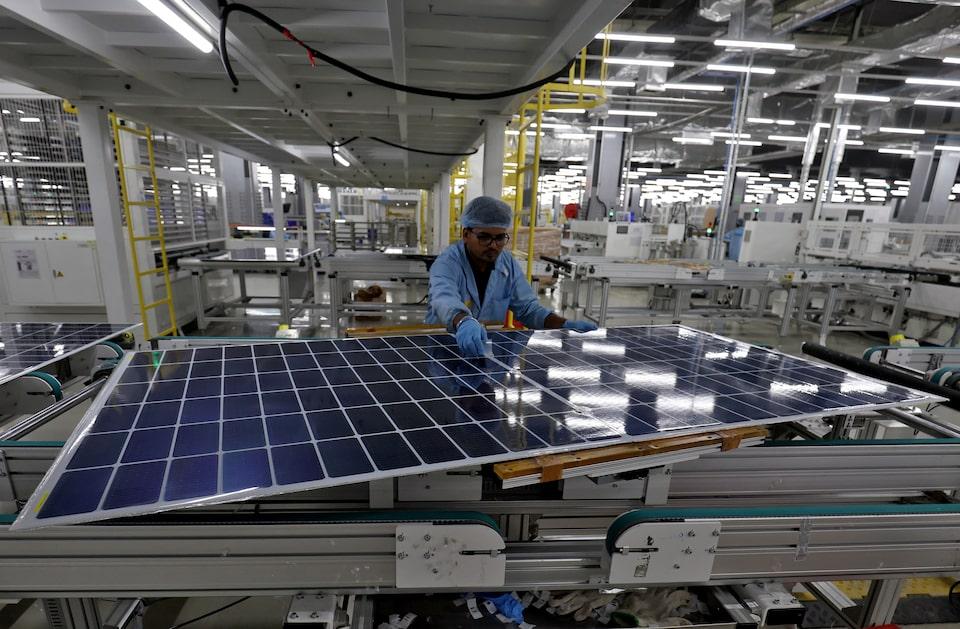
Dec 10 (Reuters) - Indian clean energy firms will be required to use solar photovoltaic (PV) modules from cells made locally by a government-approved list of companies from June 2026, in a move to curb imports from top supplier China. India already requires the use of locally-made PV modules in government projects from an approved list of domestic manufacturers, and authorities have now extended this rule to solar cells as well. The government plans to increase its non-fossil fuel capacity to 500 GW by 2030 from about 156 GW at present. Currently, India has a solar PV module-making capacity of about 80 gigawatts (GW), while its cell-making capacity is slightly more than 7 GW, with companies largely relying on Chinese cells to make modules. The government will issue a list of approved cell manufacturers as the installed capacity of solar PV cells in the country is expected to increase substantially next year, the renewable energy ministry said on Monday. Several Indian companies have already set up or are in the process of establishing solar cell making plants. Tata Power (TTPW.NS) , opens new tab recently commissioned a 4.3 GW cell making plant in southern India. Reliance Industries (RELI.NS) , opens new tab aims to commission its first phase of a 20 GW integrated solar cell and module production facility before the end of this year in the state of Gujarat, where the Adani Group already has a 4 GW cell and module making plant. Sign up here. https://www.reuters.com/business/energy/india-mandates-use-locally-made-solar-cells-clean-energy-projects-june-2026-2024-12-10/
2024-12-10 06:13
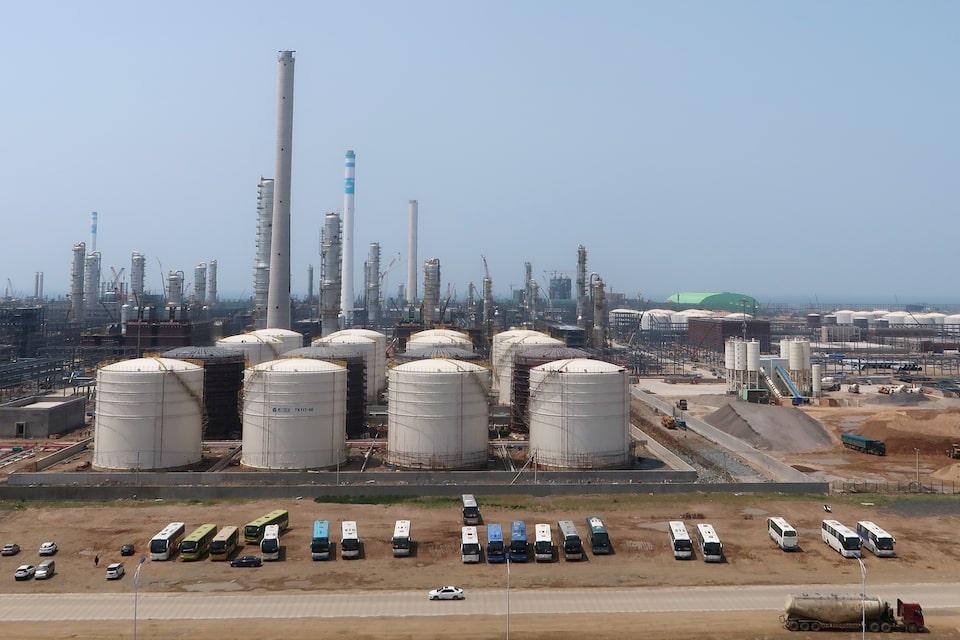
Hengli buys 12 mln bbls Mideast oil for Dec-Jan loading TotalEnergies sold most of the supply Cargoes include oil from Iraq, Qatar, UAE SINGAPORE, Dec 10 (Reuters) - Private Chinese refiner Hengli Petrochemical has snapped up Middle East crude, six traders familiar with the matter said, mostly from TotalEnergies after the French major amassed a large volume of the oil and as Iranian supply to China has tightened. The purchases follow Hengli receiving an additional crude import quota of 2 million tons (14.6 million barrels) that can be used in 2024 and 2025. In late November, Hengli Petrochemical (600346.SS) , opens new tab bought about 12 million barrels of Middle East crude from Totsa, the trading arm of TotalEnergies (TTEF.PA) , opens new tab, as well as from PetroChina (601857.SS) , opens new tab and Aramco Trading Co, according to some of the traders familiar with the transactions. The barrels, which include grades such as Qatari al-Shaheen, Iraqi Basrah Medium and Upper Zakum from the United Arab Emirates, are to load in December and January, said the traders, who declined to be named due to the sensitivity of the matter. Iranian crude supply to China has fallen since October, narrowing discounts for the sanctioned oil to their tightest in about five years, pushing some independent refiners to switch back to costlier non-Iranian Middle Eastern oil despite their struggle with weak margins, traders said. The slowdown comes ahead of expectations that U.S. President-elect Donald Trump will ramp up enforcement of sanctions on Tehran when he returns to office in January and further squeeze Iranian oil exports, which account for more than 10% of crude purchases by China, the world's biggest oil buyer. A Dalian-based Hengli executive in charge of crude oil procurement and planning confirmed the refiner stepped up buying of Middle Eastern cargoes thanks to its extra quota and attractive prices, but denied it has previously bought crude from Iran. "We recently received new quota and the market happens to be in our favour, so we bought some cargoes that have good value for money," the executive said, declining to be named as he is not authorised to speak with media. Linking Hengli's recent purchases to lower Iranian supplies is "pure speculation", the Hengli executive said. Reuters reported in July that Hengli emerged as a buyer of Iranian oil earlier this year, with a senior trading source close to the firm saying it had bought 4 million barrels a month during the first few months of the year. Another senior trading source close to Hengli put the volumes at 4 million to 6 million barrels a month. Data analytics firm Vortexa said at the time that Hengli was a buyer of Iranian crude shipments, based on its tanker tracking information and analysis. TOTAL SALES Hengli's purchases are helping to reduce excess supply held by Totsa after it went on its unusually avid two-month buying spree on the S&P Global Platts price assessment process known as "the window", the traders said. TotalEnergies was the top buyer on the Platts window for December- and January-loading Middle East oil cargoes, snapping up a total 23.5 million barrels, trade data reviewed by Reuters showed. Its last prior window purchases were in June, amounting to 4 million barrels of August-loading crude, the data showed. Traders said they believe Totsa still holds several million barrels after its recent buys. TotalEnergies did not respond to a request for comment. IRAN OIL Last week, Washington designated more vessels and entities for involvement in facilitating Iranian oil trade following a similar move in October. One of the vessels, very large crude carrier (VLCC) Phonix, has been anchored since last week outside Rizhao Port in China's independent refining hub of Shandong province, LSEG ship-tracking data shows. Late in 2019, Chinese independent "teapot" refiners stepped in as key buyers of discounted Iranian crude, filling a vacuum left by Chinese state oil firms wary of U.S. sanctions, saving billions of dollars on the country's oil import bill and cementing China's status as Tehran's top crude market. Chinese banks have recently refused to facilitate payments for purchases of Iranian oil as the number of sanctioned vessels is rising, said three separate traders who deal in Iranian crude. "It becomes more and more difficult now as even if you transferred oil from a sanctioned tanker to a non-sanctioned vessel, the latter would soon risk being put on the sanction list," said one of the three traders. Sign up here. https://www.reuters.com/business/energy/chinas-hengli-uses-extra-import-quota-buy-mideast-oil-total-traders-say-2024-12-10/
2024-12-10 06:09
LITTLETON, Colorado, Dec 10 (Reuters) - Global exports and use of thermal coal will reach all-time highs in 2024, despite the record roll-out of renewable energy generation capacity across all major continents. Exports of thermal coal through the first 11 months of 2024 are up by 9 million metric tons from the same months in 2023, per Kpler ship-tracking data, and will climb further in December as power firms stock up for the Northern hemisphere winter. Global coal-fired power generation is up by around 2% to new highs so far in 2024, while coal-fired power emissions are also at a record, data from energy think tank Ember shows. The continued expansion in coal imports and use underscores the difficulty of dislodging fossil fuels from energy systems, and may disappoint those hoping for a peak in coal burning. However, climate advocates can take heart from the slowing pace of export growth, which at only 1% marks the smallest annual expansion since 2020, when COVID-19 lockdowns sparked a rare contraction in worldwide energy output. Climate watchdogs may also be cheered by annual declines in coal imports by several of the largest coal-consuming nations, which if repeated next year could trigger falls in coal exports from 2025. Below are the key countries that have helped lift coal exports to record highs in 2024, and will be the main drivers of coal purchases and use in the years ahead. GROWTH MARKETS For Indonesia, the world's top coal exporter, 2024 will be a banner year and mark the first time the country has shipped out over 500 million metric tons of thermal coal, according to Kpler. Australia will come in second with around 203 million tons, followed by Russia (94 million tons), South Africa (55 million tons), and Colombia (50 million tons). Just 10 countries account for 87% of global coal imports so far in 2024: China, India, Japan, South Korea, Taiwan, Vietnam, The Philippines, Malaysia, Turkey and Thailand. And half of those buyers will record an annual decline in coal purchases in 2024. Unfortunately for climate trackers, top coal consumer China - which accounts for 35% of all thermal coal imports - remains in the import growth category. China expanded imports by around 8% to a record 340 million tons from January 1st through the first week of December, according to Kpler. China's electricity generation from coal-fired plants climbed 2% over the first 10 months of 2024 to a new record of 4,838 terawatt hours, according to Ember, making 2024 the ninth consecutive year of coal-fired expansion in China. However, rapidly rising renewable energy production has helped cut coal's share of electricity generation to a record low of 58.7% so far in 2024, from almost 62% in 2023 and more than 66% in 2019. For now, China's total coal consumption levels remain on a rising path even as coal's share of the generation mix declines. But over time China's total coal needs should also decline in line with coal share, and result in steadily diminishing coal use, production and imports by the country. Beyond China, other key growth markets for coal imports and consumption this year are across Southeast Asia, where several economies have benefited from expanded manufacturing output and exports, and rising regional consumption. Vietnam boosted its coal imports by nearly 7 million tons (or 24%) to a record in the first 11 months of this year from the same period in 2023, and has raised coal-fired electricity production by 17%. The Philippines and Malaysia have both also lifted coal imports to record highs this year, and have raised coal-fired generation in line with overall electricity output. Thailand's coal imports were up nearly 5% this year, matching a similar rise in coal-fired and total electricity generation. CONTRACTIONS Over the first 11 months of 2024, the second, third, fourth and fifth largest coal importers all reduced imports compared to the same months in 2023. India, the number two coal importer, cut imports by nearly 10 million tons from 2023 levels, due in large part to a climb in domestic coal production. South Korea cut imports by close to 6 million tons, while Japan cut coal imports by around 3.1 million tons and Taiwan cut imports by 3.8 million tons. Turkey, the ninth largest importer, has so far in 2024 cut imports by around 1 million tons from the same period in 2023. Collectively, those countries imported around 23.5 million tons less coal than during January-November in 2023. What's more, 2024 will be the second consecutive year when Japan, South Korea and Taiwan will all record lower coal imports from the year before, as they pursue decarbonisation targets. India's fast-growing economy is likely to trigger sporadic revivals in coal imports going forward, as it relies on coal for around 70% of electricity production. Vietnam and the Philippines are also likely to further increase coal imports in the coming years as their power demand needs exceed domestic clean energy supply growth. However, over the longer run, all major coal importers have energy system decarbonisation goals that should see coal's share of the overall energy mix fall steadily lower from around the middle of this century. The opinions expressed here are those of the author, a market analyst for Reuters. Sign up here. https://www.reuters.com/markets/commodities/global-thermal-coal-exports-power-use-hit-new-highs-2024-maguire-2024-12-10/

2024-12-10 06:09
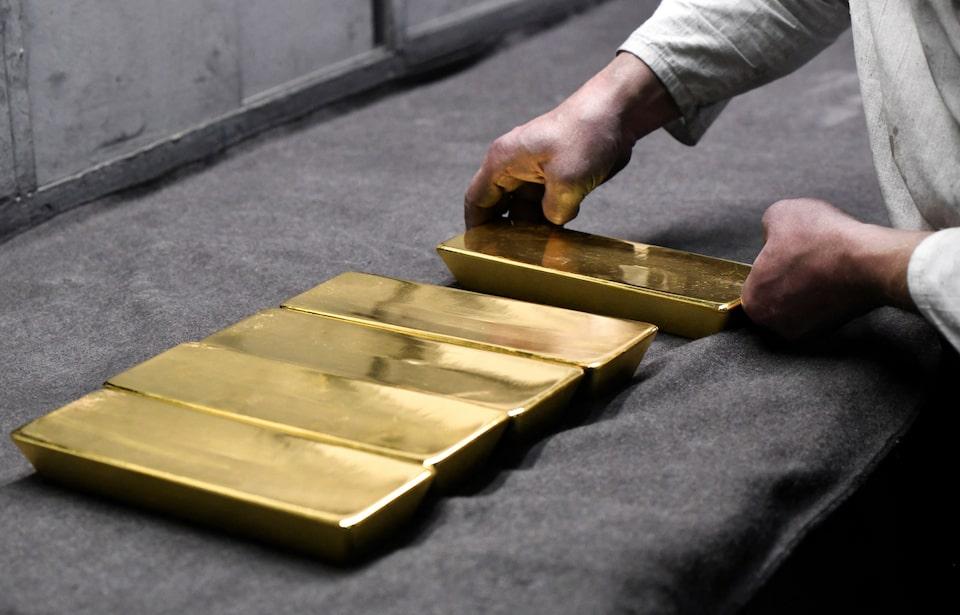
US CPI due on Wednesday, PPI on Thursday China to adopt an "appropriately loose" monetary policy in 2025 Dec 10 (Reuters) - Gold prices gained on Tuesday, helped by escalating geopolitical tensions in the Middle East and expectations of a U.S. rate cut this month, with key U.S. inflation data later this week grabbing investors' attention. Spot gold climbed 0.6% to $2,674.39 per ounce, as of 1101 GMT. U.S. gold futures rose 0.4% to $2,697.00. Friday’s jobs report has boosted bets around a December Fed rate, geopolitical tensions in the Middle East and reports of China’s central bank resuming gold purchases after a six-month break are supporting gold prices, said FXTM senior research analyst Lukman Otunuga. Traders now see about a 86% probability of a 25-basis-point rate cut next week, according to the CME FedWatch tool , opens new tab, up significantly from 73% last week. Investors are eyeing the U.S. Consumer Price Index (CPI) release on Wednesday and the Producer Price Index (PPI) on Thursday, both expected to have an influence on the Federal Reserve's rate-cut decision. "Gold bulls could face obstacles if a hotter-than-expected U.S. CPI report reduces bets around Fed cuts beyond December 2024," Otunuga added. The non-yielding bullion tends to shine in a lower-interest-rate environment and during periods of economic or geopolitical instability. Israeli forces advanced 25 km southwest of Damascus after seizing a buffer zone in southern Syria and conducting overnight airstrikes on Syrian military targets, Syrian sources reported Tuesday. Elsewhere, China will adopt an "appropriately loose" monetary policy and a more proactive fiscal approach next year, as per the Politburo. This is "a shift from a 'prudent' stance that has been held for nearly 14 years. Hence, a further reduction of interest rates in China may spur higher demand for gold purchases," said Kelvin Wong, OANDA's senior market analyst for Asia Pacific. Spot silver added 0.1% to $31.85 per ounce, platinum fell 0.1% to $938.11 and palladium was down 0.2% at $972.67. Sign up here. https://www.reuters.com/markets/commodities/gold-extends-gain-chinas-vow-policy-stimulus-2024-12-10/