2024-12-10 06:04
Swiss inflation rose to 0.7% in November Switzerland has lowest inflation rate among major economies SNB raised rates less than major peers after pandemic BENGALURU, Dec 9 (Reuters) - The Swiss National Bank will again cut its key policy rate by 25 basis points on Dec. 12, according to an over-85% majority of economists polled by Reuters, with most expecting the rate to reach near-zero in 2025, lower than previously thought. Financial market pricing is pushing more toward a larger 50 bps reduction given weak Swiss inflation and the SNB's aversion to a strengthening Swiss franc, up around 2% against the euro since a September policy meeting. Switzerland has the lowest inflation rate among major economies. But with the Swiss economy expanding at a moderate pace and the base cost of borrowing already at a meagre 1.0%, scope for a bigger reduction is limited. Over 85% of economists, 27 of 31, in the Dec. 5-9 Reuters poll predicted the Swiss central bank would cut its main rate by 25 bps to 0.75% on Dec. 12, a few hours before the European Central Bank is expected to cut by the same amount. Only four forecast the SNB to cut by 50 bps. "Market pricing may make a 25bp rate cut a slightly hawkish surprise, but we continue to see no reason - and also little chance of lasting success in terms of the exchange rate - for larger cuts given the resilient economy and stable exchange rate," Christian Schulz, deputy chief European economist at Citi, said. But he expected the SNB to downgrade its short-term forecasts again, adding "the SNB's guidance will likely remain dovish". LOW INFLATION Swiss inflation rose to 0.7% in November, well below the middle of the SNB's preferred 0-2% range and is the lowest among G10 economies. It is forecast to average just 0.7% and 1.0% in 2025 and 2026, respectively, according to poll medians. The SNB was more modest in raising rates than major peers following the pandemic, only reaching 1.75% from a deeply negative rate, and has already cut by 75 bps since March. Just over half of economists, 15 of 28, expect rates to fall to either 0.25% or zero next year. In a September poll, no economist had rates below 0.50% next year. Switzerland already has the second lowest interest rate among major economies after Japan, which has taken rates up in baby steps this year to 0.25%. In contrast to in Japan, the Swiss central bank is dealing with a strong currency that is keeping inflation low. The Swiss franc will weaken but is unlikely to give up all of its recent gains over the coming year, a separate Reuters poll found. That was based on expectations the European Central Bank will cut rates at least by 100 bps in 2025, more than the SNB, to shield the euro zone economy from expected U.S. tariffs early next year. Karsten Junius, chief economist at J. Safra Sarasin expects sluggish euro area growth will hamper Swiss exports as that is where most of them go. "We expect a further decline of inflation in the coming months such that risks to price stability are clearly on the lower side," added Junius, who sees a 50 bps cut on Thursday. (Other stories from the Reuters global economic poll) Sign up here. https://www.reuters.com/business/finance/snb-cut-rates-25-bps-dec-12-reach-zero-or-close-next-year-2024-12-09/
2024-12-10 06:00
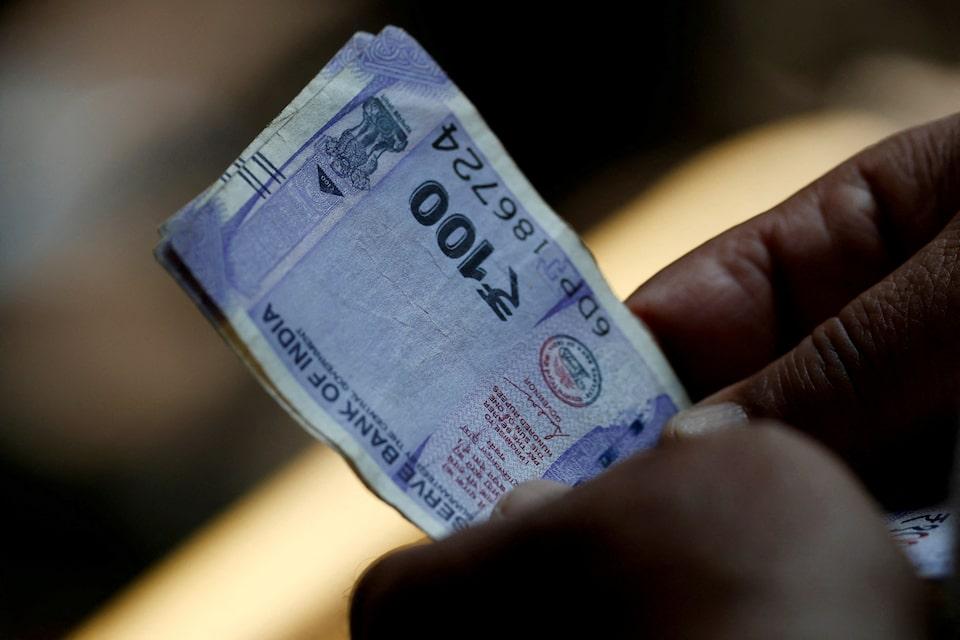
NEW DELHI, Dec 10 (Reuters) - India appointed career civil servant Sanjay Malhotra as its new central bank governor on Monday in a surprise move that leaves markets guessing about the future direction of monetary policy, as growth slows and high inflation persists. "One has to understand the turf, all perspectives and do what's the best for the economy," Malhotra, who has seldom shared his views on the economy in public, told reporters in New Delhi on Tuesday. Malhotra formally takes over on Wednesday. With a new governor at the helm of the Reserve Bank of India (RBI) and a deputy governor retiring next month, the RBI's monetary policy committee (MPC) will have a new look. The rupee fell to a record low of 84.85 per U.S. dollar, while the 10-year bond yield fell 2 basis points to 6.6954%, as the new chief's announcement prompted traders to ramp up bets on rate cuts by the RBI. Some economists said Malhotra's entry could mean rate cuts could come sooner than previously expected. The following are reactions from some economists: SHILAN SHAH, CAPITAL ECONOMICS "The appointment of Mr Malhotra could set a new direction for the RBI. Admittedly, at this very early stage, not much is known about his monetary policy views. But in comments last week, he did voice considerably more concern over the health of the economy than Mr Das did during Friday's policy announcement. "Under Das's leadership, we had forecast that cuts to the repo rate would only begin in April. But given (the) announcement, we are now forecasting the first 25bp cut at Malhotra's first meeting in charge in February." AASTHA GUDWANI, BARCLAYS "The MPC will sport an almost-new look by the February MPC meeting – with five out of the six members being relatively new. This newness will likely bring uncertainty, but we believe that peak inflation is behind us and that monetary conditions should be eased to support growth." SAMIRAN CHAKRABORTY, CITI "Market focus would be on whether the MPC's assessment of the relative balance between growth and inflation will undergo any significant change under the new-look MPC at the Feb meeting. "Markets would watch for the new governor's view on managing macro prudential policies and FX & Rates markets. At least in the near term, we expect broad continuity on these fronts." ANUBHUTI SAHAY, STANDARD CHARTERED "Malhotra’s appointment is likely to increase market expectations of rate cuts in 2025, in terms of both quantity and timing. At the 6 December MPC meeting, two of six members voted in favour of a cut." DHIRAJ NIM, ANZ RESEARCH "Malhotra's appointment has reinforced the government's preference for former civil servants at the MoF (Ministry of Finance) to lead the central bank, to ensure cohesion and coordination between monetary and fiscal policies." Sign up here. https://www.reuters.com/business/finance/economists-react-indias-new-cenbank-chief-announcement-2024-12-10/
2024-12-10 05:55
Major Wall Street indexes down, global shares fall Oil mixed amid Syria fallout NEW YORK, Dec 10 (Reuters) - Global equities retreated and the dollar rose on Tuesday as investors awaited fresh inflation data and further economic news later in the week. Gold prices hit a two-week high, boosted by rising geopolitical tensions and expectations of a third U.S. rate cut by the Federal Reserve next week. Traders awaited U.S. inflation data due on Wednesday and a meeting by the European Central Bank on Thursday. The Dow Jones Industrial Average (.DJI) , opens new tab fell 154.10 points, or 0.35%, to 44,247.83, the S&P 500 (.SPX) , opens new tab fell 17.94 points, or 0.30%, to 6,034.91 and the Nasdaq Composite (.IXIC) , opens new tab fell 49.45 points, or 0.25%, to 19,687.24. The pan-European STOXX 600 index (.STOXX) , opens new tab fell 0.5% on Tuesday, ending an eight-session winning run, with luxury stocks leading declines after weak trade data out of China. Investors will be closely watching Wednesday's consumer price index report for insight into the trajectory of U.S. inflation and ensuing Federal Reserve policy. A Reuters poll of economists found 90% anticipate a 25 basis point rate cut from the Fed at its Dec. 18 meeting. With an ECB rate cut all but certain, investors will be watching for clues about its policy path. Another boost to U.S. sentiment was a report showing small business confidence climbing to its highest level in nearly 3-1/2 years in November. Investors in emerging markets were also attuned to Brazilian President Luiz Inacio Lula da Silva undergoing surgery in Sao Paulo to drain a bleed on his brain linked to a fall at home in October. MSCI's gauge of stocks across the globe (.MIWD00000PUS) , opens new tab fell 4.28 points, or 0.49%, to 866.57. In China, officials had shifted their monetary policy stance from "prudent" to "moderately loose" ahead of the target-setting Central Economic Work conference this week, mirroring their response in previous crises. The Politburo meeting announcement adopted the strongest tone in decades, according to Chen Shujin, head of China financial and property research at Jefferies. Traders are also expecting rate cuts in Europe and Canada this week and are leaning toward a 50 basis point cut in Switzerland as authorities may tap the brakes on the franc's relentless rise against the euro . The yield on benchmark U.S. 10-year notes rose 3.1 basis points to 4.23%, from 4.199% late on Monday. The dollar index , which measures the greenback against a basket of currencies including the yen and the euro, rose 0.25% to 106.42, with the euro down 0.27% at $1.0523. Spot gold gained 1.27% to $2,692.43 an ounce. U.S. gold futures settled 1.2% higher at $2,718.40. Elsewhere in commodities, oil prices extended their climb, after rising more than 1% on Monday, on the China stimulus and possible tight supply in Europe. Investors assessed the potential regional fallout from the overthrow of Syrian President Bashar al-Assad. Brent crude futures settled up 0.07% at $72.19 a barrel. U.S. West Texas Intermediate finished up 0.32% at $68.59 a barrel. Sign up here. https://www.reuters.com/markets/global-markets-wrapup-1-2024-12-10/
2024-12-10 05:49
MUMBAI, Dec 10 (Reuters) - The Indian rupee slipped to a record low and government bond yields fell on Tuesday, as the appointment of career bureaucrat Sanjay Malhotra as the next governor of the Reserve Bank of India (RBI) prompted traders to ramp up bets on rate cuts. The rupee INR=IN fell to 84.85 per U.S. dollar, surpassing its previous all-time low of 84.7575 hit last week, while the 10-year bond yield IN067934G=CC fell 2 basis points to 6.6954%. The RBI likely stepped in to support the rupee, traders said. Malhotra, currently the revenue secretary to the finance ministry, has been appointed as the RBI governor for a three-year term starting Dec. 11 after outgoing governor Shaktikanta Das's six-year term ends on Tuesday. Das' exit, economists said, could add a dovish tilt to India's monetary policy committee as Das and RBI Deputy Governor Michael Patra were seen as the most hawkish members of the six-member rate-setting panel. Patra's term concludes in mid-January and the government is looking for a replacement. Sanjay Malhotra's appointment comes at a time when the Indian economy's growth has slowed while inflation remains elevated, complicating the outlook for monetary policy. "With Malhotra's appointment, there is an expectation that there will be a tilt towards supporting growth, and bond yields are reacting to that," said Anshul Chandak, head of treasury at RBL Bank. "A February rate cut by the RBI seems more certain now compared with... last week following Das' statements on inflation," Chandak added. On Dec. 6, the RBI kept its key interest rate unchanged but cut the cash reserve ratio that banks are required to hold, effectively easing monetary conditions. Three new external members on India's rate-setting panel were replaced in October after the terms of the previous members ended. "If the RBI adopts a growth-focused monetary policy, as suggested by recent dovish expectations, narrowing interest rate differentials could weaken carry trade inflows and hurt the rupee," a trader at a foreign bank said. The trader expects the rupee to decline to 86 by the end of March 2025. Sign up here. https://www.reuters.com/markets/currencies/indian-rupee-hits-record-low-appointment-new-rbi-chief-spurs-dovish-bets-2024-12-10/
2024-12-10 05:41
LAUNCESTON, Australia, Dec 10 (Reuters) - It's turning out to be a good week so far for China's economy, with the outlook brightening amid pledges of new stimulus measures and commodity imports putting up a strong showing in November. Beijing's plans to boost "unconventional" counter-cyclical fiscal policies and loosen monetary policy in 2025 saw equities surge on Tuesday, with the benchmark CSI300 index (.CSI300) , opens new tab jumping 3.2% at the open, as government bonds also rallied. While the announcement in official media of added monetary stimulus boosted sentiment, there was support from the strong showing of imports of major commodities in November. Natural resources, of which China is the world's biggest buyer, are a strong indicator of the health of the world's second-largest economy given its role in turning commodities into manufactured goods for export and for domestic consumption in key sectors such as construction. China's imports of crude oil rose to 11.81 million barrels per day (bpd) in November, up 14.3% from the same month in 2023 and the strongest month since August last year. It was also the first month in seven that crude imports rose from the same month in 2023. However, the strength in November was nowhere near enough to wipe out earlier weakness, with imports for the first 11 months down 2.1% on a barrels per day basis. This makes it likely that 2024 as a whole will see declining crude arrivals. The question for oil markets is whether November's increase in oil imports is the start of a stronger trend, or whether it was largely driven by a combination of lower prices and refiners using up import quotas before the end of the year. November-arriving cargoes would have been arranged around the time that global oil prices were hitting the lowest so far in 2024, with Brent futures dropping to as low as $69.19 a barrel on Sept. 10. Since that low, prices have recovered and Brent was trading around $71.78 in Asia on Tuesday. PRICE SUPPORT A price argument can also be made for iron ore, where imports dipped slightly in November to 101.86 million metric tons, down 1.9% from October's 103.84 million and also below the 102.74 million from November 2023. However, imports of the key steel raw material have held above 100 million tons every month since July and are also up 4.3% in the first 11 months of the year compared to the same period in 2023. The run of strong imports since July came after iron ore prices on the Singapore Exchange fell sharply from a 2024 peak of $143.60 a ton on Jan. 3 to a low of $91.10 on Sept. 10. They have since recovered to end at $105.69 a ton on Monday, but these price levels are probably viewed as reasonable by Chinese steel mills, helping support imports at robust levels. China's imports of unwrought copper were also strong in November, coming in at a one-year high of 528,000 tons, up 4.3% from October. Similar to crude and iron ore, copper prices were soft during the time November cargoes would have been arranged, with benchmark contracts in London dropping from the 2024 peak of $11,104.50 a ton on May 20 to a low of $8,716 on Aug. 8. Since then copper has moved in a fairly narrow range, and was at $9,205 a ton in Asian trade on Tuesday. Another major commodity performing strongly in China is coal, with November imports of 54.98 million tons being 26% higher than for the same month last year, and also up from October's 46.25 million. For the first 11 months of the year, China's coal imports jumped 14.8% to 490.03 million tons, which means that 2024 will see a record high as this already exceeds the previous peak of 474.42 million tons in 2023. Higher demand for coal-fired power given both strong electricity demand and declining hydropower output has driven China's appetite for imports. Seaborne coal prices have also been trending lower, given soft demand elsewhere in Asia and the need to compete with lower domestic prices in China. The overall picture for China's commodity imports is that they are resilient, with the weak spot being crude oil, although it showed signs of recovery in November. However, it's worth noting that lower prices have no doubt contributed to the strength in China's demand for commodities, and if prices do rally as the Chinese and global economic outlook improves, it may moderate future gains in volumes. The views expressed here are those of the author, a columnist for Reuters. Sign up here. https://www.reuters.com/markets/commodities/chinas-november-crude-oil-imports-recover-other-commodities-stay-strong-russell-2024-12-10/

2024-12-10 05:33
A look at the day ahead in European and global markets from Tom Westbrook China's equity markets have chosen to run with the authorities' latest vague promise of support for the sputtering economy, with stocks surging to their highest levels in nearly a month. The state-media readout on Monday from China's Politburo heralded a shift from "prudent" to "moderately loose" monetary policy as well as a desire to boost consumption. As with similar pronouncements in September there were no firm details but, as then, equity investors were determined not to miss out. Warning signs, or at least more circumspection, seemed evident in China's foreign exchange market, which hardly budged, and bonds, which rallied while pushing yields to record lows - showing doubt over whether growth is really going to pick up. As China-watcher and Carnegie China senior fellow Michael Pettis noted on X, plenty of debt has piled up under "prudent" conditions without re-invigorating domestic demand. "The problem with Chinese monetary policy until now has not been that its tightness has led to slow growth and low inflation, but rather that its looseness, directed almost exclusively at the supply side of the economy, has accommodated deeper imbalances and deflation," he said. European stocks already caught a boost from China's policy shift, with mining and luxury goods gaining on Monday, but the extended rally in China may lend another session of support. The data calendar is otherwise bare ahead of a busy few days. U.S. inflation data is due on Wednesday ahead of a central bank meeting in Canada and rate decisions are due on Thursday from the European Central Bank and the Swiss National Bank. The ECB is seen cutting by 25 basis points and the Bank of Canada by 50 bps. Switzerland could also go by 50 bps, given how much it has been spending to restrain the Swiss franc. Australia's central bank rounded out its year on Tuesday with a dovish surprise for traders, dropping a reference to "not ruling anything in or out" for its next policy move and instead noting it had gained confidence in inflation returning to target. The Australian dollar fell about 0.6% to $0.6401. Key developments that could influence markets on Tuesday: - German final CPI Sign up here. https://www.reuters.com/markets/europe/global-markets-view-europe-2024-12-10/