2024-12-09 09:05
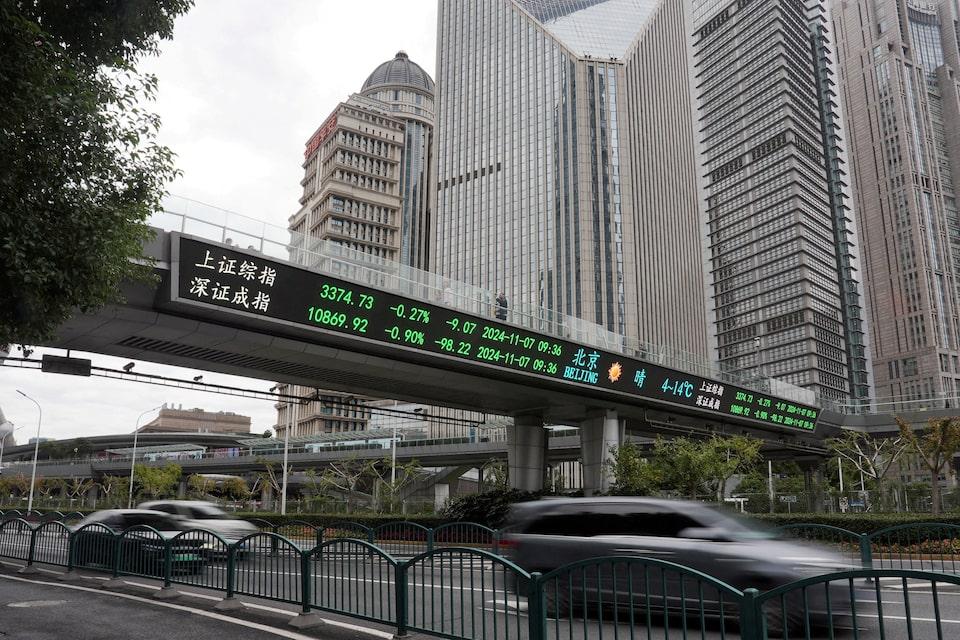
Ten-year yield falls to record low Hang Seng jumps to 1 month high SHANGHAI/HONG KONG, Dec 9 (Reuters) - Stocks jumped and China's government bonds rallied after the Politburo shifted its monetary policy stance to imply more easing is coming, mirroring moves made in previous crises. Benchmark 10-year yields fell about four basis points to 1.922%, a record low. Hong Kong's Hang Seng index (.HSI) , opens new tab jumped 2.8% to its highest in a month. China's growth has stalled as a collapse in the property market crushed confidence and consumption and investors have been eager to bet that the government will ride to the rescue. China will adopt a "moderately loose" monetary policy, according to an official readout from a meeting of top Communist Party officials, a shift from "prudent" and one it last made in 2010 to support a recovery from the global financial crisis. It will also stabilise stock and property markets and must "vigorously" boost consumption and expand domestic demand "in all directions", Xinhua cited the Politburo as saying, remarks directly addressing investors' main concerns. "It gives high hope for more monetary support to come, including outright interest rate cuts," said Frances Cheung, head of Asia rates and currency strategy at OCBC in Singapore. The Hang Seng index jumped above the eye-catching 20,000 level after the announcements, while mood-sensitive tech shares surged <.HSTECH> 4.3%. There were sharp gainers in sectors from banking to property and consumer companies and volumes leapt. Chinese shares listed in Hong Kong (.HSCE) , opens new tab rose 3.1%. Explicit mention of the stock and property markets was unusual and shows they are in authorities' focus, said Kenny Ng Lai-yin, securities strategist at China Everbright Securities International. Foreign investors have been mostly skeptical of recent gains in China's markets. However, Janus Henderson Investors' head of Greater China, Victoria Mio, said the moves showed urgency ahead of expected trade tensions with the U.S. The Hang Seng is up 12% and China's benchmark CSI 300 index (.CSI300) , opens new tab up 23% since late September, when Beijing kicked off rate cuts and a package of other measures to support the property sector and revive consumer spending. The yuan was mostly steady at 7.2751 per dollar. The rally in bond markets has been record-breaking this year and the moves pushed longer-end yields to new lows in anticipation of interest rate cuts. Ten-year yields are down about 70 basis points this year. "It is expected to boost China's economic growth next year as more fiscal and monetary policies will be rolled out," said Ken Cheung, chief Asia currency strategist at Mizuho Bank in Hong Kong. The Politburo meeting precedes the annual Central Economic Work Conference later this week, which sets key targets and policy intentions for next year. Sign up here. https://www.reuters.com/markets/asia/china-politburo-policy-shift-spurs-surge-stocks-bonds-2024-12-09/
2024-12-09 07:02
OSLO, Dec 9 (Reuters) - Equinor (EQNR.OL) , opens new tab has closed the planned sale of its assets in Nigeria and Azerbaijan for a total consideration of up to $2 billion, completing exits from the two countries after some 30 years, the Norwegian oil and gas firm said on Monday. The divestments, first announced in 2023 and completed in recent weeks, will boost cash flow in the fourth quarter and were in line with Equinor's strategy to optimise its international portfolio, the group said in a statement. "The exits enable investments to deepen further in countries where Equinor can add the most value and build a more focused and robust international portfolio," the company said without elaborating. Equinor has previously said it plans to increase its international output by some 100,000 barrels of oil equivalent per day (boed) by 2030 by bringing on stream new fields in Brazil, Britain and the United States. In Nigeria, Equinor sold its assets, including a 20.21% stake in the Agbami oil field operated by Chevron (CVX.N) , opens new tab, to Chappal Energies for up to $1.2 billion, consisting of $710 million in cash and the remainder in contingent payments. The company did not say how market prices and other factors could affect contingent payments. In Azerbaijan it sold a 7.27% stake in the Azeri Chirag Gunashli (ACG) field, a 8.71% stake in the Baku-Tbilisi-Ceyhan (BTC) oil pipeline and a 50% stake in the Karabagh project to Azerbaijan's SOCAR and India's ONGC for a total of $745 million. Equinor's net production in Azerbaijan and Nigeria averaged 24,600 and 17,700 barrels of oil equivalent per day (boed), respectively, during the first three quarters of 2024. Sign up here. https://www.reuters.com/markets/commodities/equinor-completes-nigeria-azerbaijan-asset-sales-up-2-billion-2024-12-09/
2024-12-09 06:03
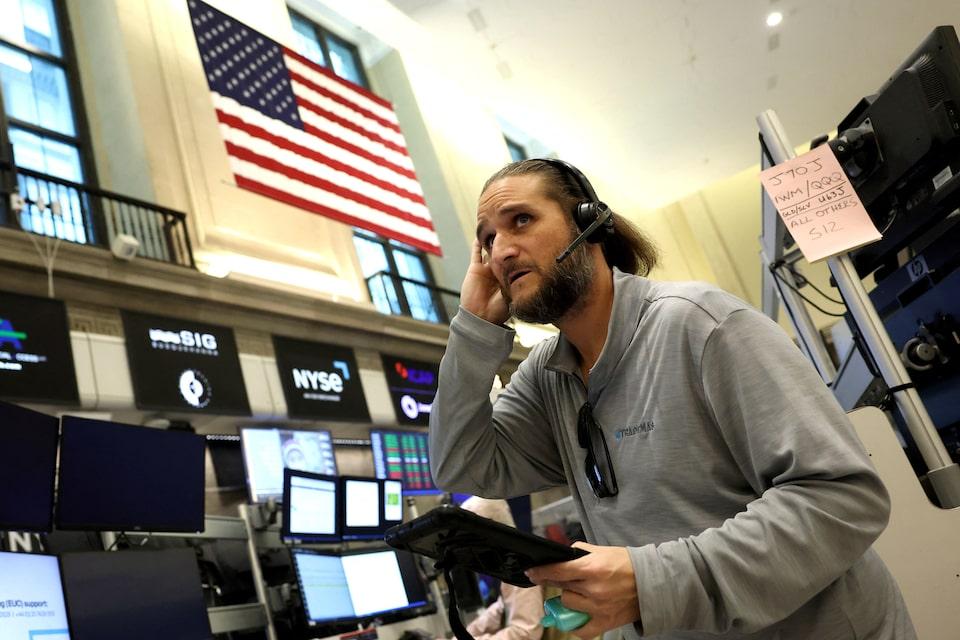
NEW YORK, Dec 9 (Reuters) - A relentless rally in U.S. stocks is showing few signs of slowing into year-end, even as rising valuations and signs of excessive speculation fuel worries that a pullback may be overdue. The S&P 500 notched its 57th record close of the year on Friday and is up nearly 28% in 2024, driven by a robust U.S. economy, expectations of lower interest rates and excitement over the tax cuts and deregulation promised by President-elect Donald Trump. Strong momentum has been a hallmark of the rally. The S&P 500 has gone over 13 months without straying 10% or more from its record high, the longest such streak in nearly three years. Historically, corrections of 10% or more have occurred once per year on average, data from BofA Global Research showed. "Momentum is the factor that is driving the market," said Steve Sosnick, chief strategist at Interactive Brokers. "The market right now is basically a freight train and nobody really wants to get in its way." Betting against a market in a strong uptrend has historically been risky: the S&P 500 has logged back-to-back annual gains of 20% or more five times since 1928, and has been higher three months later in each case, with an average gain of 6.3%, according to a Reuters analysis of LSEG data. The index was up 24.2% last year. "Momentum begets momentum," said Sonu Varghese, global macro strategist at Carson Group, who is overweight equities. "You don't want to fight the tape." Still, even some ardent bulls are starting to question whether stocks may be due for a breather. Bank of America’s Michael Hartnett on Friday noted the S&P 500 was trading at 5.3 times price to book value, exceeding its March 2000 peak, and warned there was a risk of an “overshoot” in the first quarter of 2025. He also nodded to signs of “froth” in the broader markets, including the post-election rally that took bitcoin past $100,000 for the first time ever last week. The bank has a target of 6,666 on the S&P 500 for next year, more than 9% above where it now trades. Ed Yardeni, founder of Yardeni Research, cited various measures indicating that sentiment is skewed to the bullish side, including the November Consumer Confidence Index, which showed a record 56.4% of consumers expect stocks to be higher in the next 12 months. Extremes in sentiment are often viewed as a contrarian indicator because the bar for positive surprises is greater. “For the here and now, there may be too many charged up bulls,” wrote Yardeni, adding that a near-term pullback would likely be an opportunity for investors to buy on the cheap. Lori Calvasina, head of U.S. equity research at RBC, said in late November that she had become increasingly concerned that crowded investor positioning and elevated valuations have made the S&P 500 vulnerable to a pullback of between 5% and 10%. The index currently trades at 22.6 times forward earnings, compared to a historical average of 15.77. For now, there is little indication those worries are rippling through broader markets. Take the Cboe Volatility Index (.VIX) , opens new tab, which gauges investor demand for protection from market swings. The measure, which hit a four-year high during a violent but brief market shakeout in August, slumped to a near five-month low of 12.75 on Friday. The history of the VIX index suggests market calm may persist for a while. Once the index closes below the 14 level as it did in late November, it takes an average of 136 trading sessions to climb above the 20 mark - a level associated with moderate levels of market volatility. Stocks' historical record of strong December performance may also be boosting investor confidence. The S&P 500 has generated an average gain of around 1.6% in December and finished the month higher 74% of the time, marking the highest win rate across the calendar, according to an LPL Financial analysis. Of course, a market reversal is inevitable at some point. One potential trigger could be volatility sparked by Trump’s threat to impose steep tariffs on U.S. trading partners such as Canada, Mexico and China. Strategists have warned that a full-blown trade war could counteract the positive impact of policies such as tax cuts and deregulation. But many investors are happy to stay put for the time being. For Fundstrat Global Advisors' head of technical strategy, Mark Newton, short-term 'overbought conditions' - technical speak for a market that has risen too far, too fast - is not reason enough in itself to exit stocks. "I just have a difficult time selling the equity market here," Newton said. Sign up here. https://www.reuters.com/markets/us/strong-momentum-makes-it-hard-bet-against-freight-train-us-stock-rally-2024-12-09/
2024-12-09 05:59
China resumes buying gold after six-month pause Fed rate cut pause could put pressure on prices Spot gold up 1.1% at $2,662.98 per ounce US gold futures added 1% to $2,685.50 Dec 9 (Reuters) - Gold prices hit two-week highs on Monday, climbing more than 1% on renewed buying of the metal by China's central bank following a six-month hiatus, with bullishness increased by anticipation of a U.S. Federal Reserve interest rate cut next week. Spot gold gained 1.1% to $2,662.98 per ounce, as of 01:41 p.m. ET (1841 GMT). U.S. gold futures settled 1% higher at $2,685.50. "The most important factor is news that People's Bank of China reported that it again resumed its gold purchases ... the market is getting hopeful that we could see other central banks follow suit and we could see a resumption of record territory buying," said Bart Melek, head of commodity strategies at TD Securities. The resumption of Chinese buying may support investor demand in the country. In 2023, China was the world's largest official sector buyer of gold, but the PBOC paused its 18-month buying streak in May. Robust central bank buying has played a major part in supporting gold's record rally this year, alongside monetary policy easing and geopolitical tensions. The U.S. Fed started its interest rate easing cycle with an unusually large 50 basis point cut in September, followed by a 25bp cut in November. Traders are pricing an 86% chance of another quarter-percentage-point rate cut from the central bank at its Dec. 17-18 meeting. However, if the Fed pauses and the underlying messages turn out to be cautious, that would put some interim pressure on the gold price, said StoneX analyst Rhona O'Connell. "For the medium term the geopolitical and bank-stress tailwinds exceed any headwinds." Turbulence in the Middle East increased over the weekend as Syrian rebels took control of Damascus following a 13-year civil war, forcing President Bashar al-Assad to flee to Russia. Zero-yielding bullion thrives in a low interest rate environment and normally attracts investors during times of intense political and economic instability. Spot silver added 3% to $31.90 per ounce, platinum rose 1.5% to $943.85 and palladium jumped 2.2% to $977.15. Sign up here. https://www.reuters.com/markets/commodities/gold-firms-investors-await-us-inflation-data-fed-clues-2024-12-09/
2024-12-09 05:50
A look at the day ahead in European and global markets from Wayne Cole If you are wondering how markets have reacted to the stunning fall of President Bashar al-Assad in Syria, the answer is calmly. Gold and oil prices are up around 0.4%, but that's a modest move for such a rapid turn of events and there are no signs of a rush to safety. Maybe there's just too much going on in the Middle East for traders to know how to react. It would certainly seem to be a bloody nose for Russian President Putin who has spent years propping up the Assad regime and stands to lose control of his only naval base in the Mediterranean. Moscow claimed to have a deal to keep the base and its Hmeimim air facilities in Latakia province, according to a Kremlin source quoted by Russian media, while Russia's foreign ministry played down any immediate risk. But it was far from clear whether the rebels had agreed to such a deal. The loss of those bases would severely degrade Russia's power projection in the Middle East and Africa. Political uncertainty was also a feature in Asia where South Korean stocks slid anew after President Yoon Suk Yeol survived an impeachment vote, only for prosecutors to name him as a subject of a criminal investigation over last week's martial law attempt. South Korea's finance ministry was out early on Monday to reassure markets of all the support they needed, but the won still slipped towards two-year lows and stocks (.KS11) , opens new tab shed more than 2%. Sentiment was further strained by a surprisingly sharp 0.6% month-on-month drop in China's consumer price index in November, stoking market mutterings that not enough was being done by Beijing to revive the economy. Chinese leaders are set to spend two days this week in closed-door talks on next year's policy ambitions during the central economic work conference, but the suspicion is that nothing concrete will come of it. Core U.S. inflation figures are due on Wednesday and a result above the +0.3% forecast would challenge the market's confidence in a December rate cut by the Fed. The implied probability is currently at 83% with a further 75 basis points of easing priced in for next year. In that regard, it was a relief that President-elect Donald Trump said on Sunday he would not try to replace Fed Chair Jerome Powell upon taking office in January. Of the central banks meeting this week, the ECB is seen cutting by 25 basis points and the BoC by 50 bps. The SNB could also go by 50 bps given how much it has been spending to restrain the Swiss franc. The scale of its intervention to sell francs for euros is likely the reason why the single currency is not testing parity on the U.S. dollar right now. Key developments that could influence markets on Monday: - Participation by ECB board member Piero Cipollone in Eurogroup meeting - Bank of England Deputy Governor Dave Ramsden gives a speech on financial stability - Euro zone finance ministers meet to assess their Draft Budgetary Plans - Euro Zone Sentix Index for Dec Sign up here. https://www.reuters.com/markets/europe/global-markets-view-europe-2024-12-09/

2024-12-09 05:43
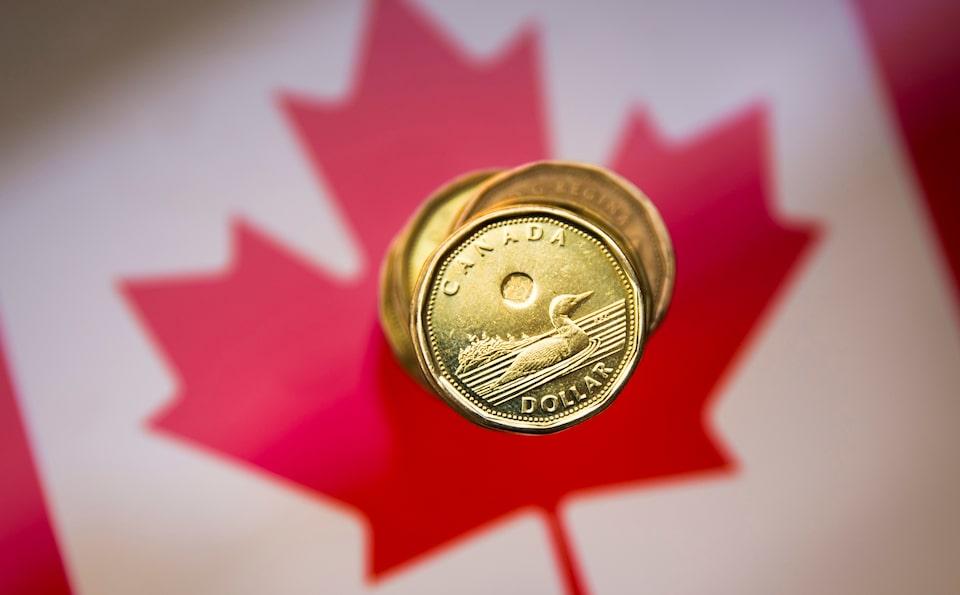
Dollar up slightly, eyes on Wednesday's US CPI data China changes monetary stance to 'appropriately loose' from 'prudent' ECB, BoC and SNB expected to cut rates this week NEW YORK, Dec 9 (Reuters) - The dollar was up slightly in skittish trading on Monday as investors awaited U.S. inflation data later this week, while the Australian and New Zealand dollars rallied after China pledged an "appropriately loose" monetary policy next year. While markets have priced in a quarter-point interest-rate cut by the U.S. Federal Reserve next week as a near certainty, investors are waiting for U.S. consumer price data on Wednesday. "The move higher in unemployment that we saw in November, that really just cements the case for a 25-basis-point cut next Wednesday," said Michael Brown, senior research strategist at Pepperstone. Data on Friday showed U.S. job growth surged in November, but a rise in the unemployment rate to 4.2% pointed to an easing labor market that should allow the Fed to cut interest rates again this month. The dollar index was up 0.179% at 106.14. The euro was down against the dollar at $1.0554, having fallen earlier by as much as 0.3%, while the greenback gained 0.77% against the yen to 151.235 . The Australian dollar gained 0.82% on the greenback, and the kiwi rose 0.58%, after China announced a shift in monetary policy to spur growth. The two currencies often serve as a proxy for the Chinese yuan , which strengthened in the offshore market to leave the dollar down 0.26% at 7.2670. CHINA POLICY China will adopt an "appropriately loose" monetary policy next year as part of steps to support economic growth, and will implement a more proactive fiscal policy and step up "unconventional" counter-cyclical adjustments, state media reported on Monday, citing a Politburo meeting. "This is a market right now that wanted to hear good signals about global growth, and so it's found receptive ears," said Adam Button, chief currency analyst at ForexLive. "We've heard promises from China before, but, once again, they're getting the benefit of the doubt." The dollar rose 0.44% versus South Korea's won . Over the weekend, South Korean President Yoon Suk Yeol survived an impeachment vote in parliament prompted by his short-lived attempt to impose martial law last week. Mizuho Bank strategist Vishnu Varathan pointed to a host of geopolitical developments, such as the weekend fall of Syrian President Bashar al-Assad and trades related to macroeconomic factors and President-elect Donald Trump, as providing markets further impetus to stay long dollars. "There's no incentive to short the dollar against any particular currency," he said. Last week's headliner, bitcoin , which hit six-figures for the first time at a record $103,649, was last at $97,009. CENTRAL BANK MEETINGS The main events investors are watching this week are the ECB policy meeting on Thursday, where a quarter-point cut is baked in, and China's closed-door Central Economic Work Conference. The Bank of Canada, the Swiss National Bank and the Reserve Bank of Australia meet this week, with deep rate cuts expected from the first two that could turn yield differentials even more against their currencies. The Canadian dollar traded near a 4-1/2-year low on Monday as markets anticipate another outsized interest-rate cut. "The potential rate cuts by the ECB, BoC, and SNB reflect a significant shift in monetary policy," said Lukman Otunuga, senior market analyst at FXTM. "Combined with rising political risks and economic data, these decisions could drive substantial currency movements." Sign up here. https://www.reuters.com/markets/currencies/loonie-aussie-focus-while-us-dollar-extends-gains-2024-12-09/