2024-12-09 04:48
Dec 9 (Reuters) - A seismic event sparked a fire and halted operations at the Alardinskaya mine in southwestern Siberia, Russian officials and news agencies said on Monday. Russia's ministry of emergency services said that 120 miners have been evacuated from the mine in Russia's vast coal region, the Kuznetsk Basin known as Kuzbass, with two of them requiring medical assistance. Russia's RIA and TASS state news agencies reported, citing regional prosecutor's office, that a seismic event had likely sparked the fire, which has yet to be contained. The Alardinskaya mine is part of the Raspadskaya (RASP.MM) , opens new tab coal mine, and has production capacity of 3 million metric tons of coal per year, RIA agency reported. The Interfax news agency reported, citing a Raspadskaya representative, that operations have been suspended at the mine. Sign up here. https://www.reuters.com/world/europe/seismic-event-sparks-fire-stops-operations-russian-coal-mine-2024-12-09/

2024-12-09 03:48
BRUSSELS, Dec 9 (Reuters) - This year will be the world's warmest since records began, with extraordinarily high temperatures expected to persist into at least the first few months of 2025, European Union scientists said on Monday. The data from the EU's Copernicus Climate Change Service (C3S) comes two weeks after U.N. climate talks yielded a $300-billion deal to tackle climate change, a package poorer countries blasted as insufficient to cover the soaring cost of climate-related disasters. C3S said data from January to November had confirmed 2024 is now certain to be the hottest year on record, and the first in which average global temperatures exceed 1.5 degrees Celsius (2.7 degrees Fahrenheit) above the 1850-1900 pre-industrial period. The previous hottest year on record was 2023. Extreme weather has swept around the world in 2024, with severe drought hitting Italy and South America, fatal floods in Nepal, Sudan and Europe, heatwaves in Mexico, Mali and Saudi Arabia that killed thousands, and disastrous cyclones in the U.S. and the Philippines. Scientific studies , opens new tab have confirmed the fingerprints of human-caused climate change on all of these disasters. Last month ranked as the second-warmest November on record after November 2023. "We're still in near-record-high territory for global temperatures, and that's likely to stay at least for the next few months," Copernicus climate researcher Julien Nicolas told Reuters. Carbon dioxide emissions from burning fossil fuels are the main cause of climate change. Cutting emissions to net zero - as many governments have pledged to eventually do - will stop global warming from getting worse. Yet despite these green pledges, global CO2 emissions are set to hit a record high this year. Scientists are also monitoring whether the La Nina weather pattern - which involves the cooling of ocean surface temperatures - could form in 2025. That could briefly cool global temperatures, though it would not halt the long-term underlying trend of warming caused by emissions. The world is currently in neutral conditions, after El Nino - La Nina's hotter counterpart - ended earlier this year. "While 2025 might be slightly cooler than 2024, if a La Nina event develops, this does not mean temperatures will be 'safe' or 'normal'," said Friederike Otto, a senior lecturer at Imperial College London. "We will still experience high temperatures, resulting in dangerous heatwaves, droughts, wildfires and tropical cyclones." C3S' records go back to 1940, and are cross-checked with global temperature records going back to 1850. Sign up here. https://www.reuters.com/business/environment/2024-will-be-hottest-year-record-eu-scientists-say-2024-12-09/

2024-12-09 02:49
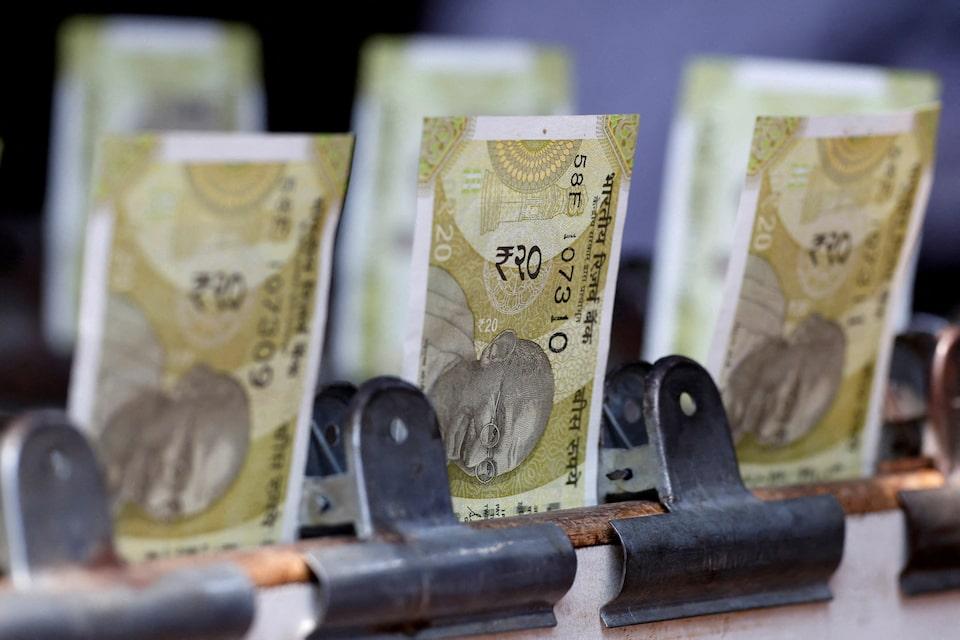
MUMBAI, Dec 9 (Reuters) - The Indian rupee is likely to open slightly lower on Monday as expectations surrounding the incoming Trump administration's policies keep the dollar well-bid despite heightened hopes of a Federal Reserve rate cut this month. The 1-month non-deliverable forward indicated the rupee would open at 84.69-84.70 to the U.S. dollar, compared with its close of 84.6875 in the previous session. The odds of a 25-basis point rate at the Fed's Dec. 17-18 meeting have risen -- to 83% from 66% -- after payrolls data showed job growth was roughly in line with expectations in November, while the unemployment rate nudged higher to 4.2%. The heightened odds though, are unlikely to help regional currencies substantially amid the lingering prospect of U.S. President-elect Donald Trump raising trade tariffs. "We doubt Asian FX can strengthen further from here, especially in H1 2025, given the likelihood that Trump 2.0 will be fast and furious in tariff implementation, making it somewhat attractive to put on some hedges against Asian FX weakness," MUFG Bank said in a note. The dollar index was at 106.05 after rising 0.5% on Friday, while U.S. bond yields dipped after the labour market data. Asian currencies were mostly lower, with the Korean won down 1% and leading losses. A reversal in portfolio outflows from India may offer the rupee some breathing room though, with foreign investors turning net buyers of stock and bonds worth over $4 billion in December so far after two months of sustained outflows. The rupee's pace of decline "could moderate heading into year-end," but the bias continues to be towards gradual deprecation below 85, a trader at a state-run bank said. KEY INDICATORS: ** One-month non-deliverable rupee forward at 84.84; onshore one-month forward premium at 14 paisa ** Dollar index higher at 106.02 ** Brent crude futures up 0.5% at $71.5 per barrel ** Ten-year U.S. note yield at 4.15% ** As per NSDL data, foreign investors bought a net $1,119.9 mln worth of Indian shares on Dec. 5 ** NSDL data shows foreign investors bought a net $65.5 mln worth of Indian bonds on Dec. 5 Sign up here. https://www.reuters.com/markets/currencies/rupee-tipped-drift-lower-buoyant-dollar-pressures-asia-fx-2024-12-09/
2024-12-09 00:39
LAUNCESTON, Australia, Dec 9 (Reuters) - It's always tempting to try and over-analyse changes in the crude oil market and Saudi Arabia's decision to cut its official prices for Asian customers to the lowest level in four years is one such example. Saudi Aramco, the state-controlled oil company of the world's largest oil exporter, said on Sunday it is lowering the official selling prices (OSPs) for refiners in Asia, which buy about 70% of the kingdom's crude. The OSP for the benchmark Arab Light grade for January-loading cargoes was lowered to a premium of 90 cents a barrel over the Oman/Dubai average, down 80 cents from a premium of $1.70 for December. This is the lowest premium for Arab Light since January 2021, at a time when global demand was weak as a result of the COVID-19 pandemic. The lowering of Saudi OSPs is often viewed by market analysts as a sign of two things, namely weak demand and an attempt to regain market share from competitors. There is certainly a case to be made for both of these factors. There is little doubt that demand in Asia has been disappointing in 2024, with it all but certain that the continent's imports will decline this year from 2023. For the first 11 months of 2024 Asia's imports were 26.58 million barrels per day (bpd), according to data compiled by LSEG Oil Research. This is down 310,000 bpd from the 26.89 million bpd for the first 11 months in 2023. However, there are some signs that demand has picked up, with LSEG data showing November imports at 27.05 million bpd, the highest in six months and up almost 1.0 million bpd from October's 26.06 million bpd. The gain was led by China, with LSEG showing the world's biggest oil importer saw arrivals of 11.77 million bpd in November, up from 10.57 million bpd in October. It could be argued that the Saudi decision to cut OSPs for January is to try and ensure that this nascent recovery in demand continues. The lower OSPs may also reflect that the U.S. dollar has strengthened in recent weeks, meaning that lower oil prices in dollars aren't fully reflected in local currencies in key Asian buyers. Since the recent peak in Brent futures of $81.16 a barrel on Oct. 7, the price in U.S. dollars has declined 12.4% to end at $71.12 on Dec. 6. However, in Chinese yuan terms it is only down 9.7% over the same period and in Indian rupees by 11.6%. MARKET SHARE The view that Aramco is trying to regain market share by lowering OSPs is also popular, but not necessarily one that stands up to scrutiny. Saudi Arabia is the biggest supplier to Asia and has seen its market share recover in recent months. From a low of 16.7% of Asia's imports in August, Saudi Arabia's share has risen to 20.8% in September, 18.3% in October and 21.0% in November. Russia, the second biggest supplier to Asia, has seen its market share go from a 2024 high of 15.8% in June to 14.5% in September, 15.7% in October and just 12.9% in November, according to LSEG data. Perhaps the biggest factor driving Aramco's decision to lower its OSP is the need to keep its oil at competitive levels versus competing grades. This isn't an issue for the bulk of Middle Eastern crude, which tends to price off movements in Aramco's OSPs. But it is more of a factor for crudes that price against Brent, such as those from West Africa. The premium that Brent commands over Middle East benchmark Dubai has been narrowing in recent months, meaning Brent is becoming cheaper on a relative basis. The premium dropped to $1.08 a barrel on Dec. 6, the lowest since Sept. 30 and down from a recent peak of $2.39 on Oct. 4. By lowering its OSPs for Asia, Aramco keeps its crude pricing more competitive with grades from exporters such as Angola and Nigeria. The views expressed here are those of the author, a columnist for Reuters. Sign up here. https://www.reuters.com/markets/commodities/saudi-arabia-cuts-crude-oil-prices-asia-amid-nascent-demand-recovery-russell-2024-12-09/

2024-12-09 00:33
Oil, gold prices gain South Korea stocks skid; Wall St down ECB, SNB and BoC all seen cutting rates this week NEW YORK/LONDON, Dec 9 (Reuters) - Global shares turned lower on Monday as traders focused on U.S. inflation data and chip stocks fell, while Beijing's promise of stimulus and the sudden collapse of the Syrian government boosted oil and gold prices more than 1%. U.S. inflation data this week could cement a December interest rate cut by the Federal Reserve at its meeting next week. China's decision on Monday to alter the wording of its stance toward monetary policy for the first time since 2010 helped global sentiment. Beijing pledged to introduce stimulus to encourage economic growth next year. The rapid collapse over the weekend of Syrian President Bashar al-Assad's 24-year rule complicates an already fraught situation in the Middle East. Friday's U.S. monthly employment data was strong enough to soothe any concerns about the resilience of the economy, but not so robust as to rule out a rate cut from the Federal Reserve next week. MSCI's gauge of stocks across the globe (.MIWD00000PUS) , opens new tab fell 2.05 points, or 0.23%, to 871.68. The Dow Jones Industrial Average (.DJI) , opens new tab fell 240.59 points, or 0.54%, to 44,401.93, the S&P 500 (.SPX) , opens new tab fell 37.42 points, or 0.61%, to 6,052.85 and the Nasdaq Composite (.IXIC) , opens new tab fell 123.08 points, or 0.62%, to 19,736.69. Shares of chip maker Nvidia (NVDA.O) , opens new tab fell 2.5% after China's market regulator said it had opened an investigation into the company over suspected violation of the country's antimonopoly law. "In addition to being reminded that December is positive 'close to three-fourths of the time,' we have seen record equity inflows, full positioning from asset managers and the highest ever reading from the Conference Board’s survey of retail investor expectations," Morgan Stanley's chief investment officer, Lisa Shalett, said in a note. "Complacency indicators are flashing, however, and while we appreciate technicals’ short-term validity, we encourage long-term investors to be measured in their enthusiasm," she said. European shares closed at their highest levels in six weeks on Monday, led by mining and luxury stocks, after China's promise of renewed stimulus. The STOXX 600 index (.STOXX) , opens new tab edged up 0.1%, and notched its eighth consecutive session of gains. COULD EXPECTED FED RATE CUT BE DERAILED? Last week's U.S. November payrolls report showed 227,000 jobs were created, compared with expectations for a rise of 200,000, while October's hurricane-distorted number was revised up. Markets now imply an 85% chance of a quarter-point cut at the Fed's Dec. 17-18 meeting, up from 68% ahead of the jobs figures, and markets have a further three cuts priced in for next year. The next test is Wednesday's U.S. inflation report. The dollar index , which measures the greenback against a basket of currencies including the yen and the euro, rose 0.2% to 106.16, with the euro down 0.15% at $1.0552. U.S. Treasury yields rose as traders waited to see whether stubbornly high price pressures could derail expectations for a Fed rate cut next week. The yield on benchmark U.S. 10-year notes rose 5 basis points to 4.203%, from 4.153% late on Friday.. The European Central Bank is widely expected to deliver a quarter-point cut on Thursday. In Asian markets, Chinese stocks and bonds rallied after China's Politburo was quoted as saying that the country will adopt an "appropriately loose" monetary policy next year, rather than a "prudent" one, marking the first time it has changed the wording of its stance in around 14 years. MSCI's broadest index of Asia-Pacific shares outside Japan (.MIAPJ0000PUS) , opens new tab closed higher by 0.88%. South Korean stocks (.KS11) , opens new tab slid 2.8%, while the won currency weakened, even as authorities pledged all-out efforts to stabilise financial markets amid uncertainty over the fate of President Yoon Suk Yeol. This week is full of central bank meetings, aside from the ECB's. The Swiss National Bank could cut rates by as much as half a point given slowing inflation, as could Canada's central bank when it meets on Wednesday. The Reserve Bank of Australia meets on Tuesday and is one of the central banks expected to hold fire, while Brazil's central bank is set to hike again to contain inflation. "With geopolitical uncertainty high and conflicting signals from hard and soft data, monetary policy remains the only game in town to support economic activity, especially in the absence of strong political leadership in Paris and Berlin," said Barclays economist Christian Keller. In France, President Emmanuel Macron had yet to name a new prime minister after Michel Barnier's minority government collapsed last week over his austere budget. Geopolitical concerns lifted both oil and gold. Spot gold gained 1.1% to $2,662.98 per ounce, and U.S. gold futures settled 1% higher at $2,685.50. Oil prices rose over 1%, with Brent futures settling up 1.4% at $72.14 per barrel. U.S. crude finished up 1.7% at $68.37. "Events in Syria over the weekend could impact the crude market and increase the geopolitical risk premium on oil prices in the weeks and months to come amid yet more instability in the Middle East region," said Jorge Leon, Rystad Energy's head of geopolitical analysis. Sign up here. https://www.reuters.com/markets/global-markets-wrapup-1-2024-12-09/
2024-12-08 23:49
Brent, WTI rose over 2% earlier in the session after two-week declines China signals loosened monetary policy next year to spur growth Overthrow of Syria's Assad fuels regional uncertainty HOUSTON, Dec 9 (Reuters) - Oil prices climbed more than 1% on Monday on higher geopolitical risk after the fall of Syrian President Bashar al-Assad, and as top importer China flagged its first move towards a loosened monetary policy stance since 2010. Brent crude futures settled $1.02, or 1.4%, higher at $72.14 per barrel. U.S. West Texas Intermediate crude futures were up $1.17, or 1.7%, to $68.37. "Events in Syria over the weekend could impact the crude market and increase the geopolitical risk premium on oil prices in the weeks and months to come amid yet more instability in the Middle East region," said Jorge Leon, Rystad Energy's head of geopolitical analysis. Syrian rebels said on state television on Sunday they had ousted Assad, ending a 50-year family dynasty and raising fears of more instability in a region gripped by war. While Syria is not a major oil producer, it holds geopolitical clout due to its location and ties with Russia and Iran, and mixed with the tensions elsewhere in the region, the regime change has potential to spill into neighbouring territories, Leon said. In early signs of disruptions in the oil market, a tanker carrying Iranian oil to Syria turned around in the Red Sea, ship-tracking data showed. Meanwhile, China will step up "unconventional" counter-cyclical adjustments, focusing on expanding domestic demand and boosting consumption, state media Xinhua reported, citing a readout of a meeting of top Communist Party officials, the Politburo. China's growth has stalled as a slump in the property market has hit confidence and consumption. Loosening policy refers to actions by a central bank or government to boost growth, such as increasing money supply, lowering interest rates, and implementing fiscal stimulus. "We see a commodity-price boom if China indeed follows through with the promises of looser monetary policy and the possibility that they will do whatever it takes to stimulate the economy," said Phil Flynn, senior analyst at Price Futures Group. China's slowdown was a factor behind the decision of oil producers' group OPEC+ last week to postpone plans for higher output until April. Weighing on prices, leading exporter Saudi Aramco on Sunday reduced its January 2025 prices for Asian buyers to their lowest level since early 2021, as markets worried it could signal weak demand. Traders also remained focused on U.S. inflation data expected later this week that could cement a December interest-rate cut by the Federal Reserve next week. Lower interest rates decrease the cost of borrowing, which can boost economic activity and spur demand for oil. Sign up here. https://www.reuters.com/business/energy/oil-prices-mixed-rising-mideast-tensions-offset-demand-concerns-2024-12-08/