2024-12-06 10:14
MUMBAI, Dec 6 (Reuters) - The Indian rupee strengthened on Friday on the back of a softer dollar and after the Indian central bank kept policy rates unchanged but cut banks' cash reserve ratio, effectively easing monetary conditions amid slowing economic growth. The rupee closed at 84.6875 against the U.S. dollar, up from its close at 84.7325 in the previous session. The currency logged fifth consecutive weekly fall, declining 0.2%. The Reserve Bank of India also raised the interest rate ceiling that banks can offer for foreign currency non-resident (FCNR-B) deposits to boost forex inflows at a time when the rupee has been under consistent pressure. The rupee had declined to its all-time low of 84.7575 earlier in the week, hurt by weakness in the Chinese yuan and strong dollar bids in the non-deliverable forwards market, prompting intervention by the RBI. "Incremental capital inflows into India from these FCNR measures may help INR at the margin temporarily, but should not be substantial enough to change the overall trajectory for USD/INR to head higher," MUFG Bank said in a note. While the rupee rose to a peak of 84.58 after the RBI's policy announcement, it consequently pared its gains amid dollar demand from importers, including local oil companies, a trader at a state-run bank said. The dollar index was slightly higher at 105.8 after declining 0.5% on Thursday, while Asian currencies were mixed. Investors now await U.S. non-farm payrolls data due later on Friday for cues on the future path of Federal Reserve policy rates. Economists polled by Reuters expect the U.S. economy to have created 200,000 jobs in November, while the unemployment rate likely rose to 4.2% from 4.1% in the previous month. Interest rate futures are currently pricing in a near 67% chance of a Fed rate cut in December. Sign up here. https://www.reuters.com/markets/currencies/rupee-ends-higher-cenbank-holds-rates-logs-fifth-straight-weekly-fall-2024-12-06/
2024-12-06 09:50
Dec 6 (Reuters) - Bitcoin smashing the $100,000 barrier raises the prospect of the cryptocurrency going mainstream, U.S. inflation data will show how much pressure there is on the Fed to adjust rates and central banks in Europe, Australia and Brazil meet. Here's what to look out for in the week ahead from Marcela Ayres in Brasilia, Kevin Buckland in Tokyo, Ira Iosebashvili in New York, and Dhara Ranasinghe and Amanda Cooper in London. 1/ FOUR, AND COUNTING For ECB policymakers, their last meeting in October must seem a lifetime ago. Since then, Donald Trump's U.S. election win means the euro area faces renewed economic pain with likely tariffs, and governments in heavyweight Germany and France have collapsed, with the latter engulfed in its second political crisis in six months. All that has dealt a blow to sentiment in a bloc where business activity is deteriorating - and the euro has slid . The ECB, also no stranger to hard times, is expected to deliver its fourth quarter-point rate cut on Thursday, with more cuts anticipated. A pick-up in inflation means a bigger rate cut is unlikely. And yes, you guessed it, ECB chief Christine Lagarde will likely stress caution and data-dependency. 2/ A CUT AND A HARD PLACE Australia's central bank, which meets on Tuesday, is in a tight spot. The economy is sputtering, the currency is at four-month lows and yet inflation is sufficiently persistent to make repeated rate cuts unlikely. The chances of a quarter-point reduction are below 15% and rates are expected to take until July to fall even 50 bps. The Bank of Canada, by contrast, looks set to answer investors' wishes for more cuts. It has said inflation is a thing of the past and more cuts could be in the offing, leaving the market split on whether its Dec. 11 meeting will yield a 25- or even a 50-bps cut. Enter the most dovish of the G10 central banks - the Swiss National Bank. With inflation at 0.7%, it is expected to cut rates by 50 bps on Dec. 12. 3/ NO HURRY Markets gaming out the trajectory for Federal Reserve policy in the months ahead get a U.S. inflation reading on Wednesday. The Fed has shaved 75 basis points (bps) off interest rates since September, following months of cooling inflation - expectations are towards another 25 bps cut later in December. But the path ahead is less clear. The economy has proved stronger than expected, and Fed Chair Jerome Powell has said there is little reason to hurry the pace of cuts. A strong number could bolster that view, potentially reigniting a bond selloff and strengthening the dollar if investors decide to further unwind bets on how much the Fed will cut next year. Economists polled by Reuters expect consumer prices to have risen 0.2% in November - matching the October rise. 4/ BITCOIN BREAKOUT There was something inevitable in Bitcoin's record surge past $100,000 after Trump's election promises to make America "the crypto capital of the planet". But it did so in resounding fashion, vaulting from below $99,000 to as high as $103,619 in the space of two hours before catching its breath. The catalyst may have been confirmation of Trump's choice of crypto veteran Paul Atkins to run the SEC. Of course, $100,000 is just a number - but one the faithful and the sceptical regard as a major milestone in Bitcoin's 16-year journey towards legitimacy. Recall though that its history is written in breathless rallies and white-knuckle reversals. While numbers like $150,000 are already being mentioned for 2025, the token is flashing overbought on daily, weekly, monthly and quarterly charts. 5/ FINAL ACT Brazil's central bank holds its final meeting under Governor Roberto Campos Neto on Wednesday, with bets on a sharper 75 bps hike after two raises that brought rates to 11.25%. Campos Neto, set to hold a news conference on Dec. 19, said a positive fiscal shock could relieve pressure on the exchange rate and long-term yields in Latin America's largest economy. But the government's widely anticipated fiscal package disappointed markets, driving up risk premiums on major assets. Brazil's real has weakened some 20% against the dollar year-to-date, and strong economic resilience - on display in the third quarter - is fuelling inflation worries. As policymakers grapple with mounting challenges, Congress debates measures to curb spending and contain debt growth. Sign up here. https://www.reuters.com/business/take-five/global-markets-themes-graphic-2024-12-06/

2024-12-06 08:42
KAMPALA, Dec 6 (Reuters) - The Ugandan shilling was little changed on Friday, with a slight bias towards weakening because of hard-currency appetite from commercial banks, traders said. At 0740 GMT commercial banks quoted the shilling at 3,665/3,675 to the dollar, compared to Thursday's closing level of 3,663/3,673. Sign up here. https://www.reuters.com/markets/currencies/ugandan-shilling-little-changed-bias-weaker-side-2024-12-06/

2024-12-06 08:10
LONDON, Dec 6 (Reuters) - Investors ploughed $136.4 billion into cash in the week to Wednesday, the biggest weekly inflow since March 2023, when markets were rattled by a regional banking crisis, according to a report from Bank of America on Friday. They also snapped up $8.2 billion of stocks and $4.9 billion of bonds, but sold $0.4 billion of gold, Bank of America said, citing data from EPFR. Crypto got a $3 billion injection, and clocked its largest four-week inflow ever, at $11 billion. Buying of U.S. equities continued for the ninth consecutive week, with inflows into small caps specifically ballooning to a record high, the bank said. Sign up here. https://www.reuters.com/markets/global-markets-flows-bofa-urgent-2024-12-06/
2024-12-06 07:37
BEIJING, Dec 6 (Reuters) - Chen Dexin, formerly general manager of commodities giant China Minmetals (CNMET.UL), has been appointed chairman and party secretary of the group, the company said on Friday. Sign up here. https://www.reuters.com/markets/commodities/chen-dexin-appointed-chairman-china-minmetals-2024-12-06/

2024-12-06 07:32
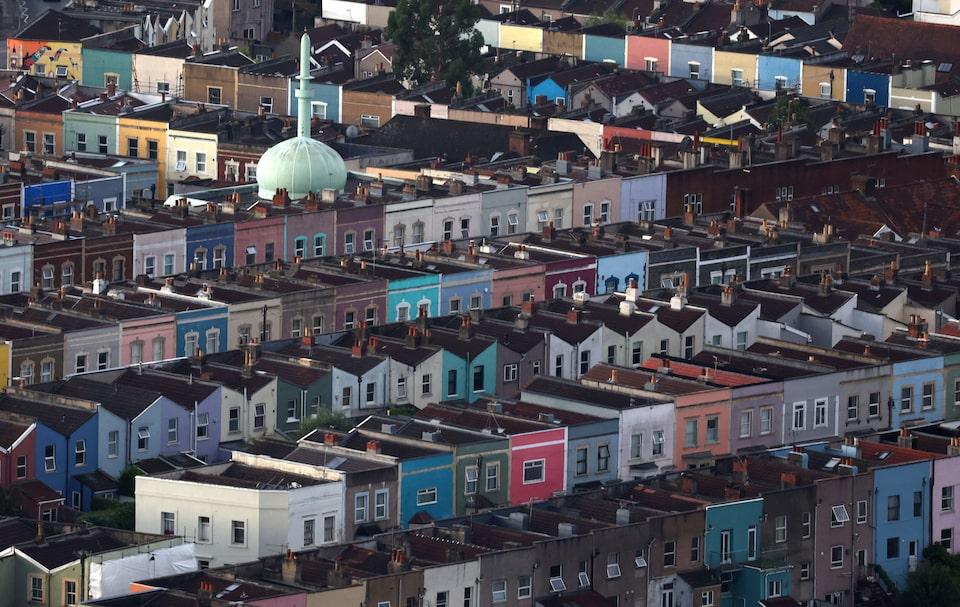
LONDON, Dec 6 (Reuters) - British house prices jumped in November by much more than expected, adding to signs of a strengthening property market mortgage lender Halifax said on Friday, but it warned that affordability challenges for buyers remain. House prices rose by 1.3% in monthly terms in November after an upwardly revised 0.4% increase in October to reach a new record of 298,083 pounds ($380,324) - well above a 0.2% rise predicted by economists in a Reuters poll. It was the biggest increase since June 2022. House prices rose in annual terms by 4.8%, the most in two-years. "Despite these positive trends, many potential buyers and movers still face significant affordability challenges and buyer confidence may be tested against a changeable economic backdrop," Amanda Bryden, head of mortgages at Halifax, said. The Bank of England said last week that lenders in October approved the most mortgages for house purchases since August 2022. The central bank cut interest rates last month for the second time since August but it has cautioned that future reductions are likely to be gradual. On Monday, mortgage lender Nationwide said house prices rose at the fastest annual pace in two years in November, while monthly prices jumped 1.2%. "The relief that the budget didn't contain even higher taxes for households and housing has more than offset the rise in mortgage rates and allowed the big gain in prices in November," Paul Dales, chief economist at Capital Economics, said. Finance minister Rachel Reeves said in her Oct. 30 budget that she would not extend a lowering of the threshold at which stamp duty tax is paid on homes beyond its expiry in March 2025. Halifax expects prices to continue to grow next year, although at a slower pace. Prime Minister Keir Starmer wants to speed up construction of new homes but analysts say a shortage of properties for sale is likely to keep upward pressure on prices. ($1 = 0.7838 pounds) Sign up here. https://www.reuters.com/world/uk/uk-house-prices-rose-13-november-halifax-says-2024-12-06/