2024-12-06 07:28
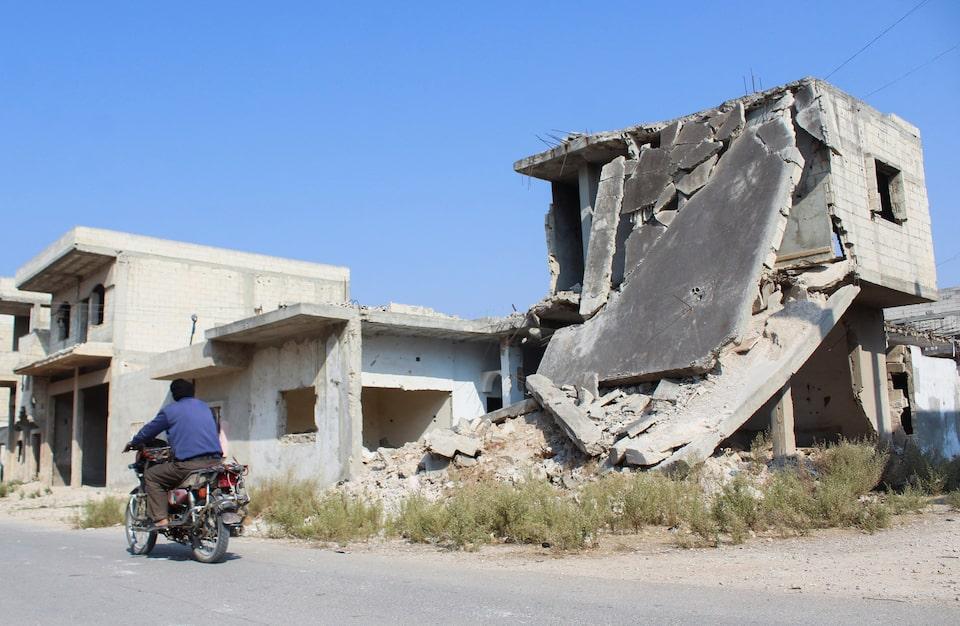
Insurgents call on government forces to defect Follows capture of three major cities in a week Rebels also claim to seize Deraa near Jordan BEIRUT/AMMAN/DUBAI, Dec 6 (Reuters) - Syrian rebel forces said on Friday their lightning advance reached the central city of Homs, which could position the insurgents to topple another town strategic to President Bashar al-Assad's grip on power. "Our forces have liberated the last village on the outskirts of the city of Homs and are now on its walls," the Syrian faction leading the sweeping assault said on Telegram. The Islamist group, a former Al-Qaeda affiliate now known as Hayat Tahrir al-Sham (HTS), made a last call on forces loyal to Assad's government in Homs to defect. Rebel sources also said early on Saturday they had seized the southern city of Daraa, near Jordan, after reaching a deal to give army officials safe passage to the capital Damascus for the army's orderly withdrawal. Reuters could not independently confirm the rebels' claims. If the Sunni Muslim rebels capture Homs, they would cut off Damascus from the coast, a stronghold of Assad's minority Alawite sect and where his Russian allies have a naval base and air base. A Syrian army source said any rebel push from the north of Homs would face Iran-backed Hezbollah forces who were positioned to bolster government defences. The Syrian Observatory for Human Rights, a UK-based monitoring group, said thousands of people had begun fleeing from Homs on Thursday night towards the Mediterranean coastal regions of Latakia and Tartus, strongholds of the government. A coastal resident said thousands of people had begun arriving there from Homs, fearing the rebels' rapid advance. Syrian state media reported the army was carrying out an operation in the Homs countryside with support from Syrian and Russian air forces, artillery, missiles and armoured vehicles. Citing a military source, it said dozens of rebels were killed. In another setback for Assad, a U.S.-backed alliance led by Syrian Kurdish fighters on Friday took Deir el-Zor, the government's main foothold in the vast desert in the east of the country, three Syrian sources told Reuters. It was the third major city, after Aleppo and Hama in the northwest and centre, to fall out of Assad's control in a week. Piling on the pressure, two Syrian army sources said the alliance known as the Syrian Democratic Forces (SDF) had swept through the Albu Kamal border crossing with Iraq on Friday. In southern Daraa province, Syrian local fighters and former rebels overran one of the main army bases, known as Liwa 52, near Herak town as fighting spread to the border with Jordan, two rebel sources told Reuters on Friday. They also seized parts of the Nassib border crossing with Jordan where dozens of trailers and passenger cars were stranded, sources added. Syrian state TV reported at least 200 insurgents were killed on Friday in Russian-Syrian airstrikes targeting rebel headquarters in the countryside of Hama, Idlib and Aleppo, citing the Russian Coordination Centre in Syria. TURKEY URGES GOVERNMENT TO ENTER DIALOGUE Russia and Jordan urged their nationals to leave Syria. After years locked behind frozen front lines, rebel forces have burst out of their northwestern Idlib bastion to achieve the swiftest battlefield advance by either side since a street uprising against Assad mushroomed into civil war 13 years ago. Syria's conflict has killed more than 507,000 people since then, the Observatory for Human Rights said in March. Of the total, 164,000 were civilians. Assad regained control of most of Syria after key allies - Russia, Iran and Lebanon's Hezbollah group - came to his rescue. But all have recently been weakened and diverted by other crises, giving Sunni Muslim militants a window to fight back. A senior Iranian official said Tehran, which has been focused on tensions with arch-foe Israel since the Gaza war began, would send missiles, drones and more advisers to Syria. "Tehran has taken all necessary steps to increase the number of its military advisers in Syria and deploy forces," the senior Iranian official said on condition of anonymity. The head of HTS, Abu Mohammed Al-Golani, vowed in an interview with the New York Times published on Friday that the rebels could end Assad's rule. "This operation broke the enemy," he said of the rebels’ lightning offensive. “Our goal is to liberate Syria from this oppressive regime,” he told the newspaper. The White House said on Friday that it was closely monitoring developments in Syria. Turkish Foreign Minister Hakan Fidan told U.S. Secretary of State Antony Blinken in a phone call that Syria's government should enter dialogue with the opposition and initiate a political process, a Turkish foreign ministry source said. In another alarming development for Assad, the head of the U.S.-backed Syrian Kurdish force said the Islamic State group, which imposed a reign of terror over swathes of Iraq and Syria before its defeat by a U.S.-led coalition in 2017, had now taken control of some areas in eastern Syria. Aron Lund, a fellow at think-tank Century Foundation, said Assad's government was "fighting for their lives at this point". It was possible the government could hold Homs, "but given the speed at which things have moved so far, I wouldn't count on it", he said. Sign up here. https://www.reuters.com/world/middle-east/thousands-flee-syrian-rebels-push-towards-homs-2024-12-06/
2024-12-06 07:12
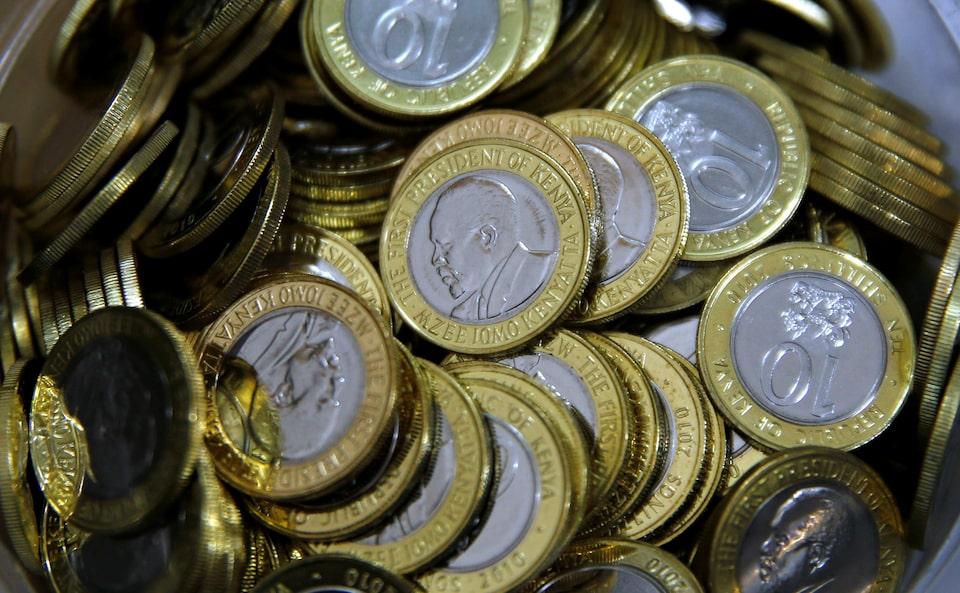
NAIROBI, Dec 6 (Reuters) - The Kenyan shilling was stable on Friday on dollar inflows from the tourism sector and tea exports, one trader said. The shilling traded at 129.00/129.50 per dollar at 0656 GMT, the same as Thursday's closing rate. "The shilling is gaining strength against the dollar," the trader said. "There's more supply than demand." Sign up here. https://www.reuters.com/markets/currencies/kenyan-shilling-stable-fx-inflows-tourism-tea-exports-2024-12-06/
2024-12-06 07:05
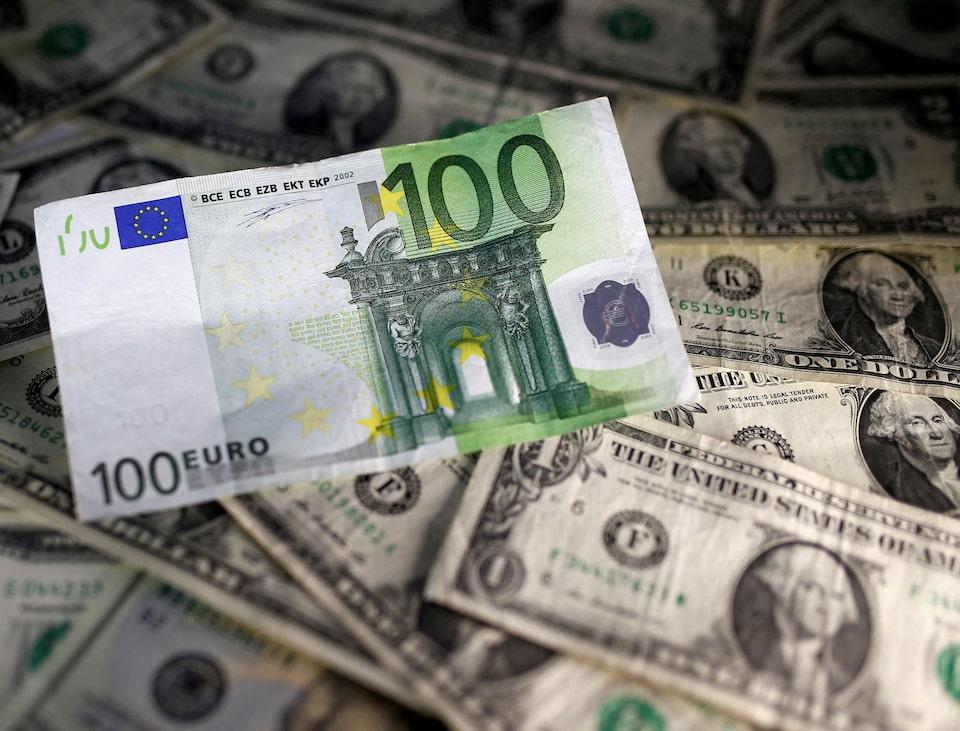
LONDON, Dec 6 (Reuters) - The European Central Bank would happily, if quietly, cheer an even weaker euro exchange rate - and may be far more wary of the opposite at just the wrong time. The euro is likely still too strong for the sort of subdued growth and outsize trade risks the zone faces next year and, far from being a brake on more monetary easing, its depreciation may well be encouraged. And it could argue for at least one deeper half-percentage-point interest rate cut at upcoming meetings. The ECB meets next Thursday for the last time in 2024 and economists overwhelmingly expect another 25-basis-point rate cut - which would be the fourth such move this year. Market thinking and the general thrust of ECB arguments are that the central bank has inflation more or less licked and should return to a neutral policy rate - somewhere around 2% if inflation holds at ECB targets. At that point it would simply sit and pray a cyclical recovery takes hold, while being alert to multiple political and trade risks unfolding through 2025. ECB President Christine Lagarde basically sketched that scenario earlier this week in a European parliament hearing, despite a lively debate among her policymakers about bigger and faster rate cuts to get across a pervasive German-led economic funk. If the gradualists hold sway, that suggests a quarter-percentage-point cut at every meeting until the middle of 2025 to get the current 3.25% deposit rate back to those rough estimates of "neutral". As such, at least 125 basis points of ECB expected easing contrasts with market pricing for half that from the U.S. Federal Reserve. And yet many strategists claim that sort of Transatlantic divergence is already largely discounted by the euro/dollar exchange rate, which has dropped about 5% in two months. The euro's nonchalant reaction to the week's political drama in Paris suggests as much. Morgan Stanley on Thursday raised a red flag about the unintended consequences of a softly-softly approach from the ECB around next week's expected rate cut and how that may pose "upside risks" for the currency. "Markets are sufficiently bearish on the euro area outlook and the euro that any sign of unchanged messaging could be treated as a hawkish surprise," it said. AVOIDING A EURO REBOUND The ECB has good reason to avoid a euro rebound just at this juncture - not least because the currency's trade-weighted index is far higher than the swoon versus the dollar suggests. Despite the euro being just 5% from dollar parity, which was last seen in the wake of Russia's invasion of Ukraine in 2022, the ECB's nominal euro exchange rate index against the bloc's main external trading partners is still only 1% below all-time highs hit in September. The inflation-adjusted real effective exchange rate index is not quite as lofty, due largely to the decade in which the bloc flirted with deflation after the 2008 global banking crash and 2010-2012 euro debt crisis. But despite ebbing in recent months, it too is little changed from where it was 10 years ago - even after the serial shocks seen in recent years. And for a region potentially facing 10%-20% U.S. tariff hits from President-elect Donald Trump's incoming administration, a simmering bilateral trade row with China and a contraction in Germany, its export-dependent weakest link, currency depreciation would be a blessing. Even if still-sparky wage growth remains an ECB irritant, that's even more of reason for a weaker currency to recapture some competitiveness in a global trade war. As euro consumer price inflation remains close to target and producer price deflation is still running at more than 3%, the ECB has ample scope to ease big. And even if trade tariffs could skew the price outlook somewhat, the ECB's chief economist, Philip Lane, has argued the growth hit from any trade war would be a much greater consideration than any temporary price-level bump from tariff hikes. The only question in some minds then is whether a euro plunge through dollar parity would be in some way jarring for regional confidence, especially at a time of nervy German and French domestic politics. But currency weakness is not the euro zone economy's problem right now. Arguably, it's the opposite. The opinions expressed here are those of the author, a columnist for Reuters. Sign up here. https://www.reuters.com/markets/currencies/ecb-would-welcome-weaker-euro-mike-dolan-2024-12-06/
2024-12-06 07:03
EU-wide storage levels lower than last year Cold snaps expected to accelerate draws Gas prices are already at highest in more than a year Europe to compete with Asia for more LNG PARIS/OSLO/LONDON, Dec 6 (Reuters) - Europe's struggling industries are bracing for a new gas price shock over the coming winter months, as colder weather depletes stocks, competition with Asia for liquefied natural gas intensifies, and the prospect of reduced Russian supplies looms. Since the energy crisis of 2022, when gas prices peaked at nearly 350 euros per megawatt hour (MWh), dozens of firms across Europe have closed factories and cut activity and jobs as high gas prices undermined their competitiveness. Many are maintaining reduced demand and lower manufacturing activity, with negative implications for Europe's sluggish growth. European Union gas demand is 17% below the five-year average observed during pre-pandemic years. At the same time, gas prices are at their highest level in over a year and analysts predict they will rise further. "The concern is that we are laying our guard down because energy prices are lower now than what we saw in 2022," Svein Tore Holsether, CEO of Oslo-listed Yara (YAR.OL) , opens new tab, a fertiliser company, told Reuters in October. "It’s important to remind ourselves that we’re still at much higher levels than other key regions like the U.S., the Middle East, and Russia.” Nervousness about the expiry at the end of the year of a Russian transit deal to supply gas to Europe via Ukraine has helped to drive buying. Francisco Blanch, the head of commodity and derivatives research at Bank of America, said it could push EU gas prices as high as 70 euros/MWh next year from nearly 50 euros/MWh now. That compares with average EU gas prices of 17.58 euros/MWh over five years before the pandemic, LSEG data showed. EU-wide gas inventories are 85% full, some 10 percentage points lower than a year ago, according to Gas Infrastructure Europe data. That makes the current winter already feel uncomfortable, said Barbara Lambrecht, an analyst at Commerzbank, as cold snaps would cause storage levels to fall faster than during the last two relatively mild winters. To try to safeguard supplies, the European Commission last week increased its storage filling target, potentially adding to the upward pressure on prices. SHRINKING INDUSTRIES Dozens of factories in Europe closed and nearly a million manufacturing jobs were lost over the last four years, Bernstein data showed. In a report on Europe's competitiveness in September, former ECB chief Mario Draghi said the loss of relatively cheap Russian gas following the 2022 outbreak of war in Ukraine had a "huge cost" to the economy and that fossil fuels would be needed at least for the remainder of the decade. "Even though energy prices have fallen considerably from their peaks, EU companies still face electricity prices that are 2-3 times those in the United States. Natural gas prices paid are 4-5 times higher," the report said. Current EU prices are nearly five times higher than U.S. gas, which trades at $3.095/mmBtu, equivalent to 10.02 euros/MWh. A survey by Germany's chambers of commerce (DIHK) in August found that high energy prices and a lack of reliable energy supplies were hindering industrial production and prompting some German firms to consider relocating abroad. Yara's CEO also told Reuters the company was "shifting our energy exposure away from Europe". German industry lobby group, the BDI, has cited high energy prices as among the factors that threaten the competitiveness of Europe's biggest economy. "The risk of de-industrialisation due to the silent migration and abandonment of many small and medium-sized enterprises in particular is constantly increasing," BDI President Siegfried Russwurm, who also sits on the board at German industrial conglomerate Thyssenkrupp, said in September. In France, industries expect to operate at 70-80% of capacity this winter due to high energy prices, especially in the chemical sector, Nicolas de Warren, president of French industrial lobby group Uniden, told Reuters. "With industry still in the dumps, there is no reason to believe gas demand from that sector will stage a comeback this year," said analysts at Rabobank, adding that some increase in demand was possible from the heating sector. EU's current storage levels, meanwhile, are some 10 billion cubic metres (bcm) lower than last year in absolute terms and the difference will be covered mainly by imports of liquefied natural gas (LNG), Helge Haugane, the head of gas and power trading at Norway's Equinor, EU's biggest gas supplier, said. That will come at a price as competition intensifies for available supplies. Although the European Union has avoided imposing sanctions on Russian gas, which some members rely on heavily, it has restricted Russian LNG deliveries. The European Parliament voted in April to pass rules allowing European governments to ban Russian LNG imports by preventing Russian firms from booking gas infrastructure capacity. That could increase storage withdrawals and push the EU to compete harder with Asia for U.S. and Middle Eastern LNG. Europe imported 11.3 bcm, or around 170 cargoes, of LNG in November, mainly from the United States and the Middle East, according to LSEG data. Sign up here. https://www.reuters.com/business/energy/gas-price-shock-set-add-europes-industrial-pain-2024-12-06/

2024-12-06 06:56
AMSTERDAM, Dec 6 (Reuters) - The Netherlands' Schiphol airport cancelled more than a hundred flights on Friday due to heavy winds caused by storm Darragh, the airport, one of Europe's main hubs, said in a statement. Other flights have been delayed, some up to an hour. "Due to strong winds caused by storm Darragh, fewer flights are expected to take off and land Friday 6 December," Schiphol (SCHP.UL) said, urging passengers to take delays and cancellations into account today. Heavy wind gusts are expected throughout most of the country on Friday morning, the Royal Netherlands Meteorological Institute said. Sign up here. https://www.reuters.com/world/europe/schiphol-airport-cancels-hundreds-flights-due-storm-darragh-2024-12-06/

2024-12-06 06:43
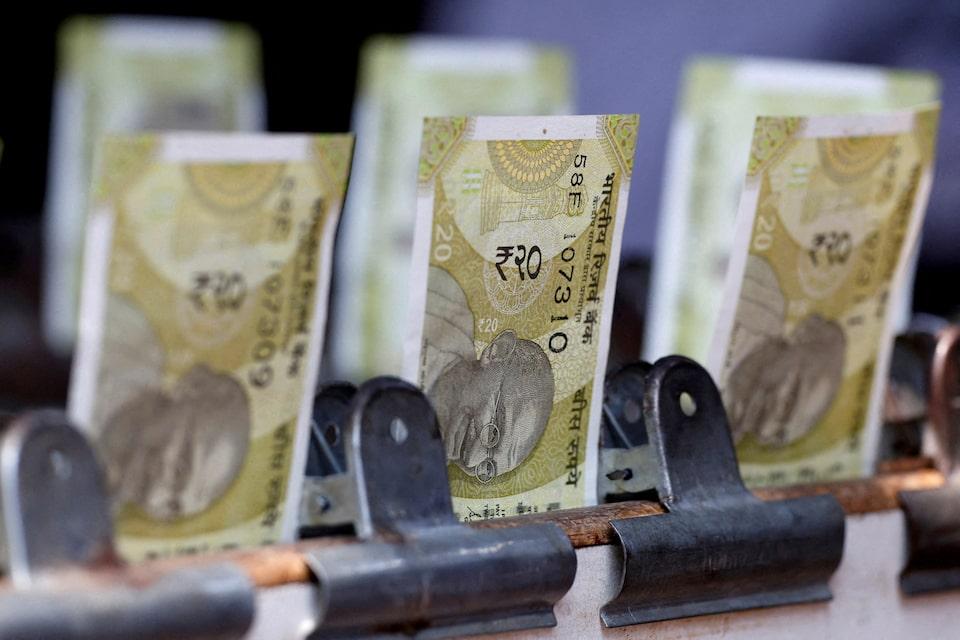
NEW DELHI, Dec 6 (Reuters) - The Reserve Bank of India on Friday raised the interest rate ceiling that banks can offer for foreign currency non-resident (FCNR-B) deposits to boost forex inflows at a time when the currency has been regularly hitting all-time lows. A FCNR-B is a term deposit account that non-resident Indians (NRIs) can open with banks in a foreign currency. Since the account is maintained in a foreign currency, the depositor is not exposed to exchange rate risk, making it attractive for NRIs. The central bank has used this route in times of pressure on the rupee including in July 2013, when the currency came under attack due to the country's weak macroeconomic fundamentals. Most recently, the RBI announced similar easing in July 2022. Banks will now be permitted to raise fresh FCRN-B deposits ranging between maturity of 1 year and less than 3 years at rates not exceeding the relevant reference rate plus 400 basis points, RBI governor Shaktikanta Das said in his monetary policy statement. Deposits with maturity between 3 and 5 years can be offered at rates not exceeding the reference rate plus 500 bps. For both the maturities, this is 200 bps higher than what they can currently offer. The decision would have been taken "weighing the cost of heavy FX intervention in the past two months", Madhavi Arora, lead economist at Emkay Global, said. The central bank is estimated to have sold $35-40 billion in the spot and the forward segments of the forex markets over these two months, while building up an estimated $60 billion in short dollar/rupee positions in the non-deliverable forwards market amidst foreign portfolio outflows from India, Arora said. The rupee has been facing pressure on multiple fronts, with concerns over incoming U.S. President Donald Trump's tariff policies, portfolio outflows, weakness in Asian peers and slowing growth undermining the Indian currency. The rupee dropped to a lifetime low of 84.7575 to the U.S. dollar on Tuesday. It was last quoting at 84.6200. Mandar Pitale, head of treasury at SBM Bank India, does not see the RBI measure helping the rupee much. "Don't think there will be significant accretion of FX deposits as a result of this measure, he said. "It may benefit banks who already have organic demand for such deposits but others can raise funds more cheaply in the local market so they are unlikely to exercise the raised ceiling." Sign up here. https://www.reuters.com/markets/currencies/india-cenbank-takes-steps-increase-forex-inflows-boost-struggling-rupee-2024-12-06/