2024-12-06 06:18
Investors raise bets on US rate cut this month Dollar gains, Euro dips amid French political turmoil S&P 500, Nasdaq advance Chinese shares climb to 3-week highs on stimulus bets Bitcoin back over $100,000 BOSTON/LONDON, Dec 6 (Reuters) - Global stocks advanced as investors raised their bets on the prospect of a U.S. interest rate cut this month after payrolls data showed strong job growth in November, while the euro dipped against the dollar as political turmoil gripped France. Futures markets put an 85% chance on the U.S. Federal Reserve cutting rates by 25 basis points at its Dec. 17-18 meeting after the data, compared with 68% earlier in the session. Nonfarm payrolls increased by 227,000 jobs last month after rising an upwardly revised 36,000 in October, in a month hit by hurricanes and strikes. Economists polled by Reuters had forecast payrolls accelerating by 200,000 jobs. "Data this morning was a Thanksgiving buffet with payrolls spot on, revisions positive, but unemployment ticking higher despite the participation rate falling," Lindsay Rosner, head of multi-sector investing at Goldman Sachs Asset Management, said. "This print doesn't kill the holiday spirit and the Fed remains on track to deliver a cut in December," Rosner added in an email. The S&P 500 and the Nasdaq rose on Friday, up 0.25% and 0.8% respectively, further bolstered by upbeat forecasts from Lululemon Athletica and other companies. The Dow was down slightly, with a 5% drop in UnitedHealth Group MSCI's gauge of stocks across the globe (.MIWD00000PUS) , opens new tab added about 0.2%. Treasury yields dipped to a six-week low after the release of the payrolls data, with the yield on benchmark U.S. 10-year notes down 2.9 basis points to 4.153%, while the 2-year note yield, which typically moves in step with interest rate expectations for the Federal Reserve, fell 4.8 basis points to 4.098%. The U.S. dollar index ticked up 0.3% to $106.05 following the jobs report. Strategists at TD Securities said there was a "high hurdle" for the dollar to extend recent gains. "We think the path of least resistance remains for some USD weakness, offering a great opportunity to buy the dip in early 2025," they wrote in a client note on Friday. European shares eked out gains on Friday, with French stocks logging their biggest daily rise in three weeks as investors factored in a potential budget despite ongoing political uncertainty, while also parsing an upbeat U.S. jobs report. The pan-European STOXX 600 <.STOXX , opens new tab> was up 0.2%, logging its seventh consecutive day in advances and its strongest weekly performance in ten. In Asia, MSCI's broadest index of Asia-Pacific shares outside Japan (.MIAPJ0000PUS) , opens new tab reversed earlier losses to be up 0.2% thanks to a rally in Chinese shares, making up for investor caution around political turmoil in South Korea. Chinese shares had climbed to three-week highs as investors scooped up technology shares ahead of a top-level policy meeting next week that will set the agenda and targets for China's economy next year. The risk premium investors demand to hold French debt rather than German Bunds dropped to a two-week low on Friday, after President Emmanuel Macron said he would appoint a new prime minister soon to get a 2025 budget approved by parliament. The euro had rallied on Thursday, on market relief that France had avoided a more volatile political outcome for now. The euro was last down about 0.23% at $1.056. BITCOIN REVERSAL Bitcoin , which hit the $100,000 mark for the first time on Thursday as investors bet on a friendly U.S. regulatory shift, initially ran into profit-taking, tumbling as far as $92,092. Prices then rebounded, last trading up 2.3% on the day around $101,300. U.S. President-elect Donald Trump on Thursday said he was appointing former PayPal chief operating officer David Sacks as his "White House A.I. & Crypto Czar," another step towards overhauling U.S. blockchain-related policy. "This spike in volatility over the last 24 hours has the hallmarks of a classic blow-off top," said Tony Sycamore, analyst at IG. Oil prices fell around 1.5% and were headed for weekly losses as analysts projected a supply surplus next year on floundering demand despite an OPEC+ decision to delay output hikes and extend deep production cuts to the end of 2026. Gold prices inched up on Friday to $2,632 an ounce. Sign up here. https://www.reuters.com/markets/global-markets-wrapup-1-2024-12-06/
2024-12-06 06:17
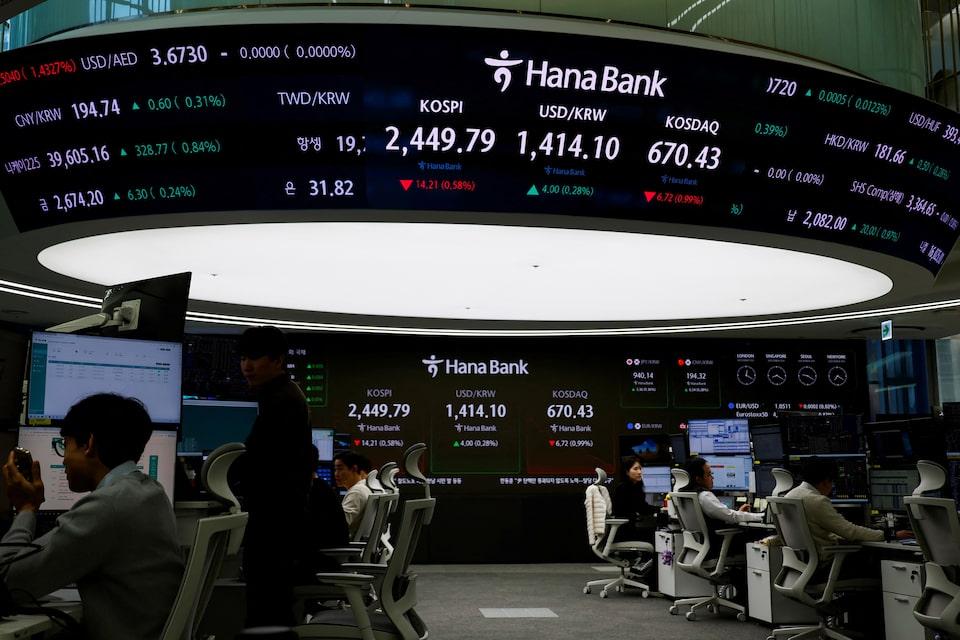
US jobs rise in November, jobless rate ticks higher Euro briefly hits three-week high vs dollar after jobs data US consumer sentiment rises, inflation expectations advance US rate futures raise odds of 25-bp cut later this month NEW YORK, Dec 6 (Reuters) - The U.S. dollar rose on Friday, as earlier selling, amid a jobs report showing higher unemployment and modest job gains overall, lost momentum ahead of an inflation report next week that could either reinforce or cast doubts on interest rate cut expectations later this month. The greenback recovered from a three-week low against the euro, which last traded down 0.3% at $1.0561 . The European common currency was poised to end the week 0.2% lower, posting losses in four of the last five weeks. Against the yen, the dollar advanced from session lows to trade little changed at 150 yen . The U.S. currency will end the week up 0.2% versus the Japanese unit, gaining in three of the last four weeks. "Noisy (payrolls) report but soft enough to reinforce the positioning adjustment across FX," Mark McCormick, head of foreign exchange and emerging market strategy at TD Securities, wrote in a research note. He noted that the U.S. dollar earlier followed Treasury yields lower, "reflecting the fact that the market sees enough here to expect another Fed cut this month." "Next week's CPI (consumer prices index) will likely be the last piece of useful data for the December Fed meeting, but we think the path of least resistance remains for some U.S. dollar weakness, offering a great opportunity to buy the dip in early 2025," McCormick wrote. Market participants earlier sold the dollar after data showed the unemployment rate inched higher to 4.2%, after holding at 4.1% for two straight months. The increase in the jobless rate reflected weakness in household employment. The smaller and volatile household survey from which the unemployment rate is compiled showed a decline of 355,000 jobs. Household employment dropped in October as well. Nonfarm payrolls, on the other hand, expanded by 227,000 jobs last month after rising an upwardly revised 36,000 in October, from 12,000. Average monthly job gains over the last four reports are now just below 150,000, short of what many economists feel is needed to provide enough work to match a growing population. Economists polled by Reuters had forecast payrolls accelerating by 200,000 jobs last month. Estimates ranged from 155,000 to 275,000 jobs. Bloomberg had forecasts of 225,000 jobs and some analysts cited that number to conclude that payrolls barely beat expectations, suggesting the Fed is not likely to pause in its easing cycle. CONSUMER SENTIMENT The dollar then shed losses after the University of Michigan Surveys for December showed consumer sentiment rising more than forecast while one-year inflation expectations rose to 2.9% from 2.6 last month. In afternoon trading, the dollar index , which measures the greenback against six major currencies, climbed 0.3% to 106, after slipping toward a three-week low in the previous session. The greenback also gained against the Swiss franc, up 0.1% at 0.8786 franc . Post-payrolls, U.S. rate futures priced in an 85% chance the Fed will lower interest rates by 25 basis points at its policy meeting later this month, up from about 70% just before the data's release, according to LSEG calculations. The odds of a pause, meanwhile, dropped to 15% from 30% ahead of the jobs report. "The Fed will indeed cut by 25-bp, just to keep policy moving from restrictive territory towards neutral," James Knightley, chief international economist, U.S., at ING, wrote in a research note. "However they are set to signal a slowing in the pace of cuts with a pause at the January FOMC meeting looking likely." The risk to that view, he noted, is next week's core CPI print coming in hot. He said the consensus is for a 0.3% rise, but so long as that is closer to 0.25% rather than 0.349%, Knightley believes the Fed will indeed opt to cut on Dec. 18. In Asia, the dollar rose versus South Korea's won after local media reported the nation's main opposition Democratic Party said lawmakers were on standby after receiving reports of another martial law declaration. The won weakened, leaving the dollar up 0.4% at 1,422.7. Elsewhere, China's yuan was little changed against the dollar but headed for its 10th straight weekly loss amid concerns new tariffs threatened by U.S. President-elect Donald Trump will heighten strains on the struggling Chinese economy, The dollar last changed hands at 7.2843 yuan in the offshore market, up 0.3% . Sign up here. https://www.reuters.com/markets/currencies/currency-markets-look-steady-amid-political-turmoil-eye-us-jobs-report-2024-12-06/
2024-12-06 06:04
Investment bank revenue could jump 5.7% in 2025, Coalition says Income could grow to $316 billion globally, estimates show M&A rebound anticipated as U.S. economy charges on LONDON, Dec 6 (Reuters) - President-elect Donald Trump's return to the White House is seen fuelling a dealmaking revival that could bolster investment banking income to $316 billion globally next year, a jump of about 5.7% on 2024, data seen by Reuters shows. M&A bankers are forecast to rake in about $27.6 billion in fees, according to previously unreported figures from analytics and insight provider Coalition Greenwich, in what could be their second-best year in at least two decades. Global investment banking income has only topped $300 billion five times in the last 20 years, the data shows, with earnings power in recent years stifled by the pandemic, inflation and global political unease. Trump's pro-business leanings should help an already thriving U.S. economy, which could in turn encourage greater volumes of cross-border dealmaking and investment from European firms chasing growth, bankers said. "I know it's that time of year where bankers love to be bullish, but we actually do think that the current climate – political clarity and macro stability - will help drive M&A," Richard King, head of corporate banking, EMEA, at Bank of America (BAC.N) , opens new tab said. "There's a lot of pent up demand that will likely come through in 2025," he said, pointing to private equity as well as acquisitive trade buyers across a range of sectors including healthcare, tech and energy. Trump's administration could be particularly conducive to M&A because he is seen as likely to wave more deals through that had been blocked under the previous administration over competition or U.S. strategic importance concerns, bankers said. While rainmakers are getting busier, bankers managing debt sales for companies and governments could also see a jump in activity, bringing in as much as $49 billion, a new record, according to Coalition. Revenue from the trading of securities -- the biggest contributor to investment bank income -- forecast at $220 billion for 2025 would be the highest since 2022. Credit and emerging markets macro-related products are likely to see the biggest jump on 2024 figures next year, with a 6% increase each while trading in interest rate-related products could shrink as much as 3.5%. "We have healthy corporate balance sheets but we have a rate environment that has increased cost of capital...so businesses cannot be lazy," said Taylor Wright, co-head of global banking at Barclays (BARC.L) , opens new tab, predicting private equity firms will be active as both buyers and sellers of businesses. "Geopolitical risk, in our view, is the wild card. It's hard to plan for that but absent that, we see a lot of factors that suggest that the next 12 to 24 months should be very good for investment banking." RETURN OF THE FAT CATS? With revenue on the increase, banker payouts look destined to follow suit, although bonuses will remain below bumper 2021 levels for now. New York-based pay consultancy Johnson Associates said last month it expected banker salaries to rise in almost every business unit, with the exception of real estate investing. Headhunters are also reporting new hiring mandates from some banks following Trump's re-election, and a focus on adding staff in the first quarter, traditionally a time when most banks look to reduce headcount. Hiring has increased across securities trading and from junior through to senior positions, said Natalie Nicolaou, Senior Manager, Distribution & Front Office, at Robert Walters UK (RWA.L) , opens new tab, told Reuters. Sign up here. https://www.reuters.com/business/finance/investment-banks-eye-2025-income-boom-trump-drives-deal-rebound-2024-12-06/

2024-12-06 05:48
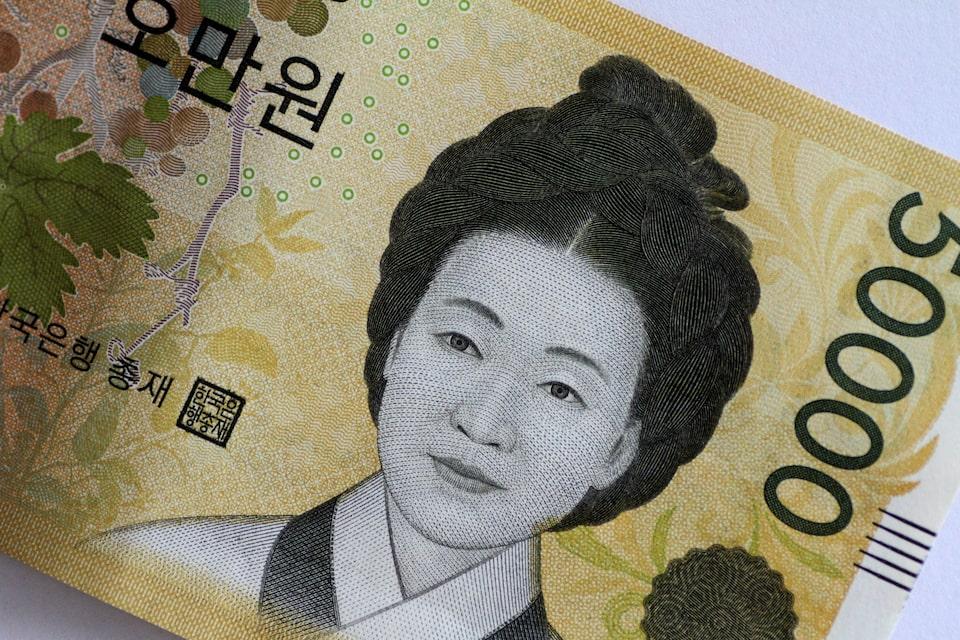
Finance Minister Choi led emergency response efforts Financial authorities activated crisis measures South Korea injects unlimited liquidity to stabilise won SEOUL, Dec 6 (Reuters) - Minutes after South Korean President Yoon Suk Yeol declared martial law on Tuesday night, plunging the country into its worst crisis in decades, his stunned finance minister knew his priorities: throw everything at defending the currency. By around 11 p.m., Choi Sang-mok, who was among the majority of cabinet members who opposed martial law, had set up an emergency meeting at the Seoul Bankers Club, an unofficial meeting place for top policymakers from the central bank, finance ministry and banking and markets regulators. As soldiers stormed the nation's parliament, Korea's top four financial authorities, known as F4, activated an emergency playbook that had been used during past crises, scrambling to head off a crippling selloff in the won before Asian markets awoke. Choi led discussions between the authorities, three people familiar with the meeting told Reuters, with the Bank of Korea responsible for efforts to stabilise the currency. The first announcement came swiftly. South Korea would inject unlimited cash into markets as needed, the finance ministry said, which pulled the won back from lows last seen in 2009 during the global financial crisis. "It was BOK Governor Rhee Chang-yong's idea to put this message out quickly," one government official told Reuters, on the condition of anonymity. "Rhee said it was really important to pre-emptively act, as the news should be a bigger shock to foreign investors than for local people." In the four decades since South Korea was last under martial law, the nation has weathered several crises and significantly evolved its systems to eschew the strongman politics of the past and focus instead on ensuring economic stability. Lessons from the 1998 Asian financial crisis formed the basis for the playbook. That episode ran deepest for South Korea, a country hugely exposed then to short-term debt and a playground for foreign speculators, forcing it into what many Koreans saw as a humiliating rescue package from the International Monetary Fund. Citizens donated their gold to a depleted national coffer. "We have had many crises. We experienced ups and downs through those crises, including the pandemic, and have a set of tools ready," said one Bank of Korea official, speaking on condition of anonymity. The last time Korea's four big agencies intervened this heavily in markets was in 2020 as the COVID-19 pandemic toppled its export-driven markets. Korea's current struggles with anaemic growth, labour strikes, a budget impasse and the troubles of trade partner China meant authorities were already on heightened alert for sharp currency swings. The won is down 9% this year against the dollar, while the KOSPI index has shed 8%, both lagging their emerging market peers. Foreign money has been leaving Korea's stock market since August, with outflows in four months topping $14 billion. "They were obviously aware of the fact that there would be a little bit of panic, particularly from foreigners, and so they did the right thing," said Jon Withaar, who manages an Asia special situations hedge fund at Pictet Asset Management. "This is now really what governments and central banks do now, when they see these types of events, they just offer unlimited liquidity. That was the playbook in COVID." 'CONTROL TOWER' Until this week, Choi was one of Yoon's conservative loyalists in the cabinet who served multiple government positions since the president was elected in March 2022, starting as a secretary of the economy division. He advanced to chief economic secretary, a position that allowed him to travel with Yoon around the world, before taking his current job in December 2023. During this week's chaos, Choi was the "control tower", sources said, directing the messaging and responses through the next day and even as subsequent developments led to the entire cabinet offering to resign. The detailed contingency plan has a long list of actions to take in every possible market scenario, beginning with the first set of reassuring messages to markets to specific funding and rescue operations, said one former policymaker who handled currency matters in the finance ministry. All the same, martial law was not on the list of possible crises under this plan, other sources said. Choi was at the cabinet meeting Yoon convened between 9 p.m. and 10 p.m. on Tuesday to discuss his martial law plans, which government official sources said most members opposed, or expressed concerns about. Just hours earlier, Choi had been at a forum for global and local investors celebrating South Korea's inclusion in the FTSE Russell's benchmark WGBI bond index. By 11 p.m. he had summoned his team to the Seoul Bankers Club. Choi was at the venue before everyone else, an official who went to the meeting said. "Finance Minister Choi came from the presidential office cabinet meeting. He was fiercely opposed to this absurd plan," said another. Kang Youngkyu, spokesman at the ministry, declined to comment when asked whether Choi had attended the cabinet meeting and opposed Yoon's martial law plans, but said he "led the F4 meetings around 11 p.m. on Tuesday and reviewed contingency plans with his colleagues throughout the night." Announcements from the F4 followed in quick succession. The BOK said it will hold an extraordinary monetary policy board meeting in the morning, and the Financial Supervisory Service said it will deploy measures to stabilise markets. By 1 a.m. in Seoul, parliament had declared the martial law decree invalid. The F4 persisted with measures, held overnight meetings with their deputies, met again at 7 a.m. and pledged to keep markets functioning normally while the financial regulator said it was ready to deploy a 10 trillion won ($7.06 billion) stock market stabilisation fund. The plan mostly worked. The won is off its two-year lows and Korea's stock market, one of the emerging world's worst performers this year, has lost just over 2.5% over the past three days. BOK Governor Rhee expressed relief on Thursday. "The good thing is that it could have really worsened how foreigners view (South Korea) if martial law had been in place for a very long time," he said at a press conference. "But this changed in just six hours." ($1 = 1,415.4600 won) Sign up here. https://www.reuters.com/markets/currencies/south-koreas-crisis-playbook-currency-stability-is-paramount-2024-12-06/
2024-12-06 05:38
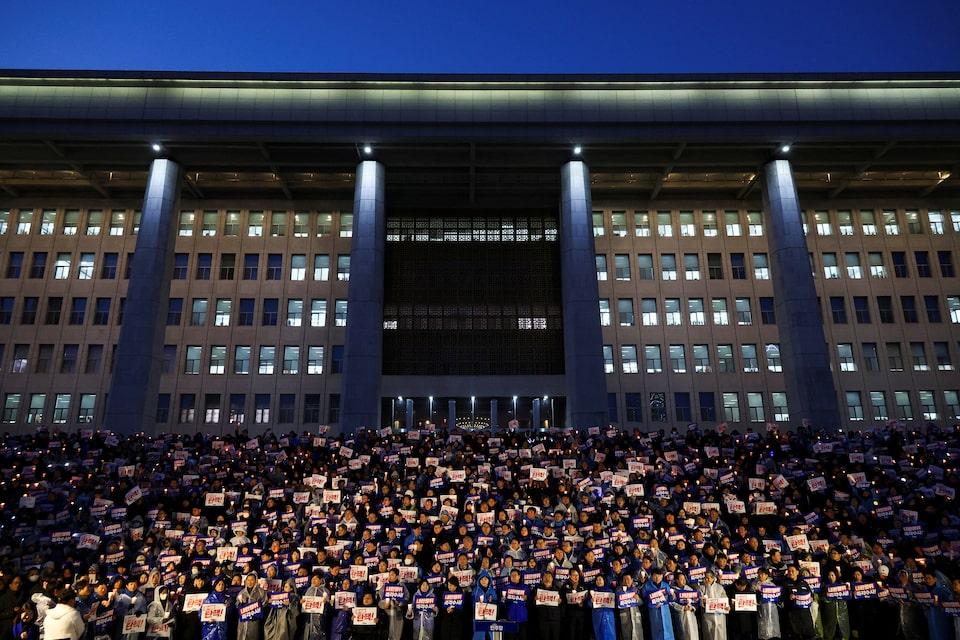
A look at the day ahead in European and global markets from Stella Qiu Risk sentiment took a hit in Asia on Friday from renewed political rumblings in South Korea, rattling investors' nerves as they awaited a crucial U.S. nonfarm payrolls report that could alter the odds of a Federal Reserve rate cut this month. Once markets caught word that there could be another martial law declaration in South Korea, heavy selling hammered the Korean won and the Seoul share market. The won sank by as much as 1%, the KOSPI dived 1.8% at one point and the Australian dollar, a barometer of risk appetite, was down 0.5%. South Korean authorities were quick to act. Dealers said the foreign exchange regulator is believed to have sold U.S. dollars to limit the decline in the won. That would not be surprising, since the authorities have pledged unlimited liquidity to stabilise markets and that tactic has so far been working. The country's special warfare commander also came out to say he would refuse any new order for martial law, calming nerves somewhat. While keeping a wary eye on South Korea, the market's main attention is fixed on U.S. payrolls data due for release later on Friday. Forecasts are centred on a rise of 200,000 jobs in November, rebounding from soft numbers in October that reflected the impact of hurricanes and strikes. The unemployment rate likely edged up to 4.2% from 4.1%. Markets are priced for a Goldilocks outcome: neither so strong that it would threaten the prospects of a rate cut, nor so soft that it would stir up concerns about the economy. Futures imply a 70% chance of a rate cut by the Fed on Dec. 18, suggesting the market is vulnerable to a hot jobs report, particularly after recent soft data emboldened the futures to price in an extra quarter point cut for 2025. Dollar bulls were also wary of a sharp pull-back in jobs, which could boost the outlook for rate cuts and wrong-foot a market that is overwhelmingly long the U.S. currency. Even the rally in Bitcoin is showing signs of fatigue after crossing the $100,000 level for the first time ever. It retreated as far as $92,092 before steadying at $97,444 on Friday, up 0.4% for the day and supported by Trump's appointment of former PayPal executive David Sacks to be his White House "artificial intelligence and crypto czar". Europe is looking ahead to a lower open with some secondary data due. EUROSTOXX 50 futures are down 0.4% and FTSE futures are 0.1% lower. U.S. stock futures are a fraction easier. In other news, Trump said he had chosen former Senator David Perdue to be ambassador to China, tapping a former politician with business experience to help steer relations riven by deep mistrust and trade tensions. Key developments that could influence markets on Friday: -- Germany industrial output -- UK Halifax house prices -- Eurozone revised GDP for Q3 -- U.S. non farm payrolls for Nov Sign up here. https://www.reuters.com/markets/europe/global-markets-view-europe-2024-12-06/
2024-12-06 05:09
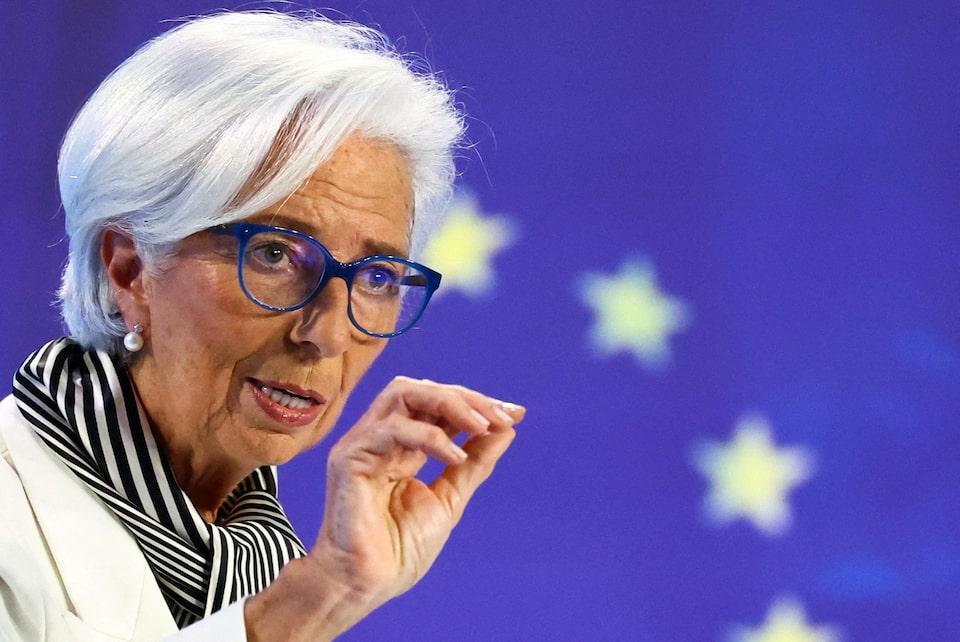
LONDON, Dec 9 (Reuters) - The European Central Bank looks set to cut rates again on Thursday as inflation heads down, and financial markets are keen for a sense of whether a more challenging environment will spark speedier moves ahead. Since the October meeting, a U.S. election win for Donald Trump has raised tariff risks for Europe; France and Germany are grappling with political turmoil; business activity has deteriorated and the euro has slumped. "It makes no sense to be hawkish right now," Pictet Wealth Management's head of macroeconomic research Frederik Ducrozet said. Here are five key questions for markets: 1/ Will the ECB cut rates by a quarter or half-point? Traders reckon a 25 bps move is more likely. It would be the fourth reduction this year, enforcing the idea of back-to-back rate cuts. A sharp slowdown in November business activity sparked talk of a big December move and the ECB's Francois Villeroy de Galhau said the bank should keep its options open for a bigger cut. Yet, most rate-setters appear to support a modest move, with inflation picking up last month and U.S. tariff policy still unclear. Other economic numbers meanwhile have been more positive: the latest ECB bank lending data showed record demand for housing loans. "We expect 25 bps instead of 50 bps as the hawks are pointing to high core inflation and inflation rising again in November," Carsten Brzeski, global head of macro for ING Research, said. 2/ What do Trump tariffs mean for ECB policy? That is unclear. Tariffs are seen as negative for economic growth, but the impact on inflation is more uncertain. For now, focus is on the hit to growth. Trump has vowed a 10% tariff on imports from all countries but details, and the response from U.S. trading partners, have yet to be seen. ECB chief Christine Lagarde says a trade war at large would be a "net negative for all", not just countries targeted by U.S. tariffs. Goldman Sachs expects more limited tariffs on Europe, foreseeing a 0.5% hit to euro zone output. "The negative GDP impact on the euro zone is likely to be somewhat more meaningful than the impact on inflation," UBS chief European economist Reinhard Cluse said, adding that more easing could be likely if trade tensions escalate. 3/ Could the ECB speed up rate cuts? Yes, especially if a sharper slowdown weighs on inflation. Money markets price in 150 bps of ECB cuts by end-2025, up from the 120 bps on Nov. 4. That scale of easing would take the ECB's key rate below the 2%-2.5% range economists view as neutral, neither stimulating nor restricting the economy. "The euro area will need something more supporting than the neutral (rate)," Bruno Cavalier, chief economist at ODDO BHF, said. 4/ What is going on with inflation? Well, consumer price inflation accelerated in November and the most closely watched components remained high, meaning ECB caution on rate cuts. Inflation still appears headed towards its 2% target, with some signs that wage pressures are easing. Societe Generale said latest ECB growth and headline inflation forecasts, to be published on Thursday, are likely to be revised lower for next year. The new forecasts could show inflation at target in the first half of the year, compared with end-2025 as the ECB projected in September. 5/ Could the ECB intervene to support French bonds? No, for now. France does not meet requirements for support under the Transmission Protection Instrument, allowing the ECB to buy the bonds of euro zone members experiencing an unwarranted selloff that tightens financial conditions. French borrowing costs have fallen on rate cut speculation and other markets are stable. Still, Lagarde may be pressed on France, which faces its second major political crisis in six months while the premium investors demand to hold French bonds over Germany has hit its highest since 2012. "There is absolutely no case whatsoever for the ECB to intervene on France right now, if only because there is no contagion to others," Pictet's Ducrozet said. Sign up here. https://www.reuters.com/markets/europe/pressures-five-questions-ecb-2024-12-06/