2024-12-06 04:31
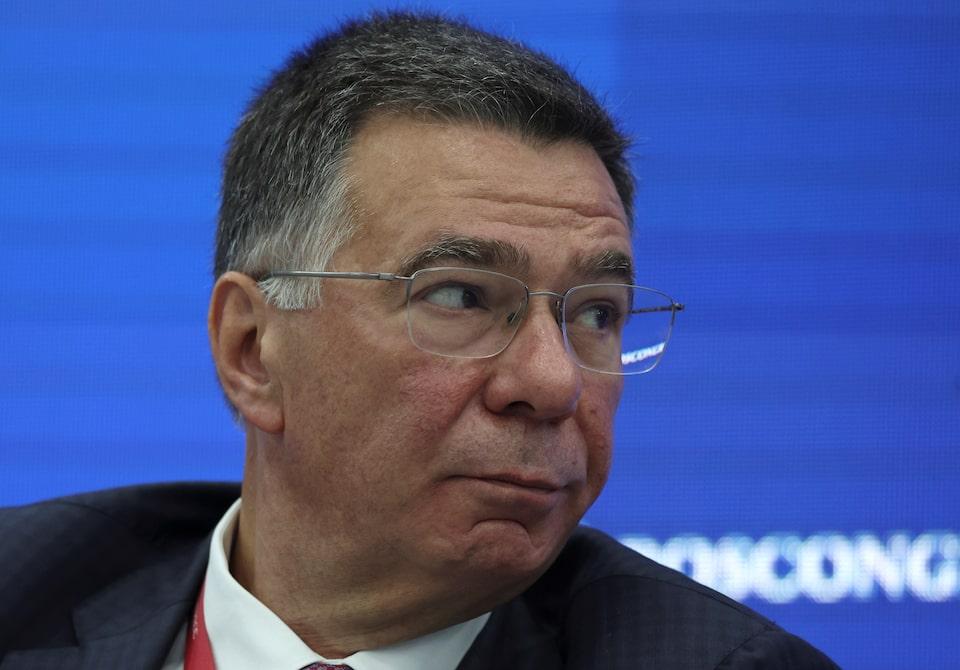
U.S. nonfarm payrolls increased by 227,000 jobs last month Traders see an 87% chance of a 25bp rate cut on Dec. 18 Platinum, palladium set for weekly declines Dec 6 (Reuters) - Gold prices inched up on Friday after the November U.S. job growth report suggested the labor market continues to ease gradually, leaving room for the Federal Reserve to cut interest rates again. Spot gold gained 0.2% to $2,636.31 per ounce by 01:41 p.m. ET (1841 GMT). U.S. gold futures settled 0.4% higher at $2,659.60. U.S. job growth surged in November, but this probably does not signal a material shift in labor market conditions that continue to ease steadily and allows the Fed to cut interest rates again this month. "The data was somewhere in between. We see the nonfarm payroll higher than the forecast, which could be a little bit of a bearish sentiment on gold in the short term, but the private payroll is slightly below the forecast almost by 9,000, this reaffirms the potential Fed cuts in the next couple of weeks," said Alex Ebkarian, chief operating officer at Allegiance Gold. The U.S. dollar and U.S. Treasuries yields fell after labour market report showed nonfarm payrolls increased by 227,000 jobs last month after rising an upwardly revised 36,000 in October. Economists polled by Reuters had forecast payrolls accelerating by 200,000. The prospect of rate cuts, starting with the half basis point reduction in September, has underpinned gold's record rally this year, as lower rates increase the appeal of holding non-yielding gold. Traders now see an 87% chance of a 25-basis-point cut at Fed's December meeting, versus a 72% chance before the payrolls data. "This report falls mostly into the 'Goldilocks' camp, which means the data was not too hot and not too cold. That suggests the Fed can go ahead and cut interest rates at its December meeting," said Jim Wyckoff, a senior market analyst at Kitco Metals. Spot silver fell 1.1% to $31 per ounce, but was up for the week. Platinum eased 1.3% to $925.78 and palladium fell 0.5% to $957.83. Both metals are set for a second straight weekly loss. Sign up here. https://www.reuters.com/markets/commodities/gold-heads-second-weekly-fall-focus-us-payrolls-data-2024-12-06/
2024-12-06 04:19
ABU DHABI, Dec 6 (Reuters) - Growth in the United Arab Emirates' non-oil private sector activity held steady in November, while improved demand conditions boosted growth in new business, a survey showed on Friday. The seasonally adjusted S&P Global UAE Purchasing Managers' Index edged up to 54.2 in November from 54.1 in October, staying above the 50.0 mark denoting growth although the growth rate remains slower than seen earlier this year. The new orders subindex rose to its highest level since August, jumping to 58.0 in November from October's 55.9, which was the slowest pace of growth in new sales since September last year. "Businesses continued to see a marked upturn in sales, which spurred activity forwards but also greatly added to outstanding work... The survey data indicated that firms did little to try and rectify these capacity pressures," David Owen, senior economist at S&P Global Market Intelligence, said. "Despite the positive headline figure, the survey data signalled a degree of uncertainty among firms about how long this strength will last." The expansion in business activity remained robust despite a slowing in the rate of output growth in November to 59.6 from 61.3 the previous month. The seasonally adjusted index nevertheless remained above its long-run average. However, UAE non-oil firms continued to accumulate faster backlogs of outstanding work in November, and the rate of job creation hit a 31-month low, with companies' confidence in future business activity remaining muted. Sign up here. https://www.reuters.com/world/middle-east/uae-non-oil-business-activity-growth-holds-steady-november-pmi-shows-2024-12-06/

2024-12-06 04:14
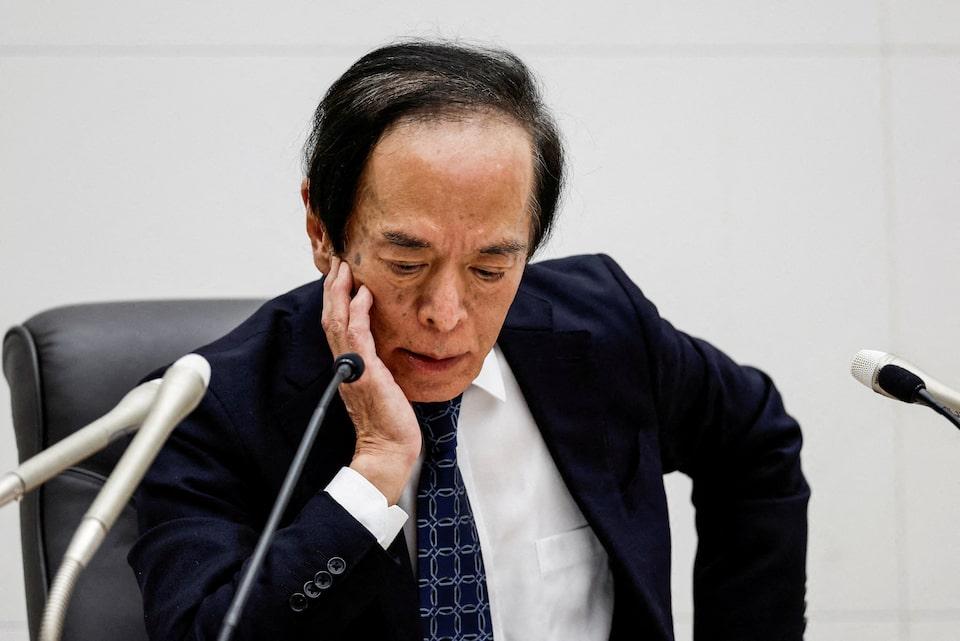
Ueda signals December will be live, but no conclusion yet BOJ leaving itself a free hand on rate-hike timing Ueda's style is to hold off on deciding until last minute BOJ becoming more convinced of wage-inflation cycle Soft consumption, Trump tariff uncertainty among risks TOKYO, Dec 6 (Reuters) - The Bank of Japan is staying guarded on the timing of the next rate hike with December hardly a done deal given soft consumption, its governor's cautious decision-making style and anxiety over U.S. economic policy in a second Trump presidency. BOJ Governor Kazuo Ueda signalled that December will be a live meeting in an interview with the Nikkei newspaper last week, when he said another rate hike was approaching. But he also warned of U.S. economic uncertainties and gave no clear sign the BOJ would indeed hike this month, causing market expectations of a move to fluctuate between December and January. Having steered Japan through a decade of ultra-easy monetary policy, the BOJ is wary of moving too fast in removing accommodative conditions, especially after a July rate hike caught markets by surprise and triggered a sharp bout of volatility in currencies, bonds and stocks. Heightened geopolitical tensions and uncertainty over U.S. President-elect Donald Trump's policies are also encouraging global policymakers, including in Japan, to approach their tasks with circumspection. After rising to around 60% following last week's release of solid inflation data, market bets of a December hike slid below 40% on Wednesday as fresh doubts emerged from media reports suggesting the BOJ will take a more cautious stance. Adding to the market confusion, dovish BOJ board member Toyoaki Nakamura didn't rule out a December hike, saying the timing would be data dependent. While the BOJ has its eyes set on hiking rates by around March, it likely wants to leave itself a free hand on the exact timing, say three sources familiar with its thinking. "What's clear is that December will be live, as with any other meeting in coming months," said one of the sources. "But from there, it's really a judgement call by the board," the source said, a view echoed by two more sources. People who know Ueda, an economics professor-turned governor, also point to his decision-making style, which is to wait until the last minute assessing data in reaching a conclusion. "He works with an academic mindset, which is to look thoroughly at each data before deciding," one of them said on condition of anonymity as he was not authorised to speak publicly. "It's unlikely he would drop signals about something he hasn't decided yet." After the Dec. 18-19 meeting, the BOJ holds a rate review on Jan. 23-24 and March 18-19. There is growing conviction within the BOJ that wages will keep rising and prod firms to hike prices - meeting a key prerequisite for another rate hike, the sources said. Regular pay has been rising at an annual pace of around 2.5-3%. Japan's largest labour union group has said it will seek wage hikes of at least 5% in 2025, near this year's hefty gains. Inflation remains above the BOJ's 2% target for well over two years with rising labour costs pushing up services prices. But other data paint a less rosy picture. Household spending fell in October for the third straight month as rising living costs pinched consumers. Factory output remains flat and exports to the United States, Japan's largest export market, slumped in October on weak auto shipments. While firms ramped up capital expenditure in July-September, recurring profits fell 3.3% from year-before levels on intensifying competition overseas, data showed. OPTIMAL TIMING The BOJ has already whittled down stimulus twice this year, ending negative interest rates in March and raising short-term borrowing costs to 0.25% in July. Ueda has repeatedly said the BOJ will keep hiking rates if the economy and prices move in line with its forecast, leading many analysts to project another hike by March. With the BOJ making clear that it will be taking a data-dependent approach in setting policy, each indicator leading up to the December meeting will likely draw strong market attention. Revised third-quarter gross domestic product data is due on Monday, followed by the BOJ's quarterly "tankan" business survey on Dec. 13. Threats of higher tariffs by Trump have stoked fresh uncertainty about the global outlook - a factor Ueda said warranted scrutiny in his interview with Nikkei. With the yen off a three-decade trough near 162 hit in July and inflation showing little sign of overshooting, the BOJ is under less pressure to hike immediately, some analysts say. "I don't see the BOJ as in a huge rush, as long as it can hike by March," said veteran BOJ watcher Mari Iwashita, who is chief market economist at Daiwa Securities. "For the BOJ, it's just a question of choosing the most optimal timing among the three meetings." Sign up here. https://www.reuters.com/markets/rates-bonds/boj-is-holding-cards-close-its-chest-december-rate-hike-2024-12-06/
2024-12-06 04:10
Brent and WTI both down more than 1%, post weekly loss Even with OPEC+ restraint, analysts see oversupply in 2025 US drillers add oil and gas rigs for first time in 8 weeks US job growth rebounds in November; unemployment rate rises NEW YORK, Dec 6 (Reuters) - Oil prices fell by more than 1% on Friday and cemented weekly losses as analysts projected a supply surplus next year on weak demand despite an OPEC+ decision to delay output hikes and extend deep production cuts to the end of 2026. Brent crude futures settled at $71.12 a barrel, shedding 97 cents, or 1.4%. U.S. West Texas Intermediate crude futures settled at $67.20 a barrel, falling $1.10, or 1.6%. For the week, Brent prices lost more than 2.5%, while WTI saw a drop of 1.2%. A rising number oil and gas rigs deployed in the United States this week, pointing to rising production from the world's biggest crude producer, also pushed prices lower. On Thursday, the Organization of the Petroleum Exporting Countries and its allies, a group known as OPEC+, pushed back the start of oil output rises by three months until April and extended the full unwinding of cuts by a year until the end of 2026. Weak global oil demand and the prospect of OPEC+ ramping up production as soon as prices rise have weighed on trading, said Bob Yawger, director of energy futures at Mizuho in New York. "They're just waiting for better pricing and once they get that, they're going to start jumping in again," Yawger said. OPEC+, which is responsible for about half of the world's oil output, was planning to start unwinding cuts from October 2024, but a slowdown in global demand - especially from top crude importer China - and rising output elsewhere have forced it to postpone the plan several times. "While OPEC+'s decision to hold off strengthens fundamentals in the near term, it could be seen as an implicit admission that demand is sluggish," analysts at HSBC Global Research said. Bank of America forecast that increasing oil surpluses will drive the price of Brent to an average $65 a barrel in 2025, while oil demand growth will rebound to 1 million barrels per day (bpd) next year, the bank said in a note on Friday. HSBC, meanwhile, now expects a smaller oil market surplus of 0.2 million bpd, from 0.5 million bpd previously, it said in a note. Brent has largely stayed in a tight range of $70-$75 per barrel in the past month, as investors weighed weak demand signals in China and heightened geopolitical risk in the Middle East. "The general narrative is that the market is stuck in its rather narrow range. While immediate developments might push it out of this range on the upside briefly, the medium-term view remains rather pessimistic," PVM analyst Tamas Varga said. Also pressuring prices was the U.S. rig count, which grew for the first time in eight weeks, energy services firm Baker Hughes (BKR.O) , opens new tab said on Friday in its closely followed report. Baker Hughes said oil rigs rose five to 482 this week, their highest level since mid-October, while gas rigs rose by two to 102, the highest since early November. Despite this week's rig increase, Baker Hughes said the total count was still down 37, or 6% below this time last year. A mixed U.S. jobs report, which showed a strong rebound in hiring but also a slight rise in the unemployment rate, extended oil's losses. Sign up here. https://www.reuters.com/business/energy/oil-prices-dip-extended-opec-supply-cuts-highlight-weak-demand-2024-12-06/

2024-12-06 04:04
MUMBAI, Dec 6 (Reuters) - The Indian rupee strengthened on Friday, tracking a rise in most regional peers that were boosted by a softer U.S. dollar, while traders await the Reserve Bank of India's (RBI) monetary policy decision. The rupee was up about 0.1% at 84.6550 as of 09:30 a.m. IST compared with its close of 84.7325 on Thursday. The RBI will deliver its policy decision at 10:00 a.m. IST. Analysts expect the central back to deliver some degree of policy easing via a reduction in banks' cash reserve ratios (CRR) after India's economic growth slowed to a seven-quarter low in the July-September quarter, even as still-high inflation may make it reluctant to cut interest rates just yet. Traders reckon that a surprise rate cut from the RBI or more dovish-than-expected policy commentary could hurt the rupee and push it to a fresh record low after the currency hit a lifetime low of 84.7575 earlier this week. The central bank's policy decision will be also be key for dollar-rupee forward premiums, traders said. The one-year dollar-rupee implied yield has declined 25 basis points so far in December, pegged by expectations of policy easing and the central bank's recently conducted dollar-rupee buy/sell swaps. "The rupee could gain support from the RBI’s efforts to manage liquidity in the banking system," Amit Pabari, managing director at FX advisory firm CR Forex said, adding that he expects potential downside for the rupee to be capped at 85. Asian currencies were mostly higher by about 0.1% on the day, while the dollar index last quoted at 105.8 after declining 0.5% on Thursday ahead of closely watched U.S. labour market data, due later on Friday. Economists polled by Reuters expect the U.S. economy to have created 200,000 jobs in November, while the unemployment rate likely rose to 4.2% from 4.1% in the previous month. Sign up here. https://www.reuters.com/markets/currencies/rupee-gains-tracking-most-asian-peers-ahead-cenbank-policy-decision-2024-12-06/
2024-12-06 03:47
Dec 6 (Reuters) - Work will continue on the BRICS settlement system despite U.S. President-elect Donald Trump's threat to impose 100% import duties on countries that try to undermine the dollar, the RIA news agency cited a senior Russian official as saying on Friday. Trump last week demanded that BRICS member countries commit to not creating a new currency or supporting another currency that would replace the U.S. dollar, saying they would otherwise face 100% tariffs. RIA quoted Russian Deputy Foreign Minister Alexander Pankin as saying that BRICS was in fact working on a settlement system rather than a new international currency. "Of course, it will continue," he said, referring to the work on the planned system. Sign up here. https://www.reuters.com/world/russia-official-says-trumps-threat-will-not-stop-work-brics-payment-system-ria-2024-12-06/