2024-12-06 03:33
HONG KONG, Dec 6 (Reuters) - China's Xinjiang Cotton Association said that international brands should give "full respect and trust" to Xinjiang cotton, following an executive's comment last week that clothing company Uniqlo does not take supply from the region. The association called on brands like Uniqlo to resume the use of cotton from China's far western territory of Xinjiang to help maintain the "healthy and stable development of the global cotton textile industry", according to a statement made on its official WeChat account on Thursday. In a British Broadcasting Corporation interview last week, Tadashi Yanai, CEO of Fast Retailing (9983.HK) , opens new tab, Uniqlo's parent company, said the fashion chain does not use Xinjiang cotton in its products. Rights groups and the U.S. government have accused China of abuses against Xinjiang's Uyghur population, and the issue of buying cotton or other goods from the region has been a geopolitical minefield for foreign companies with a large presence in China. Beijing denies any abuses in Xinjiang, which produces the vast majority of China-made cotton. "We expect international brands like Uniqlo to give full respect and trust to Xinjiang cotton," the association said. "We call on the international community and textile and garment companies to maintain a high degree of rational analysis and choice of all anti-Xinjiang remarks and behaviours." Xinjiang is part of Beijing's effort to shift labour intensive industries such as textiles out of the Pearl River Delta and into China's interior. The textile hub is also a key part of President Xi Jinping's Belt and Road Initiative, or "new silk road", an economic push spreading from western China to Central Asia and onwards towards Europe. (This story has been refiled to remove the reference to Friday in paragraph 1) Sign up here. https://www.reuters.com/markets/commodities/chinas-xinjiang-cotton-association-calls-international-brands-restore-cotton-use-2024-12-06/

2024-12-06 00:42
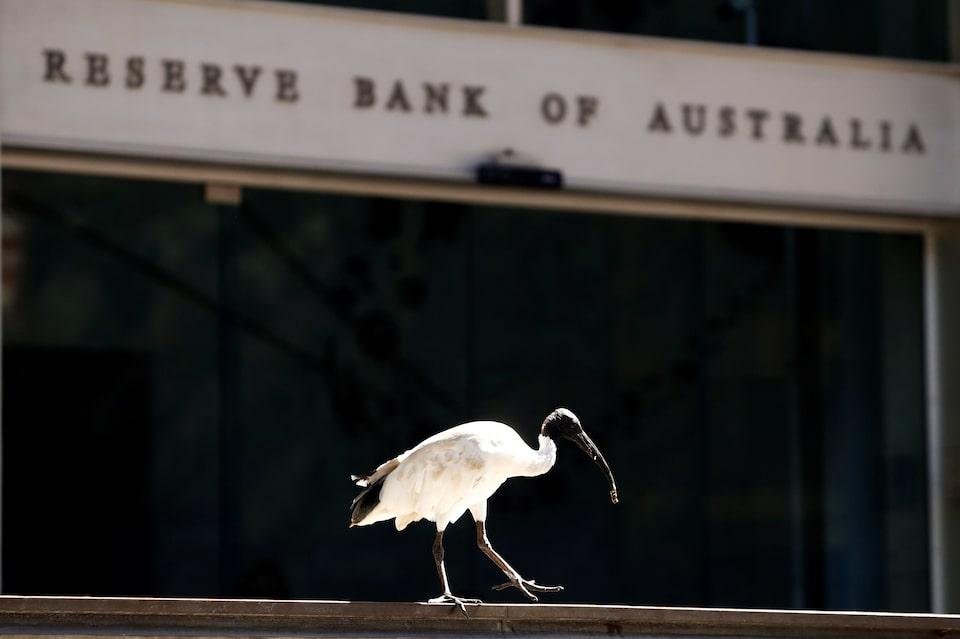
BENGALURU, Dec 6 (Reuters) - Australia's central bank will hold interest rates steady on Tuesday as a resilient labour market keeps inflation elevated, according to economists polled by Reuters who pushed forecasts for the first cut to the second quarter of next year. The Reserve Bank of Australia is the only central bank among its peers that has not yet begun lowering the cost of borrowing, in part because it raised benchmark rates by a comparatively modest 425 basis points between May 2022 and November 2023. Inflation, which the RBA targets at 2%-3%, fell to 2.8% in the previous quarter from a late 2022 peak of 7.8% as global supply chains gummed up following the pandemic. But core inflation has remained stubbornly high at 3.5%, and with unemployment near a record low the RBA is still likely to prefer keeping interest rates higher for longer. All 44 economists in the Nov. 28-Dec. 5 Reuters poll expected the RBA to hold its official cash rate (AUCBIR=ECI) , opens new tab at 4.35% at the end of its two-day policy meeting on Dec. 10. An over 60% majority, 25 of 40, forecast the RBA to first cut rates by 25 basis points in Q2 2025 to 4.10%, compared with a majority saying the first quarter in a November poll. Three of the major local banks in the survey, ANZ, NAB, and Westpac, shared that view, while CBA forecast the first cut in Q1 2025. "The data flow subsequent to the November RBA meeting was a bit more resilient, particularly on the labour market," said Luci Ellis, chief economist at Westpac, who switched her forecast for the first rate cut from February to May. Financial markets are currently pricing in over 70% chance of a cut in April . Ellis added "the RBA have shown a digging in of the heels" on the economy in assessing that aggregate demand continues to outstrip supply. Since then, there have been signs the economy is weakening. It grew at its weakest annual pace since the pandemic last quarter. "Given growth has been slow for the last year, we expect that to translate through into some further softening in the labour market but it will be some time before the RBA feels comfortable gradually cutting rates," Taylor Nugent, senior economist at NAB, said. "The economy is making only very gradual progress towards balance and the RBA will be later and shallower than other central banks having held rates in less restrictive territory for the last year or so." Falling mortgage rates next year were expected to help Australian home prices to rise steadily next year, a separate Reuters poll showed. With the RBA expected to cut rates by less than the U.S. Federal Reserve, the Australian dollar was forecast to gain nearly 1.5% in a year from about $0.644 currently, according to a Reuters poll of foreign exchange strategists. (Other stories from the Reuters global economic poll) Sign up here. https://www.reuters.com/markets/rates-bonds/rba-hold-rates-steady-december-first-cut-pushed-q2-2024-12-06/
2024-12-06 00:31
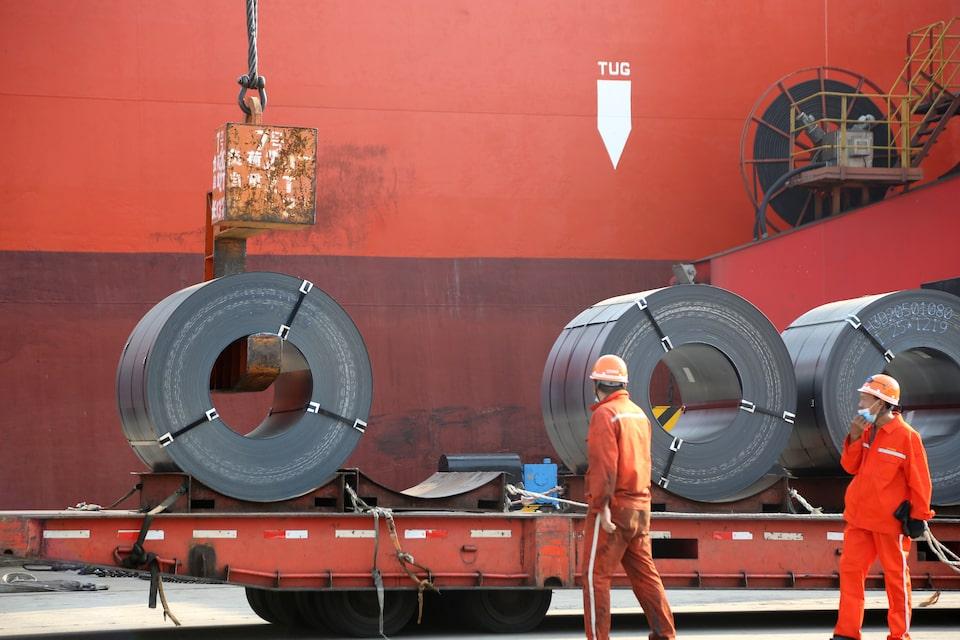
NEW DELHI, Dec 5 (Reuters) - India's finished steel imports from China reached an all-time high during the first seven months of the current financial year from April, according to provisional government data reviewed by Reuters, rattling hundreds of small Indian steel producers. China, the world's biggest steel producer, shipped 1.7 million metric tons of finished steel to India during April-October, a 35.4% increase year-on-year, the data showed. This has exacerbated the deteriorating financial health of Indian steel producers struggling with cheap Chinese imports and falling domestic prices despite robust demand driven by rapid economic growth and rising infrastructure spending in the world's fastest growing major economy. China, the world's biggest steel producer, mostly shipped stainless steel, hot-rolled coils, galvanised sheets, plates and electrical sheets, among other grades during the period, the data showed. India's overall finished steel imports surged to a seven-year high of 5.7 million metric tons during the April-October period. Finished steel imports from Japan and Vietnam more than doubled during the period, the data showed. China, South Korea and Japan accounted for 79% of total finished steel imports between April and October. India's steel ministry has sought a 25% safeguard duty or a temporary tax for two years on flat-steel products to curb cheap Chinese imports, according to a letter seen by Reuters. "There is a looming threat of huge increase in cheap imports from China," Sandeep Poundrik, the most senior civil servant at the Ministry of Steel said in a letter to his counterpart in the trade ministry. The letter was dated Nov. 27. The steel ministry did not respond to a Reuters email seeking comments. During April-October, hot-rolled coils were the largest imported grade, while bars and rods topped the imported grades in the non-flat product category, the data showed. India, the world's second-biggest crude steel producer, became a net importer of the alloy in the fiscal year to March 31, 2024 and the trend has continued since. However, demand has been strong, with consumption of finished steel reaching a seven-year high during April-October. India's finished steel exports fell 29.3% during April-October, and Italy emerged as the biggest buyer of Indian steel. But exports to Britain jumped nearly 15% between April and October, the data showed. Sign up here. https://www.reuters.com/world/india/indias-steel-imports-china-hit-record-high-latest-data-shows-2024-12-06/
2024-12-06 00:07
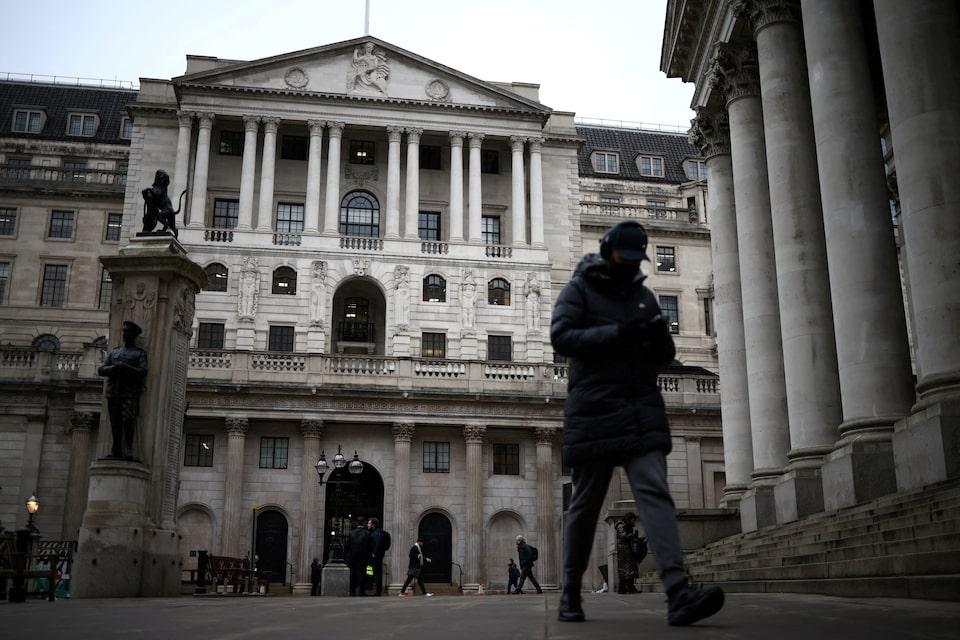
CBI cuts UK 2025 growth forecast to 1.6% from 1.9% before CBI trims UK 2024 growth estimate to 0.9% from 1.0% before Says measures in UK budget will push up firms' costs LONDON, Dec 6 (Reuters) - One of Britain's leading employers' groups on Friday cut its estimate for economic growth next year due to measures in the new government's first budget, striking a gloomier note than other recent forecasts. Growth in 2025 is now seen at 1.6%, the Confederation of British Industry (CBI) said, down from a projection of 1.9% made in June. The growth outlook for this year was trimmed to 0.9% from the June forecast of 1.0%. "Measures in the autumn budget will increase firms' costs at a time when their profit margins have already been under pressure," Louise Hellem, the CBI's chief economist, said. "Many businesses have told us that these measures will likely push up prices and weigh on their hiring and investment plans going forward." Finance minister Rachel Reeves announced in her Oct. 30 budget that employers will have to pay higher social security contributions for their workers from April, which is also when the minimum wage is due to rise by almost 7%. Many businesses have said the higher costs will threaten Prime Minister Keir Starmer's plan to speed up the economy. The Bank of England said on Thursday that more than half of companies taking part in a survey planned to raise prices and cut jobs in response to the budget. On Thursday, Starmer said his government was doubling down on its growth ambitions. Another employers group, the British Chambers of Commerce, said on Wednesday that 2025 was likely to be difficult due to the increase in employment costs and potential tariffs on exports once Donald Trump becomes U.S. president. However, unlike the CBI, the BCC revised up its forecast for growth in 2025 to 1.3% from a previous estimate of 1.0%. The OECD also this week raised its forecasts for Britain's economic growth in 2025 to 1.7% from 1.2% previously. The CBI said business investment would pick up in 2025 but slow slightly in 2026, reflecting the higher employment costs and the "crowding out" effect from higher public investment. Inflation would remain above the BoE's target until at least 2027, pushed up in part by the higher labour costs which would also weigh on private sector employment and result in a greater share of employment growth coming from the self-employed. Wage growth was set to weaken and the BoE would cut its benchmark Bank Rate slowly to 3.5% by late 2026 from 4.75% now. Overall economic growth in 2026 was seen at 1.5%. The CBI's forecasts assumed Britain avoids extra U.S. trade tariffs but the impact on growth and inflation would be marginal if the country was dragged into a trade war, it said. Sign up here. https://www.reuters.com/world/uk/uk-employers-cut-growth-forecasts-tax-hikes-weigh-economy-2024-12-06/
2024-12-05 23:55
LAUNCESTON, Australia, Dec 6 (Reuters) - It was likely a fairly easy decision for OPEC+ to once again delay plans to increase oil output. The soft state of global demand is by itself sufficient reason to justify the decision at Thursday's meeting of the group to defer winding back some of its production cuts until at least April. But weak demand growth may be the least of OPEC+'s worries as the oil market is about to be hit with the return of Donald Trump and all the uncertainty and contradictory policies that may bring. Trump's return to the U.S. presidency is likely to change the market dynamics for crude, but the problem is nobody really knows in what ways, and making decisions even trickier for OPEC+, which brings together the Organisation of the Petroleum Exporting Countries and allies including Russia. The only thing that is completely clear from Trump's rhetoric is that he wants cheaper fuel prices for U.S. consumers. To this end his arrival back in the White House on Jan. 20 should be bearish for crude prices. Trump's administration is likely to ease regulations for the U.S. oil and gas industry in the hopes that this will lead to higher production. It may well help boost U.S. natural gas output, especially if global demand for liquefied natural gas remains robust. But there's more of a question mark around U.S. crude production, which is already at record levels and may hit capacity constraints. It's also uncertain as to why U.S. oil companies would want to produce more oil if the impact of this is simply to lower prices. It becomes a calculation if the additional barrels can increase revenue and profits even if prices weaken. Some of Trump's other potential policies could have opposing effects on the crude oil market. Widespread tariffs on U.S. imports could upend global flows if the measures extend to crude. For example, tariffs on oil imports from Canada and Mexico could result in higher prices for U.S. consumers and lower profits for U.S. refiners, both of which are bearish for demand. If other countries impose retaliatory tariffs, U.S. crude and product exports may be lower, which may be bullish for prices as it reduces global supply. If Trump is successful in bringing peace to Ukraine and at least a ceasefire to the Middle East, this could be bearish for crude as it will potentially add more Russian barrels back into the market as well as lowering the risk premium. But if Trump goes hard against Iran over its nuclear programme and ramps up sanctions and their enforcement, it may be bullish for prices as it will be harder for the Islamic Republic to move barrels and may ramp up geopolitical tensions. Overall, Trump is likely to be bearish for prices, probably not because U.S. output will increase but more likely because his policies will lower global economic growth. ASIA DEMAND It's not only Trump that OPEC+ has to ponder, it's the weak state of demand in Asia, the top-importing region that buys almost two-thirds of seaborne crude oil. For the first 11 months of the year, Asia's crude imports were 26.52 million bpd, down 370,000 bpd from the 26.89 million bpd tracked by LSEG Oil Research for the same period in 2023. The decline in imports stands in contrast to OPEC's most recent forecast for Asia's oil demand to expand by 1.04 million bpd in 2024 from the previous year. Much of the decline can be blamed on China, the world's top oil importer, with OPEC and other analysts being wrong-footed by both the soft economy and the increasing structural shift to electric vehicles and LNG-powered trucks. The trend toward electrification is likely to accelerate in China, and the chances are it will expand across Asia as China seeks new markets to exploit its leadership in EVs, batteries and solar panels. Overall, OPEC+'s biggest dilemma is that it can only keep the oil price around $75 a barrel by extending its current deep output cuts of about a total of 5.86 million barrels per day. But in doing so it effectively subsidises its rivals and gives them the first opportunity to grab any increase in global demand. The views expressed here are those of the author, a columnist for Reuters. Sign up here. https://www.reuters.com/markets/commodities/opec-kicks-can-again-trump-is-added-demand-dilemma-russell-2024-12-05/

2024-12-05 23:44
Dec 5 (Reuters) - Argentina's central bank on Thursday lowered its benchmark interest rate to 32% from 35%, as the South American nation makes headway in its fight to tame triple-digit inflation. The reduction is the eighth since libertarian President Javier Milei assumed office in December 2023 and continues a series of cuts since a high of 133% in October last year. The central bank said it based its decision on "the observed consolidation of expectations for a lower inflation rate." Milei has presided over tough spending cuts. Inflation has slowed but poverty has climbed sharply and industrial activity has slipped as the economy entered recession. The rate decision came shortly after the bank published a market expectations survey which showed analysts had lowered forecasts for inflation this year. On average, they now expect a rate of 118.8% at year-end rather than 120% forecast last month. Rent and utility costs pushed annualized inflation to 193% in October, dipping below 200% for the first time in almost a year, showed data from statistics agency INDEC. As well as high inflation rates, Argentines are being squeezed by a reduction in social services spending and increased public-sector layoffs. Sign up here. https://www.reuters.com/markets/rates-bonds/argentina-central-bank-cuts-benchmark-interest-rate-32-2024-12-05/