2024-12-05 15:09
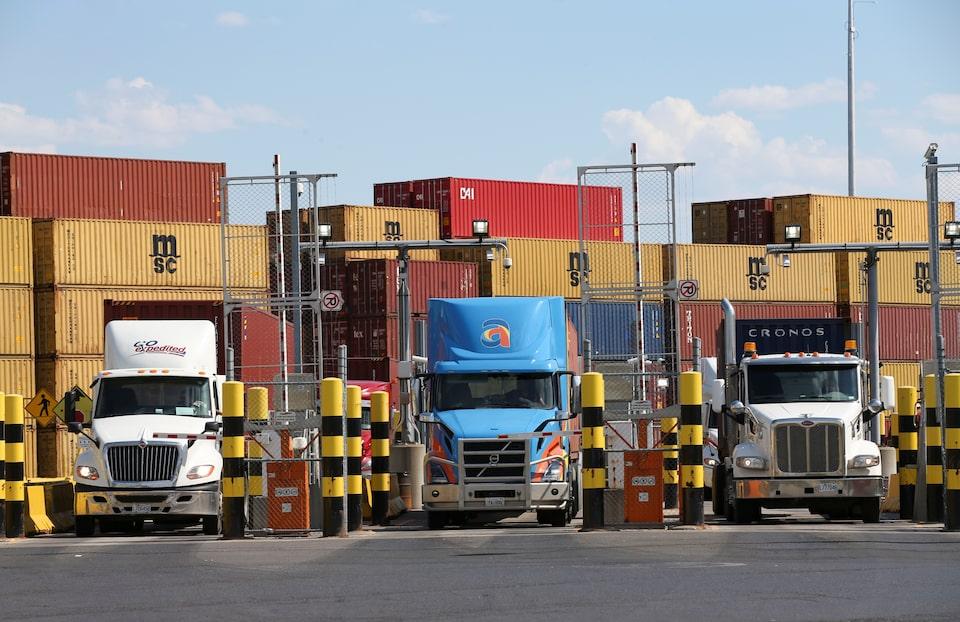
Trade deficit narrowed to C$924 million for October Trade surplus with the U.S. lowest this year Total exports rose 1.1%, imports were up by 0.5% OTTAWA, Dec 5 (Reuters) - Canada recorded in October a bigger-than-expected trade deficit with the world and its surplus with top trading partner the United States fell to its lowest this year, data showed on Thursday. U.S. President-elect Donald Trump has long complained about the U.S. trade deficit with Canada and last month threatened tariffs on exports. Canada's overall trade deficit narrowed to C$924 million ($657.60 million) in October, Statistics Canada said. It was Canada's eighth straight monthly trade shortfall, as exports could not overtake imports despite a rise in exports for the first time since June. Analysts polled by Reuters had forecast a C$790 million deficit in the month. September's trade balance was revised to a C$1.3 billion deficit from C$1.26 billion reported initially. Canada's trade surplus with the U.S., which buys more than three quarters of Canada's total exports, shrank to C$6.17 billion in October. This is the lowest it has been this year. Exports to the U.S. fell by 2.8% on a monthly basis and 8% on an annual basis, Statscan said, adding that inbound shipments from south of its border rose 1.1% monthly and 1.9% yearly. Trump threatened to impose 25% tariffs on all products imported from Canada, the United States' second biggest trading partner after Mexico, until Canada clamped down on drugs and migrants flowing into the U.S. The threat of tariffs from the U.S. makes it difficult to predict how Canada's gross domestic product will evolve next year. "The outlook for 2025 is clouded by trade/tariff uncertainty," Shelly Kaushik, an economist at BMO Capital Markets, wrote in a note. However, she said the overall trade numbers for October were largely neutral in terms of its contribution to fourth quarter growth. Data last week showed the Canadian economy underperformed the central bank's third-quarter growth forecast, and likely started the fourth quarter with small growth in October. The Bank of Canada has reduced borrowing costs by 125 basis points since June to 3.75% as inflation eased to its 2% target, but it has grown more concerned about a slowing economy. The Canadian dollar firmed up after the data and was trading up 0.36% to 1.4024 to the U.S. dollar, or 71.31 U.S. cents. Yields on two-year government bonds were up 4.4 basis points to 3.129%. Bets for a 50 basis point rate cut have shrunk since last week and currency markets now see just over 35% chance of a bigger rate cut on Dec. 11. A 25 basis point reduction in interest rate is fully priced in. On an overall basis, total exports rose 1.1% in October while imports were up by 0.5%, Statscan said. ($1 = 1.4051 Canadian dollars) Sign up here. https://www.reuters.com/markets/canadas-trade-deficit-narrows-c924-million-october-2024-12-05/
2024-12-05 14:26
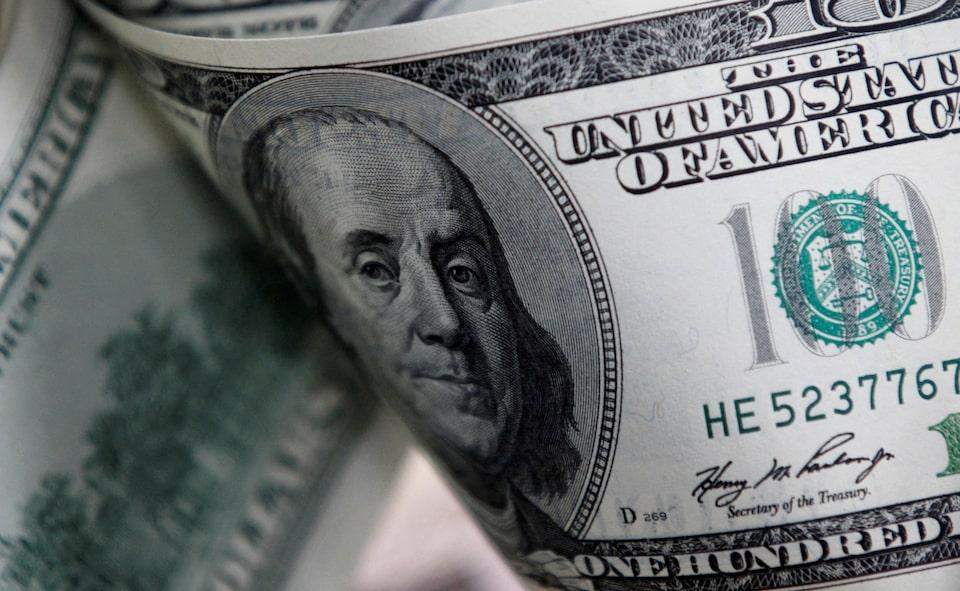
ORLANDO, Florida, Dec 5 (Reuters) - While the dollar has benefited enormously this year from the tech-led wave of U.S. "exceptionalism" that has lifted American growth, productivity, profits and stock prices, the greenback has also gotten a huge helping hand from its crisis-prone rivals. Unforeseen political and economic events have drawn investors toward the safety of the dollar throughout the year. Just look at the political chaos that erupted seemingly out of nowhere in South Korea on Tuesday, slamming the won to a two-year low and, at one point, putting it on track for its worst day in eight years. True, the won may only be the 12th-most traded currency in the world, involved in barely 2% of average daily foreign exchange turnover. But South Korea is Asia's fourth-largest economy and the wave of volatility that crashed over its FX and equity markets, forcing emergency action from Seoul to maintain financial stability, has darkened the cloud over emerging markets more broadly. That's especially true for Asia, where fears of tariffs from the incoming administration of U.S. President-elect Donald Trump have also pushed China's yuan to its lowest point this year. It's safe to say that few analysts on Jan. 1 would have had martial law in South Korea on their 2024 bingo cards. It's doubtful they had the following either: anemic growth in the euro zone, where economic weakness in Germany and political crisis in France are front and center; China sleepwalking into deflation; Canada's sluggish growth prompting the deepest interest rate cuts in the G7; Japan's yen slumping to its weakest point in 33 years; and fiscal fears slamming Brazil's real to a record low. Many observers will argue that it has forever been thus in the foreign exchange market, a zero-sum arena where prices are always relative. But this year has been especially kind to the dollar because of the idiosyncratic political issues and economic weakness that have blighted developed and key emerging market currencies. UNPRECEDENTED TAILWINDS The old FX market maxim that the dollar is the "cleanest dirty shirt" in the currency laundry basket has been borne out by events over the last year. Consider that the dollar index, a measure of the greenback's value against its G10 peers, is up only 5% this year, even as the U.S. has been tightening its stranglehold over world equities like never before. Foreigners have plowed record amounts into U.S. stocks this year, and U.S. investors have stayed at home en masse. What's more, the Federal Reserve has taken a much more cautious approach to cutting interest rates than the market had anticipated a year ago, providing another unexpected tailwind for the dollar. At the start of this year, rates futures were pricing in around 150 basis points of expected easing from the Fed in 2024. With one policy meeting to go, it's clear that's not happening. Throw in the travails that have blighted the euro zone, Canada and other major economies, and 5% appreciation suddenly doesn't look all that impressive. Granted, the dollar has risen more against many emerging market currencies, but they are much smaller components of the greenback's overall value. Given all of that, one might have expected the greenback to have appreciated more this year than it did. Looking forward, the question is, can it shine on its own merits next year? Perhaps. It's certainly difficult right now to envisage how the euro zone, China or any other large economy stages a significant recovery next year that threatens the dollar's dominance. But with the dollar hovering around its strongest level in more than 20 years and investors heavily "long," further appreciation is going to be a much harder slog. Especially if other shirts in the global currency laundry basket scrub up. (The opinions expressed here are those of the author, a columnist for Reuters.) Sign up here. https://www.reuters.com/markets/currencies/dollar-is-cleanest-dirty-shirt-mcgeever-2024-12-05/
2024-12-05 13:36
TRIPOLI, Dec 5 (Reuters) - The Central Bank of Libya (CBL) said on Thursday it had contracted British banknote printer De La Rue to print 30 billion dinars ($6.250 billion) in order to "solve the liquidity shortage problem" at the country's commercial banks. The central bank said last Sunday that the liquidity shortage problem would be "gradually solved" as of January in accordance with a plan approved by the board of directors. Despite its oil wealth, Libya has had a liquidity shortage for years, with citizens having to queue outside banks to get cash and salaries since the regime of Muammar Gaddafi was toppled in 2011. Libya's economy is heavily reliant on oil revenue, while state payrolls represent the largest percentage of spending, amounting to 48.6 billion dinars for January-October out of oil revenue of 67.8 billion dinars during that period, according to central bank data. Libya's exchange rate is 4.8 Libyan dinar to $1. CBL's governor Naji Issa met on Wednesday with De La Rue CEO Clive Vacher and Michael Wilson, the company's regional manager, to discuss implementing the contract, the bank said in a statement. "The meeting also discussed the schedule of dates for receiving the various shipments of currency," the bank said. CBL said it planned to withdraw old banknotes according to a timetable but it did not disclose further details. Libya has been split since 2014 between warring western and eastern administrations with rival factions seizing control of key economic institutions. Sign up here. https://www.reuters.com/markets/currencies/libyas-central-bank-print-30-billion-dinars-ease-liquidity-shortage-2024-12-05/

2024-12-05 13:34
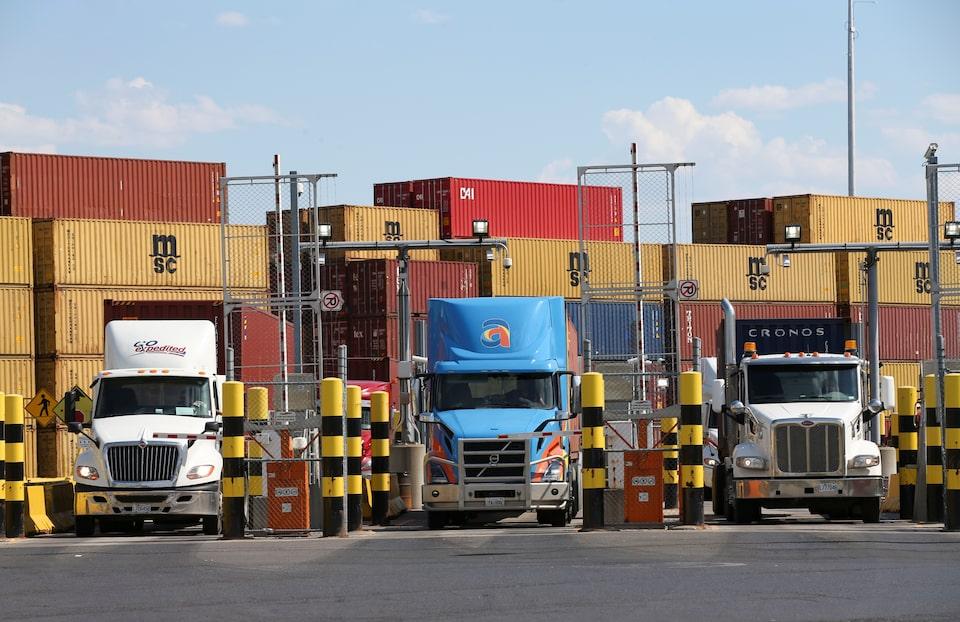
OTTAWA, Dec 5 (Reuters) - Canada posted a trade deficit of C$924 million ($657 million) in September, as the growth in exports wasn't able to overtake the growth in imports, Statistics Canada said on Thursday. This was the eighth consecutive monthly deficit. Due to the implementation of new software at the Canadian Border Services Agency, StatsCan said that this month's data includes a greater degree of estimation. Exports were up by 1.1%, on metal and non-metallic mineral products, as well as pharmaceuticals. Imports grew by 0.5%, also on metal ores and non-metallic mineral products, as well as energy products. Following are the seasonally adjusted figures in billions of Canadian dollars: Merchandise trade Oct Sep (rev) change pct Sep (prev) Balance -0.924 -1.300 n/a -1.264 Exports 64.217 63.522 +1.1 63.880 Imports 65.141 64.822 +0.5 65.145 NOTE: Analysts surveyed by Reuters forecast a trade deficit of C$790 million in October. ($1=$1.4061 Canadian) Keywords: CANADA ECONOMY/TRADE Sign up here. https://www.reuters.com/markets/canada-trade-deficit-narrows-924-million-october-2024-12-05/
2024-12-05 12:27
LONDON/MOSCOW, Dec 5 (Reuters) - OPEC+ has agreed to delay its plan to raise oil output until April 2025, an OPEC+ source told Reuters while its meeting was underway, to provide additional support for the oil market. The group will unwind its latest layer of output cuts gradually from April 2025 until 2026, the source said. Sign up here. https://www.reuters.com/business/energy/opec-delay-oil-output-hike-until-april-source-says-2024-12-05/

2024-12-05 12:18
HAVANA, Dec 5 (Reuters) - Cuba said late on Wednesday it had reconnected its national electrical grid, though generation remained far below demand one day after a plant failure knocked out power to millions across the island. Cuba's Energy and Mines Minister Vicente de la O Levy confirmed on X that the grid was back online just before midnight on Wednesday. But around the same time, the National Electric Union (UNE) said on social media it was "serving" 880 MW into the system, a fraction of the typical peak demand of 3,200 MW, suggesting that a large swath of the Caribbean island remained without electricity. A majority of Cuba's residents suffer hours-long, rolling blackouts on a daily basis even when the grid is functional. Cuba's electrical grid has been on the brink of collapse for years, as fuel shortages, a string of natural disasters and economic crisis have left the island's government unable to maintain the system's decrepit infrastructure. Dwindling oil imports from Venezuela, Russia and Mexico tipped the system into full crisis this year, leading to several nationwide blackouts that have sparked unrest and increasing anger among the population. The blackouts, together with food, medicine and water shortages, have vastly complicated life on the island and driven a record-breaking exodus of its residents since 2020. Cuba's communist-run government blames the crisis on the decades-old U.S. trade embargo, which stymies some financial transactions and makes it more difficult to purchase fuel and spare parts. Sign up here. https://www.reuters.com/world/americas/cuba-says-electrical-grid-back-online-generation-still-lagging-2024-12-05/