2025-12-29 10:44
Dec 29 (Reuters) - China's net gold imports via Hong Kong in November rose by 101.5% from October, Hong Kong Census and Statistics Department data showed on Monday. WHY IT'S IMPORTANT As the world's leading gold consumer, China's purchasing activities can significantly influence global gold markets. Sign up here. The Hong Kong data may not provide a complete picture of Chinese purchases, as gold is also imported via Shanghai and Beijing. BY THE NUMBERS Net imports via Hong Kong to China for November stood at 16.16 metric tons, compared with 8.02 tons in October. China's total gold imports via Hong Kong reached 30.22 tons in November, up 0.5% from 30.08 tons in October. KEY QUOTE "During November, we saw a lot of volatility in domestic Chinese premiums, moving from a modest premium to a significant discount, which suggests very mixed sentiment," said independent analyst Ross Norman. "However, seasonally it remains an attractive time of year for gold imports, with buying typically picking up ahead of the Lunar New Year." CONTEXT In top consumer China, bullion traded at discounts of $15 to $30 an ounce to the global benchmark spot price last week, narrowing from discounts of up to $64 seen the previous week - the deepest in more than five years, as gold prices were at record-high levels. Discounts have been offered to attract buyers amid lacklustre retail demand, but narrowed last week as speculative buying picked up on expectations of U.S. rate cuts, while tighter supply due to limited import quotas and a firmer yuan provided support. However, China kept adding gold to its reserves of the precious metal, with its holdings totalling 74.12 million fine troy ounces at the end of November from 74.09 million at the end of October, extending its buying spree for a13th month in a row. Spot gold prices have risen about 72% this year, hitting a record $4,549.71 an ounce on Friday, the biggest annual gain since 1979. The rally has been fueled by a cocktail of factors, including Federal Reserve policy easing, geopolitical uncertainty, strong central bank demand, rising ETF holdings, and ongoing de-dollarisation. https://www.reuters.com/world/asia-pacific/chinas-november-net-gold-imports-via-hong-kong-more-than-doubled-october-2025-12-29/

2025-12-29 09:36
PRAGUE, Dec 29 (Reuters) - The Czech central state budget is likely to be in a deeper deficit this year than the 241 billion crowns ($11.71 billion) originally targeted, new Finance Minister Alena Schillerova said. Schillerova said the deficit had already reached 266 billion crowns when she took office on December 15 and grew to 275 billion crowns four days later. Sign up here. "Meeting the planned deficit is unlikely," she said on Saturday in a post on X social media platform. This year's deficit in the state budget - which makes up the bulk of the overall fiscal balance - had been expected to fall from 271.4 billion crowns posted in 2024. A new government, led by billionaire Andrej Babis, whose populist ANO party won an October election with promises to raise wages and boost spending, took office this month. Analysts expect some fiscal loosening after the previous centre-right government had cut the country's overall fiscal gap to well below 3% of gross domestic product, meeting European Union rules. Babis' government has also set out to rework the 2026 budget plan, saying the previous administration's draft lacked some necessary expenditure, indicating the deficit next year would be above the previously proposed 286 billion crowns. Schillerova has said the government should approve a reworked draft in the second half of January. ($1 = 20.5770 Czech crowns) https://www.reuters.com/business/czech-2025-budget-likely-be-deeper-deficit-than-targeted-new-minister-says-2025-12-29/

2025-12-29 07:11
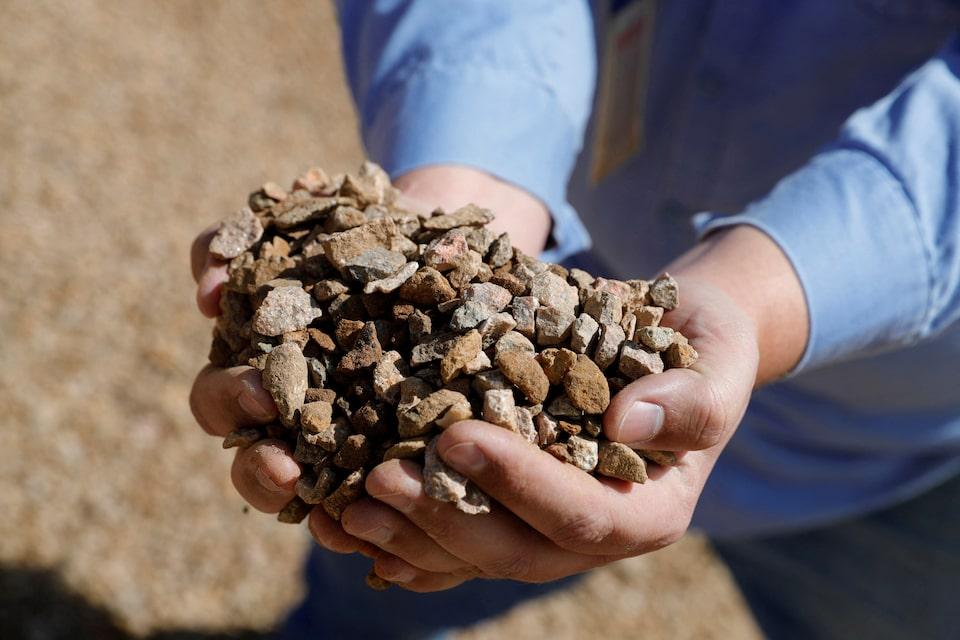
LONDON, Dec 29 (Reuters) - The U.S. Geological Survey's (USGS) updated critical minerals , opens new tab list now encompasses 60 different materials, representing around 80% of all the mined commodities on the periodic table. Some are well-known industrial inputs such as copper, nickel and zinc. Many are not. Among the rare earth elements are exotic metals such as gadolinium, ytterbium and praseodymium. Sign up here. From aluminium through to zirconium, all are considered "essential for national security, economic stability and supply chain resilience," according to the USGS. The spectrum of metals now deemed "vital for a modern American economy" speaks to a quiet revolution in how metals are used, one nurtured more in the laboratory than in the blast furnace. SPICE METALS Many critical minerals are "spice metals" - used in only tiny quantities but with a transformative impact. Consider, for example, the humble semiconductor chip, the foundation stone of modern technology, ubiquitous but unseen in our laptops, mobile phones and cars. Silicon has been the wafer material of choice for decades but is close to its technical limits when it comes to advanced computing. Sprinkle in a dash of gallium and germanium, however, and the chip's capacity rises exponentially. As garnish for the finished product, you'll need a mix of palladium, arsenic, iridium, titanium, copper and cobalt for plating, wiring, doping and packaging. It's a lot of metal for something so small, but the spice is worth it as the semiconductor industry seeks ever more powerful chips. The spice is also highly prized by the U.S. military, which helped develop the technology at the Defense Advanced Research Projects Agency. Super‑powerful gallium nitride chips enhance radar capability and boost drone-jamming capacity, a major defence priority in an age of drone swarms. POWER METALS The accelerator behind much of the recent metals revolution has been the global drive to reduce carbon emissions. The road to phasing out fossil fuels is paved with metals such as lithium, cobalt, nickel and manganese. Lithium was a niche industrial mineral used mainly in industrial lubricants until a little-known start-up called Tesla (TSLA.O) , opens new tab unveiled the Roadster , opens new tab electric vehicle in 2006. Now lithium sits at the heart of the shift from internal combustion engines to cleaner technology. No welding required. Lithium and other metallic cathode ingredients are blended as powders into bespoke recipes for battery makers. It's more chemistry than metalwork. A battery alone won't make a vehicle move. For that you need an electric motor, and the best are permanent-magnet motors rich in rare earths. Smaller magnet motors are needed to operate the windscreen wipers, adjust the seats and lower the windows. Like semiconductors, rare earth magnets are everywhere, just not in plain sight. PHOENIX METALS Copper wires the modern technological age and tin glues the whole thing together. These are two of the oldest metals used by humans; in combination they defined the Bronze Age. Thirty or so years ago both were in danger of becoming sunset metals as core applications in telecoms and packaging were steadily replaced by fiber optics and plastics respectively. Tin is still used for brass decorations and long-life food cans, but together these now account for only 17% of global usage, according to the International Tin Association. More than half of all the tin used today is for soldering circuit boards together, making it an indispensable part of the bridge between physical and virtual worlds. As for copper, it's still the best electrical conductor at the price. It wires every EV, it wires every charging point and it wires every power source. Millennia after bronze transformed tool-making, these two "phoenix metals" have been reborn as core inputs for modern life. METALS AGE Metals, both old and new, have been seeping into our technology in weird, wonderful and mostly unnoticed ways. Without them, nothing works. A study by U.S. defence software company Govini found that more than 80,000 parts across 1,900 U.S. weapon systems incorporate antimony, gallium, germanium, tungsten or tellurium. That's nearly 78% of all U.S. weapons and just five out of 60 critical minerals. This is a major problem for the Pentagon, since China is the dominant global producer of just about all of them and has this year shown it is quite prepared to leverage that position in the form of export controls. It's also a big problem for everyone, since civilian life depends on the same spicy metallic mixes. The West's pressing need to escape China's chokehold on critical minerals supply has thrust these previously obscure elements to the center of world politics. U.S. President Donald Trump's deal with Ukraine in May was underwritten by the country's mineral resources. The Washington-brokered peace deal between the Democratic Republic of Congo and Rwanda opens the door to a part of the world rich in copper and cobalt, currently dominated by Chinese operators. The U.S. International Development Finance Corporation is weighing up an investment with Congo's state miner Gecamines, which would give the U.S. a right of first refusal on future supply. Critical minerals are going to stay in the news until further notice. So expect more headlines about metals you've never heard of, such as indium, niobium and scandium. They're all critical in one form or another in the 21st century. Welcome to the new metals age. Andy Home is a Reuters columnist. The opinions expressed are his own Enjoying this column? Check out Reuters Open Interest (ROI) for thought-provoking, data-driven commentary on markets and finance. Follow ROI on LinkedIn , opens new tab and X , opens new tab. https://www.reuters.com/markets/commodities/every-mineral-is-critical-new-metals-age-2025-12-29/
2025-12-29 07:03
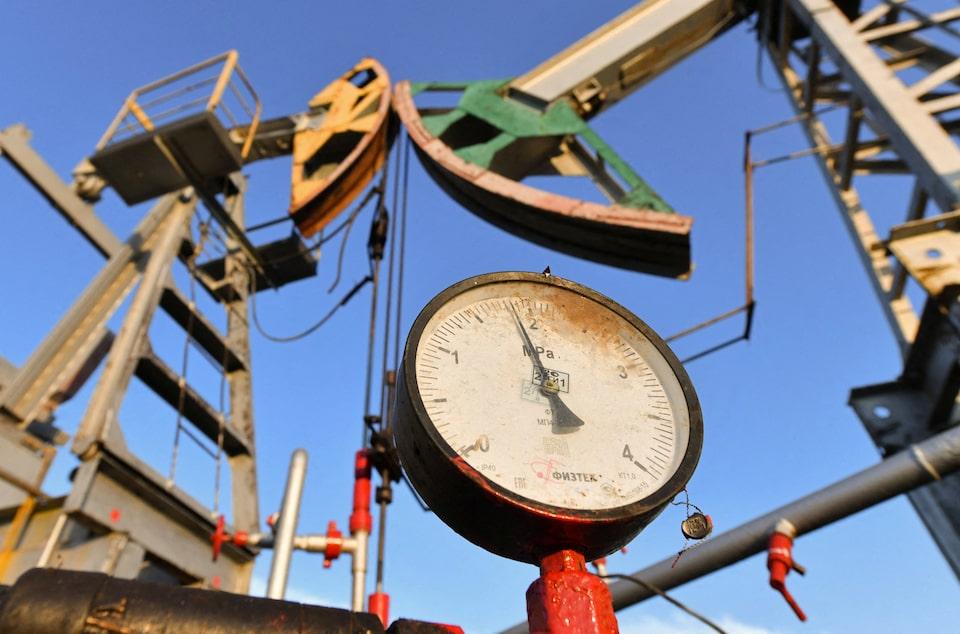
LONDON, Dec 29 (Reuters) - Energy markets enter 2026 in a downbeat mood as geopolitical uncertainty clouds the outlook and increasing signs of swelling oil and gas supplies threaten to sink prices. This past year was a wild one for the oil and gas industry, punctuated by the 12-day Israel-Iran war in June, U.S. President Donald Trump's trade wars, the intensified targeting of energy infrastructure in Russiain its war against Ukraine, OPEC’s often perplexing production decisions and the recently threatened U.S. blockade of Venezuela. Sign up here. So what’s in store for next year? Here are five trends likely to shape the energy landscape in 2026 and beyond. THE YEAR OF THE GLUT? Investors will keep a razor-sharp focus on signs of swelling oil inventories next year after crude prices fell nearly 20% in 2025 to about $60 a barrel on fears of significant oversupply. Global oil output has surged over the past year. The U.S. - the world’s biggest oil producer – ramped up production, as did Canada and Brazil, while the Organization of the Petroleum Exporting Countries and its allies including Russia, a group known as OPEC+, reversed years of cuts. The International Energy Agency forecasts supply will exceed demand in 2026 by a head-spinning 3.85 million barrels per day (bpd), the equivalent of around 4% of global demand. Yet OPEC analysts see a largely balanced market next year, creating one of the sharpest forecast divergences in decades. Uncertainty about the supply-demand balance has been compounded by China's large-scale crude stockpiling since April. Traders have limited visibility about these volumes, though they are estimated to be sizeable at roughly 500,000 bpd, according to Reuters calculations. Ultimately, the IEA looks more likely to be proven correct. According to Kpler data, oil being transported or stored on tankers has risen in recent weeks to its highest point since April 2020, when consumption cratered due to COVID-19 lockdowns. Such elevated seaborne stocks suggest onshore inventories may soon start filling, adding further downward pressure on prices. THE LNG WAVE IS COMING Demand for liquefied natural gas has surged in recent years, particularly as Europe has sought to rapidly replace the huge volumes of Russian pipeline gas it imported before Moscow’s invasion of Ukraine in 2022. The boom generated enormous profits for LNG producers and traders, but that may not be the case moving forward as global export capacity ramps up. Between 2025 and 2030, new LNG export capacity is expected to grow by 300 billion cubic metres per year, a 50% jump, according to the IEA, with around 45% coming from the U.S., the world's biggest exporter of the fuel. Supply is set to outpace demand growth over the same period, squeezing producers' margins and offering consumers in Europe and Asia some relief. Rising U.S. natural gas prices pose another headache for producers. Still, producers have some reason for optimism. As LNG prices decline in 2026 and beyond, this power source will become increasingly competitive with lower-cost options such as oil and coal, potentially boosting demand for the super-chilled fuel. DIESEL OUTPERFORMANCE PERSISTS Diesel profit margins have risen this year, gaining steam in the last six months as the refined-product market faced supply constraints even as the world is increasingly awash with crude oil. Benchmark European diesel refining margins rose 30% in 2025, compared with a 20% drop in Brent crude prices in 2025, according to LSEG data. That’s largely due to a string of Ukrainian drone attacks on Russian refineries and oil terminals, which led to a decline in diesel exports in late 2025, as well as the EU decision to ban imports of fuels made from Russian crude oil. This trend is expected to continue through 2026, since there is relatively little new refining capacity coming online. A peace deal in Ukraine would alter the calculus but likely offer only limited relief. BIG OIL EXPECTS BRIGHTER FUTURE Oil and gas companies are bracing for strong headwinds in 2026. Chevron (CVX.N) , opens new tab, Exxon Mobil (XOM.N) , opens new tab and TotalEnergies (TTEF.PA) , opens new tab have all lowered spending plans for next year by around 10% and announced deep cost cuts. At the same time, the oil majors appear quite bullish about the longer-term outlook. They are spending more on exploration and investments in new projects that will come online later this decade or in the early 2030s. Major Middle East oil producers, including Saudi Arabia and the United Arab Emirates, are also gearing up for a new era of upstream investments. This long-term bullishness may prompt Western oil majors – most of which boast solid balance sheets and relatively low debt, with BP (BP.L) , opens new tab a notable exception - to use the expected 2026 downturn to gobble up struggling rivals. RENEWABLES DOWN BUT NOT OUT In October, the IEA slashed its global forecast for renewable power growth through 2030 by one-fifth, or 248 gigawatts, compared with last year's outlook, citing weaker prospects in the U.S. and China. Global renewable capacity is now expected to rise by 4,600 GW by 2030, with solar accounting for roughly 80% of the increase. Even so, demand for electricity is expected to grow by 4% per year by 2027, driven by power-hungry data centres and the broader electrification of economies, even as governments and companies may slow energy transition plans in the name of energy security. This tension is set to dominate the world's power markets in 2026 and beyond, particularly as the costs of solar, wind and battery storage are expected to keep falling. Want to receive my column in your inbox every Monday and Thursday, along with additional energy insights and links to trending stories? Sign up for my Power Up newsletter here. Enjoying this column? Check out Reuters Open Interest (ROI), , opens new tabyour essential new source for global financial commentary. ROI delivers thought-provoking, data-driven analysis. Markets are moving faster than ever. ROI , opens new tab can help you keep up. Follow ROI on LinkedIn , opens new tab and X. , opens new tab https://www.reuters.com/markets/commodities/five-energy-market-trends-track-2026-year-glut-2025-12-29/
2025-12-29 06:39
ABUJA, NIGERIA, Dec 29 (Reuters) - Nigeria’s state oil company is betting on a long-delayed gas pipeline to ignite an industrial revolution in the country’s north, its chief executive said after briefing President Bola Tinubu on Sunday. Bashir Ojulari, Group CEO of NNPC Ltd, told reporters that the company has completed welding the main line of the $2.8 billion Ajaokuta-Kaduna-Kano (AKK) pipeline, including the critical River Niger crossing - a feat that has stalled progress for years. The milestone clears the way for connecting the pipeline early next year, a move Ojulari says will “bring gas in its full form into the northern part of Nigeria.” Sign up here. “This is not just about energy,” Ojulari said. “It’s about industrialisation - fertiliser plants, power generation, and gas-based industries in Kaduna, Kano, Abuja, and Ajaokuta. We expect to see industrial parks spring up.” The AKK pipeline, first conceived in 2008, is central to Nigeria’s ambition to leverage its vast gas reserves for economic growth. Its completion could transform the north, where chronic power shortages and a lack of energy infrastructure have stifled manufacturing for decades. Ojulari also revealed NNPC’s production targets: oil output is expected to rise to 1.8 million barrels per day in 2026, up from about 1.7 million this year, while gas production will continue to climb. He credited structural reforms under the Petroleum Industry Act for enabling NNPC to operate as a profit-driven company, no longer reliant on federal allocations. Ojulari said PresidentTinubu reaffirmed his push for $30 billion in new investments by 2030 and oil output of 2 million barrels per day by 2027. https://www.reuters.com/business/energy/nigerias-nnpc-targets-industrial-boom-countrys-north-gas-pipeline-nears-2025-12-29/
2025-12-29 06:25
Precious metals tumble from record highs on Ukraine peace deal uncertainty Dollar stays under pressure on rate cut wagers Oil prices rise as Middle East tensions heat up NEW YORK, Dec 29 (Reuters) - U.S. stocks dipped on Monday and gold tumbled from all-time highs at the top of a holiday-shortened week. The three major U.S. stock indexes ended in negative territory, weighed down by a broad selloff, which was slightly mitigated by strength in some defensive sectors that have underperformed for much of the year. Sign up here. Treasury yields eased and the dollar inched above its lowest level in almost three months, reflecting shifting expectations of Federal Reserve interest rate cuts in the coming year. "In light volume trading, we’re seeing a reversal of what we saw over the last couple of days," says Rob Haworth, senior investment strategist at U.S. Bank Wealth Management in Seattle. "The broader market is looking at the strength of last week and selling off as we head into year-end. " Market participants were closely monitoring negotiations between U.S. President Donald Trump and Ukrainian President Volodymyr Zelenskiy, with Trump saying they were getting "a lot closer" to a deal that could end Russia's war on Ukraine. But hopes for a deal dimmed after Russia accused Ukraine of trying to attack President Vladimir Putin's residence, in a potential roadblock to further negotiations. With just three sessions remaining, U.S. and global stocks were on course to end 2025 near record highs, having notched double-digit gains in a tumultuous year dominated by tariff wars, central bank policy and simmering geopolitical tensions. "When we started the year, we saw tariffs get implemented and the question was ‘will the market survive?’ The answer was yes," Haworth added. "The global economy has managed to weather many of the storms and uncertainties this year because consumers were spending and business continued to invest." "The more we can broaden out, that gives this rally more room to run," Haworth said. "We’ve had three years of strong gains there’s reason for us to expect a fourth." The Dow Jones Industrial Average (.DJI) , opens new tab fell 249.04 points, or 0.51%, to 48,461.93, the S&P 500 (.SPX) , opens new tab fell 24.19 points, or 0.35%, to 6,905.75 and the Nasdaq Composite (.IXIC) , opens new tab fell 118.75 points, or 0.50%, to 23,474.35. European stocks hit new all-time highs as gains in technology and consumer-focused stocks, although gains were capped by weakness in defense shares. MSCI's gauge of stocks across the globe (.MIWD00000PUS) , opens new tab fell 2.18 points, or 0.21%, to 1,020.63. The pan-European STOXX 600 (.STOXX) , opens new tab index rose 0.09%, while Europe's broad FTSEurofirst 300 index (.FTEU3) , opens new tab rose 1.93 points, or 0.08%. Emerging market stocks (.MSCIEF) , opens new tab rose 4.41 points, or 0.32%, to 1,401.81. MSCI's broadest index of Asia-Pacific shares outside Japan (.MIAPJ0000PUS) , opens new tab closed higher by 0.32%, to 721.89, while Japan's Nikkei (.N225) , opens new tab fell 223.47 points, or 0.44%, to 50,526.92. The dollar steadied and the yen strengthened following the release of the minutes from the Bank of Japan's policy meeting, but currency traders remained alert to the possibility of a BOJ intervention. The dollar index , which measures the greenback against a basket of currencies including the yen and the euro, rose 0% to 98.03, with the euro down 0.01% at $1.177. Against the Japanese yen , the dollar weakened 0.31% to 156.06. In cryptocurrencies, bitcoin fell 0.42% to $87,177.85. Ethereum declined 0.21% to $2,928.82. U.S. Treasury yields edged lower as investors adjusted their bets for interest rate cuts from the U.S. Federal Reserve in the coming year as economic data releases slowly return to their post-shutdown normal. The yield on benchmark U.S. 10-year notes fell 2.8 basis points to 4.106%, from 4.134% late on Friday. The 30-year bond yield fell 2.5 basis points to 4.7938% from 4.819% late on Friday. The 2-year note yield, which typically moves in step with interest rate expectations for the Federal Reserve, fell 2.6 basis points to 3.457%, from 3.483% late on Friday. Oil prices jumped as talks between U.S. and Ukrainian presidents on a possible deal to end the Russia-Ukraine war was complicated by Russia's accusations, and against potential oil supply disruptions in the Middle East arising from growing tensions in Yemen. U.S. crude rose 2.36% to settle at $58.14 per barrel, while Brent settled at $61.94 per barrel, up 214% on the day. Gold tumbled from record highs along with other precious metals amid profit taking. Spot gold fell 4.47% to $4,329.65 an ounce. U.S. gold futures fell 3.31% to $4,379.00 an ounce. https://www.reuters.com/world/china/global-markets-global-markets-2025-12-29/