2025-12-29 06:21
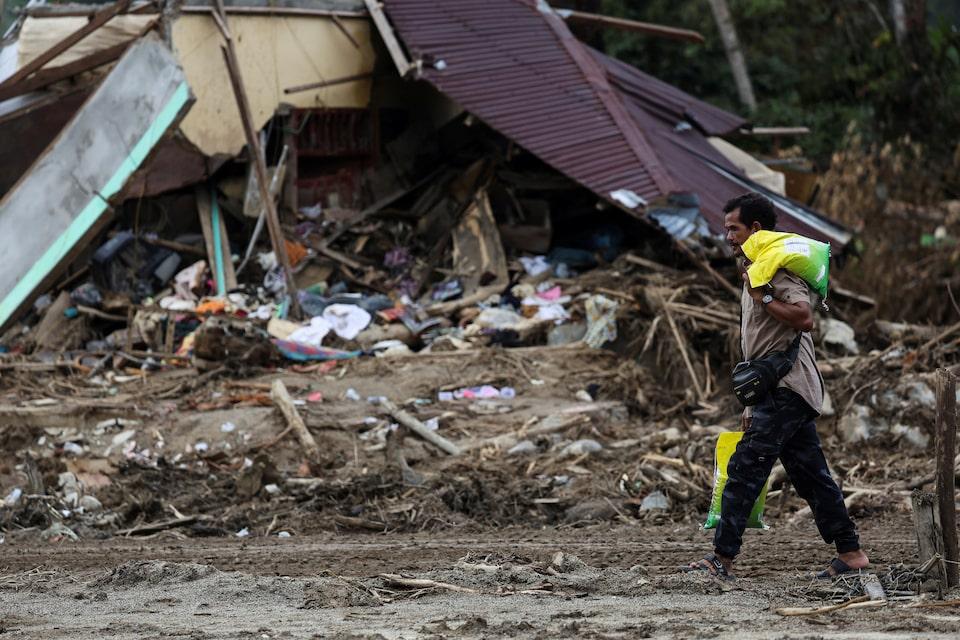
JAKARTA, Dec 29 (Reuters) - Indonesia's central government will support the plans of several regions to forgo fireworks while celebrating New Year this week in solidarity with the victims of recent floods on the island of Sumatra, an official in the president's office said on Monday. Several governments and police forces, including those in the capital Jakarta and on the popular tourist island of Bali, have said they will not allow firework displays out of respect for the victims on Sumatra, where floods and landslides have killed over 1,100 people, with around 400,000 still displaced. Sign up here. Prasetyo Hadi, spokesperson for President Prabowo Subianto's office, told reporters that the government thinks it is correct that regional governments should ban fireworks or urge people not to set them off during the celebrations. "It is correct because we have to show empathy and solidarity ... as a nation, that there are some who suffered from a disaster," he said. Police in Bali's capital of Denpasar have banned New Year's fireworks, state news agency Antara reported on Saturday. Jakarta's governor also said last week that there will be no firework displays in the city of 10 million people, and urged residents not to set any off. Indonesian authorities have built bridges and housing in the areas of Sumatra hit by the floods, which include the provinces of North Sumatra, West Sumatra, and Aceh. The recovery is expected to cost at least $3.11 billion. Several regions on the island remain in a state of emergency, coordinating minister for human development Pratikno said in a press conference on Monday. Over 20 villages across the three provinces "disappeared" after being swept away by the floods, home affairs minister Tito Karnavian said during the same briefing. https://www.reuters.com/business/environment/no-new-year-fireworks-indonesia-nation-mourns-sumatra-flood-victims-2025-12-29/
2025-12-29 06:19
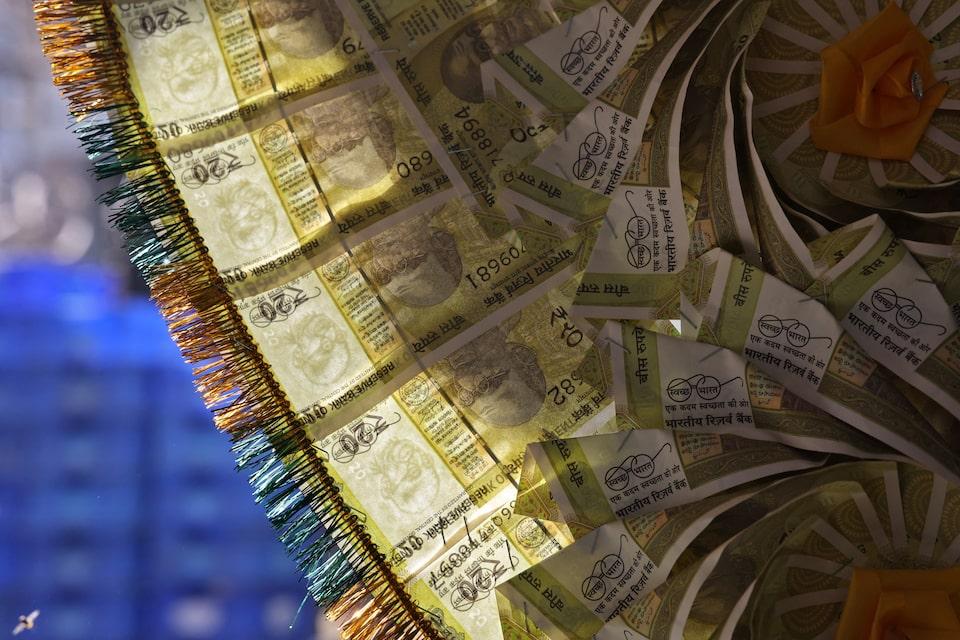
MUMBAI, Dec 29 (Reuters) - The Indian rupee weakened for a third straight session on Monday as corporate dollar demand via private banks pressured the currency, with bids at the central bank’s reference rate adding to the drag, traders said. The rupee closed at 89.9750 per U.S. dollar, softer than Friday's 89.85 finish. It opened at 89.88 and slipped steadily through the session. Sign up here. "Apart from corporate dollar demand, there was hardly any activity from traders or speculators, which was clear as volumes remained shallow," a trader with a private bank said. Earlier in the day, bankers were willing to pay a roughly 1.5-paisa premium to buy dollars at the RBI fixing rate, signalling steady dollar demand. The rupee hovered around 90 through the session and is seen at risk of slipping past the mark this week, with thinning year-end volumes likely to magnify flow-driven moves, traders said. "On the surface, markets looked calm — but beneath that calm, a larger shift may be quietly taking shape as the year turns," said Amit Pabari, managing director at FX advisory firm CR Forex. Asian cues were largely unsupportive for the rupee, with regional currencies mostly weaker and the dollar index rising to 98.05. Meanwhile, dollar/rupee forward premiums were relatively quiet after a highly volatile week, with the one-year implied yield inching up 2–3 basis points to around 2.80%. The rupee's slide against the dollar has increased its allure for UBS Asset Management ahead of a long-anticipated trade deal with the U.S. "We like the currency and feel it is very cheap. The trade deal has not yet been announced but we are hopeful it would be announced soon, so at these levels, the currency is looking attractive," said Shamaila Khan, head of fixed income emerging markets and Asia Pacific, UBS Asset Management. https://www.reuters.com/world/india/rupee-bias-mildly-negative-with-year-end-flows-positioning-focus-2025-12-29/
2025-12-29 06:02
Bulgaria to adopt euro on January 1, 2026 Concerns over price increases and political instability Businesses and some citizens welcome euro adoption SOFIA, Dec 29 (Reuters) - Bulgarian banks, businesses and shoppers were preparing this week to say goodbye to the lev currency ahead of a move to adopt the euro on January 1, a long-awaited milestone met with excitement, scepticism and, in some corners, anger. Bulgaria, a Black Sea country on the European Union's southeast frontier, will be the 21st country to join the euro currency zone after it met the formal entry criteria this year, including for inflation, budget deficit, long-term borrowing costs and exchange-rate stability. Sign up here. It comes two years after Croatia joined in January 2023 - the last country to do so - and will push the number of Europeans using the currency to more than 350 million. Becoming a member of the euro zone, apart from using euro notes and coins, also means a seat at the European Central Bank's rate-setting Governing Council. While successive Bulgarian governments have tried to make the step since joining the EU in 2007, the Balkan country of 6.7 million people is split on the issue, polls show, although businesses are largely in favour. SUSPICIONS AMONG SOME BULGARIANS Some fear it will push up prices, or are suspicious of a domestic political establishment in the throes of a crisis that saw the government step down this month amid widespread protests against proposed tax increases. In a country with historic cultural and political ties to Russia, many are wary of further allegiance to Europe. “I am against it, first because the lev is our national currency," said Sofia pensioner Emil Ivanov, interviewed while shopping. "Secondly, Europe is heading towards demise, which even the American president (Donald Trump) mentioned in the new national security strategy. "I may not be alive when this (the EU's demise) happens but that is where everything is going." BUSINESSES HAVE BEEN PREPARING Some political analysts said the campaign promoting the euro has been weak, and that older people, especially in remote areas, will struggle to adapt. They said a lack of stable government may further complicate the change. Still, in the streets and stores of Sofia, businesses have been preparing. Prices of everything from fruit to bottles of wine are displayed in both levs and euros. Government-funded billboards show the euro-lev exchange rate with a message saying: "Common past. Common future. Common currency." Television adverts have also flagged the coming change. Some have welcomed the move. "Not only older people but also all young people can easily travel using euros instead of having to exchange currency," said Veselina Apostovlova, a pensioner shopping in Sofia. Businesses that sell goods across borders were also supportive. Natalia Gadjeva, owner of the Dragomir Estate Winery in the Thracian Valley, told Reuters: "For me, the most important thing is that all operations involving currency conversion and reissuing invoices in euros and then in levs will be eliminated." https://www.reuters.com/business/bulgaria-prepares-euro-amid-excitement-scepticism-2025-12-29/

2025-12-29 05:49
NEW DELHI, Dec 29 (Reuters) - For more than a century, trams have rumbled past Kolkata's crumbling colonial facades, with their chiming bells contributing to the city's soundtrack as they ferried generations of commuters. Now, Asia's oldest tram network is on the brink of disappearing as authorities consider pulling the plug on a mode of transport that has become more nostalgia than necessity. Sign up here. The West Bengal government plans to shut down the 152-year-old system, keeping only a short heritage route. The decision has sparked a court battle as residents and heritage advocates fight to keep the trams rolling. "As children, we would take the trams for fun, but as I grew older it became a necessity," said Abha Maity, 44, recalling rides to school and college. "I can’t imagine Kolkata without them." Once a highlight of the city's streets, the wobbly trams now struggle for space amid traffic jams - competing with buses and yellow taxis - as Kolkata builds modern infrastructure and seeks faster transport. Kolkata introduced horse-drawn trams in 1873 and electrified them in 1902. At its peak, the network boasted more than 340 trams and covered the entire city. Today, only two routes remain, with a fleet of about 10. "When I joined, more than 340 trams were running. Now it's down to seven or eight," said Bacchu Sidda, a conductor for 36 years who still checks his duty roster pinned on a board at the last functioning depot in Gariahat. The government began selling depots and scrapping cars years ago, prompting a citizens' group called Calcutta Tram Users Association (CTUA) to take the fight to court. CTUA has campaigned since 2016 to save what remains of the system. "I love my trams more than myself," said Deep Das, 19, a journalism student and CTUA member. "If they disappear, it will be like a part of my body has left me." Despite resistance, authorities are pouring billions into upgrading Kolkata's infrastructure, focusing on metro expansion, wider roads and new highways to ease congestion. For now, the fate of Kolkata's aging trams awaits a court review, as they continue carrying some passengers who view them as living memories of the city's past. https://www.reuters.com/world/india/kolkatas-iconic-trams-face-final-stop-modernization-rolls-2025-12-29/

2025-12-29 05:49
Dec 29 (Reuters) - PG&E Corp (PCG.N) , opens new tab crews have restored power to about 11,000 San Francisco customers affected by an outage caused by overhead equipment failure, the company said on Monday. The outage, which began on Sunday at 7:45 p.m. PST (1145 GMT) in San Francisco's Richmond neighbourhood, had been resolved as of 10:15 pm PST (1415 GMT), the power utility said. Sign up here. https://www.reuters.com/business/energy/pge-transformer-fire-cuts-power-11000-customers-san-francisco-2025-12-29/

2025-12-29 05:09
Flaring tensions in Yemen raise Middle East oil supply concerns Russia to review position on peace talks Moscow claims Ukrainian drones targeted Russian presidential residence Investors wait for delayed US stockpiles report Dec 29 (Reuters) - Oil prices settled more than $1 a barrel higher on Monday as Russia accused Ukraine of attacking President Vladimir Putin's residence, while traders braced for potential supply disruptions in the Middle East due to rising tensions in Yemen. Brent crude futures rose $1.30, or 2.1%, to settle at $61.94 a barrel. U.S. West Texas Intermediate crude gained $1.34, or 2.4%, to close at $58.08. Sign up here. Russia on Monday accused Ukraine of launching a drone attack on the Russian presidential residence in northern Russia, due to which Moscow now plans to review its position in peace talks. Ukraine dismissed Russian statements about the drone attack and its foreign minister said Moscow was seeking "false justifications" for further strikes against its neighbor. "Unless Russia surprises the world by backing away from previous demands regarding territory and security guarantees, we are looking for the complex to edge higher through the rest of this week and next week," oil trading advisory firm Ritterbusch and Associates said. Prior to the drone attack claims, Ukrainian President Volodymyr Zelenskiy had said on Monday that significant progress had been made in talks with U.S. President Donald Trump and agreed that U.S. and Ukrainian teams would meet next week to finalize issues aimed at ending Russia's war in Ukraine. TENSIONS IN YEMEN RAISE SUPPLY CONCERNS The oil market's focus has also shifted toward the Middle East, Gelber & Associates said in a note. "Fresh instability, including Saudi air strikes in Yemen, is keeping supply-disruption headlines in play," the energy consultancy said. Yemen's Saudi-led coalition said any military moves by the main southern separatist group in the eastern province of Hadramout that undermined de-escalation efforts would be countered to protect civilians, the Saudi state news agency reported on Saturday. An escalation of fighting on Thursday killed two people from the separatist group Southern Transitional Council's Hadhrami Elite Forces in Hadramout, the group said in its statement. Saudi airstrikes followed early on Friday, targeting the STC forces in the area, a source told Reuters. Strong Chinese waterborne crude imports are also helping tighten oil markets, said UBS analyst Giovanni Staunovo. He added that $60 a barrel was the soft floor for Brent, with prices expected to recover slightly in 2026 because non-OPEC+ supply growth is likely to stall in the middle of 2026. Energy investors awaited data on U.S. stockpiles for the week ended December 19. The report, which was expected to be published at 10:30 a.m. ET on Monday, was delayed without assigning a new publication time. An extended Reuters poll showed U.S. crude oil inventories were expected to have fallen in the week ended December 19, while distillate and gasoline inventories were expected to have risen. https://www.reuters.com/business/energy/oil-gains-investors-weigh-middle-east-tensions-2025-12-29/