2024-12-04 07:02
LONDON, Dec 4 (Reuters) - Post-election U.S. reflation trades have quietly subsided and the world's sovereign bond markets have confounded many doomsters to roar back to life, dragging government borrowing rates back down over the past fortnight. It's not at all obvious as to why. But it may simply reflect trade war anxiety and related world growth concerns, or fears of another geopolitical shock with a new government due in Washington, or maybe even thoughts of sliding oil prices if U.S. drilling goes up a gear. Or maybe it's all three. What this is not is a market overly anxious about a go-go world economy, re-aggravated inflation or excessive government debt. In some respects, it's the flipside of the market consensus on what another four years of Donald Trump in the White House might do to prices, one which riffs on yield curves steepening on new stimulus, a tariff-induced inflation resurgence and stalled central bank easing. But however you characterize it, the reversal of the immediate post-election jolt in bond markets has been substantial across the developed world. Europe and China stand out. Since Nov. 7, the 10-year German bund yield has plummeted almost 50 bps, within a whisker of breaking 2% for the first time since the start of January. While that may seem peculiar for a country facing elections in two months time, it's likely a reflection of the additional pall Trump's trade tariffs would throw over an already hobbled German and euro zone economy and stepped-up European Central Bank easing. Jitters about the broader impact on the euro zone may give bunds something of a regional safety bid. But even French 10-year yields have plunged as much as 40 bps since Nov. 7, as Paris has been mired in a government crisis that risks creating political and budgetary paralysis for several months. China, facing investment curbs and eye-watering tariff threats from both outgoing and incoming U.S. administrations, saw its 10-year sovereign borrowing rates plumb sub-2% levels for the first time on record this week, a drop of almost 15 bps over the same time period. And despite persistent evidence of exceptional U.S. growth, sticky inflation and widening budget deficits, long-dated U.S. Treasury yields too , have dropped about 30 bps since the day after the election. The widest possible index of global sovereign and corporate debt worldwide, the Bloomberg Multiverse index, saw implied yields drop 15 bps over that period as the index has jumped 1.5%. INCOME IN UNCERTAINTY What gives? One prosaic explanation is overly extreme positioning against sovereign debt in the run-up to the U.S. election is just being squared off into year end and the final central bank rate cuts of 2024 are due this month. "Safe" sovereign debt allocations are often in large multi-country buckets anyway, which is why they are often priced in lockstep. But it's not at all that clear. The latest CFTC data shows speculative short positions on Treasury futures continued to rise in the latest week, even if these often say less about directional bets and mostly mirror asset manager demand. The latest Bank of America global funds survey shows an outstanding underweight position in bonds worldwide last month, but it was substantially less than the previous month, even though respondents identified "short 30-year Treasury bond" as a fourth most crowded trade out there. And underweight bond allocations more broadly are not especially extreme anyway - actually some 1.3 standard deviations above long-term averages. So it may simply be that markets are just starting to price the global growth impact of a trade war, which Trump already appears determined to get underway in a series of tariff warnings to Mexico, Canada, China and the wider BRICS grouping of developing economies over the past week or so. If countries offset those tariff rises by allowing their currencies to weaken, the U.S. dollar's value (.DXY) , opens new tab could well be supercharged worldwide, and that would act as a drain on global financial conditions and liquidity by itself. Even if U.S. growth were to continue to outperform in that world, it's unlikely it could remain entirely undamaged by a large global demand hit. But there's another factor that may see 2025 end up being much kinder to bonds in general than many assumed, a return of so-called income investing. In its secular long-term investment outlook this week, Swiss house Julius Baer said income investing may well be back in vogue over the coming years so that bonds were no longer "priced for confiscation." And there was "insufficient evidence" to support a thesis of structurally higher-for-longer interest rates, it added, given that private sectors remained net savers in many countries. "A steady income stream is even more valuable in times of macroeconomic uncertainty," Julius Baer said. And if global macroeconomic uncertainty really is good for world bonds, the rally of recent weeks should be no surprise. The opinions expressed here are those of the author, a columnist for Reuters. Sign up here. https://www.reuters.com/markets/rates-bonds/banished-bond-blues-give-clues-2025-mike-dolan-2024-12-04/

2024-12-04 06:47
Palliser demands review of dual-listing structure Activist investor says $50 bln shareholder value lost Upside of $28 bln from unified structure in near term Dec 4 (Reuters) - Activist investor Palliser Capital demanded Rio Tinto (RIO.L) , opens new tab, (RIO.AX) , opens new tab scrap its primary listing in London and unify its corporate structure in Australia, saying about $50 billion in shareholder value has already been lost due to the dual listing. UK-based Palliser in a strongly worded letter , opens new tab to the iron ore giant's board said on Wednesday that doing away with the "outdated" dual listing structure would unlock $28 billion in value to London shareholders in the near term and additional value for the combined group in the medium term. "We implore the Board to act swiftly to stop the clock on further value destruction for shareholders in the hands of a structure that is unfit for the corporate world of today," the hedge fund said. It has demanded an independent, comprehensive and transparent review by the miner's board into the rationale for maintaining a corporate structure that it says every other large company has moved on from. Rio Tinto, the world's biggest iron ore producer, did not immediately respond to a Reuters request for comment. The miner's inability to carry out stock-based mergers and acquisitions has cost shareholders an estimated $35.6 billion since the dual structure was implemented three decades ago, Palliser further stated in its letter. "Rio Tinto's approach to M&A (mergers and acquisitions) is both an obvious statistical anomaly and entirely unsustainable going forward," the activist investor said. Palliser also gave BHP's example, which scrapped its dual listing in favour of its main listing in Sydney in 2022, and said a unified Rio Tinto would trade up to and ultimately surpass its current price, which closed at A$120.08 ($77.30) per share on Wednesday. The London-listed stock ended at 50.20 pounds ($63.68) on Tuesday. ($1 = 1.5535 Australian dollars) ($1 = 0.7883 pounds) Sign up here. https://www.reuters.com/markets/commodities/activist-investor-palliser-demands-rio-tinto-scrap-london-listing-2024-12-04/
2024-12-04 06:47
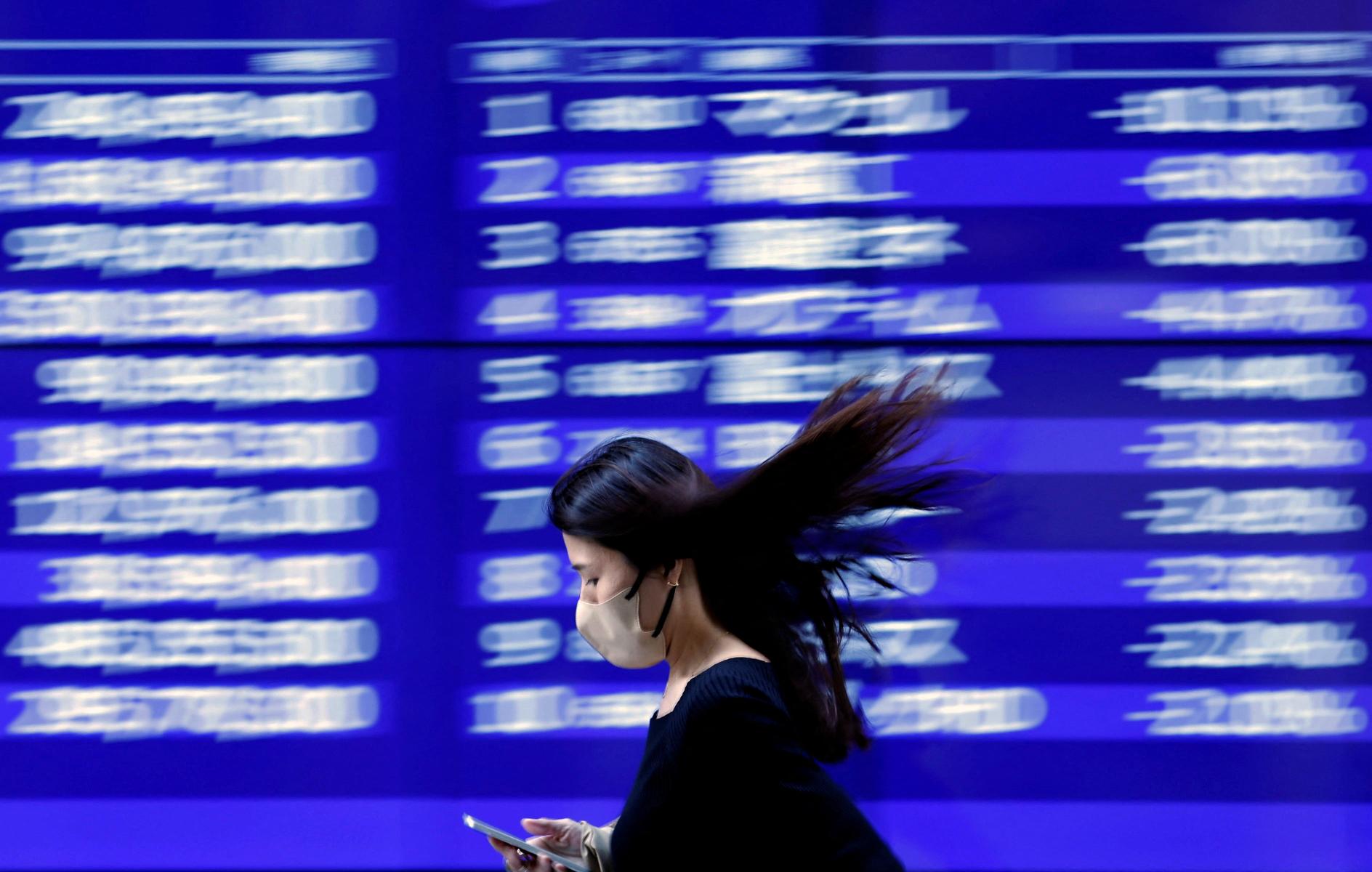
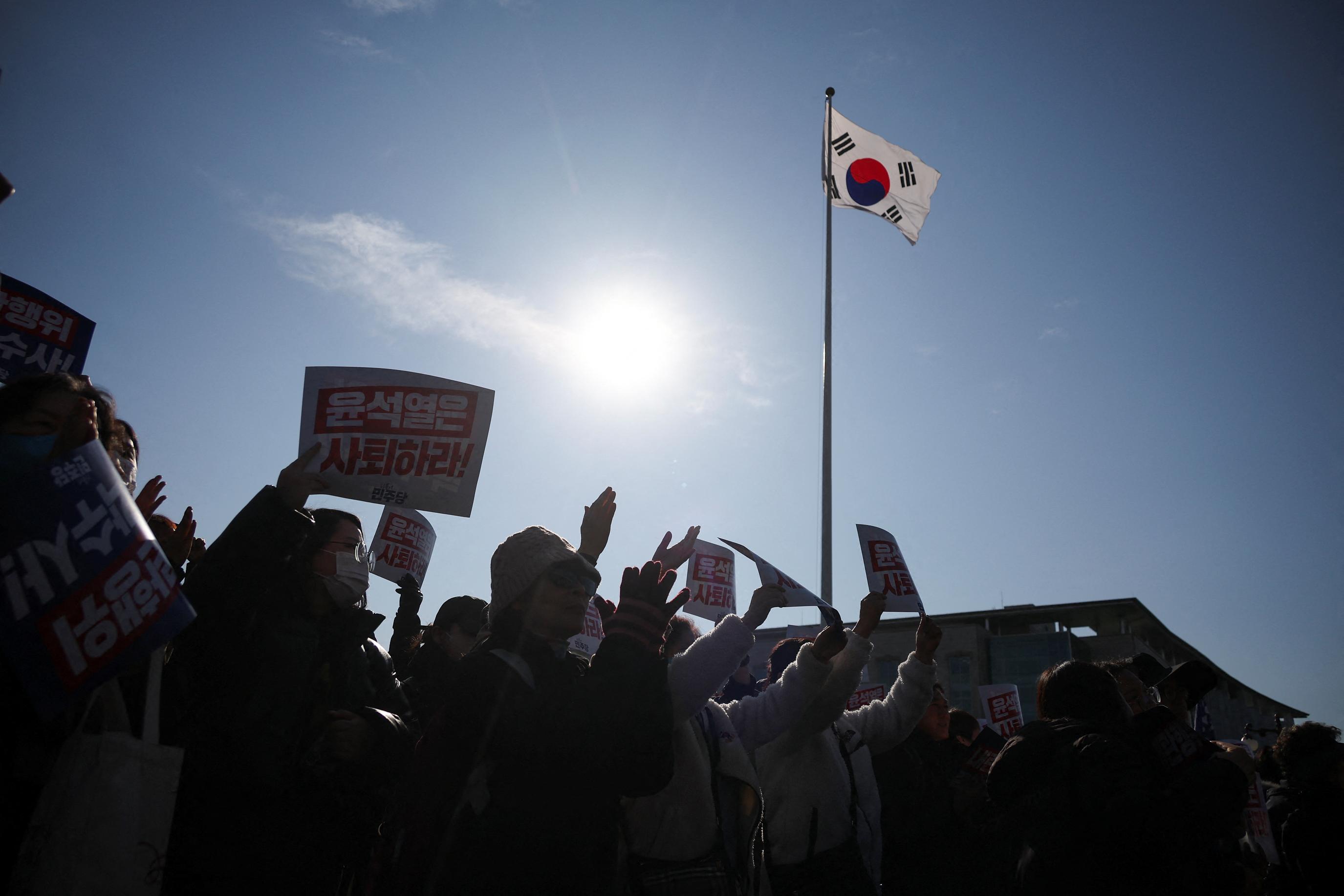
U.S. stocks rise on strong tech earnings Dollar, euro steady despite political turmoil in France Won near 2-year low amid South Korean political upheaval Treasury yields fall Dec 4 (Reuters) - A U.S. tech stock rally and expectations of lower interest rates boosted global shares while the euro and dollar were steady on Wednesday despite political turmoil in South Korea and France. Wall Street's major stock indexes rallied to record closing highs, led higher by tech stocks and comments by Federal Reserve officials. Enterprise cloud company Salesforce (CRM.N) , opens new tab and chipmaker Marvell Technology MRVL.O , opens new tab> logged strong third-quarter results. UnitedHealth (UNH.N) , opens new tab shares gained nearly 1% despite Brian Thompson, the CEO of its insurance unit, being fatally shot on Wednesday morning in New York City. The S&P 500 (.SPX) , opens new tab added 0.6% to 6,086 and the Nasdaq Composite (.IXIC) , opens new tab jumped 1.3% to 19,735 -- both record highs -- while the Dow Jones Industrial Average (.DJI) , opens new tab rose 0.7%, to 45,014. MSCI's gauge of stocks across the globe <.MIWD00000PUS> rose 0.47%. U.S. Treasury yields fell after Fed Chair Jerome Powell said the recent strength of the economy will allow the U.S. central bank to "be a little more cautious as we try to find neutral” with interest rate policy. The day started on a more negative note, when lawmakers in South Korea, Asia's fourth-largest economy, called on President Yoon Suk Yeol to resign or face impeachment a day after he declared martial law, only to reverse the move hours later. The crisis left South Korea's benchmark KOSPI index (.KS11) , opens new tab down 1.4%, taking its year-to-date losses to over 7% and making it the worst performing major stock market in Asia this year. MSCI's broadest index of Asia-Pacific shares outside Japan (.MIAPJ0000PUS) , opens new tab, which counts Samsung Electronics (005930.KS) , opens new tab as one of its top constituents, fell 0.15%. Most Asian markets aside from South Korea rose. The won currency , buoyed by suspected central bank intervention, steadied but remained close to the two-year low against the dollar that it hit late on Tuesday. South Korea's finance ministry said it was prepared to deploy unlimited liquidity into financial markets. Reports said the financial regulator was ready to deploy 10 trillion won ($7.1 billion) in a stock market stabilisation fund. "Martial law itself has been lifted, but this incident creates more uncertainty in the political landscape and the economy," said ING senior economist Min Joo Kang. In Europe, stocks (.STOXX) , opens new tab gained about 0.4% and the euro traded near a two-year low ahead of the no-confidence vote in France. French lawmakers later in the day voted to oust the fragile coalition of Prime Minister Michel Barnier, deepening the political crisis in the euro zone's second-largest economy. Barnier's government is France's first to be forced out by a no-confidence vote in more than 60 years. The country is struggling to tame a massive budget deficit. The single currency, last at $1.0511 , was little changed on the day but down about 5% over the last three months. Investors have been bracing for tariffs from U.S. President-elect Donald Trump. U.S. POLICY PATH Away from political turmoil, investors are hoping for more clues on the policy path the Fed will likely take next year, with a November employment report due on Friday. U.S. job openings increased solidly in October while layoffs dropped by the most in 1-1/2 years, data showed on Tuesday. Another survey showed employers hesitant to hire more workers. U.S. economic activity also expanded slightly in most regions since early October, with employment growth "subdued" and inflation rising at a modest pace and businesses expressing optimism about the future, the Fed said on Wednesday in its "Beige Book" economic summary. The yield on benchmark U.S. 10-year notes fell 3.3 basis points to 4.188%, from 4.221% late on Tuesday. St. Louis Fed President said the pace of future rate cuts has grown less clear. The BlackRock Investment Institute (BII) said it sees persistent U.S. inflationary pressures from rising geopolitical fragmentation, big spending on AI and low-carbon transition. In debt markets, BII raised its weighting on short-term U.S. Treasuries to "neutral" from "underweight", saying market pricing now roughly matches its expectations for interest rate cuts from the Fed next year. "We think it will cut further in 2025, and growth will cool a little, but with inflation still above target the Fed won't have room to cut much past 4%, leaving rates well above pre-pandemic levels," BII said in its 2025 outlook. Markets see about a 75% chance of a 25 basis point cut this month, with 80 bps of cuts expected by the end of next year. In currencies, the dollar index , which measures the U.S. currency against six rivals, was little changed at 106.3. Oil futures as traders awaited an imminent OPEC+ decision on supply. A larger-than-expected draw in U.S. crude stockpiles last week lent some support to prices. U.S. crude fell 1.62% to $68.81 a barrel and Brent declined to $72.53 per barrel, down 1.48% on the day. In cryptocurrencies, bitcoin gained 3% to $98,892 and Ethereum rose 7.4% to $3,881 as Trump said he would nominate Paul Atkins to run the U.S. Securities and Exchange Commission. Atkins is seen as a crypto industry-friendly pick. Sign up here. https://www.reuters.com/markets/global-markets-wrapup-1-2024-12-04/
2024-12-04 06:43
Dec 4 (Reuters) - Australian mining giant Rio Tinto (RIO.AX) , opens new tab forecast higher consolidated mined copper production for fiscal 2025 on Wednesday, driven primarily by an anticipated 50% surge in output from its Oyu Tolgoi operation in Mongolia next year. While Rio Tinto's profits primarily stem from iron ore, it is shifting focus towards copper, projecting a 3% annual growth from 2024 onwards through existing projects, which not only includes the Oyu Tolgoi mine, but also partnerships with Codelco in Chile and First Quantum in Peru. The miner aims to reach an annual copper production of 1 million metric tons by 2030, aiming to evolve into a major player in the clean energy supply chain by focusing on high-quality, low-emission raw materials essential for energy transformation. "We are executing our strategy of delivering a stronger, more diversified, and growing business, underpinned by our belief in the demand for materials which are essential for the global energy transition," CEO Jakob Stausholm said. Rio Tinto, however, projects an increase in overall capital expenditures for fiscal 2025, estimating $11.0 billion, compared to the $9.5 billion forecasted for 2024. In October, Rio Tinto agreed to purchase U.S.-based Arcadium Lithium in a $6.7 billion deal, a strategic move set to propel it to the position of the world's third-largest lithium miner, significantly boosting its presence in the electric vehicle battery supply chain. The world's largest producer of iron ore said it expects copper production in fiscal year 2025 to be 780,000-850,000 tons, compared with 660,000-720,000 tons expected in fiscal 2024. Rio Tinto's Rincon 3000 starter project in Argentina achieved a milestone with its first lithium production last week, paving the way for a final investment on the project by the year end. It maintains its projected capital expenditure for decarbonisation initiatives through 2030 at the lower end of the $5-$6 billion range. Sign up here. https://www.reuters.com/markets/commodities/australias-rio-tinto-sees-copper-production-surge-2025-2024-12-04/
2024-12-04 06:28
Korean stocks, won hit by martial law declaration Political turmoil adds to Korea's investment risk premium Foreign investors have withdrawn $14 bln from Korean stocks since August SINGAPORE, Dec 4 (Reuters) - Global investors have always valued South Korea below other markets for reasons ranging from tensions with the North to the tight structures of its conglomerates - politics this week gave them cause to deepen that discount. Korean stocks fell and the won plunged to two-year lows on Tuesday after President Yoon Suk Yeol shocked the world by declaring martial law in the export powerhouse. The impact was short-lived. Parliament overturned the ruling within hours and markets stabilised. Yet, for investors, it was a reminder of the reasons Korean stocks and the currency have underperformed global markets for months. "In the longer term, the martial law episode would accentuate the 'Korean Discount', an elevated risk premium with trading Korea-related assets, equities, FX and bonds," said Daniel Tan, a Singapore-based portfolio manager at Grasshopper Asset Management. "Investors could require a bigger risk premium to invest in the won and Korean equities." Korea's legendary "discount" refers to how cheaply stocks in the KOSPI 200 index (.KS11) , opens new tab are priced relative to the assets companies hold, known as the price-to-book (P/B) ratio. A majority of companies listed on the KOSPI trade at a P/B below 1, way below peers. The MSCI world index trades at a ratio of 3.5. The current political turmoil comes as Yoon and the opposition-controlled parliament clash over the budget and various scandals. By Wednesday morning, opposition lawmakers had vowed to impeach the president while the Chosun Ilbo newspaper reported the cabinet intended to resign en masse. There are a few reasons for Korea's perpetual discount. One is the risk that comes from long-running tensions between North and South Korea. Another is the nature of its businesses dominated by opaque family-run chaebols that seldom give out generous dividends. The share price of biggest of them, chipmaker Samsung Electronics (005930.KS) , opens new tab, is 9.2 times future earnings versus 18.5 for regional peer Taiwan Semiconductor Manufacturing Co. (TSMC) (2330.TW) , opens new tab. The discount deepened this year as investors fretted over how exposed Korea is to China, whose anaemic economy now faces fresh U.S. trade tariffs. The won is down 9% this year against the dollar, while the KOSPI has shed 7%, both lagging their emerging market peers. "Despite the market being cheap and having underperformed —which is usually an enticing factor for investors — there's not enough to see the won stabilise," said Sat Duhra, portfolio manager for Asian dividend income at Janus Henderson. "Investors have been wary of the so-called 'Korea discount', and this only reinforces the sentiment. I don’t plan to add to Korea in this uncertainty." Foreign money has been leaving Korea's stock market since August, with outflows in four months topping $14 billion. Money has gone into its high-yielding bonds. Yet investors could now turn cool on those bonds if the political mess morphs into a Yoon impeachment, snap elections or higher spending commitments by the country's two main political parties. While authorities scrambled to prop up the won and calm financial markets on Wednesday, investors are still anxious about what comes next for the currency. "Near term, you've got to think that it's going to be difficult for the won to do particularly well: Terrible structural backdrop, the domestic economy looks weak, you've got the central bank likely coming in and doing more (easing) than was previously expected, and on top of that, political malaise," said Rob Carnell, ING's regional head of research for Asia-Pacific. "The fact that just generally the dollar looks stronger than everything else by default (makes it) almost a perfect storm." Sign up here. https://www.reuters.com/markets/asia/politics-prove-investors-right-korea-discount-2024-12-04/
2024-12-04 06:28
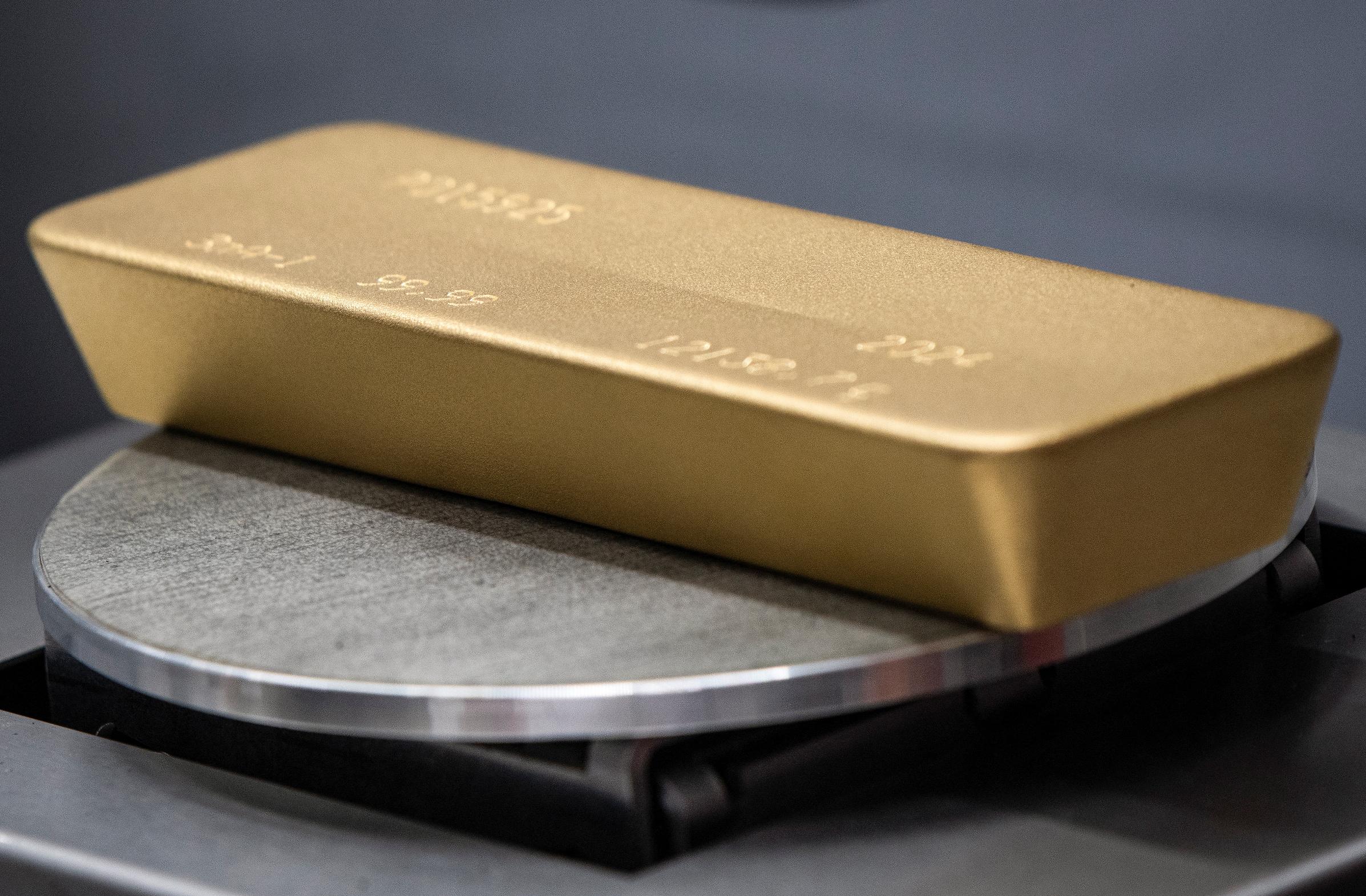
US private payrolls slightly below expectations in November Focus shifts to US non-farm payrolls report on Friday Platinum down more than 1% Dec 4 (Reuters) - Gold edged higher on Wednesday after data showed U.S. private payrolls rose at a moderate pace last month, while investors digested remarks from Federal Reserve Chair Jerome Powell and looked forward to Friday's non-farm payrolls report. Spot gold was up 0.4% at $2,654.03 an ounce by 02:15 p.m. ET (1915 GMT). U.S. gold futures settled 0.3% higher at $2,676.20. "Gold bounces as ADP disappoints, coming in just short of consensus. Market was looking for a bigger bounce a month after the hurricanes and the Boeing strike," said Tai Wong, an independent metals trader. Private payrolls rose by 146,000 last month, the ADP report showed. Economists polled by Reuters had forecast private employment increasing by 150,000 positions. Powell said the recent performance of the economy will allow the U.S. central bank to be more judicious with the future path of interest rate cuts. Investors now await Friday's pivotal U.S. payroll report and next week's inflation data for clues on the Fed's policy trajectory. Gold is seeing a muted reaction today, with a stronger impact expected from the upcoming U.S. nonfarm payrolls and if data points to weakening employment it would support prices, said Everett Millman, chief market analyst with Gainesville Coins. U.S. central bankers on Tuesday signalled inflation is gradually heading toward the 2% target, hinting at potential interest rate cuts. Traders are pricing in a 77% chance of a 25-basis-point cut at the Fed's Dec. 17-18 meeting. Bullion, which does not pay any interest, historically performs well in low-interest rate environments. Safe-haven gold was also supported by global geopolitical unrest, including South Korea's political turmoil, France's government facing collapse, relentless Russian drone strikes in Ukraine and Israel threatening war with Lebanon if its truce with Hezbollah collapses. Spot silver rose 1% to $31.33 an ounce, platinum lost 1.3% to $940.6 and palladium was up 0.5% at $976.56. Sign up here. https://www.reuters.com/markets/commodities/gold-steady-all-eyes-us-jobs-data-fed-chairs-speech-2024-12-04/