2024-12-04 05:02
Political crisis rocks French markets Bond risk premium touches highest since 2012 But borrowing costs drop as bond vigilantes hold fire for now Government collapse will upend efforts to improve French outlook LONDON/PARIS, Dec 4 (Reuters) - Bond investors are likely to spare France the dire financial "storm" Prime Minister Michel Barnier has warned of, but the fallout from the political crisis will hurt businesses, consumers and taxpayers. Barnier's government looks all but certain to fall as soon as Wednesday with Marine Le Pen's far-right National Rally planning to topple it after a dispute over his 60 billion-euro ($63 billion) belt-tightening budget aimed at curbing a budget deficit double the European Union's limit. Market moves have been significant. The euro zone's second-largest economy briefly paid higher yields on its government bonds on Monday than previously bailed-out Greece. Its closely watched risk premium, or spread, over Germany rose to 90 basis points (bps) last week, the highest since 2012, another throwback to the bloc's debt crisis. All this has renewed talk of the return of bond vigilantes, who demand higher returns from governments they perceive as fiscally reckless. Yet big investors see the latest upheaval as the next episode in a long-winded reckoning rather than a budget-driven market meltdown of the sort Britain went through in 2022. "This is a slow burning crisis which will lead to an ongoing widening of spreads and an ongoing deterioration of sovereign creditworthiness," said Union Investment's head of fixed income and FX Christian Kopf. "But for the time being, I do not see the ingredients for this to totally get out of hand and morph into an outright sovereign debt crisis," said Kopf, who is underweight French debt. Signalling that French markets are set for more pain first, investors expect the spread could rise to around 100 bps were Barnier's government to collapse, spelling the end for its belt-tightening plans. That would mean investors rank France increasingly on a par with Italy. Without Barnier's measures, France's Treasury has estimated the budget deficit could reach 7% of economic output next year rather than the 5% targeted. But whether that requires an immediate rethink on the country's debt sustainability is another matter. French borrowing costs have dropped despite heightened uncertainty over the last two weeks, helped by European Central Bank rate cut expectations. The 10-year yield is down over 20 bps since President Emmanuel Macron called a snap election in June. "There is no snowball effect of higher yields driving greater concerns about debt sustainability," said Chris Jeffery, head of macro strategy at Legal & General Investment Management, sticking to his overweight position in French bonds with much bad news priced in. Ratings agency Standard & Poor's left its AA- rating on France unchanged on Friday. France's European partners also see limited potential for a spillover of the tensions, officials told Reuters. Italy's risk premium has held steady over the last two weeks as France's has risen - a far cry from a decade ago when market angst spread across the bloc's highly indebted states. And while the ECB's Transmission Protection Instrument to buy bonds from countries whose debt comes under pressure through no fault of their own has increased bond market confidence, the bank is not seen stepping in soon. "The country needs to have taken all the necessary measures for the deficit for that to be applied," Greek central bank governor Yannis Stournaras said on Monday, ruling out an intervention for now. PAIN AHEAD Even if market pain looks contained for now, a government collapse would reduce the chances of any push to tackle France's pressing fiscal problems. "Society in France doesn't want to accept there will be cuts to social provisions and longer retirement ages. Because of this, it does feel like it will be difficult to change the direction of travel," said BlueBay Asset Management chief investment officer Mark Dowding. Political uncertainty has also left businesses in retrenchment mode without clarity about tax and broader economic policy. This could weigh on tax revenues, whose unexpected weakness was one of the main reasons France's deficit overshot expectations this year. "The main channel of impact is through companies by the way of investment and hiring," said Oxford Economics senior economist Leo Barincou. With business surveys indicating hiring intentions at their weakest since 2021, a fragile labour market could hurt consumer spending, which economists had expected to benefit from purchasing power gains from lower inflation. However, the political crisis means there is now the risk that consumers - traditionally the driver of French growth - continue to park extra income in savings. Even before this week's crisis, consumer confidence was at its lowest level since Macron called the election. French banks, a crucial source of funding for corporates, have also been hit badly. Societe Generale (SOGN.PA) , opens new tab, Credit Agricole (CAGR.PA) , opens new tab, BNP Paribas (BNPP.PA) , opens new tab shares are down 7%-15% since Macron's announcement. Political instability leaves France particularly exposed just as Europe's already sluggish economy faces a possible trade war with the United States and a Chinese slowdown. "We'd need a solid government with its head on its shoulders and clear ideas, but we risk having no government at all," said economist Sylvain Bersinger with French economics consultancy Asteres. ($1 = 0.9515 euros) Sign up here. https://www.reuters.com/markets/rates-bonds/bond-vigilantes-spare-france-now-political-crisis-will-bring-more-pain-2024-12-04/

2024-12-04 04:44
US crude stockpiles fell more than expected last week OPEC+ to discuss oil policy on Dec. 5 NEW YORK, Dec 4 (Reuters) - Oil futures fell nearly 2% on Wednesday as investors awaited an imminent OPEC+ decision on production cuts, while a larger-than-expected draw in U.S. crude stockpiles last week lent some support to prices. Brent crude futures fell $1.31, or 1.78%, to settle at $72.31 a barrel. U.S. West Texas Intermediate crude futures fell $1.40, or 2%, to $68.54. On Tuesday, Brent posted its biggest gain in two weeks, rising by 2.5%. The market was on tenterhooks, with investors focused on the upcoming OPEC+ meeting, analysts said. The Organization of the Petroleum Exporting Countries and its allies in OPEC+ meet on Thursday, and are likely extend output cuts until the end of the first quarter of next year, industry sources told Reuters. "While a delay to unwinding production cuts is expected, the rhetoric out of the meeting is going to have the biggest sway," said Matt Smith, Kpler lead Americas oil analyst. OPEC+ has been looking to phase out supply cuts through next year. A single bank sold a large volume of U.S. oil futures contracts in early afternoon trading on Wednesday, a source told Reuters, pushing prices down more than 1% within minutes and causing traders to scramble to decipher the reason. U.S. crude stocks fell more than expected last week as refiners ramped up operations, the Energy Information Administration (EIA) said. Gasoline and distillate stockpiles rose by more than expected during the week. "A pop in refining activity with runs climbing to a high not seen since the summer has resulted in a see-saw of crude inventories drawing and products building," Smith said. The bullish momentum only lent some support to prices. A shaky ceasefire between Israel and Hezbollah, South Korea's curtailed declaration of martial law and a rebel offensive in Syria that threatens to draw in forces from several oil-producing countries all lent support to oil prices, said Priyanka Sachdeva, senior market analyst at Phillip Nova. In the Middle East, Israel said on Tuesday it would return to war with Hezbollah if their truce collapses and that its attacks would go deeper into Lebanon and target the state itself. In South Korea, lawmakers have submitted a bill to impeach President Yoon Suk Yeol after his declaration of martial law on Tuesday, which was reversed within hours, sparking a political crisis in Asia's fourth-largest economy. Sign up here. https://www.reuters.com/markets/commodities/oil-steady-markets-weigh-higher-us-stockpiles-opec-supply-plans-2024-12-04/

2024-12-04 03:12
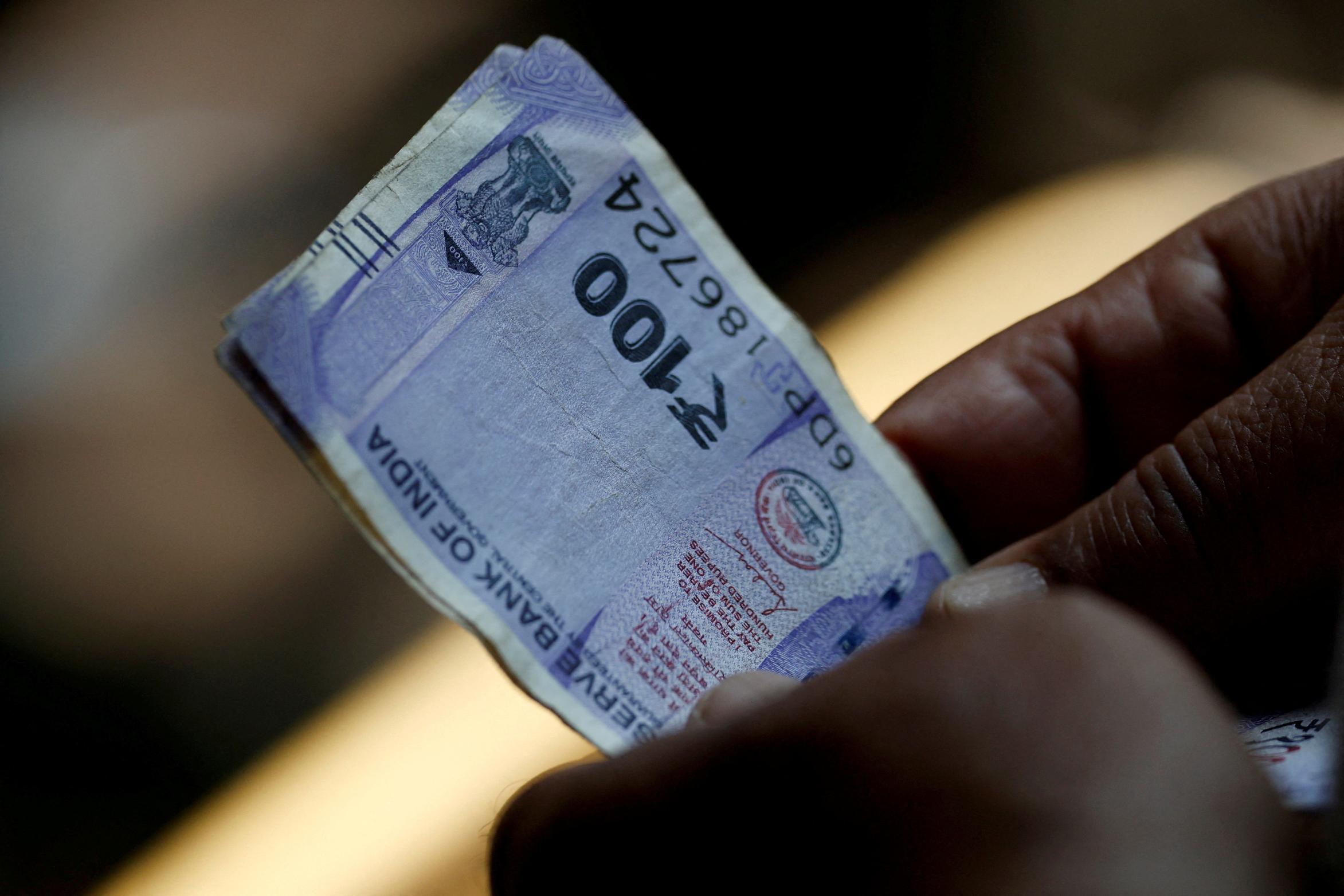
MUMBAI, Dec 4 (Reuters) - The Indian rupee is likely to open little changed on Wednesday amid mixed Asian cues, while awaiting the Reserve Bank of India's (RBI) interest rate decision and the U.S. jobs report later this week. The one-month non-deliverable forward indicated that the rupee will open nearly unchanged from 84.6850 in the previous session. On Tuesday, the currency dropped to a lifetime low of 84.7575 before recovering slightly amid the RBI's intervention via the forwards market and dollar sales by foreign banks. In light of Tuesday's price action, "the bias is on the downside (for the dollar/rupee)", a currency trader at a bank said. "I see a few factors that will be of help to the rupee - equity outflows have abated, the yuan decline for now has paused near 7.30 and the RBI may have put in a top (for the dollar rupee) at 84.75-84.80." Having moved near 84.20 more than a week ago, the rupee has seen a quick decline since then, by its standard, to the current level. That has pushed its Relative Strength Index, a momentum indicator, past 70, indicating that the rupee is oversold. ASIAN CURRENCIES MIXED The Korean won was down nearly 1% on Wednesday, the worst performer by a margin, amid political upheavals in the country. South Korean President declared martial law on Tuesday, which he later reversed. The nation's equity gauge was down almost 2% on the day. On the other hand, the offshore Chinese yuan was on a recovery path, inching up to 7.2880 to the U.S. dollar. All eyes are now on the U.S. non-farm payrolls data this Friday, which will likely prove a key variable on whether the Federal Reserve will cut rates at the Dec. 17-18 meeting. Meanwhile, the RBI will make its rate decision on Friday amid disappointing India September quarter GDP data. KEY INDICATORS: ** One-month non-deliverable rupee forward at 84.80; onshore one-month forward premium at 13.5 paise ** Dollar index up at 106.42 ** Brent crude futures at $73.7 per barrel ** Ten-year U.S. note yield at 4.23% ** As per NSDL data, foreign investors bought a net $448 million worth of Indian shares on Dec. 2 ** NSDL data shows foreign investors bought a net $34.7 million worth of Indian bonds on Dec. 2 Sign up here. https://www.reuters.com/markets/currencies/rupees-downtrend-may-pause-traders-eye-rbi-decision-us-jobs-data-2024-12-04/
2024-12-04 00:41
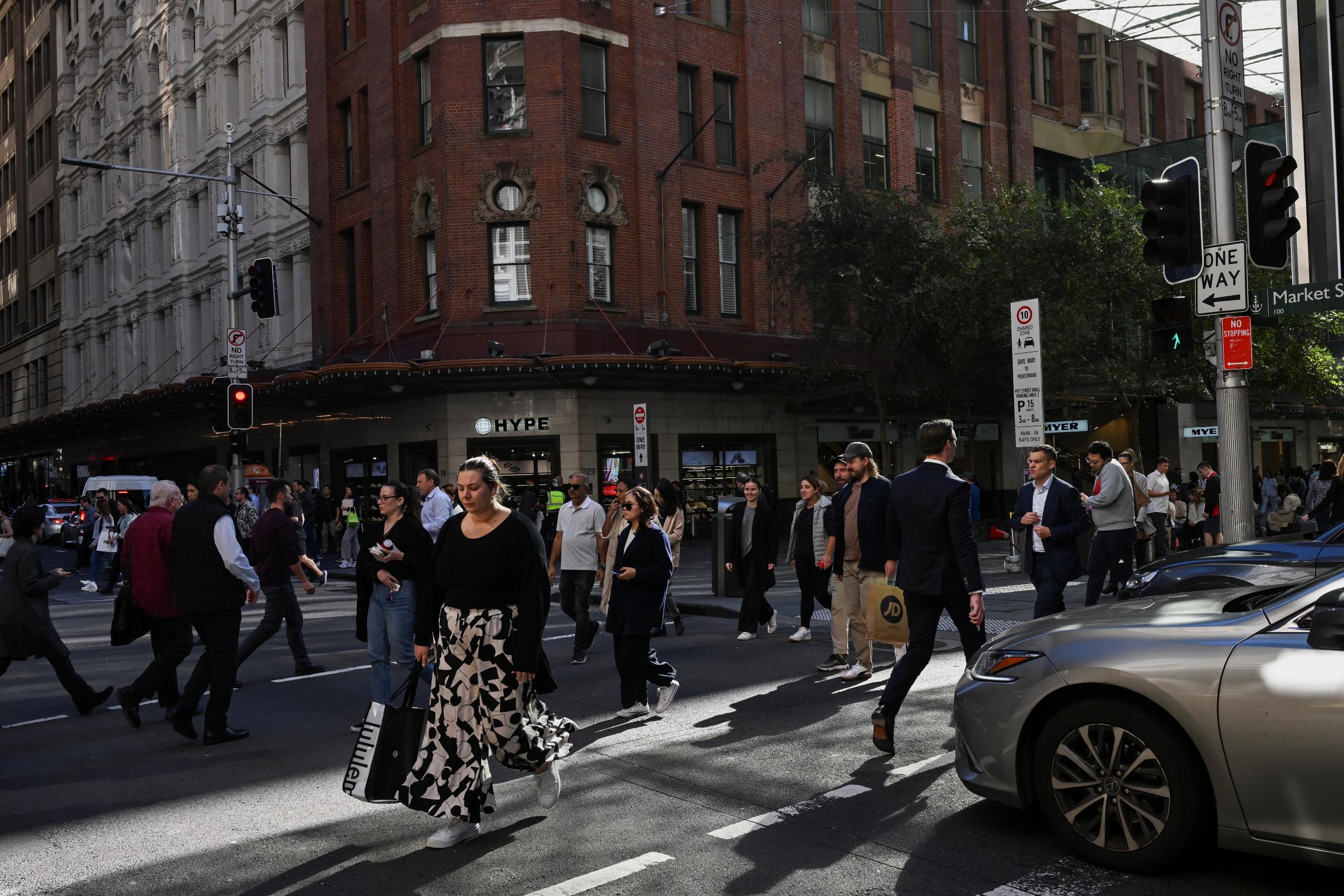
Q3 GDP +0.3% q/q vs forecast +0.4%; +0.8% y/y vs forecast +1.1% Govt spending added 0.6 ppts to growth, households added nothing Household incomes grew but consumers reluctant to spend Markets now almost fully pricing April start to rate cuts SYDNEY, Dec 4 (Reuters) - Australia's economy in the third quarter grew at the slowest annual pace since the pandemic, disappointing hopes for a rebound as government spending did all of the heavy lifting and consumers remained cautious. Investors reacted by pushing the Australian dollar 0.7% lower to $0.6442. Markets moved to almost fully price in a rate cut next April at 96% from 73% before, and see a 35 basis points easing for May, from 28 bps before. Data from the Australian Bureau of Statistics (ABS) on Wednesday showed real gross domestic product rose 0.3% in the September quarter, missing market forecasts of 0.4%. Annual growth slowed to 0.8%, from 1.0% the previous quarter, contrary to expectations of a small pick up to 1.1%. That marked the slowest pace since late 2020. The Reserve Bank of Australia had expected economic growth would rise to 1.5% by the end of the year as tax cuts flowed through to households' wage pockets and consumers became more confident that interest rates would not increase again. However, the surprisingly weak third quarter result is putting that forecast in jeopardy. "Put it together on balance, the weak GDP numbers argue for an earlier rather than later cut," said Shane Oliver, chief economist at AMP that is tipping a cut in May. "The weakness we're seeing in the economy, particularly the private sector of the economy, just indicates that there's still a high chance that we could get a cut in February." The ABS said that the expansion was driven by public sector spending, adding 0.6 percentage points to growth, thanks to a record level of public investment. Household spending, which accounts for half of GDP, added nothing. Treasurer Jim Chalmers described the GDP growth as weak and below historical averages. "Our economy is still growing but very slowly. It's weighed down by interest rates and cost of living pressures and the global economic uncertainties as well," Chalmers said. CONSUMERS REMAIN CAUTIOUS The central bank has kept interest rates steady at a 12-year high of 4.35% for the past year and signalled little inclination to ease anytime soon. The weak result suggests monetary policy is doing the job of slowing down demand. The RBA expected consumer spending to pick up from the tax cuts and slowing inflation, but consumers seem to have stayed cautious for now, even though their disposable income grew 1.5% in the quarter. The savings rate rose to 3.2% due to the billions of dollars in tax cuts, the ABS noted. GDP per capita, however, dropped another 0.3%, down for the seventh straight quarter. Signs over recent months have pointed to consumers being in a better mood. Retail sales rose for a third straight month in October as consumer sentiment jumped, and anecdotes from the Black Friday sales event suggest the momentum likely carried through November. "We expect GDP growth will slowly pick up in the coming quarters... But this improvement will be unspectacular, with the economy set to endure below trend growth in the near term while capacity constraints continue to bite," said Sean Langcake, head of macroeconomic forecasting for Oxford Economics Australia. The report also showed more good news on the inflation gauges, with the GDP chain price index down to 2.4% last quarter and growth in real unit labour costs slowing to an annual rate of 1.6%. Productivity - the measure of output per hour worked - dropped 0.5% in the quarter, a troubling sign for the RBA as its forecasts on inflation to return to the target band of 2% to 3% in 2026 were centred on a pickup in productivity. Sign up here. https://www.reuters.com/world/asia-pacific/australia-economy-grows-03-q3-misses-forecasts-2024-12-04/
2024-12-04 00:38
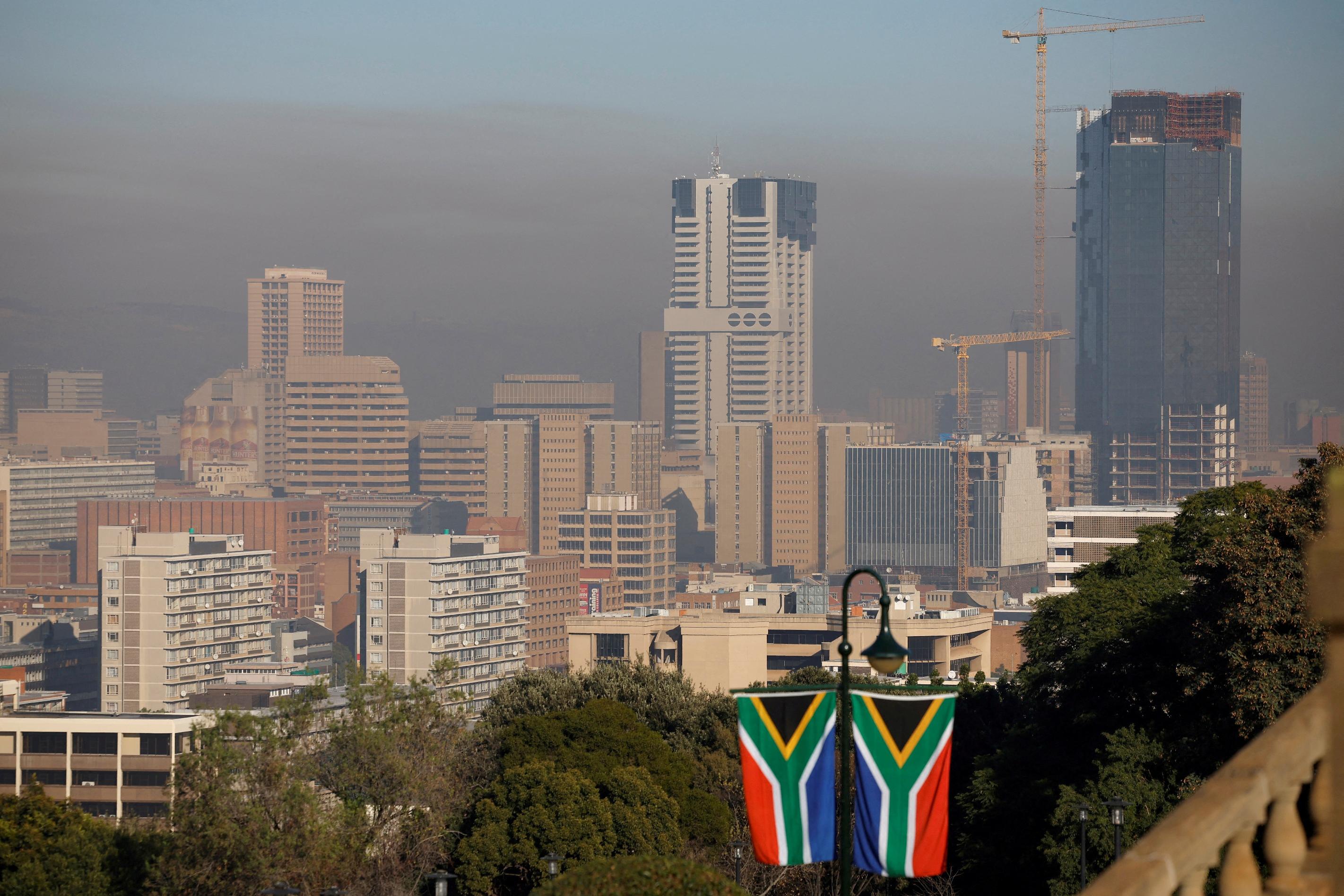
Dec 3 (Reuters) - Credit ratings agency Moody's affirmed South Africa's Ba2 rating on Tuesday, highlighting the country's robust financial sector and external position following a recent regime change. Reduced power cuts and expectations of lower interest rates have improved South Africa's financial stability following successful elections in June, the country's central bank said in November. The coalition government of national unity (GNU), formed in June after the African National Congress lost its parliamentary majority for the first time in 30 years, boosted business confidence. "The ratings affirmation highlights that despite nascent improvements, South Africa's economy is likely to remain subdued," Moody's said in its report. It also anticipates the energy sector to increasingly drive private sector investments. The agency expects the country's economic growth to remain on the slow lane and government debt burden to be stable with balanced risks. Moody's anticipates that the new government will likely pursue structural reforms to alleviate existing growth bottlenecks, and continue fiscal consolidation efforts to mitigate spending pressures from social demand, interest payments and state-owned enterprises. In November, S&P revised South Africa's outlook to positive on better reforms by the new government. Sign up here. https://www.reuters.com/world/africa/moodys-affirms-south-africas-ba2-rating-amid-economic-challenges-political-2024-12-03/
2024-12-04 00:32
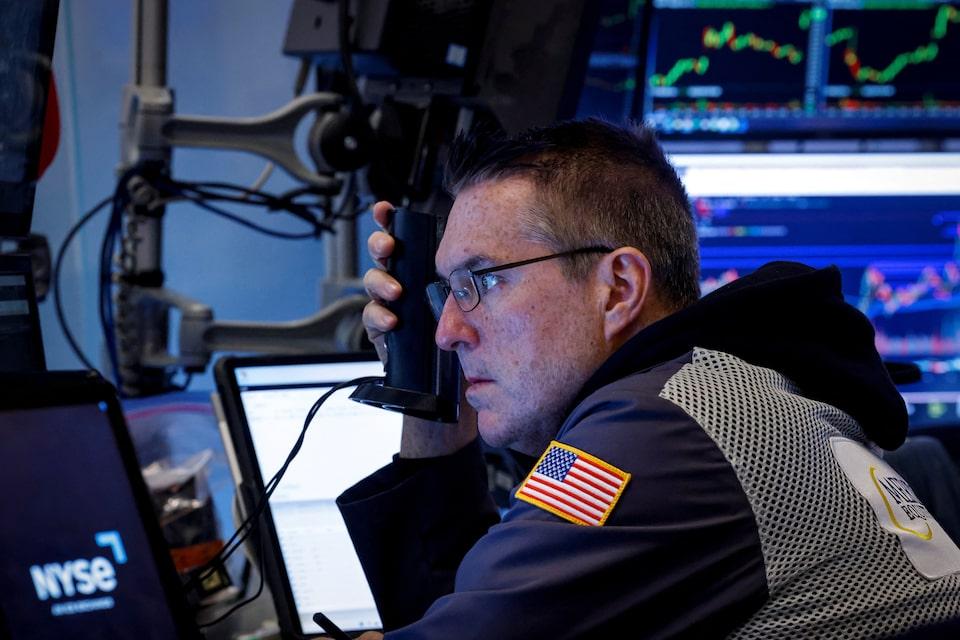
Tesla slips after its China-made EV sales drop in November South Korean shares fall Indexes: Dow down 0.17%, S&P 500 up 0.05%, Nasdaq up 0.40% NEW YORK, Dec 3 (Reuters) - The S&P 500 and Nasdaq eked out record closing highs on Tuesday, with tech-related shares extending recent gains as investors awaited further jobs data. The Dow finished slightly lower on the day. Among S&P 500 sectors, technology (.SPLRCT) , opens new tab, communication services (.SPLRCL) , opens new tab and consumer discretionary (.SPLRCD) , opens new tab were the only gainers, extending their advance on Monday. Marketwatchers also digested reassuring comments from Federal Reserve policymakers. Two policymakers said they see inflation heading down to the U.S. central bank's 2% target and that the job market is "solid." They stayed away from signaling whether they would support another interest rate cut later this month. On Monday, Fed Governor Christopher Waller said he was inclined "at present" to support another rate cut this month. Investors will pay close attention to the U.S. monthly employment report on Friday. They also are keen to see other data this week, including a November reading of private payrolls and the Institute for Supply Management's services report. "The market is kind of waiting for the big data, which would be ISM and the (employment report) on Friday ... so people are sitting on their hands a little bit," said Paul Nolte, senior wealth advisor and market strategist for Murphy & Sylvest in Elmhurst, Illinois. A report on Tuesday showed U.S. job openings increased solidly in October while layoffs dropped by the most in 1-1/2 years. Financial markets expect a roughly 72% chance of a 25-basis-point rate cut at the Fed's Dec. 17-18 policy meeting, CME Group's FedWatch tool showed. Shares of Amazon (AMZN.O) , opens new tab rose 1.3%. The company announced a new slate of artificial intelligence platforms, known as foundation models, at its annual AWS conference. The Dow Jones Industrial Average (.DJI) , opens new tab fell 76.47 points, or 0.17%, to 44,705.53, the S&P 500 (.SPX) , opens new tab gained 2.73 points, or 0.05%, to 6,049.88 and the Nasdaq Composite (.IXIC) , opens new tab gained 76.96 points, or 0.40%, to 19,480.91. The S&P 500 advanced 5.7% in November as former U.S. President Donald Trump recaptured the White House in the Nov. 5 election and his Republican Party swept both houses of Congress. The index is up roughly 27% for the year to date. "This is a market that has performed extremely well. You want it to pause, take a breather and wait for another catalyst to push it higher," said Quincy Krosby, chief global strategist, LPL Financial in Charlotte, North Carolina. The Dow transportation average (.DJT) , opens new tab fell 2% in its biggest daily percentage drop since September. U.S.-listed shares of South Korean companies also declined, with iShares MSCI South Korea ETF (EWY.P) , opens new tab easing 1.6%. South Korean President Yoon Suk Yeol said he would move to lift a martial law declaration he had imposed just hours before that unnerved world markets. Shares of Tesla (TSLA.O) , opens new tab declined 1.6% after data showed the automaker's sales of China-made electric vehicles fell 4.3% year-on-year to 78,856 in November. After the closing bell, Salesforce (CRM.N) , opens new tab shares rose about 7% following the release of its results, including stronger-than-expected quarterly revenue. The stock ended the regular session 0.1% higher. Declining issues outnumbered advancers by a 1.24-to-1 ratio on the NYSE. There were 310 new highs and 50 new lows on the NYSE. On the Nasdaq, 1,647 stocks rose and 2,732 fell as declining issues outnumbered advancers by a 1.66-to-1 ratio. Volume on U.S. exchanges was 12.70 billion shares, compared with the 14.81 billion full-session average over the last 20 trading days. Sign up here. https://www.reuters.com/markets/us/futures-bide-time-with-focus-more-data-fed-commentary-2024-12-03/