2024-12-03 22:02
CHICAGO, Dec 3 (Reuters) - Global commodities trader Cargill began laying off employees across its vast operations on Tuesday in a drive to slash headcount by 5%, sending U.S. workers from supply chain, inventory control and other roles to look for new jobs. Cargill, a major grain merchant and U.S. beef processor, is facing a downturn in returns in cattle, grains and oilseeds businesses. In Minnesota, home to its headquarters, Cargill plans to terminate 475 employees at an office center in Wayzata starting on Feb. 5, the company said in a letter to state officials. Cargill began informing staff about layoffs this week, and they are eligible for severance, according to the letter. Cargill has more than 160,000 employees worldwide, and a spokesperson said all operating regions will be affected by cutbacks. "The company is facing a cyclical downturn," said Chris Johnson, agribusiness director for S&P Global Ratings. "Certainly, their exposure to beef is a reason why they have faced a significant shortfall in earnings." Cargill rival Archer-Daniels-Midland (ADM.N) , opens new tab, which does not have a beef business, said on Tuesday it is seeking to control costs as the challenging commodities cycle is likely to continue into 2025. The cost of cattle has soared for beef processors after drought reduced grazing lands, prompting ranchers to slash the nation's herd to its smallest size in decades. U.S. meatpacker Tyson Foods (TSN.N) , opens new tab said on Monday it is closing a Kansas beef and pork plant. Cargill's oilseed processing business is also under pressure from uncertain demand for biofuels and lower processing margins, analysts said. Ample supplies of soybeans and corn have pushed prices for the commodity crops near four-year lows, hitting the grains handling business of Cargill, ADM and other rivals such as Bunge. On LinkedIn, several employees in Costa Rica said they had lost their jobs in talent acquisition. U.S. employees in inventory control, marketing, supply chain analysis, and the company's Digital Technology and Data unit also sought new jobs on the networking site. Cargill previously said it will undergo structural changes after missing internal earnings goals. It reported revenue of $160 billion for its 2024 fiscal year that ended in May, down from a record $177 billion in the previous year. "We think it's more of a multi-year process for this strategic change to really impact the company's profitability," Johnson said. Sign up here. https://www.reuters.com/markets/commodities/cargill-terminate-about-475-employees-minnesota-2024-12-03/

2024-12-03 21:49
Dec 4 (Reuters) - A look at the day ahead in Asian markets. A sudden burst of political chaos in South Korea has put investors in Asia on the defensive, pointing to a cautious market open across the continent on Wednesday despite Wall Street's resilience the previous day. South Korea's President Yoon Suk Yeol declared martial law on Tuesday to thwart "anti-state forces" among his opponents, creating the most serious challenge to the country's democracy since the 1980s, only to lift it hours later after lawmakers rejected the move and protesters gathered outside parliament. The initial declaration had an immediate impact on the won, slamming it to a 2-year low against the dollar. At one point, it was down 2% and set for its biggest one-day loss since Nov. 9, 2016, the day after the 2016 U.S. election that swept Donald Trump to power and started the clock ticking on a looming trade war with China. This cemented the won's unwanted status as the worst-performing major Asian currency against the dollar this year, bringing its year-to-date losses to nearly 10%. The benchmark Kospi is also one of the worst-performing equity indexes in Asia this year, down nearly 6% year-to-date at Tuesday's close. Yoon's about face, however, appears to have restored a sense of calm. The won is still weaker but reclaimed more than half its losses from earlier on Tuesday. Kospi futures traded on the Eurex exchange are pointing to a fall at the stock market open in Seoul of only around 0.3%. Elsewhere in Asia, India's rupee is at a record low, while China's yuan is at a 13-month low and seemingly poised for a break below 7.30 per dollar, as traders speculate Beijing is allowing it to slide as trade tensions with Washington heat up. China on Tuesday announced a ban on exports of 'dual-use items' related to key minerals gallium, germanium, antimony and superhard materials to the United States. This came 24 hours after the U.S. launched a third crackdown in three years on China's semiconductor industry, curbing exports to 140 firms. If volatility in key assets across Asia is spiking, U.S. market volatility right now is pretty subdued. The VIX 'fear index' on Tuesday hit its lowest since July, and the MOVE index of implied volatility in U.S. Treasuries has tumbled since the U.S. presidential election to a two-month low. The Asian calendar on Wednesday sees the release of Australian GDP, Thai inflation, and a raft of purchasing managers index reports for November, including China's Caixin services PMI. Australia's economy is expected to have expanded at a 0.4% pace in the July-September period, twice the rate of the previous quarter, and at a 1.1% year-on-year pace, a marginal uptick from the 1.0% annual growth registered in Q2. Here are key developments that could provide more direction to markets on Wednesday: - Reaction to South Korea political instability - Australia GDP (Q3) - PMIs, including China's 'unofficial' services (November) Sign up here. https://www.reuters.com/markets/asia/global-markets-view-asia-graphic-2024-12-03/

2024-12-03 21:20
WASHINGTON, Dec 3 (Reuters) - Meta (META.O) , opens new tab said on Tuesday it is seeking proposals from nuclear power developers to help meet its artificial intelligence and environment goals, becoming the latest big tech company to take interest in atomic power amid an expected boom in electricity demand. The company wants to add 1 to 4 gigawatts of new U.S. nuclear generation capacity starting in the early 2030s, it said in a release. A typical U.S. nuclear plant has a capacity of about 1 gigawatt. "At Meta, we believe nuclear energy will play a pivotal role in the transition to a cleaner, more reliable, and diversified electric grid," the company said in a release. U.S. data center power use is expected to roughly triple between 2023 and 2030 and will require about 47 gigawatts of new generation capacity, according to Goldman Sachs estimates. But it will be tough to swiftly meet soaring power demand with nuclear reactors, as companies face an overburdened U.S. Nuclear Regulatory Commission, potential uranium fuel supply obstacles and local opposition. Microsoft (MSFT.O) , opens new tab and Constellation Energy (CEG.O) , opens new tab announced a deal in September to restart a unit at the Three Mile Island plant in Pennsylvania in what would be the first-ever restart for a data center. That announcement followed a similar agreement in March in which Amazon.com (AMZN.O) , opens new tab, purchased a nuclear-powered data center from Talen Energy (TLN.O) , opens new tab. Meta said it is seeking developers with expertise in community engagement, development and permitting, and would consider either small modular reactors, an emerging part of the business that is not yet commercial, or larger nuclear reactors similar to today's fleet of U.S. nuclear plants. Meta said it will take submissions from developers that want to take part in the request for proposals until Feb. 7, 2025. The company said it was using the request-for-proposal process because, compared to renewable energy projects like solar and wind, nuclear is more capital-intensive, takes longer to develop, and is subject to more regulatory requirements. "An RFP process will allow us to approach these projects thoroughly and thoughtfully with these considerations in mind," it said. (This story has been corrected to fix the deadline for proposals from Jan. 3 to Jan. 7, in paragraph 8) Sign up here. https://www.reuters.com/business/energy/meta-seeks-nuclear-power-developers-reactors-start-early-2030s-2024-12-03/

2024-12-03 21:02
BRUSSELS, Dec 3 (Reuters) - (This Dec. 3 story has been officially corrected to remove reference to 'emergency break', after European Parliament amended its press release, in paragraph 7) Negotiators for EU institutions agreed a compromise on Tuesday on a ban on the import of commodities linked to deforestation, which will be delayed by a year but without changes proposed by EU lawmakers. The European Commission in October proposed a 12-month delay until Dec. 30, 2025 after complaints from 20 EU countries, some companies and countries such as Brazil and Indonesia. EU governments backed the move. However, EU lawmakers voted last month not only to delay the EU Deforestation Regulation, but also to water it down by proposing a new 'no risk' category of countries with vastly reduced checks. These would principally have been EU members. Negotiators for EU governments and lawmakers met late on Tuesday and agreed on the 12-month delay, but with no changes to the existing rules. Large operators and traders will have to respect the obligations from Dec. 30, 2025, and small enterprises six months later, a delay designed to allow companies around the world to adapt. The Commission committed to assess whether requirements could be simplified for countries that have sustainable forest management practices. The Commission will also commit to have the online system for companies operational by December 2025 and to propose the country risk classification at least six months before. The European People's Party, the largest parliamentary group, which pushed for further changes, welcomed these add-ons. The Greens group described the compromise of a delay with no amendments as a "partial but significant victory". The deforestation regulation aims to root deforestation out of supply chains for beef, soy, wood, cocoa, palm oil, coffee and rubber sold in Europe, so that EU consumers are not contributing to the destruction of forests from the Amazon to Southeast Asia. It was hailed as a landmark in the fight against climate change, but emerging market countries from Brazil to Indonesia say it is protectionist and could exclude millions of poor, small-scale farmers from the EU market. Sign up here. https://www.reuters.com/business/environment/eu-agrees-deforestation-law-delay-discards-changes-2024-12-03/

2024-12-03 21:01
Mashinsky to be sentenced in April Guilty plea averts trial that had been scheduled for January Celsius filed for Chapter 11 bankruptcy protection in 2022 NEW YORK, Dec 3 (Reuters) - Alex Mashinsky, founder and former CEO of cryptocurrency lender Celsius Network, pleaded guilty on Tuesday to two counts of fraud. Mashinsky, 59, was indicted on July 13, 2023, on seven counts of fraud, conspiracy and market manipulation charges. Federal prosecutors in Manhattan said he misled customers of Celsius to persuade them to invest, and artificially inflated the value of his company's proprietary crypto token. He pleaded not guilty that day. On Tuesday, during a hearing before U.S. District Judge John Koeltl, Mashinsky said he pleaded guilty to two out of the seven counts he was initially charged with: commodities fraud, and a fraudulent scheme to manipulate the price of CEL, Celsius’ in-house token. In court, Mashinsky admitted to giving Celsius customers "false comfort" by giving an interview in 2021 in which he said Celsius had received approval from regulators for its "Earn" program, which it had not. That program offered to deploy customers' cryptocurrency assets to yield investment returns. He said he also failed to disclose that he had been selling his holdings of CEL, the platform's in-house token. "I know what I did was wrong, and I want to try to do whatever I can to make it right," Mashinsky said. As part of his plea deal with prosecutors, Mashinsky agreed not to appeal any sentence of 30 years or less - the maximum he faces for the two counts. Koeltl is set to sentence him on April 8, 2025. Federal prosecutors in Manhattan have said Mashinsky also personally reaped approximately $42 million in proceeds from selling his holdings of the Cel token. "Mashinsky made tens of millions of dollars selling his own CEL at artificially high prices, while his customers were left holding the bag when the company went bankrupt," Damian Williams, the U.S. Attorney in Manhattan, said in a statement on Tuesday. Before pleading guilty, Mashinsky had been scheduled to go on trial on Jan. 28. "Sometimes, accepting responsibility when and where appropriate is the best way to help everybody move on," Mashinsky's defense lawyer Marc Mukasey told reporters after the hearing on Tuesday. Founded in 2017, Celsius filed for Chapter 11 bankruptcy protection in July 2022 after customers rushed to withdraw deposits as crypto prices fell. Many were initially unable to access their funds. The company exited bankruptcy on Jan. 31, and has pivoted to Bitcoin mining. Crypto lenders such as Celsius grew rapidly as crypto prices surged during the COVID pandemic. They promised easy loan access and eye-popping interest rates to depositors, then lent out tokens to institutional investors, hoping to profit from the difference. Mashinsky was one of several crypto moguls to be charged with fraud after a slump in crypto prices in 2022 caused a number of companies, including now-bankrupt exchange FTX, to collapse. Prices for digital assets like Bitcoin have since surged, in part due to optimism about U.S. President-elect Donald Trump's expected policies friendly toward cryptocurrency. Celsius' former chief revenue officer, Roni Cohen-Pavon, pleaded guilty in September 2023 and agreed to cooperate with prosecutors' investigation. FTX's founder Sam Bankman-Fried was convicted of stealing roughly $8 billion from the exchange's customers in November 2023 and sentenced in March to 25 years in prison. Sign up here. https://www.reuters.com/technology/celsius-founder-alex-mashinsky-intends-plead-guilty-two-fraud-counts-2024-12-03/

2024-12-03 20:53
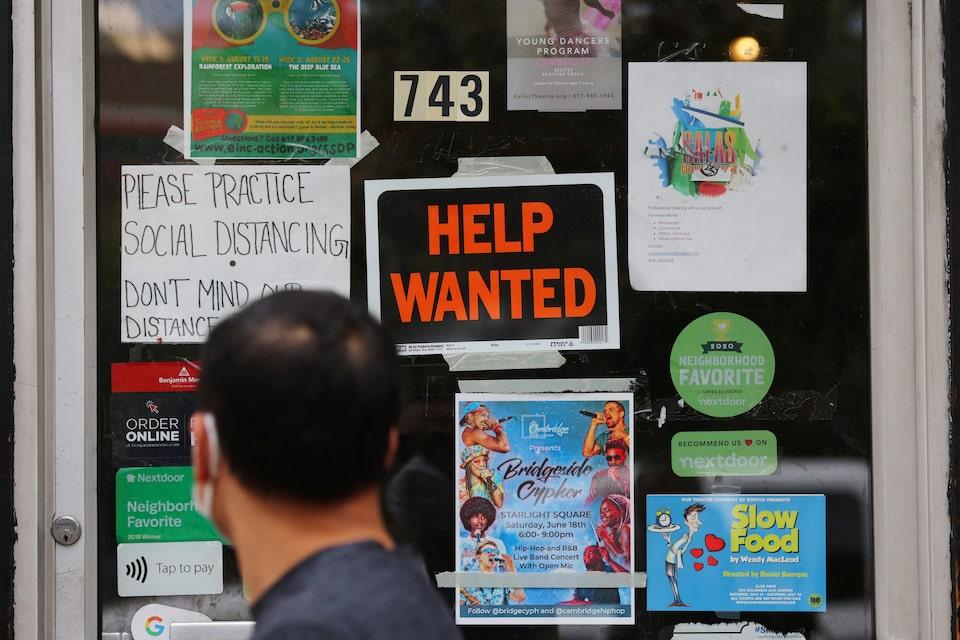
Job openings increase 372,000 to 7.744 million in October Hires decrease 269,000 to 5.313 million Layoffs drop 169,000, the most since April 2023 Resignations increase 228,000 to 3.326 million WASHINGTON, Dec 3 (Reuters) - U.S. job openings increased solidly in October while layoffs dropped by the most in 1-1/2 years, suggesting the labor market continued to slow in an orderly fashion. But the Job Openings and Labor Turnover Survey, or JOLTS report, from the Labor Department on Tuesday also showed employers hesitant to hire more workers. The historically low level of layoffs is anchoring the labor market and the broader economy through higher wages that are driving consumer spending. There were 1.11 job openings for every unemployed person in October, up from 1.08 in September. This ratio, which peaked at 2.03 in early 2022, is now below the 1.2 that prevailed before the COVID-19 pandemic. Workers also grew more confident in the labor market, with resignations posting their largest increase in nearly 1-1/2 years. The state of the labor market could determine whether the Federal Reserve delivers a third consecutive interest rate cut this month amid lack of progress in lowering inflation back to the U.S. central bank's 2% target. "The report points to ongoing resilience and doesn't flag major concerns about the economy," said Oren Klachkin, financial market economist at Nationwide. "With policy still restrictive in its view, the Fed can probably push through with another rate cut before considering a pause next year." Job openings, a measure of labor demand, had risen by 372,000 to 7.744 million by the last day of October, the Labor Department's Bureau of Labor Statistics said. Data for September was revised lower to show 7.372 million unfilled positions instead of the previously reported 7.443 million. Economists polled by Reuters had forecast 7.475 million vacancies. The increase in job openings was led by the professional and business services sector, with 209,000 unfilled positions. Vacancies rose by 162,000 in the accommodation and food services industry and climbed by 87,000 in the information sector. But there were 26,000 fewer open positions in the federal government. The job openings rate increased to 4.6% from 4.4% in September. The U.S. South accounted for most of the job openings after a sharp decline in September, which economists had attributed to the impact of Hurricane Helene. All the unfilled positions were in small businesses, with 321,000 vacancies at establishments employing one to nine people. Hires fell by 269,000 to 5.313 million, pulled down by declines in construction, manufacturing, finance and insurance, professional and business services as well as the leisure and hospitality industry. The hires rate dropped to 3.3% from 3.5% in September. Hiring declined across all business sizes. It fell in all four regions, with the South recording a drop of 106,000, likely because of Helene and Hurricane Milton. "While concerning on the surface, some of the slowing in hiring may be the result of hurricane disruptions, as employers may have been keeping openings up but pushing back interviews or start dates to deal with the fallout from Helene and Milton," said Cory Stahle, an economist at Indeed Hiring Lab. Stocks on Wall Street were mixed. The dollar fell against a basket of currencies. Yields on longer-dated U.S. Treasuries rose. MORE WORKERS QUITTING Higher borrowing costs as the Fed battled inflation have left businesses with little appetite to increase headcounts. Financial markets saw a roughly 72% chance of a 25-basis-point rate cut at the Fed's Dec. 17-18 policy meeting, CME Group's FedWatch tool showed. The central bank kicked off its policy easing cycle in September and has reduced its policy rate by 75 basis points to the 4.50%-4.75% range, having hiked it by 5.25 percentage points in 2022 and 2023. Nonetheless, employers are not cutting their workforces on a large scale. Layoffs decreased by 169,000 in October, the largest drop since April 2023, to 1.633 million. There were fewer job cuts in the construction, manufacturing, leisure and hospitality industries. But layoffs increased by 60,000 in the retail sector. The layoffs rate fell to 1.0% from 1.1% in September. More workers quit their jobs, likely in search of greener pastures. Quits surged by 228,000, the most since May 2023, to 3.326 million. The quits rate, viewed as a good measure of labor market confidence increased to 2.1% from 1.9% in September. The higher quits rate, which suggests a gradual slowdown in wage growth, was consistent with a recent jump in consumer confidence. The hurricanes and strikes distorted the labor market in October. With rebuilding underway in the areas devastated by the storms and the strikes at Boeing (BA.N) , opens new tab and another aerospace company having ended, a sharp acceleration in job growth is anticipated in November. A Reuters survey of economists estimated payrolls increased by 200,000 jobs last month after rising by only 12,000 in October, the fewest since December 2020. The unemployment rate is forecast to tick up to 4.2% from 4.1% in October. The closely watched employment report for November is due to be released on Friday. "But the difference between hires and separations lends downside risk to our forecast for a sizeable rebound in November nonfarm employment," said Matthew Martin, a senior U.S. economist at Oxford Economics. Sign up here. https://www.reuters.com/markets/us/us-job-openings-rise-october-layoffs-decrease-2024-12-03/