2026-02-09 11:03
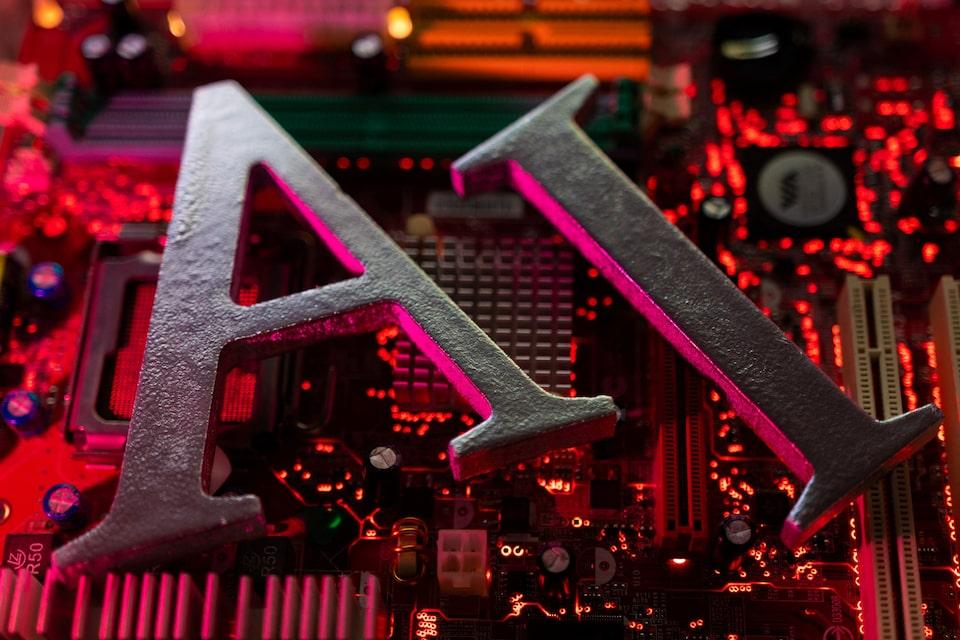
AI tools raise concerns about software business models Software stocks underperform S&P 500 by nearly 24 percentage points Options traders expect continued volatility in software stocks Tech sector's decline contrasts with gains in energy, materials, and consumer staples NEW YORK, Feb 9 (Reuters) - The software and services industry's recent plunge has ignited fears that the artificial intelligence boom may be reshaping markets in unexpected ways, raising questions about whether a rotation out of technology stocks signals trouble ahead for the AI trade. Financial markets, juiced for months with investor enthusiasm about the artificial intelligence trade, got a rude awakening last week as software stocks around the globe sank on worries that fast-advancing AI tools could upend the industry. Sign up here. While a rebound in the broader market helped soothe nerves on Friday, the outlook for U.S. software stocks, at the epicenter of the selloff, remained murky. Despite a 2% rebound on Friday, options market participants remained on high alert for further pain. The selloff, which crossed continents knocking stocks from Europe to Asia, was triggered by a new legal tool from Anthropic's Claude large language model that raised existential questions about traditional software business models. Investors are questioning whether the earnings-compounding nature of software companies would get disrupted, with strategists noting a broader rotation into value and cyclical-oriented sectors such as consumer staples, energy and industrials. SOFTWARE SLUMP Software and services stocks' underperformance against the S&P 500 has reached near-record proportions, with the sector lagging the benchmark by nearly 24 percentage points over the past three months, nearly the worst such gap in data going back three decades. The downturn marks a stark reversal for the industry group that overall put up outsized gains for much of the post-pandemic era, when investors bet on digital transformation and cloud computing. The current selloff rivals only a handful of periods since 1995, including the dot-com crash of 2000-2001, when the spread plunged below negative 25. To be sure, historically, such extreme readings have sometimes preceded either capitulation selling or marked attractive entry points for contrarian investors, though the 2000-2001 period showed underperformance could persist for extended stretches. SOFTWARE GLITCH For now, the selloff has left many U.S. software stocks smarting from eye-watering losses since the S&P technology sector peaked in late October. Oracle (ORCL.N) , opens new tab is the loss leader, having shed nearly 50%, from October 29 to February 5, while ServiceNow (NOW.N) , opens new tab and AppLovin (APP.O) , opens new tab each tumbled more than 40%. Gartner (IT.N) , opens new tab, Palantir (PLTR.O) , opens new tab, Intuit (INTU.O) , opens new tab, Datadog (DDOG.O) , opens new tab, and Workday (WDAY.O) , opens new tab were also swept away in the selloff. TURNING AWAY FROM TECH The swoon in software stocks comes amid a broader market shift away from technology. The heavyweight tech sector (.SPLRCT) , opens new tab has stumbled since its late-October peak, sinking some 10% over that time as of Friday morning trading. Other areas of the market have thrived over that period. The energy (.SPNY) , opens new tab, materials (.SPLRCM) , opens new tab, consumer staples (.SPLRCS) , opens new tab and industrials (.SPLRCI) , opens new tab sectors all have climbed at least 10% over that time, during which eight of the 11 S&P 500 sectors have posted gains. Yet the overall S&P 500 (.SPX) , opens new tab is little changed over that time. With the tech sector still accounting for nearly one-third of the weight of the benchmark index, investors are concerned that the market will struggle to make headway if tech continues to struggle. On Friday, the Dow Jones Industrial Average rose above 50,000 points for the first time, helped by a rally in shares of Nvidia. VOLATILE OUTLOOK While selling pressure on software stocks eased on Friday, with the industry index rising, traders in the options market were hesitant to dial back expectations for more near-term stock gyrations. For the $6 billion iShares Expanded Tech-Software Sector ETF , 30-day implied volatility - a gauge of how much traders expect the shares to swing in the near term - was 41%, barely down from the 10-month high of 45% touched on Thursday. The elevated volatility gauge suggests traders are not quite sure whether the worst of the selloff is over. Meanwhile short sellers, who aim to sell borrowed shares to buy them back later at a lower price, were poised to capitalize on further share price declines. Through Thursday, the IGV ETF's short interest - or the number of shares short as a percentage of the free float - stood at 19%, close to the highest ever, according to data and analytics company Ortex Technologies. https://www.reuters.com/business/media-telecom/us-software-stocks-tumble-sparks-concerns-that-ai-trade-is-reshaping-markets-2026-02-09/
2026-02-09 10:32
BAMAKO, Feb 9 (Reuters) - Mali will create a state-owned company to manage holdings in mining companies, according to a statement released by the council of ministers. Other resource-producing countries in West Africa such as Niger and Guinea have been managing their assets through similar state-owned mechanisms. Sign up here. The company Sopamim, whose capital is fully owned by the state, will acquire and manage Mali's holdings, according to the statement released late on Friday. The West African country is one of Africa's largest gold producers, with mining companies including Barrick Gold (ABX.TO) , opens new tab, B2GOLD (BTO.TO) , opens new tab, Resolute Mining (RSG.AX) , opens new tab, Endeavour Mining (EDV.L) , opens new tab and Hummingbird Resources active in the gold-rich western and southern regions. In 2022, Mali created another state-owned company called Sorem with the aim to explore and develop mineral resources. Mali's military rulers introduced a new mining code in 2023, expanding state and local ownership of mines to at least 35% from 20%. The new code also increased tax collection, helping to push up state revenues from gold mining companies by 52.5% in 2024. Last month, Mali named a former Barrick executive as special adviser to the presidency who will oversee the mining sector. https://www.reuters.com/world/africa/mali-creates-state-owned-company-manage-mining-holdings-2026-02-09/

2026-02-09 10:31
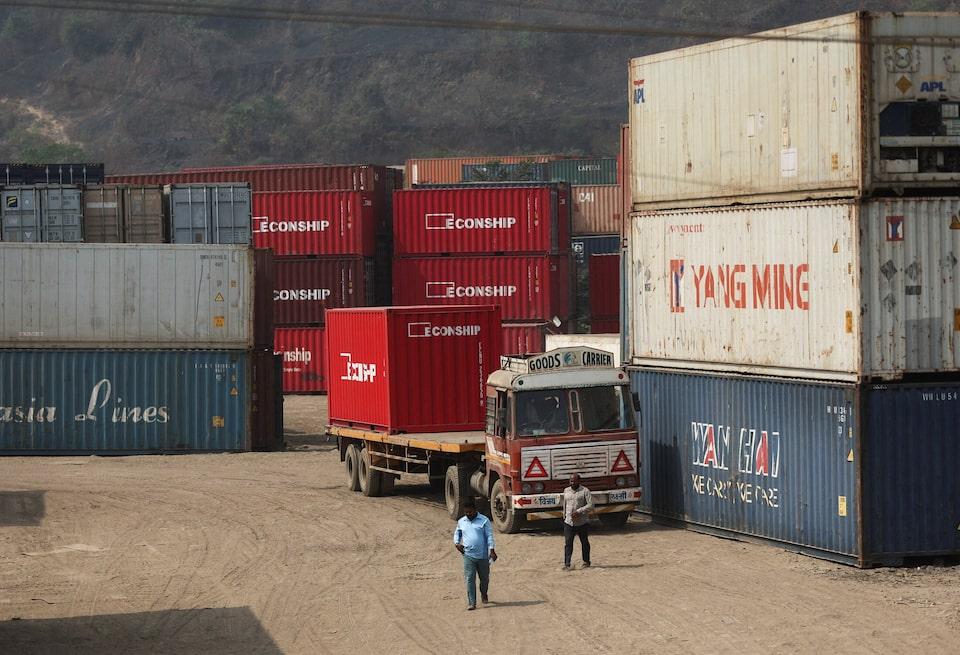
Indian farm unions call for February 12 protests over US deal Unions warn US farm imports could depress domestic prices Government says farmers' interests are protected NEW DELHI, Feb 9 (Reuters) - Indian farm unions and opposition parties have called for nationwide protests against the new India-U.S. trade framework, saying it risks hurting the farm sector by allowing more U.S. imports, although the government says key staples are protected. The agreement has become a political flashpoint, reviving memories of the 2020–21 farm law protests, when the government was forced to repeal three laws aimed at deregulating agricultural markets. Sign up here. The government has defended the pact, saying farmers' interests are protected by excluding imports of grains such as rice, wheat, corn and dairy products, while growers of basmati rice, fruits, spices, coffee and tea would gain duty-free access to the U.S. market. Farm groups say the pact puts Indian farmers at a disadvantage. FARMERS COMPLAIN OVER LACK OF DETAIL "We are worried about the India-U.S. trade deal, as it would hurt Indian farmers, who are far more vulnerable than their American counterparts," said Rakesh Tikait, a farmers' leader. He said U.S. farmers have larger landholdings and receive higher subsidies, while Indian farmers also face crop losses from weak processing infrastructure and rising cultivation costs. The Samyukt Kisan Morcha (SKM), a coalition of more than 100 farm groups, has called for protests on February 12, saying the deal would allow imports of subsidised U.S. farm products that could depress domestic prices and hurt rural incomes. The interim India-U.S. trade framework amounts to a complete surrender to U.S. agricultural multinationals, SKM said in a statement, urging the government not to sign the pact. "We will not allow the government to open up the Indian farm sector for American companies," SKM national secretary Purushottam Sharma said, adding that lower tariffs on crude soyoil, currently taxed at about 16.5%, would hurt domestic oilseed producers. Apple growers have also voiced concern. In a representation to Prime Minister Narendra Modi, the Kashmir Valley Fruit Growers-cum-Dealers Union said more than 700,000 families depend on horticulture in key apple-producing states and called for import duties of more than 100% on U.S. apples. The opposition Congress party has called the agreement a "total surrender" of national and farm interests and questioned the lack of detailed product lists and tariff lines disclosed by the government. Farmer leaders have also urged the government to share details of the pact. "India could be made into a dumping ground by this deal," Congress leader Pawan Khera said, citing U.S. Agriculture Secretary Brooke Rollins, who said it would boost U.S. farm exports to India, lift prices and pump cash into rural America. https://www.reuters.com/world/india/indian-farm-unions-opposition-vow-fight-india-us-trade-pact-2026-02-09/
2026-02-09 10:28
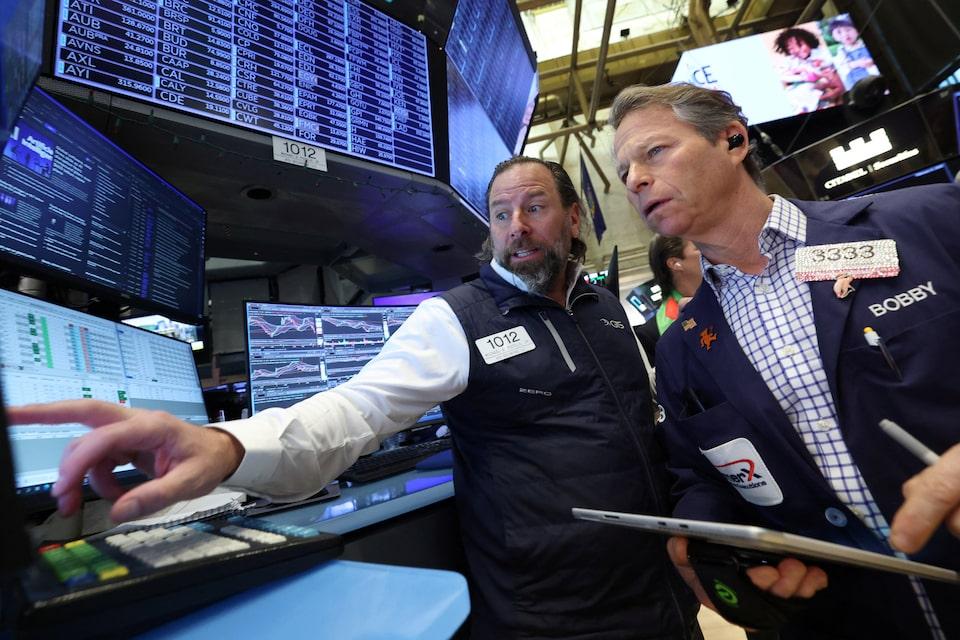
Indexes up: Dow 0.04%, S&P 500 up 0.47%, Nasdaq up 0.90% Dow marks second record close in a row S&P 500's software services index rallies 2.9% Oracle climbs after upgrade, Kroger jumps after next CEO Feb 9 (Reuters) - The S&P 500 and the Nasdaq rose solidly after a shaky start on Monday, as technology stocks found their footing following last week's AI-sparked selloff, while investors waited for key economic data that could shed light on the Federal Reserve's interest-rate path. While the Dow notched its second closing record in a row with a small gain, the S&P 500 ultimately finished short of its closing record. Sign up here. The S&P 500 technology sector (.SPLRCT) , opens new tab finished up 1.6% to extend Friday's gains after a steep selloff last week. The S&P 500 Software Services index (.SPLRCIS) , opens new tab ended up 2.9% as it clawed back some losses for a second day after a bruising seven days of losses fueled by fears that AI could intensify competition. One big gainer in software was Oracle (ORCL.N) , opens new tab, which added 9.6% after D.A. Davidson upgraded it to a "buy" recommendation from "neutral." Along with the upgrade, Keith Lerner, chief investment officer at Truist Advisory Services, said another support for technology stocks came from comments CNBC attributed to Sam Altman, the CEO of Microsoft-backed OpenAI. Altman told employees that the startup's artificial intelligence chatbot, ChatGPT, was back to exceeding 10% monthly growth, according to CNBC's report which Reuters could not independently verify. "You've a sharply oversold market where a little bit of good news can go a long way," said Lerner, adding that "the rubber band was stretched too far for tech and software" in last week's selloff. While the software index was still almost 13% below its trading levels just before the exodus that started in late January, the broader tech sector was less than 3% under its pre-selloff levels. After surpassing 50,000 points for the first time on Friday, the Dow Jones Industrial Average (.DJI) , opens new tab rose 20.20 points, or 0.04%, to 50,135.87. The S&P 500 (.SPX) , opens new tab gained 32.52 points, or 0.47%, to 6,964.82 and the Nasdaq Composite (.IXIC) , opens new tab gained 207.46 points, or 0.90%, to 23,238.67. The Nasdaq finished 3% below its latest record closing high, reached in November, while the S&P 500 was just out of reach of its last record close of 6978.60 reached on January 27. The materials index (.SPLRCM) , opens new tab, up 1.4%, showed the second biggest advance among the S&P 500's 11 major industry indexes, as a rally in gold and silver boosted miners. The consumer staples sector (.SPLRCS) , opens new tab, which had benefited during the technology selloff, was tied with healthcare (.SPXHC) , opens new tab for the steepest sector declines of the day, with both falling 0.86%. Healthcare's biggest loser was Waters (WAT.N) , opens new tab whose shares sank 13.9% after the lab equipment maker forecast first-quarter profit below Wall Street estimates. Investors also weighed weakness in a Becton Dickinson (BDX.N) , opens new tab unit it acquired last year. The Philadelphia SE Semiconductor index (.SOX) , opens new tab gained 1.4%. Among its members, Nvidia (NVDA.O) , opens new tab shares added 2.5% providing the S&P 500's biggest boost, but traders must wait until later this month for results from the AI chip leader. Coming closer in the pipeline is the January nonfarm payrolls report due on Wednesday, which was delayed by a partial government shutdown, and the closely watched January Consumer Price Index on Friday. Markets are currently pricing in the year's first interest-rate cut in June, according to CME Group's FedWatch tool, which could be when U.S. President Donald Trump's nominee for Fed chair, Kevin Warsh, takes over. Among individual stock movers, Hims & Hers Health (HIMS.N) , opens new tab tumbled 16% for its seventh consecutive daily loss. Novo Nordisk (NOVOb.CO) , opens new tab sued the telehealth firm for patent infringement after the U.S. firm launched, then canceled, a $49 copy of the Danish drugmaker's weight-loss pill Wegovy following backlash from the U.S. Food and Drug Administration. Workday (WDAY.O) , opens new tab shares slid 5% after the human resources software provider announced co-founder Aneel Bhusri will return as its CEO. Kyndryl (KD.N) , opens new tab shares plunged 54.9% after the IT services provider delayed its quarterly filing and flagged material weakness in its financial reporting. Kroger's (KR.N) , opens new tab shares rallied 3.9% after the grocery giant named former Walmart executive Greg Foran as its chief executive. Advancing issues outnumbered decliners by a 2.13-to-1 ratio on the NYSE where there were 789 new highs and 99 new lows. On the Nasdaq, 2,887 stocks rose and 1,917 fell as advancing issues outnumbered decliners by a 1.51-to-1 ratio. The S&P 500 posted 63 new 52-week highs and 20 new lows while the Nasdaq Composite recorded 165 new highs and 127 new lows. Trading volume was relatively light on Monday with about 17.78 billion shares changing hands compared with the 20.66 billion moving average for the last 20 sessions. https://www.reuters.com/business/wall-st-futures-muted-markets-await-key-economic-data-2026-02-09/
2026-02-09 10:12
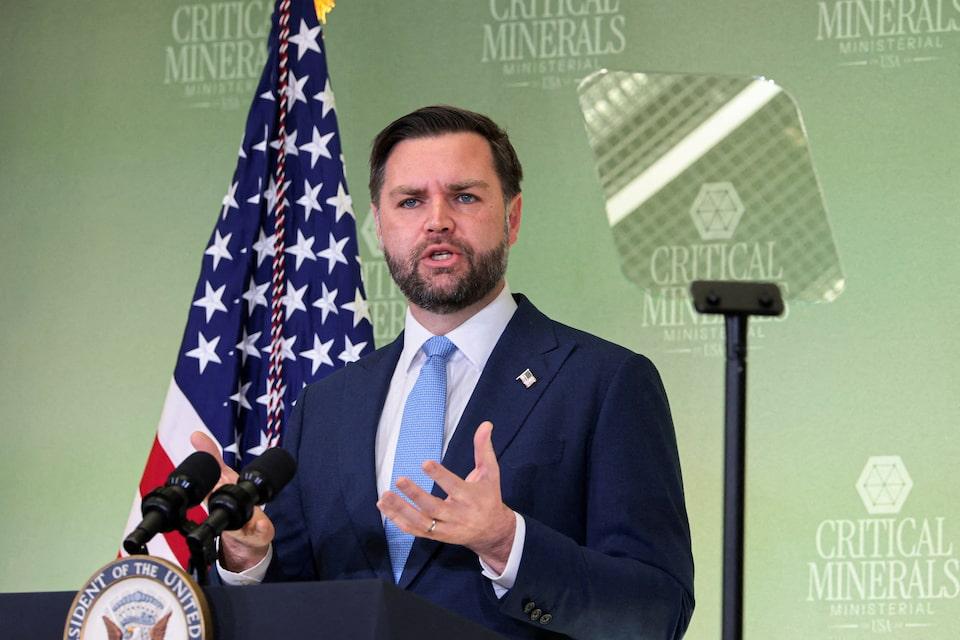
JD Vance's visit follows US-brokered peace accord Baku, Yerevan rebuilding ties after decades of war Vance to discuss planned transit corridor Energy, critical minerals also in focus TBILISI, Feb 9 (Reuters) - U.S. Vice President JD Vance will visit Armenia and Azerbaijan this week to push a Washington-brokered peace agreement that could transform energy and trade routes in the strategic South Caucasus region. His two-day trip to Armenia, which begins later on Monday, comes just six months after the Armenian and Azerbaijani leaders signed an agreement at the White House seen as the first step towards peace after nearly 40 years of war. Sign up here. Vance, the first U.S. vice president to visit Armenia, is seeking to advance the Trump Route for International Peace and Prosperity (TRIPP), a proposed 43-kilometre (27-mile) corridor that would run across southern Armenia and give Azerbaijan a direct route to its exclave of Nakhchivan and in turn to Turkey, Baku's close ally. "Vance's visit should serve to reaffirm the U.S.'s commitment to seeing the Trump Route through," said Joshua Kucera, a senior South Caucasus analyst at Crisis Group. "In a region like the Caucasus, even a small amount of attention from the U.S. can make a significant impact." The Armenian government said on Monday that Vance would hold talks with Prime Minister Nikol Pashinyan and that both men would then make statements, without elaborating. Vance will then visit Azerbaijan on Wednesday and Thursday, the White House has said. Under the agreement signed last year, a private U.S. firm, the TRIPP Development Company, has been granted exclusive rights to develop the proposed corridor, with Yerevan retaining full sovereignty over its borders, customs, taxation and security. The route would better connect Asia to Europe while - crucially for Washington - bypassing Russia and Iran at a time when Western countries are keen on diversifying energy and trade routes away from Russia due to its war in Ukraine. Russia has traditionally viewed the South Caucasus as part of its sphere of influence but has seen its clout there diminish as it is distracted by the war in Ukraine. Securing U.S. access to supplies of critical minerals is also likely to be a key focus of Vance's visit. TRIPP could prove a key transit corridor for the vast mineral wealth of Central Asia - including uranium, copper, gold and rare earths - to Western markets. CLOSED BORDERS, BITTER RIVALS In Soviet times the South Caucasus was criss-crossed by railways and oil pipelines until a series of wars beginning in the 1980s disrupted energy routes and shuttered the border between Armenia and Turkey, Azerbaijan's key regional ally. Armenia and Azerbaijan were locked in bitter conflict for nearly four decades, primarily over the mountainous region of Nagorno-Karabakh, an internationally recognised part of Azerbaijan that broke away from Baku's control as the Soviet Union fell apart in 1991. Azerbaijan and Armenia fought two wars over Karabakh before Baku finally took it back in 2023. Karabakh's entire ethnic Armenian population of around 100,000 people fled to Armenia. The two neighbours have made progress in recent months on normalising relations, including restarting some energy shipments. But major hurdles remain to full and lasting peace, including a demand by Azerbaijan that Armenia change its constitution to remove what Baku says contains implicit claims on Azerbaijani territory. https://www.reuters.com/world/asia-pacific/us-vice-president-vance-heads-armenia-azerbaijan-push-peace-trade-2026-02-09/
2026-02-09 09:56
KAMPALA, Feb 9 (Reuters) - Uganda's central bank kept its main lending rate unchanged on Monday for the sixth meeting in a row, saying an uncertain economic environment meant a cautious approach was necessary. The Bank of Uganda's Central Bank Rate (UGCBIR=ECI) , opens new tab has been at 9.75% since October 2024. Sign up here. Governor Michael Atingi-Ego told a press conference that the current policy stance remained appropriate to support economic activity while ensuring that inflation stabilises around the bank's 5% medium-term target. Inflation inched up to 3.2% year on year in January from 3.1% in December (UGCPIY=ECI) , opens new tab. Atingi-Ego said inflation was projected to remain slightly below target in 2026, within a range of about 3.8%-4.3%, before stabilising around 5%. Economic growth is forecast to be between 6.5% and 7% in the current fiscal year ending in June, rising to an average of 8% over the medium term because of high levels of public investment and oil-related infrastructure developments, the governor added. The East African country is preparing to start pumping commercial volumes of crude oil later this year. https://www.reuters.com/world/africa/uganda-central-bank-keeps-key-lending-rate-unchanged-2026-02-09/