2025-12-29 05:07
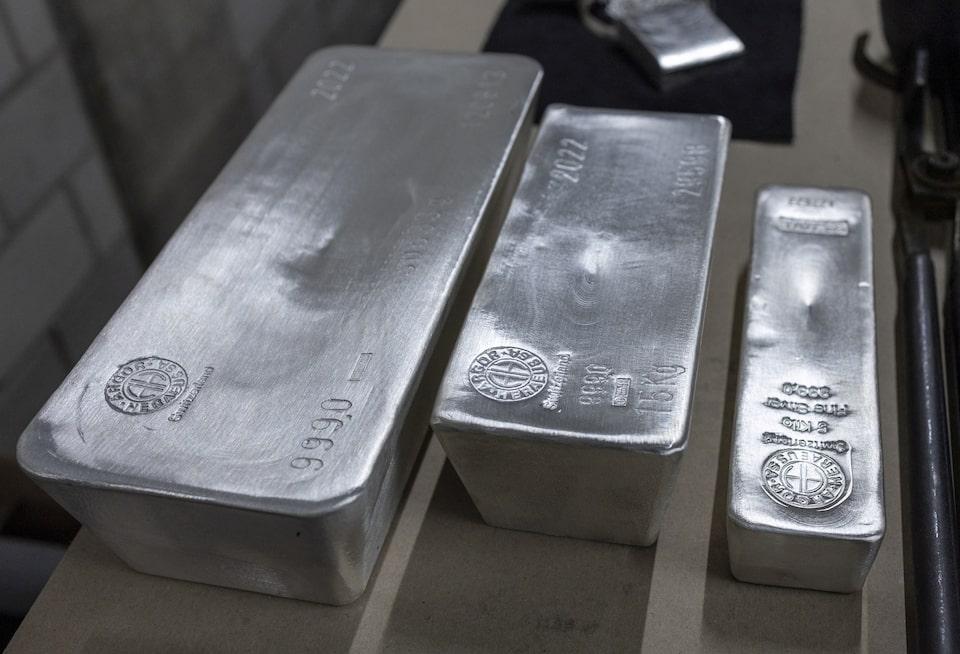
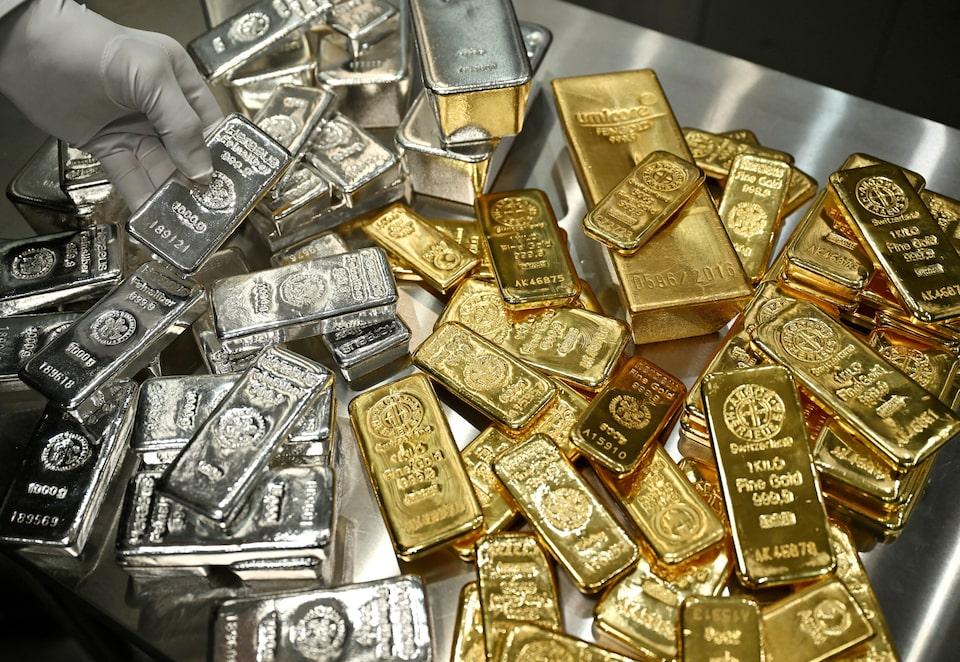
Silver hits record high at $83.62/oz Gold up 65% year-to-date; silver gains 147% Dec 29 (Reuters) - Precious metals retreated sharply on Monday, with silver and platinum falling from record highs hit earlier in the session, as investors booked profits after recent rallies. Spot gold fell 4.5% to $4,330.79 an ounce by 1:51 p.m. ET (1851 GMT) after hitting a record $4,549.71 on Friday, while U.S. gold futures for February delivery settled 4.6% lower at $4,343.60. Sign up here. Platinum dropped 14.5% to $2,096.53/oz after touching a record peak of $2,478.50 earlier in the session, while silver shed 9.5% to $71.66 an ounce, also retreating from a record high of $83.62 hit earlier in the session. Spot palladium plunged 15.9% to $1,617.47/oz. "All the metals moved up to recent and all-time highs. We are seeing profit-taking pullbacks off of those spectacularly high levels," said David Meger, director of metals trading at High Ridge Futures. Gold has surged about 65% this year. Platinum and palladium are also on track for annual gains. Silver has outperformed all with a 147% gain so far, driven by its critical mineral status, supply shortages and rising industrial and investor demand. "I believe that the underlying fundamentals of (silver) supply constraints remain factors in the market and we still have positive prospects going into 2026," Meger added. President Vladimir Putin told U.S. President Donald Trump on Monday that Russia would review its position in peace negotiations after what Moscow said was a Ukrainian drone attack on a Russian presidential residence, the Kremlin said. Gold is a traditional safe-haven asset that performs well during periods of economic and geopolitical uncertainty. Elsewhere, Daniel Ghali, commodity strategist at TD Securities, said that drops in prices were exacerbated by liquidity constraints largely associated with the deadline for the President to make a recommendation to the critical minerals investigation, and holiday-thinned trading. https://www.reuters.com/world/india/precious-metals-retreat-silver-dips-after-breaching-80ounce-2025-12-29/
2025-12-29 04:54
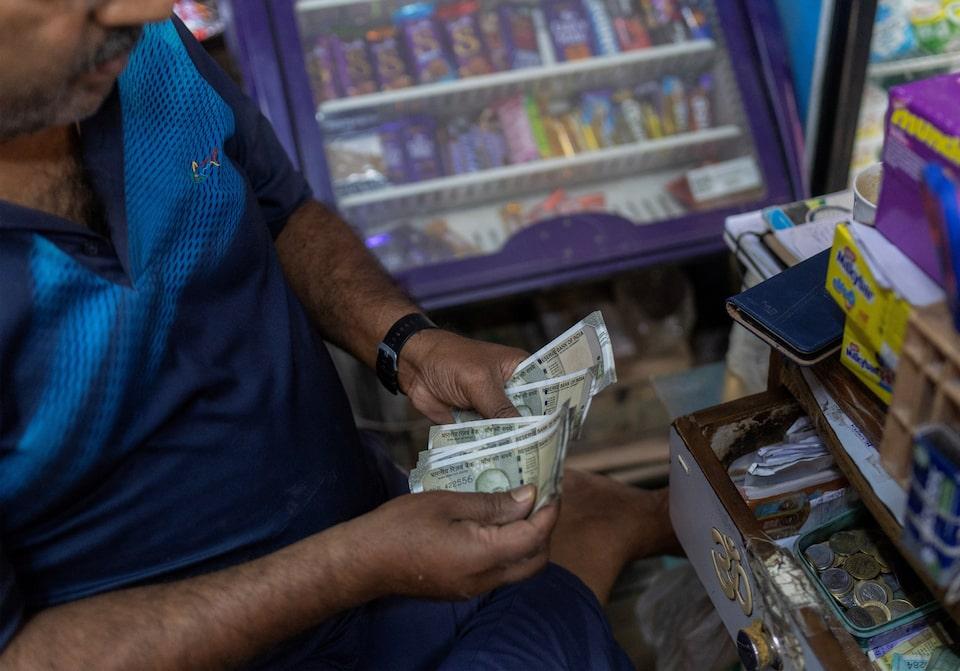
MUMBAI, Dec 29 (Reuters) - The Indian rupee's slide against the dollar has increased its allure for UBS Asset Management ahead of a long-anticipated trade deal with the U.S., even as it remains neutral on Indian bonds. "We like the currency and feel it is very cheap. The trade deal has not yet been announced but we are hopeful it would be announced soon, so at these levels, the currency is looking attractive," said Shamaila Khan, head of fixed income emerging markets and Asia Pacific, UBS Asset Management. Sign up here. The Indian rupee has recovered partially from a record low of 91.0750 hit earlier in the month, but still remains down nearly 5% in 2025, the worst performing major Asian currency this year. The rupee has been hit by weak investment flows and steep U.S. tariffs in the absence of a trade deal. Traders say the currency continues to face pressure despite the Reserve Bank of India keeping volatility in check. Measured against a basket of trading-partner currencies, the rupee's real effective exchange rate has fallen to a decadal low in 'undervaluation' territory, but investors reckon that may not be enough to drive a rebound just yet. UBS, though, argues that the RBI allowing the currency to fall is a temporary phenomenon, intended to support exporters until a trade deal is reached. "The cheapness of the currency is a new development, so investors should look at that, as the fundamentals of the country look intact and when Indian assets cheapen, it is an opportunity for us," Khan said, noting that she expects a trade deal with the U.S. in the next few months. NEUTRAL ON DEBT Even as the asset manager remains bullish on the Indian rupee, UBS AM is neutral on the nation's government bonds that screen as expensive in terms of valuation. "We are neutral to underweight on the fixed income space, as we feel they are not very cheap compared to the currency," Khan added. The 10-year bond yield is down 14 bps after hitting a high of 6.70% last week, as the central bank announced a slew of liquidity measures. Foreign investors have been withdrawing funds from India's government bonds this month, on the view that the central bank is done with its rate easing cycle and amid the fall in rupee. Higher withholding taxes are also a bone of contention for foreign investors as "returns get diluted", said Khan. (This story has been refiled to correct a typo in the company name in paragraphs 1 and 2) https://www.reuters.com/world/india/ubs-am-warms-beaten-down-indian-rupee-neutral-government-debt-2025-12-29/
2025-12-29 04:17
Arbitration hearing has been underway since 2016, sources say. Tribunal expected to deliver verdict in mid-2026, sources say. Government argues mismanagement resulted in lost reserves, two people say. Government says Reliance and BP should pay the value of the shortfall, two people say Reliance and BP disputed in the hearings that they owed anything to the government, two people say. NEW DELHI, Dec 29 (Reuters) - India is seeking over $30 billion in compensation from Reliance Industries (RELI.NS) , opens new tab and BP (BP.L) , opens new tab in an arbitration case for gas it says the companies failed to produce from offshore fields, according to three people with knowledge of the matter. A tribunal has been hearing the dispute in India since 2016 over gas produced from two deepwater fields, D1 and D3, in the D6 block of the Krishna Godavari basin, seven individuals with knowledge of the proceedings said. Final arguments took place on Nov. 7, they said. Sign up here. The three-member tribunal is expected to deliver its verdict in mid-2026, two people aware of the hearing schedule said. The verdict can be challenged in Indian courts, several people said. Reuters is reporting the case and India's $30 billion claim for the first time. The D1 and D3 fields, India’s first major deepwater gas project, were seen as key to bolstering the country’s energy independence when first developed. However, the high-profile project was plagued by production difficulties related to water ingress and reservoir pressure, as well as cost-recovery disputes with the government, and failed to live up to initial production hopes, previous public statements by Reliance and the government show. In 2012, the oil ministry told parliament in a written statement that prior to commencing the work on the D6 gas fields, Reliance had estimated the recoverable reserves from D1 and D3 at 10.3 trillion cubic feet (tcf) before revising that down to 3.1 tcf. A Reliance spokesperson said that the arbitration is confidential and did not comment on the case. A spokesperson for London-based BP, a Reliance partner in the fields, declined to comment. Spokespeople for India's federal oil, law and information ministries, and the prime minister's office, did not reply to multiple requests seeking comment. The gas block, located in the Bay of Bengal off the southern state of Andhra Pradesh, was awarded by the Indian government in 2000 to Reliance, a company controlled by billionaire Mukesh Ambani, under a production sharing contract. The $30 billion claim is the largest ever pursued by the Indian government against a corporation and centres on its allegation that mismanagement by the companies resulted in the loss of most of the reserves in D1 and D3, three people said. In 2011, Reliance sold a 30% stake in 21 oil-and-gas production sharing contracts (PSCs) that Reliance operates in India, including the KG-D6 block, to BP for $7.2 billion. Under the production sharing contract between Reliance and the Indian government, disputes must be settled by a mutually agreed arbitration tribunal. Two individuals said that the government argued in the arbitration that Reliance had estimated recoverable gas reserves from D1 and D3 fields at about 10 trillion cubic feet but had produced only about 20% of that. The government said that Reliance and BP should pay the government the value of the shortfall, two people said. In their arguments to the tribunal, Reliance and BP disputed that they owed anything to the government, the two people said. In a public statement in February 2020 to announce it had ceased production at the D1 and D3 fields, Reliance said that overall production from the block that includes those fields had reached 3 tcf of gas equivalent. It was not clear from the statement how much of the gas came from the D1 and D3 fields. Under the contract with the government, Reliance and its partners were allowed to recover costs from gas and oil sales before sharing profits with the government, both Reliance and the government have said in previous public statements. The government's profit share was 10% in the first year and under the contract could rise subsequently once costs were recovered, the government has said in previous public comments. During the arbitration hearings, the government justified its demand of $30 billion in compensation by saying that it owned any gas discovered under the contract and that mismanagement had led to most of the reserves being lost, two people said. It alleged that Reliance mismanaged the fields by pursuing what the government argued was “unduly aggressive” production methods, which involved extracting gas from fewer wells than the number initially planned, two people said. The government says Reliance used only 18 wells, instead of 31 planned, without adequate infrastructure, which resulted in damage to the reservoir, they said. https://www.reuters.com/business/energy/india-claims-30-billion-reliance-industries-bp-underproduction-gas-field-sources-2025-12-29/

2025-12-29 01:43
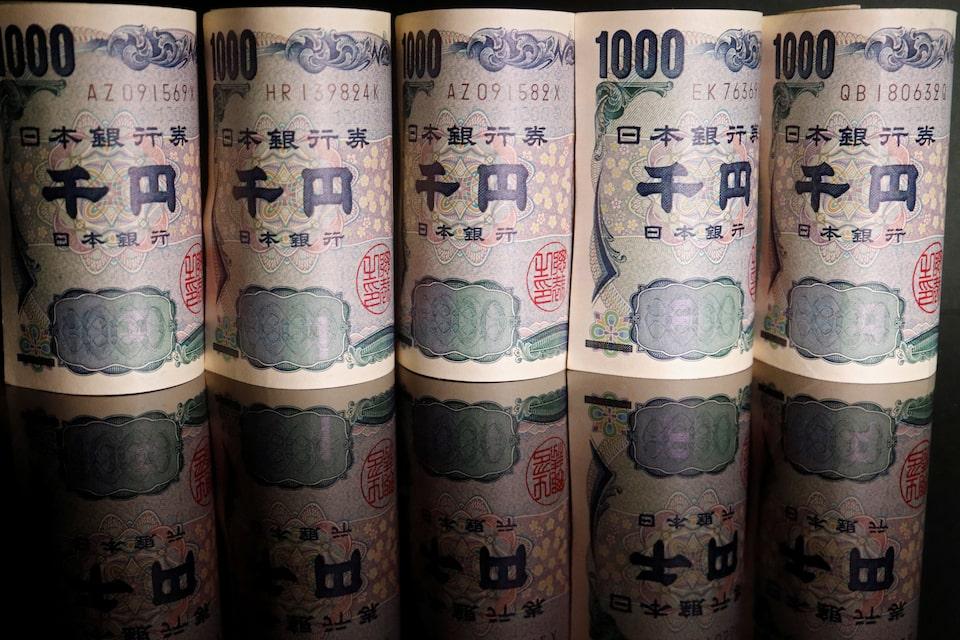
BOJ report shows many board members saw need for rate hikes Fed minutes highlight thin data calendar US pending home sales jump NEW YORK, Dec 29 (Reuters) - The yen strengthened on Monday in light holiday trading, on track for its fifth gain in six sessions as markets weighed the timing of additional interest rate hikes in Japan and the chances of intervention. Bank of Japan policymakers debated the need to continue raising rates, the minutes from its policy meeting earlier in December, when the central bank hiked its policy rate to a 30-year high of 0.75% from 0.5%, showed on Monday. Sign up here. Finance Minister Satsuki Katayama said last week that Japan has a free hand in dealing with excessive moves in the yen, and similar statements from officials have helped stem the softening in the Japanese currency against the dollar in recent days. "The conditions for intervention don't exist right now and those conditions would be dramatic price action or high volatility... since they hiked rates, it has chopped around a bit, but I don't think the threshold's there," said Marc Chandler, chief market strategist at Bannockburn Capital Markets in New York. "The market is focused on next year, people who are trading today and tomorrow are sort of last minute kind of things, they tend to be small orders and people who have to do them, so I won't take much of a signal from this, we've been consolidating for a few days." The dollar index , which measures the greenback against a basket of currencies, rose 0.09% to 98.12, with the euro down 0.12% at $1.1757. Sterling weakened 0.04% to $1.3489. Against the Japanese yen , the dollar weakened 0.23% to 156.18. In a note on Monday, Torsten Slok, chief economist at Apollo Global Management in New York, said the yen has traded much weaker than interest rate differentials alone would suggest over the past six months, "indicating that growing concerns about Japan’s fiscal position in a rising rate environment are starting to dominate." Despite the rate hike at the BOJ's December 19 meeting, the yen weakened to a one-month low of 157.77 per dollar, prompting intervention warnings. Japan last stepped into markets to defend its currency in July 2024, buying yen after the currency hit a 38-year low of 161.96. The economic calendar is thin in most markets ahead of the New Year holiday, although U.S. data showed pending home sales rose 3.3% last month after an upwardly revised 2.4% gain in October, the National Association of Realtors said. The index tracking sales rose to its highest level since February 2023. Tuesday will bring about the release of minutes from the Federal Open Market Committee's meeting earlier this month in which the U.S. central bank cut rates and projected just one more reduction for next year, although markets have priced in roughly two more. In cryptocurrencies, bitcoin fell 0.13% to $87,432.89. https://www.reuters.com/sports/yen-stages-partial-recovery-boj-hikes-intervention-risks-weighed-2025-12-29/
2025-12-29 01:41
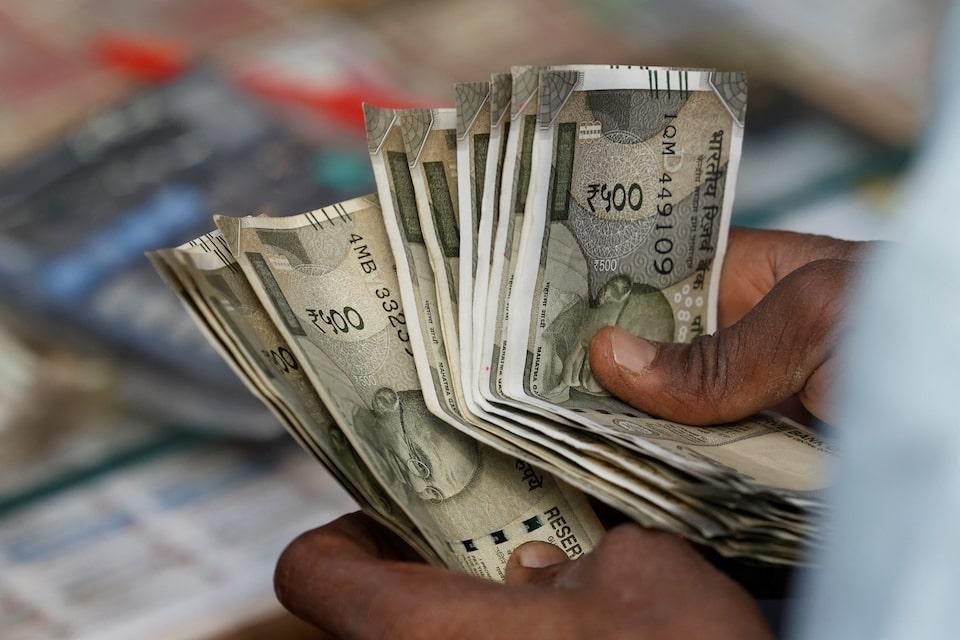
MUMBAI, Dec 29 (Reuters) - The Indian rupee may face headwinds this week from maturing non-deliverable forward (NDF) positions, while bond traders would watch demand-supply dynamics and foreign investor activity. The rupee closed at 89.85 per dollar on Friday, down 0.6% for the week, as persistent corporate hedging eroded an intervention-led rebound from near record lows. Sign up here. Traders said the rupee could slip past 90 per dollar again this week, and without central bank support, may test 91. "The cycle of elevated dollar demand from NDF maturities is likely to resume, leaving the currency exposed," a trader at a large private bank said. Year-end thinning in trading volumes could amplify flow-driven moves, the trader added. Beyond the immediate cues, stalled India–U.S. trade talks and foreign portfolio outflows continue to weigh on the rupee despite RBI intervention, said Anil Bhansali, head of treasury at Finrex Treasury Advisors. Foreign investors are on track to pull out a record roughly $18 billion from local stocks this year. Global market activity is expected to be subdued as investors await minutes from the U.S. Federal Reserve's December policy meeting for cues on the future path of interest rates. The 10-year benchmark 6.48% 2035 yield settled at 6.5637%, down 4 basis points on the week. Traders expect the yield to move in a 6.52%–6.63% range, with continued attention on the overall demand-supply scenario and foreign flows. The 10-year bond yield hit 6.70% last week but has since cooled off after the Reserve Bank of India announced it would purchase bonds worth 2 trillion rupees ($22.28 billion) over four weeks, including 500 billion rupees on Monday. Some traders also speculated that the RBI was an active buyer in the secondary market before announcing the liquidity package. "Given it is also likely that the RBI could have intervened on screen, this could be taken as a sign of the central bank's discomfort with the pace of rise in bond yields despite a somewhat dovish policy decision earlier this month," said Abhishek Upadhyay, senior economist at ICICI Securities Primary Dealership. "Absent significant pressure on the FX side in the next quarter, the RBI may not need to intervene more from liquidity standpoint." Pressure on bonds persists as foreign investors continue to pare positions ahead of year-end, with net selling of 135 billion rupees so far in December. Still, Matthew Kok, portfolio manager for Asian fixed income at Eastspring Investments, said it makes sense to hold government bonds in portfolios benchmarked in local currency. KEY EVENTS: India ** November fiscal deficit - December 31, Wednesday (3:30 p.m. IST) ** December HSBC manufacturing PMI - January 2, Friday (10:30 a.m.) U.S. ** Initial weekly jobless claims for week to December 27 - December 31, Wednesday (7:00 p.m. IST) ** December S&P Global manufacturing PMI final - January 2, Friday (8:15 p.m. IST) ($1 = 89.7660 Indian rupees) https://www.reuters.com/world/india/rupee-may-face-ndf-pressure-bonds-eye-demand-before-quarter-end-2025-12-29/
2025-12-29 00:52
29 ديسمبر كَانُون ٱلْأَوَّل (رويترز) - تجاوز سعر الفضة 80 دولارا للأونصة (الأوقية) اليوم الاثنين، مدعوما بالطلب القوي من القطاعين الصناعي والاستثماري، وانخفاض المخزونات، والتوترات الجيوسياسية، وتوقعات بخفض إضافي لأسعار الفائدة الأمريكية. وانخفض سعر الذهب في المعاملات الفورية 0.1 بالمئة إلى 4527.79 دولار للأونصة بحلول الساعة 1152 بتوقيت جرينتش أمس الأحد، بعد أن سجل مستوى قياسيا جديدا بلغ 4549.71 دولار في الجلسة السابقة. Sign up here. واستقرت العقود الأمريكية الآجلة للذهب تسليم فبراير شباط عند 4553.10 دولار للأونصة. وارتفع سعر الفضة في المعاملات الفورية 3.8 بالمئة إلى 82.15 دولار للأونصة ، بعد أن لامست أعلى مستوى لها على الإطلاق عند 83.62 دولار في وقت سابق من الجلسة. وحققت الفضة مكاسب بنسبة 181 بالمئة منذ بداية العام لتتجاوز حاجز 80 دولارا مدفوعة بتصنيفها ضمن قائمة المعادن الأمريكية الحرجة ومحدودية المعروض وانخفاض المخزونات وسط ارتفاع الطلب الصناعي والاستثماري. وبالنسبة للعملات الأخرى، انخفض البلاتين في المعاملات الفورية 0.8 بالمئة إلى 2429.10 دولار بعدما ارتفع إلى أعلى مستوى له على الإطلاق عند 2478.50 دولار في وقت سابق من الجلسة، وارتفع البلاديوم 0.1 بالمئة إلى 2003.83 دولار للأوقية. https://www.reuters.com/markets/commodities/spot-silver-crosses-80-first-time-2025-12-29/