2024-12-03 18:59
Dec 3 (Reuters) - Imperial Oil Ltd (IMO.TO) , opens new tab on Tuesday said it is currently managing a minor biomass spill into the St. Clair River from its water treatment plant in Ontario, Canada. "This occurred this morning and has been contained within the site's outfall. Booms have been placed within that area of the river," Imperial said. As a precaution, a vac truck has been stationed at the area to prevent another carryover occurrence, the company said. Imperial was not immediately available to comment on the volume of the release. Sign up here. https://www.reuters.com/business/environment/imperial-oil-reports-biomass-spill-into-st-clair-river-ontario-2024-12-03/

2024-12-03 18:38
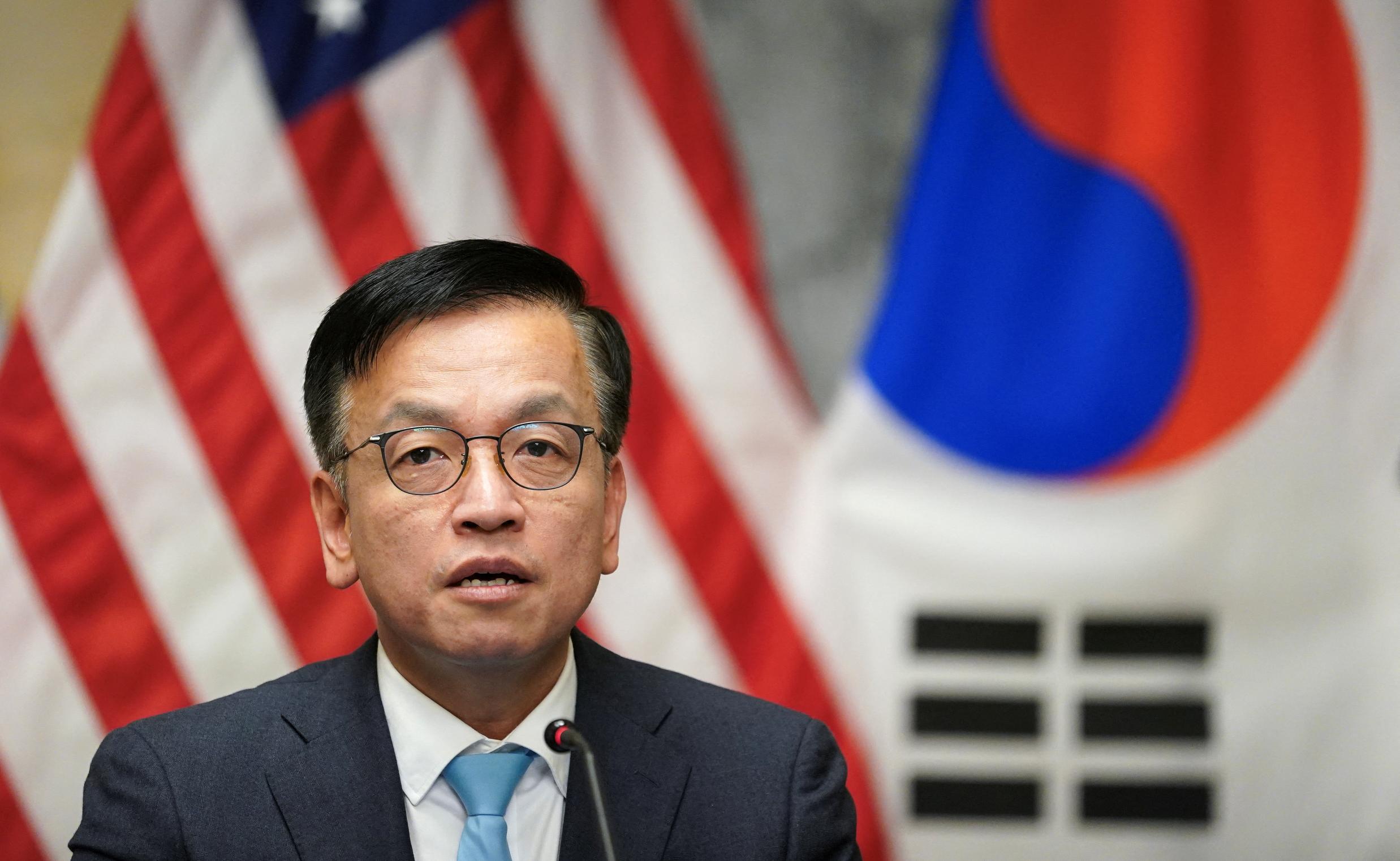
South Korea ready to inject unlimited liquidity into markets BOK to start repo operations, loosen collateral policies Political turmoil adds uncertainty to economy, budget deadlock persists SEOUL, Dec 4 (Reuters) - South Korea's finance ministry said on Wednesday it was ready to deploy "unlimited" liquidity into financial markets after President Yoon Suk Yeol lifted a martial law declaration he imposed overnight that pushed the won to multi-year lows. The announcement came after Finance Minister Choi Sang-mok and Bank of Korea Governor Rhee Chang-yong held emergency talks overnight, and as the central bank board abruptly met to approve rescue measures for the local credit market. While financial markets found their footing in Wednesday trade, with the won higher and stocks trimming some losses, investors remain wary about longer-term political stability in South Korea, which has been seeking to make its markets more global. "All financial, FX markets as well as stock markets will operate normally," the government said in a statement. "We will inject unlimited liquidity into stocks, bonds, short-term money market as well as forex market for the time being until they are fully normalised." The BOK said it will start special repo operations from Wednesday for local financial institutions to support smooth market functioning. It also said it would loosen repo collateral policies by accepting bank debentures issued by some state-run enterprises. The financial regulator added it was ready to deploy 10 trillion won ($7.07 billion) in a stock market stabilisation fund any time, the Yonhap news agency said. South Korea's won , gained 0.8% as of 0212 GMT, coming off the two-year low of 1,442.0 hit overnight after Yoon's shock martial law declaration. Local foreign exchange dealers suspected authorities sold dollars as part of smoothing operations, intervening hard as soon as markets opened to limit a decline in the won. South Korea's parliament, with 190 of its 300 members present, unanimously passed a motion early Wednesday requiring the martial law be lifted. Korean shares (.KS11) , opens new tab fell 2% on Wednesday with chipmaker Samsung Electronics (005930.KS) , opens new tab down 1.31% and battery maker LG Energy Solution (373220.KS) , opens new tab off 2.64%. The KOSPI index and won are among Asia's worst performing assets this year. Overnight, U.S.-listed South Korean stocks fell, while exchange-traded products in New York including iShares MSCI South Korea ETF (EWY.P) , opens new tab and Franklin FTSE South Korea ETF (FLKR.P) , opens new tab lost about 1% each. Daniel Tan, a Singapore-based portfolio manager at Grasshopper Asset Management, said over the longer-term, the incident would accentuate the "Korean Discount", which refers to a tendency for local companies to have lower valuations than global peers. "A reflection of the 'Korean Discount', Korea's equity benchmark KOSPI currently trades at 0.8 times one-year forward estimated book value, while the MSCI World Index trades at closer to 3 times," Tan said. "Investors could require a bigger risk premium to invest in the won and Korean equities." FISCAL RISKS The political turmoil comes as Yoon and the opposition-controlled parliament clash over the budget and other measures. The opposition Democratic Party last week cut 4.1 trillion won from the Yoon government's proposed 677.4 trillion won ($470.7 billion) budget, putting parliament in a deadlock over spending. The parliamentary speaker on Monday stopped the revised budget from going to a final vote. A successful budget intervention by the opposition would deal a major blow to Yoon's minority government and risk shrinking fiscal spending at a time when export growth is cooling. "The negative impact to the economy and financial market could be short-lived as uncertainties on political and economic environment could be quickly mitigated on the back of proactive policy response," Citi economist Kim Jin-wook said in a report. Sign up here. https://www.reuters.com/markets/asia/skorea-authorities-vow-stabilize-markets-parliament-votes-lift-martial-law-2024-12-03/
2024-12-03 14:27
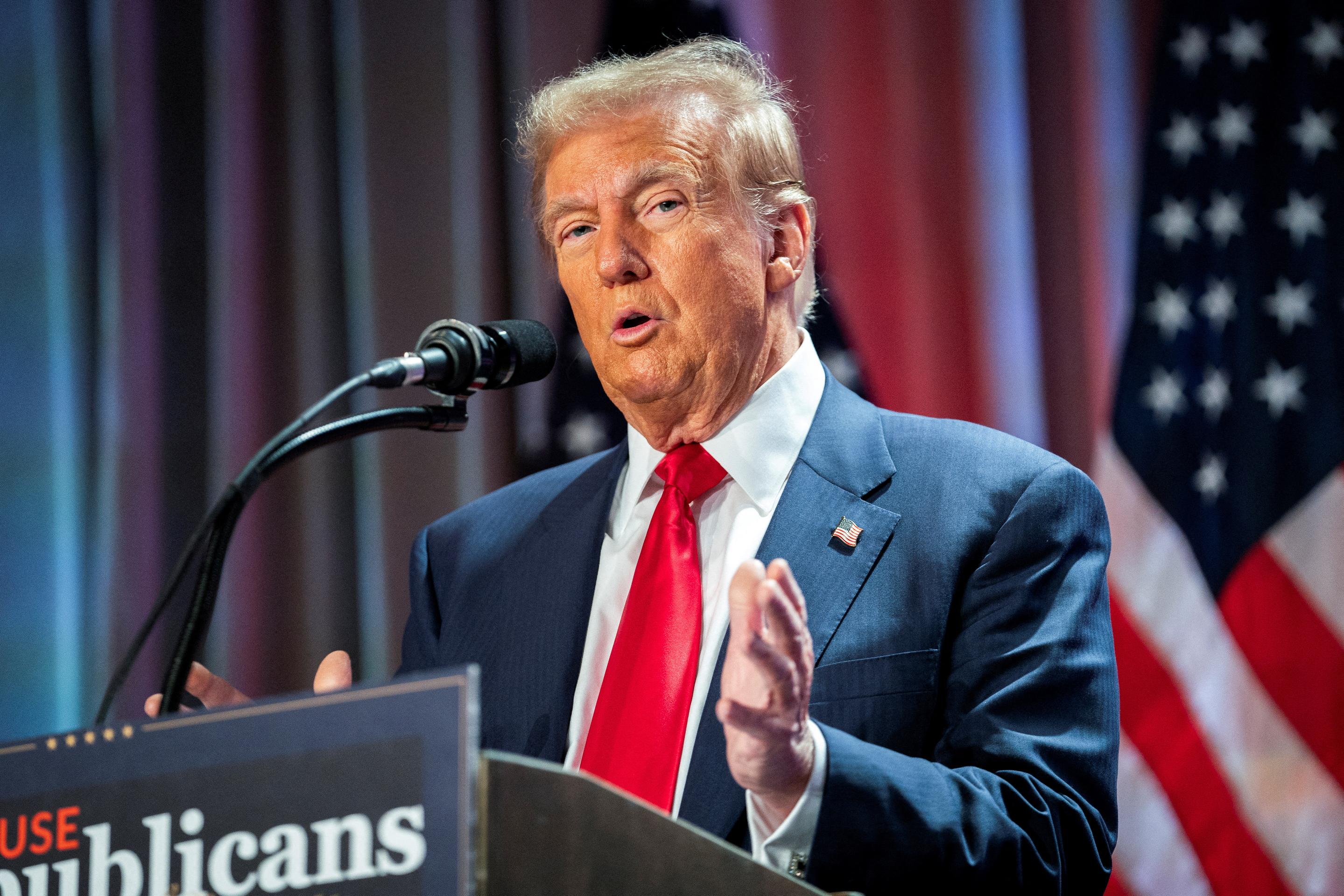
ORLANDO, Florida, Dec 3 (Reuters) - President-elect Donald Trump's latest threat to slap huge tariffs on countries that try to move away from the "mighty U.S. dollar" inadvertently highlights the intractable contradiction at the heart of U.S. trade and economic policy. Trump has repeatedly stated that he wants to boost U.S. competitiveness and reduce its yawning trade deficit, which he blames on other countries' unfair economic practices. But how can he do that while simultaneously preserving the dollar's strength and unrivaled status as the world's reserve currency, which has for decades helped fuel American consumers' purchasing power? His "America First" goals of expanding domestic energy production and deepening the country's status as the world's leading tech hub could, all else being equal, lead to an appreciating exchange rate. But this would be at odds with his other "America First" goal: boosting U.S. manufacturing. This isn't a partisan conundrum. President Joe Biden has spent trillions of dollars over the last four years in an effort to boost U.S. manufacturing, green energy production, and other key sectors. Meanwhile, the greenback has continued to strengthen, which hasn't made U.S. exports more attractive. Vice President Kamala Harris would be facing the same dilemma had she won last month's presidential election. But it's especially tricky for Trump, who has been more vocal in his criticism of countries like China, Mexico and Canada which run huge trade surpluses with the U.S., and more bombastic about his ability to fix those imbalances. A weaker dollar and lower interest rates would be two of the most obvious tools to do that. But as he made clear in his social media post on Saturday, he also wants to protect the dollar's global hegemony and preserve its relative value. Something has to give. 'DIAMETRICALLY OPPOSED' The U.S. has run a trade deficit for nearly 50 years, consistently sucking in more imports than it exports. Manufacturing has been declining as a share of the economy for almost as long, notably since China was admitted into the World Trade Organization in 2001. The U.S. trade deficit last year was around 3.0% of GDP, much smaller than the record 5.7% of GDP reached in the mid-2000s, but still large. And in nominal terms, which Trump focuses on more, it is an even bigger at $773 billion. The deficit is consistent with the dollar's status as the preeminent currency in global trade, financial market trading and international foreign exchange reserves. No other currency comes close to being as dominant, even as the dollar's share of global FX reserves has eroded in recent years. The trade deficit is offset by a surplus in the U.S. capital account, as China and others have plowed their surpluses back into U.S. bonds and stocks. If the trade deficit were reduced, so too would the capital account surplus and attendant demand for U.S. assets from abroad. All else being equal, this would put upward pressure on bond yields and interest rates. Nodding to the symbiotic relationship between the U.S. trade deficit and capital account surplus, Michael Pettis, a senior fellow at Carnegie China, pointed out on the platform X on Saturday that the U.S. cannot simultaneously cut its trade deficit and increase the global dominance of the dollar, because these impose "diametrically opposed" conditions. Rebalancing the global economy so that the U.S. runs smaller trade deficits and has a stronger manufacturing sector, while China and other large net exporters increase domestic consumption and cut their trade surpluses, would ultimately require major global FX adjustments. And U.S. consumers might not be pleased with this outcome, having benefited enormously in recent decades as the trade deficit has sucked in cheap goods from abroad, from clothes to electrical appliances and everything in between. "You are implicitly asking U.S. consumers to accept a loss of purchasing power and a willingness to pay more for imported goods in order to give support to the manufacturing sector," says Joe Brusuelas, principal and chief economist at RSM. That's a tall ask. And given the role purchasing power played in the recent election, it's likely one the president-elect won't actually want to make. (The opinions expressed here are those of the author, a columnist for Reuters.) Sign up here. https://www.reuters.com/markets/us/trumps-trade-threat-runs-into-inconvenient-dollar-truth-mcgeever-mcgeever-2024-12-03/
2024-12-03 14:12
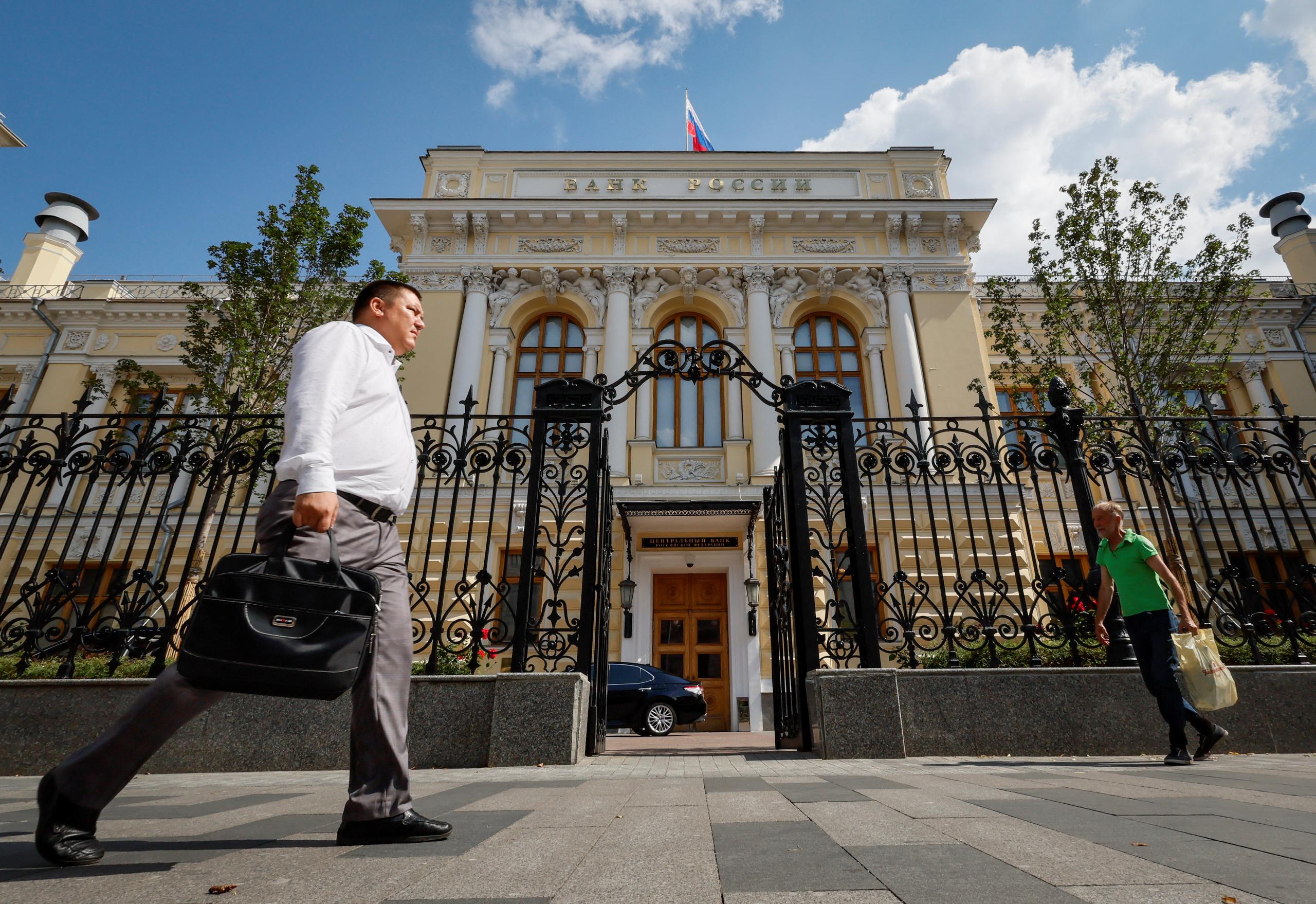
Russian central bank seen hiking key rate to 23% on Dec. 20 Rouble seen just above 100 vs dollar throughout 2025 Inflation expected to end 2024 at 9% MOSCOW, Dec 3 (Reuters) - The Russian central bank is set to raise its benchmark interest rate by another 200 basis points to 23% at its Dec. 20 board meeting after the rouble's sharp fall in November, a Reuters poll showed on Tuesday. The rouble has lost about 15% against the dollar in what many analysts described as panic buying of foreign currency in the wake of new U.S. sanctions on Russian banks including Gazprombank, which handles payments for Russia's energy trade with Europe. This is an increase by 100 bps compared to last month's poll, when analysts projected that the rouble will trade at a median of 100 to the U.S. dollar in one year. A weaker rouble is fuelling inflationary expectations, a major factor in the central bank's decision. "We expect that the central bank will raise the key rate by 200 bps to 23% at the Dec. 20 meeting and maintain a firm signal about the possibility of raising the key rate at subsequent meetings," Sovkombank's chief analyst Mikhail Vasilyev said. Ten analysts forecast a December rate hike to 23%, with one predicting a smaller hike to 22% and another a jump to 25%. The rouble traded at 106 to the dollar on Tuesday and is seen strengthening to a median of 103.2 by the year's end, according to the average forecast. The rouble is seen stabilising just above 100 to the U.S. dollar throughout next year. Inflation was seen hitting 9% in 2024, according to the poll, above the central bank's official estimate of 8.5%, and gradually falling to 6.3% next year as a result of the central bank's monetary tightening. "The collapse of the rouble, which the central bank watched from the sidelines for some time, may shift the inflation forecasts for 2025 from 5-5.5% to 6-7%," said Dmitry Polevoy, head of investment at Astra Asset Management. He said that more active intervention from the regulator in the forex market could have mitigated the exchange rate situation at an earlier stage. The central bank stopped foreign currency purchases last week in response to the rouble's fall but rejected suggestions of more active intervention to prop up the Russian currency, saying it would adhere to the floating exchange rate policy. Economic growth forecasts were almost unchanged from last month, with analysts expecting GDP growth at 3.8% in 2024, just below the official forecast of 3.9%. Economic growth is expected to slow sharply to 1.8% next year. Sign up here. https://www.reuters.com/markets/europe/russias-interest-rate-inflation-seen-higher-after-roubles-fall-2024-12-03/
2024-12-03 12:57
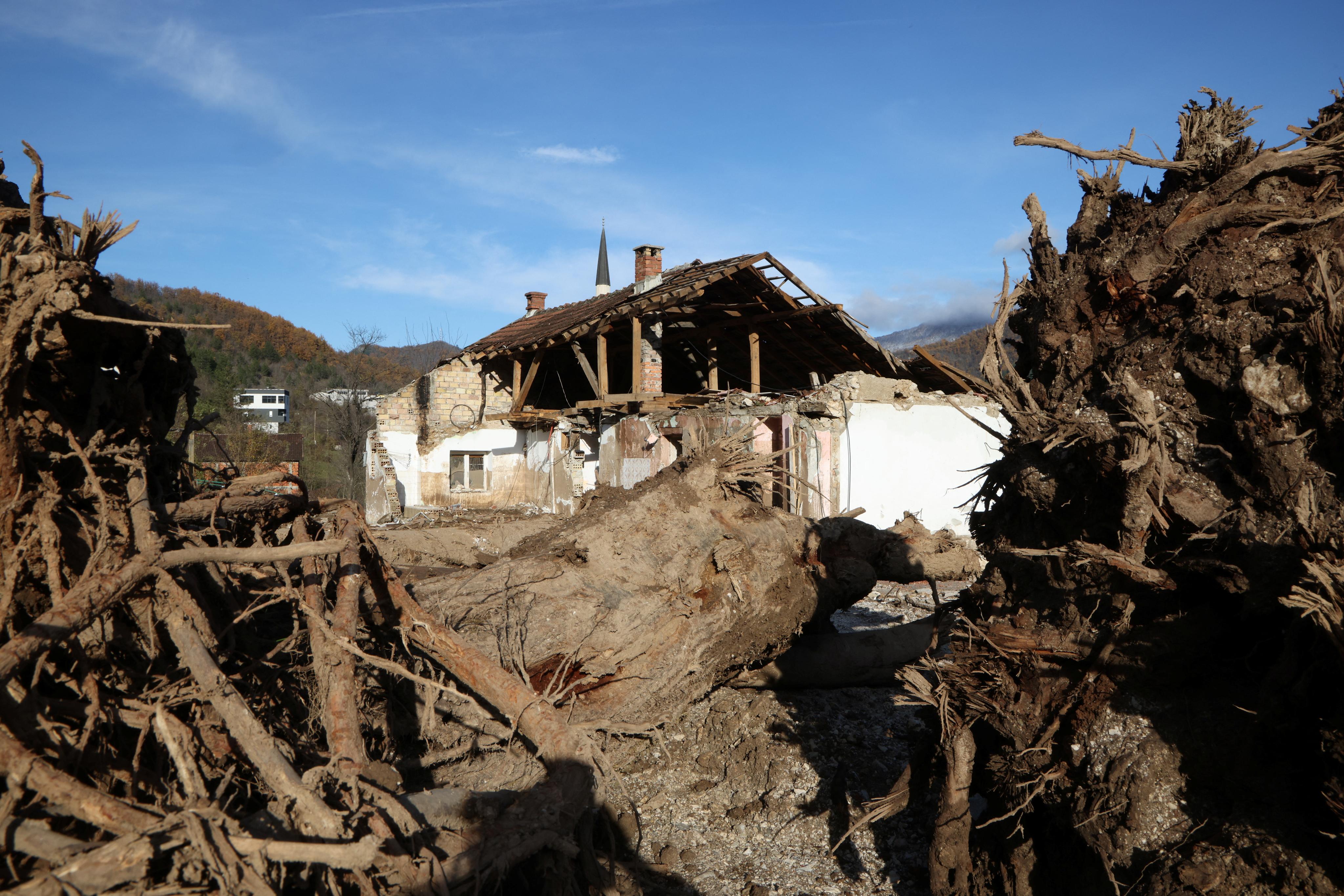
DONJA JABLANICA, Bosnia and Herzegovina, Dec 3 (Reuters) - Drivers entering Donja Jablanica in Bosnia pass under a banner with an angry message from locals who say authorities have done little to help since deadly floods devastated the village in October. "Shame on the State and Government of the Federation BiH," reads the banner, hanging from an underpass, referring to the Bosniak-Croat region of decentralised post-war Bosnia. Heavy rain caused flooding and a landslide that swept through the village in a hilly area 70 km (45 miles) southwest of Sarajevo, wrecking homes, felling trees and disabling a railway line. Of the 27 people killed in the flooding across Bosnia, 19 died in Donja Jablanica. Two months on, the disaster has laid bare the difficulties of channelling funds in the fragmented Balkan country whose multiple governments have struggled to respond. Locals say they have relied on charitable donations. "We have got nothing from the state, not a single fening," said Esad Begovic, 72, while cleaning mud and debris from his house. "I don't sleep here. A man has let me use his apartment, and I even don't know the man." Begovic said the only help has come from a local charity called Pomozi.ba which has collected donations and provided food, clothes and tools. The local government of the southern Herzegovina-Neretva canton, where the floods inflicted the greatest damage, said it had sent funds to local communities and allocated 3.4 million marka ($1.83 million) to repair roads under its jurisdiction. But it said it was not clear where the money would come from, or when it would arrive. "This disaster has proved once again it is necessary to improve channels of communication between all levels of governance in Bosnia," spokesman Pero Pavlovic said. Under a peace deal that ended its 1992-95 war, Bosnia is made up of two autonomous regions, the Bosniak-Croat Federation and a Serb Republic, linked via a weak central government. The government of the Bosniak-Croat Federation, where the disaster occurred, did not respond to requests for comment. Last week it put the flood damage estimate at 308 million marka ($166.3 million). Today Donja Jablanica is abandoned, its houses mostly destroyed by the collapse of a nearby quarry during the floods. Each week, people hold peaceful protests at the entrance to the village demanding government aid. Dzevad and Mirsada Grlica wonder if they will be able to return to another mountain village near the town of Konjic after the road was destroyed in a landslide which left cracks in the foundations of their house. They say that nobody has offered help, except for Dina Alic, an activist linked to a local women-run charity called NERA. Alic helped raise money for a new greenhouse for the couple. Mirsada has already planted out green salad leaves, onion and spinach. "This means so much to me," she said. "It's a new beginning." ($1 = 1.8619 marka) Sign up here. https://www.reuters.com/world/europe/angry-bosnian-villagers-wait-help-months-after-deadly-floods-2024-12-03/
2024-12-03 12:36
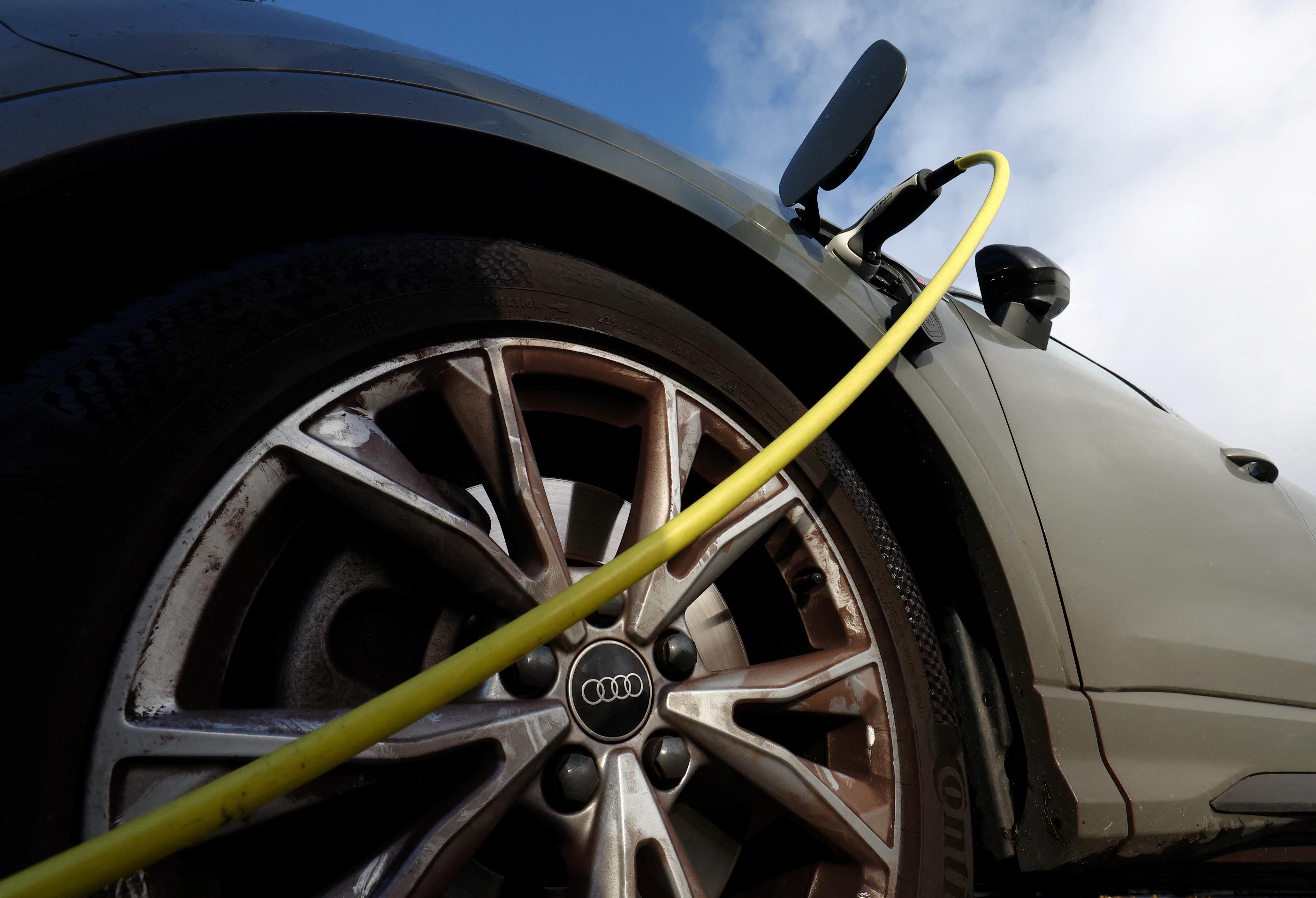
Signs of slower-than-expected shift to EVs Weakness in Europe autos sector has hit jobs BRUSSELS, Dec 3 (Reuters) - The European Commission called on Tuesday for an additional 1 billion euros ($1.1 billion) of EU funds to be made available to support electric vehicle battery cell manufacturing, as the EV sector shows signs of pressure. This would form part of an overall 4.6 billion euros set aside from the EU's Innovation Fund to boost net zero technologies and renewable hydrogen in the bloc, the Commission said. European electric vehicle makers face fierce competition from Asia in particular and demand has lagged expectations, which in turn has hit jobs in the region. "As promised, we're already delivering for European citizens and businesses. We are investing 4.6 billion euros to back cutting-edge European projects in net-zero technologies, electric vehicles batteries and renewable hydrogen," EU Commissioner Wopke Hoekstra said in a statement. European carmakers have been struggling with weak demand and a slower-than-expected shift over to electric vehicles, while also trying to fend off competition from China. The European Union has proposed raising tariffs on Chinese-built EVs to counter what it says are unfair Chinese subsidies. On Tuesday, Swiss automotive supplier Feintool FTON.S said it would close one of its sites in Germany and cut its workforce by as many as 200 people due to weakness in demand for electric vehicles and uncertainty over the shift to renewable energy. ($1 = 0.9506 euros) Sign up here. https://www.reuters.com/business/autos-transportation/european-commission-favours-more-eu-funds-electric-vehicles-sector-2024-12-03/