2024-12-03 06:18
Dec 3 (Reuters) - U.S. President-elect Donald Trump said on Monday a series of tax incentives and tariffs will revive storied American firm U.S. Steel (X.N) , opens new tab, as he reiterated his opposition to Nippon Steel's (5401.T) , opens new tab planned $15 billion purchase of the company. "I am totally against the once great and powerful U.S. Steel being bought by a foreign company, in this case Nippon Steel of Japan," Trump wrote on his social media platform Truth Social. "I will block this deal from happening. Buyer Beware!!!" Nippon Steel hopes to close the deal before Trump retakes the White House on Jan. 20, despite opposition from President Joe Biden and a powerful U.S. labor union. In a statement on Tuesday following Trump's comments, Nippon Steel said it would invest no less than $2.7 billion into U.S. Steel's unionized facilities, secure union jobs and share technological innovations. "Nippon Steel is determined to protect and grow U.S. Steel in a manner that reinforces American industry, domestic supply chain resiliency, and U.S. national security," it said. U.S. Steel, in a separate statement, reiterated its support for the deal, saying it would preserve steelmaking in Pennsylvania and Indiana and that the transaction should be approved on its merits. Last month, Japanese Prime Minister Shigeru Ishiba wrote to Biden, who has referred the deal to a government panel that reviews foreign investments for national security risks, asking him to approve the transaction, sources have said. The deadline for that Committee on Foreign Investment in the United States (CFIUS) review is this month. CFIUS could approve the deal, possibly with measures to address national security concerns, or recommend that the president block it. It could also extend the review. The United Steel Workers union, which opposes the deal, welcomed Trump's comments. Sign up here. https://www.reuters.com/markets/deals/trump-says-tax-incentives-tariffs-will-make-us-steel-stronger-2024-12-03/

2024-12-03 06:16
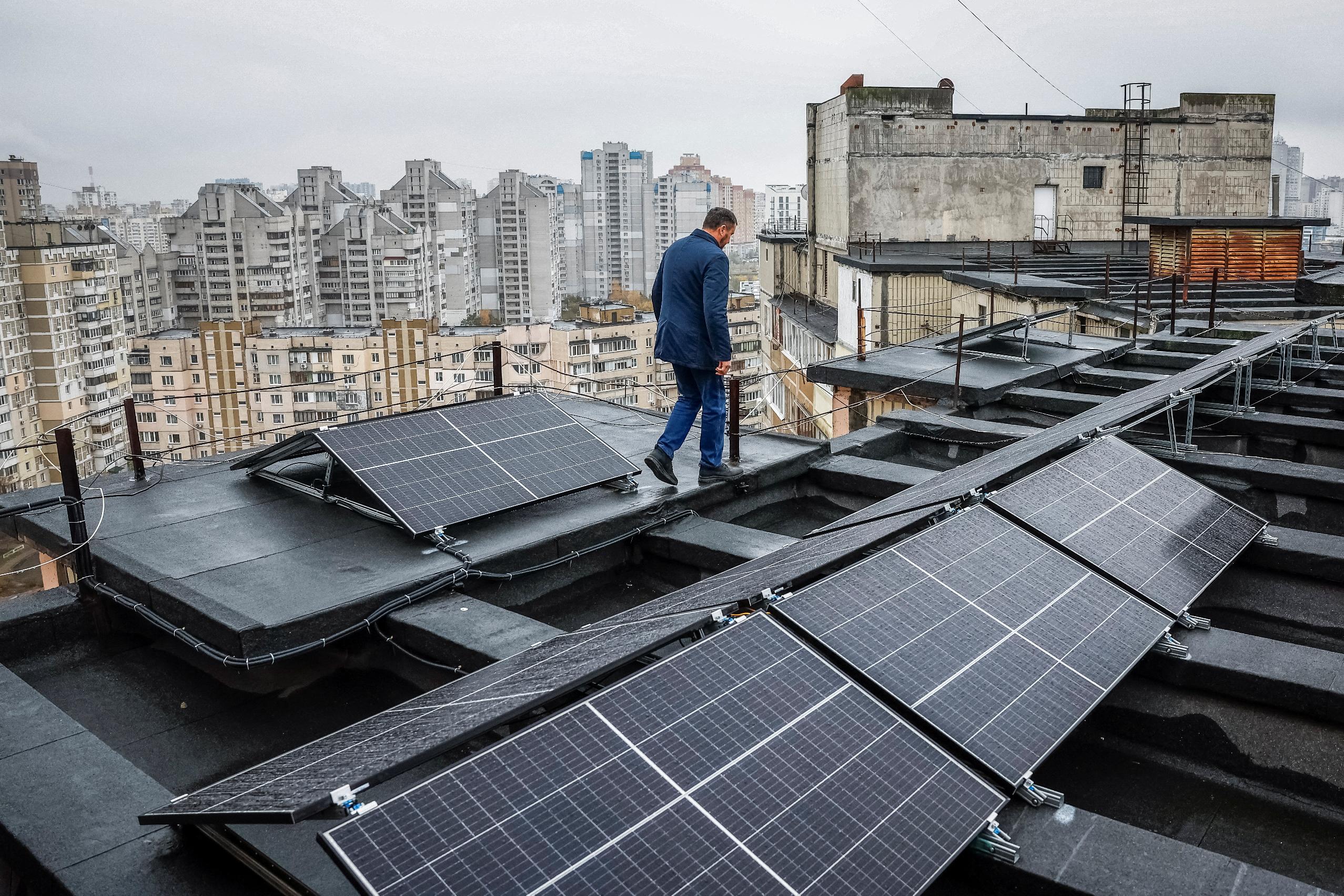
Ukrainians innovate to beat winter power outages Russia has pummelled power stations, other infrastructure Third winter of war promises to be most challenging yet Blackouts increasingly common, affecting power and water KYIV, Dec 3 (Reuters) - Standing on the rooftop of a 16-storey residential apartment building in Ukraine's capital Kyiv, Valerii Pyndyk pointed to several rows of solar panels. Pyndyk hopes the installation - one of the first of its kind by residents in Kyiv - will help about 1,000 families living in the building get through what could prove Ukraine's most difficult winter since the start of Russia's invasion. "The idea was born when we had electricity cut-offs in summer. We - the housing association board - realised that if we had blackouts in summer, then in winter they will not be shorter but longer," said Pyndyk, 49, who heads the association. The two previous winters of the war were already challenging, but Russia has now intensified its attacks on Ukraine's energy infrastructure, with at least 11 major missile and drone strikes since March. About half of Ukraine's generating capacity was knocked out and distribution networks were also damaged. In Kyiv, daily blackouts of eight hours are common and people plan their days around when power is scheduled to be available, including waiting in cafes for elevators to work if they live near the top of high-rise buildings. Some residents and businesses have rushed to install new generating capacity in an attempt to access energy independently of the central energy system. "Overall in Ukraine there is a steady trend towards energy independence, starting from small (consumer) clients and ending with business," said Serhiy Kovalenko, CEO of Yasno, a leading energy supplier. Analysts said strategies included more electricity imports from Ukraine's Western neighbours, purchases of generators and alternative energy sources including solar panels, batteries and small gas turbine generators. Yasno, which supplies electricity and gas to more than 3.5 million consumers and up to 100,000 businesses, provides options that include solar panels and accumulating batteries and inverters. "Demand is very high," Kovalenko told Reuters. "This autumn we installed up to eight megawatts, next year we will install up to 30-35 megawatts." Eight megawatts is enough to supply around a dozen enterprises in this case, the company said. SECURITY CONCERNS Russia has damaged or destroyed all of Ukraine's thermal and hydropower plants. In monetary terms, total damage to Ukraine's energy sector exceeds $56 billion, including $16 billion in direct physical destruction and over $40 billion in indirect financial losses, according to estimates from the Kyiv School of Economics. The country has to rely increasingly on nuclear generation, which makes it difficult to balance the amount of electricity on the grid, especially during peak morning and evening hours when retail consumption jumps. Ukraine has tried to defend its energy system by building protective structures, setting up mobile drone-hunting groups and working with partners to bring in more air defence systems. But it still lacks sufficient resources to protect facilities across the country. After each Russian strike, the government, energy companies, engineers and Ukraine's partners scramble to recover and rebuild what they can. Winter weather can complicate matters. "If we have a cold winter, consumption will be much more than last winter. Last winter, maximum consumption was 18 gigawatts (GW), so this year we think that if it is cold... it will be 19 gigawatts," said Olena Lapenko, general manager for energy security at a Kyiv-based think-tank, DIXI group. Once the lights go off, the immediate fix for many is to turn on the generators. "We need this electricity... to bake bread, to make croissants, cakes... We took a lot of steps to be ready – we bought powerful generators," said Stanislav Zavertailo, co-owner of Honey confectioneries and Zavertailo pastry shops in Kyiv. As his team refuelled an industrial generator at their production site, Zavertailo said electricity was driving up costs. "One kilowatt-hour is five to six times more expensive than the usual one." Generators work better for small- and medium-sized enterprises and offer only a temporary solution, analysts said. Looking for ways to help bigger businesses, the government agreed with Ukraine's central European neighbours to increase imports to 2.1 GW at any given time from Dec. 1. But imports are also expensive, said Lapenko. PUSH FOR CLEAN ENERGY Dozens of financial programmes supported by Kyiv's Western allies have been launched to shift Ukraine's energy mix to a cleaner and more sustainable model. Legislative changes were also introduced to simplify equipment purchases and imports. Solar panels have started to appear on roofs of private houses, residential buildings, schools, hospitals and other public buildings. Pyndyk said the cost of the installation on his building was about 950,000 hryvnias ($23,000) and that the government and Kyiv municipality had offset about two-thirds of that amount. He and his residents plan to install more panels on other buildings next year. Official data showed that about 1.5 GW of new solar generation has been installed. But given Ukraine's needs and the scale of wartime damage to energy infrastructure, such changes are only the beginning. "This problem is not only a challenge for this winter. Coal generation is outdated and we need to change something," said Lapenko of DIXI group. "This is the prospect for three, four or five years to replace what was destroyed and gradually replace that outdated generation." Sign up here. https://www.reuters.com/world/europe/ukrainians-find-new-energy-sources-beat-blackouts-winter-arrives-2024-12-03/
2024-12-03 06:06
Dec 3 (Reuters) - U.S. oil major Exxon Mobil Corp (XOM.N) , opens new tab is weighing a sale of its petrol stations in Singapore, a deal that could raise about $1 billion, Bloomberg News reported on Tuesday, citing sources. Exxon operates 59 petrol stations in Singapore under its Esso brand, according to Esso's website. A sale would allow Exxon to raise cash to deploy in other areas of higher growth potential, the report said, adding that players in the energy industry and investment funds had shown preliminary interest in the disposal. Exxon declined to comment on the report. The company has been operating in Singapore for more than 130 years. Its facilities in the country include a refining complex, a lubricant plant, a fuels terminal and a liquefied petroleum gas (LPG) bottling plant. A potential deal would become the oil major's second divestiture in Southeast Asia in recent months. Reuters reported in July that Exxon had agreed to sell its Malaysian oil and gas assets to state energy firm Petronas, exiting the country's upstream sector where it used to be a dominant producer. Sign up here. https://www.reuters.com/markets/commodities/exxon-weighs-sale-singapore-fuel-stations-1-bln-bloomberg-news-reports-2024-12-03/
2024-12-03 06:04
LITTLETON, Colorado, Dec 3 (Reuters) - Natural gas prices in Asia, Europe and North America have climbed by around 30% to 50% so far in 2024, and look set to keep rising over the coming months as forecasts for cold weather trigger higher heating demand in key consumer hubs. Active restocking of rapidly-declining gas inventories in Europe and Asia should also spur strong gas demand, even if temperatures turn mild again in those areas. That should ensure gas market sentiment remains broadly bullish until the upcoming winter is over, and that prices may have little scope to retreat until well into 2025. High and rising gas prices in turn look set to raise power costs across key global markets, jeopardising fragile economic growth in China, Europe and elsewhere and raising fresh concerns about inflation. Rapidly climbing gas-fired generation costs also raise the likelihood of higher generation by coal-fired power plants, which are already cheaper to run than gas-fired plants but generate around 55% more emissions per unit of power output. COLD WINTER COMING Higher gas-fired generation for heating across North America, Europe and North Asia is the main near-term driver of global gas prices. Those regions account for over two-thirds of global gas use, and are all set to enter the peak period for heating demand over the coming months. What's more, for the first time in years, average temperatures across the key gas markets of China, Japan and mainland Europe are all set to slip below long-term averages this month. This will snap the recent run of relatively mild winter weather across those areas seen over the past couple of years, and will result in a synchronized rise in gas-fired heating demand that should further lift gas market prices and sentiment. In Seoul, South Korea, average temperatures during December are set to average around negative 2.17 degrees Celsius (28 degrees Fahrenheit), compared to a long-term average of negative 0.7 degrees Celsius, according to LSEG. Shanghai, Tokyo and Hong Kong are also set to record average temperatures of well below-normal this month. The resulting rise in heating demand across those greater metropolitan areas - home to over 100 million people - will trigger faster burn rates of natural gas and coal, and an accelerated draw on power fuel stockpiles over the rest of 2024. In Europe, a drop in temperatures to below-normal levels is also forecast this month, especially in the gas-heavy power markets of Italy and Germany, according to LSEG. STOCKS DRAW The pick-up in gas use across Europe has already triggered a speedy drawdown in the region's natural gas stockpiles. Between October 1 and the end of November, cumulative gas inventories held in Germany, the Netherlands, Belgium and France declined by 11%, according to LSEG. That compares to relatively flat gas inventories over that period in 2023, a 3.5% rise in gas stocks in 2022, and an average draw of only 2% over that period since 2017. The absolute level of collective gas stocks in those countries as of December 1 is also the lowest for that date since 2021, which was before Russia's invasion of Ukraine led to cuts in pipelined gas flows to the region. As a result, power firms will be under pressure to try to rebuild those inventories over the coming months even as they increase gas burn-rates due to rising heating demand. In the United States, current natural gas inventories are the highest in over five years, according to the U.S. Energy Information Administration. However, they are also on the cusp of the traditional draw-down period when stockpiles decline by an average of 9% over the final five weeks of the year. This means that even the apparently abundant gas stocks held in the U.S. will tighten significantly heading into 2025, and will further underpin gas market sentiment. FUEL SWITCHING Many power systems across Asia have the leeway to burn more coal instead of gas to meet the higher heating demand, and will opt to do so if the cost of gas-fired generation rises too far above coal generation. In Japan, the cost of spot liquefied natural gas (LNG) is already around 44% above the average coal-to-gas switching price, and means that coal-fired power producers will be incentivized to raise output faster than gas-fired producers. Power firms in China, South Korea and other parts of Asia that also have the flexibility to use either gas or coal for generation will also likely opt to raise coal output faster. That could trigger a slowdown in the pace of gas use in Asia, and set the stage for potential price pull-backs in Asian markets. However, rising gas demand by power firms in Europe will likely more than offset any demand drops in Asia, and ensure that global gas prices remain relatively well supported through the coming winter. That means that even though many key natural gas markets have already climbed by 50% already this year, more price increases are likely coming. The opinions expressed here are those of the author, a market analyst for Reuters. Sign up here. https://www.reuters.com/business/energy/key-global-natural-gas-prices-set-keep-rising-into-2025-maguire-2024-12-03/

2024-12-03 06:02
LAUNCESTON, Australia, Dec 3 (Reuters) - Asia's imports of Russian crude oil and liquefied natural gas are set to log small declines this year and while coal had a bigger drop, there's little evidence that Western sanctions are working well. Russia has come to rely on Asia, the world's biggest buyer of energy commodities, to soak up cargoes that are no longer able to be sold to buyers in Europe and elsewhere as a result of sanctions placed against Moscow in the wake of the February 2022 invasion of Ukraine. China and India emerged as major purchasers of Russian crude, coal and LNG after the invasion, taking cargoes because of the discounts on offer. This dynamic has largely continued in 2024, and while there is likely to be some small decrease in Asia's imports of Russian energy commodities, it's hard to say that this is because of sanctions or because of other factors, such as sluggish growth in China, the world's second-largest economy. Asia's imports of seaborne crude from Russia, the world's second-largest exporter, are on track to drop to 161.2 million metric tons in 2024, down from 170.6 million in 2023, according to data compiled by commodity analysts Kpler. In barrels per day (bpd) terms, Asia's seaborne imports from Russia are likely to come in around 3.22 million bpd this year, down 5.6% or 190,000 bpd from the 3.41 million bpd in 2023. The bulk of the decline is because China, the world's biggest crude importer, saw arrivals from Russia drop 100,000 bpd to 1.24 million bpd in 2024. South Korea was responsible for the other major decline in imports from Russia, which dropped from around 100,000 bpd in 2023 to just 29,000 bpd in 2024. India, which now counts Russia as its top crude supplier, saw largely steady imports of 1.76 million bpd in 2024, down slightly from 1.79 million bpd in 2023. LNG, COAL Asia's imports of Russian LNG are also likely to be lower in 2024 than the previous year, but only by a tiny 1.6%. A total of 14.93 million tons of Russian LNG is likely to arrive in Asia this year, down from 15.17 million in 2023, according to Kpler data. China is the major buyer of Russian LNG, with 6.65 million tons this year, up a touch from 6.63 million in 2023. The other major importer is Japan, which buys Russian LNG as a result of an ownership stake in the Sakhalin-2 LNG project. Japan's imports of 5.47 million tons in 2024 are slightly down from the 5.90 million in 2023. However, Japan's imports of all grades of Russian coal did drop substantially in 2024, sliding 75% to 610,000 tons from 2.42 million 2023. Overall, Asia's imports of seaborne Russian coal dropped to 102.3 million tons, down 19.3% from the 126.8 million in 2023. The decline was largely driven by China, with imports falling to 45.01 million tons in 2024 from 59.19 million in 2023. This is likely a price-driven dynamic as China's coal imports have risen strongly so far in 2024, with official customs data showing a 13.5% increase in the first 10 months of the year to 435.4 million tons. Russian coal has to compete against overland supplies from Mongolia, as well as seaborne grades from Indonesia and Australia, with prices from the two biggest exporters of the fuel trending lower over the course of 2024. Putting together Asia's imports of Russian energy commodities and it's clear that the decline in volumes in 2024 is small, and even the slightly larger drop for coal is explained by price competition, rather than by any sanctions measures. It's also likely that for crude oil, Russia has had to offer discounts in order to maintain volumes. The question then becomes whether the discount was deep enough to cause Moscow any real pain from lost revenue. The views expressed here are those of the author, a columnist for Reuters. Sign up here. https://www.reuters.com/markets/commodities/russias-crude-oil-lng-shipments-asia-slip-slightly-2024-russell-2024-12-03/

2024-12-03 05:59
CEO Tavares' abrupt departure knocked Stellantis shares Board worried about Tavares' focus on cost-cutting -source Company struggling with too much inventory, Chinese competition Problems not easily fixed -analyst MILAN, Dec 2 (Reuters) - Outgoing CEO Carlos Tavares clashed with Stellantis' board over his plans to quickly turn around the ailing U.S. business by cutting costs, rather than focusing on long-term strategy, investors and bankers familiar with the matter said on Monday. Shares in the Jeep, Fiat and Peugeot manufacturer slumped as much as 10%, hitting their lowest since July 2022, as investors worried about the vacuum left at the top of the world's No. 4 carmaker following Tavares' resignation on Sunday. Stellantis (STLAM.MI) , opens new tab is struggling to get rid of overcapacity and bloated inventory in its key North American market, at a time when global demand remains sluggish and competition from Chinese rivals, especially in electric vehicles, is intensifying. In addition to its U.S. travails, the company's focus on raising prices among its mass-market marques has driven away inflation-hit customers in its other important market, Europe. Stellantis had said shortly after a shock profit warning in September that Tavares would retire in early 2026, at the end of his current term. The process to select a new CEO was initially set to be completed by the final quarter of next year. Interviews with half a dozen shareholders, bankers and analysts show how quickly since then disagreements deepened between Tavares - long one of the auto industry's most respected executives - and the board over how to resolve the crisis. A senior investment banker briefed on the matter said on Monday that the board had grown concerned about Tavares' strategy for turning things around. In recent months, and with just over a year left of his contract, the CEO had focused mainly on cutting costs, the banker said. The board worried that was leading to quality issues but also cramping the company's ability to develop and design new models. Customers and dealers were furious about Tavares' strategy, the banker said. Launches of some key models, like the new version of the popular Peugeot 3008 mid-sized SUV and the budget Citroen C3 city car, with its electric version e-C3, have faced delays. A source familiar with the matter told Reuters on Sunday that tensions grew because the board felt Tavares was focused on finding near-term solutions to save his reputation rather than working in the best interests of the company. Stellantis declined to comment and Reuters could not reach Tavares on Monday. STICKING POINTS Tavares' cost-cutting had hurt in particular his relationship with U.S. dealers and the U.S. United Auto Workers union, analysts said. In a Sept. 10 letter to Tavares, Stellantis national dealer council president Kevin Farrish complained that the pursuit of short-term profits meant "rapid degradation" of the Jeep, Dodge, Ram and Chrysler brands, adding: "You created this problem". The UAW has threatened to strike against the automaker over delayed investments, prompting lawsuits from Stellantis accusing the union of breach of contract. Another sticking point for investors was Tavares's hardline approach to the European Union's upcoming tougher emissions targets at a time of slowing EV sales, said Massimo Baggiani, founder at Niche Asset Management and a Stellantis shareholder. It "frightened" investors and major shareholders, he said. CEO Tavares repeatedly confirmed pledges by Stellantis to meet the EU goals and said last-minute changes or delays to the regulation, as proposed by European auto lobby ACEA, were unfair. New rules known as Corporate Average Fuel Economy (CAFE) from Jan. 1 will require around 21% of the firm's total sales during 2025 to come from electric vehicles. Should it miss the target, it will have to pay other companies with lower emissions to pool emissions and reduce their average CO2 emissions or pay a fine. Stellantis' current EV sales mix in the EU is around 12%. Europe chief Jean-Philippe Imparato warned last month in an interview with Italian newspaper Milan Finanza that fines could be as much as 3 billion euros ($3.1 billion) if it did not manage to comply. Tavares' early exit despite his determination to turn things around before 2026 shows how serious the problems at the group are, Bernstein analyst Stephen Reitman said. "It points to what we've said for a long time - that the problems are very deep and they're not easily fixed now," he said. ($1 = 0.9519 euros) Sign up here. https://www.reuters.com/business/autos-transportation/tavares-clashed-with-stellantis-board-over-revival-plan-sources-say-2024-12-02/