2024-12-03 05:57
Powerful militia Asaib Ahl al-Haq central to scheme, sources say Sanctioned Iran-backed AAH leader Khazali supported Sudani as PM Fuel oil smuggling provides dollars for Iran, sources say DUBAI, Dec 3 (Reuters) - A sophisticated fuel oil smuggling network that some experts believe generates at least $1 billion a year for Iran and its proxies has flourished in Iraq since Prime Minister Mohammed Shia al-Sudani took office in 2022, five sources with knowledge of the matter told Reuters. The operation exploits a government policy under which Iraq allocates fuel oil to asphalt plants at heavily subsidised prices and involves a network of companies, groups and individuals in Iraq, Iran and Gulf states, according to the five people and three Western intelligence reports, two from August this year and one which was undated. Under the scheme, anywhere from 500,000 to 750,000 metric tons of heavy fuel oil (HFO), including high sulphur fuel oil (HSFO) - equivalent to 3.4 million to 5 million barrels of oil - is diverted from the plants each month and exported, mostly to Asia, two of the sources said. The extent of the fuel oil smuggling since Sudani came to power and the involvement of multiple entities within Iraq in the illicit trade have not previously been reported. Iranian and Iraqi officials did not respond to detailed requests for comment about the findings in the Reuters story. Iran views its neighbour and ally Iraq as an economic lung and wields considerable military, political and economic influence there through the powerful Shi'ite militias and political parties it backs. It also sources hard currency from Iraq through exports and avoids U.S. sanctions via its banking system, Iraqi and U.S. officials say. While Baghdad has been delicately balancing its role as an ally of both Washington and Tehran for years, with President-elect Donald Trump expected to take a hard line on Iran's attempts to skirt U.S. sanctions, its activities in neighbouring Iraq are expected to come under increasing scrutiny. Of the two main routes the fuel oil takes out of Iraq, one involves blending it with similar product from Iran and passing it off as purely Iraqi, helping Tehran evade tough U.S. sanctions on energy exports, said the five sources, who declined to be named due to the sensitivity of the matter. The other involves exporting the fuel oil that was originally meant for the subsidy programme using forged documentation to mask its origins. Iran benefits directly from the first route. Iranian fuel oil typically sells at a discount due to sanctions but it can sell it for a higher price if it is passed off as Iraqi. The second route, meanwhile, benefits the Iranian-backed militias in Iraq that control the smuggling scheme. Three sources estimated how much both routes were bringing in based on assumptions about the volumes traded and relative prices. Their estimates ranged from $1 billion a year to over $3 billion. The illicit trade potentially puts Iraqi institutions and officials at risk of U.S. sanctions for helping Iran and some Iraqi officials are concerned a Trump administration could target them, the three sources said. However, Iraqi leaders rely heavily on the support of influential Iranian-backed Shi'ite groups to stay in power, making it difficult for them to crack down on illicit activities, such as the fuel oil smuggling, the sources said. Sudani's office did not respond to requests for comment about the trade, the risk of sanctions or government attempts to curb the business. ON WASHINGTON'S RADAR The lucrative smuggling and its links to Iran and individuals under U.S. sanctions are already on Washington's radar. The subject came up in discussions between U.S. officials and Sudani when the Iraqi prime minister visited the United States in September, one of the sources said. Asked by Reuters whether smuggling had been raised, a State Department official said: "While we do not comment on specific discussions, we can affirm the Department has emphasized with our Iraqi counterparts the harms of illicit trade and our support for bringing oil transparently to market." The U.S. Treasury did not respond to questions about the fuel oil trade or whether Iraqi entities and officials were at risk of sanctions. U.S. sanctions on Iran are chiefly in response to its nuclear programme and its support for groups across the Middle East that the U.S. sees as terrorist organisations, including Hamas in Gaza, Hezbollah in Lebanon and the Houthis in Yemen. While Washington has put pressure on Iraqi officials to clamp down on activities benefiting Iran, Tehran's influence runs deep. Central to the smuggling operation is Iraqi Shi'ite group Asaib Ahl al-Haq (AAH), a paramilitary force and political party that was an early backer of Sudani and a key member of the bloc that nominated him to be prime minister, according to the five people with knowledge of the matter and the three reports. The findings in the reports seen by Reuters are based on a broad range of sources in Iraq and its government departments who were not identified. Sudani's office and AAH and its leader Qais al-Khazali did not respond to questions posed by Reuters. Backed by Iran's Islamic Revolutionary Guard Corps (IRGC), AAH was folded into Iraq's security apparatus in 2018 and now also has 16 members of parliament. Khazali was sanctioned by Washington , opens new tab in 2019 for AAH's alleged role in serious human rights abuses, related to the killing of protesters in Iraq that year and other violence, including a 2007 attack that killed five U.S. soldiers. Khazali mocked the sanctions, saying in a video posted on X two days later that he was personally hurt it had taken Washington so long to sanction him. HOW IT WORKS While fuel oil smuggling existed before Sudani came to power in October 2022, it has grown in complexity and become more formalised since he took office, the five sources said. Iraqi fuel oil exports are on track to hit an all-time high above 18 million tons this year, according to industry sources and ship-tracking data, more than double exports in 2021. To create surplus fuel oil for export, some of the asphalt plants involved in the network overstate their needs when requesting official fuel oil allocations. Others exist in name only, meaning their entire allocations can be diverted for export, according to the five sources and intelligence reports. Central to the scheme is the State Company for Mining Industry, which operates asphalt plants as a joint venture with private companies, the sources said. It was originally established to boost local industries, such as flancoat production, an asphalt waterproofing material used in construction. The state firm was singled out in one of the Western intelligence reports as coming under tight AAH control during Sudani's tenure and being used for the export of large quantities of HSFO. Al-Thager Asphalt Industries Factory, one of the state mining company's ventures according to its website, is used by AAH as a site for storing fuel oil, the intelligence report said. Some of the plants allegedly involved are controlled by AAH or Kataib Hezbollah, another Iraqi militia backed by Iran's Revolutionary Guards and designated as a terrorist organisation , opens new tab by Washington, the intelligence report said. The State Company for Mining, Al-Thager and Kataib Hezbollah did not respond to detailed requests for comment. In a previous attempt to clamp down on the trade, Sudani's predecessor Mustafa al-Kadhimi ordered a review of the actual operating capacity of asphalt plants, cut their allocations and raised the price of subsidised fuel to $220 per ton from $70, according to two of the sources and the intelligence reports. Reuters couldn't determine what prompted the crackdown. In January 2023, a few months after Sudani took over, the price was lowered to $100-$150 a ton, far below the market price for exports, estimated at anywhere between $300 and $500. The lower the price of the subsidized fuel, the higher the profit margin when exporting it on the international market. Sudani's government also expanded licensing for asphalt plants to include 37 new projects, a near-doubling of the industry almost overnight, one of the sources said. All of the sources said some of the projects were fictitious, suggesting they were just ploys to get fuel oil allocations for export. The allocation of fuel oil is determined by Sudani's office through its National Operations Command (PM-NOC). The Oil Products and Distribution Company (OPDC) is then tasked with processing fuel movement requests, which include vehicle numbers, cargo volumes and specifications, and identifying information for each driver and truck. The fuel oil movements are reviewed by the PM-NOC and approved with memos that let trucks pass through various checkpoints manned by Iraq's oil police, three sources said. PM-NOC, OPDC and Iraq's state oil marketing company SOMO, the body responsible for exporting Iraqi fuel oil, did not respond to requests for comment. BLENDED WITH IRANIAN FUEL Once diverted from the plants, the fuel oil takes one of the two routes, both involving forged documentation, the five sources said. Some of the Iraqi fuel is exported directly through Iraq's southern ports with falsified documents listing it as other products, such as vacuum residue or flancoat, both byproducts of refining that can be shipped legitimately. The state mining company, which owns a network of heavy fuel oil blending facilities across Iraq, is authorised to transport fuel oil between them and export flancoat, one of the intelligence reports said. The second route involves blending the illicit fuel oil with similar Iranian fuel and passing it off as purely Iraqi, again with falsified documents, to help Tehran skirt tough sanctions Western nations have imposed on its energy exports. The southern Iraqi city of Basra has emerged as the heart of the blending operations, with Khor Al Zubair and Umm Qasr ports key export points for the illicit fuel, the five sources said. Reuters was unable to determine whether the authorities in the ports were aware of the smuggling operation. The blending is done by Iraqi engineers, typically during ship-to-ship transfers, and the fuel oil is then shipped to clients mainly in Asia, two of the intelligence reports said. The operation is made easier by the similarity between Iraqi and Iranian fuel oil grades and it is difficult to determine scientifically that blending has occurred after the fact, one of the people said. Iraq's port authorities did not respond to requests for comment. In July, Sudani's government ramped up the price of subsidised fuel oil to $369 per ton, recommended cutting asphalt plant allocations to about 60% of their capacity and also ordered a review of their actual capacity. Reuters was unable to determine why the government launched the review, or the outcome. Three of the sources said the move was an attempt by the government to distance itself from the smuggling operation. Sudani's representatives did not respond to requests for comment. Subsidised prices have been inching back down since August and are now $228 to $268 a ton. Sign up here. https://www.reuters.com/world/middle-east/fuel-oil-smuggling-network-rakes-1-billion-iran-its-proxies-2024-12-03/
2024-12-03 05:35
A look at the day ahead in European and global markets from Kevin Buckland France is still the center of Europe's attention on Tuesday, with the government all-but-certain to collapse after both the right wing and left wing submitted no-confidence motions. The final straw was Prime Minister Michel Barnier's attempt to ram a social security bill through parliament without a vote, setting the fragile coalition up on Wednesday to be the first French government forced out by a no-confidence vote since 1962. It plunges Europe further into political crisis as the year ends, with Germany facing snap elections following the collapse of the government there, just as Donald Trump is about to come back to the White House, threatening huge tariffs on the region for not buying enough American cars and farm produce. France, though, can at least celebrate something of a warming of ties with the President-elect. Trump lauded Paris' reconstruction of the Notre-Dame Cathedral and will attend its reopening on Saturday in his first foreign trip since his election win. The euro remained on the back foot on Tuesday, but pan-European STOXX 50 futures pointed higher, riding the wave of positivity from fresh record highs on Wall Street. The economic data calendar is empty today in Europe, but a pre-recorded interview with ECB board member Piero Cipollone will be aired at an event in Milan. Fed speakers include Chicago Fed boss Austan Goolsbee and Fed Governor Adriana Kugler in Chicago and Detroit, respectively. The macro highlight of the day will be the U.S. JOLTS job openings, a favourite among Fed officials, which acts as a prelude to Friday's all-important monthly payrolls report. Bets on a quarter-point rate cut on Dec. 18 have been on the rise, and now stand at 75% on CME's FedWatch Tool, up from 66% a day earlier and 52% a week ago. Key developments that could influence markets on Tuesday: -ECB's Cipollone pre-recorded interview airing -Chicago Fed's Goolsbee, Governor Kugler speak at separate events -U.S. JOLTS job openings (Oct) Sign up here. https://www.reuters.com/markets/europe/global-markets-view-europe-2024-12-03/
2024-12-03 00:48
HOUSTON, Dec 2 (Reuters) - U.S. oil major Exxon Mobil (XOM.N) , opens new tab and partners are continuing to negotiate with Guyana's government on the terms for developing a shallow-water oil block, an Exxon spokesperson said on Monday. Exxon, Hess (HES.N) , opens new tab and CNOOC (600968.SS) , opens new tab won offshore block S8 in a bidding round launched in late 2022 by President Irfaan Ali's administration. The group remains interested in the block and talks are continuing, an Exxon Mobil spokesperson said via email. The spokesperson declined to disclose whether it aimed to use the block for carbon capture and storage, or for oil and gas exploration. The South American country's vice president had said last month that the group had withdrawn from the auction after the government was uninterested in a carbon sequestration project. But on Thursday, Vice President Bharrat Jagdeo said Exxon had since written to the government on interest in the block. "They said there might have been a misunderstanding, they have not walked away from" negotiations, Jagdeo said in response to a request for additional auction details at his weekly briefing. "Let's see how it goes." Eight of the 14 oil and gas blocks Guyana offered in the round received bids, including by large oil firms Petronas, CNOOC and TotalEnergies (TTEF.PA) , opens new tab. Jagdeo said he expected an agreement with TotalEnergies in the near future. Sign up here. https://www.reuters.com/business/energy/exxon-talks-continue-shallow-water-block-guyana-auction-company-says-2024-12-03/
2024-12-03 00:46
Oil product demand, excluding petrochemical feedstocks, peaked in 2023 - IEA, China researcher Crude imports may peak from 2025 or grow marginally - analysts Total oil demand, including naphtha, LPG, to peak towards 2030 Petrochemicals expansion bolsters demand for naphtha, LPG SINGAPORE, Dec 3 (Reuters) - China's crude oil imports are on track to peak as soon as next year as transport fuel demand begins to decline for the world's top crude buyer, ending the country's decades-long run as the dominant driver of expanding oil consumption. The speed of its transition to electric mobility has stunned oil producers and investors. No single market is positioned to replace Chinese demand, which has made up 41% of annual global oil consumption growth averaging 1.1 million barrels per day (bpd) over the past three decades, according to the Statistical Review of World Energy. EV and hybrid sales in China topped combustion engine vehicle sales for the first time in July, eating into China's need to import crude for refiners to make gasoline, with prolonged economic weakness also slowing overall oil consumption. Demand for transportation fuels began to decline this year in a three-year plateau that started in 2023, said Ciaran Healy, demand analyst at the International Energy Agency, a view echoing a Chinese oil researcher's. The plateau has come around two years earlier than the 2025-2027 period the IEA forecast as recently as June, Healy told Reuters. As a result, producers and investors face the prospect that Chinese crude imports are nearing their peak, with only China's expanding petrochemicals sector poised to underpin oil consumption in coming years. "The oil industry is sort of figuring it out," said Martijn Rats, chief commodity strategist at Morgan Stanley. He expects jet fuel and petrochemicals to drive Chinese oil demand growth at about 100,000-200,000 bpd annually in coming years, far below the long-term trend. "Other countries are picking up the slack a little bit, but the incoming data is such that they're not offsetting the deceleration that we've seen in China," said Rats. "If China doesn't grow at its historical trend rate, then it's very unlikely that the world will grow at its historical trend rate," he said. While China's crude imports are set for a November bounce, they fell 3.4% annually in the first 10 months of 2024, a rare and steep decline surpassed only by the pandemic-triggered 7.2% drop for the same period in 2021. That has hit crude prices, which have traded for most of the year in the $70-$80 per barrel range despite conflict in the Middle East and Ukraine, frustrating plans by OPEC to boost supply and driving four consecutive downward revisions in the producer group's 2024 demand growth forecasts. FUEL PEAKS In addition to the rise in EVs and an economic slowdown as China grapples with a property sector crisis, the replacement of diesel trucks by cheaper gas-fired vehicles is also stalling diesel consumption. Jet fuel demand continues to grow, but not enough to offset erosion in gasoline and diesel use, even as Chinese refiners plan to start up new plants next year. With combined demand for transport fuels peaking and low refining margins, China's refinery sector, long plagued by overcapacity, is set for an accelerating consolidation. The speed of change in China's oil markets has led to widely varying forecasts for when fuel and crude demand will peak. Consultancy FGE predicts China's crude imports may peak next year at 11.2 million bpd, on par with the record set in 2023 and 440,000 bpd above levels in the first 10 months of 2024. Energy Aspects said China's crude imports may grow 500,000 bpd between 2024 and 2026 as new refining capacity comes online, an average 250,000-bpd annual increase, with slim growth beyond that. The outlook for diesel demand, which accounts for over 20% of China's oil use, is a key swing factor. FGE believes China's diesel demand peaked in 2022, while the IEA said in November it peaked in 2023 at 3.7 million bpd, and S&P Commodity Insights sees the crest coming in 2027, at slightly over 4 million bpd. Gasoline, another major oil product, will peak this year, according to IEA, Energy Aspects and Rystad Energy forecasts, as consumers embrace EVs and plug-in hybrids. PETCHEM PIVOT With fuel demand peaking, petrochemicals are set to be the main engine driving any medium-term oil demand growth, with China poised to raise imports of feedstocks LPG and ethane to plug a domestic supply gap, according to the IEA. The peak in China's total oil liquid demand, including naphtha, LPG and fuel oil, will come towards 2030, driven by petrochemical production, analysts said. China became the largest maker of polymers during the pandemic years after big investments by private firms such as Rongsheng and Hengli Group and state refiners Sinopec and PetroChina pushing to boost self-sufficiency in petrochemicals. The IEA expects China's total oil demand to peak around the end of the decade at 18.1 million bpd, 1.5 million bpd higher than in 2023, with growth at 2.7% per year from 2023 to 2025 before slowing to 0.6% a year between 2026 and 2030. China will account for just 108,000 bpd of this year's global demand growth of 936,000 bpd - far below China's typical 40% share of liquids demand growth in the five years before 2020, Rystad Energy said in a recent note. Although Beijing's recent stimulus has lent support to oil prices, analysts and industry insiders downplay expectations of a significant demand boost. "Gasoline and diesel are dead as EVs grow at a surprisingly fast pace and there's more replacement by LNG," said a trader at an independent Chinese refiner, declining to be named as he was not authorised to speak with media. "We are doing more on the petrochemical side given the growing demand, but as everybody rushes in, that prospect isn't looking good either." Sign up here. https://www.reuters.com/markets/commodities/after-decades-china-sputters-engine-global-oil-demand-growth-2024-12-03/
2024-12-02 23:55
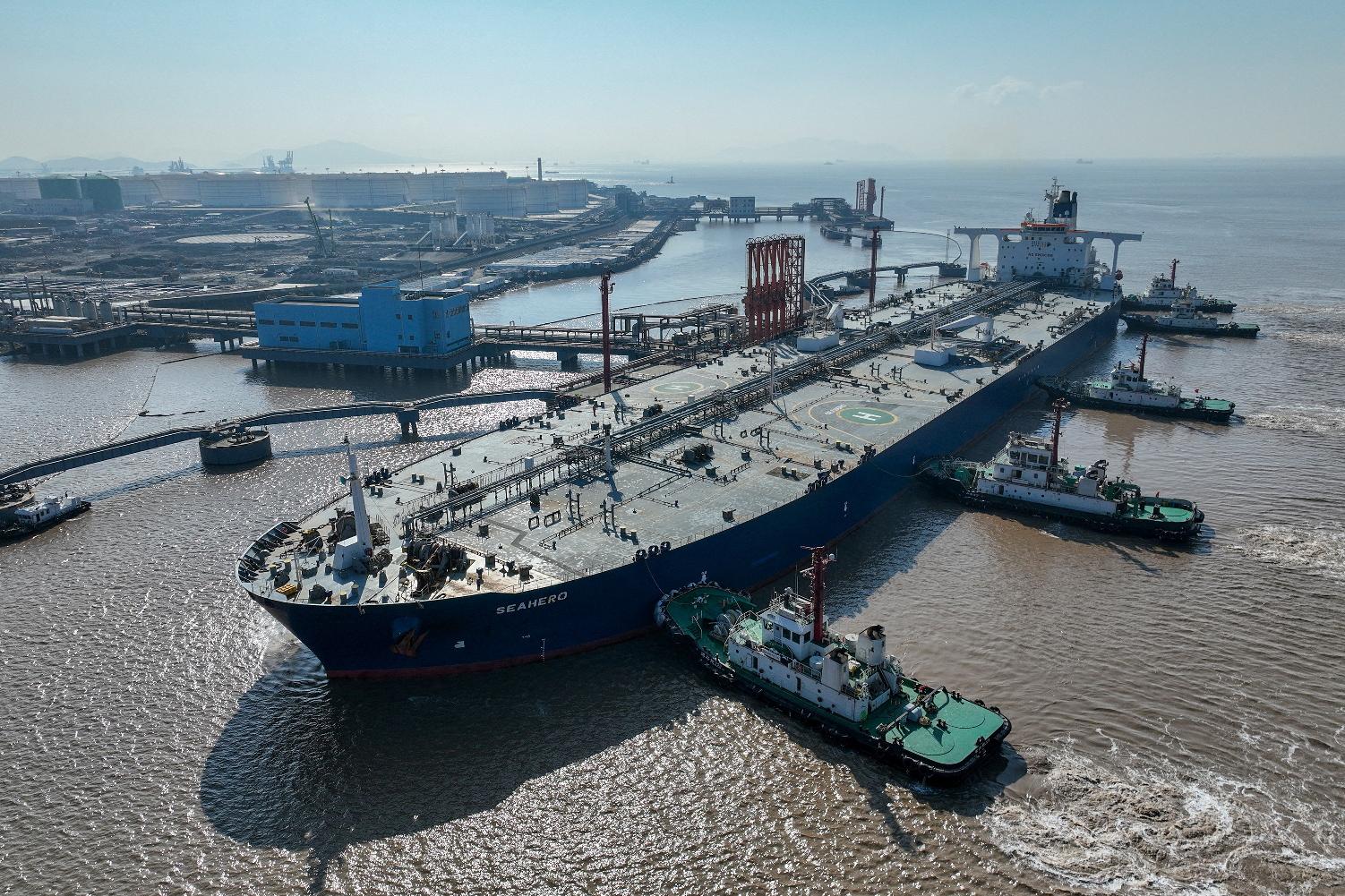
Dec 3 (Reuters) - Most of the world's airlines are not doing enough to switch to sustainable jet fuel, according to a study by Brussels-based advocacy group Transport and Environment, which also found too little investment by oil producers in the transition. The comments come as the airline sector calls for more production of the fuel, which can be made from materials such as wood chips and used cooking oil. "Unfortunately, airlines at the moment are not on the trajectory to have meaningful emissions reduction because they're not buying enough sustainable aviation fuel," Transport and Environment aviation policy manager Francesco Catte said. As it stands, SAF makes up about 1% of aviation fuel use on the global market, which needs to increase for airlines to meet carbon emission reduction targets. The fuel can cost between two to five times more than regular jet fuel. A lack of investment by major oil players, who have the capital to build SAF processing facilities, is hampering the market's growth, the study says. In its ranking, Transport and Environment pointed to Air France-KLM (AIRF.PA) , opens new tab, United Airlines (UAL.O) , opens new tab and Norwegian (NAS.OL) , opens new tab as some of the airlines that have taken tangible steps to buy sustainable jet fuel, particularly its synthetic, cleaner burning version. But 87% are failing to make meaningful efforts, the ranking shows, and even those who are trying could miss their own targets without more investment. Airlines such as Italy's ITA Airways and Portugal's TAP have done very little to secure SAF in the coming years, the ranking shows. A TAP spokesperson said the airline was the first to fly in Portugal with SAF in July 2022, "and is committed to flying with 10% SAF in 2030". ITA Airways did not respond to a Reuters request for comment. Sign up here. https://www.reuters.com/sustainability/climate-energy/airlines-not-switching-quickly-enough-green-jet-fuel-study-says-2024-12-02/
2024-12-02 23:16
Dec 2 (Reuters) - Banks which financed two Brazilian coffee traders that last week sought court-supervised debt restructuring have a total of 1.1 billion reais ($181.6 million) in credit with the firms, court documents seen by Reuters showed on Monday. The amount refers only to advance money the banks gave to traders Atlantica and Cafebras in contracts linked to future coffee exports, known locally as ACCs, according to the documents. It is not known if the traders have other debt with roasters or coffee importers related to supply deals. Brazil's largest bank, state-controlled Banco do Brasil SA (BBAS3.SA) , opens new tab, has the biggest share of the debt with 765 million reais, followed by Banco BTG Pactual (BPAC3.SA) , opens new tab with 181.5 million reais and Banco do Nordeste (BNBR3.SA) , opens new tab with 100.9 million reais, the documents showed. Other three banks had smaller credits pending from ACCs. Atlantica and Cafebras, both owned by Brazilian coffee group Montesanto Tavares, filed a request last week to have a large part of its debt negotiated in court, a judicial move that can precede a bankruptcy proceeding if the negotiation is not successful. The move left the coffee market on tenterhooks with coffee importers fearing they could not get their orders delivered or that other exporters in Brazil could run into financial troubles as coffee prices skyrocketed. Banco do Brasil, BTG Pactual and Banco do Nordeste did not immediately return requests for comments. Atlantica and Cafebras said in the court documents that the recent spike in prices was the latest challenge to their operations, since they caused margin calls on their hedging operations to sour. One coffee broker, who sent some of the court documents to Reuters, said he was surprised by the size of the credit the two traders had, particularly the part from Banco do Brasil. "It is a huge amount for companies that are not that big," he said, asking not to be named given the sensitivity of the issue. ($1 = 6.0580 reais) Sign up here. https://www.reuters.com/business/finance/banks-behind-troubled-brazil-coffee-traders-could-take-181-mln-hit-2024-12-02/