2024-12-02 12:28
Uncertain economic outlook could add to oversupply Lower prices accompanied by a trade war could damage economies Trump's sway over prices is limited NEW YORK/LONDON, Dec 2 (Reuters) - Donald Trump has promised to "drill, baby, drill" to halve energy costs, a plan that sends shivers through the governments of emerging market oil producers anxious about dollar earnings and fills poorer importing countries with hope. In practical terms, Trump, the incoming president of the world's biggest oil producer, cannot fully control prices. The United States has limited influence over producer group OPEC+, the Organization of the Petroleum Exporting Countries and allies, and it does not have a state oil company Trump can order to increase output. But an uncertain economic outlook in the biggest oil consuming countries, notably China, and potential oil oversupply has led investors to hedge their bets on the impact of Trump's election promise. "You will have very country-specific problems or challenges with lower oil prices," said Thomas Haugaard, portfolio manager of emerging market debt with Janus Henderson. "But more than half of the EM investment universe are big importers of oil. There will be winners and losers from that kind of shock." Here is a look at countries that could win - or lose - if global oil prices fell to roughly $40 per barrel , just above half current prices. PRODUCER PAIN Balance sheets at the world's producers - including OPEC's biggest producer Saudi Arabia - would in theory take the biggest hit from lower oil prices. But the Kingdom, with multiple sovereign wealth funds and ready access to global borrowing, is insulated to an extent. Following the oil price crashes of recent years, Saudi Arabia, along with other Gulf nations, such as the United Arab Emirates, has sought to diversify its economy and nurture local debt markets. JPMorgan noted, however, a price drop could force it to further scale back megaprojects such as the $500 billion city-of-the-future, NEOM. For poorer producers, such as Angola, Ecuador and Nigeria, lower prices would be more damaging. Most rely on oil for dollars, and need prices near $100 per barrel to balance budgets. "They don't have any savings to fall back on," said David Rees, senior emerging markets economist with investment firm Schroders, adding those countries already had debt and limited access to affordable borrowing. "If you get a big hit to your key revenue, then those kind of big coverages of debts just get worse and worse and worse," he said. That pressure also can lead investors to ignore positive stories - such as Nigeria's sweeping fuel subsidy and foreign exchange reforms, or Angola's rush to pay down its debts "When oil prices see this kind of pressure, investors tend to paint all oil-producing countries with the same brush," said Razia Khan, Standard Chartered's head of research, Africa and Middle East. BIG SAVINGS? For importers, a lower oil price could cut inflation and ease demand for foreign exchange. China spends just under $300 billion importing oil, followed by India at nearly $200 billion. Smaller importers, including Indonesia, Kenya, Pakistan, South Africa, Thailand and Turkey could also benefit. "If you put $40 (oil) in and just assume $40 for every day, instead of energy inflation averaging around about zero over the next year or so, it knocked it down to like minus 15," said Rees of Schroders. The boon could be bigger for emerging economies that subsidise fossil fuels: Venezuela and Iran spend more than 20% of their GDP on subsidies. NOTE OF CAUTION Lower prices alone are no guarantee of economic relief, especially if they are accompanied by the trade war Trump's threatened tariffs , opens new tab could unleash. Analysts say that could cut global economic growth and cause a demand shock, with negative ramifications worldwide. South Africa, a platinum, coal and iron exporter, would fare poorly if global commodity prices fell more widely. In addition, weaker balance sheets for the world's richer oil producers could have knock-on effects. Egypt, Kenya and Pakistan - debt-laden importers that have relied on foreign funding in recent years - would take a hit if Gulf producers, such as the UAE, closed their chequebooks while weathering a price decline. Lower oil prices could also delay the transition from fossil fuels, damaging the long-term prospects of some emerging market energy importers, as well as adding to costs they face from climate change. "Meaningfully lower prices can be associated with periods of depressed global economic activity, which is not good for emerging markets," said Alejo Czerwonko, chief investment officer for emerging markets Americas at UBS Global Wealth Management. "So the reasons behind why prices are lower matter." Sign up here. https://www.reuters.com/business/energy/trumps-low-oil-price-promise-is-risk-boon-emerging-markets-2024-12-02/

2024-12-02 12:11
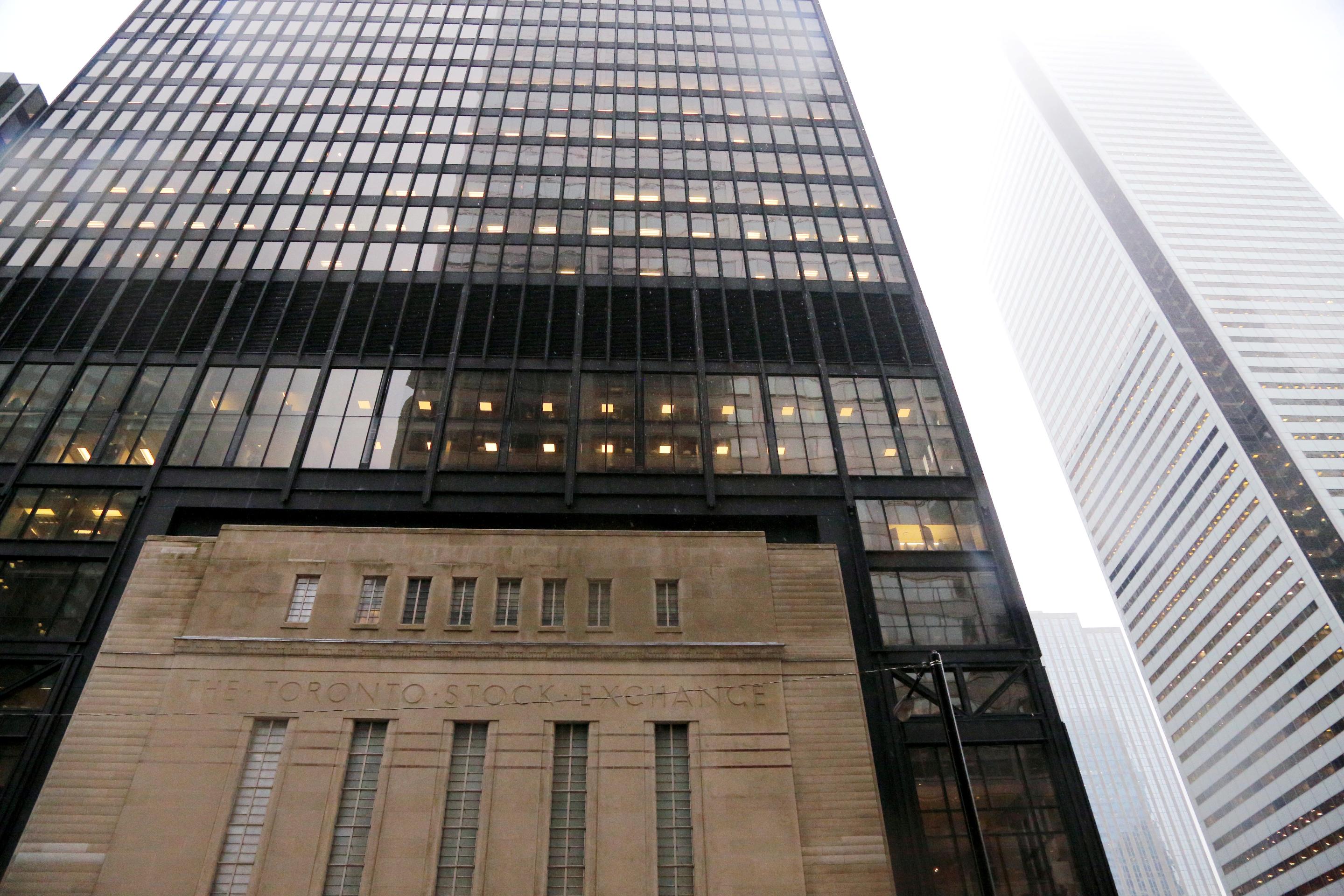
S&P/TSX composite index down 52.23 points, or 0.2% Materials sector fell 0.91%, energy index down 0.77% Canadian dollar weakened 0.3% to the greenback Main index up 22% this year, hovers around record high Dec 2 (Reuters) - Canada's main stock index fell on Monday, pulled down by a strong U.S. dollar and lower commodity prices that weighed on the commodity-heavy index. The Toronto Stock Exchange's S&P/TSX composite index (.GSPTSE) , opens new tab was down 52.23 points, or 0.2%, at 25,595.77. The materials and energy companies, which together account for more than a quarter of the weight of the composite index, fell as a strong dollar made prices of these commodities more expensive in local currency. Canada's materials sector (.GSPTTMT) , opens new tab fell 0.91% owing to lower gold and copper prices while the energy index (.SPTTM) , opens new tab was down 0.77% on lower crude oil prices in Canadian currency. "Overall market sentiment appeared cautious, influenced by a mix of global cues and some sectoral pressures," said Robert Gill, senior vice president and portfolio manager at Goodreid Investment Counsel. Also, uncertainty regarding global economic conditions, including interest rate trajectories and commodity price volatility, is negatively influencing market sentiment, he said. The healthcare sector was the biggest loser of the day with a drop of 4.37%, weighed down by Bausch Health Companies (BHC.TO) , opens new tab, which fell over 7%. The TSX has had a stellar year so far with overall returns of over 22%, and it currently hovers around its record high levels, especially led by heavyweight financials, materials and mining. Financials (.SPTTFS) , opens new tab, representing primarily the top six banks, accounts for close to a third of the total weight of the composite index and has gained close to 30% this year. The loonie weakened by 0.3% to to 1.40 against the U.S. dollar, or 71.43 U.S. cents, but recovered some early morning losses which saw it falling by almost 0.5%. On the economic data front, Canadian manufacturing activity increased at the fastest pace in 21 months in November. Later in the week, the spotlight will be on key November employment numbers that could dictate how far and how fast the Bank of Canada will lower interest rates. For the Dec. 11 rate-setting meeting, traders are pricing in a 48% chance for a 50-basis point cut and a 25 basis point rate cut is fully priced in. The focus will also be on quarterly earnings from big Canadian lenders later in the week, including results from Royal Bank of Canada (RY.TO) , opens new tab, National Bank of Canada (NA.TO) , opens new tab and Toronto Dominion Bank (TD.TO) , opens new tab, among others. "Eyes will be watching to see how all banks are handling mortgage renewals and provisions for credit losses," Gill of Goodreid said, adding that any positive forward guidance from TD would likely boost its share prices. South of the border, Friday's U.S. monthly payrolls report could guide the Federal Reserve's move at its policy meeting on Dec. 17-18. Sign up here. https://www.reuters.com/markets/tsx-futures-rise-oil-strength-focus-domestic-jobs-data-2024-12-02/
2024-12-02 11:48
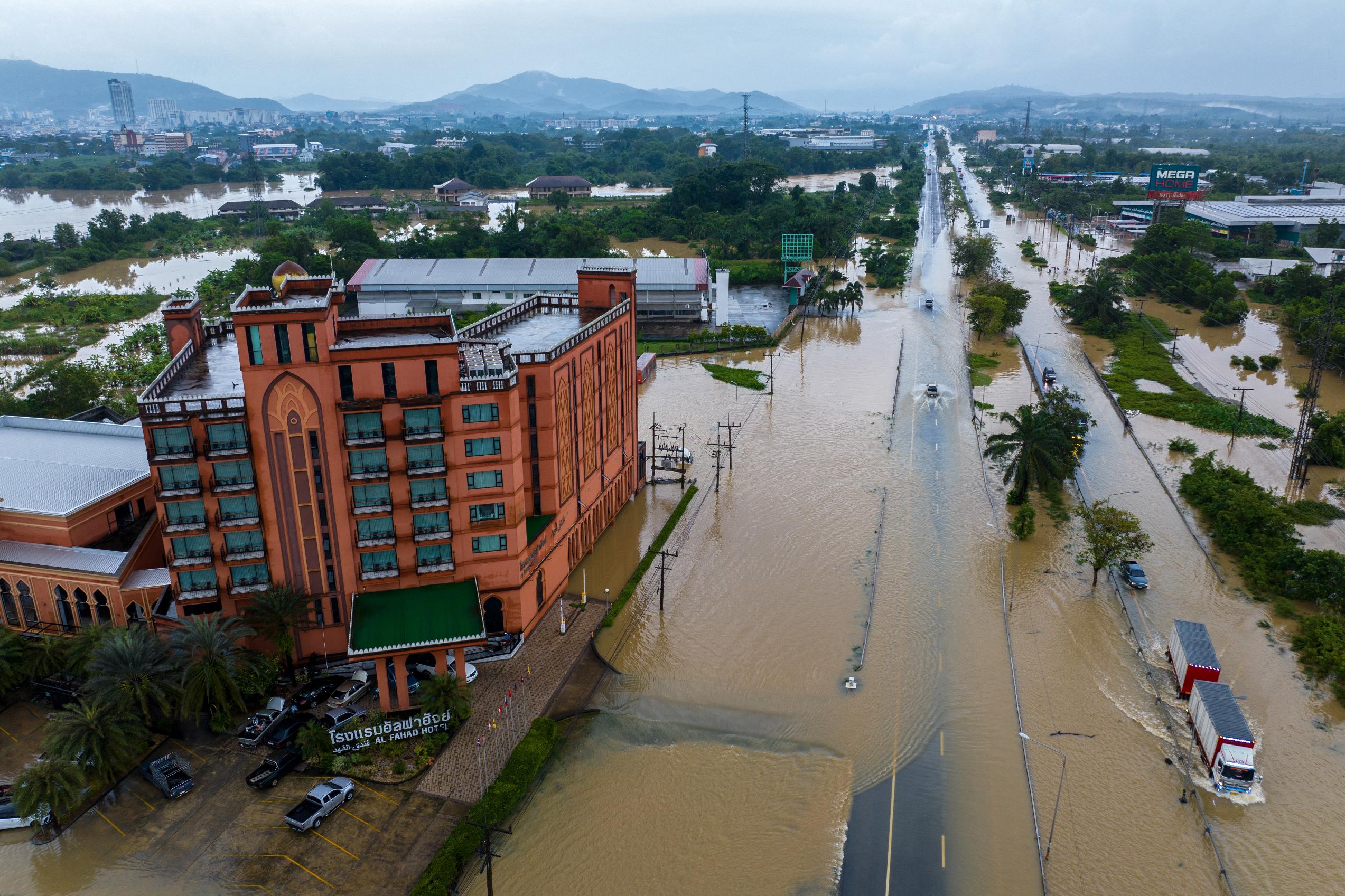
KUALA LUMPUR/BANGKOK, Dec 2 (Reuters) - Malaysia and Thailand are facing a second wave of heavy rain and potential flooding this week, authorities said on Monday, even as some displaced residents were able to return home and the worst floods in decades began receding in some areas. Since last week, 27 people have died and more than half a million households in the neighbouring Southeast Asian countries have been hit by torrential rain and flooding that authorities say have been the most severe in years. The immediate situation has improved in some areas and water levels have eased, according to government data on Monday. In Malaysia, the number of people in evacuation shelters dropped to around 128,000 people, from 152,000 on Sunday, according to the disaster management agency. The Malaysian Meteorological Department on Monday forecast a wind convergence in the worst-hit states of Kelantan and Terengganu from Dec. 3 to 4, which it said would potentially bring thunderstorms and heavy rains during the period. This would be followed by a monsoon surge from Dec. 8 to 14 across the Malaysian peninsular, it said. The floods have destroyed homes, led to the suspension of rail links, and left businesses and farmers reeling, with more than 38,000 hectares of paddy fields damaged in major rice-producing areas in Malaysia. Meanwhile, in southern Thailand, 434,000 households remain affected, its interior ministry said on Monday, down by about 100,000 from the weekend figure. The government has provided food and supplies for those in the flood-hit areas, the ministry said, adding water levels in seven provinces were decreasing. Thailand's Meteorological Department said people in the lower south should beware of heavy to very heavy rains and possible flash flooding and overflows, especially along foothills near waterways and lowlands, from Dec. 3-5. Sign up here. https://www.reuters.com/world/asia-pacific/thailand-malaysia-brace-fresh-wave-floods-water-levels-ease-2024-12-02/
2024-12-02 11:38
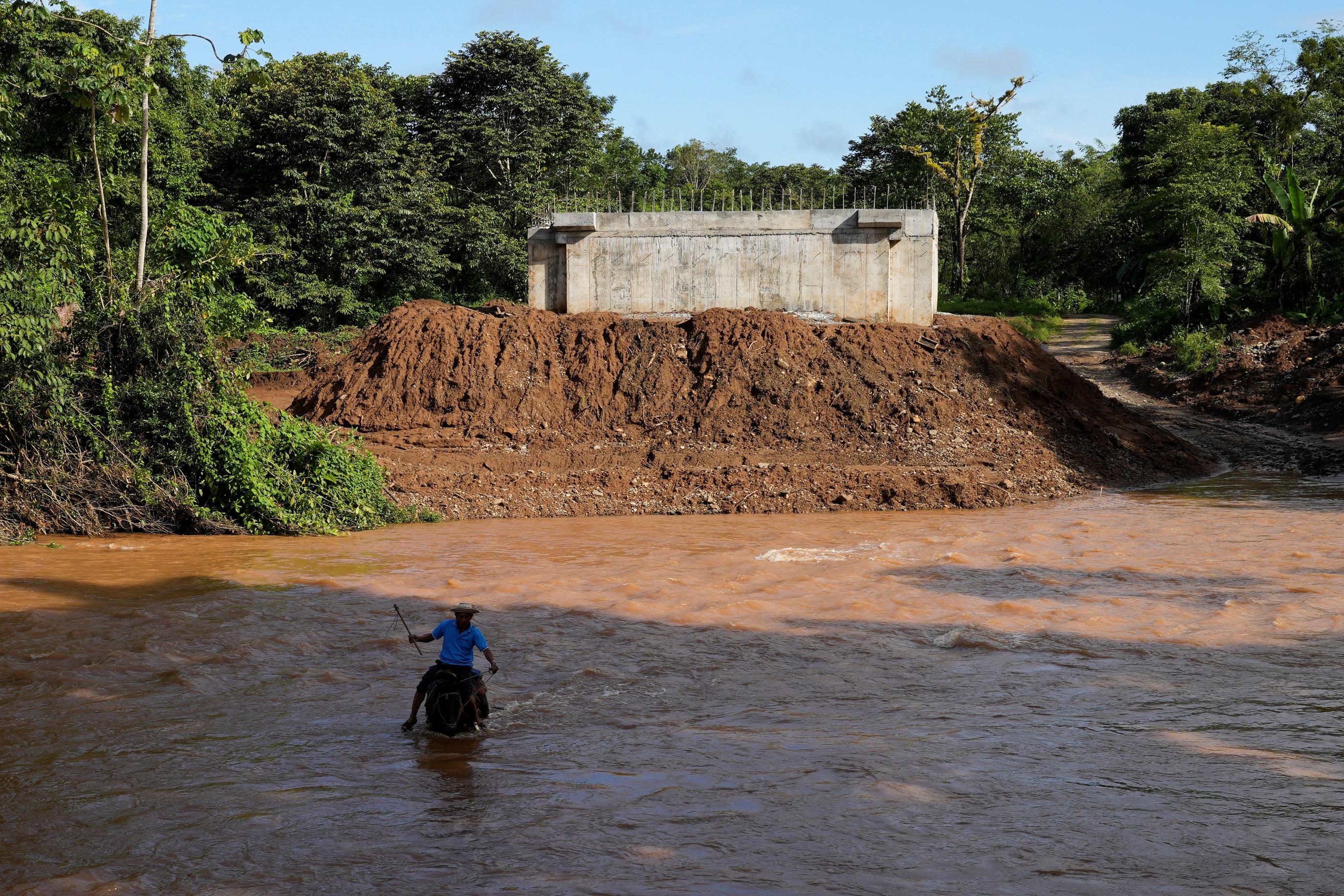
Canal Authority plans massive dam to secure freshwater for locks Project could face opposition from local communities and activists Severe drought in the past year restricted vessel traffic on the canal TRES HERMANAS, Panama, Dec 2 (Reuters) - The lush river valleys of El Zaino y La Arenosa in western Panama, home to hundreds of families that eke out a living farming, fishing and raising cattle, could soon be submerged by a massive man-made reservoir designed to ensure the viability of the Panama Canal in the face of a changing climate. Tres Hermanas, with its farms, two schools, churches and a medical clinic, is one of dozens of towns that would disappear in the next six years if the state-owned Panama Canal's ambitious $1.6 billion project goes ahead. Residents are divided: some do not want to leave, while others are focused on getting fair compensation if they are forced to move. If they are not satisfied, recent history suggests public opposition could endanger the entire project. While the Rio Indio dam project was first proposed two decades ago, more extreme weather in the last decade, including a severe drought in the past year that restricted vessel traffic on the canal, has lent greater urgency to the proposal. The canal accounts for 3.1% of the Central American country's gross domestic product. The waterway, which allows up to 14,000 ships to cross per year, accounts for 2.5% of global seaborne trade and is critical to U.S. imports of autos and commercial goods by container ships from Asia, and for U.S exports of commodities, including liquefied natural gas (LNG). "The Rio Indio reservoir project would be the most complete solution (to more frequent droughts) in a 50-year horizon," the canal's deputy administrator, Ilya Espino de Marotta, told Reuters in an interview in October. The project still needs to pass a long approval process including a public consultation, discussion by the cabinet and the National Assembly's final green light. Panama's President Jose Mulino has said the discussion will be completed next year, but the shipping industry is watching with some trepidation after delays and suspensions of major projects in recent years, including a controversial mining contract with Canada's First Quantum Minerals (FM.TO) , opens new tab. After broad public opposition, the Supreme Court last year declared the contract unconstitutional, and the government ordered the mine to be closed. Although the number of people facing relocation for the dam is relatively small, they are backed by an activist group called Countrymen Coordinator for Life, which was instrumental in blocking First Quantum's mining contract. Cesar Petit, senior economist at BancTrust & Co, an investment bank specializing in emerging markets, said there was political consensus in Panama behind the dam project but the government would need to establish a credible plan for compensating people who will be displaced and affected in nearby areas. "There are significant risks that the project to build the multipurpose reservoir on the Rio Indio will be postponed or suspended indefinitely," Petit told Reuters. "The communication strategy of the benefits of the plans and an adequate incentive and compensation program for those affected will be key to successfully implementing this plan." Jose Icaza, minister for Canal Affairs, told Reuters the government understands the "anxiety and concerns" of residents. "Our priority is not to impact the living conditions and the peace of the basin's residents, and for this reason we will continue to work directly with them to meet their needs as we move forward with the construction project," he said. The Panama Canal Authority aims to create a massive dam 840 meters in length and 80.5 meters in height to secure freshwater for its locks. It says the reservoir's 1.25 billion cubic meters of water would allow up to 15 additional vessel transits per day during the dry season, and help provide drinking water to Panama's growing 4.5 million population. Unlike the Suez Canal, which does not have locks, the Panama Canal relies on fresh water to operate three sets of locks that allow ships to cross between the Pacific and Atlantic oceans through a 50-mile artificial waterway. If it wins approval, the dam is expected to be completed by 2030 or 2031, but the clock is ticking: Last year was the third driest in the waterway's 110-year history. The second driest was 2015. Meteorologists forecast Panama will face more severe droughts and faster water evaporation due to higher temperatures in the future. A Supreme Court ruling in July returned to the canal authority a geographic area that almost doubles its territory. It can now be used to expand business and secure water sources, including the dam. According to an initial survey by the canal, the project would demand the relocation of some 2,260 people, and would impact at least partially an additional 2,000 people in the reservoir zone. A census to count more accurately how many people will be affected is expected to be completed in January, Espino said, while some infrastructure work by Panama's government, including a bridge that could accommodate heavy equipment, is visible in the Tres Hermanas area. Panama's ministry of Public Works said in a release the bridge is intended to be used for cars and people to cross the Rio Indio. "There is already a start," Espino said, referring to planning linked to the project's technical aspects. "But of course, the most complicated part is the process of resettling people. These are conversations that have to be held individually with each family." STAY OR GO? Three lawyers and activists from community groups said the Rio Indio plan would have a "high environmental impact" due to deforestation and loss of biodiversity in regions including Capira, west of Panama City. The project, which includes a $400 million budget for its social component, mainly relocations, has divided residents. Some are willing to sell their land and move, while others want to fight the project. "No farmer wants to live in a slum," said Dilubino Agraje, who represents the Rio Indio communities at Countrymen Coordinator for Life. The organization is pressing for more details about the relocation plans. "We were born and raised here. If we leave, it is not because we want to, but because we'll have to," said 60-year-old Paulino Alabarca, a rice farmer born in Tres Hermanas, while riding through the town on his horse. A different plan to transfer water from an existing reservoir fed by the Bayano river that could be finished sooner and would not require family relocations was analyzed and discarded by the canal's administration years ago because of location and higher costs, Espino said. From an environmental damage point of view, the Rio Indio project could have a greater negative impact and few positive benefits that could not be obtained otherwise, said Professor LeRoy Poff, an expert on aquatic ecology from Colorado State University, referring to displacement of people and livelihoods, damages downstream for the fish and for the forests. "There is a real importance, as we go forward amid climate change, in maintaining healthy rivers, because they have the greatest potential to respond to changing environments," he added. The Bayano alternative is gaining traction among many communities, including Tres Hermanas. "There are means for them to leave us alone," said Alabarca referring to that project. But it could bring different complications as it would involve negotiations with power provider AES Panama, a company jointly owned by the state and U.S. AES Corp (AES.N) , opens new tab that owns and operates the Bayano hydroelectric infrastructure, according to lawyers studying that project. AES Panama "is not currently in any process of selling its stakes," it told Reuters in an email. "However, fully understanding the issue and its importance for the country, it is in the best disposition and open to talk to the state to evaluate and reach fair agreements." Canal minister Icaza said the Rio Indio project was imperative for the canal's survival and "the most viable option." Espino said she thinks both projects will be needed in the long run. "Climate change has really ruined the natural navigation channels that existed," she said. The recurrence of the El Niño weather phenomenon has accelerated to every three years, extending Panama's dry season and exhausting much of the water resources in the country with the fifth most rainfall in the world. Its next occurrence, expected in 2027, will be a challenge for the canal again since the Rio Indio project is not expected to be ready before 2030, the canal's chief, Ricaurte Vasquez, told Reuters. In preparation for the next drought, the canal has changed its reservation model, is calling on shippers to consolidate cargoes and is preparing water recycling measures. In recent years, the expansion of housing near the waterway has intensified the canal's competition with its surrounding communities for freshwater, said Panama City-based environmentalist Raisa Banfield. "The canal exists and the canal must operate as efficiently as possible," Banfield said. But, she added, there needs to be a balance. "The question is... How much are we going to sacrifice to continue passing ships, and more ships and bigger ships?" Sign up here. https://www.reuters.com/business/environment/threatened-by-climate-change-panama-canal-has-big-plans-deal-with-drought-2024-12-02/
2024-12-02 11:21
Bangladesh, Adani differ on dues Adani cut supplies to Bangladesh on Oct. 31 over payment delays Bangladesh told Adani it needed only half the power this winter DHAKA, Dec 2 (Reuters) - Bangladesh has halved the power it buys from neighbouring India's Adani Power, citing lower winter demand, government officials told Reuters on Monday, amid disagreements over dues running into hundreds of millions of dollars. Adani, whose founder has been accused by U.S. authorities of being involved in a bribery scheme in India, charges which he has denied, halved supply to Bangladesh on Oct. 31 over payment delays as the country battles a foreign exchange shortage. Subsequently Bangladesh told Adani to keep supplying only half the power for now, officials said, although it will keep paying its old dues. "We were shocked and angry when they cut our supply," said Md. Rezaul Karim, chairperson of the state-run Bangladesh Power Development Board (BPDB). "Winter demand is now down, so we have told them there is no need to run both units of the plant." Adani has been supplying power under a 25-year contract signed in 2017 under ousted Prime Minister Sheikh Hasina, from a $2-billion power plant in India's eastern state of Jharkhand that has two units, each with capacity of about 800 megawatts. A document seen by Reuters showed the plant ran at only 41.82% capacity in November, the lowest this year, with one unit shut since Nov. 1. Two BPDB sources said Bangladesh had bought about 1,000 MW a month from Adani last winter, adding that Adani had asked the board when it would resume normal purchases, but had not received a definitive answer. An Adani Power spokesperson said the firm was continuing supply to Bangladesh, although mounting dues were a significant concern, making plant operations unsustainable. "We are in constant dialogue with senior officials of BPDB and the government, who have assured us that our dues will be cleared soon," said the spokesperson. The firm was confident Bangladesh would fulfil its commitments, just as Adani had upheld its contract obligations, he added. Karim said Bangladesh owed Adani about $650 million, and paid about $85 million last month and $97 million in October. An Adani Power source, speaking on condition of anonymity, said the dues had jumped to about $900 million, hurting its debt profile and risking a higher cost of funds. Bangladesh wants to sharply lower prices under the Adani deal, unless it is cancelled by a court, which has called for an investigation into it, the de facto minister for power and energy told Reuters on Sunday. The Adani Power spokesperson said the firm had no indication that Bangladesh was reviewing its power purchase pact. Adani charges the highest rate of all Indian suppliers to Bangladesh, a government document seen by Reuters showed. Its cost per unit was 14.87 taka during the fiscal year that ended on June 30 2024, compared with an average of 9.57 for all Indian suppliers. The retail price in Bangladesh is 8.95 taka a unit, leading to an annual power subsidy bill of 320 billion taka ($2.7 billion). "Because the prices are high, the government has to subsidise," said Muhammad Fouzul Kabir Khan, Bangladesh's power and energy adviser. "We would like power prices, not only from Adani, to come down below the average retail prices." ($1=119.0000 taka) Sign up here. https://www.reuters.com/business/energy/bangladesh-halves-power-buying-indias-adani-amid-payment-dispute-2024-12-02/
2024-12-02 11:07
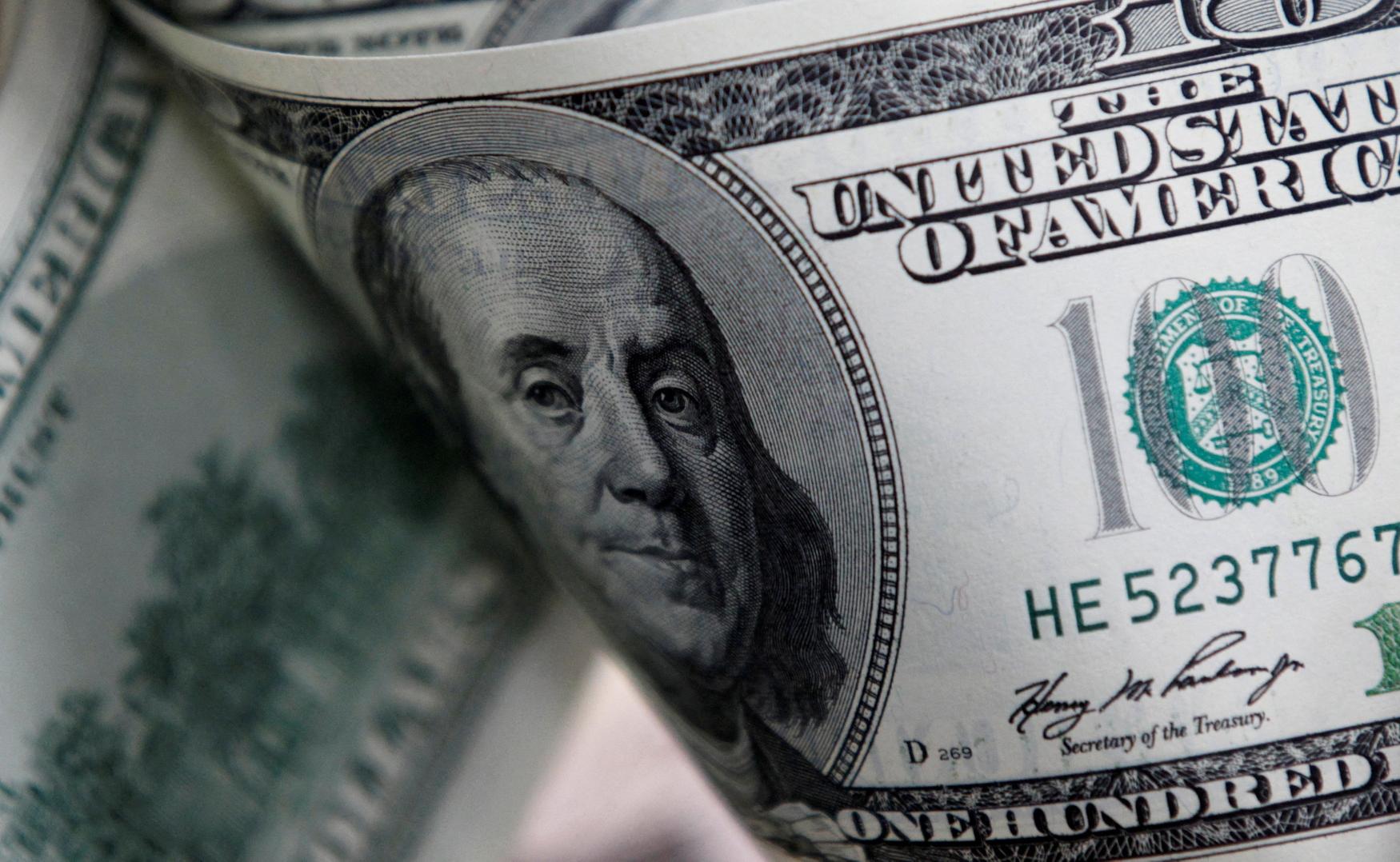
A look at the day ahead in U.S. and global markets from Mike Dolan The dollar breezed into December on the front foot, helped by Donald Trump's weekend support for its global reserve status just as the euro wavered on tense French politics and China's yuan swooned on fresh easing expectations there. As U.S. markets return in earnest from Thanksgiving into the final month of a bumper year, the dollar recaptured its mojo after a tepid holiday week for the greenback. Without any obvious prompt, the President-elect's latest social media swipe warned the BRICS bloc of developing nations against pushing a rival currency to the dollar in global trade and commerce - adding they faced 100% tariffs if they did. While the trade threat seems notional, it contained some heft in markets who had assumed a second Trump presidency would be overtly behind weakening the dollar's value. Reserve status and exchange rate value are two different things, of course, but the comments seemed to bolster the currency nonetheless. More immediately the 0.5% jump in the dollar index (.DXY) , opens new tab on Monday was driven largely by the relapse in the euro as markets assessed the risk of a collapse of the French government. France's far-right National Rally will likely back a no-confidence motion against the government unless there's a "last-minute miracle", with lawmaker Marine Le Pen giving Prime Minister Michel Barnier until Monday to yield to RN's demands as a part of protracted horse trading over the annual budget plan. The euro fell almost a cent at one point first thing on Monday before regaining a toehold above $1.05 and France's benchmark CAC 40 (.FCHI) , opens new tab dropped more than 1%. And yet French sovereign debt, in the eye of the storm, appeared calmer - with nominal 10-year yields falling to their lowest in a month and premiums over German equivalents edging in from Friday's levels. Part of the subsidence of borrowing costs is related to heightened expectations of European Central Bank easing as the euro wide economy struggles and German manufacturing activity shrinks amid auto sector woes, trade worries and election angst. German bund yields fell to their lowest since early October, eyeing lows of 2% for the first time since January. But the other balm for French bonds was relief that Standard & Poor's on Friday held its rating on France's long-term sovereign debt steady at "AA-" and kept its outlook at stable. And it wasn't just euro government yields on the retreat. Despite more upbeat November business surveys from China this weekend, which helped benchmark stocks indexes (.CSI300) , opens new tab there outperform on Monday, intense speculation about further easing from the People's Bank of China saw 10-year yields dip below 2% for the first time on record - more than 220 basis points below U.S. equivalents. The move, as the PBOC tries to bring deposit rates offered by banks to brokerages and fund companies in line with its official 1.5% reverse repo policy rate, saw the offshore yuan fall to its weakest level since July. Speculation is rife that China will respond to any renewed tariff hikes from an incoming Trump administration by allowing a weaker yuan, partly offsetting the impact on its exports to the United States. But before we even get there, further restrictions on U.S.-China trade were due on Monday, with the U.S. due to launch its third crackdown in three years on China's semiconductor industry - curbing exports to 140 companies including chip equipment maker Naura Technology Group (002371.SZ) , opens new tab among other moves. Back on Wall Street, the new week brings another critical sweep of labor market updates - now central to Federal Reserve thinking as it heads towards its final meeting of the year and after unusual payroll weakness in October. After several jobs market cuts through the week, Friday brings the November employment report. Payrolls growth is expected to have bounced back to 183,000 during the month compared to the meager 12,000 recorded for October. Still, much like sovereign bonds elsewhere, U.S. Treasury yields - which tumbled sharply through the past week to confound many post-election bets - remain subdued first thing on Monday. Key U.S. manufacturing readouts for last month are due from ISM and S&P Global later. U.S. stock futures , which ended the shortened week on a high last Friday, ticked back slightly ahead of the bell. In corporate news, and partly reflecting the auto sector shudder in Europe as trade war fears mount, shares in Stellantis slumped almost 9% to two-year lows after CEO Carlos Tavares resigned abruptly on Sunday and deepened investors' worries about the turnaround of the world's No. 4 carmaker. Key developments that should provide more direction to U.S. markets later on Monday: * US November manufacturing surveys from ISM and S&P Global, October construction spending * Federal Reserve Board Governor Christopher Waller and New York Fed President John Williams speak * US corporate earnings: Zscaler * German Foreign Minister Annalena Baerbock visits China Sign up here. https://www.reuters.com/markets/us/global-markets-view-usa-pix-2024-12-02/