2024-11-29 11:09
Nov 29 (Reuters) - After a disappointing 2024, Latin American companies are expected to see earnings rebound around 16% next year, JPMorgan calculations showed, with almost all countries except Colombia set for double-digit growth. This year, earnings at companies in the region are estimated to have contracted by 24%, JPMorgan analyst Cinthya Mizuguchi said in a note to clients. "For 2024, LatAm stands as the worst region both in terms of performance but also for year-end earnings outlook," said Mizuguchi in the note published late Wednesday. "FX depreciation played a large role in this deterioration of expectations, but the outlook for 2025 seems brighter," Mizuguchi added. Emerging markets have felt the pain of a strong dollar more broadly this year with the greenback having strengthened nearly 5% since the start of the year against a basket of currencies. On the sector front, Mizuguchi expects double-digit growth for energy, industrials, financials, tech, healthcare and telecom after sharp contractions this year. However, consumer discretionary was expected to be an outlier and in line for a contraction of 9% in 2025, though that comes after a 136% increase this year. Earnings growth at companies in Brazil and Mexico are estimated to hit about 15% and 14% respectively next year. On an equity index level, it has been a painful year for Latin America, with the regional MSCI index (.MILA00000PUS) , opens new tab having stumbled 25% so far this year. In dollar terms, Brazil's MSCI index (.dMIBR00000PUS) , opens new tab and peer Mexico (.dMIMX00000PUS) , opens new tab have sunk around 27% so far this year. That compares to a more than 5% gain in the broader MSCI emerging market equity index. (.MSCIEF) , opens new tab Sign up here. https://www.reuters.com/markets/jpmorgan-sees-latam-company-earnings-rebounding-16-2025-2024-11-29/
2024-11-29 11:05
A look at the day ahead in U.S. and global markets from Mike Dolan While Americans have been feasting and preparing to shop, U.S. Treasuries have put in a decent rally this week - countering considerable post-election fiscal anxieties as world bonds find a bid more broadly. While the holiday week and month-end position squaring may explain some of the peculiar subsidence in government yields, the move partly reverses at least one of the prevailing 'Trump trades' and has dragged the lofty dollar (.DXY) , opens new tab down with it. Well-behaved U.S. inflation updates and decent demand during another heavy week of debt sales have helped a rally that began in earnest last Friday as President-elect Donald Trump nominated Wall Street money manager Scott Bessent as treasury Secretary. In the backdrop, Trump's early trade tariff threats may also have darkened the global growth outlook, while nerves in Europe about France's tense budget negotiations appear to have eased somewhat overnight. Testing the durability of the drop in borrowing rates may need the new month to get underway next week, with U.S. stock and bond markets open only for half a day on Friday after Thanksgiving. But the moves have been sizeable - with 10-year yields retreating to their lowest in a month to 4.20% and 30-year long bond yields at their lowest in six weeks. Long-term inflation expectations derived from 10-year inflation protected Treasury securities have slipped below 2.3% this week too, with inflation swaps also dialing back. The New York Fed's estimate of the 10-year 'term premium' - the additional compensation investors demand for holding longer-term debt to maturity - has dissipated too. It's now just 13 basis points and almost a third of post-election peaks. Energy markets have helped, with crude prices ebbing on the tentative ceasefire between Israel and Hezbollah in Lebanon. U.S. gasoline pump prices quietly ticked down to their lowest in more than three years. But there's also a sense that the growth picture worldwide may also be darkening and the 2-to-10 year Treasury yield curve barely clung to positive territory on Friday having dipped back negative for the first time since Oct. 10 earlier this week. With a big week for labor market data due next week, one eye remains on the gradually cooling U.S. employment situation, and futures still price more than a 50% chance the Federal Reserve will cut another quarter point off policy rates next month. FEASTING AND SHOPPING Wall Street stock benchmarks were higher ahead of Friday's shortened session, with eyes on the retailers and price discounting amid the traditional 'Black Friday' spending spree. There were differing inflation pictures overseas, with Japan's yen capitalizing on the softer dollar by rising more than 1% on above-forecast Tokyo inflation readings. The equivalent November reading for the euro zone moved back above the European Central Bank's 2% target, but was in line with expectations. French and German government debt yields both fell back on Friday, with the spread between the two narrowing as signs of some compromise emerged in the French budget row. French Prime Minister Michel Barnier on Thursday dropped plans to raise electricity taxes in his 2025 budget, bowing to far-right threats to bring the government down unless he eased the burden on the working classes. However, the far-right National Rally warned this concession was insufficient to avoid a no-confidence vote as early as next week. Chinese stocks (.CSI300) , opens new tab outperformed earlier amid hopes for some positive news from key business surveys released this weekend. Key developments that should provide more direction to U.S. markets later on Friday: * Chicago November business survey, Canada Q3 GDP revision * European Central Bank vice president Luis de Guindos speaks * Bank of England publishes financial stability report Sign up here. https://www.reuters.com/markets/us/global-markets-view-usa-2024-11-29/
2024-11-29 10:19
MOSCOW, Nov 29 (Reuters) - The Russian rouble will strengthen when temporary speculative factors and market nervousness are gone, but the economy will need to adapt to new U.S. sanctions targeting the banking sector, Economy Minister Maxim Reshetnikov said on Friday. The rouble was largely stable against all major currencies on Friday but remained at its lowest level since March 2022, the first month of the Ukraine war. The currency is down by over one quarter against the U.S. dollar since early August. "It is evident that adaptation to the new anti-Russian sanctions will be necessary, including changes to banking mechanisms and channels for currency inflows into the Russian market," Reshetnikov said in a statement. Reshetnikov statement followed a call from President Vladimir Putin not to panic over the rouble's fall and a decision by the central bank not to buy foreign currency on the domestic market from Nov. 28 until the end of the year. The latest U.S. sanctions on Russia's financial sector hit Gazprombank, which handles payments for Russia's energy trade with Europe and is the major supplier of Western currencies to the market. The sanctions created a shortage on the Russian foreign exchange market, which led to panic buying of foreign currencies. Reshetnikov said there were no fundamental reasons for the rouble's fall. "We assume that once the market nervousness subsides, the exchange rate will return to its fundamental values," he said. Sign up here. https://www.reuters.com/markets/europe/russias-economy-will-need-adapt-new-us-sanctions-economy-minister-says-2024-11-29/

2024-11-29 10:06
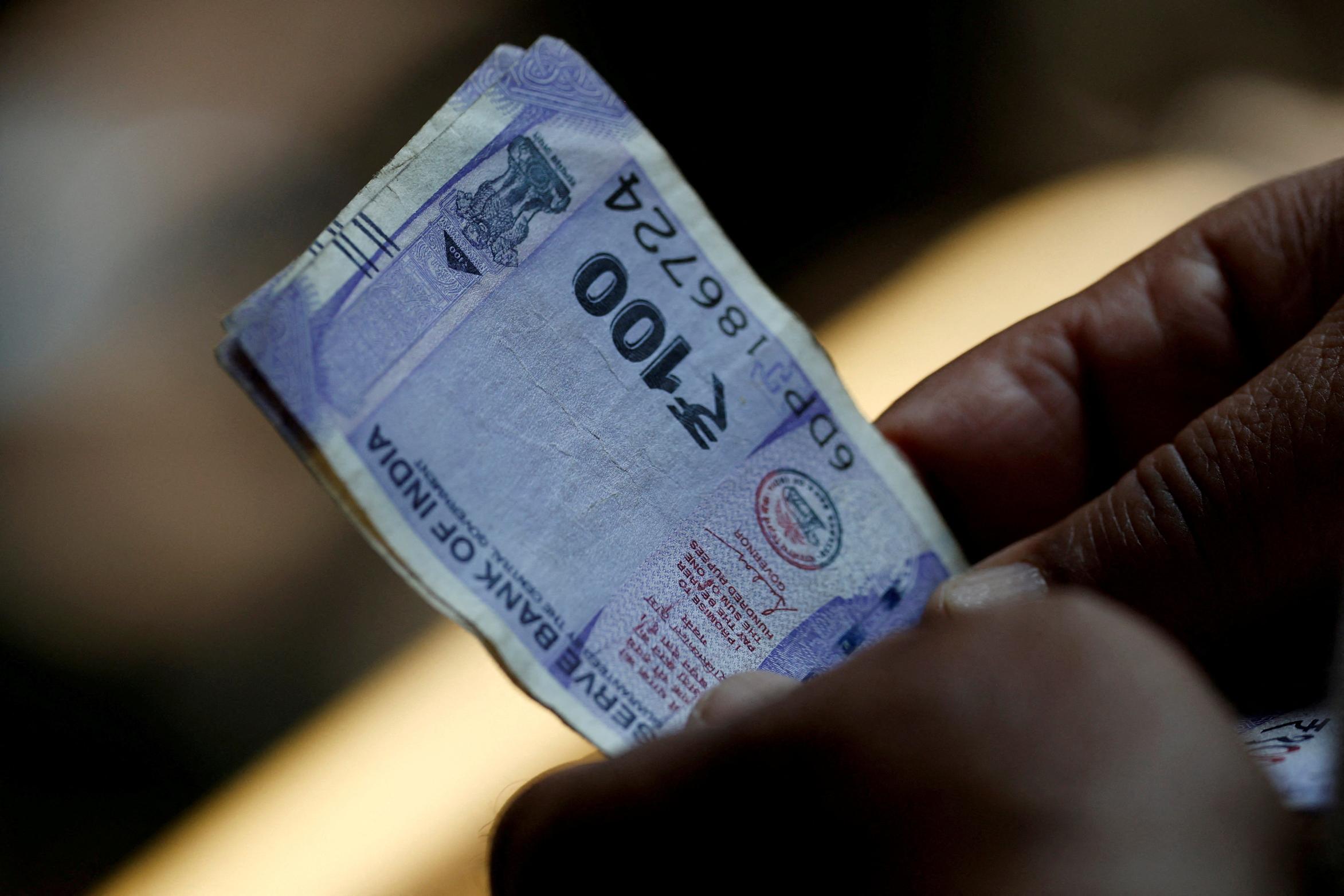
MUMBAI, Nov 29 (Reuters) - The Indian rupee ended November with its worst monthly performance in eight, as Donald Trump's victory in the U.S. election boosted the dollar and U.S. bond yields, while foreign portfolio outflows persisted. The rupee closed at 84.4825 against the dollar on Friday, nearly flat on the day but within touching distance of its lifetime low of 84.5075 hit last week. For the month, the rupee fell by nearly 0.5%, the steepest decline since March. The dollar has rallied and U.S. yields have risen since Trump's victory in the Nov. 5 presidential election, hurting emerging market assets. The dollar index is up 2% in November while the 10-year U.S. Treasury yield rose to as high as 4.50% earlier in the month, its highest since July. Foreign investors net sold more than $1.7 billion of local stocks and bonds in November, adding to the $11.5 billion outflow of the previous month. Still, the rupee has fared better than most of its regional peers, largely on the back of frequent interventions by the Reserve Bank of India. In addition to its dollar-selling interventions across the spot, futures and non-deliverable forward market, the RBI has also asked banks to lower their speculative bets against the currency and has increased its scrutiny of lenders' forex activity. Traders expect the RBI to continue with its firm defence of the currency and only allow gradual depreciation. Emerging market currencies may stay on tenterhooks heading into the inauguration of the incoming Trump administration in January as investors await clarity on its policies, especially surrounding trade tariffs. "We believe the Indian rupee and IGB (Indian government bonds) would be the most resilient assets in Asia under the Trump presidency," analysts at Societe Generale said in a note. On the day, Asian currencies were mostly stronger benefiting from softness in the dollar, but the rupee was unable to gain in the face of dollar demand from foreign banks, traders said. Sign up here. https://www.reuters.com/markets/currencies/rupee-logs-worst-month-since-march-trump-win-lifts-dollar-outflows-persist-2024-11-29/
2024-11-29 08:53
Dec 2 (Reuters) - Financial markets head into a December laden with uncertainty over geopolitics, global trade and economic growth, particularly in Europe, where France is in the cross-hairs over its budget. U.S. President-elect Donald Trump's pledge to impose steep tariffs on Canada, Mexico and China has jolted markets and upended interest rate and inflation forecasts. Here's what to look out for in the week ahead, from Kevin Buckland in Tokyo, Ira Iosebashvili in New York and Dhara Ranasinghe, Karin Strohecker and Amanda Cooper in London. 1/ HOLDING ON? Traders got a taste of what the months ahead may look like. Trump's pledge to slap tariffs on some of the United States' major trading partners has juiced up the dollar even more. The greenback rose more than 1.5% against the Canadian and Mexican currencies, highlighting sensitivity to Trump-related headlines and uncertainty over his policies. So, November ends with the biggest monthly fall in the euro since early 2022, the steepest drop in German bond yields this year, the biggest bitcoin surge since February and one of the biggest monthly jumps in U.S. stocks this year. Now for a volatile December. Trump aside, U.S. and euro area rates are tipped to fall, Japan's could rise. Geopolitics may bring relief (Middle East) and fear (Russia/Ukraine) as well as add political turbulence (France, Germany). 2/ IMPASSE Tensions escalated in France over Prime Minister Michel Barnier's proposed budget, which contains 60 billion euros in painful tax rises and spending cuts. Far-right National Rally leader, and coalition partner, Marine Le Pen has threatened to topple the government over it and speculation is rising that this could happen by Christmas. French bonds haven't sold off too hard, but they've lagged the market so badly the premium France must pay to borrow over 10 years relative to Germany is back to 2012 crisis-era highs. The government will try to push through the social security budget on Monday and failure to do so would trigger a no-confidence motion. 3/ TARIFF FEAR, STIMULUS FAITH Trump's threat of new tariffs on Mexico, China and Canada hit Asian markets hard, but mainland shares (.CSI300) , opens new tab have mostly shrugged off talk of a 10% levy on all Chinese imports, partly because it was lower than the 60% he campaigned on. But analysts think Beijing could produce whatever new stimulus is needed to counter the economic drag of a trade war, and several say the ultimate result will be an acceleration of China's high-tech self-sufficiency drive. The biggest loser has been staunch U.S. ally Japan, with the Nikkei (.N225) , opens new tab down about 1.4% since Trump's Truth Social post, mostly led by auto stocks. Yet Honda is the top-ranking automaker after Tesla on Cars.com's "Made in America" list, with Toyota's Camry sedan and Highlander SUV also rating highly. Mexican factories remain a vulnerability for everyone, particularly for high-margin, top-selling pickup trucks. 4/ PRICED FOR PERFECTION As U.S. stocks hover near record highs, investors await next Friday's jobs report for a clearer picture of how the economy is faring ahead of the Federal Reserve’s December meeting. Robust U.S growth has helped power stocks higher all year, even as it raises concerns of an inflationary rebound that can undo the Fed’s progress in taming consumer prices. But another blowout jobs report, such as the one that shocked markets in October, could derail expectations for how much the Fed will be able to cut in the months ahead, potentially shaking an important pillar of the stocks rally. Indeed, minutes of the last policy meeting showed Fed officials aren't unanimous on how much more rates should fall. Economists polled by Reuters expect the U.S. to have created 183,000 new jobs last month. 5/ AFRICAN FIRST South Africa takes over the G20 presidency on Sunday, the first African country to lead the group that represents 85% of the world's economy, 75% of its trade and 67% of its population. President Cyril Ramaphosa wants to focus on climate change, inclusive growth, food security and artificial intelligence. But his agenda might be bumping up against the reality of trade wars and diplomatic tensions as Trump moves into the White House. South Africa is the fourth emerging market in a row to assume the chair after Indonesia, India and Brazil, and will hand the baton to the U.S. in December 2025. Sign up here. https://www.reuters.com/business/take-five/global-markets-themes-graphic-2024-11-29/
2024-11-29 08:19
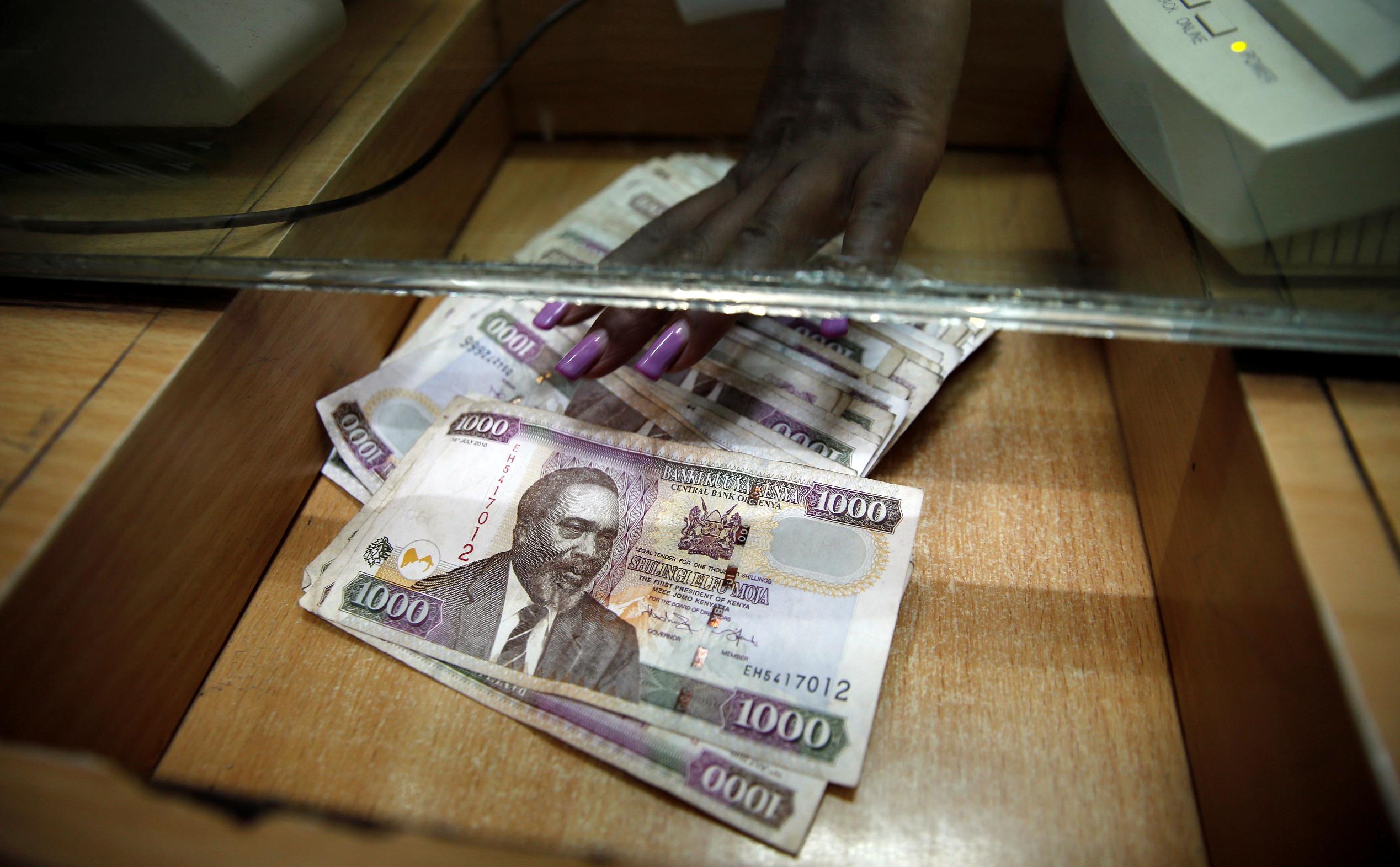
NAIROBI, Nov 29 (Reuters) - The Kenyan shilling depreciated slightly against the dollar on Friday, data from the London Stock Exchange Group showed. The shilling traded at 129.65/129.85 at 0809 GMT per dollar, compared with Thursday's closing rate of 129.45/130.45. Sign up here. https://www.reuters.com/markets/currencies/kenyan-shilling-weakens-slightly-lseg-data-shows-2024-11-29/