2024-11-29 07:19
Damaged power plant fights to stay online amid attacks Russia launched two big assaults on Ukraine's grid in November Plant staff consider their work as a second front in the war Power outages are increasing as winter sets in Nov 29 (Reuters) - When Russian missiles hurtle towards the Ukrainian power plant and employees scramble for the bomb shelter, a handful of workers stay above ground in a control room protected by sandbags to keep the system running manually. The facility, the location of which energy officials asked Reuters not to identify for security reasons, has been pounded by missiles this year in an aerial assault on the grid that Russia renewed this month as the war's third winter sets in. "When there are attacks, we stay here even though we know there are missiles coming at us ... To say we're not afraid is not true because we are all living, normal people and we are afraid," said Serhii, 52, a shift leader who has worked at the plant for over 30 years. Outside the control hub is a vast machine room that has holes in its walls and extensive damage after missile strikes, the most recent of which were on Nov. 17 in this facility. The smell of burning hung in the air during a recent Reuters visit, as water dripped from a damaged roof. Missile parts lay on the floor, twisted metal sheets were stacked up to the side and broken pieces of equipment were strewn around. Workers in grubby overalls busied themselves with repairs and clambered over a damaged power unit. Serhii, who declined to provide his surname, and his fellow workers see themselves as on the front line of a crucial battle in the 33-month-old war with Russia - to supply millions of people with power despite the attacks. Russia, which denies targeting civilian infrastructure but views the Ukrainian power system as a legitimate target in its war, has inflicted major damage on energy facilities since it began a spate of attacks on the grid in spring. The facility is one of five remaining thermal power plants owned by DTEK, Ukraine's largest private power provider, which provided a quarter of the country's electricity needs before Moscow's February 2022 invasion. As well as the location, DTEK asked Reuters not to disclose certain details about the plant, including the amount of electricity it currently produces, saying such information could help Russia conduct future strikes. The facility, which typically provides electricity and heating to hundreds of thousands of people, has undergone major repairs throughout much of the year. The November attacks created more urgent repair work. "We've been set back six months," said Oleksandr, 52, a senior worker at the plant. 'WINTER WON'T BE EASY' Russia unleashed its second big attack on Ukraine's energy infrastructure this month on Thursday, triggering deep power cuts across the country. After the two waves of attacks, the outlook for Ukraine's energy grid has worsened at a volatile moment in the war, with Russian troops advancing in the east and Donald Trump preparing to enter the White House on Jan. 20. Ukraine repaired some of its energy infrastructure that was hammered in the spring and summer, putting it in what had looked like an unexpectedly strong position for the looming winter, industry sources said. But now they say the damage inflicted on Nov. 17 and Nov. 28 has set them back significantly, raising the prospect of long blackouts and other outages in the depths of winter. Temperatures are already hovering around 0 Celsius (32 Fahrenheit). One industry source said that, despite the setbacks, Ukraine would be able to handle the looming challenges. The workers interviewed by Reuters at the plant said they would do their best. "This is our front, some of the guys have a front in the east, our front is here. Our task is to ensure that our Ukraine has electricity, that it functions in full," said Serhii. Sign up here. https://www.reuters.com/world/europe/meet-energy-workers-battling-keep-lights-ukraine-2024-11-29/

2024-11-29 07:03
JAKARTA, Nov 29 (Reuters) - Indonesian rescuers on Friday searched for survivors buried in three cars and bus at the base of a cliff after flash floods and landslides in North Sumatra province killed at least 29 people. Torrential rain for the past week in the province has triggered flash floods and landslides in four different districts, Indonesia's disaster agency has said. The death toll from one landslide on Wednesday on a hilly interprovince road rose to nine from seven, Hadi Wahyudi, the spokesperson of North Sumatra police told Reuters on Friday. At least five cars, one bus, and one truck were trapped at the base of a cliff following the landslide. On Friday, police and rescuers focused their search for missing people on three cars and one bus buried in mud. "We still don't know how many people who were still trapped," Hadi said. In other districts, landslides over the weekend killed 20 people and rescuers will keep searching for two missing people until Saturday. Flash floods hit the provincial city of Medan on Friday although waters have receded in some areas, said Sariman Sitorus, spokesperson for the local search agency. The floods forced a delay in votes for regional elections in some areas in Medan on Wednesday. Extreme weather is expected in Indonesia towards the end of 2024, as the La Nina phenomenon increases rainfalls across the tropical archipelago, the country's weather agency has warned. Sign up here. https://www.reuters.com/world/asia-pacific/indonesian-rescuers-search-missing-buried-cars-bus-after-landslide-sumatra-2024-11-29/

2024-11-29 06:56
PM Orban nominates finance minister as central bank chief Mihaly Varga is seen as a loyalist to Orban Orban seeks revival of the economy before 2026 election BUDAPEST, Nov 29 (Reuters) - Prime Minister Viktor Orban nominated Finance Minister Mihaly Varga as Hungary's next central bank governor on Friday, turning to an ally as he seeks to revive the economy before a 2026 election. In power since 2010, Orban has struggled to revive Hungary from last year's inflation-led downturn, with the economy back in technical recession and falls in the forint putting on ice rate cuts from 6.5%, the highest in the European Union. Some investors are concerned that an Orban-aligned majority of policymakers could lead to sharper rate cuts to boost growth before the election. Varga was a lawmaker in Orban's Fidesz party after Hungary's first free elections in 1990 after decades of communist rule, and has served multiple terms as finance minister, including the period after the COVID-19 pandemic, when Hungary ran one of the highest budget deficits in the EU. The 59-year-old economist, who has avoided open criticism of Orban's largesse, will succeed Gyorgy Matolcsy, Orban's former economic mastermind, who has become increasingly critical of the prime minister's policy course since a 2022 election. Roger Mark, an analyst at fund manager Ninety One, said Varga was seen as cautious and conservative, but was clearly a loyalist to Orban, whose government has repeatedly put pressure on the bank to cut interest rates more sharply. "If investors drove a sharp sell-off in the HUF (Hungarian forint) as a result, this would restoke inflation, which would be self-defeating for Orban and Fidesz," Mark said. Varga, who will take over from Matolcsy in March, has said inflation should be the bank's top priority, but that it also needs to cooperate with the government on economic policy. "It is difficult to believe that a new governor, whatever his mandate from Orban, would straight away ignore market signals and plunge the currency into a crisis," Commerzbank economist Tatha Ghose said. "We might assume that the new governor would wait for a better external market environment to seek opportunistic rate cuts." SLOW RECOVERY The European Commission, the EU executive authority, expects Hungary's economy to expand by just 1.8% in 2025 after virtually no growth this year - the slowest pace in central Europe and a far cry from the 3.4% growth projected in Hungary's 2025 budget. Some surveys show opposition challenger Peter Magyar's centre-right Tisza Party has caught up with Orban's right-wing Fidesz, signalling the 2026 election could be close. Orban is looking to revive the economy with a housing boost, funds for small businesses, increases in wages and pensions and rises in family tax benefits to offset some of last year's inflation surge to the EU's highest levels. Marton Nagy, Orban's economy minister, also expressed concern about large sums of cheap loans that the central bank provided to companies before the inflation surge and are now expiring, saying this should be handled by the next governor. The National Bank of Hungary left its base rate steady in November after a sharp fall in the forint following Donald Trump's U.S. election triumph. His trade tariff plans could hit export-reliant central European economies, including Hungary. The bank said its December inflation report would provide an assessment of the impact on next year's price growth, which the bank in September projected in a 2.7-3.6% range. That was before the latest wave of forint weakening. Societe Generale strategist Marek Drimal said the bank was likely to become somewhat more pro-growth under the new governor. "But at the same time, it won't be anything that would totally overhaul the economy and monetary policy setting because they know that if they overdo it, the consequences could be quite harsh," he said. Sign up here. https://www.reuters.com/business/finance/orban-ally-varga-take-over-hungarys-central-bank-economy-sags-2024-11-29/

2024-11-29 06:26
Wall Street looking set for best month in a year Dollar dominance shifts as yen surges, ECB bets shift Asian equities set for monthly falls on Trump tariff fears Dollar set for a 3.1% weekly drop on yen NEW YORK/LONDON, Nov 29 (Reuters) - Global stock markets rallied on Friday, with Wall Street crowning November with its biggest monthly gain in a year on post-election growth hopes, while the dollar eased amid prospects for firmer rates in Japan and easing in Europe. U.S. trading was thin the day after Thanksgiving. Many investors made it a long weekend and stocks and bonds closed early, so most month-end position adjustments were done before the holiday. The S&P 500 (.SPX) , opens new tab rose 0.56% to mark the best monthly gain since November 2023 of 5.14%, while the Nasdaq's (.IXIC) , opens new tab 0.83% rise Friday secured a 6.2% gain for the month, it's best since May. MSCI's broad gauge of world stocks (.MIWO00000PUS) , opens new tab rose 0.52%, also securing the best month since May. Donald Trump's Nov. 5 election victory and pledges of tax cuts, deregulation and import tariffs have supercharged investors' expectations for U.S. and Wall Street stocks to keep outperforming other regions. U.S. tech shares are also benefiting from an artificial intelligence investing craze. Speculation about Japanese rate hikes drove a rebound for the yen , which ended with the biggest weekly gain vs the buck since July. The dollar fell 1.25% on the day to 149.65 yen. It delved 149.46 yen in late trade, the lowest since Oct. 21, under pressure after Japan's government finalised a stimulus budget and inflation in Tokyo came in hotter than economists expected. The dollar index , which measures the currency against six major rivals, fell 0.26% to 105.79, ending the week 1.4% lower thanks to a sudden rebound for the euro, which had been lurching towards the key $1 marker on tariff fears and a bleak euro zone outlook The outlook for lower U.S. rates has also weighed on the dollar. Trump's import tariffs could boost U.S. inflation, Federal Reserve officials have turned cautious on rate cuts while futures traders put odds that the Fed will cut rates another 25 basis points at December's meeting at 65%. However, for 2025 they see less chance that the central bank will continue to bring rates down at the same pace as this year. "The dollar is a little bit weaker. That's helpful for the multinationals in the S&P 500," said Quincy Krosby, chief global strategist, LPL Financial in Charlotte, North Carolina. Trump has pledged immediate 25% tariffs on all products from Mexico and Canada when he takes office in January and an additional 10% on imports from China, a major trading partner for Asian economies and euro zone export powerhouse Germany. "President-elect Trump has called out Canada, Mexico, and China for now, but Europe is not far down the list," strategists at BCA Research said, recommending investors limit their exposure to European stocks and favour German government bonds. The euro wrapped the day up 0.21% at $1.0575. It has recovered from crushing losses since the Nov. 5 U.S. election to gain 1.25% this week, supported by data on Friday showing higher euro zone inflation, limiting bets for deep European Central Bank rate cuts. Europe's STOXX (.STOXX) , opens new tab share index rose 0.58%, while Europe's broad FTSEurofirst 300 index (.FTEU3) , opens new tab rose 12.65 points, or 0.63%. Asian and emerging market stocks sustained the deepest blows from tariff fears. While Tokyo's Nikkei 225 index (.N225) , opens new tab eased a bit on Friday, it ended November off 2.23%, even though Japan was not singled out as a tariff target. MSCI's broadest index of Asia-Pacific shares outside Japan (.MIAPJ0000PUS) , opens new tab showed a 2.35% loss for the month. Traders have fully priced a 25-bps European Central Bank rate cut to 3% in December, although hawkish remarks from board member Isabel Schnabel this week dampened speculation about a 50 bps reduction. The yield on the benchmark U.S. 10-year notes fell 6.8 basis points to 4.174%. Investors bought government bonds this week after Trump nominated hedge fund manager and Wall Street veteran Scott Bessent for Treasury Secretary, easing fears about excessive U.S. borrowing. U.S. crude fell 0.42% to $68.43 a barrel and Brent fell to $73.06 per barrel, down 0.3% on the day after the Israel-Hezbollah ceasefire deal in Lebanon eased supply fears, while gold rose 0.42% to $2,652.09 an ounce. In cryptocurrencies, bitcoin gained 2.23% to $97,252.72. Sign up here. https://www.reuters.com/markets/global-markets-wrapup-1-2024-11-29/
2024-11-29 06:23
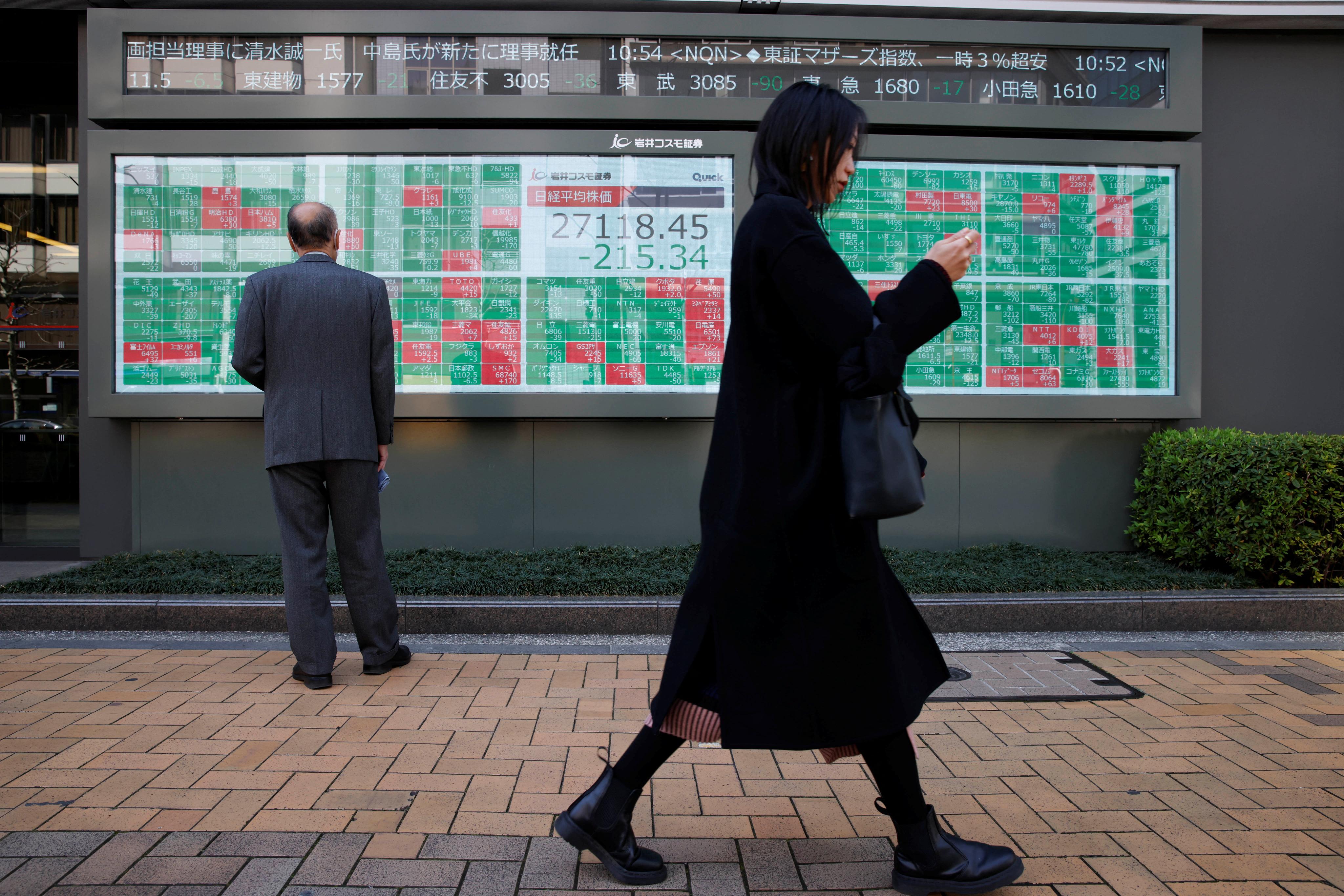
NEW YORK, Nov 29 (Reuters) - The yen jumped to a six-week high against the dollar on Friday after faster-than-expected inflation in Tokyo supported bets for a Bank of Japan interest rate hike next month. Tokyo's core consumer price index, which excludes volatile fresh food costs, rose 2.2% year-on-year in November from a year earlier, up from 1.8% last month and beating forecasts for a 2.1% gain. "The yen is turning into the latest momentum trade ... with little friction to prevent it rising in thin holiday trade," said Matt Simpson, senior market analyst at City Index. Trading volumes declined heading into the U.S. Thanksgiving holiday on Thursday, with many traders still out on Friday. The dollar was last down 1.27% at 149.62 yen , and earlier dipped to 149.47 yen, the lowest since Oct. 21. It is set for a 3.38% weekly loss against the Japanese currency, the largest since July. The dollar index fell 0.31% to 105.74, after earlier reaching 105.61, the lowest since Nov. 12. It is on track for a 1.78% rise in November as investors adjust for the likelihood that the new U.S. administration under Donald Trump next year will loosen business regulations and enact other policies that boost growth. Analysts also say that proposed new tariffs and a promised clampdown on illegal immigration could reignite inflation. Stronger-than-expected economic data has also boosted bets that the Federal Reserve will slow its pace of interest rate cuts as it approaches the neutral rate. Traders are pricing in 66% odds for a 25 basis point cut at the Fed's Dec. 17-18 meeting, but only a 17% chance of an additional reduction in January, according to the CME Group’s FedWatch Tool. The next major U.S. economic data release will be next Friday's employment report for November. The euro gained 0.24% to $1.0578. The single currency has tumbled 2.8% in November as the dollar has rallied, putting it on course for its worst month since May 2023. Data on Friday showed that French consumer prices grew in line with expectations in November. Germany’s inflation report on Thursday showed price pressures remaining flat in November despite expectations of a second consecutive increase. ECB policymaker Francois Villeroy de Galhau said on Thursday that the central bank should keep its options open for a bigger rate cut next month, countering hawkish comments from peer Isabel Schnabel the previous day. Bitcoin climbed 2.39% to $97,414, trying to claw its way back to the record high of $99,830 from a week ago. This month, the leading cryptocurrency is set to book a 39% jump - its best performance since February - on bets for a more favourable regulatory environment under Trump. Sign up here. https://www.reuters.com/markets/currencies/yen-surges-150-per-dollar-amid-growing-boj-rate-hike-bets-2024-11-29/
2024-11-29 06:18
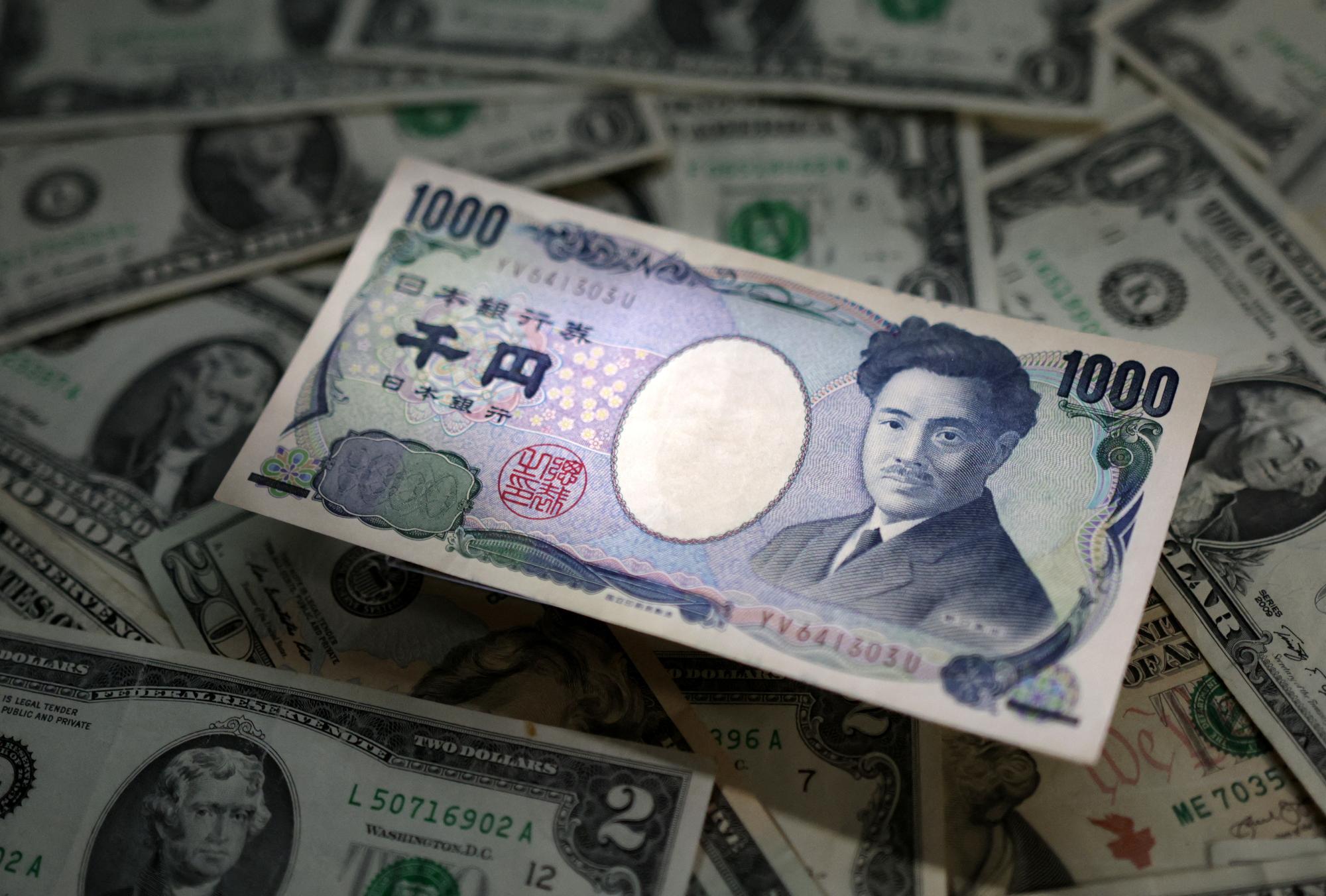
Gold down 3% in Nov, worst month since Sept 2023 Silver, platinum and palladium also down in Nov so far Dollar set for 2% gain in November Nov 29 (Reuters) - Gold prices gained on Friday, supported by a weaker greenback and geopolitical woes, but were on course for their worst monthly performance since September 2023 due to a dollar rally this month following Donald Trump's U.S. election victory. Spot gold climbed 0.7% to $2,659.49 per ounce, as of 1201 GMT, but set for a weekly fall of about 2% after a sharp sell-off earlier this week. U.S. gold futures also gained 0.8% to $2,659.20. Bullion has declined 3% so far in November, its worst monthly performance since September 2023, as traders expect the prospect of higher tariffs under Trump administration to keep interest rates higher for longer. The dollar index (.DXY) , opens new tab fell to its lowest point since Nov. 12, but remains on track for a 2% rise in November. Gold has seen a significant rise this year, and we are witnessing a sharp decline this month due to substantial profit-booking after Trump's victory and the rally in U.S. dollar following the election results, said Jigar Trivedi, a senior analyst at Reliance Securities. Gold is often seen as a safe-haven asset during times of economic or political uncertainty, including trade wars, but higher rates increase the opportunity cost of holding non-yielding bullion. "The Middle East concerns have been slightly off due to the ceasefire talk, but on the contrary Russia-Ukraine concerns are still prevailing in the market," said Ajay Kedia, director at Kedia Commodities, Mumbai. Israel's military said on Thursday that an arrival of suspects was detected in several areas in southern Lebanon, and called it a violation of a ceasefire with Hezbollah. Additionally, Russia unleashed its second big attack on Ukraine's energy infrastructure this month on Thursday. Investors await major U.S. economic data releases next week, including job reports, for clues on the Federal Reserve's future rate cut outlook. Spot silver added 1.5% to $30.70 per ounce, platinum gained 1.2% to $942.25 and palladium advanced 1.2% to $987.37, though all were set for monthly losses. Sign up here. https://www.reuters.com/markets/commodities/gold-gains-softer-us-dollar-geopolitical-concerns-set-weekly-fall-2024-11-29/