2024-11-28 12:45
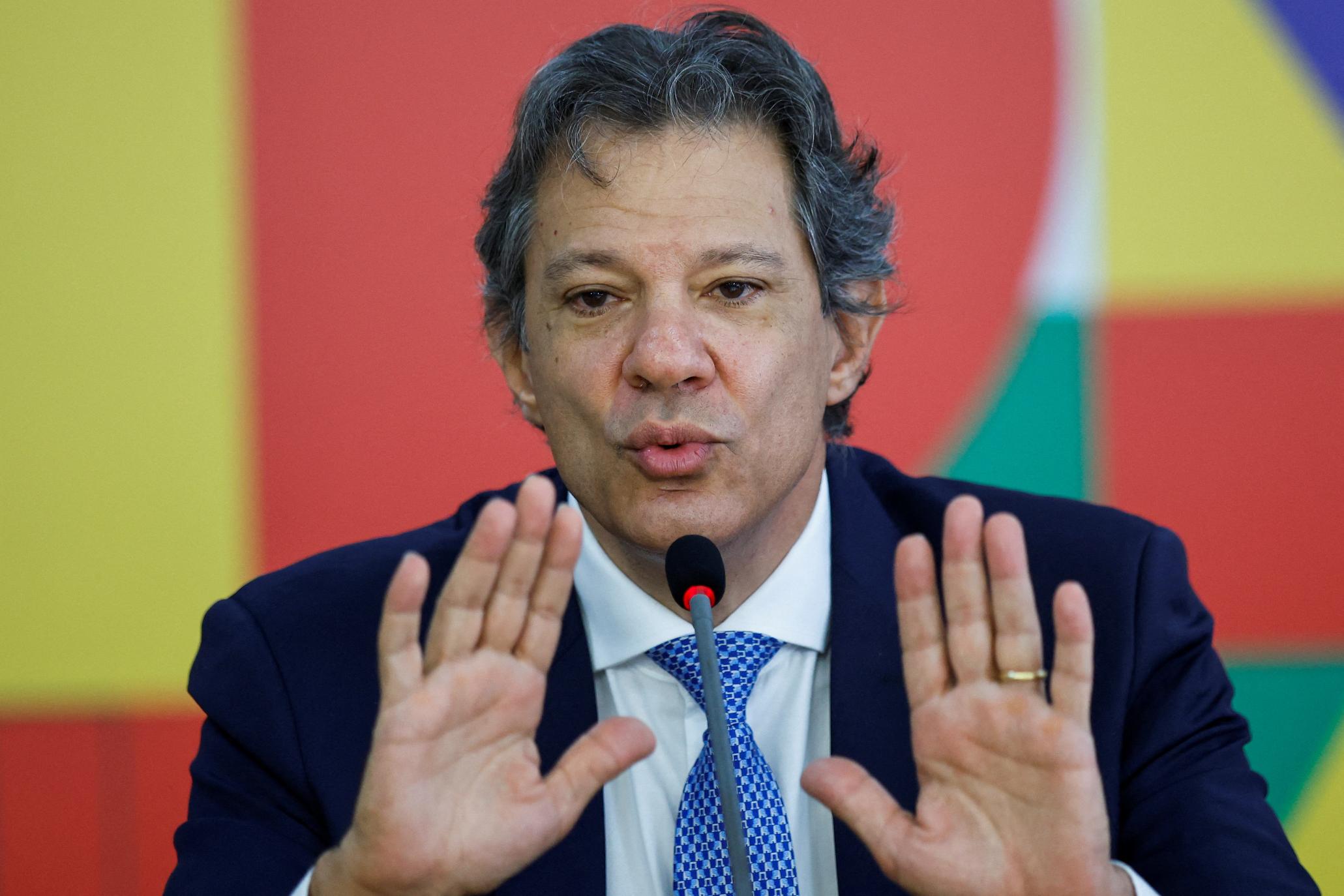
BRASILIA, Nov 28 (Reuters) - Brazil's government on Thursday detailed spending cuts aimed at achieving more than 70 billion reais ($11.8 billion) in savings over the next two years to support its new fiscal framework, but investors remained anxious, roiling financial markets. Investors were surprised by an announcement that tax exemptions would rise, and worried that the government was relying on overly optimistic fiscal projections. The Brazilian real ended at its weakest closing level ever at 5.99 per dollar. Interest rate futures rose further and the Bovespa (.BVSP) , opens new tab stock index fell some 2%. Barclays said the highly anticipated measures to curb expenditures were overshadowed by income tax reform plans aimed at easing the burden on the middle-class. It said this limited credibility of the measures and necessitated a firmer response from the central bank. Uncertainty over the fiscal outlook had already led the central bank to call for structural measures to control spending, accelerating its tightening pace in November with a 50 basis-point hike that brought interest rates to 11.25%. "We now see the central bank hiking rates by 100 basis points in the next meeting," said JP Morgan, adding it viewed the government's fiscal estimates as too optimistic. Finance Minister Fernando Haddad sought to calm the market following a meltdown on Wednesday over announcement of a proposal to increase the income tax exemption threshold for those earning up to 5,000 reais per month from 2,824 reais. After weeks of delays, markets had expected the package to focus exclusively on spending cuts, consistent with previous statements by Haddad. Those statements had suggested that the government would wait until next year to propose changes in tax exemptions to fulfill a campaign promise by President Luiz Inacio Lula da Silva. On Thursday, Haddad told a press conference that the broader income exemptions would carry a 35 billion reais fiscal impact that would be fully neutralized by compensatory measures, taking effect only in 2026 after Congressional approval. COMPENSATIONS The government said around half of the compensation would come from setting a higher effective tax rate for the wealthiest. The proposal would hike the effective income tax rate for those earning more than 600,000 reais per year. The rate would reach 10% for individuals earning over 1 million reais annually. The current effective tax rate is 4.2% for the top 1% of earners and 1.75% for the top 0.01%, government figures showed. To cover the remaining fiscal hit, the government would end the income tax exemption for retirees with severe illnesses or who suffered accidents and who earn above 20,000 reais per month, among other measures. Media reports of a coming increase in the income tax exemption had already soured market sentiment even before the official announcement. Haddad said the U.S. dollar had been strengthening globally, and that inflation in Brazil is expected to end the year within or very close to the official target range of 1.5% to 4.5%. "The market needs to read again what the government is doing. They've been wrong in terms of growth and deficit (projections)," Haddad said. "Our work is not done. I don't believe in silver bullets. I'm happy with this year's results." ($1 = 5.9377 reais) Sign up here. https://www.reuters.com/world/americas/brazils-haddad-says-income-tax-reform-be-neutral-take-effect-2026-2024-11-28/
2024-11-28 12:39
NEW DELHI, Nov 28 (Reuters) - India will auction its first tranche of offshore minerals, which is worth more than 1.5 trillion rupees ($17.8 billion), a government source directly involved in the decision making told Reuters on Thursday. A total of 13 blocks will be auctioned as part of the first tranche, including three for construction sand and another three for lime mud. Seven out of the 13 blocks will be polymetallic nodules and have not been valued yet, the source said. The source did not want to be identified as they are not authorised to speak to the media. The federal mines ministry did not immediately respond to a Reuters email seeking comment. The ministry is expected to shortly announce the details of the auction. ($1 = 84.4470 Indian rupees) Sign up here. https://www.reuters.com/markets/commodities/india-auction-first-offshore-minerals-tranche-worth-more-than-178-bln-source-2024-11-28/

2024-11-28 12:28
NEW DELHI, Nov 28 (Reuters) - Airlines and airports in India received a total of 999 hoax bomb threats from the start of this year until Nov. 14, nearly ten times more than in the whole of 2023, the country's deputy civil aviation minister told parliament on Thursday. The threats to both domestic and international flights were made mostly through social media, disrupting travel in the world's fastest growing aviation market, and all were found to be false alarms. "The recent threats were hoaxes and no actual threat was detected at any of the airports/aircraft in India," the minister, Murlidhar Mohol, told parliament in a written answer. More than 500 bomb threats were made in the last two weeks of October alone - higher than the rest of the year combined - he said, and 12 people have been arrested in relation to the 256 police complaints registered over such threats up to Nov. 14. Sign up here. https://www.reuters.com/world/india/indian-airlines-airports-received-999-hoax-bomb-threats-this-year-until-nov-14-2024-11-28/

2024-11-28 12:15
SINGAPORE, Nov 28 (Reuters) - Alternative fuels could account for up to a fifth of A.P. Moller-Maersk's (MAERSKb.CO) , opens new tab marine fuel consumption in 2030 as part of its goal to reach net zero by 2040, a senior company executive said on Thursday. The container shipping giant typically consumes between 10 and 11 million metric tons of fuel oil equivalent per year, of which 3% were alternative fuels last year, Emma Mazhari, vice president, head of energy markets, told reporters. The world's fleet moves more than 80% of global trade and contributes about 3% of global greenhouse gas (GHG) emissions. "We would probably look at 15% to 20% green fuel or renewable fuel in 2030," Mazhari said, adding that this depended on how well the company performed on its energy efficiency measures. "It's going to be biodiesel. Green methanol is going to feature very heavily, and bio-methane as well," she said. Bio-methane production is growing in Europe and North America which can be used as fuel in ships that use liquefied natural gas (LNG), she added. The company launched on Thursday its latest dual-fuelled methanol container vessel A.P. Moller, part of a fleet of 18 such ships scheduled to be delivered this year and next. The Danish-flagged vessel had been filled with 500 metric tons of green methanol fuel before it left Hyundai Heavy Industries' shipyard in Ulsan, South Korea, Maersk said. It has the capacity to carry 16,000 cubic metres of methanol which would allow it to sail from Asia to Europe and back. Maersk has signed a contract with China's LONGi Green Energy Technology (601012.SS) , opens new tab to buy bio-methanol which will start in 2026. While more shippers have placed orders for methanol dual-fuelled vessels, green methanol supply has yet to catch up with demand. Also, ships require about double the volume of methanol than traditional fuel due to the lower energy intensity. Alternative fuels cost more than double conventional fuels, Maersk President Asia Pacific Ditlev Blicher said. "Like many other green technologies, whether it's solar panels or EV vehicles, you need scale and it needs to become commercially viable for it really to take off," he said. "What we need in that respect, is for regular regulations to push up the price of the dirty fuels." Maersk is working with the International Maritime Organization (IMO) to get such regulations in place, Blicher said. The IMO's Marine Environment Protection Committee is scheduled in April to set a global regulatory structure for reducing GHG emissions in the maritime industry. Sign up here. https://www.reuters.com/sustainability/maersk-could-use-15-20-alternative-fuels-its-fleet-2030-2024-11-28/

2024-11-28 12:11
MEXICO CITY, Nov 28 (Reuters) - Bank of America is bullish on its future in Mexico, according to the head of the bank's unit in the country, and stands to benefit from the so-called "nearshoring" trend even after threats of tariffs on exports to the U.S. by President-elect Donald Trump. WHY IT'S IMPORTANT Trump's threat earlier this week to slap tariffs on Mexico and Canada has roiled markets and clouded the horizon for investments by multinational firms into the region. The three countries are part of a regional trade agreement known as the USMCA, which is up for review in 2026. The neighboring nations, particularly the U.S. and Mexico, are heavily reliant on imports and exports from the other country. KEY QUOTES "It will be very difficult for uncertainties, either internal or external effects to alter or modify the opportunities that we see in Mexico," said Bank of America's Mexico head, Emilio Romano, in a press briefing. "We believe that the nearshoring or friendshoring phenomenon will not be reversed," he said, referring to the trend in which large multinationals have moved operations to Latin America's No. 2 economy. "Mexico will not deviate from this North American economic integration, there is no turning back." BY THE NUMBERS Bank of America expects to double its revenue and client volume in Mexico within the next five years, Romano said. The firm's client base should grow from 400 to 800, according to the executive. In Mexico, BofA offers institutional banking services and does not serve individual clients. Romano declined to provide more detail about the bank's revenue outlook. WHAT'S NEXT Trump's tariff threats will continue to generate market volatility, Romano said. However, he cautioned that they were likely a bargaining strategy by Trump to kick off trade negotiates and unlikely to actually be imposed. Sign up here. https://www.reuters.com/business/finance/bank-america-bets-long-term-growth-mexico-due-nearshoring-despite-trump-tariff-2024-11-28/

2024-11-28 11:53
Russia mounts second big attack on energy sites this month Strikes cut power to more than 1 million people State grid operator announces deep power cuts Fears of more outages as winter bites KYIV, Nov 28 (Reuters) - Russia unleashed on Thursday its second big attack on Ukraine's energy infrastructure this month, triggering deep power cuts across the country. President Vladimir Putin said Moscow had struck in response to Ukraine's strikes on Russian territory with U.S. medium-range ATACMS missiles. He said Russia's future targets could include "decision-making centres" in Kyiv. Ukrainian President Volodymyr Zelenskiy accused Russia of a "despicable escalation", saying it had used cruise missiles with cluster munitions. Later in his nightly video address, Zelenskiy said he was speaking to Western leaders, including NATO Secretary General Mark Rutte, British Prime Minister Keir Starmer and German Chancellor Olaf Scholz, to forge a response to "Russia's attempt to make the situation more unbearable and drag out the war". "Now is the time to strengthen our positions - the position of Ukraine and our partners," he said. U.S. President Joe Biden condemned the Russian attack as "outrageous," saying in a statement that it serves as a "another reminder of the urgency and importance of supporting the Ukrainian people in their defense against Russian aggression." Over 1 million people lost power in the immediate aftermath of the strikes, and millions more had their existing schedule of rolling power cuts intensified. Ukraine's air force said Russia used 91 missiles and 97 drones in Thursday's attack. It said 12 of those had hit their targets, most of which were energy and fuel facilities. "The enemy is using a large number of missiles and drones. Their massive use in certain areas often exceeds the number of means of (air defence) cover," the air force said in a statement. Infrastructure facilities were damaged in nine regions, Ukraine's Interior Ministry said. POWER CUTS DURING WINTER The attack reinforced fears of long power cuts during the winter months as temperatures hover around zero. Officials said it was the 11th major strike on the energy system since March. Russia has knocked out about half Ukraine's available generating capacity during the war, damaged the distribution system and forced authorities to impose long blackouts. The air force said it had shot down 79 missiles and downed 35 drones, while 62 drones were "lost", meaning it was likely they had been disrupted by electronic warfare. A source in the energy sector said Ukraine had disconnected all nuclear power units from the grid before the attack to protect them. Ukraine gets more than half of its electricity from nuclear plants. Ukraine's state grid operator Ukrenergo announced deep power cuts across the country because of damage from the attacks, warning of at least 12 hours without electricity for some consumers. All missiles or drones aimed at the capital Kyiv were brought down, officials said. THERMAL AND RADAR DECOYS The air force said Russia was using thermal and radar decoys to trick Ukrainian air defences, and putting electronic warfare devices on its missiles. "All this significantly complicates the operation of Soviet-made anti-aircraft missile systems ... Western systems work much more effectively in such conditions, but Ukraine does not have enough to reliably cover hundreds of critical infrastructure facilities," it said. It said foggy weather conditions also made it harder for machine gunners to spot drones. More than 33 months after Russia invaded Ukraine, Russian ground forces are advancing at their fastest pace in two years. Russia fired a new hypersonic intermediate-range ballistic missile at Ukraine this month after the United States allowed Kyiv to strike Russian territory with advanced Western missiles. "Putin does not want peace. We must force him into peace through strength," Foreign Minister Andrii Sybiha said, reiterating Kyiv's call for more air defence and long-range capabilities from Western allies. In western Ukraine, Lviv regional governor Maksym Kozytskyi said Thursday's Russian strikes had cut off electricity to about 523,000 people. Power was also cut to nearly 500,000 people in the Volyn and Rivne regions, their governors said, and disrupted in the Khmelnytskyi and Zhytomyr regions. State oil and gas firm Naftogaz said its facilities had been attacked in the morning airstrikes. Officials across Ukraine said they were turning on generators to ensure emergency heat and water supplies to hospitals, schools and other critical facilities during bitter winter weather. Sign up here. https://www.reuters.com/world/europe/explosions-heard-ukraines-odesa-kropyvnytskyi-ukrainian-media-report-2024-11-28/