2024-11-28 01:33
SEOUL, Nov 28 (Reuters) - South Korea's central bank unexpectedly cut interest rates by 25 basis points to 3.00% on Thursday, delivering its first back-to-back cuts since the global financial crisis of 2008-2009. MARKET REACTION: South Korea's policy-sensitive three-year treasury bond futures rose as much as 0.23 points to 106.64 after the rate decision, while the won weakened. COMMENTS: PAIK YOON-MIN, FIXED INCOME ANALYST, KYOBO SECURITIES "Bank of Korea also recognised that the economy is bad.The rate cut now is about responding to the economic slowdown, and has an aspect of normalising the level of interest rates that were too high in relation to prices and employment, so we expect a continued gradual reduction in rates to be maintained next year." CHO YONG-GU, ECONOMIST, SHINYOUNG SECURITIES "This is a surprise in terms of consensus, and it's not a surprise in terms of reflecting market interest rates, which have come down by almost 50 bps in the last one or two weeks. It seems to reflect the impact of the U.S. presidential election. And the economic conditions are worse than expected. I think the government wanted it a lot as well. Next year, I think the rate may go down to 2.5%. But we will have to watch the governor's remarks on how important he views the currency exchange rate and other factors."MIN JI-HEE, RATES ANALYST, MIRAE ASSET SECURITIES "Basically, it reflects a lot of concerns about slowing growth. There is still some uncertainty about the Trump administration's policy, so the (dollar/won) exchange rate seems to be under upward pressure. In this regard, the uncertainty of external factors is likely to ease gradually after Trump's inauguration." Sign up here. https://www.reuters.com/markets/rates-bonds/view-bank-korea-unexpectedly-cuts-rates-second-straight-meeting-2024-11-28/

2024-11-28 00:56
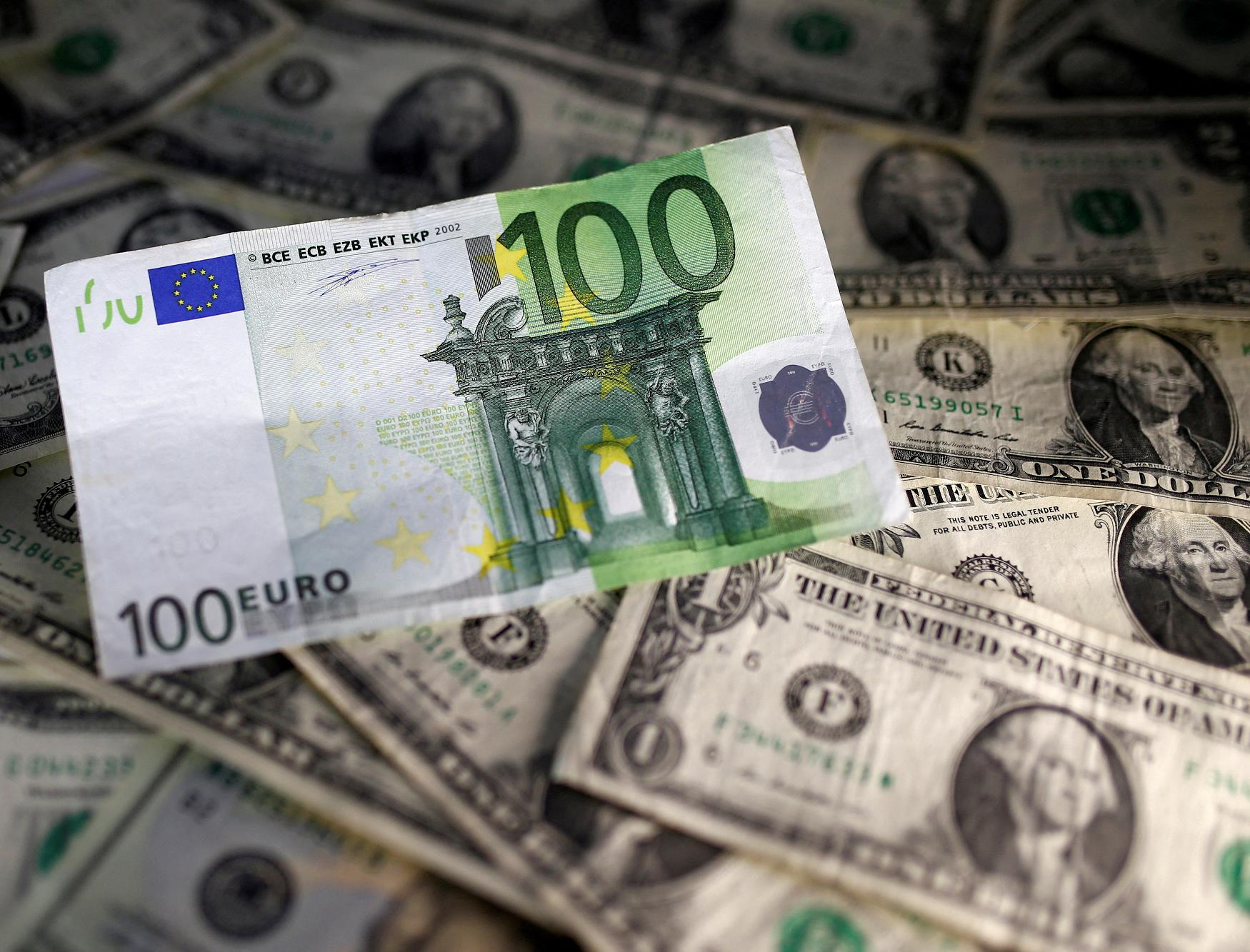
Yen slips but set for weekly jump Euro eases after Weds surge following hawkish policymaker remarks S. Korea cuts rates, dealers say authorities sell dollars Nov 28 (Reuters) - The euro dipped against the dollar on Thursday as traders reined in bets of more interest rate cuts by the European Central Bank, while broader currency moves were muted in U.S. holiday-thinned trading. The Japanese yen slipped to 151.58 per dollar but with its 2.1% gain this week the currency has recovered losses suffered since the U.S. election and was heading for its best weekly showing in three months. Markets see about a 53% chance the Bank of Japan will raise rates next month. Broad trade was light as U.S. stock and bonds markets were shut for the Thanksgiving holiday. The dollar index ticked up to 106.21 after dropping to as low as 105.85 in the prior session, a two-week trough. "It's likely to be a subdued couple of days to wrap up the week but I expect the dollar should rebound as December gets underway," said Michael Brown, senior research strategist at Pepperstone, adding that Wednesday's move that put the dollar back under 106 seemed a bit "detached from fundamentals." "We're still talking about U.S. exceptionalism, an incredibly long laundry list of issues in the euro zone and now we've got French budget worries this morning." The euro slipped 0.2% to $1.054625 after its sharp rise on Wednesday following hawkish remarks from European Central Bank board member Isabel Schnabel The comments prompted investors to pull back on more aggressive rate cut expectations and buy the common currency which is on track for its worst month in two-and-a-half years. German annual inflation was flat in November despite expectations of a second consecutive increase. It comes ahead of euro zone inflation data on Friday which could offer hints on the ECB's next steps. Money markets now see only a 13% chance of a larger 50 basis points rate cut by the ECB, whereas last Friday it was a toss up. A 25 bps move is fully priced in. "Today’s macro data releases in the euro zone should encourage the ECB hawks to object to a 50bp rate cut in December," said Carsten Brzeski, global head of macro at ING. Eyes are also on France's fragile coalition government, which is struggling to pass a budget. HOLIDAY LULL Sterling was little changed at $1.2666 versus the greenback, while the Swedish crown firmed against the dollar and euro as data showed sentiment among businesses and consumers in Sweden picked up in November. The Australian dollar recovered from early weakness and gain slightly to $0.6501. Reserve Bank of Australia governor Michele Bullock said that core inflation was too high to allow for rate cuts in the near term. While the currency majors were in a bit of a lull, there was some action in emerging markets. Russia's rouble strengthened to just over 110 per dollar after shedding nearly a third of its value since August as the Russian central bank said it would stop forex purchases until the end of the year to support the currency. Brazil's real touched a record low on concern over the impact of tax cuts on a stretched budget. South Korea's won was a little weaker after the central bank cut rates at a second straight meeting - an outcome only four of 38 economists polled by Reuters had foreseen. Sign up here. https://www.reuters.com/markets/currencies/euro-jump-rising-yen-put-brakes-dollar-2024-11-28/
2024-11-28 00:00
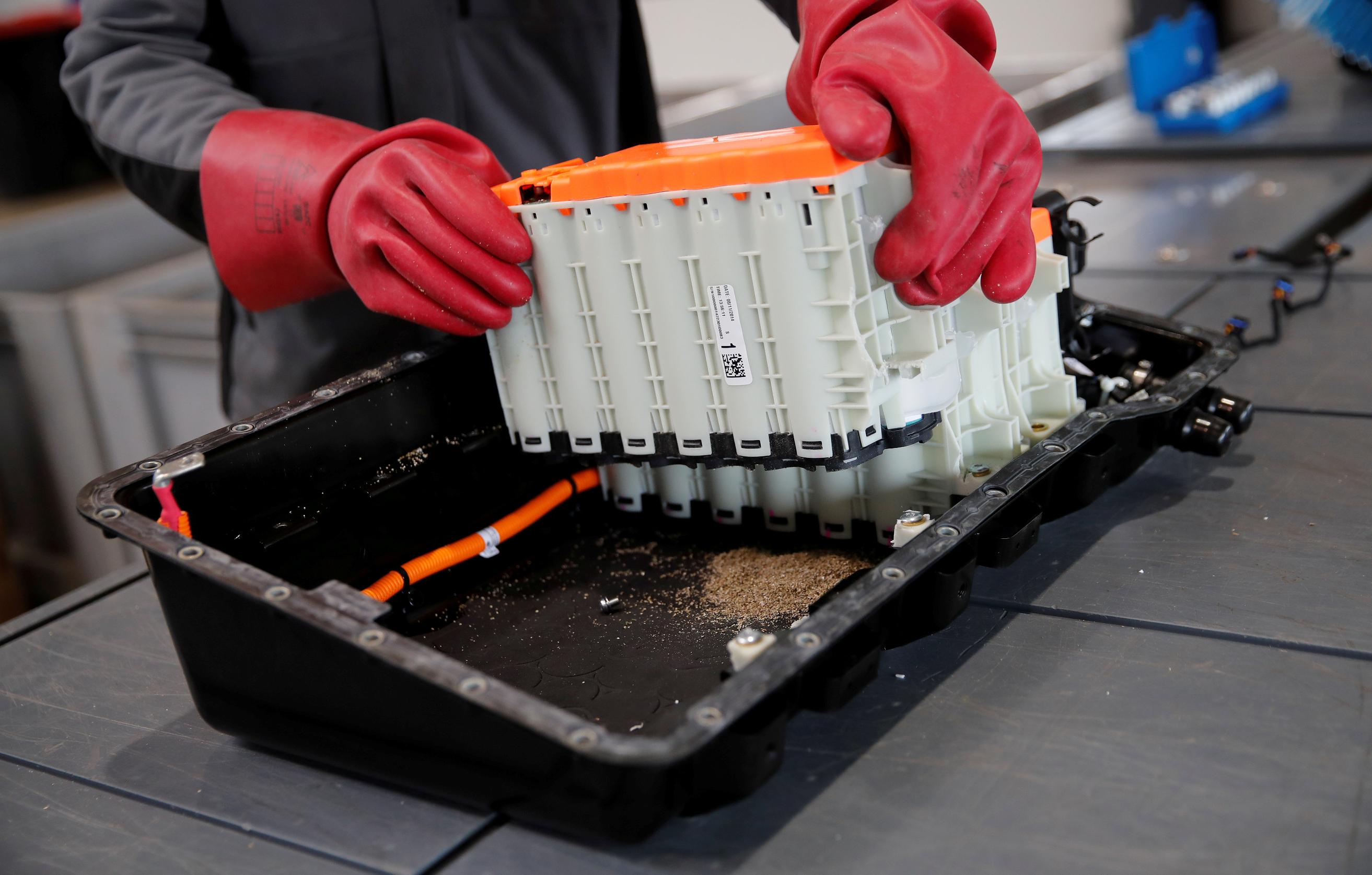
LONDON, Nov 28 (Reuters) - The United States hasn't had a tin smelter since 1991. That year marked the closure of the Longhorn plant in Texas, which was built with federal funds , opens new tab in 1942 to reduce the country's import dependency at a time when tin cans quite literally fed the war effort. Tin is still a critical metal, now for its use in circuit-board soldering rather than in preserved food, and the U.S. government is once again considering how to reduce the country's reliance on imports, currently running at 75% of annual consumption. With no mines and no active reserves, the only way of closing the import gap is to recycle more. The Department of Defense (DOD) has recently awarded , opens new tab $19 million to U.S. secondary tin producer Nathan Trotter & Co. to expand domestic recycling capacity and capture more of the 38,000 metric tons of tin scrap that is exported every year. Such recycling, or urban mining, is the often overlooked part of the critical minerals self-sufficiency equation. URBAN MINING The DOD has also channeled funds to companies such as 6K Additive , opens new tab, which recycles titanium alloys, and Rare Earth Salts , opens new tab, which recovers terbium from old light bulbs. The Department of Energy (DOE) will invest , opens new tab $22 million for an upgrade of Golden Aluminum's recycling operations in Colorado and earmarked up to $270 million for enhanced copper recycling at Wieland's Shelbyville facility in Kentucky. The DOE is also looking to build from scratch an electric vehicle (EV) battery recycling chain. It has distributed funds , opens new tab for new processing capacity, new scrap sorting technology and, in the case of B2U Storage Solutions, even the transport of used batteries. Urban mining has many advantages over primary mining and smelting. Recycling metals is cheaper than producing virgin metal because it requires much less energy, up to 90% less in the case of aluminium. It is therefore also much "greener", emitting 80% less greenhouse gas than primary metal, according to the International Energy Agency's (IEA) just-released special report on recycling. Perhaps most importantly of all for U.S. supply-chain planners, boosting domestic critical metals production by expanding recycling capacity means a much shorter permitting process than building new mines. UNTAPPED POTENTIAL Recycling alone won't replace the need for new mines but it can make a big difference, potentially reducing global demand for new mining activity by 25-40% by 2050 in a scenario that meets national climate pledges, according to the IEA. However, urban mining's full potential has yet to be fulfilled. The share of secondary supply of copper in global demand, including direct melt scrap in products manufacture, fell from 37% in 2015 to 33% in 2023, the IEA said. The share of recycled nickel decreased from 33% to 26% over the same period. Aluminium bucked the trend with an increase from 32% to 35% thanks to well-established waste management programs and supportive regulations, the IEA noted. But the United States is a laggard with secondary copper accounting for just 30% of national consumption, lower than the global average. The country is the world's largest exporter of both copper and aluminium scrap, much of the outbound flow ending up in China. The core problem is the hollowing out of U.S. scrap processing capacity, particularly that needed to treat old end-of-life material that often needs meticulous sorting and dismantling before entering a remelt furnace. A successful recycling economy also needs an efficient collection system, which is still lacking in the United States. U.S. recycling rates for aluminium cans, one of the easiest products to loop back into the supply chain, are below 50%, according to the U.S. Aluminum Association. That means the equivalent of $800 million of valuable resource going to landfill every year, almost enough to build a new primary smelter. BATTERY CHALLENGE Recycling EV batteries comes with a whole different set of challenges. Extracting valuable metals such as nickel and cobalt from a spent battery can be a profitable business but what about batteries with none of those elements? The EV battery sector has pivoted towards cheaper lithium-iron-phosphate (LFP) chemistry in the last couple of years, such batteries now accounting for around 40% of the global market. The relatively low value of the core metal inputs undercuts the economic case for recycling LFP batteries, meaning the sector may need to look at different pricing mechanisms such as toll-based recycling. A global regulatory framework for recycling spent EV batteries is also still work in progress. Waste codes for black mass, the concentrated mixture of cathode and anode in a spent battery, vary widely by country and region. Moreover, as the IEA report points out, China still dominates the middle processing stage of the supply chain, where recycled metals are fed back into precursor elements for new batteries. Today the world's top 20 companies for spent battery pre-treatment and materials recovery are Chinese, representing a new potential dependency for Western countries. LEAD TEMPLATE Most of the challenges can be overcome with the right policy mix, both at national and international level, according to the IEA. A successful template for EV batteries and indeed all metals recycling is provided by the humble lead-acid battery. Recycling rates for what is classified as a health hazard can be as high as 99% in developed countries such as the U.S. or in Europe. The lead market still needs new mines but far fewer of them thanks to its high recycling rate. As the U.S. government is discovering, investing in new scrap processing capacity is far cheaper and greener than building new mines. Most importantly of all from a national security standpoint, the metal is also already captive in the domestic market. The opinions expressed here are those of the author, a columnist for Reuters. Sign up here. https://www.reuters.com/markets/commodities/us-targets-scrap-close-critical-minerals-gap-andy-home-2024-11-27/
2024-11-27 23:59
Nov 27 (Reuters) - Canada's environment minister warned on Wednesday that oil and gas companies would be breaking federal laws if they withheld emissions data, after Alberta's premier said the province was considering measures to block a proposed emissions cap. Alberta premier Danielle Smith on Tuesday said her government intends to put forward a motion in the provincial legislature that would allow it to launch a legal challenge to Ottawa's proposed oil and gas emissions cap. Canada's main oil and gas province is also considering looking at other steps to undermine the cap if it becomes law, such as restricting entry into oil and gas facilities in Alberta and access to emissions data. "If companies stop reporting to the federal government they would be in violation of federal laws, something I certainly wouldn't advise to any large companies," federal environment minister Steven Guilbeault told reporters in Ottawa. The latest spat between Smith's conservative government in Alberta and Prime Minister Justin Trudeau's Liberals highlights the province's staunch opposition to a policy aimed at cutting emissions from Canada's highest-polluting industry. It also shows how even if Trudeau's government manages to win a federal election next year, the oil and gas emissions cap will face further opposition. Polls currently show the Liberals are on track to lose badly and the opposition Conservative Party has said it would scrap the policy if elected. The proposed cap would force producers to cut oil and gas emissions 35% below 2019 levels by 2030, and Ottawa says the target can be met using existing technology. But Alberta argues the cap would force companies to cut production by at least 1 million barrels per day, nearly a quarter of the province's total oil output. While Alberta is entitled to challenge federal legislation through the courts, the other measures proposed by the province would be unconstitutional if the oil and gas emissions cap becomes law, said Emmett Macfarlane, a professor of political science at the University of Waterloo. "Banning federal officials from entering facilities or trying to block disclosure of information regarding emissions ... that is unconstitutional nonsense if the federal government is acting within its authority," Macfarlane said. "In any conflict between federal and provincial law, federal law wins out." Sign up here. https://www.reuters.com/business/energy/canada-environment-minister-warns-oil-gas-companies-against-withholding-2024-11-27/

2024-11-27 23:20
PCE rises 2.3% in October on annual basis Dell, HP fall after downbeat quarterly forecasts Q3 GDP unrevised at 2.8%; weekly jobless claims at 213,000 Indexes down; Dow 0.31%, S&P 500 0.38%, Nasdaq 0.6% Nov 27 (Reuters) - Wall Street's main indexes closed lower on Wednesday, with the Nasdaq leading declines, as technology stocks slumped on Thanksgiving eve on worries the Federal Reserve may be cautious about rate cuts after stubbornly strong U.S. inflation data. Data showed consumer spending increased solidly in October, suggesting the U.S. economy maintained its strong pace of growth, but progress on lowering inflation appeared to have stalled. Traders added to bets the Fed will lower borrowing costs by 25 basis points at its December meeting, according to CME's FedWatch. However, they anticipate the central bank leaving rates unchanged at its January and March meetings. Investors were still gauging the impact of President-elect Donald Trump's pledge on Monday to impose duties of 25% on imports from Mexico and Canada and 10% on Chinese goods unless they halt flows of the deadly opioid fentanyl and illegal migrants into the U.S. Goldman Sachs said in a note this week an escalation in tariff policy risks delaying the return to 2.0% inflation target. According to preliminary data, the S&P 500 (.SPX) , opens new tab lost 22.85 points, or 0.38%, to end at 5,998.78 points, while the Nasdaq Composite (.IXIC) , opens new tab lost 113.80 points, or 0.59%, to 19,061.78. The Dow Jones Industrial Average (.DJI) , opens new tab fell 136.31 points, or 0.31%, to 44,723.23. Dell (DELL.N) , opens new tab slumped 12% and HP(HPQ.N) , opens new tab dropped almost 6% after downbeat quarterly forecasts, weighing on the Information Technology sector (.SPLRCT) , opens new tab, which dropped 1.2%. The sentiment spread to megacaps such as Nvidia (NVDA.O) , opens new tab and Microsoft (MSFT.O) , opens new tab, while the Philadelphia SE Semiconductor Index (.SOX) , opens new tab ended 1.8% lower. The Russell 2000 index (.RUT) , opens new tab was sluggish after hitting a record high earlier in the week. It ended 0.1% higher. Investors also assessed data earlier in the day which showed the economy grew at a solid clip in the third quarter. Weekly jobless claims fell again last week, leaving the door open for another rate cut from the Fed in December. "Inflation has proven to be a little stickier than the Fed would have liked, which may give them pause with respect to cutting rates," said Scott Welch, chief investment officer at Certuity. "There are questions around the effects of Trump's stated tariff policy, which, if implemented could be pretty inflationary and so the Fed is going to have to balance itself between the economic data and the incoming administration's policy agenda." Minutes from the Fed's November meeting, released on Tuesday, showed policymakers were uncertain about the outlook for interest-rate cuts and how much the current rates were restricting the economy. The benchmark S&P 500 was on track for its biggest one-month rise in a year and its sixth month of gains out of seven, as markets price in the view that Trump's policies will benefit local businesses and the overall economy. Workday (WDAY.O) , opens new tab slipped 6.2% after forecasting fourth-quarter subscription revenue below expectations, hit by weaker client spending on its human capital management software. Advancing issues outnumbered decliners by a 1.64-to-1 ratio on the NYSE. There were 406 new highs and 54 new lows on the NYSE. The S&P 500 posted 79 new 52-week highs and no new lows while the Nasdaq Composite recorded 136 new highs and 71 new lows. Volume on U.S. exchanges was 11.40 billion shares ahead of the holiday, compared with the 14.92 billion average for the full session over the last 20 trading days. Sign up here. https://www.reuters.com/markets/us/futures-dip-caution-prevails-ahead-inflation-data-2024-11-27/

2024-11-27 23:19
Tariffs could raise US fuel prices by 10%, analysts say Many refineries configured to run heavy Canadian grades Midwest refineries most reliant on Canadian crude imports Gulf Coast refiners have some capacity to import more OPEC oil NEW YORK, Nov 27 (Reuters) - U.S. President-elect Donald Trump's pledge to impose tariffs on Canada would drive up fuel prices for Americans as it would upend decades-old oil trade from its top crude supplier, analysts said on Wednesday. Trump, who takes office on Jan. 20, said this week he would impose a 25% tariff on all imports from Canada and Mexico until they clamp down on drugs and migrants crossing the border. Canadian oil imports would not be exempt under a free-trade deal from the levies, Reuters reported. Even as surging oil output to record highs has made the U.S. the world's largest producer in recent years, more than a fifth of the oil processed by U.S. refiners is imported from Canada. In the landlocked U.S. Midwest, where refineries process 70% of the more than 4 million barrels per day (bpd) of Canadian crude imports, consumers could see pump prices jump by 30 cents per gallon or more, or about 10%, based on current prices, GasBuddy analyst Patrick De Haan said. If implemented, the tariffs would force those refiners, including Marathon Petroleum (MPC.N) , opens new tab, BP (BP.L) , opens new tab, and Phillips 66 (PSX.N) , opens new tab, to either pay a higher price to import oil from these countries or to find alternative suppliers that would be further away and thus also more expensive. In either scenario, a portion of the added costs is likely to be passed on to U.S. consumers in the form of higher prices for gasoline at retail pumps, Commodity Context analyst Rory Johnston said. "Any tariffs on Canadian oil are going to increase pump prices given the dependence of much of the U.S. refining industry on Canadian crude," Johnston said. The cost of crude feedstock is the biggest component of retail gasoline prices. BP, Marathon, and Phillips 66 did not immediately respond to requests for comment. America's top oil trade groups, the American Fuel and Petrochemical Manufacturers group and the American Petroleum Institute, meanwhile, said imposing the tariffs would be a mistake - exposing a rare moment of discord between the industry and Trump. "Across-the-board trade policies that could inflate the cost of imports, reduce accessible supplies of oil feedstocks and products, or provoke retaliatory tariffs have potential to impact consumers and undercut our advantage as the world’s leading maker of liquid fuels," AFPM said on Tuesday. Cheaper gasoline was among Trump's top priorities during his re-election campaign , opens new tab as he sought to connect with consumers frustrated by sky-high fuel prices in the aftermath of the coronavirus pandemic, Russia's invasion of Ukraine, the war in Gaza and other supply disruptions. Gasoline prices jumped to over $5 per gallon in 2022, but have fallen sharply since, hitting $3.04 as of Monday, the lowest since 2020, the U.S. Energy Information Administration said. MIDWEST TO BE HIT HARDEST Many of the country's refineries are configured to process heavy Canadian crude grades, and not the light grade pumped in the booming U.S. shale oilfields. U.S. Midwest refineries, in particular, are geared to run the heavier crude shipped across the border by pipeline or rail. BP's Whiting refinery in Indiana, the largest fuel supplier in the Midwest, imported more than 250,000 bpd of Canadian heavy oil in 2023, or about 57% of its 440,000 bpd refining capacity, according to RBN Energy. Other U.S. states will also feel the pinch, albeit to a smaller extent, GasBuddy's De Haan said. Major consumer markets on the U.S. East Coast can tap seaborne cargoes from Europe or Africa if tariffs threaten their purchases of gasoline from the Irving Oil refinery in Saint John, New Brunswick, he said. Irving Oil did not immediately respond to a request for comment. West Coast refiners are better geared to process U.S. crude, he added. "States that border Illinois are the areas that would be most impacted because they have the fewest alternatives," De Haan said. Gulf Coast refiners have some capacity to import more oil from members of the Organization of the Petroleum Exporting Countries such as Iraq, Saudi Arabia, Kuwait and Venezuela, Commodity Context's Johnston said. Across the board, many refiners are already facing significantly lower margins for producing fuel, hitting their profits in recent quarters. "These potential tariffs are a kick in the teeth for refineries," De Haan warned. Sign up here. https://www.reuters.com/markets/commodities/trumps-proposed-tariffs-canada-would-drive-up-pump-prices-analysts-warn-2024-11-27/