2024-11-27 22:02
Cuba's sugar output expected to drop to 300,000 metric tons by 2025 Fuel, fertilizer, machinery shortages hit Cuba's sugar industry hard US sanctions, COVID-19 crisis worsen Cuba's economic and agricultural decline HAVANA, Nov 27 (Reuters) - Cuba, which once produced millions of tons of sugar, expects to output just 300,000 metric tons of the sweetener in 2025, according to provincial media reports, as it struggles to find the resources to plant cane in a bitter symbol of agriculture's decline on the Caribbean island. Sugar was long "king" in Cuba as a hundred mills churned out raw sugar for domestic consumption and export. But the fuel, fertilizer, machinery and labor shortages that plague Cuba's broader farm sector have hit the sugar industry especially hard, with year after year of record-breaking low output. Production of sugar cane is dominated by state mills in Cuba's Communist-run economy. This year, less cane means a record low of just 15 mills will be open for sugar production, versus 24 the year before, the government announced as the first mill opened this week. "We have to plant cane," Vice President Salvador Valdes said in central Camaguey province in late November, a province slated to produce 10,000 tonnes compared with up to 200,000 in the past. "The first thing is the cane. If there is cane there will be a harvest, but we have less and less cane," Valdes said. The government has yet to report last season's output, which Reuters estimated at a record low of 300,000 metric tons of raw sugar, based on reports in provincial Communist party newspapers and sources. The figure is similar to production in the late 1800s. Ten of 13 sugar-producing provinces have reported production plans this year similar to their output during the last season. Since tough new U.S. sanctions and the COVID-19 pandemic gutted the import-dependent country's foreign exchange earnings and sparked a grueling economic crisis in 2020, food production has fallen over 40% and food processing a similar amount, according to the government. In eastern Las Tunas province - once a prominent sugar-producing region, the local Communist Party newspaper reported that "during the period December 2020 to June 2024 the areas planted with sugarcane decreased 48%." Sign up here. https://www.reuters.com/markets/commodities/cuban-sugar-industry-demise-mirrors-food-crisis-2024-11-27/

2024-11-27 21:50
Nov 28 (Reuters) - A look at the day ahead in Asian markets. Investors were grappling with fresh U.S. inflation data and its implications for Federal Reserve policy along with continued fallout from Donald Trump's tariff pledges as trading in the U.S. was thinning out ahead of the Thanksgiving holiday. Asian markets were waking up to a tepid day for U.S. equities, with technology shares leading major indexes lower. Shares of Dell (DELL.N) , opens new tab and HP (HPQ.N) , opens new tab sank after weak forecasts from the personal computer makers, weighing on the tech sector (.SPLRCT) , opens new tab. Data showed the personal consumption expenditures (PCE) price index -- an inflation gauge followed by the Fed -- rose 2.3% in the 12 months through October, a slight uptick from the prior month. Traders were still expecting another interest rate cut when the Fed meets in mid-December, with Fed futures showing that expectations of a 25 basis point reduction remained intact following the PCE data. Investors were trying to sort through the potential fallout from Trump's pledge earlier this week of big tariffs on Canada, Mexico and China, which has rattled assets including currencies and auto shares. For example, Goldman Sachs economists estimated the tariffs, if implemented, would increase U.S. core PCE inflation by 0.9%. Meanwhile, Mexico's president warned the country would retaliate if Trump followed through with his 25% across-the-board tariff, a move her government warned could kill 400,000 U.S. jobs. With tariffs as a continued specter, major Asian indexes posted mixed sessions on Wednesday. Japan's Nikkei (.N225) , opens new tab ended lower, with automakers leading the losses, amid concerns about the impact of Trump's tariff plans and a stronger yen. But key China equity gauges gained more than 1%, as data showed a less sharp decline in the country's industrial profits and traders bet that Beijing will provide stimulus to counter risks from the U.S. tariffs. In India, a Reuters poll of equity analysts found that equity markets will take time to recover from their recent sell-off because they remain overvalued, with last week's Adani indictments only adding to the pain. Beyond the U.S., central bank policy was in focus elsewhere globally. New Zealand's central bank cut rates on Wednesday for a third time in four months, and flagged more substantial easing. The Bank of Korea is up next. The BOK is expected to keep its key policy rate at 3.25% on Thursday to support the Korean won against a strong U.S. dollar, according to a Reuters poll of economists, who forecast at least three rate cuts next year. The end of the week is expected to bring more eventful data in Asia, with GDP figures due in India and Taiwan on Friday, along with Tokyo CPI data. "Black Friday" -- the day after Thanksgiving -- also marks the unofficial start of U.S. holiday shopping season. The extent to which inflation-challenged shoppers flock to deals will be of interest to markets, with consumer spending making up more than two-thirds of U.S. economic activity. Here are key developments that could provide more direction to markets on Thursday: - Bank of Korea monetary policy meeting - Australia capex data (Q3) - Germany CPI (Nov) Sign up here. https://www.reuters.com/markets/asia/global-markets-view-asia-graphics-2024-11-27/

2024-11-27 21:45
Nov 27 (Reuters) - Bitcoin rose 5.05% to $96,286 at 2130 GMT on Wednesday, adding $4,633 to its previous close. Bitcoin, the world's biggest and best-known cryptocurrency, is up 150.3% from the year's low of $38,505 on Jan. 23. Sign up here. https://www.reuters.com/technology/bitcoin-last-up-505-96286-2024-11-27/

2024-11-27 21:41
Tariffs could harm US consumers, industry warns Canadian/Mexican producers would look to Asia Europe less likely to benefit from better availability of Mexican/Canadian crude SINGAPORE/LONDON, Nov 27 (Reuters) - Oil producers in Canada and Mexico will likely be forced to reduce prices and divert supply to Asia if U.S. President-elect Donald Trump imposes 25% import tariffs on crude imports from the two countries, traders and analysts said. Two sources familiar with Trump's plan told Reuters that oil would not be exempted from potential tariff hikes on imports from Canada and Mexico, despite the U.S. oil industry's warnings that the policy could hurt consumers, industry and national security. The United States accounts for 61% of waterborne flows from Canada, and 56% from Mexico, respectively, ship tracking data from Kpler showed. Canadian waterborne crude exports have jumped 65% to about 530,000 barrels per day (bpd) in 2024, the data showed, after the opening of the expanded Trans-Mountain pipeline increased shipments to the U.S. and Asia. "The Canadian producers, if they face export constraints, if they're not able to re-route their barrels that previously were exported to U.S. to other markets, may face deeper discounts and may also suffer some revenue losses," Daan Struyven, co-head of global commodities research at Goldman Sachs said. Canada and Mexico export mainly heavy high-sulphur crude that is processed by complex refineries in the U.S. and most of Asia. "The impact is all on the heavy grades. What are the U.S. refiners going to do? Even Saudi Arabian Heavy crude is limited," a Singapore-based trader said, adding that some U.S. refiners can only receive crude via pipelines, limiting their options for imports. "Either the producer or the refiner will have to absorb the tariffs," he said, adding that Canadian producers will have to discount their oil more to attract demand from Asian refiners and cover long-distance shipping costs. Refining sources in Asia and analysts said they expect to see more Canadian and Mexican oil heading to Asia if Trump imposes the tariffs. "We are likely to see quite some volume going to China and India, where refiners' configurations are able to refine the crude,” said LSEG analyst Anh Pham. TMX exports to Asia have risen in recent months as Asian refiners led by Chinese processors test the new grades. However, Mexican exports are down 21% to about 860,000 bpd this year. European refiners are less likely to pounce on cheaper Mexican and Canadian cargoes, Energy Aspects analyst Christopher Haines told Reuters. Tariffs on Mexico "would potentially free up some crude for Spanish refiners that take Maya, but Asia could easily absorb any volumes not sold into the U.S. Gulf, so there will be competition," he said, adding that European refiners typically don't import much Canadian crude. Exports of Mexican crude to Europe have averaged around 191,000 bpd so far this year, 81% of which was delivered to Spain, according to Kpler. Canadian flows are lower at 85,000 bpd. Still, some traders and Goldman Sachs analysts remain sceptical that Trump would actually impose the tariffs, which he has previously used as a negotiating tool, as doing so would drive inflation for U.S. consumers and refiners. Sign up here. https://www.reuters.com/business/energy/asia-likely-benefit-cheaper-canadian-mexican-oil-if-trump-imposes-tariffs-2024-11-27/

2024-11-27 21:27
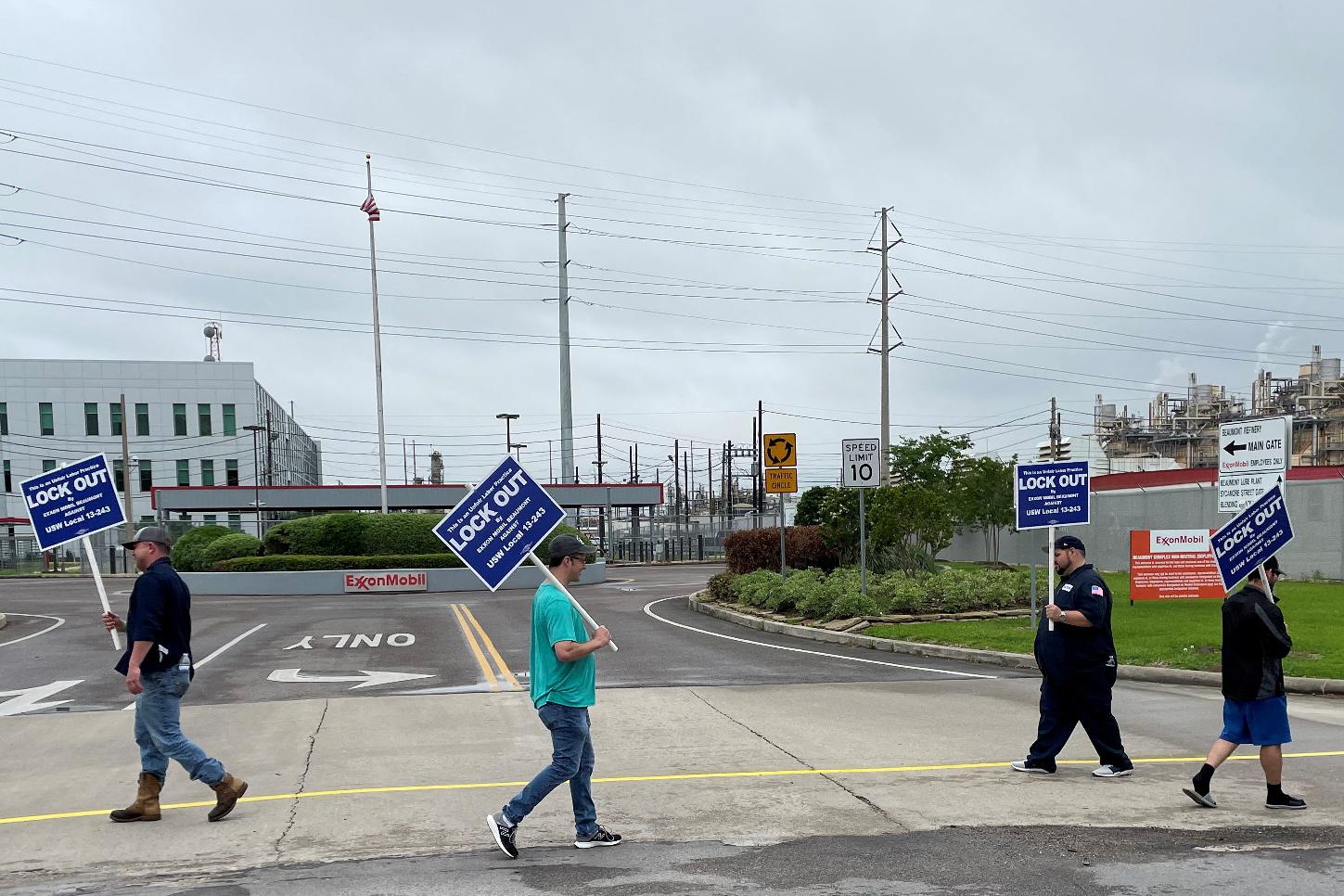
NLRB judge finds no evidence to support union claim United Steelworkers union sought backpay for 2021-2022 lockout USW to weigh options, including appeal HOUSTON, Nov 27 (Reuters) - A U.S. National Labor Relations Board administrative law judge has ruled Exxon Mobil's (XOM.N) , opens new tab 10-month-long lockout of some 600 union workers at a Texas oil refinery during a contract dispute was legal. The judge sided with Exxon in his decision on Nov. 21, finding the 2021 and 2022 lockout was to pressure the United Steelworkers union workers toward a deal, not to oust the union from the 369,024 barrel-per-day (bpd) Beaumont, Texas, refinery complex. The USW had faced a decertification campaign and filed an unfair labor practice complaint during the lockout, alleging an improper effort to break the plant's union. The union had sought millions of dollars in lost pay and benefits for the workers who were locked out of the plant between May 2021 and March 2022. "There is little or no evidence that the company locked out the unit employees to unlawfully pressure them to decertify the union,” NLRB law judge Jeffrey Wedekind said in an opinion accompanying the decision. A spokesperson for Exxon did not reply to a request for comment. Meekie Moseley, president of USW Local 13-243, which represents the workers, said the union is considering its options following the judge's decision. The USW can appeal the decision to the NLRB. “We believe the decision does not reflect the facts of the case,” Moseley said in a statement. Wedekind's decision came 18 months after hearings began in the case. Those hearings considered whether internal Exxon documents involving negotiating strategy, and a post-contract review could be considered in the case. But Wedekind excluded the documents, some of which showed Exxon managers early on had weighed a lockout and debated what it would take for union members to vote to decertify, or formally remove, the union. In documents viewed by Reuters, Exxon managers had early on considered using a lockout and later felt that changes in the makeup of the workforce would benefit the company's strategy in future talks. A fifth of the workers initially locked out on May 1, 2021, had left the company prior to the contract settlement in March 2022. The replacements “previously worked as contractors for the duration of the lockout – benefits both site performance and long-term labor strategy,” wrote a plant manager Jose Diaz, according to the documents that were posted on an internal website and leaked to the USW, according to hearing testimony. Another document had raised the prospect of getting workers to push out the union during the next round of negotiations in 2027 by dividing the contract between the complex's refinery and the lube oil plant. "Split the contract in 2027, and the refinery will decertify eventually," former plant manager Jonathan Parsons said, according to the documents. Sign up here. https://www.reuters.com/legal/us-labor-board-judge-rules-exxons-texas-refinery-union-lockout-was-legal-2024-11-27/
2024-11-27 20:58
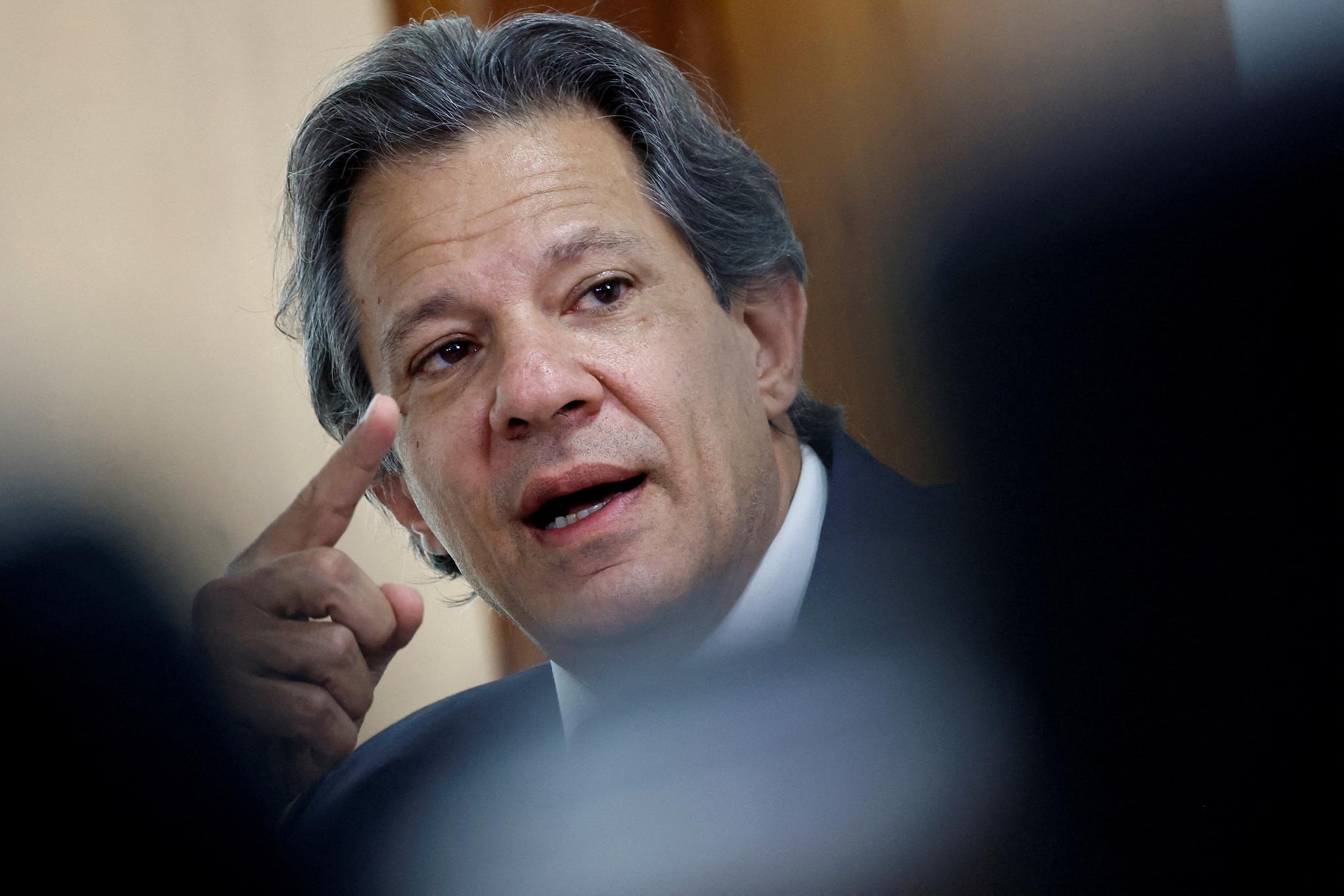
Finance minister announces long-awaited fiscal measures Government aims to shift income tax burden off 'middle class' Markets jolted, had expected focus on spending cuts Minister vows 70 bln reais of spending cuts in two years BRASILIA, Nov 27 (Reuters) - Brazil's government on Wednesday proposed to expand income tax exemptions for lower-income Brazilians and increase taxes on those who earn more, while outlining plans to trim public spending in coming years. Brazilian markets sank ahead of the televised announcement by Finance Minister Fernando Haddad, on reports that the government was introducing the income tax reform instead of focusing exclusively on the long-awaited spending cuts. The Brazilian real slipped 1.8% on the news to 5.91 per U.S. dollar, its weakest close ever in spot trading. Brazil's benchmark Bovespa stock index (.BVSP) , opens new tab slid 1.7% and long-term interest rates climbed sharply higher. After markets closed, Fernando Haddad announced what he described as "the biggest income reform in our history," proposing to raise the tax-free threshold to 5,000 reais ($842) per month from 2,824 reais per month, while making up for the lost revenue with higher taxes on those earning over 50,000 reais. The bigger tax exemption carries out a campaign promise by leftist President Luiz Inacio Lula da Silva. Haddad also outlined the key elements of a much-anticipated spending cut package, which are expected to generate savings of 70 billion reais ($11.8 billion) over the next two years. All the measures still need be formalized and then voted on by Congress. They come after weeks of internal government debate and repeated delays to proposed spending cuts, which the government had initially aimed to announce after municipal elections at the end of October. Uncertainty over the fiscal measures has been driving volatility in Brazilian markets amid concerns the government has not done enough to meet new budget rules passed last year to rein in the growth of public debt. "The market was expecting something more concrete, relevant, on spending cuts," said Lucelia Freitas, a foreign exchange specialist at Manchester Investimentos. "But the announcement on income tax went in the opposite direction." Haddad argued that the shifting income tax burden would help Brazil's middle class without creating a net fiscal impact, adding that the policy was "in line with established international standards." A government official, speaking on condition of anonymity, expressed disappointment with the inclusion of the tax exemption in Wednesday's speech, warning it could overshadow new spending controls and hurt talks in Congress over the fiscal package. MINIMUM WAGE, MILITARY PENSIONS Among the measures to control public spending, Haddad said real growth of the minimum wage would stay within the same limits that apply to overall expenditure, reining in the growth of various mandatory expenditures linked to the minimum wage. He also said that military pensions would now be subject to a minimum retirement age, and public sector salaries would be capped according to a constitutional ceiling. On another front, he announced restrictions on the annual "wage bonus" benefit, which boosts the income of the poorest formal workers. Haddad said in case of a primary deficit, the creation, expansion or extension of tax benefits will be prohibited. Lula, who has openly opposed calls for fiscal austerity, last year approved a new fiscal framework that combines primary budget targets with a cap that limits overall spending growth to up to 2.5% above inflation. However, with many mandatory expenses - such as social benefits and pensions - rising at a faster pace, the new rules have constrained funding for investments and operational costs. Many economists have warned that, without reforms to curb mandatory spending, the framework would become unsustainable within a few years. Sign up here. https://www.reuters.com/markets/brazils-haddad-make-tv-address-markets-eye-spending-cuts-2024-11-27/