2024-11-27 16:02
Nov 27 - European leaders’ proposals to curb migration may appeal to a large swathe of voters, but they won’t please most economists. Many EU leaders are ramping up efforts to curb migration, in particular the entrance of refugees and asylum seekers. While several plans have been scuppered by court rulings, like Italian Prime Minister Giorgia Meloni’s recent proposal to process asylum seekers in Albania, the opposition to immigration across the bloc shows little sign of abating. And even though curtailing illegal immigration is important for Europe, a wider pushback could prove counterproductive from an economic standpoint because immigrants, on average, make a positive contribution to EU government finances and economic activity. Attempting to restrict immigration broadly could therefore weigh on the already-low growth rates in many European economies and potentially increase inflation in the region over the long run – making EU policymakers’ jobs even harder. RETURN ON INVESTMENT In its 2021 Migration Outlook , opens new tab, the OECD calculated the direct contribution of immigrants and natives to government finances in a range of countries. This direct contribution is calculated as taxes paid minus individual government aid received, such as government benefits, pensions, education and healthcare. At first glance, the benefit of immigration appears modest. Across OECD countries, immigrants made a net contribution of 1.6% of GDP to government finances, compared to 7.9% for the native population. But immigrants make up only 10-20% of the total population. After adjusting for that, it quickly becomes clear that immigration is a boon for government finances. For the developed countries in the OECD, governments receive about 53% more in revenue from immigrants than they spend on them. For countries like Italy and Spain, this return on investment approaches or even surpasses 100%. Compare this to the return on investment for the native-born, which is typically between 30% and 40% and averages 35% in the OECD. Critics may argue that these calculations ignore other costs of immigration such as border control and policing. If these government expenses are added back, the so-called ‘fiscal return’ on immigration does become negative, but so does the return on the native population. Like-for-like, immigrants are still less costly to the government than native-born citizens. Of course, not all immigrants contribute equally to government finances, and highly skilled immigrants obviously contribute more , opens new tab, on average, than low-skilled ones. But one should not underestimate the contribution low-skilled immigrants make and the potential costs to an economy if they are removed from the workforce. For instance, the Peterson Institute for International Economics (PIIE) , opens new tab has simulated the impact on the U.S. economy of president-elect Donald Trump’s mass deportation plans. PIIE estimates that the deportation of 1.3 million undocumented immigrants would reduce the country’s GDP by 0.3% per year and increase inflation by 0.3% per year in the first three years. Turning back to Europe, my own model projects that euro zone inflation would rise by roughly 0.3% per year if immigration levels to the region were halved. Businesses facing a smaller labour supply would either have to produce fewer goods and services, creating shortages that could push up prices, or invest in automation, a cost that would likely be recovered via higher prices. VICIOUS CYCLE Reducing immigration could prove especially costly for the euro zone, given that it’s facing an aging population, low birth rates and stagnation in its largest economy, Germany. A significant reduction in immigration could increase government deficits, while the reduced supply of labour would likely curtail GDP growth. This, in turn, could create a negative feedback loop, with weaker GDP growth shrinking the government’s tax intake and further expanding deficits. Plus, if labour supply is lower, whether it’s skilled or unskilled labour, wage inflation is apt to speed up, which could generate higher inflation overall – and higher interest rates – for everyone. The EU already faces an unnerving economic outlook. In September, former president of the European Central Bank Mario Draghi said that the bloc must invest heavily or face the slow agony of low growth and economic decline. If immigration is reduced in the EU, the negative trends Draghi is warning about will almost certainly get worse, meaning even more investment – and borrowing – will be needed to boost economic activity. European leaders would therefore be wise to heed economists’ advice and not create additional hurdles for themselves as they seek to get growth back on track. (The opinions expressed here are those of the author, a columnist for Reuters.) Sign up here. https://www.reuters.com/markets/europes-immigration-pushback-fails-economics-101-joachim-klement-2024-11-27/

2024-11-27 16:01
JOHANNESBURG, Nov 27 (Reuters) - South Africa's rand was steady against the dollar on Wednesday, as the greenback eased after the release of a key U.S. inflation report. At 1551 GMT, the rand traded at 18.20 against the dollar , not far from its previous close. Trade in the rand has been volatile this week amid market jitters about the imposition of trade tariffs by U.S. President-elect Donald Trump. The dollar index was last down 0.7% against a basket of currencies after data showed the U.S. personal consumption expenditures price index climbed 0.2% in October, matching September's unrevised gain. South African domestic investor focus will be on monthly producer inflation data on Thursday followed by money supply, trade and budget balance on Friday. On the stock market, the Top-40 (.JTOPI) , opens new tab index closed about 0.4% lower. South Africa's benchmark 2030 government bond was stronger, with the yield down 2.5 basis points at 9.03%. Sign up here. https://www.reuters.com/markets/currencies/south-african-rand-recoups-some-losses-against-dollar-2024-11-27/
2024-11-27 15:37
MOSCOW, Nov 27 (Reuters) - Sanctions imposed by the United States on Russia's third largest lender Gazprombank, which handles the energy trade, are behind the rouble's free fall in recent days, a top executive from VTB, Russia's second largest bank, said on Wednesday. "My assumption is that the sanctions against Gazprombank have had a significant impact, as it has ceased to be a channel for delivering foreign currency to the Moscow Exchange," Dmitry Pyanov told reporters. Pyanov added that stabilisation of the forex market within the next few days should be the focus of the central bank's attention. Sign up here. https://www.reuters.com/business/finance/russias-vtb-says-us-sanctions-are-behind-roubles-fall-2024-11-27/
2024-11-27 15:25
MEXICO CITY, Nov 27 (Reuters) - Mexican President Claudia Sheinbaum said on Tuesday that Mexico would raise tariffs on imports from the United States if President-elect Donald Trump follows through on his threat to issue a 25% tariff on Mexican imports after taking office. "If there are U.S. tariffs, Mexico would also raise tariffs," Sheinbaum said in a press conference on Wednesday, adding that doing so would allow "benefits" for Mexico in the event of tariffs from Washington. Sign up here. https://www.reuters.com/markets/mexico-would-raise-tariffs-if-us-does-so-first-president-says-2024-11-27/

2024-11-27 15:19
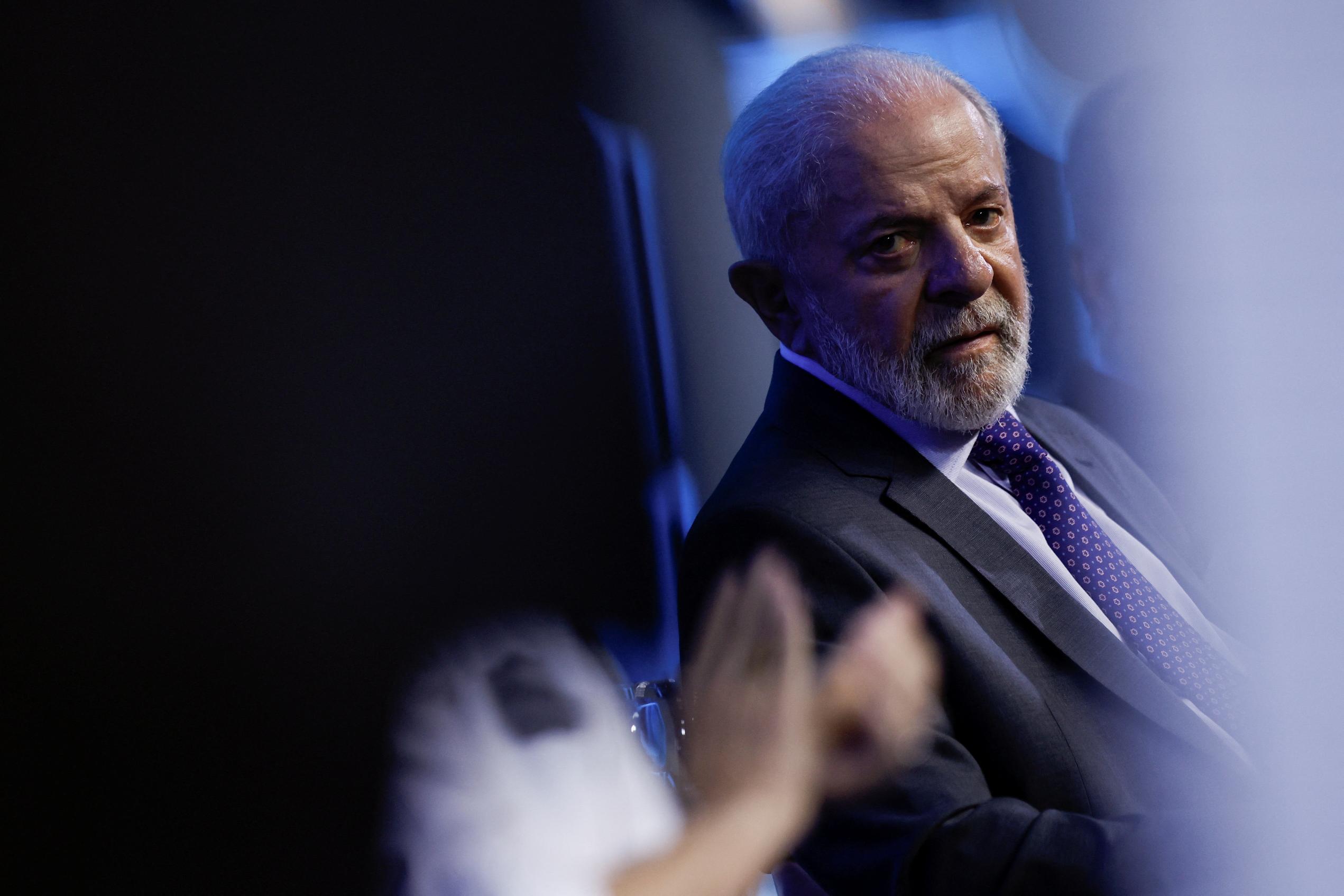
BRASILIA, Nov 27 (Reuters) - Brazilian President Luiz Inacio Lula da Silva said on Wednesday he hoped a trade deal between the European Union and the South American Mercosur bloc would be finalized by the end of this year, even as it faced opposition, mainly from France. "We will get it done," Lula told an event hosted by industry group CNI in Brasilia, shrugging off French opposition. The deal was being negotiated directly with European Commission President Ursula von der Leyen, he said. "Von der Leyen has the mandate to make this agreement, and I intend to sign it this year," Lula said. Mercosur joins Brazil, Argentina, Uruguay, Paraguay and Bolivia in a market that is a sought-after destination for EU manufacturing exporters, though European farmers, especially in France, fear the competition it will bring. A deal between the EU and Mercosur has been in the works for some 25 years. The parties had announced an agreement in 2019, but it was never formally ratified due to EU demands for commitments on Amazonian deforestation and climate change. European negotiators arrived in Brazil on Tuesday for a new round of talks ahead of a Mercosur summit in Uruguay's capital Montevideo next week. A source familiar with the matter said there was "good will" from both parties to clinch an agreement. Despite the opposition from France and Poland, other EU countries such as Germany and Spain favor the deal. Argentina, whose President Javier Milei has said in the past that the South American common market served no purpose, on Wednesday also voiced support for the deal. "We support trade agreements, whether the one you refer to or any other that can benefit Argentines," presidential spokesman Manuel Adorni told a press conference when asked about the Mercosur-EU deal. Both Milei and Lula met with French President Emmanuel Macron earlier this month in South America. Macron reiterated France's opposition to a deal due to concerns over agricultural imports that do not meet European standards and said Milei had expressed dissatisfaction to him with the current terms of the trade accord. Sign up here. https://www.reuters.com/business/brazils-lula-hopes-mercosur-eu-trade-deal-by-year-end-2024-11-27/
2024-11-27 15:07
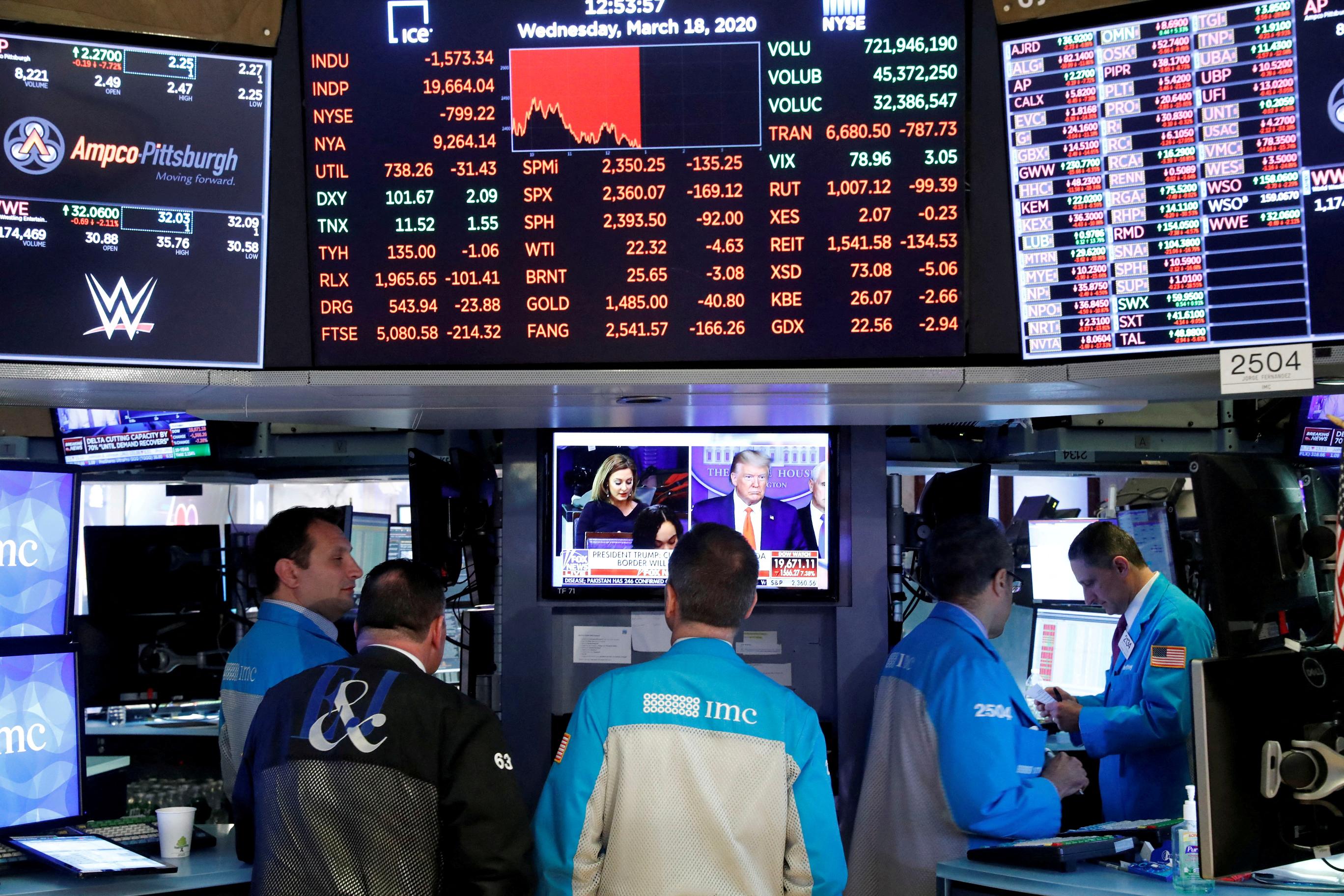
Demand for protection against market crash firm Cboe Skew Index at 2-month high Trump policy risks keep investors on edge NEW YORK, Nov 27 (Reuters) - Demand for options protection against an equity market crash is rising, even as a post-election rally takes U.S. stocks to record highs. Worries over the possibility of a contested election dissipated following President-elect Donald Trump’s victory earlier this month, helping the S&P 500 (.SPX) , opens new tab climb to an all-time high. The Cboe Volatility Index, one measure of investor anxiety, closed near a post-election low of 14.10 on Tuesday. But several barometers gauging uptake for protection against extreme market swings - such as the Nations TailDex Index (.TDEX) , opens new tab and Cboe Skew (.SKEWX) , opens new tab - are picking up. While the rise in these indexes does not necessarily mean investors expect catastrophic events, they suggest elevated caution in the face of several weighty risks, including the potential of an inflationary snap-back to ructions in global trade next year. One such risk came to the fore late on Monday, when Trump pledged big tariffs on Canada, Mexico and China - detailing how he will implement campaign promises that could trigger trade wars. Though U.S. stocks largely shrugged off the comments, Trump’s broadside evoked flashbacks to the trade-fueled market swings that took place during his first term, bolstering the case for portfolio hedging. Amy Wu Silverman, RBC Capital Markets head of derivatives strategy, said investors are guarding against so-called fat tail risks, options parlance for higher expected probabilities of extreme market moves. "While investors broadly remain long equities, the tails are fatter," she said. "This is partly from a rise in geopolitical risk premium and certainly potential policy risk as Trump returns to the presidency and potentially enacts tariffs and other measures." The Nations TailDex Index (.TDEX) , opens new tab, an options-based index that measures the cost of hedging against an outsized move in the SPDR S&P 500 ETF Trust, has risen to 13.64, double its post-election low of 6.68. The index is higher now than it has been about 70% of the time over the past year. Cboe Skew index (.SKEWX) , opens new tab, another index that indicates the market's perception of the likelihood of extreme price movements, on Monday closed at a two-month high of 167.28. VIX call options, which offer protection against a market sell-off, also shows some of this demand to protect against "tail risks." VIX three-month call skew - a barometer of the strength of demand for these contracts - is hovering near the highest level in over five years, according to an analysis by Susquehanna Financial Group. "The general idea is there is an 80-95% chance of pretty low volatility, that's why the VIX is relatively low, but there's just more of a tail event being factored in," said Chris Murphy, co-head of derivative strategy at Susquehanna. Maxwell Grinacoff, equity derivatives strategist at UBS, said Monday’s tariff pledge by Trump is the kind of risk investors might be worried about encountering again in coming months. "It gives people a reason again to start hedging," he said "You've seen more of a return to downside hedging again." Investors are also grappling with uncertainty over how deeply the Federal Reserve will be able to cut interest rates in coming months, as central bankers are faced with a stronger-than-expected economy that could spur an inflationary rebound if they ease monetary policy too far. The Fed will hold its last monetary policy meeting of the year on Dec. 17-18. The Russia-Ukraine war and conflict between Israel and Hamas could also add to market flare-ups. UBS’s Grinacoff said next year may hold parallels to 2018, when stocks hit new highs at the start of the year only to slide as headlines on trade and tariffs hurt growth expectations and volatility picked up across asset classes. Investor demand for protection is “warranted, in my opinion,” he said. Sign up here. https://www.reuters.com/markets/us/investors-cling-crash-protection-despite-sizzling-us-stock-market-rally-2024-11-27/